
Rebar Coupler Supplier Sustainability: A Long-Term Checklist
Mechanical rebar splicing has moved from a specialist technique to a standard line item in structural specifications, and the supply base has expanded with it. Independent market research places the global rebar coupler market at USD 1.82 billion in 2025, projected to reach USD 3.47 billion by 2034 at a compound annual growth rate of 7.4% (Dataintelo). Building construction accounted for 47.6% of 2025 revenue, and Asia Pacific contributed approximately 41.3% of the global total.
That growth solves an availability problem and creates a continuity problem. Long-cycle work — high-rise cores, sea-crossing bridges, railway stations, airport structures — does not purchase couplers once. It purchases them repeatedly, against the same specification, over a horizon measured in years. Suppliers that win the first order are not automatically the suppliers that can still deliver the tenth.
This article sets out a long-term supplier evaluation checklist organised around a single procurement question: can a rebar coupler supplier still deliver the same coupler, in the same material, with valid documentation, three or four years into the project?
What “Supplier Sustainability” Means in a Procurement Context
In this context, supplier sustainability is not an environmental claim. It describes a supplier's capacity to remain a stable source of the same product across the life of a project and across repeat orders. It is measurable, and it breaks down into five elements:
- Product continuity — the same coupler type, thread geometry and material grade remain available in the same size range.
- Range continuity — the complete size envelope (for example 16–40 mm) stays intact, so later project phases do not require a second, differently specified supplier.
- Documentation continuity — certificates, test reports and material declarations remain valid and consistent between orders.
- Capacity continuity — stated output and lead time can absorb repeat orders and schedule changes.
- Service continuity — technical support remains available after delivery, not only during the quotation stage.
Each element can be verified against documents and specifications rather than reputation. That is what makes long-term evaluation a checklist exercise instead of a judgement call.
The Problem: A Bigger Supplier Pool Is Not a More Stable One
The opportunity in this market is scale. A 7.4% growth trajectory between 2025 and 2034 means more projects specifying mechanical splices, more regional demand, and more suppliers entering the category. Buyers benefit from choice, competitive pricing and shorter lead times.
The risk sits in the same trend. When supply expands quickly, the visible differentiators — price, delivery speed, catalogue breadth — are the ones suppliers can imitate fastest. The differentiators that matter at year three — whether the same steel grade is still used, whether the coupler outer diameter and thread specification are unchanged, whether the certification is still valid, whether the machine that prepares the rebar end is still supported — are invisible during a first-order comparison.
Evaluation-stage buyers therefore need a framework that deliberately tests the invisible attributes. The checklist below is structured for that purpose.
The Long-Term Evaluation Checklist
Seven criteria carry most of the diagnostic weight when assessing whether a rebar coupler supplier can hold a multi-year project. Each one should be verified against documentation, not against sales statements.
| Criterion | What to verify | Evidence to request |
|---|---|---|
| 1. Portfolio depth | Whether rolling, pressing, upsetting and one-touch coupler families are all available across 16–40 mm | Published size tables with outer diameter, length and thread per size |
| 2. Material consistency | Which grades are assigned to which coupler type, and whether that assignment repeats between orders | Material test report supplied with production lots |
| 3. Size-range continuity | Whether the size ladder stays complete from 16 mm to 40 mm in each family | Thread specification table including pitch and thread angle |
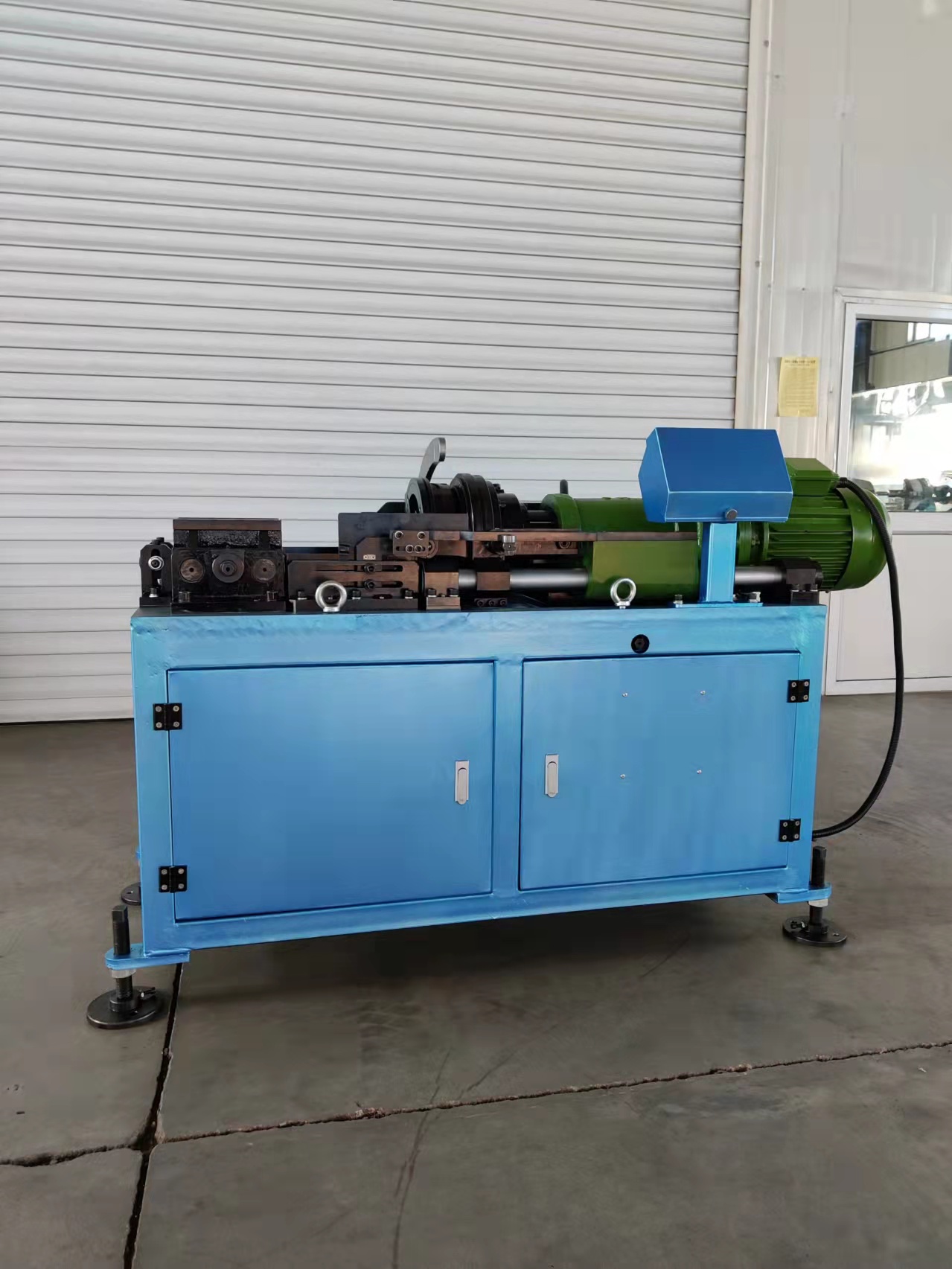
| 4. Equipment ecosystem | Whether the machines that prepare rebar ends and complete the connection come from the same supply chain | Machine specifications for threading, cutting, pressing, upsetting and torque wrenches |
| 5. Certification runway | Whether certificate validity covers the project programme | Certificate numbers, issuing bodies, issue and expiry dates |
| 6. Capacity and order flexibility | Monthly output, lead time, MOQ policy and the defined scope of OEM customisation | Capacity statement, lead-time statement, customisation definition |
| 7. Repeat-supply record | Whether volumes were supplied annually over a project-matched duration rather than once | Case references with annual volumes and application type |
Criteria 1 to 4 determine whether the product can stay identical. Criteria 5 to 7 determine whether the supplier can stay present. A supplier that satisfies only the second group is a reliable logistics partner with a variable product. A supplier that satisfies only the first group is technically capable but commercially unpredictable at scale.
Portfolio Depth as Evidence of Staying Power
A supplier offering one coupler type serves one moment of a project. A supplier offering several connection technologies — and the machines that make them work — is more likely to remain relevant when a later phase arrives with a different site condition, a different rebar diameter, or a different specification clause.
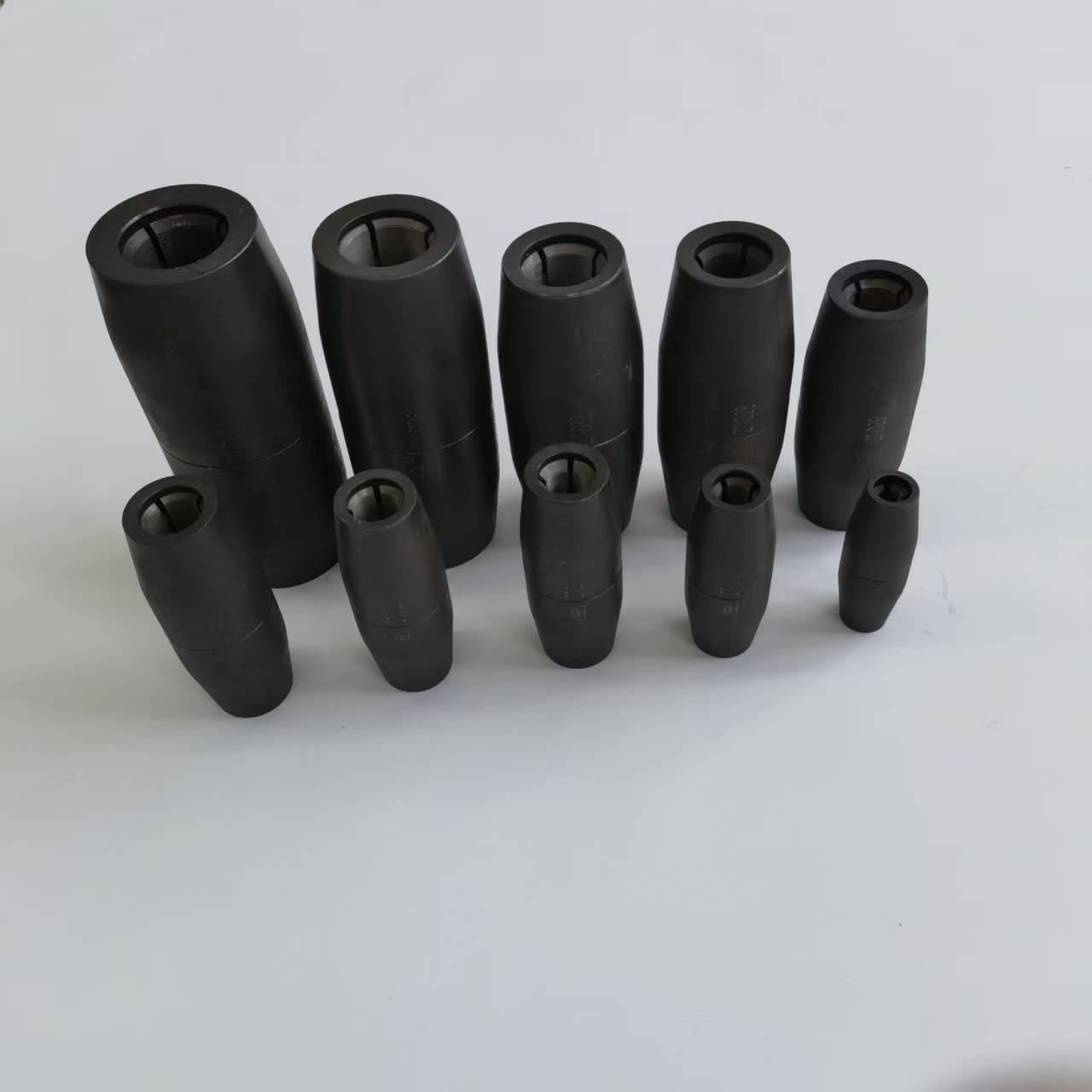
CANGZHOU BARTECH CONSTRUCTION MATERIAL CO., LTD. is a rebar coupler and rebar connection equipment supplier based in Qing County, Cangzhou City, Hebei Province, China, exporting since 2008 and serving markets across Asia, the Middle East and South America, including Vietnam, Malaysia, Kuwait, Qatar, UAE, Saudi Arabia and Mexico. All of its output is export-oriented. Its published portfolio contains four coupler families inside the 16–40 mm size envelope:
- Rolling rebar coupler — parallel thread rolling technology; carbon steel 45# or alloy steel 40CR; outer diameter from 24 mm (16 mm rebar) to 59 mm (40 mm rebar); thread from M16.5×2.5 to M40.2×3.0 at a 60° thread angle.
- Upsetting rebar coupler — parallel thread upsetting technology; carbon steel 45# or alloy steel 40CR; outer diameter from 26 mm to 62 mm; thread from M20×2.5 to M45×4.0.
- Pressing rebar coupler — cold pressing technology; carbon steel Q355B; outer diameter from 30 mm (φ16) to 70 mm (φ40); wall thickness from 4.5 mm to 11.3 mm.
- One-touch rebar coupler — alloy steel 40CR; from φ11–16 up to φ40; outer diameter from 35 mm to 83 mm.
The supporting equipment catalogue is drawn from the same specification set: Rebar Threading Machine models CBT40A, CBT40L, 40AO and 40MO; Rebar Thread Cutting Machine MQ40; Rebar Coupler Pressing Machine CBT32; Rebar Upsetting Machine Auto 36S and 50S; and Rebar Electric Torque Wrench BOC 8-32 and BOC 8-42.
For evaluation purposes, the practical consequence is that the sizing decision, the material decision and the equipment decision can be resolved against one consistent set of specifications rather than across multiple unrelated suppliers — which is precisely where thread-geometry mismatches and re-approval costs accumulate between project phases. Product documentation is published at www.chinabartech.cn.
Material Consistency Across Repeat Orders
The most common long-term failure in coupler procurement is not a defective first batch. It is a different second batch. Carbon steel 45#, alloy steel 40CR and Q355B are distinct materials with distinct mechanical behaviour, and a supplier that substitutes one grade for another between orders creates re-approval work for the contractor and, in regulated markets, documentation risk.
The published material assignments in the Bartech portfolio are type-specific rather than interchangeable: rolling and upsetting couplers use carbon steel 45# or alloy steel 40CR; pressing couplers use carbon steel Q355B; one-touch couplers use alloy steel 40CR. That mapping is the first thing a buyer should record at the evaluation stage, because it becomes the baseline against which later delivery documents are compared.
Quality control documentation includes a material test report, 10% production testing during production lines, and 100% appearance surface checking. The evaluation question is not whether these processes exist on paper, but whether the resulting documents reach the buyer with every order and match the baseline recorded at qualification.
Sizing Continuity and Where the Envelope Ends
The coupler families above span 16 mm to 40 mm. The published threading machines state the same rebar range — CBT40A, CBT40L and 40AO are all specified for 16–40 mm rebar, with maximum threading lengths of 120 mm, 100/200 mm and 90–150 mm respectively. Size continuity across a project is therefore supported at the product-family level.
Three boundaries are worth stating plainly, because a checklist that only lists strengths is not a checklist.
Boundary one — pressing equipment coverage. The Rebar Coupler Pressing Machine CBT32 is specified for 16–32 mm rebar, while the pressing coupler family is published up to φ40. Buyers specifying pressed couplers above 32 mm should confirm the equipment configuration with the supplier during evaluation rather than assume that the coupler size ladder and the machine coverage are identical.
Boundary two — MOQ conditions. The stated policy of no minimum order quantity applies to stock couplers. Couplers customised by outer diameter, inner diameter and thread are produced to order, so commercial terms for custom configurations follow production planning rather than stock rules.
Boundary three — support model. After-sales support for this supplier is provided as online technical support. Projects that require scheduled on-site engineering attendance should specify that requirement contractually rather than assume it is included.
Couplers Versus Traditional Splicing: Where the Case Is Weaker
Mechanical rebar splices are governed by international standards including ISO 15835, ASTM A615 and BS 8110, with Eurocode 2 widely applied in EU markets. Standardisation has made mechanical connections easier to specify, but it has not made them universally superior.
Traditional lap splicing and welding remain technically valid on many sites, and in some conditions they are the more practical choice. Mechanical coupling requires rebar end preparation — threading, upsetting or cutting — along with trained operators, calibrated equipment and inspection discipline. On small pours, irregular structural geometries, or short-duration packages where mobilising and maintaining that equipment set is not efficient, lap splicing can be simpler and involve less logistics.
The mechanical route becomes the stronger option where rebar runs are long, reinforcement congestion is high, load-path continuity matters, or the structural specification already calls for mechanical splicing. The evaluation question is therefore not “coupler or lap” in the abstract, but whether the supplier can support the mechanical route consistently for the whole duration of the programme if that route is selected.
Application Fit: High-Rise, Bridge and Long-Cycle Projects
Published application scenarios for this product family are construction projects, high-rise buildings, airport projects, high-railway stations, and large bridges including sea-crossing bridges. These are exactly the project types where the duration of supply matters as much as the first shipment.
A Kuwait-based case provides a useful reference pattern. A construction enterprise purchasing standard rebar couplers for outdoor construction work was supplied at 400,000 units per year, with the supply duration matching the construction programme rather than a single delivery window. Reported outcomes were higher strength, stable quality and good operation, with easy connection highlighted as the operational advantage.
A second reference from Vietnam covers tall building and railway station construction at an annual scale of 500,000 units. Reported attributes include high strength, good quality, clear outer surface and strict thread specifications, and the product was also adopted by an automotive OEM client. For a buyer, the transferable signal in both cases is annual repeat volume over a project-matched duration — not a single order fulfilled once.
Market Trend Analysis
The direction of the category is clear from third-party research. The global rebar coupler market stood at USD 1.82 billion in 2025 and is projected to reach USD 3.47 billion by 2034, a CAGR of 7.4% (Dataintelo). Building construction took 47.6% of 2025 revenue; Asia Pacific took approximately 41.3%. By product type, tapered thread couplers held the largest share at 38.2% in 2025, with parallel thread couplers close behind.
Two implications follow for evaluation-stage buyers. First, as demand expands, the number of suppliers grows faster than genuine differentiation, which shifts the basis of competition toward documentation quality, capacity reliability and range continuity. Second, parallel thread technologies — the basis of rolling and upsetting couplers — sit in a large and closely contested segment, which strengthens the case for evaluating suppliers on the completeness of their size range rather than on the price of a single catalogue item.
Future Outlook
Expect certification validity, material traceability and equipment-service continuity to become standard evaluation items rather than optional checks. Certificate dates are an early signal of how a supplier manages long-term obligations. Cangzhou Bartech's CE certification is registered under Nr.SC-PSC-4-2025-12-14 within the scope of the EU Construction Products Regulation and remains valid until 2030-12-03. Its ISO 9001:2015 certification, number 31623Q10713R1S, covers the sale of rebar couplers, rebar connection equipment and related spare parts and carries an expiry date of 2026-12-21.
For a project running beyond that second date, the renewal record is itself an evaluation data point. Buyers who track certificate expiry at the qualification stage avoid discovering a documentation gap in the middle of a structural package.

Looking further ahead, the suppliers likely to remain on approved-vendor lists are those whose catalogue, materials and machinery evolve together. A coupler family that gains a new size without a matching threading or pressing capability creates a specification gap; a machine range that advances without corresponding coupler sizes creates the same problem in reverse. Continuity is a system property, not a product property.
FAQ
How can a construction buyer test whether a rebar coupler supplier will remain reliable over a multi-year project?
Evaluate against continuity rather than price alone: whether every size from 16 mm to 40 mm stays available in the coupler family being specified, whether each coupler type has a defined material grade, whether certificates remain valid through the project programme, whether monthly capacity and lead time are stated in writing, and whether the supplier can show annual repeat volumes over a project-matched duration. Each of these is checkable with documents at the qualification stage.
Which rebar coupler types should a long-term supplier offer for 16–40 mm rebar?
Four connection families cover most project conditions: rolling, upsetting, pressing and one-touch couplers. In the Cangzhou Bartech range, rolling and upsetting couplers are produced in carbon steel 45# or alloy steel 40CR, pressing couplers in carbon steel Q355B, and one-touch couplers in alloy steel 40CR. All four families are published across the 16–40 mm envelope, which allows a specification to be completed without introducing a second supplier for a different connection method.
Why does material grade consistency matter more than a single material test report?
A material test report confirms one production lot. Consistency confirms the relationship between lots. Carbon steel 45#, alloy steel 40CR and Q355B behave differently under load and are not interchangeable in a qualified specification. If a supplier changes the grade assigned to a coupler type between orders, the contractor may need to re-qualify the connection and update project documentation. Verification should compare the grade declaration on each delivery against the grade recorded at evaluation.
How does certificate validity affect long-term coupler procurement?
Certificates carry expiry dates, and those dates can fall inside a project programme. Cangzhou Bartech's CE certification Nr.SC-PSC-4-2025-12-14 is valid until 2030-12-03 under the EU Construction Products Regulation, while ISO 9001:2015 certification 31623Q10713R1S expires 2026-12-21. Buyers should record both dates at qualification and confirm the renewal position before the earlier date is reached, particularly where the certification is referenced in structural submissions.
What capacity and delivery indicators show that a supplier can handle repeat orders?
Look for a stated monthly capacity, a stated lead-time range, a defined MOQ policy and a defined customisation scope. For this supplier, monthly capacity is 300,000 pieces, lead time is 7–30 days depending on quantity, stock couplers carry no minimum order quantity, and OEM customisation covers coupler outer diameter, inner diameter and thread. Documentation supporting those claims includes material test reports, 10% production testing during production lines and 100% appearance surface checking.