
Rebar Couplers by Project Type: A Site-Condition Reference
Project teams evaluating rebar couplers for a new tender often start with a practical question: which splice type should be specified for this structure? The answer depends on the project type, the on-site environment, the installation equipment available, and the standards a contractor must comply with. This reference reviews how rebar coupler technologies match different construction scenarios, using the product range of Cangzhou Bartech Construction Material Co., Ltd. as a working example.
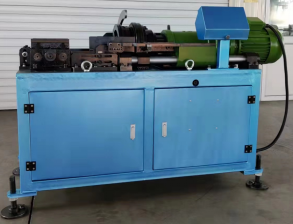
Cangzhou Bartech Construction Material Co., Ltd. is a China-based manufacturer of rebar couplers and rebar threading equipment. Founded in 2008 and located in Qing County, Cangzhou City, Hebei Province, the company exports all of its production to markets in Asia, the Middle East, and South America, including Vietnam, Malaysia, Kuwait, Qatar, the UAE, Saudi Arabia, and Mexico. Its product lines cover four mechanical connection technologies: parallel thread rolling, upset forging, cold pressing, and one-touch quick connection, together with threading machines, upsetting machines, pressing machines, and electric torque wrenches.
Why Project Conditions Drive Rebar Coupler Selection
Rebar couplers are not a one-size-fits-all construction product. The same coupler model may be appropriate for a high-rise tower but not ideal for a railway bridge, because the structural demands, installation workflow, and compliance requirements differ.
Several variables shape the selection decision:
- Rebar grade and diameter: most coupler ranges cover 16-40 mm bars. Upsetting machines in Cangzhou Bartech's catalog support Grade 400 bars up to 50 mm and Grade 500 bars up to 40 mm.
- Site climate: tropical high-humidity, hot-dry, and rainy conditions affect equipment operation and installation planning.
- Installation mode: site threading, factory pre-threading, and one-touch rapid connection each require a different coupler type and equipment set.
- Compliance framework: CE marking, ISO 9001, ISO 15835, ASTM A615, and BS 8110 are commonly referenced in project specifications.
- Supply capacity: large construction programs need suppliers that can maintain continuous delivery over the project duration.
Four Coupler Technologies at a Glance
Cangzhou Bartech's catalog is organized around four forming methods. Buyers can compare them by material, connection principle, and dimensional range.
| Coupler type | Material | Connection method | Thread size range | Rebar range |
|---|---|---|---|---|
| Rolled thread (parallel thread) | Carbon steel 45# or alloy steel 40CR | Thread rolled directly on rebar end | M16.5×2.5 to M40.2×3.0 | 16-40 mm |
| Upset forged | Carbon steel 45# or alloy steel 40CR | Rebar end upset, then threaded | M20×2.5 to M45×4.0 | 16-40 mm |
| Cold pressing | Carbon steel Q355B | Sleeve pressed hydraulically onto bar ends | No thread | 16-40 mm |
| One-touch | Alloy steel 40CR | Pre-assembled quick sleeve | No thread | 11-40 mm |
Rolled thread couplers are a common choice for general building work because the threading machine can produce threads directly on standard rebar ends. Upset forged couplers require an additional upsetting step, which increases the thread diameter and provides a larger thread engagement area. Cold pressing couplers remove the threading operation entirely, while one-touch couplers are designed for the fastest possible assembly on site.
What the Technical Parameters Tell Buyers
Each coupler family has its own dimensional logic, and these dimensions matter for design approval and job planning.
For rolled thread couplers in the 16-40 mm range, a 25 mm bar uses a coupler with an outer diameter of 38 mm and a length of 62 mm, with thread M25.6×3.0. A 32 mm bar uses a 48 mm outer diameter, a 76 mm length, and thread M32.6×3.0. The outer diameter and length define the load path of the splice.
Upset forged couplers use a larger thread for the same bar size. A 25 mm upset coupler has a 40 mm outer diameter and an M30×3.5 thread, compared with M25.6 for the rolled version. The larger thread engagement is the technical reason upset couplers are specified where a higher connection margin is required, for example in railway structures.
Cold pressing couplers are longer and use a thin wall because they rely on radial deformation. A 25 mm pressing coupler is 150 mm long with a 7.4 mm wall; a 40 mm pressing coupler is 240 mm long with an 11.0 mm wall. One-touch couplers have a thicker wall reflecting the alloy steel 40CR material: the 25 mm version is 143 mm long with a 56 mm outer diameter, while the 40 mm version is 200 mm long with an 83 mm outer diameter.
Matching Couplers to Project Scenarios
Tall Buildings in Tropical Climates
High-rise construction is a major application for mechanical rebar couplers, consistent with the 47.6% share of building construction in global rebar coupler market data. These projects are typically outdoor work in normal tropical temperature and humidity. The coupler mix commonly includes rolled thread and one-touch types, installed with rebar threading machines and electric torque wrenches. ISO and CE certificates are stated as project requirements.
Cangzhou Bartech's application data links its rolling thread couplers (16-40 mm), one-touch couplers, CBT40L and 40MO threading machines, and the BOC 8-42 electric torque wrench to tall building work in countries including the UAE, Australia, and India.
High-Railway and Rail Station Construction
Railway structures place higher demands on the connection system. The working environment is outdoor and open-air, often tropical. The operation sequence for this project type is upsetting, thread cutting, and coupler assembly, using rebar upsetting machines and thread cutting machines. That points to upset forged couplers as the primary type, with rolled thread couplers as a complementary option.
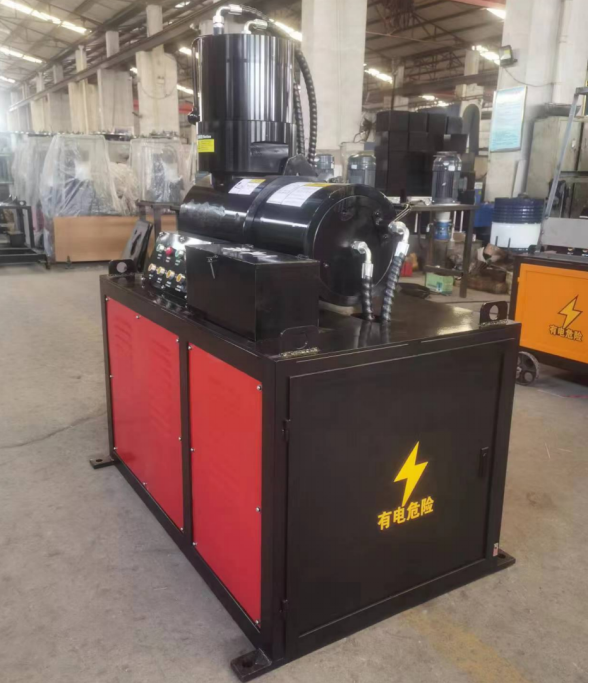
The equipment range matched to high-railway work includes the 36S and 50S upsetting machines and the MQ40 thread cutting machine, which handles M14-M45 thread sizes with a maximum thread length of 100 mm.
Large-Scale Capital Projects in Hot Dry Climates
Projects such as the New Capital construction program in Egypt involve super high-rise buildings in outdoor environments with high temperature and dry climate. The connection procedure combines threading, assembly, and fastening with couplers. A broader product matrix is often specified because different structural elements require different connection methods.
The application record for this scenario lists upsetting couplers, rolling couplers, pressing couplers, and one-touch couplers, together with threading machines and rib cutters or rollers. CE and ISO certificates are listed as special requirements.
General Construction in High-Humidity, Rainy Tropical Regions
In markets such as Vietnam, construction sites often operate under high humidity and rainy weather with continuous all-day work. Projects include high-rise buildings, hotels, and airway stations. The standard operation is threading the rebar ends with a threading machine and connecting the two ends with couplers to extend rebar length and height.
The product mix for this environment includes upsetting, rolled thread, and one-touch couplers. The BOC 8-42 electric torque wrench supports final tightening of couplers for bar sizes up to 40 mm. CE and ISO compliance is listed as a purchase requirement.
Factory-Based Rebar Pre-Threading
Not all rebar splicing occurs on the jobsite. In industrial pre-threading, rebar ends are processed indoors in large batches under normal room temperature. The special requirements for this scenario are long-life rib cutters and rollers, and strong shafts and machine parts, because the equipment runs continuously.
The equipment referenced for factory use includes automatic threading machines, the CBT40A threading machine, the 36S upsetting machine, and the MQ40 thread cutting machine. Coupler types in this scenario include pressing couplers and one-touch couplers, since pre-threaded bars are often paired with rapid-connection sleeves on site.
Supporting Equipment for Rebar Coupler Installation
A mechanical splice system is only as reliable as the equipment that prepares the rebar end. Cangzhou Bartech's equipment range is sized for both site and factory use.
| Equipment | Model | Capacity / power | Key parameters |
|---|---|---|---|
| Rebar threading machine | CBT40A | 16-40 mm, 5.5 kW | Max thread length 120 mm |
| Rebar threading machine, quick type | 40MO | 16-40 mm, 5.5 kW | Max thread length 95 mm (150 mm without block) |
| Rebar auto threading machine | 40AO | 16-40 mm, 5.5/7.5 kW | Air clamping 0.4-0.8 MPa |
| Rebar threading machine | CBT40L | 16-40 mm, 5.5 kW | Max thread length 100/200 mm |
| Rebar electric torque wrench | BOC 8-42 | 12-40 mm rebar, 16-32 coupler | Max torque 400 N·m, 21V 6.0Ah |
| Rebar electric torque wrench | BOC 8-32 | 8-32 mm rebar | Max torque 350 N·m, 21V 6.0Ah |
| Rebar coupler pressing machine | CBT32 | 16-32 mm | 4 kW, 50T clamp tension, 70 MPa oil pressure |
| Rebar upsetting machine | 36S | Grade 400: 16-36 mm; Grade 500: 16-32 mm | 7.5 kW, 31.5 MPa |
| Rebar upsetting machine | 50S | Grade 400: 16-50 mm; Grade 500: 16-40 mm | 11 kW, 31.5 MPa |
| Rebar thread cutting machine | MQ40 | M14-M45, max thread 100 mm | 5.5 kW, 380V/50HZ or 415V/50HZ |
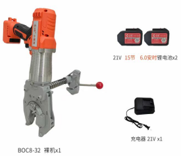
The availability of matching installation equipment is a practical factor in coupler selection. When the coupler and the threading machine come from the same manufacturer, the thread dimensions of the coupler and the threading dies are designed as one system. This reduces the risk of alignment problems on site.
Supply and OEM Considerations for Buyers
Buyers evaluating a coupler supplier also look at production capacity, customization, and quality control. Cangzhou Bartech reports a monthly capacity of 300,000 pieces and an annual output of 3,600,000 pieces. Lead time is 7-30 days depending on quantity, and stock couplers have no minimum order quantity. OEM customization covers coupler outer diameter, inner diameter, and thread specifications.
Quality control measures include material test reports, 10% production testing during production, and 100% appearance and surface checking. The company's engineering staff is listed as 10 engineers.
The supplier's case data references a Kuwait-based construction enterprise purchasing 400,000 pieces per year for outdoor construction work, and a Vietnam-based automotive OEM purchasing 500,000 pieces per year for tall building and railway station construction. Both cases report stable operation and high connection strength as the main outcomes.
Market Context: Where the Rebar Coupler Industry Is Headed
According to Dataintelo, the global rebar coupler market was valued at USD 1.82 billion in 2025 and is projected to reach USD 3.47 billion by 2034, at a CAGR of 7.4%. Building construction accounted for 47.6% of revenue in 2025, the largest application segment. Asia Pacific contributed approximately 41.3% of global revenue. By product type, tapered thread couplers held the largest share at 38.2%, followed closely by parallel thread couplers.
These figures help frame supplier choices. Parallel thread couplers, which include the rolled thread type offered by Cangzhou Bartech, represent the second-largest product segment in the market. The company's export market footprint in Asia, the Middle East, and South America aligns with the regional demand pattern.
Rebar Couplers vs. Lap Splicing and Welding: Trade-offs and Limits
Mechanical couplers compete with traditional lap splicing and welding. Lap splicing transfers load through overlapping bars and the surrounding concrete. It is simple and familiar, but it consumes extra steel, increases bar congestion, and can be difficult to arrange in densely reinforced members. Welding avoids overlap but introduces heat, requires skilled labor, and may be restricted by rebar chemistry or site conditions.
Mechanical couplers eliminate lap length, reduce material consumption, and do not depend on open-flame work. They are widely used in high-rise, bridge, and rail structures where joint density is high.
Mechanical splicing also has limits. It requires threading or pressing equipment and a power supply: most machines in the reference range run on 380V/50HZ, with some models also accepting 415V/50HZ. Thread quality depends on the condition of rib cutters and rollers, so tool maintenance is part of operating cost. Buyers must also verify that the coupler and installation method meet the project's structural standards. International standards commonly cited for mechanical rebar splices include ISO 15835, ASTM A615, and BS 8110, which is often replaced by Eurocode 2 in European projects.
Future Outlook
Several directions are visible from current product and market data. First, the projected growth of the rebar coupler market suggests mechanical splicing will continue displacing traditional methods in regions with large infrastructure pipelines. Second, rapid-connection products such as one-touch couplers are likely to become more important as site labor availability becomes a constraint. Third, factory pre-threading will gain ground as projects seek to shift work from site to controlled conditions; automatic threading machines are already part of the product landscape.
Finally, compliance documentation will play a larger role. Buyers will increasingly ask for certification numbers, material test reports, and traceability as part of the procurement record. Suppliers that can document their process and product quality will be better positioned in tenders that require full traceability.
FAQ
What types of rebar couplers are used in construction projects?
Construction projects commonly use four mechanical connection types: rolled thread (parallel thread) couplers, upset forged couplers, cold pressing couplers, and one-touch quick connection couplers. In Cangzhou Bartech's product line, rolled thread couplers are made of carbon steel 45# or alloy steel 40CR; upset forged couplers use the same materials; cold pressing couplers use carbon steel Q355B; one-touch couplers use alloy steel 40CR.
Which rebar coupler type is suitable for high-rise building projects?
High-rise building projects in tropical outdoor environments are typically served by rolled thread couplers and one-touch couplers, installed with rebar threading machines and electric torque wrenches. The application requires ISO and CE certification. Countries referenced in the application data include the United Arab Emirates, Australia, and India.
What equipment is needed to install rebar couplers on site?
On-site installation typically requires a threading machine to produce the thread on the rebar end and an electric torque wrench for final tightening. Cangzhou Bartech's matching equipment includes the CBT40A and CBT40L threading machines (16-40 mm, 5.5 kW), the BOC 8-42 torque wrench (max 400 N·m), and the BOC 8-32 torque wrench (max 350 N·m). For cold pressing couplers, the CBT32 pressing machine (16-32 mm, 50T clamp tension) is used.
What materials are used in mechanical rebar couplers?
The primary materials are carbon steel 45# and alloy steel 40CR. Cold pressing couplers are made from carbon steel Q355B. Threading machines are constructed from carbon steel.
What certifications should a buyer verify when sourcing rebar couplers?
Buyers typically check CE marking and ISO 9001. Cangzhou Bartech holds CE certification (number SC-PSC-4-2025-12-14, valid until 2030) and ISO9001:2015 (number 31623Q10713R1S). Mechanical rebar splices are also governed by international standards including ISO 15835, ASTM A615, and BS 8110, with Eurocode 2 commonly replacing BS 8110 in European projects.
What is the production capacity and lead time for rebar coupler orders?
Cangzhou Bartech reports a monthly capacity of 300,000 pieces and an annual output of 3,600,000 pieces. Lead time is 7-30 days depending on quantity, and stock couplers have no minimum order quantity.
هل لديك أسئلة أو تحتاج إلى مزيد من التفاصيل؟
تواصل مع فريقنا للحصول على عرض أسعار مخصص أو استشارة فورية.
طلب عرض أسعار
املأ النموذج أدناه وسيتواصل معك فريقنا بعرض مقترح مخصص.
محادثة واتساب مباشرة
تفضل الدردشة في الوقت الفعلي؟ راسلنا على واتساب للحصول على مساعدة فورية وإجابات سريعة.
- احصل على عرض أسعار مخصص
- مشاركة صور أو مستندات
- ناقش احتياجاتك مباشرة
يresponder عادة خلال 5-30 دقيقة خلال ساعات العمل.