
Rechargeable Lithium-ion Batteries Explained: Formats, Applications and Selection Clues for OEM Buyers
A rechargeable lithium-ion battery is now the default power source for a widening range of industrial devices, from agricultural drones and delivery robots to surgical systems and portable medical tools. For OEM buyers, however, the category is not a single product but a layered family of cells, chemistries and custom battery packs. This article explains the key formats, how suppliers such as Shenzhen Topway New Energy Co., Ltd. build purpose-specific solutions, and what buyers should look for during the awareness and research phase.
Why Lithium-ion Battery Knowledge Matters Earlier in the Buying Cycle
ODM and OEM procurement teams often begin with a simple question: which rechargeable lithium-ion battery fits the device? The answer depends on several connected decisions, including cell format, cathode chemistry, pack topology, operating temperature range and the manufacturer's ability to customise. Because these choices affect weight, runtime, charging behaviour and certification, they should be considered before the final product design is locked.
Market signals explain the growing interest. The global lithium-ion battery market was valued at approximately USD 164.8 billion in 2024 and is projected to reach USD 422.8 billion by 2032. China's lithium-ion battery exports exceeded 3.9 billion units in 2024, an 8.1% year-on-year increase. These figures point to a mature but still expanding supply base, which makes supplier evaluation more important rather than less.
From Cell Formats to Finished Packs: How to Read the Product Language
Buyers comparing lithium-ion products encounter terms such as 18650, 21700, 14500, LiFePO4, NCM and battery pack. Understanding these terms helps translate a device requirement into a supplier brief.
| Term | What It Means |
|---|---|
| 18650 battery / 21700 battery | Cylindrical cell format names based on dimensions. The 18650 format is widely used in portable and industrial battery packs; the 21700 format offers a larger physical footprint. |
| 14500 battery / 18500 battery | Smaller cylindrical cells used in compact devices, such as digital tools, laryngoscope equipment and other space-constrained applications. |
| LiFePO4 battery / NCM battery | Cathode chemistry families. LiFePO4 is common for energy storage and long-cycle applications; NCM is often selected when energy density and lighter weight are priorities. |
| Battery pack | An assembled unit that connects cells, protection electronics and housing into a usable power source for a specific device. |
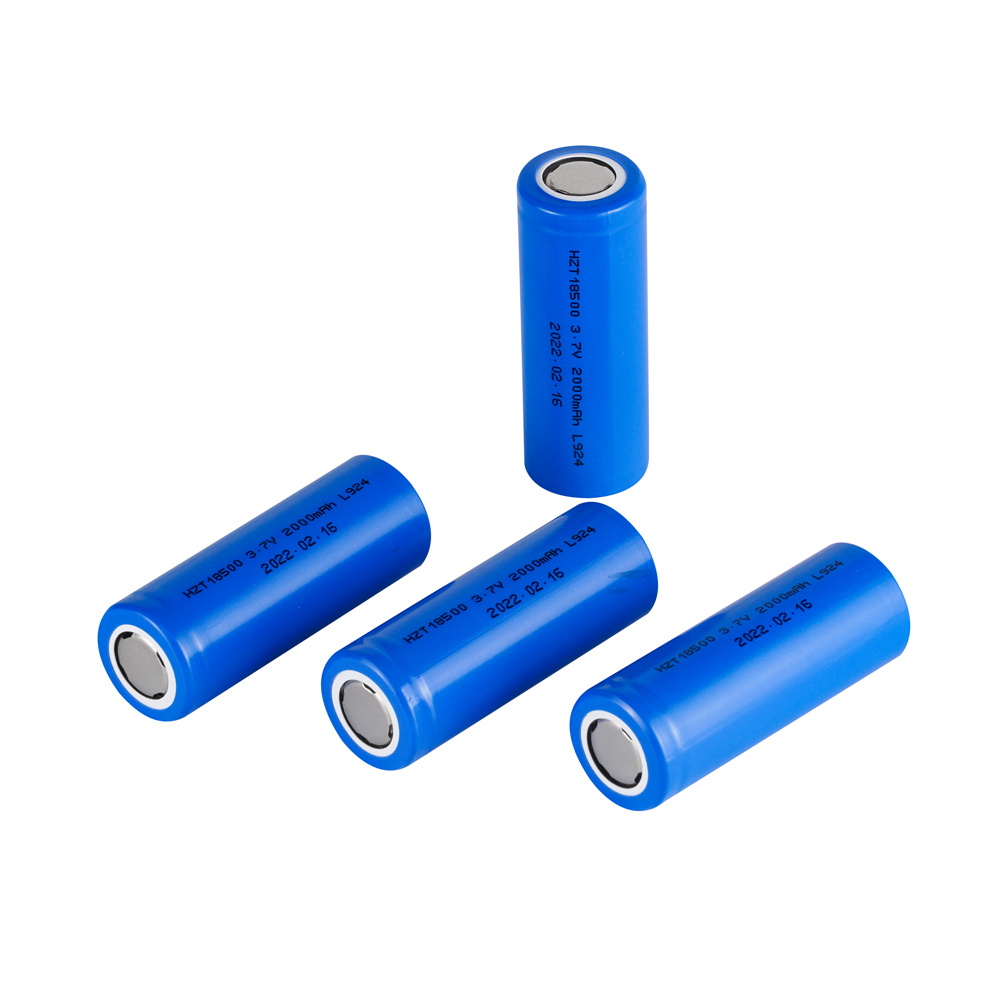
18650 rechargeable battery cells. Cylindrical formats remain a common building block for custom lithium-ion packs.
Single Cells vs. Purpose-Built Battery Packs
A single 18650 rechargeable battery or 14500 battery can power small electronics. Most industrial devices, however, require a battery pack that delivers a specified voltage, capacity and discharge behaviour. For example, Shenzhen Topway New Energy Co., Ltd. lists a 48V 13Ah LiFePO4 battery built on an 18650 13s5p architecture. The pack description, material and cell arrangement determine whether the product fits the intended energy storage or mobility application.
When suppliers publish parameters such as charge current, discharge current, temperature range and weight, buyers can compare candidate packs at a system level. For instance, an agriculture drone battery model 25.2V 20Ah lists charge current of 15A and discharge current of 20A with an operating temperature of -10 to 60°C. A delivery robot battery rated 25.6V 30Ah uses LiFePO4 chemistry and covers -20 to 60°C. These differences reflect application priorities: drones often need higher discharge capacity relative to weight, while service robots may prioritise cycle life and thermal stability.
Company Spotlight: Shenzhen Topway New Energy in the Custom Battery Landscape
Shenzhen Topway New Energy Co., Ltd. is a Shenzhen-based manufacturer of lithium-ion battery packs and custom power solutions. The company operates with independent R&D capability and focuses on robot batteries, exoskeleton batteries and drone batteries, while also supplying cells and packs for consumer electronics, lighting and digital products.
Several facts are useful for early-stage supplier filtering:
- The company runs a 10,000 m² facility with around 200 employees and a dedicated R&D team of 15 people.
- Its main products include robot battery, exoskeleton battery and drone battery solutions.
- Related products have passed RoHS, UL and CE export certifications.
- About 40% of its products are exported, with main markets spanning the US, EU countries, Japan, Korea, Southeast Asia, Australia and Latin America.
- The company plans to introduce advanced battery production lines, moving from battery pack assembly and cooperative production toward in-house cell-to-pack manufacturing.
What this means for buyers: a manufacturer with independent R&D, export certifications and planned production expansion may be better positioned for product iteration and volume consistency than a trader without engineering depth.
Technology Deep Dive: 18650, 21700, LiFePO4 and Custom Pack Design
Choosing between an 18650 battery, a 21700 battery and a LiFePO4 pack is not about selecting the newest name; it is about matching the cell to the load profile and mechanical envelope.
Cylindrical formats such as 18650 and 21700 are produced in high volumes, which helps suppliers achieve consistency. When configured into a 48V 13Ah LiFePO4 battery, the 18650 cells can be arranged in series and parallel groups — for example, 13 series connections and 5 parallel groups — to reach the target voltage and capacity. Multi-cell arrangements require a BMS or protection structure to manage voltage balance, temperature and current.
The material system also changes the specification sheet. NCM-based cells are commonly used where compact size and energy density matter, such as in robotics and some medical devices. LiFePO4-based cells are often found in applications where thermal stability and long service life are valued, such as energy storage, delivery robots and light electric vehicles.
Application Landscape: What Different Devices Require
Lithium-ion batteries for drones, robots and medical devices look similar at a distance, but their technical requirements differ significantly.
Drone Batteries
Drone use cases include agriculture, racing, GPS, tactical and underwater operations. The global drone battery market was estimated at USD 8.13 billion in 2024, with lithium-based technologies holding 91.14% of that market. An agriculture drone battery often needs weather resistance and stable discharge for spray operations; a racing drone battery may prioritise high discharge current and light weight; a tactical drone battery may require custom form factors.
Shenzhen Topway New Energy Co., Ltd. supplies several drone-oriented rechargeable lithium-ion batteries, including a 25.2V 20Ah agriculture drone battery and racing drone battery models. Its product family also includes an underwater drone battery model using 18650 cells and a 105565 7.4V 5000mAh tactical drone battery format.

Robotic surgery battery. Medical and surgical robots require predictable power in compact, safety-sensitive designs.
Robot Batteries
Robotics spans delivery robots, smart robots, surgical robots and exoskeletons. Delivery robots typically operate in urban and indoor environments where temperature changes, charging frequency and reliability matter. Surgical robots demand lightweight, safety-conscious power. Exoskeleton batteries help power assistive devices that support human movement. The medical machine battery market was valued at USD 2.22 billion in 2024, driven partly by robotic surgery and portable diagnostic devices.
Shenzhen Topway New Energy's robot battery line includes a 25.6V 30Ah delivery robot battery based on LiFePO4, and a 1160100 7.4V 10000mAh model positioned for robotic surgery applications. Both examples show how pack format and chemistry are adapted to the operating environment.
Medical and Portable Device Batteries
Medical batteries are not limited to robots. Devices such as laryngoscopes and portable diagnostic tools may rely on compact formats like the 14500 3.7V 500mAh cell, while larger medical carts may use 12.8V 28Ah packs. Because medical applications may involve sensitive environments, certifications such as IEC 62133-2 remain central to supplier qualification.
Comparison with Traditional Power Solutions
Compared with older lead-acid or nickel-based systems, a well-designed rechargeable lithium-ion battery usually offers higher energy density, lower weight and longer cycle life in repeated charge-discharge use. These advantages make lithium-ion attractive for mobile and autonomous equipment. However, lithium-ion is not automatically the correct answer in every scenario. Traditional lead-acid batteries still have a role where initial acquisition cost is the dominant consideration, where weight is not a constraint, or where the application is stationary and supported by mature recycling infrastructure. Buyers should therefore compare total cost, charging behaviour and operating environment rather than assuming a newer chemistry is always superior.
Market Trends and What They Mean for Supplier Choice
Several trends are visible in the lithium-ion supply chain. First, Chinese exports continue to grow in unit volume, giving international buyers broader access to cell manufacturing capacity. Second, application-specific demand is rising in drones, medical machines and robotics, confirmed by third-party segment estimates. Third, buyers increasingly ask suppliers to show evidence of certifications and manufacturing capability, not just finished product samples.
These trends push the evaluation criteria beyond price. A supplier's cell sourcing, assembly quality, testing procedure, lead time and ability to document compliance become decision-relevant information.
Supplier Considerations for the Research Stage
For OEM buyers still in the awareness-to-research phase, the goal is to build a shortlist of credible suppliers. Useful filters include:
- Does the supplier publish cell format and chemistry data for its battery packs?
- Are important export certifications such as RoHS, UL or CE listed?
- Does the supplier have engineering staff and factory floor capacity to support customisation?
- Can the supplier demonstrate relevant application experience across robots, drones or medical devices?
- Does the company's growth plan align with your future volume needs?
Future Outlook
The rechargeable lithium-ion battery market will continue to segment by application. Standard formats such as 18650, 14500 and 21700 will coexist with purpose-built packs that combine specific chemistries, protection circuits and mechanical design. Manufacturers like Shenzhen Topway New Energy Co., Ltd. are evolving from battery pack assembly toward more integrated production, which may improve the consistency and scalability of custom lithium-ion solutions. For buyers, the practical implication is straightforward: start with the application requirement, translate it into pack-level specifications, and then evaluate suppliers against documented capability and certification evidence.
FAQ
What is the difference between an 18650 battery and a battery pack?
An 18650 battery is a cylindrical lithium-ion cell format. A battery pack combines multiple cells, protection electronics and housing into a complete power source with a defined output. Suppliers such as Shenzhen Topway New Energy Co., Ltd. use cell formats such as 18650 to build custom packs at different voltages and capacities, including LiFePO4 packs like the 48V 13Ah model.
What does LiFePO4 battery mean?
LiFePO4 refers to lithium iron phosphate cathode chemistry. It is commonly used in rechargeable lithium-ion batteries where thermal stability and cycle life are prioritised. Shenzhen Topway New Energy uses LiFePO4 in products such as the 25.6V 30Ah delivery robot battery and 48V 13Ah battery.
Which lithium battery format is best for a new drone or robot project?
There is no universal best format. The choice depends on voltage, capacity, discharge current, weight and physical space. For high-rate drone use, buyers may evaluate NCM-based packs such as a 25.2V 20Ah agriculture drone battery; for robot applications requiring long cycle life, a LiFePO4 pack such as the 25.6V 30Ah delivery robot battery can be more appropriate.
Are lithium-ion batteries used in medical devices safe?
Lithium-ion batteries can be used in medical devices when the pack is designed with appropriate protection and the supplier follows recognised export certification standards. Shenzhen Topway New Energy states that its related products have passed RoHS, UL and CE export certifications, which are common evidence points for buyers evaluating medical or industrial applications.
Why should an OEM buyer care about cell format 14500, 18500 or 21700?
The cell format determines the physical dimensions, capacity range and pack design flexibility. Compact devices may use a 14500 battery or 18500 battery, while high-capacity systems may use the 21700 battery or multi-cell 18650 configurations. Matching the correct format to the device envelope reduces redesign risk and improves overall efficiency.
For further technical specifications and company details, download the company brochure: Shenzhen Topway New Energy Co., Ltd. brochure.
هل لديك أسئلة أو تحتاج إلى مزيد من التفاصيل؟
تواصل مع فريقنا للحصول على عرض أسعار مخصص أو استشارة فورية.
طلب عرض أسعار
املأ النموذج أدناه وسيتواصل معك فريقنا بعرض مقترح مخصص.
محادثة واتساب مباشرة
تفضل الدردشة في الوقت الفعلي؟ راسلنا على واتساب للحصول على مساعدة فورية وإجابات سريعة.
- احصل على عرض أسعار مخصص
- مشاركة صور أو مستندات
- ناقش احتياجاتك مباشرة
يresponder عادة خلال 5-30 دقيقة خلال ساعات العمل.