
Recommended CNC Machining Options for Robotics & Automation
Recommended CNC Machining Options for Robotics & Automation
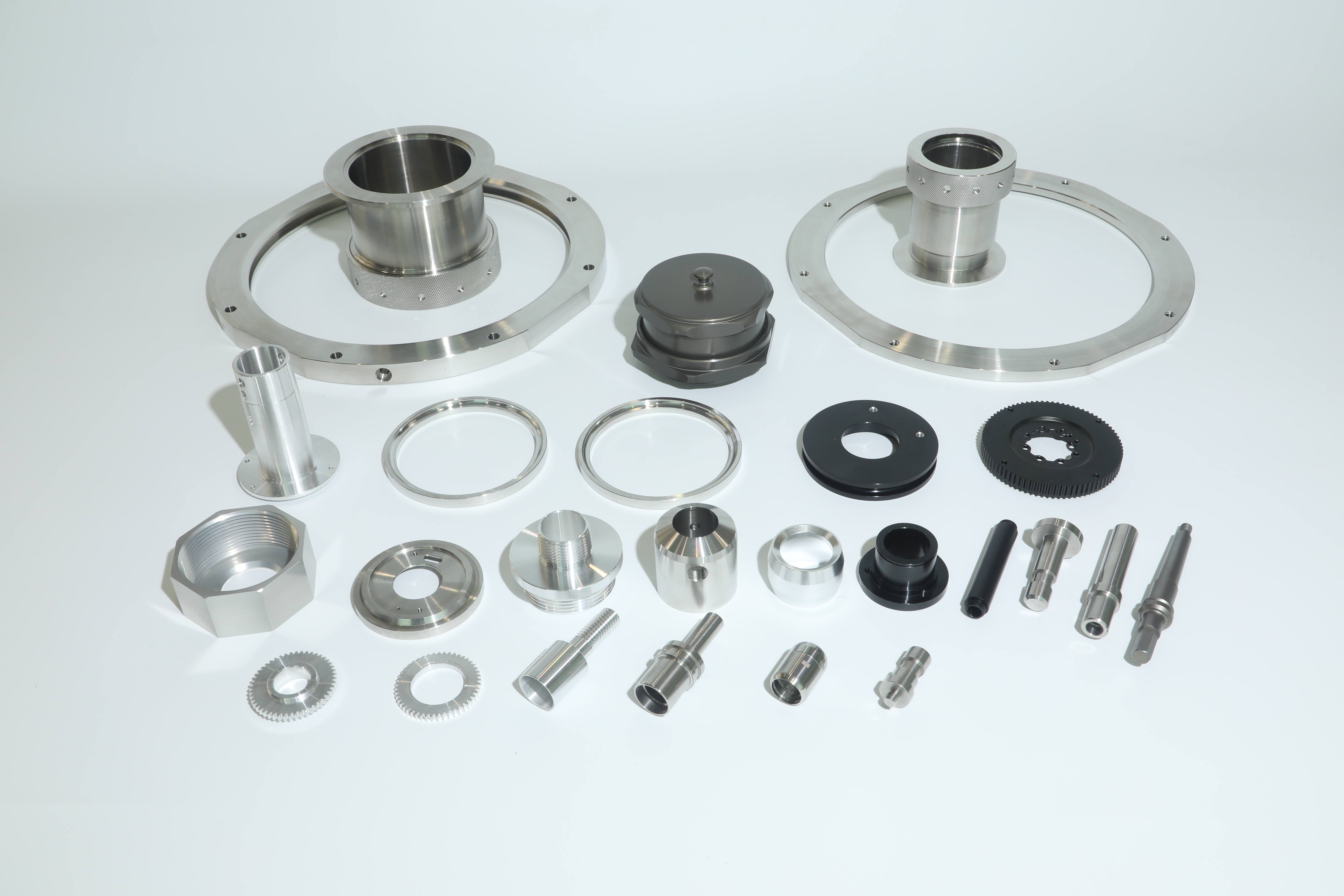
Part families typical of robotics and automation builds: machined brackets, turned drive components and cast housings.
A robotics or automation build rarely fails at the drawing stage. It fails at the process decision: a 5-axis cycle specified for a part that 3-axis machining could have produced at a lower unit cost, or a die-cast housing committed to tooling before volume existed to amortise it. For buyers in smart manufacturing, the shortlist question is not which machine shop quotes lowest, but which process route fits the part family, and whether the supplier can hold that route repeatably across batches.
This reference sets out a practical shortlist of CNC machining and die casting options for robotics and automation parts, the conditions under which each is the better fit, and the evidence a buyer should request before awarding an order. It is written as a buyer reference rather than a product page. Recommendations are anchored in stated capability, and the sections that follow also identify where a route stops being the right answer.
SUNPREC HARDWARE CO., LTD (SUNPREC) is a Dongguan-based one-stop metal parts manufacturer established in 2020. The company operates a 3,500 m² factory with 200 employees and capabilities spanning precision CNC machining, CNC turning, die casting, investment casting, extrusion and surface finishing. SUNPREC states a production tolerance of ±0.01 mm, supported by FANUC machining centres rated to 0.005 mm machine tolerance, and works within ISO 9001, AS9100 and RoHS frameworks with in-house inspection on HEXAGON CMM equipment. It reports roughly 90% export share, mainly to the EU and USA, and more than 300 clients across 50+ countries.
Why robotics and automation parts are a process-selection problem
Automation hardware is not one product. It is a set of part families with different failure modes. A joint housing cares about stiffness and bore alignment. An end-effector bracket cares about mass and repeatability. A controller enclosure cares about wall uniformity and finish. A heat sink cares about fin geometry and thermal contact. A motor housing cares about concentricity between bearing seats.
Each of those requirements points to a different production route. Buying all of them through a single process assumption - typically 3-axis milling for everything, or casting for everything - tends to produce one of two outcomes: parts that meet tolerance but cost more than they should, or parts that look correct on drawing review and then drift in assembly because the route could not hold the stack-up.
The practical response is to shortlist by route, not by supplier first. Once the route is fixed by geometry, volume and material, supplier comparison becomes a much narrower question about equipment, inspection and documentation.
The shortlist at a glance
Six routes cover the majority of robotics and automation metal parts. The table below is a decision starting point, not a quotation guide; final route selection depends on the drawing, the batch size and the assembly function of the part.
| Route | Typical robotics / automation parts | Choose it when | Main watch-out |
|---|---|---|---|
| 3-axis CNC milling | Mounting plates, sensor brackets, base plates, fixture jaws | Features are accessible from one or two orthogonal directions; batch size is modest | Multiple re-fixtures can add stack-up error across faces |
| 4-axis / indexed CNC milling | Multi-face adapter blocks, rail carriages, angle brackets | Parts need features on several sides but not continuous freeform surfaces | Indexing still introduces setup time and reference transfer |
| 5-axis CNC milling | Curved housings, impeller-like contours, compound-angle ports, thin-wall structural parts | Complex 3D contours, undercuts, or tight positional tolerance between angled features | Higher programming and machine-rate cost; not automatically tighter than a well-fixtured 3-axis part |
| CNC turning / turn-mill | Motor shafts, bearing adapters, bushings, threaded inserts, pulleys | Part is predominantly rotational, with secondary milled features | Non-symmetric features can force a second operation |
| Die casting plus secondary machining | Motor housings, equipment housings, sensor bodies, heat sinks | Volume justifies tooling; wall sections are reasonably uniform; draft is acceptable | Tooling lead time and cost sit ahead of the first good part |
| Extrusion plus machining | Frames, rails, structural profiles, enclosure bodies | Cross-section is constant and length varies | Limited to prismatic profiles; end features still need machining |
SUNPREC supports 3-axis, 4-axis and 5-axis CNC machining, CNC turning, die casting and extrusion under one production flow, with finishing and inspection handled in-house. For buyers, that combination matters less as a marketing point and more as a control point: fewer handovers between machining, finishing and measurement means fewer opportunities for reference loss.
3-axis, 4-axis or 5-axis: the contour test
The 3-axis versus 5-axis decision is usually framed as a precision question. In practice it is a geometry and setup question. A 3-axis machine moves the tool in three linear axes while the part stays fixed, so every additional face requires either a new fixture or a re-clamping step. A 5-axis machine tilts the tool or the part, so angular faces and continuous contours can be reached without breaking the setup.
Five tests separate the two routes reliably:
- Feature access. If every feature on the drawing can be reached from one or two orthogonal directions, 3-axis machining with a simple fixture is normally the most economical route.
- Contour continuity. Compound curves that must be cut as a single continuous surface - aerodynamic shrouds, curved covers, blended fillets - generally need simultaneous multi-axis motion to avoid visible step-over and witness marks.
- Angular position tolerance. Where a hole pattern on an angled face must hold position relative to a datum on a different face, reducing setups usually reduces accumulated error. This is where 5-axis earns its cost.
- Thin-wall stability. Cutting a thin wall from several directions progressively weakens the part. Single-setup machining is often more stable for thin-wall structural components.
- Batch size and cycle economics. 5-axis programming time and machine rates are higher. For low-volume runs of simple prismatic parts, that premium does not repay itself.
The evidence that matters on the supplier side is not the axis count alone. It is whether the shop can demonstrate a working tolerance of ±0.01 mm on production parts, and whether that figure is supported by in-house measurement rather than by the machine specification. SUNPREC's stated position is a ±0.01 mm production tolerance held on machining centres rated to 0.005 mm, verified through inspection rather than assumed from the equipment badge. Buyers should ask for the inspection route on the specific drawing, because the achievable tolerance on a given feature depends on fixturing, wall thickness, material and surface treatment.
Two honest boundaries apply here. First, 5-axis machining does not by itself make a part more accurate; a poorly fixtured 5-axis part will still drift. Second, the optimum is not always the most capable machine - a well-planned 3-axis process with a dedicated fixture can hold ±0.01 mm on prismatic automation brackets at a lower unit cost than a 5-axis alternative.
When die casting is the right route for housings and heat sinks
Die casting becomes the preferred route when the part is a housing or a heat sink produced in volume, and when the design can tolerate the process rules that come with casting: draft angles on vertical walls, reasonably uniform wall sections, and radii where a sharp internal corner would otherwise concentrate stress and block metal flow.
Three robotics and automation part families fit die casting particularly well:
- Motor housings. Cast housings consolidate geometry that would otherwise be machined from solid, and the casting is then machined at the bearing seats and sealing faces where concentricity and surface finish actually matter.
- Equipment and controller housings. Enclosures with ribs, bosses and mounting features are expensive to remove from a billet and comparatively economical to cast, provided the wall sections are designed for fill.
- Heat sinks. Fin arrays are a natural casting geometry, and casting avoids the material waste of machining fins from a solid block.
The route has a clear boundary. Die casting carries tooling cost and tooling lead time ahead of the first production part, so it is a poor fit for prototypes, engineering samples and low-volume or high-mix builds. It is also unforgiving of late design change: revising a casting tool after sign-off is materially more expensive than revising a machining programme. Where a programme is still in validation, machined parts from billet are usually the lower-risk choice, with casting introduced once the design and the volume are both settled.
SUNPREC offers die casting alongside in-house CNC machining and surface finishing, which is the practical arrangement for cast housings: the casting supplies the form, and machining supplies the critical interfaces. Buyers should confirm which surfaces are cast and which are machined, and which datum the machinist will use, before the tool is cut.
Material fit: aluminium, steel, stainless, brass, titanium, magnesium, zinc and plastics
Material choice in automation hardware is usually driven by stiffness-to-mass ratio, wear behaviour, corrosion exposure and cost - in that order. The table below summarises how the common material families map onto robotics and automation parts.
| Material | Typical use in automation hardware | Practical note |
|---|---|---|
| Aluminium | Arm links, brackets, adapter plates, housings, heat-sink bodies | Strong candidate where mass matters; anodising adds wear and corrosion resistance but must be allowed for in tolerance planning |
| Carbon steel | Shafts, structural pins, clamp bodies | Cost-effective and stiff; requires a protective finish in most environments |
| Stainless steel | Cleanroom and food-handling automation, wash-down areas, medical housings | Corrosion resistance without coating; machining is slower and tool wear higher |
| Brass | Fittings, connectors, bushings, small conductive components | Good machinability and electrical behaviour; lead content is a RoHS consideration for EU-bound assemblies |
| Copper | Thermal and electrical conductors, busbars, cold plates | Excellent conductivity; soft and prone to galling, so handling and finishing need attention |
| Titanium | High-load, low-mass arm components and end-effector structures | High strength-to-weight ratio; material cost and tool wear are the limiting factors |
| Magnesium | Weight-critical structural parts | Lightest structural option, but chip handling and corrosion protection add process steps; not a default selection |
| Zinc alloys | Small cast housings, sensor bodies, brackets | Castability and dimensional stability are strong; strength is lower than steel or aluminium |
| Plastics (POM, ABS, Nylon, PEEK) | Covers, insulators, guides, low-load fixtures, high-temperature or chemical-exposed parts | Fast to produce and light; achievable tolerances differ from metals and should be agreed per feature |
SUNPREC's stated material range covers aluminium, stainless steel, carbon steel, brass, copper, titanium, and engineering plastics including POM, ABS, Nylon and PEEK, processed across 3-axis, 4-axis and 5-axis CNC machining. Buyers should treat the material list as a starting capability statement and confirm the specific alloy, condition and certificate for their drawing, since material certificates are part of the standard documentation set on precision orders.
Finishing and inspection decisions that decide whether parts assemble
Two categories of specification quietly determine whether a robot assembles cleanly: surface finishing and measurement. Both interact with tolerance, and both are frequently under-specified at quotation stage.
On finishing, SUNPREC offers anodising, hard anodising, powder coating and sandblasting as in-house processes. Each carries a tolerance consequence. Anodising and hard anodising build a conversion layer on the surface, so dimensions on mating or bearing features must either be masked or pre-adjusted. Powder coating adds measurable thickness and must be excluded from precision interfaces and datum faces. Sandblasting changes surface texture and can affect appearance matching across a batch. The practical rule for buyers is to mark on the drawing which surfaces are functional and which are cosmetic, and to confirm masking intent before production rather than after.
On measurement, capability is only meaningful if it is applied to every batch. SUNPREC's inspection chain runs incoming material screening (IQC), in-process monitoring (IPQC), final inspection (FQC) and outgoing verification (OQC), using HEXAGON CMM, 2.5D optical comparators, TRIMOS high-precision height gauges, micrometers and calipers. Documentation includes FAI reports, material certificates, certificates of conformance and dimensional inspection reports, with processing parameters and test data recorded so that production and inspection records remain traceable for all orders.
For a robotics buyer, the relevant question is which of those records will accompany a given order by default and which are requested. A dimensional inspection report on the critical features, a material certificate and a COC are the minimum defensible set for precision automation parts; the FAI report matters most on first articles and on design changes.
Certification evidence: ISO 9001, AS9100 and RoHS
Certification is a filter, not a ranking. SUNPREC works within ISO 9001, AS9100 and RoHS frameworks, and buyers should read those three claims differently.
ISO 9001 addresses quality management consistency: whether processes, records and corrective actions are controlled. It says nothing directly about machining capability. AS9100 extends that system with aerospace-specific requirements around traceability, risk management and configuration control, which is why it is often used as a proxy for discipline in high-consequence programmes even outside aviation. RoHS addresses restricted substances, and it becomes a live requirement wherever automation hardware ships into the EU or is integrated into electronics products - brass and plated components are the usual places where it needs checking.
For each certificate, the verification step is the same: confirm the scope matches the processes actually being purchased, confirm the certificate number and issuing body, and confirm validity dates. A certificate covering assembly but not surface finishing is not evidence for a finishing-critical order.
Where the shortlist stops: limits, trade-offs and the traditional alternatives
A shortlist that does not state its limits is not a buying reference. Four boundaries apply to the routes described above.
The tolerance figure is not universal. ±0.01 mm is a working production tolerance for machined features at SUNPREC, not a blanket guarantee across every geometry. Thin walls, deep pockets, plastics, and cast surfaces that are subsequently machined all behave differently, and some features will require an agreed, feature-specific tolerance. Buyers should expect a supplier to say so rather than to accept a blanket callout.
Multi-axis capability is not automatically the economical choice. For simple prismatic automation brackets in modest volumes, conventional 3-axis machining with a purpose-built fixture can match the tolerance requirement at a lower unit cost. Choosing 5-axis for every part is a common and expensive procurement habit.
Casting is volume-dependent. Die casting is a strong route for motor housings, equipment housings and heat sinks once volume supports tooling, and a poor route for prototypes and high-mix low-volume builds. A supplier offering both routes should be asked to justify which one it recommends and why, in writing.
One-stop capability does not replace design-for-manufacture review. Integrated machining, casting and finishing reduces handovers, but the drawing still sets the ceiling. Undefined datums, tolerance stack-ups that exceed the assembly requirement, and cosmetic requirements stated without a reference standard will produce disputes regardless of how capable the shop is. Where a buyer needs a finishing process outside anodising, hard anodising, powder coating and sandblasting, that requirement should be raised during quotation rather than assumed to be covered.
Compared with general job shops and small machining factories, SUNPREC's stated differentiators are in-house high-precision equipment and inspection, integrated one-stop processing from machining to finishing, and suitability for higher-consequence part families such as aerospace parts, medical housings and semiconductor equipment components. The company also states that its equipment and automated programming approach reduces human-induced dimensional deviations and lowers maintenance demand relative to general job shops and small machining factories. Those are self-reported positions; the verification route remains sample parts, inspection reports and certificate scope.
Cost and lead time: comparing quotes without misleading averages
Cost comparison across CNC routes is where most shortlists break down, because unit price depends on part complexity, material, process sequence and order quantity simultaneously. A single per-part figure without those variables is not comparable across suppliers.
Two data points from SUNPREC frame the commercial logic. The company reports that unit cost on mass orders is 10%-15% lower than scattered small workshops, and that prototypes can be produced in 3-5 days, with low-volume manufacturing available from 10 pieces and urgent orders supported. Annual output capacity is stated at 5,000,000 units, with a 10-engineer R&D team supporting manufacturability review.

Batch staging before dispatch: mixed-volume automation orders depend on documented inspection release, not on inventory volume alone.
The practical reading is that the one-stop model tends to pay off where a part needs more than one operation - machined, then anodised, then measured, then documented. Where a part is a single-operation turning job with no finishing, the advantage narrows and price competition is straightforward. Buyers should therefore separate quotes into machining, finishing, inspection and documentation lines before comparing totals, and should ask which of those lines change with volume.
Market signals behind the shortlist
The route mix recommended here reflects a market that is expanding and shifting toward multi-axis capability. Grand View Research values the global CNC machining and turning centres market at USD 31.3 billion in 2026, with Asia Pacific holding a 55.5% revenue share in 2023. Dataintelo projects the aerospace CNC machining segment growing from USD 4.7 billion in 2024 to USD 8.8 billion by 2033.
On the equipment side, 5-axis vertical machining centres are identified as a critical high-growth segment for complex aerospace and automotive components in 2026, which aligns with the contour-driven cases described above rather than with simple prismatic work. In the United States, IBISWorld data places the machine shop services market at USD 46.3 billion in 2026 across approximately 16,400 active businesses - a fragmented supply base in which documentation and inspection discipline become the practical differentiators.
Regulation is moving in the same direction. As of 2 February 2026, the FDA Quality Management System Regulation incorporates ISO 13485:2016 by reference under 21 CFR Part 820 for medical device manufacturing. Automation and handling equipment built for medical production therefore inherits documentation expectations from its end market, not only from its own specification.
Future outlook
Three developments are likely to shape robotics and automation sourcing over the next planning cycle. First, multi-axis capacity continues to expand, but the buyers who benefit most will be those who apply it selectively to contour-critical parts rather than across the whole bill of materials. Second, casting and machining will increasingly be specified as one combined route for housings, with the casting supplying form and machining supplying interfaces - which places a premium on suppliers who control both under one quality system. Third, documentation is becoming a design input rather than an afterthought, driven by regulated end markets and by traceability expectations that now travel with automation equipment into medical, aerospace-adjacent and electronics production environments.
For procurement teams, the practical implication is to shortlist by route and then by evidence, in that order. The route decides the cost structure; the evidence decides whether the cost structure survives contact with assembly.
FAQ: decision questions buyers ask before awarding a CNC machining order
How should a buyer decide between 3-axis and 5-axis CNC for a robotics part?
The decision is driven by feature access, contour continuity, angular position tolerance and batch size. If all features are reachable from one or two orthogonal directions, 3-axis machining with a dedicated fixture is normally the more economical route. Simultaneous multi-axis work is justified where compound curves must be cut as one continuous surface, or where features on angled faces must hold position relative to datums on other faces.
When is die casting a better choice than machining from billet for housings?
Die casting suits motor housings, equipment housings and heat sinks where volume can absorb tooling cost and lead time, and where the design allows draft angles and reasonably uniform wall sections. Critical interfaces such as bearing seats and sealing faces are then machined after casting. It is a poor fit for prototypes, engineering samples and high-mix low-volume builds, where machined parts carry lower change risk.
What tolerance can be expected on precision automation parts?
SUNPREC states a production tolerance of ±0.01 mm, supported by machining centres rated to 0.005 mm machine tolerance and verified through in-house inspection. That figure is a working tolerance for machined features, not a universal guarantee: thin walls, deep pockets, plastics and post-cast machined surfaces may require feature-specific tolerances agreed at quotation.
Which materials are practical for robot structures and end-effector parts?
Aluminium is the common choice where mass matters; carbon steel suits stiff structural parts that can be finished for corrosion protection; stainless steel suits cleanroom, wash-down and medical-adjacent automation; titanium suits high-load low-mass structures at higher material and tooling cost; brass and copper serve conductive and thermal roles; zinc alloys suit small cast housings; and engineering plastics such as POM, ABS, Nylon and PEEK cover guards, insulators and low-load components.
What inspection documentation should accompany a precision CNC order?
A dimensional inspection report on critical features, a material certificate and a certificate of conformance form the minimum set for precision automation parts. First article inspection reports are relevant on new parts and design changes. SUNPREC's inspection flow covers incoming material screening, in-process monitoring, final inspection and outgoing verification, with records maintained for traceability.
Which certifications matter for automation parts destined for the EU or USA?
ISO 9001 evidences quality management consistency, AS9100 adds aerospace-grade traceability and configuration control requirements, and RoHS addresses restricted substances for EU-bound and electronics-integrated hardware. For each, buyers should verify that the certificate scope covers the processes actually purchased, and should confirm certificate number and validity.
Reviewing the shortlist against a drawing package
The shortlist above is most useful as a checklist applied to a specific bill of materials: classify each part by family, assign a route, then test the supplier against the tolerance, finishing and documentation that route requires. SUNPREC's published capability summary, including its equipment list, inspection hardware and certification claims, is available as a downloadable PDF presentation for buyers assembling that review.
Download the SUNPREC capability presentation (PDF)
هل لديك أسئلة أو تحتاج إلى مزيد من التفاصيل؟
تواصل مع فريقنا للحصول على عرض أسعار مخصص أو استشارة فورية.
طلب عرض أسعار
املأ النموذج أدناه وسيتواصل معك فريقنا بعرض مقترح مخصص.
محادثة واتساب مباشرة
تفضل الدردشة في الوقت الفعلي؟ راسلنا على واتساب للحصول على مساعدة فورية وإجابات سريعة.
- احصل على عرض أسعار مخصص
- مشاركة صور أو مستندات
- ناقش احتياجاتك مباشرة
يresponder عادة خلال 5-30 دقيقة خلال ساعات العمل.