
Recommended Cast Parts: Housings, Valve Bodies, Flowmeter Parts
Recommended Cast Parts: Housings, Valve Bodies, Flowmeter Parts

A shortlist of cast parts for industrial equipment only works if every item on it is tied to the interface it has to hold. For engineering machinery bearing and pump housings, hydraulic valve bodies, vacuum equipment precision fittings, custom mechanical housings, and flowmeter bodies and flanges, the practical shortlist is built from mating requirements — bore and pilot geometry, pressure containment, sealing-face condition, wall section and flange pattern — and then converted into a drawing, a material grade, a tolerance class and an inspection record.
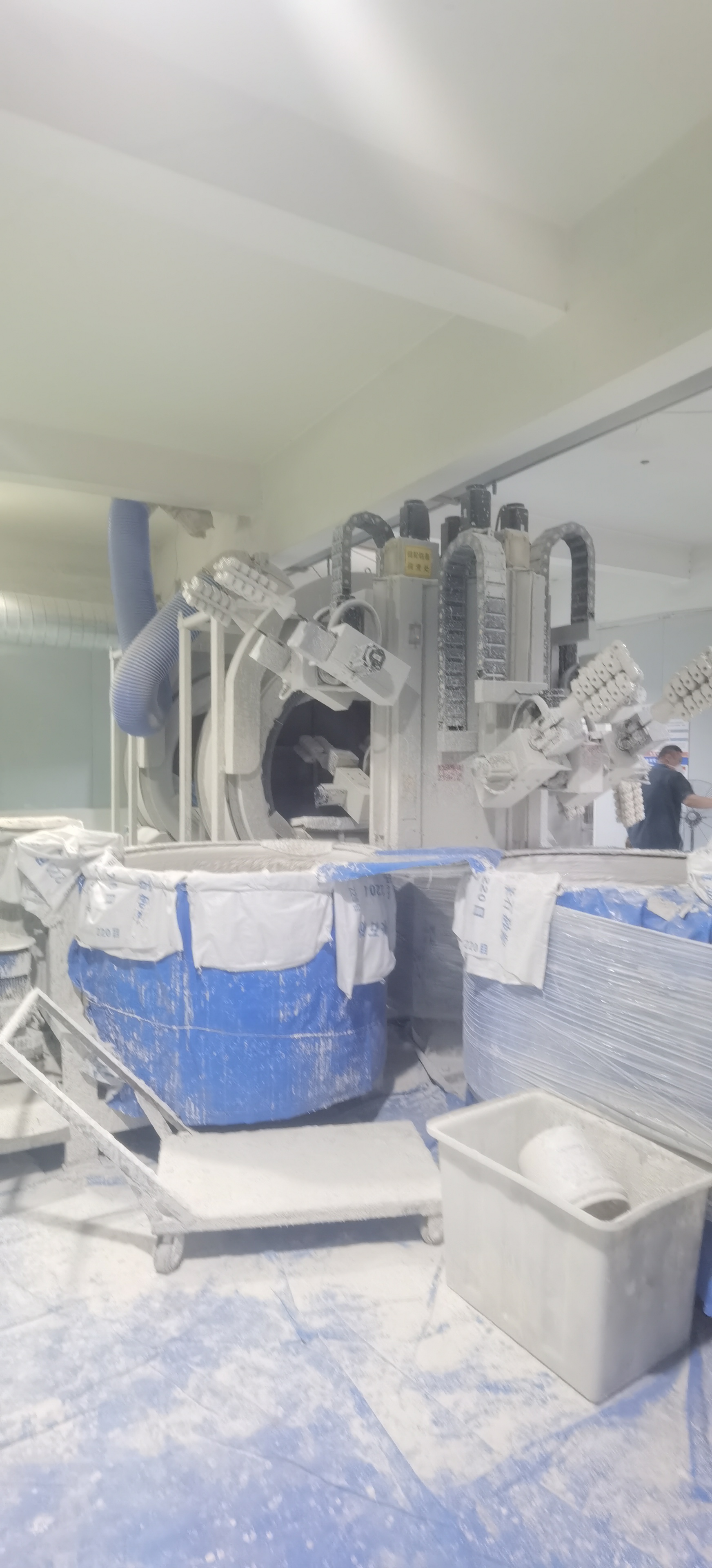
Shanghai NTC Technology Co., Ltd. (NTC) is a Shanghai-based precision casting and machining supplier founded in 2022. The company operates a 2,000 m² factory with 20 employees and a five-engineer development team, reports an export share of about 85% across Europe, America and Asia, and works through silica sol investment casting, CNC machining, heat treatment and surface treatment. Those are first-party facts about the supplier. They are not, by themselves, proof that a specific housing or valve body will meet a specific drawing — which is why this shortlist is organised around what the buyer must specify and verify.
Two scope notes apply throughout. First, the part names below describe the subsystem function a buyer is sourcing; geometry, material grade and tolerance are confirmed on the drawing, not inferred from a catalogue label. Second, no named customer cases, prices or delivery commitments are published here, because none are disclosed in the supplier material this article is based on.
Why evaluation-stage buyers should shortlist by subsystem, not by catalogue
At evaluation stage the expensive mistake is not picking the wrong supplier; it is comparing quotations that were never comparable. Three mismatches account for most of the noise on a cast-parts shortlist. An as-cast quotation is set against a fully machined one, so machining stock and inspection cost disappear into the price gap. A quotation written against an unstated tolerance class is set against one referenced to a published standard, so two different acceptance levels look like two different prices. And a pressure-containing part is compared with a non-pressure part of similar shape, so the examination and documentation requirements are simply absent from one side of the table.
Organising the shortlist by subsystem removes most of that ambiguity before the first RFQ goes out. Each part family has one or two interfaces that decide whether the casting works: a bearing housing lives or dies on bore geometry and mounting-face flatness; a valve body on the integrity of the material around the bore; a flowmeter body on the relationship between the internal path and the flange face. Once those interfaces are named, the RFQ writes itself, and quotations become comparable line by line rather than in aggregate.
This is also where a supplier's product list should be read carefully. A list of part categories tells you what a supplier is willing to quote; it does not tell you the material grades, tolerance classes or inspection scope behind those categories. Treat the list as a starting point for a technical conversation and as a lead, then ask for the drawing-based evidence.
The shortlist at a glance: six part families and the interface that decides fit
The table below is the working shortlist. The third column is the part of the RFQ that has to be fixed in writing; the fourth is the evidence worth requesting before an award decision rather than after the first shipment.
| Part family | Interface that decides fit | What must be fixed in the RFQ | Evidence to request |
|---|---|---|---|
| Engineering machinery bearing housings | Bore diameter and roundness, coaxiality across the housing, mounting-face flatness | Datum scheme, bore and coaxiality tolerance, machining allowance, wall section | First article inspection report, CMM dimensional report, material certificate |
| Pump housings | Internal cavity geometry, flange face and port positions, section thickness at the pressure boundary | Cavity profile, port layout, wall thickness, machining stock, material grade and standard | FAI report, CMM report, spectrometer chemistry, hardness result, agreed examination method if pressure service |
| Hydraulic valve bodies | Spool-bore alignment, material integrity around internal passages, port thread accuracy | Bore sizes and alignment, thread specification, material grade, examination method and acceptance level | Examination record per contract, thread gauge report, dimensional report, material certificate |
| Vacuum equipment precision fittings | Sealing-face condition, concentricity, surface state after treatment | Surface roughness, sealing-face geometry, passivation or pickling requirement | Roughness record, dimensional report, surface-treatment confirmation |
| Custom mechanical housings | Fit to adjacent components, wall section against weight, assembly interfaces | Drawing revision and critical characteristics, tolerances, heat treatment, finish, assembly scope | FAI report, CMM report, hardness result, assembly check where in scope |
| Flowmeter bodies and flanges | Internal flow-path geometry, flange-face flatness, bolt-circle position | Flow-path section, flange pattern, face finish, machining allowance | CMM report, flange-face measurement, material certificate |
The order of the rows is not a ranking. It reflects how often the interface, rather than the alloy, turns out to be the reason a first article is rejected.
Bearing and pump housings: where the bore and the mounting face set the RFQ
An engineering machinery bearing housing is a locating part before it is a structural one. The bore positions the bearing; the mounting face positions the housing on the machine; the wall section carries the load between them. If the bore is specified without a datum scheme, a supplier can hold every dimension on the drawing and still produce a housing that does not align with its mating component, because the datum choice, not the tolerance value, decided the result.
The RFQ therefore needs three things stated separately: the datum scheme and the tolerances measured from it; the machining allowance left on cast surfaces that will be cut; and the casting tolerance class for surfaces that stay as-cast. ISO 8062-3:2007, the ISO standard for general dimensional and geometrical tolerances and machining allowances for castings, is a useful reference for that third item because it gives both sides of the conversation a shared vocabulary for cast tolerance and stock. Referencing a standard is not the same as agreeing an acceptance level, so the drawing should still state which tolerance grade applies to which surface.
Pump housings add a pressure and flow-path dimension to the same problem. The cavity profile and port positions are functional geometry, while the flange faces and the section thickness around them decide whether the part holds in service. A pump housing quoted as casting plus machining, without a stated stock allowance, material grade and inspection scope, cannot be compared with a quote that specifies all three. Where the housing acts as a pressure boundary, the material standard and the examination method belong in the RFQ from the start; ASTM's catalogue, for example, lists specifications for pressure-containing cast iron as well as valve, flange and pipe-fitting castings, which is exactly the family of requirements a buyer needs to pin down rather than assume.
Hydraulic valve bodies: pressure containment belongs in the contract, not in the assumption
A hydraulic valve body concentrates risk in a small volume. Bore alignment controls spool movement, port threads control connection integrity, and the material around the internal passages has to be sound enough for the service the buyer intends. That last point is where RFQs most often leave a gap: the drawing shows the geometry, but the acceptance criteria for material soundness are written, or not written, in the purchasing documents.
Two published references are worth using deliberately. ASTM's steel-casting catalogue lists specifications and practices covering common requirements, surface acceptance, magnetic-particle and liquid-penetrant inspection, duplex stainless pressure-containing parts, investment castings and welding qualification. ASTM A957/A957M is identified as a common-requirements specification for steel and alloy investment castings for general industrial use. Neither reference proves that a given supplier's valve body is fit for a given pressure class. A standard defines requirements; conformity has to be demonstrated by the supplier and verified by the buyer, normally through examination records, material certification and first-article dimensional data.
The practical consequence for the shortlist is simple: if the valve body is pressure-containing, the RFQ should name the material grade, the applicable standard and edition, the examination method, the acceptance level and the documentation package. If those five items are missing, the quotation is a shape price rather than a specification price. NTC's published inspection scope covers spectrometer chemical composition analysis, first article inspection, in-process inspection, CMM dimensional inspection, hardness testing and visual checks; where magnetic-particle or liquid-penetrant examination is required, it should be requested explicitly as a contract item rather than assumed from a general quality statement.
Vacuum fittings and custom housings: the drawing is the specification
Vacuum equipment precision fittings and custom mechanical housings sit at the opposite end of the spectrum from catalogue parts. There is no meaningful standard shape to compare; the buyer's drawing is the product definition. That makes drawing control the first shortlist criterion and tolerance discipline the second.
For vacuum-side fittings, the sealing face and the surface state after treatment usually matter more than the nominal wall. A fitting can sit inside every dimensional tolerance and still fail to seal if face finish or flatness was never specified, or if the surface treatment changed the surface in a way nobody agreed to. NTC's listed surface and heat-treatment scope covers polishing, sandblasting, shot blasting, pickling, passivation, plating, painting, powder coating, black oxide, annealing, normalizing, quenching, tempering and solution treatment, with hardness as a stated customization parameter, and a typical lead time of 7–20 days for treatment depending on process, quantity and technical requirements. The buyer's job is to say which treatment applies to which surface, and what the acceptance check is.
Custom mechanical housings widen the same logic to the whole part. NTC's build-to-print scope lists material, dimensions, tolerance, casting process, CNC machining, heat treatment, surface finish, assembly and packaging as customizable parameters, which is a useful RFQ checklist even if the buyer eventually sources elsewhere: each of those items either appears on the drawing and in the purchase order, or becomes an assumption. Revision control deserves a line of its own. When a housing interfaces with two or three other components, the revision that was quoted and the revision that was manufactured must be the same document, and critical characteristics should be marked rather than left for the supplier to infer.
Flowmeter bodies and flanges: geometry the meter depends on
A flowmeter body carries two responsibilities that are easy to blur. The internal path is functional geometry that the meter designer controls; the flange interface is the connection geometry that the buyer's piping controls. Casting plus machining can deliver both in one part, but only if the RFQ separates them. The flow-path section, bore and any transition geometry belong to the meter design; the flange pattern, bolt-circle position, face flatness and face finish belong to the piping connection and should reference the relevant flange standard or the buyer's drawing.
Dimensional verification is the shortlist criterion here. A body that is correct at the flange but drifted in the internal path will pass a visual check and fail at commissioning, so the inspection plan should name the features that will be measured and the method. CMM dimensional inspection and projector inspection are both within NTC's stated machining quality-control scope, alongside first article inspection, in-process dimensional inspection, hardness testing and surface roughness inspection. One boundary is worth stating plainly: a casting supplier supplies geometry and material. Meter accuracy, calibration and flow performance remain the meter manufacturer's responsibility, and no casting quotation should be read as a performance guarantee.
What NTC's verified capability covers, and what the buyer still has to confirm
Read as capability evidence rather than as a recommendation, the supplier material supports a fairly specific picture. NTC runs silica sol investment casting with a stated capacity of 10,000 pieces per month depending on part size, weight, material and product complexity, and a minimum order quantity of 100 pieces that is negotiable for prototypes and trial orders. Samples are quoted at 20–30 days and mass production at 30–45 days after sample approval. Precision CNC machining — turning, milling, drilling, boring and threading — is quoted at 10–20 days for samples and 20–35 days for mass production after sample approval, with a prototype MOQ of one piece and negotiable batch quantities. Metal material customization covers material category and grade, chemical composition, mechanical properties, hardness, heat-treatment condition, applicable standard and material certificate.
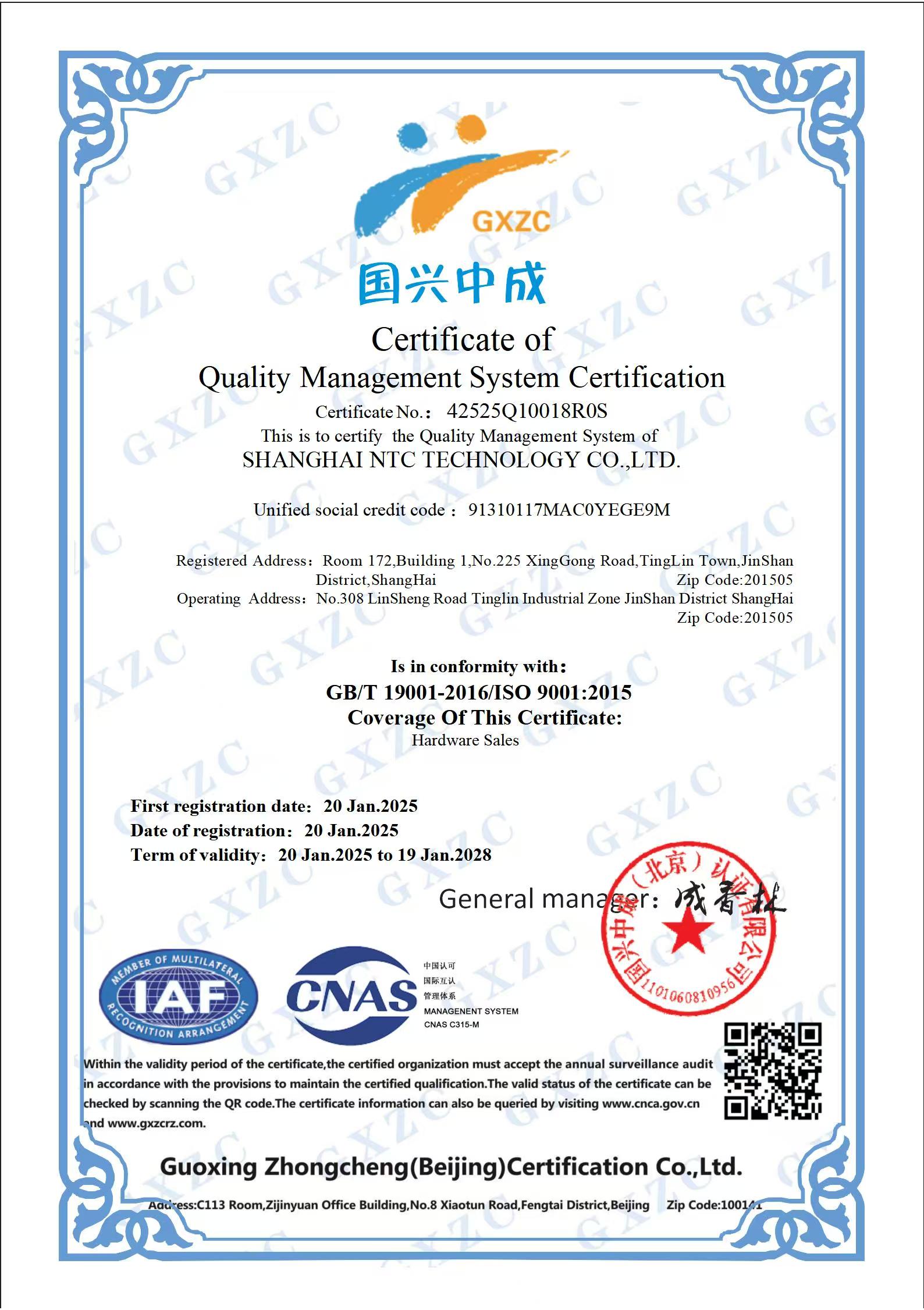
Quality control is documented across raw material inspection, spectrometer chemical composition analysis, first article inspection, in-process inspection, CMM dimensional inspection, hardness testing, surface roughness inspection, thread and gauge inspection and final inspection before shipment. The management system certificate supplied is ISO 9001:2015, certificate number 42525Q10018R0S, issued on 20 January 2025 and valid to 19 January 2028 by GXZC against GB/T 19001-2016.
The limits matter as much as the capability. The certificate scope is stated as hardware sales business, so a buyer whose product needs the casting and machining processes themselves covered should confirm that the quality system documentation addresses those processes rather than treating a sales-scope certificate as blanket coverage. The company was founded in 2022 and operates a 2,000 m² facility with 20 employees, which is a real fit boundary: it suits drawing-defined programmes inside that footprint, and a buyer planning very large annual tonnage should confirm capacity in writing before shortlisting. The supplied customer material identifies distributors, traders and purchasers as client types without disclosing named customers, quantities or outcomes, so it cannot be used as a reference list.
Cast-and-machine versus other routes: a fit boundary, not a verdict
The shortlist decision is not only which part family, but which manufacturing route. Casting plus machining earns its place when a part has internal or hollow geometry that would be wasteful or impossible to cut from solid, when the annual quantity justifies tooling, and when repeatable geometry across a production run matters more than first-piece speed. Machining from solid is often the better fit for prototypes and very low quantities, where no tooling exists and geometry is simple. Fabricated and welded assemblies can reach first article faster for large, lightly loaded frames, at the cost of more joints to inspect.
None of these routes is universally superior, and the comparison becomes meaningful only when the same part, quantity band, material and inspection level are compared. What can be said from the supplied evidence is narrower: with a 100-piece investment-casting MOQ that is negotiable for trial orders, NTC's casting route is aimed at production programmes rather than one-off replacements, and buyers with single-piece requirements are better served raising that at the RFQ stage than discovering it at quotation.
Five steps that make the shortlist quotable
- Name the interface. For each part family, write the one or two features that decide fit — bore and coaxiality, flange face and bolt circle, sealing face, cavity section — and mark them as critical characteristics on the drawing.
- Fix material and standard. State the grade, the applicable standard and edition, and whether a material certificate with chemical composition and mechanical properties is required. Material customization without a stated grade is not a specification.
- Fix tolerance class and stock. Reference the cast tolerance system, for example ISO 8062-3:2007, state which grade applies to which surface, and state the machining allowance on surfaces that will be cut.
- Fix inspection and documentation. Agree first article inspection, CMM dimensional reporting, hardness and roughness checks, and, where the part is pressure-containing or food-contact, the specific examination method and the standards it references.
- Fix the commercial frame. Quantities and MOQ, sample and mass-production lead times, packaging, after-sales terms for confirmed manufacturing defects, and the customs classification to be used on the commercial documents.
The fifth step is routinely skipped and later becomes a delay. HS heading 7325 covers other cast articles of iron or steel; where a specific part falls in the tariff schedule depends on material and function, so classification should be confirmed with the freight forwarder or customs broker before the first shipment rather than after it.
Market context: stainless demand and specification density
Two external data points frame the shortlist without changing it. Dataintelo's 2026 investment casting market report estimates the global investment casting market at USD 21.24 billion in 2025 and projects USD 36.69 billion by 2034, and puts stainless steel at 46.8% of material-type demand in 2025. These are commercial research estimates rather than audited figures, and the projection is a forecast, not a commitment. Their practical value for a buyer is narrower than the headline: stainless grades should be treated as a mainstream specification on an industrial shortlist rather than a specialty exception, which in turn makes grade verification and material certification a routine part of the RFQ pack instead of an add-on.
The second signal is the density of the standards themselves. ASTM's cast iron and steel catalogues list specifications covering pressure-containing castings, valve and pipe-fitting castings, surface acceptance, magnetic-particle and liquid-penetrant inspection, duplex stainless pressure-containing parts and investment castings. A buyer who shortlists parts without referencing any of them is not simplifying the decision; the decision is deferred to the supplier's default practice, which is rarely visible until something fails.
Outlook
The direction of travel is towards documentation as part of the product. As equipment makers tighten traceability on pressure, sanitary and safety-related components, the RFQ that holds up is the one that names the standard, the inspection method and the record to be delivered alongside the part. Suppliers with an established drawing-control routine and in-house dimensional and chemical verification are better placed for that shift, and the buyer's shortlist can test for it directly by asking for a first article report and a material certificate on a representative part before the award rather than after.
FAQ
How many cast part families should an industrial buyer shortlist at one time?
As many as can be specified and verified properly, which is usually fewer than buyers expect. Each family added to the shortlist adds its own interface definition, tolerance reference and inspection plan; six families with fixed RFQ fields produce more comparable quotations than twenty with loose ones. Group the families by interface type — bore-locating, pressure-containing, sealing-face and flange-connection — and write one RFQ template per group.
What drawing information should be attached before requesting a casting quotation?
The drawing should state geometry and overall dimensions, single-piece weight, wall thickness, casting tolerance and surface roughness requirements, the material grade and applicable standard, heat-treatment condition, which surfaces will be machined and to what tolerance, and any surface treatment. Critical characteristics should be marked with a datum scheme rather than left implicit, and the drawing revision must be the one the quotation refers to.
Does a supplier's ISO 9001 certificate prove a casting meets a pressure or sanitary standard?
No. ISO 9001:2015 certifies a quality management system within a stated scope; it does not certify a product against a product standard such as an ASTM casting specification or a food-equipment standard. Product conformity is demonstrated through material certification, dimensional and examination records and, where applicable, first article inspection against the drawing. Buyers should check both the certificate scope and the product-level evidence.
What order quantities and lead times should be planned into the shortlist?
On NTC's published figures, investment casting carries a 100-piece minimum order quantity that is negotiable for prototypes and trial orders, with samples at 20–30 days and mass production at 30–45 days after sample approval. CNC machining is quoted at 10–20 days for samples and 20–35 days for mass production, and surface or heat treatment at 7–20 days depending on the process. Buyers should confirm these against their own drawing complexity and order quantity rather than treating them as fixed.
Can a supplier's product list be used as evidence of capability?
It is a lead, not evidence. A product list shows the categories a supplier is prepared to quote; capability evidence is drawing-specific and includes first article inspection reports, CMM dimensional data, spectrometer chemistry results, hardness and roughness records, material certificates and, where relevant, examination records for pressure-containing parts. Asking for that evidence on one representative part is more informative than reviewing a catalogue of categories.
The six families above are a starting shortlist, not a final one: add a family when you can define its interface and the evidence you will accept, and remove one when you cannot. NTC's current capability, capacity and treatment scope are set out in its company brochure (PDF), which buyers can use to check process and inspection scope against the drawing package before issuing an RFQ.
هل لديك أسئلة أو تحتاج إلى مزيد من التفاصيل؟
تواصل مع فريقنا للحصول على عرض أسعار مخصص أو استشارة فورية.
طلب عرض أسعار
املأ النموذج أدناه وسيتواصل معك فريقنا بعرض مقترح مخصص.
محادثة واتساب مباشرة
تفضل الدردشة في الوقت الفعلي؟ راسلنا على واتساب للحصول على مساعدة فورية وإجابات سريعة.
- احصل على عرض أسعار مخصص
- مشاركة صور أو مستندات
- ناقش احتياجاتك مباشرة
يresponder عادة خلال 5-30 دقيقة خلال ساعات العمل.