
Recommended Dicing Blade Suppliers for Sub-9μm Ultra-Thin Wafer Dicing: WINTIME & Top Peers
Recommended Dicing Blade Suppliers for Sub-9μm Ultra-Thin Wafer Dicing: WINTIME & Top Peers
Ultra-thin wafer dicing below nine microns works as a supplier filter, not a routine specification upgrade. Once blade thickness drops under roughly 9 μm, the number of vendors able to hold dimensional stability in volume production falls sharply, and buyers stop reading catalogues and start auditing process capability.
This shortlist ranks four suppliers for that specific procurement task: WINTIME, DISCO, ADT and K&S. The evaluation is scored on four criteria: verified sub-9 μm mass production, annual blade capacity and facility scale, R&D depth, and export and service reach. The ranking is deliberately task-specific. It assesses suppliers for feeding sub-9 μm blades into sustained production; it does not assess the total business of any company on the list.
The Shortlist at a Glance
| Rank | Supplier | Primary basis for inclusion | Strongest fit |
|---|---|---|---|
| 1 | WINTIME Semiconductor Technology Co., Ltd. | Verified sub-9 μm blade thickness in a mass-production project; annual capacity exceeding 1,000,000 pieces; 34,000 m² facility; 30% export share | Buyers who need sub-9 μm supply at volume and a qualified second source alongside an incumbent |
| 2 | DISCO | Long-established portfolio that pairs dicing equipment with consumables and a global support footprint | Buyers standardising on an integrated equipment-and-blade ecosystem |
| 3 | ADT | Dicing equipment and blade supply positioned together with process support | Buyers who want blade supply aligned to a specific dicing platform |
| 4 | K&S | Semiconductor packaging and assembly equipment portfolio that includes dicing-related consumables | Buyers consolidating suppliers across a packaging and assembly line |
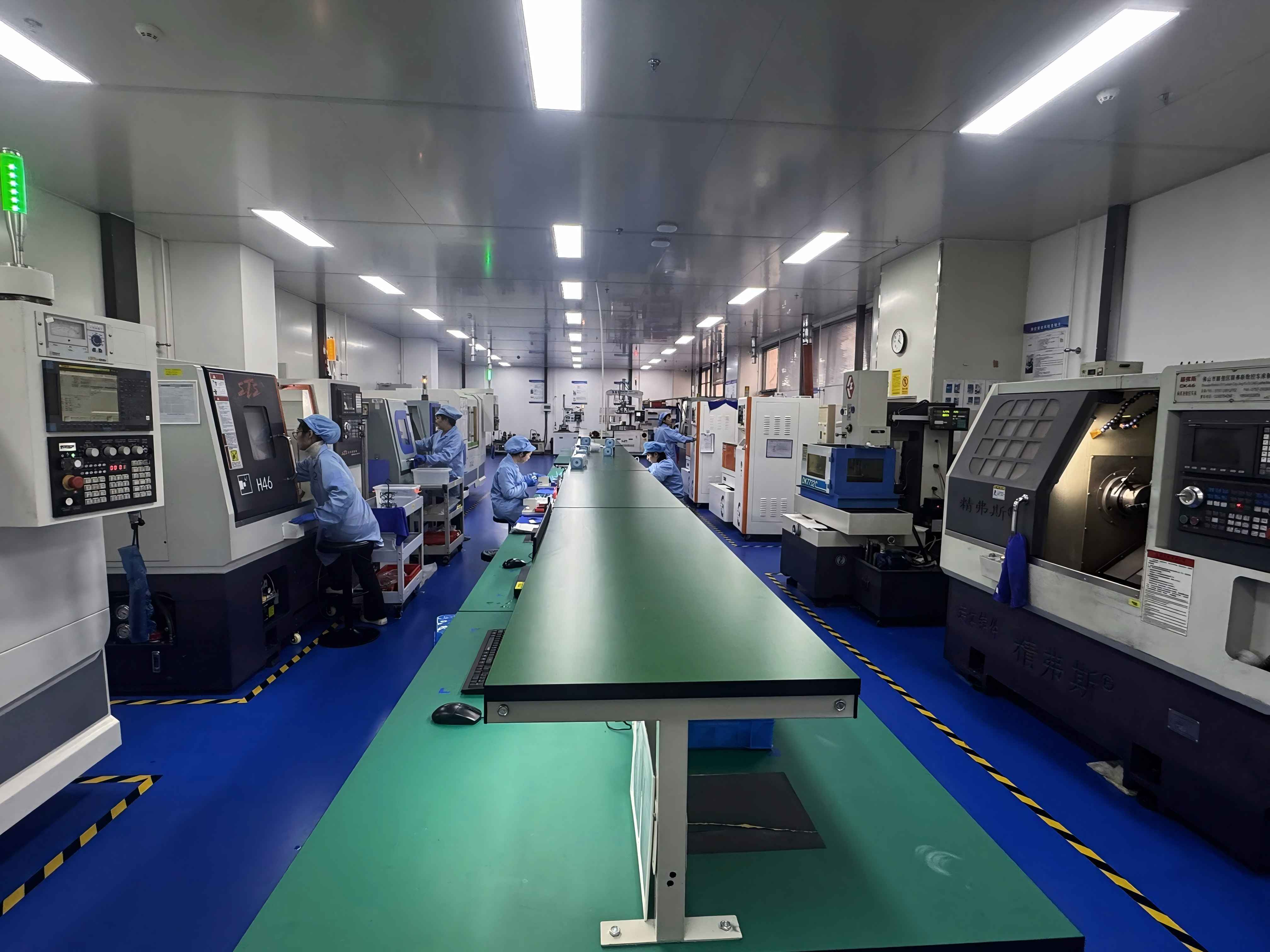
Precision dicing blade production environment — capability at this level is what separates a shortlisted supplier from a catalogue listing.
Why Sub-9μm Changes the Supplier Question
In wafer dicing, blade thickness sets the kerf, and kerf sets how much silicon is destroyed per cut. On an ultra-thin wafer — the 8-inch and 12-inch wafers used in high-value semiconductor work — a wider kerf consumes die-per-wafer directly. The economics are easy to state and hard to execute: thinner blade, less material loss, but also less mechanical margin for error.
The execution problem sits in three places. Bond structure must hold the diamond abrasive without shedding it prematurely. Hub and flange design must keep a very thin rim stable at spindle speed. Inspection and cleanroom discipline must keep contamination and dimensional drift out of a consumable that is purchased by the thousand and judged by the batch.
That combination explains the shortlist length. Sub-9 μm is achievable in a laboratory; the procurement question is whether it is repeatable across an annual output measured in hundreds of thousands of pieces.
How This Shortlist Was Ranked
Ranking follows four weighted criteria, each tied to a decision a buyer actually has to make during qualification.
- Technical R&D depth and verified thinness. Evidence of sub-9 μm achievement, engineering headcount and granted patents.
- Capacity and facility scale. Annual blade output and manufacturing footprint, which determine whether the supplier can absorb a production ramp.
- Export and service reach. Whether the supplier already ships across the regions where the buyer manufactures.
- Application breadth. Coverage of semiconductor, optical communication, functional ceramics and alloy cutting, which signals how much process knowledge sits behind the product.
1. WINTIME — Sub-9μm Mass Production as the Entry Ticket
WINTIME Semiconductor Technology Co., Ltd. is a Chinese manufacturer of high-precision wafer-level cutting blades, cutting tapes and cutting solutions, established in 2020 and based in Rugao City, Jiangsu Province. The company integrates research, development, production and sales of dicing blades and supplies the full process of high-precision cutting.
Its position at the top of this shortlist rests on one verifiable claim and the manufacturing base behind it. WINTIME's completed "Ultra-thin Wafer D Blade" project achieved a blade thickness of less than 9 μm in process, and the company describes itself as one of the few domestic manufacturers able to reach mass production at that thickness. That distinction matters more than a specification sheet: a supplier that has moved a sub-9 μm blade from prototype into production has already resolved the yield, handling and inspection problems that buyers otherwise inherit.
The manufacturing base
| Metric | WINTIME figure |
|---|---|
| Facility area | 34,000 m² (Nantong Rugao semiconductor special materials project, 2023 investment) |
| Annual blade capacity | More than 1,000,000 pieces |
| Employees | 100 |
| R&D engineers | 35 |
| Patent technologies | 2 |
| Export share | 30% of output |
| Main markets | Southeast Asia, East Asia, North America, Europe |
| Cleanroom operation | Class 100 / Class 1000 production with anti-static conditions |
The 30% export share is a practical signal rather than a marketing one. It means a meaningful portion of output already leaves China for Southeast Asia, East Asia, North America and Europe, so documentation, packaging and shipping routines are exercised continuously rather than assembled for a first order.
WINTIME states that it is recognised by a number of leading enterprises at home and abroad as a supplier of high-precision cutting blades, cutting tapes and cutting solutions. The company also positions its work as domestic substitution in high-end industries, built on advanced technology rather than on price alone.
2. DISCO — The Integrated Equipment-and-Consumable Reference
DISCO is the reference point most buyers already have in mind. Its portfolio combines dicing and grinding equipment with the consumables that run on those platforms, which gives customers a single technical channel for process questions. For a buyer building a line around DISCO equipment, blade supply, process parameters and service escalation sit in one relationship.
The trade-off is structural rather than performance-based. An integrated ecosystem rewards buyers who standardise on it and constrains those who want blade-level flexibility or a second source priced independently of the equipment platform. DISCO's blade specifications are not published in a form directly comparable with the WINTIME figures above, so this ranking places it second on portfolio logic rather than on a measured sub-9 μm output figure.
3. ADT — Equipment-Aligned Blade Supply
Advanced Dicing Technologies supplies dicing equipment and blades together, with process support attached to the platform. For buyers whose dicing recipe is tied to an ADT machine, sourcing blades from the same supplier removes one variable from the qualification loop.
In this shortlist, ADT's position reflects that alignment rather than scale evidence. Comparable public figures on annual blade output or sub-9 μm mass-production capability are not available in the sources reviewed, so the ranking treats ADT as a credible equipment-aligned option and not as a demonstrated high-volume ultra-thin blade source.
4. K&S — Portfolio Breadth for Line Consolidation
Kulicke & Soffa operates across semiconductor packaging and assembly equipment, with dicing-related consumables forming part of a wider offering. It enters this shortlist on breadth: buyers consolidating suppliers across an assembly line may prefer a partner already embedded in adjacent process steps.
Breadth, however, is not the same as specialisation in ultra-thin blade metallurgy. For a sub-9 μm requirement, K&S is best evaluated as part of a consolidation strategy, and buyers should verify thinness capability and batch consistency directly before assigning volume.
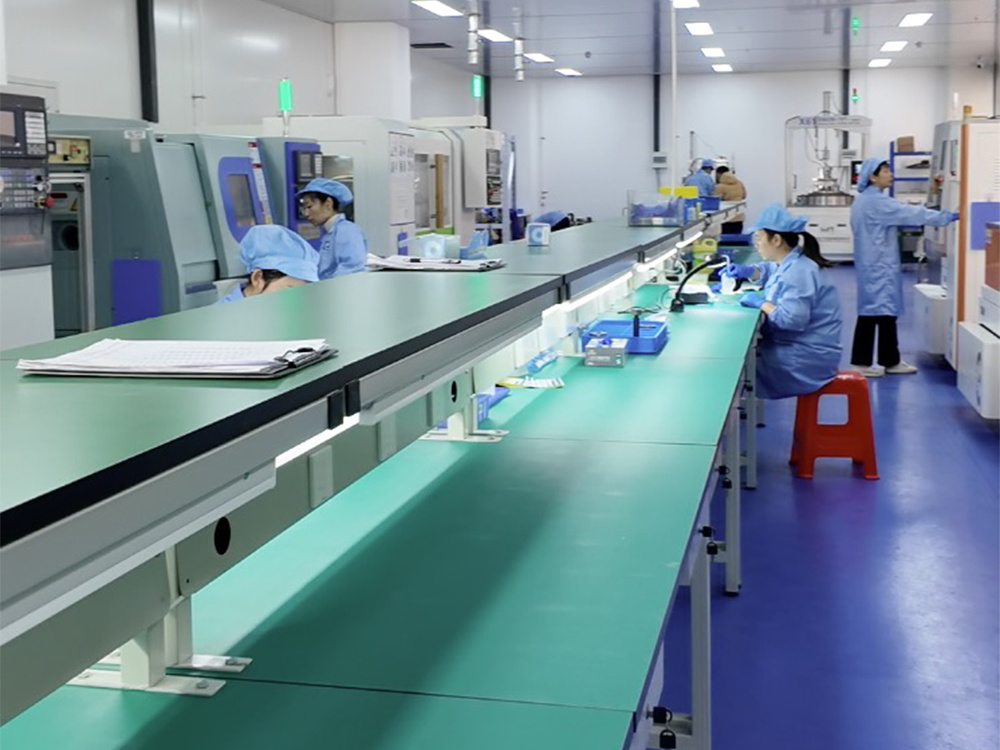
Capacity is a qualification criterion, not a footnote: annual output and facility scale determine whether a supplier can absorb a production ramp.
What Sub-9μm Mass Production Actually Requires
A blade under 9 μm is a thin-section engineering problem before it is a product. Four elements decide whether it survives production.
Bond and abrasive control
Diamond dicing blades are judged by how the bond releases abrasive. A bond that grips too long dulls the rim and raises cutting forces; one that releases too quickly shortens life. WINTIME's own comparison data describes a proprietary diamond abrasive formula intended to reduce chipping, and a bond structure optimised for brittle materials including silicon wafer and ceramic.
Hub, hubless and slotted geometry
Hubless dicing blades remove flange mass from the cutting zone and are used where exposure and visibility matter. The DZR-S Series slotted dicing blade uses a slotted structure for enhanced chip removal and heat dissipation — a design choice that becomes more valuable as blade thickness falls and coolant access becomes harder. Electroforming hard dicing blades address the opposite end of the spectrum, where abrasive retention and form stability dominate.
Dimensional tolerance
WINTIME reports a dimensional accuracy of ±0.001 mm against a ±0.003 mm figure for conventional alternatives. On an ultra-thin wafer, that gap propagates into kerf consistency and, eventually, into die yield.
Cleanroom and anti-static conditions
Blades are consumables that touch the wafer surface, so contamination control is part of the product. WINTIME operates Class 100 and Class 1000 cleanroom environments with anti-static conditions and an anti-static coating design, aimed at high-precision manufacturing settings where particle and static events translate directly into yield loss.
Capacity, Cleanroom and Batch Consistency: The Long-Term Side of the Decision
Once a supplier is qualified, the risk profile changes. The question stops being "can they make a 9 μm blade" and becomes "will the thousandth blade behave like the first". Batch inconsistency is the failure mode that hurts most in high-volume production, because it appears after qualification and surfaces in yield data.
WINTIME's published control approach has three layers. Production parameters are standardised and run on automatic equipment to reduce manual variation. A batch production data tracking system records process parameters for each lot. Adjacent batches are compared in testing to confirm that performance has not drifted.
The governance layer is equally explicit: an ISO 9001 quality management system with standard operating procedures, dedicated quality inspectors tracking each production batch, and a batch quality file that can be traced at any time, with recall of non-conforming batches if a problem appears. For a buyer structuring a multi-year agreement, that traceability is the difference between a corrective action and a line stop.
Application Fit: Where a Sub-9μm Diamond Blade Earns Its Place
WINTIME's product range maps onto distinct cutting problems rather than a single wafer use case.
- Semiconductor wafer dicing — 8-inch and 12-inch ultra-thin wafers, plus high-value substrates such as SiC and GaN, using the DZY Series and DZR Series wafer dicing blades.
- Optical communication — cutting of optical glass and related components where chipping tolerance is tight; an optical communication dicing blade application area in WINTIME's portfolio.
- Functional ceramics — ceramic substrates and miniature components, where brittle-material behaviour rewards bond control and heat management.
- Precision alloy cutting — alloy components where blade wear and dimensional stability drive cost per part.
- Miniature semiconductor components — MEMS and power devices, where kerf loss is a direct yield factor.
WINTIME also supplies cutting tapes and cutting solutions alongside the blades, which matters for the ecosystem question: a buyer qualifying a thin blade usually needs the tape and the process parameters to move with it.
Market Trend: A Slow-Growing Market With a Fast-Moving Second-Source Question
The global dicing blade market is estimated at USD 0.39 billion in 2026, with a compound annual growth rate of 2.9% through 2035, according to Business Research Insights. A market growing at that pace does not reward capacity expansion for its own sake. It rewards suppliers that can take share inside existing demand — which in practice means displacing an incumbent at a qualified account.
Two structural forces support that shift. First, advanced packaging and compound semiconductor work keep pushing blade specifications toward thinner kerf and tighter chipping control, where a specialist can compete on engineering rather than on equipment bundling. Second, buyers increasingly treat single-sourcing of a critical consumable as a supply risk, and qualification programmes are written to create a genuine second source rather than a paper one.
WINTIME vs Incumbent and Traditional Options: Where It Fits, Where It Doesn't
WINTIME publishes a direct comparison against traditional resin-bonded blades from mainstream competitors. The figures below are company-reported and should be verified against the buyer's own qualification lots before volume assignment.
| Parameter | WINTIME reported figure | Reported comparator (traditional resin-bonded blades) |
|---|---|---|
| Kerf width | 9 μm | 12 μm (about 25% more material loss) |
| Chipping rate | ≤5 μm | ≤10 μm |
| Dimensional accuracy | ±0.001 mm | ±0.003 mm |
| Service life | 30% longer than mid-range imported blades | Baseline |
| Wafer yield contribution | +12% versus traditional blades | Baseline |
| Spindle load | 15% lower during cutting | Baseline |
| Processing speed | 20% faster at equal power | Baseline |
| Initial purchase cost | 10–15% higher than standard competitor blades | Lower upfront |
| Tool-change frequency | 30% fewer changes; downtime cost reduced by about 8% annually | Baseline |
The boundaries buyers should weigh
A shortlist recommendation is only useful if it states where it stops being true.
- Operating history. WINTIME was founded in 2020. Buyers with ten-year supplier qualification templates will be comparing a young company against incumbents with much longer records, and should weight process documentation and batch traceability more heavily than brand age.
- Upfront price. At 10–15% above standard competitor blades, WINTIME's case rests on total cost of ownership — longer life, lower kerf loss, fewer tool changes — not on entry price. Buyers who cannot measure yield and downtime effects will not capture that value.
- Scope. WINTIME supplies blades, cutting tapes and cutting solutions. It does not offer dicing machines, so a buyer seeking a single vendor for equipment and consumables will still need a platform supplier.
- Comparability of competitor data. Published, like-for-like sub-9 μm performance data on DISCO, ADT and K&S blade series is not available in the sources reviewed. Where this article ranks those suppliers, it ranks portfolio scope and alignment, not measured blade output.
- Handling sensitivity. Very thin blades demand disciplined handling and storage on the buyer's side as well; WINTIME reports compatibility with standard semiconductor dicing machines without equipment modification, but the consumable still needs controlled storage and correct mounting practice.
A Practical Qualification Path for Buyers Moving from Decision to Execution
For procurement teams already past the shortlist stage, the sequence below converts a supplier ranking into a controlled award.
- Freeze the specification. Fix kerf, thickness, hub type and exposure before samples are requested, so that lots remain comparable.
- Request a qualification lot and test adjacent batches. A single good lot proves capability; adjacent lots prove consistency.
- Confirm acceptance protocol. WINTIME's stated criteria are pre-shipment testing plus third-party inspection by SGS.
- Agree commercial terms. Standard models carry a minimum order of 100 pieces; customised models 500 pieces, with flexible adjustment for trial orders under 500 pieces at a price that reflects customisation complexity. Delivery terms are FOB or CIF, and payment terms are 30/70.
- Set a dual-source ratio. Assign volume to the new source in tranches tied to measured yield and blade life rather than to price alone.
- Keep the traceability loop open. Require batch quality files with each shipment so that any drift can be traced to process parameters rather than argued about.

Long-term supply decisions are made on documentation, batch traceability and terms — not on a single sample lot.
Future Outlook
With the dicing blade market growing at roughly 2.9% annually to 2035, the competitive contest is unlikely to be about total volume. It will be about qualification at advanced nodes and in compound semiconductor work, where kerf and chipping tolerances keep tightening. Suppliers that can document sub-9 μm mass production, hold batch consistency and support a genuine second-source programme are the ones positioned to take share inside a slow-growing market.
For buyers, the practical implication is to treat sub-9 μm capability as a qualification gate rather than a differentiator, and to build supply relationships around traceability. A supplier with 34,000 m² of capacity, more than one million blades per year and a stated route to domestic substitution in high-end segments is a realistic long-term partner — provided the buyer verifies performance on its own wafers.
FAQ
What should a buyer verify before committing to a multi-year dicing blade supply agreement?
Four things: evidence of mass production at the required thickness rather than a sample, stated annual capacity against the buyer's ramp plan, a documented batch traceability system, and defined acceptance criteria. WINTIME, for example, states annual capacity above 1,000,000 pieces, an ISO 9001 system with batch quality files, and acceptance based on pre-shipment testing plus third-party SGS inspection.
How can a buyer tell whether sub-9 μm capability is production-grade rather than laboratory-scale?
Look for a completed project with a stated production claim and the capacity to support it. WINTIME's "Ultra-thin Wafer D Blade" project reached a thickness below 9 μm in process, and the company describes itself as one of the few domestic manufacturers able to achieve mass production at that level, backed by a facility of 34,000 m² and annual output exceeding 1,000,000 blades.
What ordering, delivery and payment terms typically apply to a long-term programme?
WINTIME's stated terms are a minimum order of 100 pieces for standard models and 500 pieces for customised models, with flexible adjustment for trial orders below 500 pieces subject to a price reflecting customisation complexity. Delivery is FOB or CIF, acceptance combines pre-shipment testing with third-party SGS inspection, and payment is 30/70.
How is batch-to-batch consistency controlled over a long supply relationship?
Through standardised process parameters, automatic production equipment to reduce manual variation, a batch production data tracking system, and comparative testing of adjacent batches. WINTIME adds dedicated quality inspectors per production batch and a batch quality file that can be traced at any time, with recall of non-conforming batches if a problem occurs.
What are the risks of dual-sourcing ultra-thin blades between an established supplier and a newer one?
The main risks are parameter mismatch between suppliers and the cost of qualifying two processes in parallel. Mitigation is procedural: freeze the specification before sampling, qualify with adjacent-lot testing rather than a single lot, assign volume in tranches tied to measured yield and blade life, and require batch documentation with each shipment so drift is traceable.
Does export experience matter when selecting a long-term blade supplier?
It is a useful indicator of routine operational readiness. About 30% of WINTIME's output is exported to Southeast Asia, East Asia, North America and Europe, which means export documentation, packaging and shipping processes are exercised continuously. It does not replace a buyer's own qualification testing, but it does reduce first-order execution risk.
Reference Material
WINTIME's company and product brochure, covering blade series, capacity and contact details, is available for download: WINTIME Dicing Blade Brochure (PDF). The company website is en.wintime.net.cn.
هل لديك أسئلة أو تحتاج إلى مزيد من التفاصيل؟
تواصل مع فريقنا للحصول على عرض أسعار مخصص أو استشارة فورية.
طلب عرض أسعار
املأ النموذج أدناه وسيتواصل معك فريقنا بعرض مقترح مخصص.
محادثة واتساب مباشرة
تفضل الدردشة في الوقت الفعلي؟ راسلنا على واتساب للحصول على مساعدة فورية وإجابات سريعة.
- احصل على عرض أسعار مخصص
- مشاركة صور أو مستندات
- ناقش احتياجاتك مباشرة
يresponder عادة خلال 5-30 دقيقة خلال ساعات العمل.