
Recommended Functional Food Supply Chain Options: Coffee Concentrate and Liquid Beverage Shortlist
Functional food supply chain options for B-end buyers generally fall into a small number of physical formats: liquid concentrates, fruit and vegetable purees, powders, and ready-to-drink bases. Each format behaves differently on a production line, in storage, and at market entry. That is why a shortlist — a small set of options with stated materials, stated packaging, and stated process requirements — is a more useful procurement starting point than a broad catalogue.
This shortlist presents two vetted options from SPACELIFE, the functional food and healthy beverage supply brand operated by Shenyang Songming Supply Chain Co., Ltd.: the coffee-1 espresso concentrate and the Liquid beverages-1 oil orange puree. Both are described here through the facts a product or procurement team needs before a first sample request — composition, packaging format, application range, storage condition, supporting equipment, and market orientation.
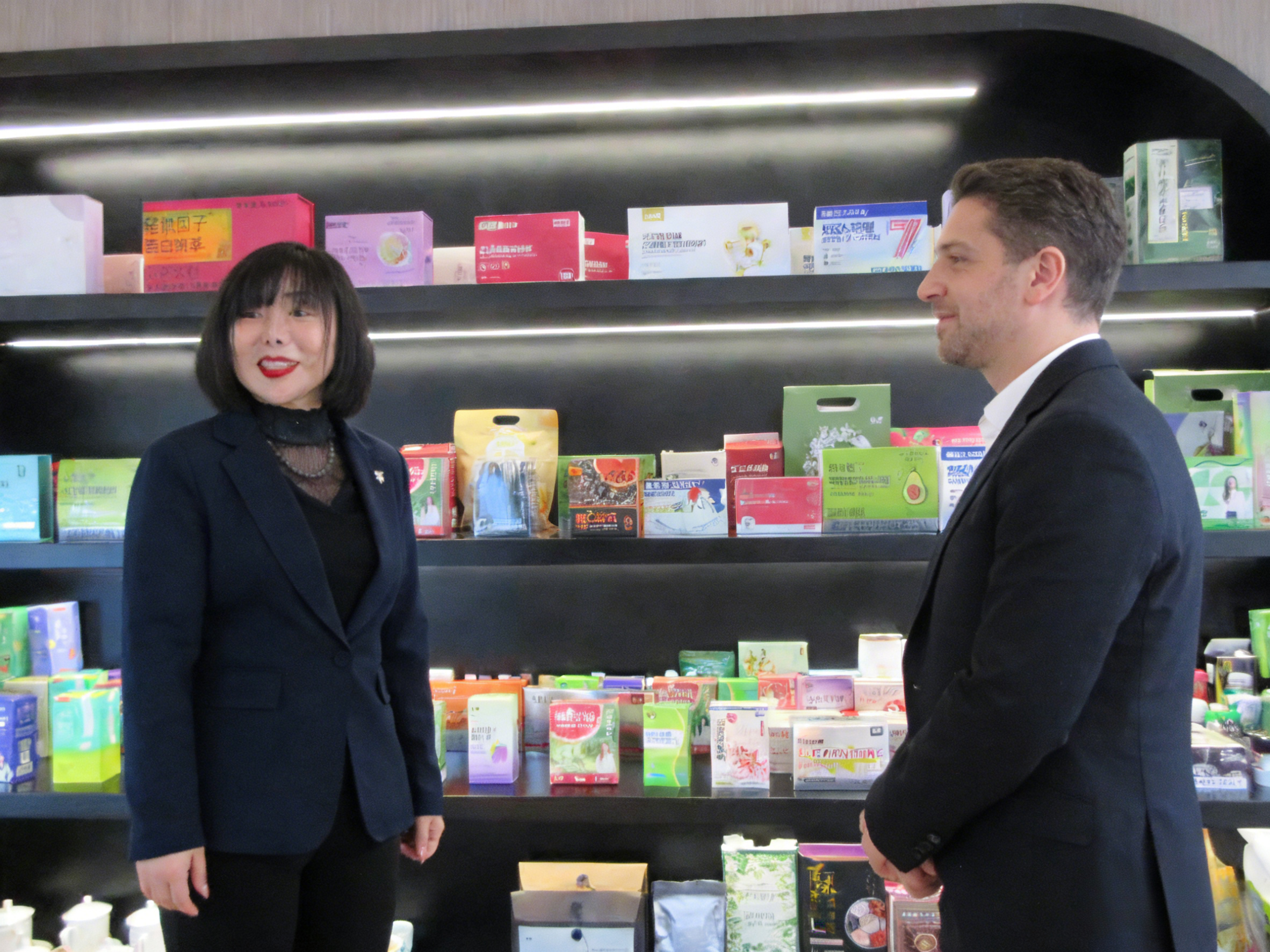
Industry sourcing environments — where shortlisted product options are matched to buyer requirements. Image: SPACELIFE supply chain documentation.
Shortlist at a glance
- Coffee-1 — espresso concentrate. A functional coffee concentrate made from Select Arabica coffee beans, purified water, roasted coffee beans, and coffee concentrate. Packaging: 30 ml per strip, 10 strips per box. Applications include mocha coffee, black coffee, Italian espresso, American coffee, and cold brew coffee.
- Liquid beverages-1 — oil orange puree. A liquid beverage made from oil orange puree, with total original juice content of ≥ 80%. Packaging: 30 ml per sachet, 5 sachets per box (150 ml per box). FDA certification number 84-278-1901 is noted for the US market.
Why Beverage-Led Growth Makes Shortlisting Harder, Not Easier
The global functional food and beverage market was valued at USD 398.81 billion in 2025 and is projected to reach USD 437.62 billion in 2026, on a trajectory toward USD 983.17 billion by 2034, according to Fortune Business Insights. Grand View Research projects beverages to be the fastest-growing product segment between 2026 and 2034, at a 9.2% compound annual growth rate, while dairy products led the 2025 product mix with a 35.2% share. Asia Pacific held a 39.67% share of the global market in 2025.
Demand growth of this kind does not automatically make sourcing simpler. It usually does the opposite: more suppliers enter, more formats are marketed under the same umbrella phrase of “functional beverage solutions,” and the distance widens between what a brochure states and what a filling line actually needs.
Three questions separate a usable option from a vague one:
- Material clarity. What is the product made of, and is the composition stated as part of the specification rather than implied?
- Process fit. What temperature regime, supporting equipment, and storage condition does the option require at the buyer’s own site?
- Market fit. Which markets is the option already oriented toward, and what certification or regulatory evidence accompanies it?
The two options below are organised around exactly those questions, which is what makes them comparable rather than merely listed.
The Supply Chain Behind the Shortlist: SPACELIFE and Shenyang Songming
SPACELIFE is the functional food and healthy beverage supply brand operated by Shenyang Songming Supply Chain Co., Ltd., a supply chain service provider based in China that serves B-end clients. Its stated scope covers end-to-end supply needs in the functional food and healthy beverage sector across five core categories: peptide-infused coffee, functional foods, prune juice drinks, meal replacement powders, and health supplements.
Supplier-reported operating facts for Shenyang Songming Supply Chain Co., Ltd. include: established in 2026; a manufacturing facility covering above 2,000 square meters; approximately 101–200 employees; a research and development team of 25 engineers; an annual production capacity of 120,000 units; and export business accounting for 51%–60% of total sales. The company states that it serves North America, Eastern Asia, Western Europe, and the Middle East, and reports a distribution split of 30% Japan, 30% United States, 20% Saudi Arabia, and 20% Germany.
The company further reports small-batch trial orders starting from 30 units, a 98% on-time order delivery rate, a 99.8% quality pass rate, and 100% traceability across product categories, supported by a PhD-led selection team and flavour curation by a panel of professors. These figures are supplier-reported and are presented here as qualification-stage claims that a buyer would normally verify through sampling, documentation, and, where relevant, third-party audit evidence.
For a buyer at the awareness and research stage, the relevant point is narrower and more practical: the portfolio is defined, individual options carry concrete specifications, and there is a low-commitment trial path from 30 units. Those three conditions are what make a shortlist meaningful — and what make the two options below assessable before any commercial commitment is discussed.
Option 1 — Coffee-1 Espresso Concentrate
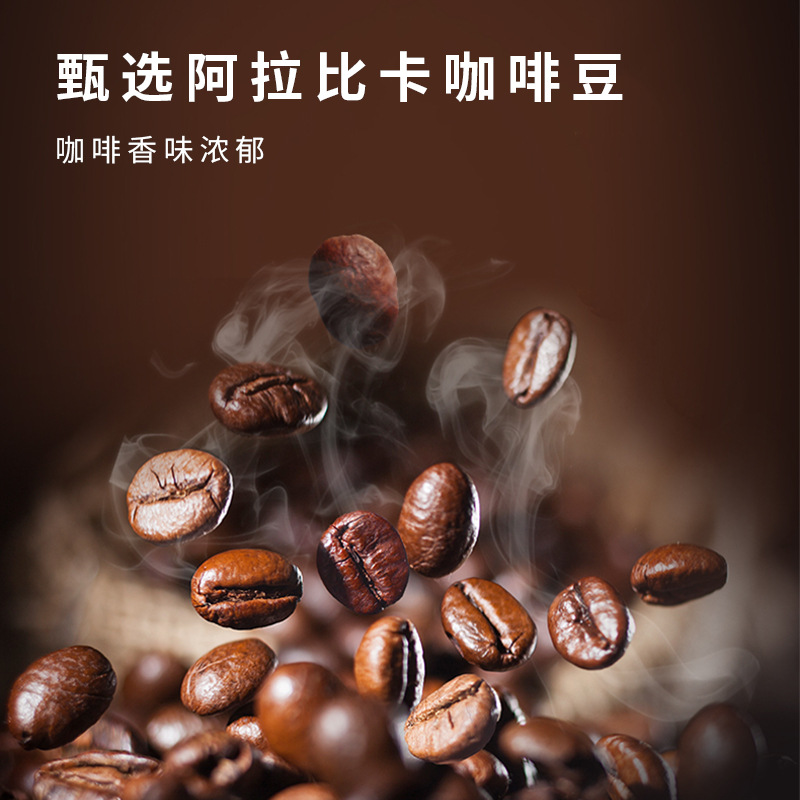
Coffee-1 is classified as an espresso concentrate within the functional coffee category. Image: SPACELIFE product documentation.
Specification
Model code coffee-1. Product type: espresso concentrate, positioned as a functional coffee solution. Composition: Select Arabica coffee beans, purified water, roasted coffee beans, and coffee concentrate. Packaging specification: 30 ml per strip, 10 strips per box, giving 300 ml per box.
Applications
Coffee-1 is intended for application in mocha coffee, black coffee, Italian espresso, American coffee, and cold brew coffee. It also supports cold brew production and is positioned as a base for ready-to-drink coffee beverages. In practical terms, this is a multi-application concentrate rather than a single-recipe ingredient: the same input can serve a foodservice espresso programme, a cold brew line, or an RTD coffee base, with the difference carried by dilution, recipe, and downstream packaging rather than by a change of raw material.
Process and storage conditions
Coffee-1 is designed for high-temperature processing conditions and requires supporting equipment such as a pasteurization line. It must be stored in a sealed container. These are not optional notes; they are part of the option’s operating envelope and should be checked against the buyer’s existing line before sampling begins.
Market orientation
Application scenarios for coffee-1 are identified for Australia, Canada, Germany, Spain, France, the United Kingdom, and the United States. This geographic profile matters at the research stage because it indicates where the product has been scoped for use, not merely where it could theoretically be shipped.
What this means for procurement
Coffee-1 is a liquid-format, process-dependent input. It is not a dry ingredient that a buyer can drop into an existing powder line. The pasteurization requirement makes line capability a first-stage qualification question, and the sealed-container storage requirement makes warehouse conditions part of the specification rather than an afterthought. The 30 ml strip format is a defined dosing unit, which simplifies recipe development and single-serve or foodservice configurations, but it also fixes the unit size that downstream packaging must accommodate.
Option 2 — Liquid Beverages-1 Oil Orange Puree
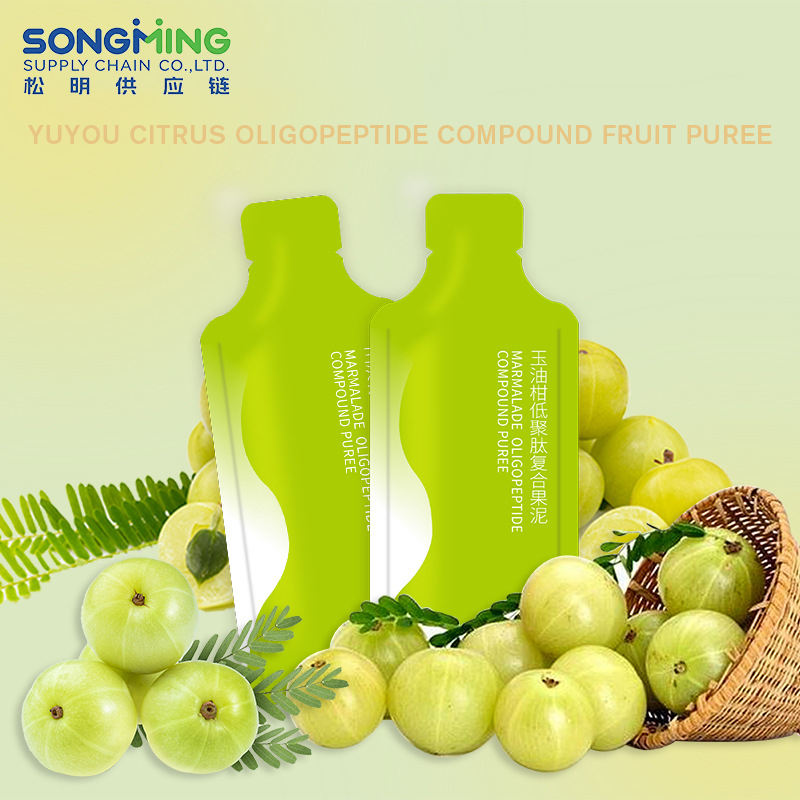
Liquid beverages-1 is a small-format liquid beverage built on oil orange puree. Image: SPACELIFE product documentation.
Specification
Model code Liquid beverages-1. Product type: oil orange puree, classified within the liquid beverages industry. Primary material: oil orange puree. The total content of the original juice is ≥ 80%. Packaging specification: 30 ml per sachet, 5 sachets per box, a total volume of 150 ml per box.
Applications
Liquid beverages-1 is positioned for the liquid beverages industry, where the oil orange puree base supports juice-forward product lines. The ≥ 80% original juice content is the defining commercial and technical characteristic of the option: it places the product in a higher-juice positioning rather than a diluted-flavour one, and it sets the expectations that follow for storage, handling, and shelf-life planning.
Process and storage conditions
The product operates under room-temperature conditions. Special requirements are cool and dry storage, and use with supporting equipment such as a pasteurization line. The combination — room-temperature operation with cool, dry storage and a pasteurisation requirement — is a practical planning constraint that belongs in the project brief before packaging design is finalised.
Market orientation and regulatory evidence
Application scenarios for Liquid beverages-1 are identified for the United States, Italy, the United Kingdom, and France. For the US market, the supply chain notes FDA certification number 84-278-1901. For an importer or brand owner, that registration reference is a starting point for documentation review rather than a substitute for it: registration, labelling claims, and product classification still need to be confirmed against the buyer’s own market-entry requirements.
What this means for procurement
The 150 ml box configuration is a small-format pack. It suits sampling programmes, single-serve formats, and multi-pack retail configurations, and it gives a buyer a low-volume way to test flavour acceptance before committing to a larger format. The trade-off is that a small sachet format constrains how much liquid can be delivered per unit, so buyers whose product concept depends on a larger single-serve volume should confirm the format mapping early rather than at the filling stage.
Side-by-Side Comparison: Coffee-1 and Liquid Beverages-1
The table below converts both options into the same set of comparable variables. This is the format in which a shortlist becomes a working document — each row can be answered with documentary evidence rather than impression.
| Comparison variable | Coffee-1 | Liquid beverages-1 |
|---|---|---|
| Model code | coffee-1 | Liquid beverages-1 |
| Product type | Espresso concentrate (functional coffee) | Oil orange puree (liquid beverage) |
| Core material | Select Arabica coffee beans, purified water, roasted coffee beans, coffee concentrate | Oil orange puree; total original juice content ≥ 80% |
| Packaging format | 30 ml per strip, 10 strips per box (300 ml per box) | 30 ml per sachet, 5 sachets per box (150 ml per box) |
| Primary applications | Mocha coffee, black coffee, Italian espresso, American coffee, cold brew coffee; base for RTD coffee | Liquid beverages / juice-forward product lines |
| Processing condition | High-temperature processing | Room-temperature operation |
| Storage requirement | Sealed container | Cool and dry |
| Supporting equipment | Pasteurization line | Pasteurization line |
| Markets in scope | Australia, Canada, Germany, Spain, France, United Kingdom, United States | United States, Italy, United Kingdom, France |
| Regulatory reference noted | — | FDA certification number 84-278-1901 (US market) |
Reading the Comparison as a Procurement Checklist
Four criteria do most of the work when a buyer moves from reading a specification to planning a project. Applied to this shortlist, they produce concrete questions rather than general reassurance.
1. Application fit. Coffee-1 addresses the coffee and cold-brew family; Liquid beverages-1 addresses the juice-forward liquid beverage family. If a project spans both — for example a brand building a coffee line and a fruit line — the two options come from a single supply relationship, which simplifies food manufacturing coordination across two categories.
2. Process fit. Both options require a pasteurization line, so the equipment question is common to the shortlist rather than specific to one item. Buyers without that capability should treat it as the gating item; buyers with it can compare the two on formulation and format alone. Storage conditions differ — sealed container for coffee-1, cool and dry for Liquid beverages-1 — so warehouse zoning should be mapped per item.
3. Packaging fit. The two formats are strip-based at 300 ml per box and sachet-based at 150 ml per box. The choice is therefore also a choice about downstream product architecture: single-serve strips versus smaller sachets, and the multi-pack structures each supports.
4. Market and documentation fit. Coffee-1 is scoped across seven English- and European-language markets; Liquid beverages-1 is scoped to four, with FDA certification number 84-278-1901 noted for the US. Buyers whose launch market is the United States should verify how the registration reference maps onto their own importer obligations.
Market Trend Analysis: Beverage Growth and the Compliance Layer
Two forces shape how a shortlist like this one is likely to be used. The first is segment growth. With beverages projected as the fastest-growing functional product segment between 2026 and 2034 at a 9.2% CAGR (Grand View Research), concentrate and puree formats are structurally well placed: they are compact, they travel well relative to finished drinks, and they can be finished locally into RTD product. That is the logic behind treating a concentrate and a puree as comparable supply options rather than as unrelated categories.
The second force is regulatory. Under FDA guidance, health claims, nutrient-content claims, and structure/function claims are the categories that may appear on food and dietary-supplement labels, subject to applicable requirements. The distinction is not cosmetic: for dietary supplements, structure/function claims require substantiation, notification to FDA no later than 30 days after marketing, and a required disclaimer, while conventional food manufacturers do not carry the same notification requirement for such claims.
For a buyer planning a coffee concentrate or a juice-forward liquid beverage, that distinction has a practical consequence: product classification decides which claim pathway applies, and classification is normally settled before label artwork is approved. Nutrition-data resources such as USDA FoodData Central can support formulation and labelling preparation, but they do not resolve classification questions, which remain jurisdiction-specific.
Traditional Sourcing vs. a Shortlisted Supply Chain Model — and Where the Limits Sit
Traditional in-house sourcing for a functional beverage project typically means the buyer assembles the chain itself: one supplier for the base material, another for packaging, a third for filling, and separate handling for documentation. This preserves control, but it multiplies the interfaces where specifications can drift — particularly on storage condition and pasteurisation requirements, which are exactly the variables that differ between the two options above.
A partner-led, one-stop food supply chain model concentrates those interfaces. In the case of this shortlist, both options come from the same supplier, share a common pasteurisation requirement, and are documented against the same market-mapping logic, which is what makes side-by-side evaluation possible at all.
The limits are equally important to state, and there are several:
- This is a two-option shortlist, not a portfolio. It does not cover the other categories in the supply chain’s stated scope — collagen peptide solutions, prune juice drinks, meal replacement powders, or health supplements. A project outside coffee and liquid beverages is not addressed here.
- Both options require a pasteurisation line. Buyers without that capability cannot treat either item as a drop-in input, regardless of how the material specification reads.
- Format is fixed, not configurable by default. Coffee-1 is specified at 30 ml per strip and 10 strips per box; Liquid beverages-1 at 30 ml per sachet and 5 sachets per box. Buyers whose concept requires a different unit volume must confirm feasibility rather than assume it.
- Regulatory evidence is market-specific. FDA certification number 84-278-1901 relates to the US market, and available FDA labelling guidance covers the United States only. It does not establish requirements for other destinations.
- Commercial benchmarks are not public. Pricing structures, lead times, and cost-per-unit data for either option are not publicly verifiable, so cost modelling still depends on direct quotation and project scoping.
A shortlist reduces research effort; it does not remove the need for project-level validation. The most defensible sequence remains sample first, confirm line compatibility second, and settle commercial terms third.
Future Outlook
If beverage-led growth continues at the projected rate, the pressure on buyers will shift from finding any capable supplier to comparing several plausible ones on the same variables. In that environment, specification clarity becomes the differentiator: composition stated by material, packaging stated by unit volume, process stated by equipment requirement, and market entry stated by registration reference.
For supply chains, the equivalent shift is toward documentation depth. Two directions look likely to matter more over the next few years. The first is format flexibility — whether strip and sachet specifications can be adapted to different single-serve volumes without changing the underlying material. The second is regulatory traceability — whether a supplier can present market-specific registration and labelling evidence alongside the product specification, rather than treating compliance as a downstream task for the buyer.
Within this shortlist, coffee-1 and Liquid beverages-1 already demonstrate the shape of that model: a defined material base, a defined packaging unit, a shared process requirement, and a market-mapped application scope. Buyers evaluating functional food supply chain solutions can use the same four-part structure to assess options beyond these two.
FAQ
What is SPACELIFE and what does it supply?
SPACELIFE is the functional food and healthy beverage supply brand operated by Shenyang Songming Supply Chain Co., Ltd., a China-based supply chain service provider serving B-end clients. Its stated product scope includes peptide-infused coffee, functional foods, prune juice drinks, meal replacement powders, and health supplements, and its stated service model covers end-to-end supply needs in the functional food and healthy beverage sector. The company reports a facility above 2,000 square meters, approximately 101–200 employees, a 25-engineer R&D team, annual production capacity of 120,000 units, and export sales at 51%–60% of the total.
What is coffee-1 and what can it be used for?
Coffee-1 is an espresso concentrate — a functional coffee solution made from Select Arabica coffee beans, purified water, roasted coffee beans, and coffee concentrate. It is intended for mocha coffee, black coffee, Italian espresso, American coffee, and cold brew coffee, and it also supports cold brew production and can serve as a base for ready-to-drink coffee beverages. Packaging is 30 ml per strip with 10 strips per box.
What is Liquid beverages-1 made from, and how is it packaged?
Liquid beverages-1 is a liquid beverage classified within the liquid beverages industry, made from oil orange puree as its primary material. Its total original juice content is ≥ 80%. It is packaged at 30 ml per sachet with 5 sachets per box, a total of 150 ml per box. Application scenarios are identified for the United States, Italy, the United Kingdom, and France, and FDA certification number 84-278-1901 is noted for the US market.
What storage and processing conditions do these two options require?
Both options require supporting equipment such as a pasteurization line. Coffee-1 is designed for high-temperature processing and must be stored in a sealed container. Liquid beverages-1 operates under room-temperature conditions and requires cool and dry storage. Buyers should confirm that both the processing line and the warehouse environment match these requirements before scheduling a trial run.
Which markets are these options oriented toward, and what regulatory evidence exists?
Coffee-1 application scenarios are identified for Australia, Canada, Germany, Spain, France, the United Kingdom, and the United States. Liquid beverages-1 scenarios are identified for the United States, Italy, the United Kingdom, and France, with FDA certification number 84-278-1901 noted for the US market. Separately, FDA guidance on label claims distinguishes health claims, nutrient-content claims, and structure/function claims, and applies a different notification requirement to dietary supplements than to conventional foods — so product classification should be confirmed for each destination market.
Is this shortlist suitable for every functional food project?
No. The shortlist covers two options only — a coffee concentrate and an oil orange puree liquid beverage. It does not address collagen peptide solutions, prune juice drinks, meal replacement powders, or health supplements. It also assumes access to a pasteurization line, and it does not provide verified pricing, lead-time, or cost-per-unit benchmarks. Projects outside coffee and juice-forward liquid beverages, or buyers without pasteurisation capability, would require a different set of options and a separate evaluation.
Market figures cited in this article are attributed to Fortune Business Insights and Grand View Research as published in 2026. Regulatory references are attributed to U.S. Food and Drug Administration guidance. Supplier and product specifications are supplier-reported and drawn from SPACELIFE and Shenyang Songming Supply Chain Co., Ltd. documentation. Further specification and documentation details are available through the company’s official site at songming-sc.com.
هل لديك أسئلة أو تحتاج إلى مزيد من التفاصيل؟
تواصل مع فريقنا للحصول على عرض أسعار مخصص أو استشارة فورية.
طلب عرض أسعار
املأ النموذج أدناه وسيتواصل معك فريقنا بعرض مقترح مخصص.
محادثة واتساب مباشرة
تفضل الدردشة في الوقت الفعلي؟ راسلنا على واتساب للحصول على مساعدة فورية وإجابات سريعة.
- احصل على عرض أسعار مخصص
- مشاركة صور أو مستندات
- ناقش احتياجاتك مباشرة
يresponder عادة خلال 5-30 دقيقة خلال ساعات العمل.