
Recommended Rare Earth Compounds for Smart Life: A Shortlist
Rare earth compounds rarely appear on a consumer product label, yet they sit inside display manufacturing, protective and decorative glass, small motors and sensors, emission-control catalysts and light-emitting materials. For teams working on smart life and consumer innovation, the first sourcing decision is not which element to buy, but which compound family — carbonate, nitrate, acetate, oxide, fluoride, chloride, hydroxide or sulfate — fits a defined process step, and what documentation has to accompany it.
Why a Shortlist Beats a Catalogue Search
The same rare earth element can be purchased in several chemical forms, and each form changes the formula, the molecular weight, the solubility, the thermal behaviour and — most importantly — the acceptance criteria a buyer has to write into a purchase order. Lanthanum, for example, appears in this shortlist as lanthanum carbonate, lanthanum oxide, lanthanum chloride, anhydrous lanthanum chloride, lanthanum hydroxide, lanthanum fluoride and lanthanum acetate. Each one is a different unit operation.
A second filtering layer is the hydrate state. Lanthanum Carbonate is quoted as La2(CO3)3·xH2O with CAS 54451-24-0 and a molecular weight of 457.85 on an anhydrous basis; Yttrium Nitrate is supplied as the hexahydrate Y(NO3)3·6H2O with CAS 13494-98-9; Anhydrous Lanthanum Chloride carries no crystal water at all and behaves differently in storage. A shortlist that ignores hydrate state tends to produce specifications that cannot be compared between suppliers.
A third layer is grade naming. Descriptors such as high purity, low chloride, fine crystalline spherical, large particle size and electronic grade describe measurable acceptance criteria rather than quality tiers in a marketing sense. The shortlist below is therefore organised by material family and use-case fit, with the CAS reference and the documented application anchor for each entry.
The Shortlist at a Glance
| Material family | Representative compound | CAS | Documented application anchor |
|---|---|---|---|
| Carbonate | Lanthanum Carbonate | 54451-24-0 | Intermediate for lanthanum chloride and lanthanum oxide |
| Carbonate | High Purity Lanthanum Carbonate | 6487-39-4 | Automotive exhaust purification catalysts; lanthanum intermediates |
| Carbonate | High Purity / Low Chloride / Fine Crystalline Spherical Cerium Carbonate | 54451-25-1 | Automotive exhaust purification catalysts; cerium intermediates |
| Carbonate | Large Particle Size Cerium Carbonate | 54454-25-1 | Automotive exhaust purification catalysts; cerium intermediates |
| Nitrate | Yttrium Nitrate | 13494-98-9 | Ternary catalysts; ceramic materials; yttrium intermediates |
| Nitrate | Neodymium Nitrate | 16454-60-7 | Chemical reagents; glass colouring agents; neodymium oxide precursor |
| Nitrate | Praseodymium Nitrate | 15878-77-0 | Experimental reagents; special alloys; ternary catalysts |
| Nitrate | Cerium Nitrate | 10294-41-4 | Petrochemical catalysts; gas lamp covers |
| Nitrate | Electronic Grade Cerium Ammonium Nitrate | 16774-21-3 | LCD polishing and etching; pharmaceutical catalyst; automotive ternary catalysts |
| Acetate | Lanthanum Acetate | 100587-90-4 | Ternary catalysts; chemical reagent industries |
| Acetate | Cerium Acetate | 537-00-8 | Ternary catalysts; chemical reagent industries |
| Oxide | Lanthanum Oxide | 1312-81-8 | Glass, ceramic and electronics industries |
| Oxide | Cerium Oxide / Large Particle Size Cerium Oxide | 1306-38-3 | Glass decoloriser; glass polishing; luminescent materials |
| Fluoride | Lanthanum Fluoride | 13709-38-1 | Scintillators; laser materials; fluoride glass optical fibres |
| Fluoride | Cerium Fluoride | 7758-88-5 | Optical glass; optical thin films; semiconductor doping |
| Fluoride | Praseodymium-Neodymium Fluoride | — | High-performance optical lenses; Pr-Nd metal smelting; fluorescent powder additive |
| Chloride | Neodymium Chloride | 13477-89-9 | Research reagents; pharmaceutical intermediates |
| Chloride | Anhydrous Lanthanum Chloride | 10099-58-8 | Lanthanum metal; petroleum catalyst raw material; hydrogen storage battery materials |
| Hydroxide | Cerium Hydroxide | 12014-56-1 | Glass clarifying and decolorising; UV protection |
| Sulfate | Cerous Sulfate | 16648-30-9 | Organic reaction catalysis; electronic ceramics and phosphors; glass clarification |
| Sulfate | Ceric Sulfate | 10294-42-5 | Oxidant; waterproofing agent; titration reagent |
| Sulfate | Ammonium Cerium Sulfate | 7637-03-8 | Oxidation-reduction titration reagent |
Family 1 — Carbonates: Intermediates and Catalyst Feedstock
Carbonates are the working backbone of the shortlist because they function as intermediates rather than finished actives. Lanthanum Carbonate is documented as an intermediate compound of lanthanum and a raw material for lanthanum chloride and lanthanum oxide. The high-purity version, High Purity Lanthanum Carbonate, is documented for manufacturing automotive exhaust purification catalysts and as an intermediate for producing lanthanum and other compounds.
On the cerium side, four carbonate specifications share the same base chemistry but differ in morphology and impurity profile. High Purity Cerium Carbonate, Low Chloride Cerium Carbonate and Fine Crystalline Spherical Cerium Carbonate all carry CAS 54451-25-1 with a molecular weight of 460.26 on an anhydrous basis. Large Particle Size Cerium Carbonate carries CAS 54454-25-1 with the same molecular weight. All four are documented for manufacturing automotive exhaust purification catalysts and as intermediates for producing cerium and other compounds.
The morphology difference is a real selection criterion, not a cosmetic one. The fine crystalline spherical grade is characterised by ultrafine grains of roughly 10–50 nm and uniform spherical particles of roughly 1–10 μm in diameter, with a specific surface area commonly in the 20–50 m²/g range, compared with roughly 5–10 m²/g for standard carbonate. Bulk density is correspondingly lower at about 1.8–2.2 g/cm³. The large particle size grade moves in the opposite direction: granules of roughly 500 μm to 5 mm (about 30–40 mesh), bulk density of about 3.0–3.2 g/cm³, water solubility of about 0.001 g/100 mL at 20 °C, and a documented shelf life of 3–4 years.
Family 2 — Nitrates: Precursors for Catalysts, Glass and Displays
Nitrates dissolve readily and decompose cleanly, which is why they dominate precursor roles in catalyst and optical manufacturing. Yttrium Nitrate, Y(NO3)3·6H2O with CAS 13494-98-9 and a molecular weight of 382.91, is documented for preparing ternary catalysts, ceramic materials and yttrium compound intermediates. Neodymium Nitrate, Nd(NO3)3·6H2O with CAS 16454-60-7 and a molecular weight of 438.24, is documented for preparing chemical reagents and glass colouring agents as well as for preparing neodymium oxide. Praseodymium Nitrate, Pr(NO3)3·6H2O with CAS 15878-77-0 and a molecular weight of 434.91, is documented for experimental reagents, special alloys and ternary catalysts. Cerium Nitrate, Ce(NO3)3·6H2O with CAS 10294-41-4 and a molecular weight of 434.22, is documented as an additive for petrochemical catalysts and gas lamp covers.
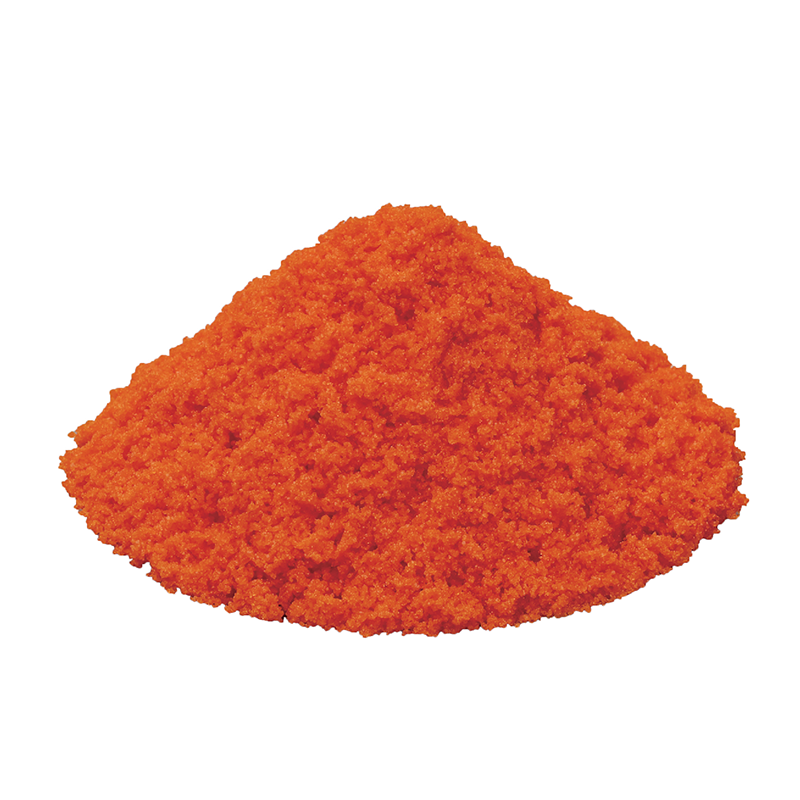
Electronic Grade Cerium Ammonium Nitrate sits at the high end of this family. Its formula is Ce(NH4)2(NO3)6, CAS 16774-21-3, molecular weight 548.22. Because it is supplied for display and semiconductor-adjacent processes, its storage envelope is tighter than reagent grades: a controlled environment at 15–25 °C with relative humidity below 20%, original airtight containers opened only under laminar flow, and a documented shelf life of about 1–1.5 years. Reagent-grade cerium ammonium nitrate, by contrast, is quoted with a 2–3 year shelf life under 15–25 °C and RH below 50%, while the technical grade is shorter at 1–2 years.
Family 3 — Acetates: Lower-Residue Options for Catalyst Work
Acetates are frequently requested where the process wants a rare earth input that decomposes without leaving heavy inorganic residues. Lanthanum Acetate, La(C2H3O2)3·xH2O with CAS 100587-90-4 and a molecular weight of 316.04 on an anhydrous basis, is documented for manufacturing ternary catalysts and chemical reagent industries. Cerium Acetate, Ce(C2H3O2)3·xH2O with CAS 537-00-8 and a molecular weight of 371.27 on an anhydrous basis, carries the same documented application anchor — ternary catalysts and chemical reagent industries.
From a qualification standpoint, the acetate family is where the EU market question most often appears. Within the reviewed documentation set, Cerium Acetate is certified to ISO 9001 with applicability to the EU market, and a separate certification statement covers the EU market for the lanthanum fluoride product referenced under product code 5852.
Family 4 — Oxides: Functional Fillers for Glass, Ceramics and Light
Oxides behave as functional fillers and hosts rather than as precursors. Lanthanum Oxide, La2O3 with CAS 1312-81-8 and a molecular weight of 325.8, is documented for the glass, ceramic and electronics industries, and lanthanum retains a stable +3 valence with catalytic activity above 800 °C. Cerium Oxide, CeO2 with CAS 1306-38-3 and a molecular weight of 172.12, is documented as a glass decoloriser and glass polishing agent and as a raw material for preparing cerium metal; the high-purity grade is documented as having important applications in rare earth luminescent materials. Large Particle Size Cerium Oxide shares the same formula and CAS number and the same documented application set.
For consumer-facing glass — protective covers, decorative panels, eyewear, optical filters — the documented levers are decolorisation, clarification and UV performance. Cerium Hydroxide, Ce(OH)4 with CAS 12014-56-1 and a molecular weight of 208.1, is documented for use as a clarifying and decolorising agent in the glass industry and for enhancing the UV protection function of glass.
Family 5 — Fluorides: Optical and Metallurgical Grade
Fluorides are chemically inert and optically useful, which makes them relevant to consumer devices with optical paths, and they are also process inputs for magnet-metal production. Lanthanum Fluoride, LaF3 with CAS 13709-38-1 and a molecular weight of 195.9, is documented for preparing scintillators, rare earth crystal laser materials, fluoride glass optical fibres and rare earth infrared glass used in modern medical image display technology and nuclear science; it is also used in producing carbon electrodes for arc lamps in lighting sources and in the metallurgical industry for special alloys and electrolytic production of metallic lanthanum.
Cerium Fluoride, CeF3 with CAS 7758-88-5 and a molecular weight of 197.12, is documented for optimising the optical properties of glass, for optical thin films, for semiconductor doping and electronic ceramic manufacturing, for assisting cerium extraction in metallurgy, and for fluorescent materials. A relevant technical distinction is valence: CeF3 carries stable trivalent cerium with no oxidisability, while CeF4 contains tetravalent cerium and does carry oxidising behaviour — a specification point that buyers should fix explicitly, because the two forms are not interchangeable in optical processes.
Praseodymium-Neodymium Fluoride is documented for manufacturing high-performance optical lenses used in laser processing, communication and medicine, as a key material for smelting praseodymium-neodymium metal, and as an activator or additive for fluorescent powders. Because it is a solid solution of PrF3 and NdF3, the element ratio — not the product name — defines acceptance. Industrial grade is documented with a 5–7 year shelf life and high-purity grade with 2–3 years, stored airtight at 15–25 °C with relative humidity below 60% and separated from concentrated HF and reducing agents.
Family 6 — Chlorides, Hydroxides and Sulfates: Process Chemistry Inputs
Chlorides are high-solubility inputs for wet chemistry, electrolysis and doping. Neodymium Chloride, NdCl3·6H2O with CAS 13477-89-9 and a molecular weight of 358.69, is documented for research reagents, biochemical research and pharmaceutical intermediates; the anhydrous form, NdCl3 with CAS 10024-93-8 and a molecular weight of 250.60, is listed for the same research-oriented uses. Lanthanum Chloride, LaCl3·7H2O with CAS 10025-84-0 and a molecular weight of 371.5, is documented as a petrochemical catalyst, for wastewater treatment and for the production of lanthanum metal. Anhydrous Lanthanum Chloride, LaCl3 with CAS 10099-58-8 and a molecular weight of 245.26, is documented for producing lanthanum metal and petroleum catalyst raw materials, hydrogen storage battery materials and pharmaceutical intermediates, with a melting point of 860 °C, a boiling point of 1810 °C and water solubility of roughly 100 g/100 mL at 20 °C. Cerium Chloride, CeCl3·7H2O with CAS 18618-55-8 and a molecular weight of 372.6, is documented for petrochemical catalysts, for producing metal cerium and other cerium compounds, and for improving the UV resistance of glass.
Hydroxides are typically selected where a controlled release of cerium or lanthanum ions is wanted. Cerium Hydroxide is documented in two behaviourally distinct forms: Ce(OH)3, a weak base that is easily oxidised by air, and Ce(OH)4, which behaves as a strong oxidant toward low-valent metal ions. Lanthanum Hydroxide, La(OH)3 with CAS 14507-19-8 and a molecular weight of 189.9, is documented for the glass, ceramic and electronics industries.
Sulfates split by valence as well. Cerous Sulfate, Ce2(SO4)3·5H2O with CAS 16648-30-9 and a molecular weight of 658.42, is documented for catalysing organic reactions, as a standard reagent for analytical titration, in electronic ceramics and phosphors, in glass clarification and decolorisation treatment, and for improving coating quality in electroplating. Ceric Sulfate, Ce(SO4)2·4H2O with CAS 10294-42-5 and a molecular weight of 404.284, is documented as an oxidant, waterproofing agent, mould inhibitor and titration reagent. Ammonium Cerium Sulfate, (NH4)4Ce(SO4)4·xH2O with CAS 7637-03-8 and a molecular weight of 596.52, is documented mainly as an oxidation-reduction titration reagent.
Grade Language: Turning Labels into Specifications
Enquiry language often runs ahead of specification language. Labels such as luminescent grade rare earth salts, low impurity rare earth oxide, easily soluble rare earth carbonate, metallurgical grade rare earth fluoride, catalyst grade cerium oxide, rare earth oxide for batteries, rare earth raw material for glass decolorisation, or rare earth powder for ceramic additive are useful shorthand, but none of them is a standardised grade. Documented battery-related uses in this review set appear for lanthanum oxide in lithium battery and hydrogen storage alloy modification, and for anhydrous lanthanum chloride in hydrogen storage battery materials; documented glass-decolorisation uses appear for cerium oxide, cerous sulfate and cerium hydroxide; documented ceramic-additive uses appear for lanthanum oxide and cerium carbonate as a sintering aid.
The same caution applies to mixed-material enquiries. Praseodymium-Neodymium Fluoride is a documented product; requests phrased as praseodymium-neodymium mixed oxide or lanthanum cerium mixed salt should be converted into an element ratio, a purity basis and an impurity ceiling before they can be quoted or compared.
Market Signals Shaping This Shortlist
Three published data points frame why this shortlist is worth maintaining. The global rare earth elements market has been projected to reach approximately USD 14.03 billion by 2025, with magnet applications accounting for 31.2% of total value, according to IMARC Group. China's rare earth exports reached 62.6 thousand metric tons in 2025, the highest volume in a decade despite tightening export licensing controls, according to customs data reported by Statista. And metal oxides accounted for approximately 42.6% of the global glass additive industry in 2025, driven by demand for UV protection and refractive index refinement, according to Fact.MR.
Demand-side projections point in the same direction: neodymium-praseodymium demand is projected to grow at a CAGR of 8.4% through 2035 on the back of the electric vehicle and wind turbine sectors, per Arthur D. Little, while the high-purity rare earth fluorides market is forecast to grow at a CAGR of 5.5% from 2025 to 2031, per QY Research.
Read the market numbers carefully. Published estimates for the rare earth elements market diverge widely because of segmentation. One research publisher puts 2025 at USD 14.03 billion; another places 2025 at USD 4.12 billion; a third places 2024 at USD 3.95 billion. The difference reflects whether the figure covers raw minerals or downstream compounds. Buyers should therefore use such figures for direction, not for budgeting, and rely on their own quoted volumes and grades for cost planning.
Boundaries: Where the Shortlist Stops Working
A shortlist is only trustworthy if its limits are stated alongside its entries. Four boundaries matter in practice.
- Solubility limits the fluoride family. Lanthanum Fluoride and the related fluorides are nearly insoluble in water and can only be brought into solution through complexation in a concentrated fluorine medium. Processes without that capability should not assume a fluoride can simply be dissolved like a nitrate or a chloride.
- Valence decides handling risk. Tetravalent cerium compounds such as Ceric Sulfate and Cerium Ammonium Nitrate are strong oxidisers. Documentation for these grades calls for storage separated from reducing agents, organics and combustibles, and for acid-resistant containers and ventilation. This is a real operational cost compared with trivalent cerium chemistry.
- Hydrate state sets shelf life. Documented shelf lives range from about 1–1.5 years for electronic grade cerium ammonium nitrate, to 1–2 years for several hydrates, to 2–3 years for anhydrous forms and 3–4 years for large particle size cerium carbonate. Anhydrous lanthanum chloride is hygroscopic and gradually converts to lower hydrates above roughly RH 50%.
- Morphology-sensitive grades are not drop-in equivalents. Fine crystalline spherical cerium carbonate and large particle size cerium carbonate share a molecular weight but are not interchangeable in a coating, filter-bed or catalyst-bed process, because bulk density, flowability and dissolution rate differ substantially.
On the commercial side, published specification sheets in this review set do not carry price bands, and price bands are grade-, hydrate form-, packaging- and volume-dependent. A shortlist should therefore always be converted into a quotation sheet that separates those variables rather than into a single number.
Acceptance Criteria and Purchasing Terms to Clarify
The following checklist is drawn from the specification and handling data attached to the compounds above and is intended to be used before an order is placed.
- Identity: confirm the exact product name, formula and CAS number — for example La2(CO3)3·xH2O / 54451-24-0 for Lanthanum Carbonate, Y(NO3)3·6H2O / 13494-98-9 for Yttrium Nitrate, or Ce(NH4)2(NO3)6 / 16774-21-3 for Electronic Grade Cerium Ammonium Nitrate.
- Basis: state whether purity and molecular weight are quoted on an anhydrous or hydrated basis. Several entries above are explicitly quoted on an anhydrous basis.
- Grade: define what terms such as high purity, low chloride, electronic grade, fine crystalline spherical and large particle size mean numerically for that purchase.
- Physical form: specify particle size range, bulk density and, where relevant, spherical versus irregular morphology.
- Impurity ceilings: identify the elements or ions that must be controlled for the intended process, including chloride where the low chloride carbonate grade is relevant.
- Storage and shelf life: agree the temperature, humidity and packaging conditions and the expected shelf life, since these differ by grade and hydrate form.
- Documentation: agree which certificates, specification sheets and lot-level test records accompany the shipment, and confirm the market to which any certification applies.
- Commercial terms: fix packaging, quantity basis, lead time and acceptance testing responsibilities in writing.
Supplier Perspective: The Portfolio Behind the Shortlist
Sichuan Wonaixi New Materials Technology Co., Ltd. (WONAIXI) is a manufacturer founded in 2012 that focuses on research, development and production of rare earth functional materials, and is certified as a National High-Tech Enterprise and a Sichuan Provincial SRDI Enterprise. The company is documented as supplying nine major categories of rare earth products plus a complete zirconium salts series, totalling more than 50 refined specifications, with main products in high-purity rare earth salts, high-precision rare earth polishing powder and full-series zirconium salts.
Its production base covers 46,667 m² with 98 employees and 12 engineers in the R&D team, and annual output is documented at 15,000 tons of high-purity rare earth salts plus 3,000 tons of high-precision rare earth polishing powder. Products are documented for use in national defence, aerospace, pharmaceutical manufacturing, electronics, new energy, three-way catalysis, environmental protection and precision optical polishing.
On compliance, WONAIXI holds ISO 9001 certification issued by the CFL Certification Center, certificate number 06526Q01354R101, against GB/T19001-2016 / ISO9001:2015, covering manufacturing and sales of electronic special rare earth functional materials including cerium salts and lanthanum oxide, with validity from 2026-06-01 to 2029-05-31 and applicability to the EU, US, Middle East and Southeast Asia. The company also holds more than 10 national invention patents and has specialised in rare earth separation since 2012.
For buyers, the operationally relevant capabilities are customisation across indicators, contents, specifications, purity and packaging; documented lead times of 30–45 days; 100% testing; and remote after-sales support. Export markets documented include the United States, Japan, South Korea, France, Italy, Thailand, Australia, Pakistan, Spain, Germany, India and Austria, with main markets listed as Japan, South Korea, USA, France and the UK, and an export ratio of 10%.
Future Outlook
Two forces will shape rare earth compound shortlists over the next few years. The first is application pull: with neodymium-praseodymium demand projected to grow at 8.4% annually through 2035 and high-purity rare earth fluorides forecast at a 5.5% CAGR from 2025 to 2031, fluoride and magnet-metal-adjacent chemistry is likely to stay the tightest part of the chain, which argues for early specification alignment rather than late-stage substitution.
The second is qualification pressure. As rare earth compounds move further into consumer devices, display manufacturing and optical components, the differentiator shifts from availability of a compound to the completeness of its documentation — CAS identity, hydrate basis, grade definition, impurity control, storage envelope and lot traceability. Buyers who already treat these six items as standard purchase-order fields will find shortlists like this one faster to use and easier to defend internally.
FAQ
Which rare earth compounds are most relevant to smart life and consumer innovation applications?
The documented set spans several families. Carbonates such as Lanthanum Carbonate and High Purity Cerium Carbonate serve as intermediates and automotive exhaust purification catalyst feedstock. Nitrates such as Yttrium Nitrate, Neodymium Nitrate, Praseodymium Nitrate and Electronic Grade Cerium Ammonium Nitrate serve catalyst, glass colouring and display manufacturing roles. Oxides such as Lanthanum Oxide and Cerium Oxide serve glass, ceramic and electronics industries. Fluorides such as Lanthanum Fluoride, Cerium Fluoride and Praseodymium-Neodymium Fluoride serve optical, scintillator and magnet-metal applications. Acetates, chlorides, hydroxides and sulfates cover catalyst, reagent, glass and water-treatment roles.
What grade information should be confirmed before ordering a carbonate such as lanthanum carbonate or cerium carbonate?
Confirm the exact grade name, the CAS number and the purity basis. Lanthanum Carbonate is CAS 54451-24-0 with a molecular weight of 457.85 on an anhydrous basis; High Purity Lanthanum Carbonate is CAS 6487-39-4. Cerium carbonate grades — High Purity, Low Chloride and Fine Crystalline Spherical — carry CAS 54451-25-1, while Large Particle Size Cerium Carbonate carries CAS 54454-25-1, all at a molecular weight of 460.26 on an anhydrous basis. Where morphology matters, also confirm particle size, bulk density and specific surface area, because the spherical and large particle size grades differ materially in these parameters.
Why do CAS numbers and hydrate forms change acceptance criteria for compounds such as yttrium nitrate or neodymium nitrate?
Because the hydrate form changes the formula and the molecular weight, and therefore the mass balance a buyer uses to calculate charge weights. Yttrium Nitrate is supplied as Y(NO3)3·6H2O with CAS 13494-98-9 and a molecular weight of 382.91; Neodymium Nitrate as Nd(NO3)3·6H2O with CAS 16454-60-7 and a molecular weight of 438.24; Praseodymium Nitrate as Pr(NO3)3·6H2O with CAS 15878-77-0 and a molecular weight of 434.91. Storage envelopes and shelf lives also differ by hydrate state, so both identity and form belong in the purchase order.
How should buyers compare acetate, nitrate and chloride options for catalyst-related work?
Compare on four dimensions: the documented application anchor, the residues the compound leaves after thermal treatment, the solubility the process requires, and the storage envelope. Lanthanum Acetate (CAS 100587-90-4) and Cerium Acetate (CAS 537-00-8) are documented for manufacturing ternary catalysts and chemical reagent industries. Nitrates such as Yttrium Nitrate and Praseodymium Nitrate are documented for ternary catalysts and related intermediates. Chlorides offer high water solubility — Anhydrous Lanthanum Chloride is documented at roughly 100 g/100 mL at 20 °C — but are hygroscopic and require moisture-controlled storage. The correct choice depends on the process step, not on an inherent ranking of families.
What certification evidence is available for rare earth compounds supplied into the EU market?
Within the reviewed documentation set, ISO 9001 certification is held by Sichuan Wonaixi New Materials Technology Co., Ltd. under certificate number 06526Q01354R101, issued by the CFL Certification Center against GB/T19001-2016 / ISO9001:2015, with validity from 2026-06-01 to 2029-05-31 and applicability to the EU, US, Middle East and Southeast Asia. Specific product-level statements include ISO 9001 applicability to the EU market for Cerium Acetate, and a separate certification statement covering the EU market for the lanthanum fluoride product referenced under product code 5852.
What are the practical limitations of rare earth compounds in consumer-facing production?
Several limits are documented. Fluorides such as Lanthanum Fluoride are nearly insoluble in water and require complexation in a concentrated fluorine medium. Tetravalent cerium compounds, including Ceric Sulfate and Cerium Ammonium Nitrate, are strong oxidisers that must be stored away from reducing agents, organics and combustibles. Shelf lives range from about 1–1.5 years for electronic grade cerium ammonium nitrate to 3–4 years for large particle size cerium carbonate. Morphology-specific carbonate grades are not drop-in substitutes for one another. And praseodymium-neodymium fluoride acceptance is defined by element ratio rather than by product name.
Additional technical data on these compounds, including specification sheets and packaging options, is compiled in the WONAIXI product brochure; the company profile is published at wonaixi.com.