
Recommended Screw Compressor Air End Options for 30–45 kW Rock Drills and Mining Jumbos
Recommended Screw Compressor Air End Options for 30–45 kW Rock Drills and Mining Jumbos
30–45 kW rock drills and mining jumbos need reliable, water-free compressed air for hours at a stretch in dusty, vibration-heavy and often remote conditions. The air end chosen for that power band is what determines whether the machine keeps drilling or sits down before the next shift. This guide compares five documented screw compressor air end options — GCU integrated blocks, GU separate airends, extreme-condition packages, quick-swap service modules and ODM custom airends — and sets out the fit conditions and verification steps buyers should apply.
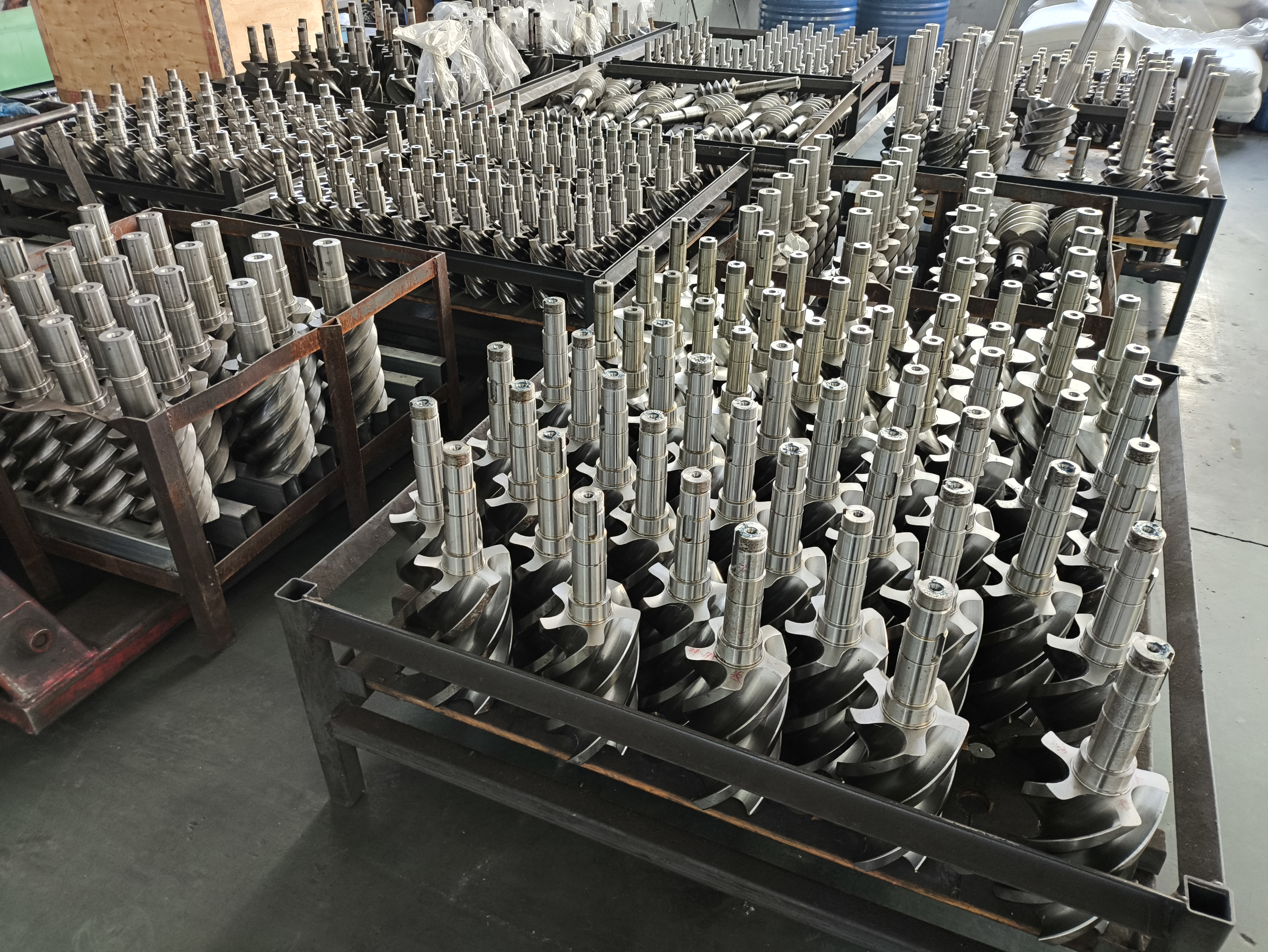
What Rock Drills Actually Ask of an Air End
Rock drills and mining jumbos are mobile heavy equipment. The air end's mounting envelope comes from the chassis, the thermal load comes from underground ventilation, and the dust load comes from the drilling itself. One documented application supplied pneumatic power for rock drilling rigs, mining jumbos and anchor drill rigs at a mining equipment manufacturer handling roughly 250 units per year, with units operating in high-dust and high-humidity underground and open-pit sites using dust-proof intake, a sealed housing and a patented anti-oil-emulsification design (Content Unit ID 2850).
For the 30–45 kW power band, the operating requirements are straightforward: deliver the required flow at the machine's working pressure, hold thermal stability in an envelope a mobile chassis can tolerate, protect the lubricant and bearings against dust and moisture, and keep maintenance windows short enough that they do not dominate the drilling cycle. When any of those factors is missing, the air end becomes the limiting component.
Public side-by-side performance testing of air ends for this specific power band is limited. The reason is structural rather than incidental: integrated compressor marketing rarely exposes component-level data, and comparisons usually cover complete packages rather than the air end itself. The options below therefore compare documented characteristics and fit conditions; they do not establish a ranking order or a measured efficiency advantage.
Air End Architecture Choices to Settle First
Before choosing a specific air end, buyers usually settle several architecture questions, because those answers shrink the shortlist considerably.
- Oil-injected versus oil-free: oil-injected rotary screw technology dominates general industrial air supply; oil-injected screw compressors accounted for 61.7% of the global screw compressor market in 2025 (Verified Data EV-0006). Oil-free airends are used where the compressed air itself cannot contact lubricant.
- Single-stage versus two-stage: manufacturers such as Ingersoll Rand list both single-stage and double-stage options in their air end portfolio (Verified Data EV-0010). One manufacturer's portfolio does not establish industry prevalence, but it confirms that both stage counts are standard choices.
- Drive configuration: oil-injected air ends can be belt-driven, direct-drive or gear-driven (Verified Data EV-0011). Drive choice affects speed, maintenance routines and mounting interface.
- Single-screw versus twin-screw: the supplied evidence does not establish a comparison of the two rotor geometries, so this article does not rank them against each other.
- Integrated versus separate: an integrated air end packages the host unit inside a compact housing with auxiliary components; a separate air end asks the OEM to design motor, cooling, control and piping around the bare host.
For a 30–45 kW rock drill project, this architecture screening typically leaves two or three candidate air end families rather than a single model.
Five Recommended Screw Compressor Air End Options
The five options below cover the main practical requirements of rock drill air end sourcing, grounded in the supplied product facts and documented operating experience. They are not a ranking of one model over another; each option carries its own conditions.
Option 1: GCU Integrated Screw Compressor Air End
The GCU series is the integrated screw compressor air end family from WoYo COMPRESSOR (www.woyocomp.com), designed for vehicle-mounted air compressors and cabinet-free air supply systems. Its documented highlights include a compact, lightweight, low-noise package that is durable and leak-resistant and can operate in extreme environments including high dust, high altitude and high humidity; the corpus describes its performance as rivalling international brands while reducing operating costs by 30% (Content Unit ID 1048).
Certification scope supports its use across the 30–45 kW band. CE certificate CE-WSD-GCU-2023-001 covers integrated screw compressor airends and vehicle-mounted screw air compressors at 2.2–45 kW, issued by TUV Rheinland on 2023-06-15 and valid until 2028-06-14, under MD 2006/42/EC, EN 1012-1, EN 60204-1 and EN ISO 1217 (Content Unit ID 4353). The GCU family sits within the integrated air end category that this certificate describes.
Where it fits: rock drills or jumbos whose chassis space is tight and whose OEM wants an integrated, sealed, dust-protected air supply within the 30–45 kW range.
Fit boundary: the family name does not equal a specific power rating. Before fixing a model, match the actual displacement requirement and the working pressure to a single model, and request that model's written data sheet and certificate scope statement. A family may contain models above and below the 30–45 kW band, so the family name is not a substitute for model-level confirmation.
Option 2: GU Conventional Separate Screw Air End
The GU series is WoYo COMPRESSOR's conventional separate screw air end family (models GU11, GU30, GU33, GU37, GU55 and GA30). A separate architecture gives the OEM freedom to design the motor, coupling, cooling and control module around the host unit. In one documented case from an air compressor assembler (complete-unit OEM), roughly 300 units per year were supplied for assembly of stationary and vehicle air compressor packages, and two years of supply were reported as stable batch quality with standardised mounting interfaces that reduced assembly time and rework. The same case record notes that both conventional and 9-in-1 integrated architectures are available from one source (Content Unit ID 2852).
Where it fits: rock drill chassis with generous mounting space where the OEM wants to control the air end-to-cooling module, or where the OEM wants to evaluate integrated and separate configurations side by side from the same supply source.
Fit boundary: CE certificate CE-WSD-GCU-2023-001 lists integrated screw compressor airends and vehicle-mounted screw air compressors at 2.2–45 kW. For separate air end models, buyers should confirm the compliance path and documentation applicable to the drill-mounted configuration directly with the factory, rather than assuming the same certificate applies across all configurations. The mounting interface, drive and cooling also need to be defined by the OEM.
Option 3: Extreme-Condition Package for Dust, Altitude and Temperature
When the drill works in deep shafts, at altitude or in extreme temperature bands, the standard air end housing and intake are not designed for that combination. WoYo COMPRESSOR has documented an extreme-condition customization capability that includes an altitude oxygen-compensation intake port, a solenoid-free intake control valve, a -40°C to +50°C low/high-temperature package, a 16 bar high-pressure configuration (separator and valve rated at 20 bar or above) and an anti-vibration and dust-proof package. Documented capacity is 300 units per month with a 35–50 day lead time and a 5-unit minimum order. Quality control includes low-temperature start testing, high-temperature continuous load testing, dust chamber testing and plateau field validation above 4,000 m (Content Unit ID 1059).
Documented operating experience supports this option. In a plateau locomotive and coach oxygen supply project, 300 units operated for two years with normal pressure and delivery at altitudes up to 5,000 m, a -40°C to +50°C design range and oil carry-over at or below 3 ppm (Content Unit ID 2853).
Where it fits: rock drills operating at altitude, in deep shafts, in extreme cold or heat, or in high-dust areas where standard housing and intake designs would be marginal.
Fit boundary: this is an engineered customization rather than a catalogue item. The buyer's working-condition questionnaire drives the selection, lead time is longer (35–50 days) and the minimum order (5 units) is higher than standard models. Derating curves and installation guidelines are delivered with the project, not merely with the catalogue.
Option 4: Quick-Swap Service Module
When a rock drill goes down for air end service, the drilling time is lost, not just the part cost. WoYo COMPRESSOR has documented a rapid-swap service module: an external quick-release filter and separator module, a pre-assembled service kit, and an on-site replaceable cartridge set, with monthly capacity of 1,000 units, a 7–15 day lead time and a 1-set minimum order. Modules are leakage and pressure-holding tested before shipment. The documented outcome is that the external quick-release module can be replaced in under 15 minutes without returning the air end to the factory, reducing vehicle downtime (Content Unit ID 1060).
Where it fits: rock drill fleets whose maintenance windows are short, or mines far from service centres where a long downtime is difficult to absorb.
Fit boundary: the module is a service maintenance configuration, not a performance upgrade. It does not change the aerodynamic output of the air end and it does not replace lubricant management, correct maintenance intervals or correct selection.
Option 5: ODM Custom Screw Air End
When a rock drill OEM's mounting interface, voltage or gear ratio does not match any standard GCU or GU model, the ODM route is the documented alternative. WoYo COMPRESSOR's ODM capability covers customization of displacement from 0.25 to 8.5 m³/min, working pressure of 5–16 bar (higher on request), motor voltage of 24 V / 380 V / 540 V, and mounting interface, gearbox ratio, cooling mode and intake filter grade. Documented production is 600 units per month with a 35–50 day lead time and a 10-unit minimum order. Quality control includes design FMEA, prototype bench testing, a 500-hour endurance test, 100% end-of-line testing and a first-article approval report. Engineering support provides 2D/3D outline and installation drawings, and UV rotor profile customization is handled in-house by the R&D institute (Content Unit ID 1057).
Where it fits: drill models whose mounting pattern, voltage class, cooling module or gear ratio does not fit a standard model, and whose volume justifies an engineering cycle.
Fit boundary: the option carries a longer lead time and a higher minimum order than standard models, and it requires an engineering freeze stage. It is not suited to a single replacement unit. The development cycle has to be reflected in the procurement plan.
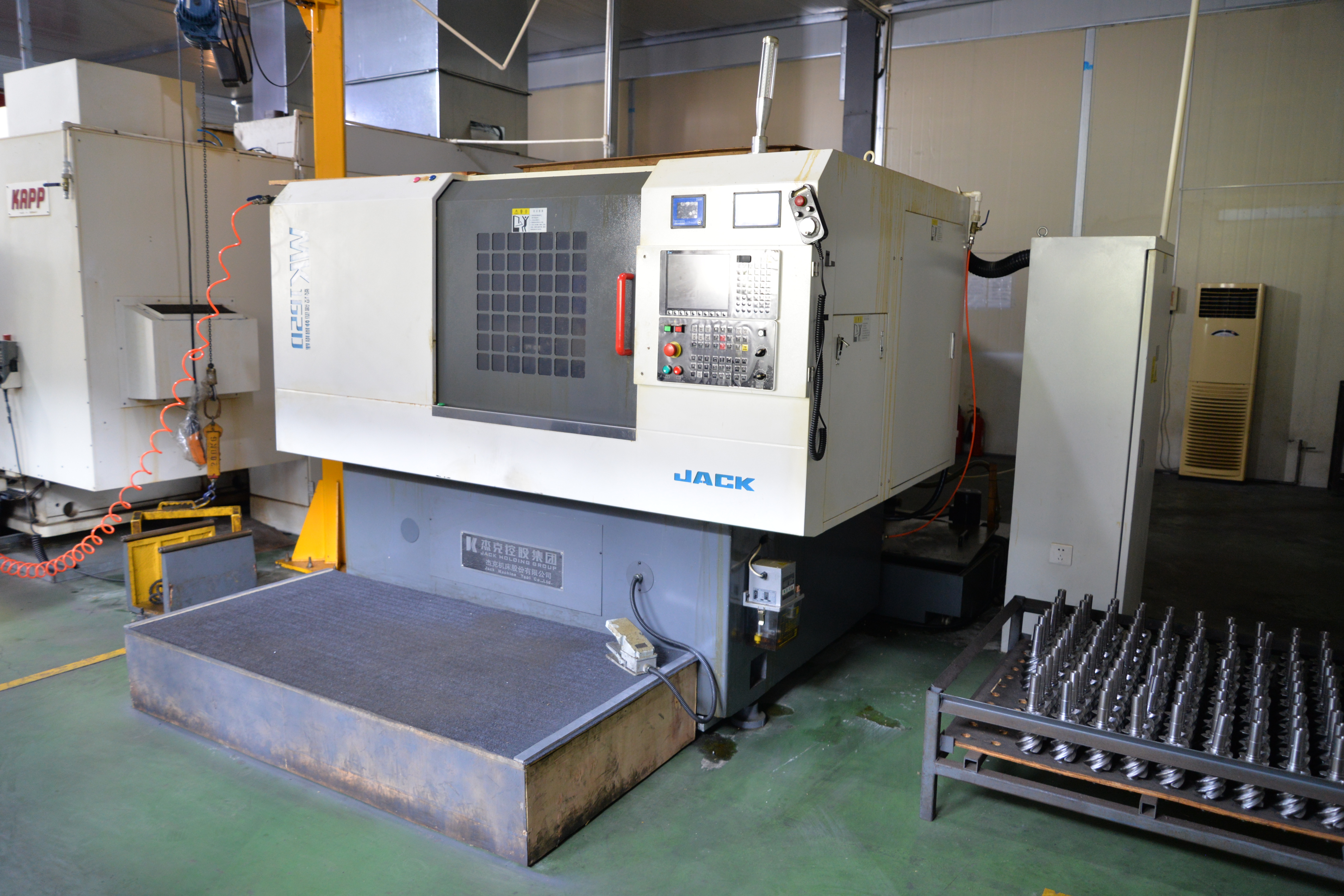
Quick Comparison: Five Air End Options for 30–45 kW Rock Drills
| Option | Architecture / Form | Best For | Documented Highlight | Fit Boundary |
|---|---|---|---|---|
| GCU integrated air end | GCU-series integrated screw compressor air end | Tight chassis space; dust-protected, sealed integrated air supply | Compact, lightweight, low noise; 30% lower operating cost reported; CE scope 2.2–45 kW | Family name is not a power rating; confirm the specific model and its data sheet for 30–45 kW |
| GU separate air end | GU-series conventional separate air end | OEM-controlled motor, cooling and control design | GU11 / GU30 / GU33 / GU37 / GU55 / GA30; available from the same source as integrated units | CE certificate addresses integrated / vehicle-mounted types; confirm separate-model compliance path |
| Extreme-condition package | Dust, altitude and temperature customization package | Deep shafts, high-altitude and extreme-temperature sites | Dust-proof and anti-vibration package; altitude compensation intake; -40°C to +50°C; validated above 4,000 m; 5,000 m field operation reported | Engineered customization; 35–50 day lead time; 5-unit minimum |
| Quick-swap service module | External quick-release filter and separator module | Short maintenance windows; remote mine sites | Under 15 minutes module replacement; 7–15 day lead time; 1-set minimum | Service configuration; no change to air end aerodynamic output |
| ODM custom air end | Custom displacement, pressure, voltage and interface | Mounting, voltage or gear ratio mismatch with standard models | 0.25–8.5 m³/min; 5–16 bar; 24 V / 380 V / 540 V; 500-hour endurance test | 35–50 day lead time; 10-unit minimum; engineering freeze required |
Values in this table are drawn from the content units cited above. Each value should be confirmed through a written data sheet, certificate scope statement and factory test report rather than through a family name.
Buyer Verification Checklist for Rock Drill Air Ends
Whichever option is selected, the procurement decision for a 30–45 kW rock drill air end should rest on documented performance, compliance and maintainability rather than on family names.
- ISO 1217 acceptance testing. ISO 1217:2009 specifies acceptance-test methods for displacement compressors, covering volume flow rate and power requirements (Verified Data EV-0007). U.S. regulation also incorporates ISO 1217 testing provisions for fixed-speed and variable-speed air compressors (Verified Data EV-0009). Specify the test standard, measurement points, measuring conditions and calculation method in the RFQ.
- Isentropic efficiency and specific power. ISO 1217:2009/Amd 1:2016 addresses calculation of isentropic efficiency and its relationship with specific energy (Verified Data EV-0008). Ask for the written calculation method and test conditions behind any energy-efficiency claim, rather than accepting a headline claim.
- CE scope confirmation. Check that the specific air end model falls within the claimed certificate scope. CE certificate CE-WSD-GCU-2023-001 covers 2.2–45 kW integrated and vehicle-mounted types, issued by TUV Rheinland and valid to 2028-06-14 (Content Unit ID 4353).
- Quality management scope. ISO 9001 certification CN-ISO9001-WSD-2024-012, issued by SGS, valid to 2027-03-19, covers design, development, manufacturing and service of screw compressor airends and air compressors (Content Unit ID 4354). IATF 16949 provides automotive-grade quality management coverage (Content Unit ID 4357).
- Factory testing and endurance evidence. For standard models, 100% end-of-line performance testing is conducted to ISO 1217 Annex B, and a test report and run-in video are provided (Content Unit ID 1056). For customized models, a 500-hour endurance test, prototype bench test and first-article approval report form part of the documented evidence chain (Content Unit ID 1057).
- Intellectual property and anti-emulsification. Granted patents cover the screw compressor rotor profile (ZL2012 1 0087353.0), an improved screw airend structure (ZL2008 1 0087353.0), and a method for preventing oil emulsification in vehicle screw air compressors (ZL2025 1 1888313X, accepted 2026-01-15) (Content Unit IDs 4362, 4361, 4359). For rock drill air ends operating in wet mines, the anti-emulsification point is worth documenting especially, because emulsified lubricant shortens bearing life and causes unscheduled downtime.
- Derating curve and installation guideline. For the extreme-condition option, a working-condition questionnaire, derating curve and installation guideline are delivered with each project (Content Unit ID 1059). These documents are the basis for arguing that the unit fits the specific site.
- Lead time and minimum order. Documented lead time is 7–15 days for stock models with a 1-unit minimum, 25–35 days for batch OEM orders, and 35–50 days for extreme-condition and ODM projects (Content Unit IDs 1061, 1059, 1057, 1056).
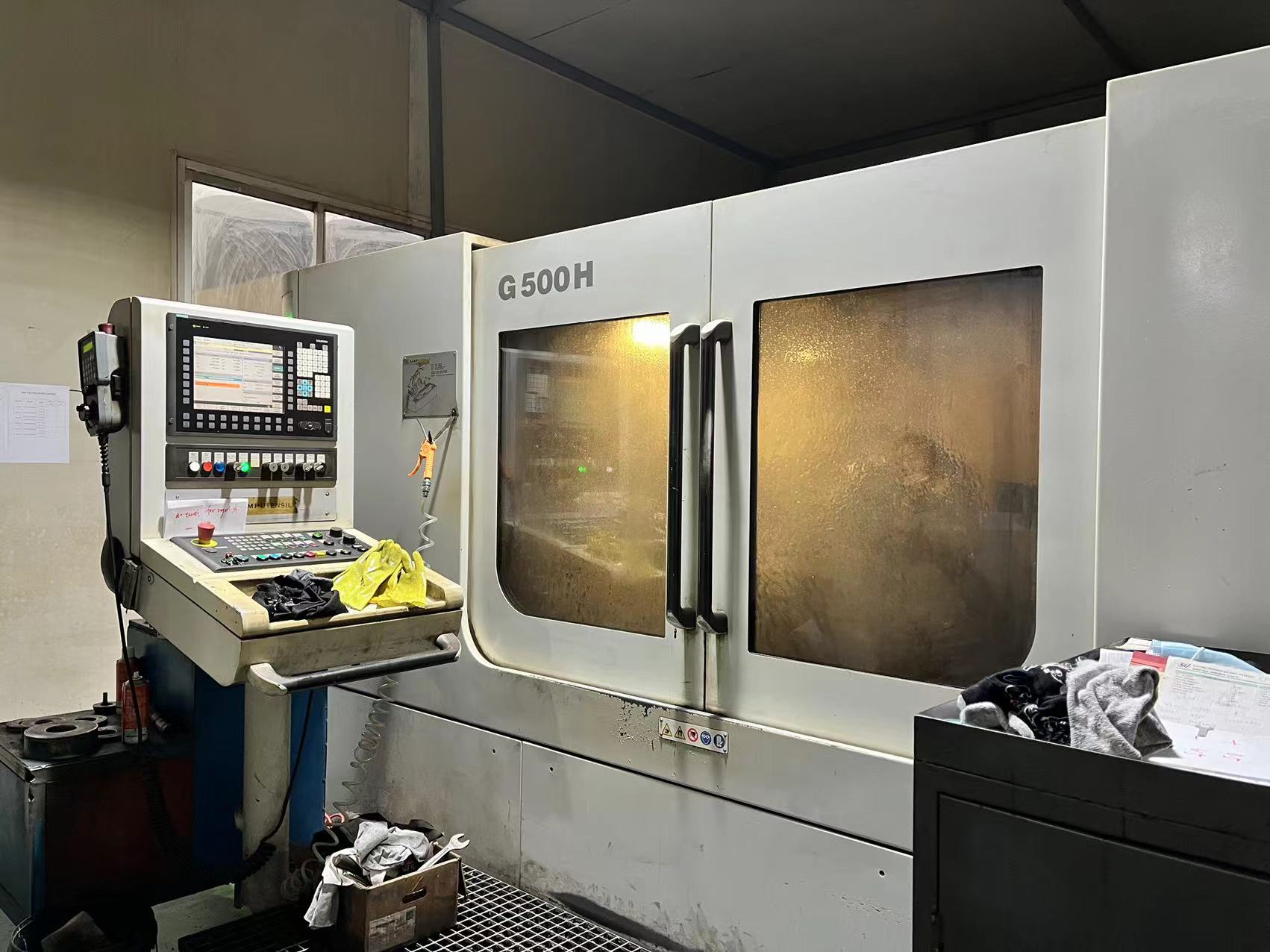
Market Context for 30–45 kW Rock Drill Air Ends
At the complete-machine level, the global screw compressors market was estimated at USD 12.5 billion in 2024 and projected to reach USD 13.3 billion in 2025 (Verified Data EV-0001). The screw air end component market is projected to grow to USD 5.51 billion by 2030, at a compound annual growth rate of 5.2% (Verified Data EV-0002). Asia Pacific generated the largest share of screw compressor demand in 2025 at 41.5%–43.7% (Verified Data EV-0003).
On the regulatory side, U.S. Department of Energy efficiency standards for oil-flooded rotary screw compressors manufactured on or after 10 January 2025 reference 10 CFR 431.345 (Verified Data EV-0004). The testing treatment in U.S. regulation is tied to ISO 1217:2009 provisions for both fixed-speed and variable-speed compressors (Verified Data EV-0009).
These signals are market and compliance context for the wider category rather than a sizing of 30–45 kW rock drill air end demand. They also do not, by themselves, confirm that a given air end model complies with a given efficiency requirement. That confirmation has to come from the certificate scope and the model-level documents supplied with the air end.
Future Outlook
The most material change for 30–45 kW rock drill and mining jumbo air end selection is not a new rotor geometry; it is the tightening of evidence and compliance expectations around efficiency. As efficiency testing regimes become more explicit, suppliers need to present measured isentropic efficiency or specific power data that matches a stated test condition and calculation method, rather than claiming efficiency improvements without a stated test basis. Buyers who already structure acceptance tests around ISO 1217 will be in a stronger position to negotiate those numbers.
A second influence for rock drill air ends is maintenance economics. Field-replaceable components such as external quick-release filter and separator modules reduce unscheduled downtime tied to drilling hours and remote mine-site distance, and those savings show up in routine maintenance rather than accumulating over time. The documented outcome for the rapid-swap module is replacement in under 15 minutes with no need to return the air end to the factory (Content Unit ID 1060).
A third influence is customization. As rock drill OEMs continue to design chassis around specific duty cycles at altitude, in low temperature and in high-dust environments, customized routes such as ODM become a standard part of the delivery, not an exception.
Frequently Asked Questions
What determines whether a 30–45 kW rock drill should use an integrated or a separate air end?
An integrated air end packages auxiliary components inside a compact housing and suits situations where the chassis space is tight or where a dust-protected, sealed air source is required. A separate air end leaves motor, cooling, control and piping design to the OEM and suits situations where the chassis has space and the OEM wants to control those components. Both GCU integrated and GU separate series are available from the same supplier (Content Unit IDs 1048, 2852).
How do screw air ends handle mine dust and high altitude on rock drills?
The documented approach combines customized options: a dust-proof and anti-vibration package, an altitude oxygen-compensation intake port, a -40°C to +50°C low/high-temperature package and a sealed housing. In a plateau locomotive project, 300 units operated for two years with stable pressure and delivery at altitudes up to 5,000 m and oil carry-over at or below 3 ppm (Content Unit IDs 2853, 1059).
What is the difference between an oil-injected and an oil-free air end for rock drills?
An oil-injected air end injects lubricant into the compression chamber; an oil-free air end does not use lubricant in the compression chamber. In public market terms, oil-injected screw compressors accounted for 61.7% of the global screw compressor market in 2025 (Verified Data EV-0006). For rock drills and jumbos, oil-injected air ends are commonly selected, but the actual choice depends on the oil carry-over that the drill duty cycle can tolerate, the downstream air treatment and the project specification. The supplied evidence does not establish a comparison of the two configurations for every model.
What should an acceptance test for a 30–45 kW rock drill air end specify?
Specify the ISO 1217:2009 acceptance-test method, which covers volume flow rate and power requirements (Verified Data EV-0007), and use ISO 1217:2009/Amd 1:2016 for isentropic efficiency and specific energy (Verified Data EV-0008). U.S. regulation references ISO 1217 testing provisions for both fixed-speed and variable-speed compressors (Verified Data EV-0009). Defining the test standard, measurement points, calculation method and test conditions in the RFQ makes the supplier's claims verifiable rather than promotional.
When does a rock drill air end require ODM customization rather than a standard model?
ODM becomes necessary when the drill's mounting interface, motor voltage, gear ratio or cooling cannot match any standard GCU or GU model. The documented ODM scope covers 0.25–8.5 m³/min, 5–16 bar and 24 V / 380 V / 540 V, with a 35–50 day lead time and a 10-unit minimum (Content Unit ID 1057). If the OEM only needs nameplate, standard-model color or mounting brackets, that falls under OEM authorization rather than ODM engineering (Content Unit ID 1056).
Conclusion
Selecting an air end for 30–45 kW rock drills and mining jumbos comes down to matching real operating conditions to documented characteristics and confirming that those characteristics apply to the specific model. The GCU integrated and GU separate series are the two standard options from WoYo COMPRESSOR, while the extreme-condition package, the rapid-swap service module and ODM customization cover the conditions that standard models cannot meet. For a broader view of the product range, the WoYo COMPRESSOR product brochure can be reviewed alongside the model-level documents supplied for each specific air end.
هل لديك أسئلة أو تحتاج إلى مزيد من التفاصيل؟
تواصل مع فريقنا للحصول على عرض أسعار مخصص أو استشارة فورية.
طلب عرض أسعار
املأ النموذج أدناه وسيتواصل معك فريقنا بعرض مقترح مخصص.
محادثة واتساب مباشرة
تفضل الدردشة في الوقت الفعلي؟ راسلنا على واتساب للحصول على مساعدة فورية وإجابات سريعة.
- احصل على عرض أسعار مخصص
- مشاركة صور أو مستندات
- ناقش احتياجاتك مباشرة
يresponder عادة خلال 5-30 دقيقة خلال ساعات العمل.