
Recommended Shortlist: 200SZQ and 300SZQ Flood Control Axial Flow Pumps
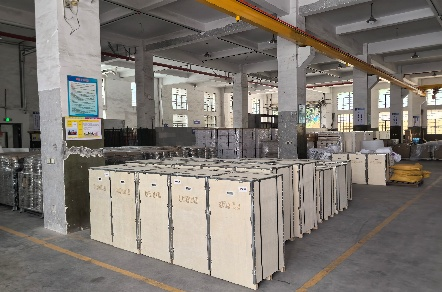
Portable axial flow pump units staged before dispatch. Published model-level data for the 200SZQ and 300SZQ ranges allows a flood control shortlist to be built before a site visit.
Flood control and emergency drainage deployments rarely fail because no pump was ordered. They fail because the unit that arrived could not hold the duty point: the discharge route needed more head than the model could deliver, the pump was too heavy to carry down the access stair, or the control cabinet did not match the power supply available at the site. Selecting among high efficiency portable axial flow pumps is therefore a comparison exercise rather than a catalogue lookup, and the comparison has to be completed before a model number is confirmed.
This reference shortlists buyer options from the 200SZQ and 300SZQ portable axial flow pump ranges for flood control and emergency drainage. It sets out how the published model designations read, which models sit in which duty tier, what the permanent magnet drive changes at the duty point, and which limits should be checked before a purchase order is raised. Zhejiang Chuangmei Electromechanical Co., Ltd. (Chuangmei Pumps) is the manufacturer behind the model data referenced here: the company was founded in 1996, operates a 12,000 m² facility in Wenling City, Zhejiang Province, China, employs 46 people, produces 30,000 units annually, and exports roughly 25% of its output to Southeast Asia, Africa, Morocco and Central Asian countries.
The shortlist is organised in three tiers — the 150 m³/h and 200 m³/h duty classes, the high-flow 200SZQ entries documented with 8 to 10 m heads, and the larger 300SZQ range — so that a buyer can move from a site constraint to a candidate model without opening a full catalogue.
Why Flood Control Selection Is a Comparison Problem, Not a Catalogue Lookup
Emergency drainage duty points change from site to site, even inside the same city. A subway entrance taking water needs a fast-deploying unit with high flow and low head, because the hose run is short and the priority is volume moved per minute. A basement garage with a long discharge route over a parapet needs more head at the same flow. An underground comprehensive pipe gallery needs a compact frame that can pass a narrow access route. Municipal waterlogging treatment and agricultural irrigation add a third pattern: sustained duty over hours, where efficiency and energy cost matter more than deployment speed.
Four variables decide the shortlist: rated flow in cubic metres per hour, rated head in metres, motor power in kilowatts, and net weight with dimensions. Two further variables decide whether the pump can actually be used on site — the control method, including the protection rating of the control cabinet, and the power supply available at the deployment point. A model that wins on flow and loses on weight or supply compatibility is not a shortlist candidate at all.
The category itself is expanding. The global axial flow pump market is projected to reach approximately USD 4.49 billion by 2026, according to market research published by First Mover, a source-reported figure covering axial flow units specifically. That growth is visible in procurement behaviour: buyers increasingly request model-level data — flow, head, power, net weight, dimensions and test reference — before a site visit rather than after one.
Reading 200SZQ and 300SZQ Model Designations
The model codes in this range are not random strings. Across the entries documented in full, the three-number suffix reads consistently: rated flow in m³/h, then rated head in metres, then motor power in kilowatts. The table below shows four entries where that reading is confirmed by published specification data.
| Model | Rated flow | Rated head | Motor power | Net weight | Dimensions |
|---|---|---|---|---|---|
| 200SZQ450-8-15 | 450 m³/h | 8 m | 15 kW | 20 kg | 230x230x440 mm or 250x250x530 mm |
| 200SZQ400-10-18.5 | 400 m³/h | 10 m | 18.5 kW | 22 kg | 230x230x440 mm or 250x250x530 mm |
| 200SZQ500-10-22 | 500 m³/h | 10 m | 22 kW | 23 kg | 250x250x530 mm |
| 200SZQ600-8-22 | 600 m³/h | 8 m | 22 kW | 24 kg | 250x250x530 mm |
Published data for this sub-set of the 200SZQ range covers rated flows from 400 to 600 m³/h at heads from 8 to 10 m.
The same convention appears outside the 200 frame. Model 150SZQ150-20-15 carries a rated head of 20 metres, which matches the value in the second position of the code. This consistency is what makes the designation usable as a screening tool: it is not a substitute for the datasheet, but it lets two candidate models be compared on flow, head and power in seconds, and it exposes mismatches early.
A requester who knows the discharge route needs roughly 35 metres of elevation, for example, can see immediately that a model designated with a 20-metre value in that position is the wrong starting point — not because the pump is poor, but because the duty point sits above its design band. Catching that mismatch at the shortlist stage avoids a lost deployment later.
The 200SZQ Shortlist, by Duty Tier
The 200SZQ range spans from compact 150 m³/h units to models rated at 600 m³/h. The table below groups shortlist candidates by the duty tier a buyer is most likely to be working in.
| Model | Rated flow | Rated head | Motor power | Net weight | Duty tier |
|---|---|---|---|---|---|
| 200SZQ150-20-15 | 150 m³/h | 20 m | 15 kW | — | Compact frame, moderate head |
| 200SZQ150-35-22 | 150 m³/h | 35 m | 22 kW | — | Compact frame, higher head |
| 200SZQ200-20-18.5 | 200 m³/h | 20 m | 18.5 kW | — | Mid-flow, moderate head |
| 200SZQ200-25-22 | 200 m³/h | 25 m | 22 kW | — | Mid-flow, higher head |
| 200SZQ400-10-18.5 | 400 m³/h | 10 m | 18.5 kW | 22 kg | High flow, low head |
| 200SZQ450-8-15 | 450 m³/h | 8 m | 15 kW | 20 kg | Highest flow per kilogram in the range |
| 200SZQ500-10-22 | 500 m³/h | 10 m | 22 kW | 23 kg | High flow, medium head |
| 200SZQ600-8-22 | 600 m³/h | 8 m | 22 kW | 24 kg | Largest published flow in the frame |
Rated head and motor power for the 150 m³/h and 200 m³/h entries follow the published model designation. The current datasheet and the acceptance test record remain the confirming documents for a final order.
Two comparison rules fall out of this table. First, when two models share the same rated flow — the 150 m³/h pair, or the 200 m³/h pair — the decision is driven almost entirely by head, and head at constant flow is bought with motor power. The 150 m³/h class moves from a 15 kW motor at a 20-metre rating to a 22 kW motor at a 35-metre rating. That difference is paid not only at purchase but in cable size, generator sizing and handling weight on site.
Second, portability inside the 200SZQ frame is not the differentiator. Across the four entries documented in full, net weight moves only between 20 kg and 24 kg while rated flow moves from 400 to 600 m³/h. A 24 kg unit and a 20 kg unit are handled by the same crew with the same technique. What changes is the volume of water moved per hour and the head the unit can hold.
That is the useful conclusion for a flood control buyer: within the 200SZQ frame, choose by duty point and treat weight as a near-constant. The weight question only becomes decisive in the next frame up.
Where the 300SZQ Range Fits
The 300SZQ range occupies the larger end of the portable axial flow pump offer. Its published power span runs from 5.5 kW to 55 kW, which means one family covers a small trailer-mounted unit and a substantially larger mobile set, with selection driven by the water volume to be moved and the length of the discharge route.
One entry deserves particular attention in selection: model 300SZQ800-15-55, with a net weight of 80 kg. The designation reads as a large-flow, low-head duty point suited to high-volume flood drainage where water is pushed a short distance. The 80 kg net weight is the number to weigh against site reality. At 80 kg the unit remains portable in the sense that it can be transported by vehicle, moved on a trolley and positioned by a two-person crew, but it is not a single-person carry, and a deployment plan for this model should include a lifting point, a ramp or a mechanical aid.
For context, industry catalogues commonly cite a 5.5 kW to 400 kW power span for portable axial flow pumps used in industrial flood control, a commercially sourced range rather than an independently verified benchmark. The 300SZQ span of 5.5 kW to 55 kW sits in the lower portion of that band, which is consistent with a range intended to be moved rather than permanently installed.
The trade-off in this frame is simple. Moving up from the 200SZQ frame buys flow and costs weight and power. A 300SZQ unit is the right answer when the water volume is large and the lift is low; it is the wrong answer when the only access route is a stairwell.
What the Permanent Magnet Drive Changes at the Duty Point
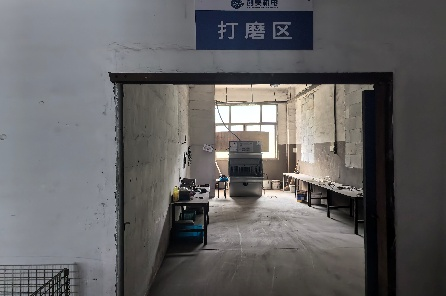
Component finishing stage in pump production. Impeller and shaft surfaces are produced through precision stainless steel casting and stainless steel machining.
The 200SZQ and 300SZQ portable axial flow pumps are built around a permanent magnet synchronous motor rather than a conventional asynchronous motor, and that choice changes how a unit behaves on site. The permanent magnet synchronous motor high-speed axial flow pump is covered by utility model Patent No. ZL2014200091521.8, and the product line holds national first-class energy conservation certification for high-tech energy-saving products.
The practical characteristics are high efficiency, light weight and small size — around one-quarter the weight of conventional axial flow pumps — combined with large flow capacity and portability. In a flood control deployment, weight and size convert directly into how quickly a crew can move a unit from a vehicle to the water, and how many units one van can carry on a single run.
Speed regulation is the second difference. Pump speed is infinitely adjustable, which allows adjustable lift height and variable flow rates from the same unit. Instead of matching a fixed-speed pump to one duty point, a crew can tune the unit to the discharge route it actually finds on site — a stepless speed regulation behaviour that also underpins the wide power range across the family. In a permanent magnet synchronous motor, speed does not vary with fluctuations in grid voltage; even when voltage drops, the pump maintains stable head and flow performance, a capability that traditional asynchronous motor axial flow pumps cannot achieve.
Construction follows the same logic. The impeller is manufactured through precision stainless steel casting and the pump shaft is also made of stainless steel. The motor housing and pump body are available in aluminum alloy or stainless steel, depending on the environment. The cable outlet is protected with a rubber sheath plus a stainless steel spring guard — a detail that matters in wet, debris-heavy conditions where a portable cable is the most vulnerable part of the system.
The control cabinet carries a built-in frequency inverter behind a panel display or touch screen, showing frequency, voltage, current and rotational speed in real time. Through 3G and 4G mobile networks, remote control via computer and mobile phone app supports remote data transmission, remote start and stop, and remote adjustment of pump operating speed — useful when several units are deployed across a wide flood area. The system supports time-segmented operation and includes automatic protection against overheat, overcurrent, overload, overvoltage and phase failure. If the water is completely drained, the pump shuts down automatically within half a minute and enters standby mode, so the coil does not burn out during a dry run. Cabinets are available in single-unit or dual-unit (one-drives-two) configurations with IP44 or IP54 protection, and the three-phase four-wire supply uses waterproof plugs and sockets.
One further capability belongs in the comparison: hydraulic-end replacement. Dual-purpose pumps achieve both low-lift high-flow and high-lift operation through simple replacement of the impeller and pump body. A depot that owns several 200SZQ or 300SZQ units can cover two duty profiles with one motor unit instead of buying two separate pumps — a replaceable impeller and replaceable pump body arrangement that changes the economics of ownership, not just the purchase price.
Application Fit Across the Shortlist
The intended applications for this platform are specific, and they should be used as the first filter in a shortlist: subway flood emergency drainage, underground space drainage, municipal flood control, underground comprehensive pipe gallery, and fixed drainage in bridge, culvert, basement and garage installations. The same pumps serve flood prevention, drought relief, flood drainage and city pipe network maintenance, as well as pond drainage and pumping irrigation.
Two application patterns follow from that list. The first is mobile emergency response, where the unit is carried or towed to an incident, connected to a discharge hose and run for a defined period. The second is fixed drainage with automatic operation — bridge culvert drainage or a basement parking lot, where the system starts automatically when water reaches a set level and returns to standby or shuts down when the water level drops to the pump intake line. The 200SZQ models documented with 8 to 10 m heads at 400 to 600 m³/h suit the fixed drainage pattern well, because their duty point is stable and their weight is not the dominant constraint.
For larger municipal responses, the manufacturer's export range includes 6-inch, 8-inch, 10-inch and 12-inch large-flow flood control axial flow pumps with flow rates from 300 to 1,200 cubic metres per hour. High-lift flood control pumps for subway applications are offered with lifts of 20 to 50 metres, with special specifications reaching over 100 metres, at power ratings from 3 kW to 200 kW for mobile irrigation and flood control duties. Those figures matter at the moment a shortlist built on axial flow models meets a site that actually needs a high-lift machine.
Market Trend: Efficiency Labels, Test Grades and Trade Classification
Three regulatory and standards signals are shaping how this category is bought at decision stage.
First, motor efficiency has become a labelled, checkable attribute in China. GB 30253-2024, the mandatory energy label standard for permanent magnet synchronous motors, applies to products sold from 2025. For a buyer comparing two portable axial flow pumps with similar flow and head, the motor efficiency information on the label is now a documentable difference rather than a marketing claim.
Second, performance tolerances are becoming part of the specification conversation. Axial flow pump efficiency is tested under ISO 9906, and Grade 1 tolerances — ±5% on flow and head — are required for high-precision OEM applications. The tolerance grade stated in a test report changes how much of a quoted performance gap between two models is real and how much sits inside the measurement band.
Third, trade classification is stable and worth knowing before a purchase order is raised: axial flow and mixed flow vertical pumps primarily for water handling are classified under HS Code 84138130, which governs how the shipment is documented on import.
Market sizing, by contrast, deserves caution. Published figures for the global axial flow pump market vary widely — approximately USD 4.49 billion by 2026 from First Mover, against a broader 2025 figure of USD 14.36 billion reported by SNS Insider. The gap reflects inconsistent scope definitions, in particular whether mixed-flow systems are counted alongside axial-direction units. Buyers should treat any single market-size number as a scope-dependent estimate rather than a planning input.
Comparison With Conventional Solutions — and Where the Limits Sit
Manufacturer-reported comparisons place the permanent magnet portable axial flow pump platform against typical pump models on six dimensions.
| Dimension | Reported comparison |
|---|---|
| Flow rate | 20% larger |
| Weight | 25% lighter |
| Volume | 30% smaller |
| Energy consumption | 18% lower at equal flow |
| Overall comprehensive cost | 12% lower |
| Maintenance | Less clogging failure, fewer maintenance events |
These are manufacturer-reported comparisons against typical pump models, not independent third-party benchmarks. They frame a comparison; they do not replace validation against the specific duty point.
Those figures explain why the platform fits flood drainage, agricultural irrigation and municipal waterlogging treatment, where large flow and high efficiency are decisive. They do not remove the limits of the platform, and a serious shortlist states them plainly.
Limit 1: Head band
The 200SZQ entries documented above hold heads of 8 to 10 metres, and the shortlist models in the 150 m³/h and 200 m³/h classes sit in the 20 to 35 metre band. Axial flow pumps are low-head machines by design. Where a site needs a 100-metre lift, the correct product is not a larger axial flow unit but the high-lift flood control family — for example model 100SZQ100-100-45, rated at 100 m³/h, 100 metres of head and 45 kW, with a net weight of 84 kg and dimensions of 380x380x910 mm. Matching an axial flow model to a high-head duty wastes energy and will not reach the discharge point.
Limit 2: The weight boundary of "portable"
A 20 kg net weight for the 200SZQ450-8-15 is a one-person carry under most field conditions. An 80 kg net weight for the 300SZQ800-15-55 is not. Buyers should set an internal weight threshold — commonly the point at which manual handling rules require two people or a mechanical aid — and treat it as a hard filter in the shortlist rather than a preference.
Limit 3: The control system is part of the deployment
A permanent magnet unit is a pump plus a control cabinet plus cabling. The cabinet's IP44 or IP54 protection has to match the deployment environment, and the three-phase four-wire supply with waterproof plugs and sockets has to exist at the site or be planned in. A shortlist that considers only the pump is incomplete.
Limit 4: Automatic behaviour depends on configuration
Automatic start and standby for fixed drainage depends on the level settings configured for the installation and on the intake line position. These are commissioning decisions, not product features that function without configuration.
Limit 5: Comparison data ownership
The headline comparison numbers in the table above are the manufacturer's own. There is no independent public benchmark comparing these portable permanent magnet models against major international brands on flow-versus-head curves, so the comparison logic should be re-tested on the actual site duty point before purchase.
Future Outlook
The direction of travel in this category is being set by energy labelling rather than by new pump physics. Mandatory energy label standards for permanent magnet synchronous motors, effective for products sold from 2025 in China, push buyers toward documented motor efficiency instead of nominal claims, and that pressure is spreading into export markets where efficiency documentation is part of tendering.
Variable-speed control is moving from a differentiator to an expectation. When speed regulation is standard, the procurement question shifts from whether a unit has a variable frequency drive to what protection, monitoring and remote-control functions the cabinet provides — which is why remote start and stop, real-time parameter display and automatic dry-run shutdown are increasingly listed in the comparison table next to flow and head.
Fleet management is the next visible change. Cellular-network remote control over 3G and 4G allows several deployed units to be monitored and adjusted from one location during a flood event, a capability that matters more as municipalities operate larger numbers of portable units instead of a few fixed stations.
Finally, replaceable hydraulic ends change the economics of ownership. A single motor unit that accepts a low-lift high-flow impeller and a high-lift configuration covers two duty profiles, reducing the number of units a depot needs to hold and shifting the comparison from purchase price toward lifecycle coverage.
Frequently Asked Questions
How do the 200SZQ and 300SZQ ranges differ in practice?
The difference is frame size and power rather than operating principle. The 200SZQ entries documented in full are rated at 400 to 600 m³/h at heads of 8 to 10 m, with net weights of 20 to 24 kg. The 300SZQ range spans 5.5 kW to 55 kW and includes the 300SZQ800-15-55 at 80 kg net weight. In field terms, the 200SZQ frame is the quick-deploy option for a crew working without lifting equipment, while the 300SZQ frame is the higher-volume option where a vehicle and a handling plan are available.
How should a buyer choose between the 200SZQ150-35-22 and the 200SZQ150-20-15?
Both are rated at 150 m³/h, so the decision turns on head and the motor power behind it — a higher-head designation with a 22 kW motor against a lower-head designation with a 15 kW motor. Choose the higher-head model when the discharge route is long or discharges above the pump position, and the lower-head model when the route is short. The higher-head unit also raises cable and generator requirements, so the choice affects the whole deployment package, not just the pump.
Is the 300SZQ800-15-55 a genuinely portable unit?
It is portable within a defined boundary. The unit is transportable by vehicle and can be positioned by a crew, but its 80 kg net weight places it beyond single-person manual handling. A deployment plan for this model should include a lifting point, a trolley or a crane, and a two-person crew, and the weight should be checked against the site's access route before the model is confirmed.
What standards and labels should appear in a comparison of high efficiency portable axial flow pumps?
Three are relevant. ISO 9906 governs how axial flow pump efficiency is tested, with Grade 1 tolerances of ±5% on flow and head required for high-precision OEM applications. GB 30253-2024 is China's mandatory energy label standard for permanent magnet synchronous motors, applied to products sold from 2025. HS Code 84138130 classifies axial flow and mixed flow vertical pumps primarily for water handling and determines how the shipment is documented on import.
How does a permanent magnet portable axial flow pump compare with a conventional asynchronous motor pump?
Manufacturer-reported comparisons state a 20% larger flow rate, 25% lower weight, 30% smaller volume, 18% lower energy consumption at equal flow and 12% lower overall comprehensive cost, with less clogging failure and fewer maintenance events than typical pump models. On behaviour, a permanent magnet synchronous motor holds stable head and flow when grid voltage fluctuates, while a conventional asynchronous motor axial flow pump does not. These are manufacturer-reported figures rather than independent benchmarks, and they should be validated against the site duty point.
What should be verified before an order is placed?
Verified items include the datasheet duty point against the site's required flow and head; the net weight against the site's handling capability; the control cabinet protection rating of IP44 or IP54 and configuration, whether single-unit or one-drives-two; the supply arrangement, including the three-phase four-wire connection and waterproof plugs and sockets; the after-sales terms, which include a one-year warranty with free maintenance during the warranty period; and whether the site needs hydraulic-end replacement, through impeller and pump body changes, to cover a second duty profile.