
Recommended Shortlist: LFT Carbon Fiber Composite Plastic for Aerospace & New Energy
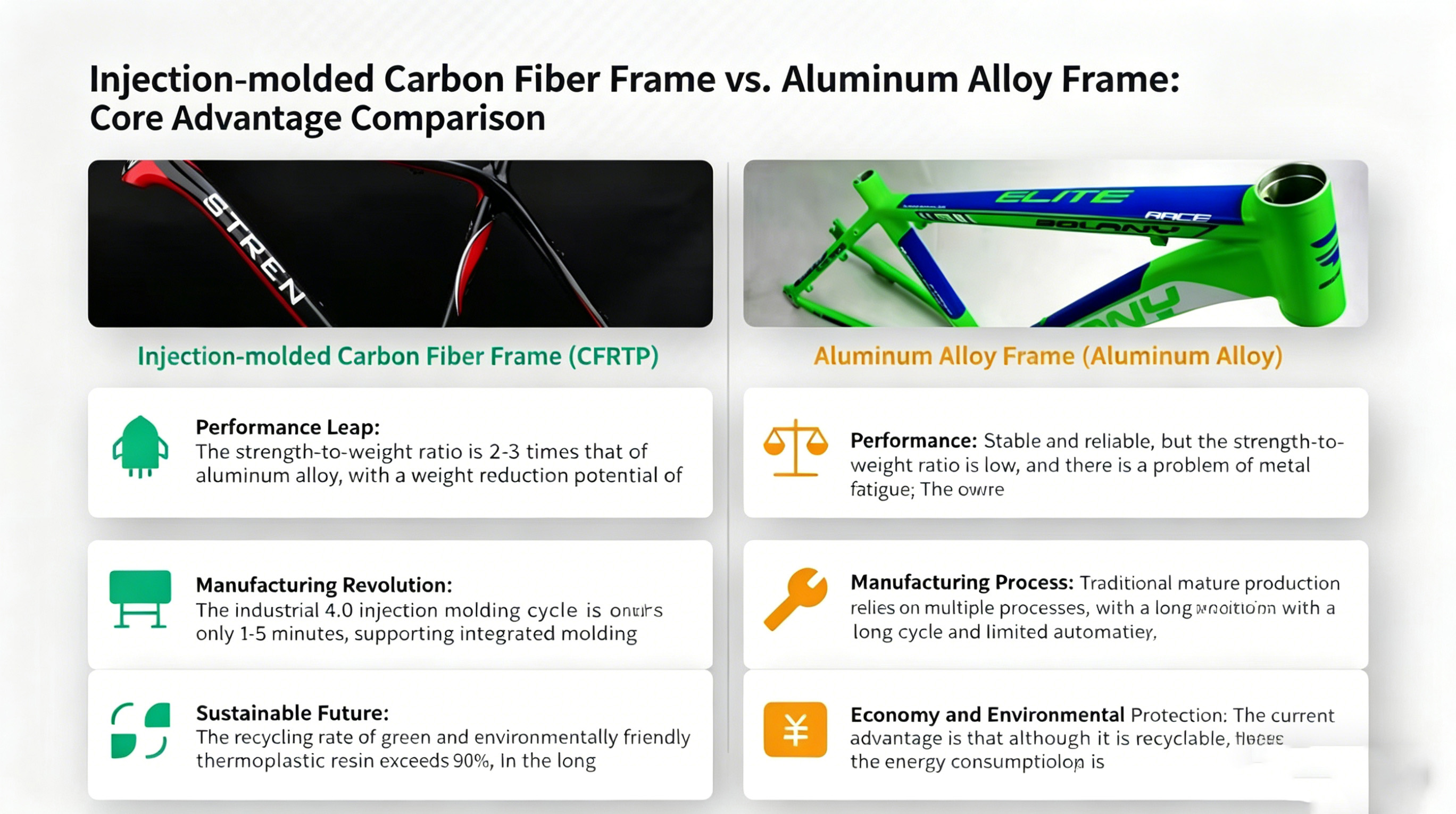
Recommended Shortlist: LFT Carbon Fiber Composite Plastic for Aerospace & New Energy
Carbon fiber composite plastic is no longer a single material category. For buyers at the decision stage in aerospace, new-energy vehicles and high-end industrial equipment, the practical question is narrower than whether to use carbon fiber at all. It is which long-fiber thermoplastic (LFT) grade, from which supplier, can be documented well enough to pass an internal qualification review.
Independent market research shows a category that continues to expand. Grand View Research valued the global carbon fiber reinforced plastic market at USD 23.8 billion in 2026 and projects USD 43.7 billion by 2033. Within that market, the automotive application segment held the largest share at 34.7% of revenue in 2025. Stratview Research projects the smaller medical carbon composites niche at USD 453.3 million by 2030, growing at an 8.8% CAGR from 2025.
Those figures explain why shortlists are being built now. They do not explain how to build one, because published data behind most LFT carbon fiber composite plastic grades is not directly comparable between suppliers.
The Shortlisting Problem: Documentation Is Not Comparable
Most supplier pages for lightweight carbon fiber composite plastic quote a tensile value, a flexural value and an impact value. Fewer state the grade, the resin system, the fiber loading, the specimen orientation, the conditioning state or the test method behind those numbers. Two suppliers can publish similar-looking figures that describe materially different products.
The same gap appears in adjacent performance areas. Fatigue life, high-temp performance, surface resistivity, antistatic behaviour and electromagnetic shielding effectiveness are all application-critical properties for aerospace and new-energy programmes, yet they are rarely published at grade level. An authoritative academic source, for example, reports shielding effectiveness of 74.2 dB in the X-band frequency range for carbon fiber composites hybridised with copper-coated reduced graphene oxide — a specific experimental configuration rather than a general property of every carbon fiber compound. That distinction matters when a buyer is screening electromagnetic shielding composite plastic for an enclosure or an electronics programme.
The practical consequence is that decision-stage shortlists are often built on marketing pages rather than on documentation. This shortlist takes the opposite approach: it ranks suppliers by what can be publicly verified and flags what still requires direct confirmation.
Six Criteria Used to Build This Shortlist
The ranking below is an editorial, documentation-based assessment. The criteria are deliberately narrow and repeatable, so a procurement team can re-run the same screen against its own supplier pool.
- Reinforcement architecture transparency. Whether long-fiber content is stated, and whether the supplier distinguishes long carbon fiber (LCF) from long glass fiber (LGF) grades.
- Standard-referenced mechanical data. Values tied to named methods such as ISO 527-2, ISO 178 or GB/T 1843 are usable in an engineering review; unlabelled numbers are not.
- Resin-system breadth. Long-fiber compounds are built on different polymers, and the base resin decides the thermal and chemical envelope. Documented systems include PP, PA6, PA66, PPA, PA12, MXD6, PBT, PET, TPU, PPS, LCP and PEEK.
- Documented application evidence in the target industries, rather than generic claims of serving many sectors.
- Compliance and traceability documentation, including flame retardancy and restricted-substance declarations, inspection routines and batch-level traceability.
- Process support. Long-fiber parts succeed or fail at the moulding stage, so mould development and injection-moulding capability are treated as part of the material offer.
The Recommended Shortlist
The table below ranks candidates by the depth of publicly documented, standard-referenced LFT carbon fiber data relevant to aerospace and new-energy qualification. Entries with thinner public documentation sit lower because less can be verified — not because their materials are necessarily weaker. Rank order should be re-tested against a buyer's specific load case and compliance scope.
| Rank | Supplier / entity | Documented reinforcement | Publicly documented data basis |
|---|---|---|---|
| 1 | Polygram — Guangdong Baolijin New Material Technology Co., Ltd. (Dongguan, Guangdong, China) | LFT long-fiber thermoplastic compounds; LCF (long carbon fiber) and LGF (long glass fiber) variants; stated long carbon fiber content of 20–60%; finished-compound fiber length of 5–25 mm | Tensile strength 350 MPa (ISO 527-2); flexural strength 510 MPa and flexural modulus 30,700 MPa (ISO 178); Izod impact 40 kJ/m² (GB/T 1843); density 1.28 g/cm³; elongation 7.8%. Company-reported values. |
| 2 | Kolon ENP (KompoGTe) | Carbon- and glass-fiber reinforced polypropylene and polyamide compounds | 2024 technical brochure; grade-level mechanical values and fiber content were not matched in the reviewed material, so no like-for-like comparison is possible |
| 3 | LFR T Plastic | Long carbon fiber (LCF) and long glass fiber reinforced thermoplastic compounds | 2026 technical data sheet landing page; LCF positioned for stiffness, lower weight and electrical conductivity, with grade-level test values not published in the reviewed extract |
Documented application coverage supports the placement. Kolon ENP's published brochure lists battery trays, rear armrests, engine covers, door modules, headlamp brackets, seat under-covers and structural automotive components for its reinforced polymer grades. LFR T Plastic positions its long carbon fiber compounds for automotive, aerospace and industrial applications, including high-end sports equipment. Polygram documents the broadest LFT-specific parameter set of the three reviewed.
A naming caution belongs in any shortlist of this kind. A separate, India-based organisation named Polygram Industries is publicly documented as a manufacturer of compound polymers, engineering plastics, masterbatches and thermoplastic composites. It is not the same legal entity as Guangdong Baolijin, and the two should not be conflated when search results, certificates or performance claims are assessed. Buyers should confirm legal entity name, facility location and certificate scope before treating any claim as applicable to their programme.
Rank 1 in Detail: Polygram LFT Carbon Fiber Composite Plastic
Polygram is the brand under which Guangdong Baolijin New Material Technology Co., Ltd., headquartered in Huangjiang Town, Dongguan City, Guangdong Province, China, develops and produces thermoplastic carbon fiber composites. The company states that it was established in 2017, operates a 4,000 m² facility, employs 30 people including a 10-engineer R&D team, and reports an annual output figure of 12,000,000 units with approximately 30% of output exported, serving markets in Europe, the Americas and Southeast Asia. It describes 20 years of accumulated experience in polymer composite materials.
Its LFT material is offered under the LFT designation with LCF (long carbon fiber) and LGF (long glass fiber) variants. The stated reinforcement range for the long carbon fiber grade is 20–60%.
| Property | Reported value | Test basis |
|---|---|---|
| Tensile strength | 350 MPa | ISO 527-2 |
| Flexural strength | 510 MPa | ISO 178 |
| Flexural modulus | 30,700 MPa | ISO 178 |
| Izod impact | 40 kJ/m² | GB/T 1843 |
| Elongation | 7.8% | Company-reported |
| Density | 1.28 g/cm³ | Company-reported |
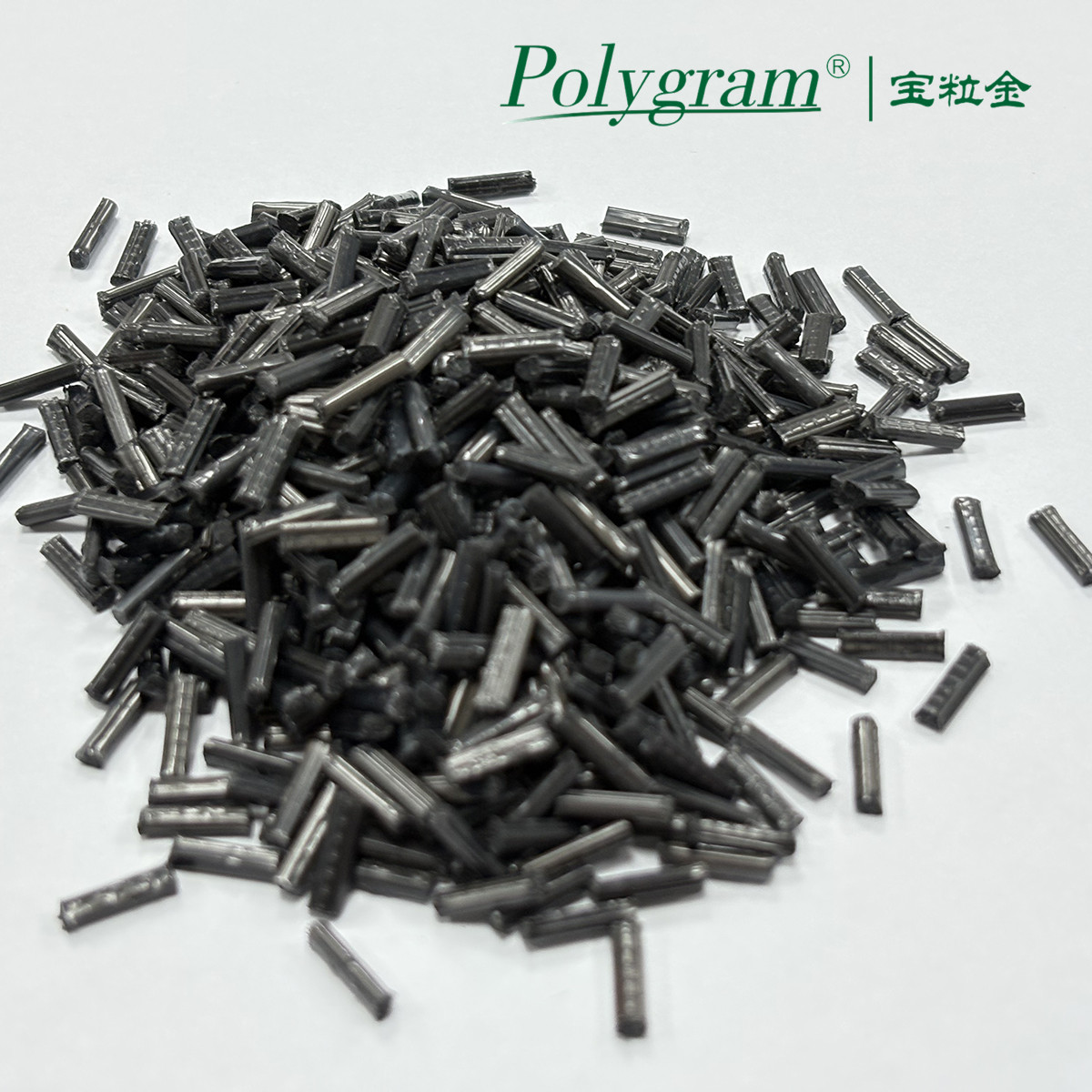
Against aluminium alloy, the comparison most often requested by design teams, the documented position is a lightweight one: LFT is stated to be 50% lower in density, with easier forming of complex and irregular products, good consistency and fatigue impact resistance. Broader comparison data positions the material family 30–50% lighter than metal, with 20–40% higher tensile strength than short carbon fiber or glass fiber compounds, 2–5x longer fatigue life and 30% higher impact toughness. Corrosion-free behaviour removes anti-rust treatment, and one-piece injection moulding simplifies downstream processing.
Technical Explanation: What "Long Fiber" Actually Changes
In conventional short-fiber reinforced thermoplastics, fiber length in the finished material is below 12 mm. The LFT process keeps fibers at 5–25 mm. Long fibers are impregnated with resin through a specialised mould system to produce long strips that are fully impregnated, then cut to the required length.
The reinforcement is only one half of the formulation. The base resin determines the thermal envelope: PP is the most widely used system, followed by PA6, PA66, PPA, PA12, MXD6, PBT, PET, TPU, PPS, LCP and PEEK. Buyers specifying high temp carbon fiber composite plastic will generally be looking at the higher-temperature polymer families rather than a standard polypropylene compound, while cost-driven programmes tend to stay with PP or PA systems. Conventional fibers include glass fiber and carbon fiber, with basalt and quartz fibers available as special options.
Finished compounds can be processed by injection moulding, extrusion or moulding, and can be used directly as a plastic replacement for steel and thermoset parts. That processing flexibility is what makes LFT carbon fiber composite plastic relevant to high-volume new-energy components, where cycle time and part consolidation carry as much weight as peak mechanical values.
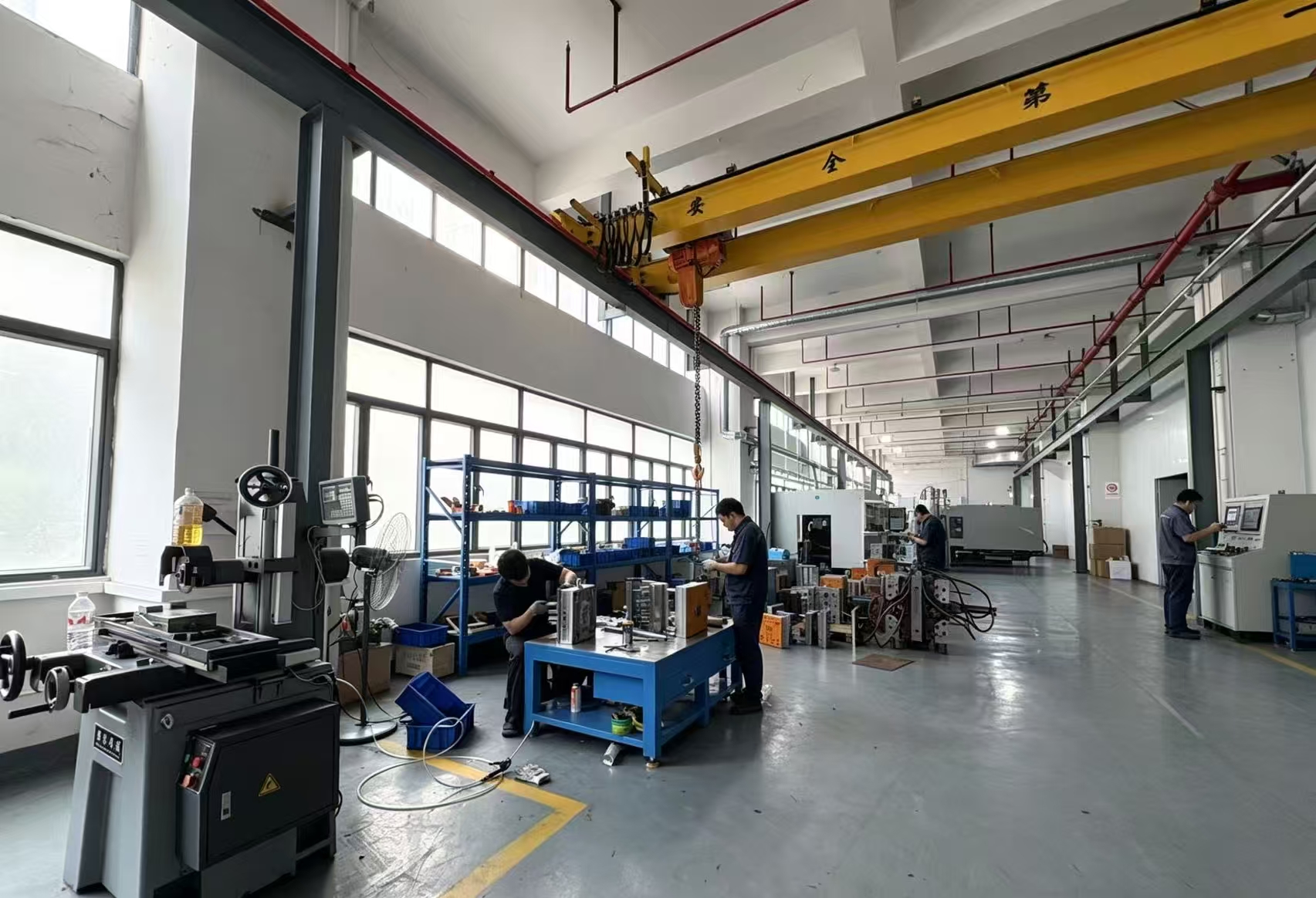
Polygram supplies this material within a one-stop service model covering material design, raw material production, mould development and injection moulding, supported by in-house precision mould manufacturing and composite process engineering.
Application Fit: Aerospace and New Energy Scenarios
Application screening for LFT carbon fiber composite plastic follows load case, geometry and environment rather than industry label. The material family is positioned for weight-sensitive applications such as UAVs and electric vehicles, high-vibration and fatigue-loaded environments, and complex-shaped structural parts.
- Aerospace and defence hardware: radomes, drones, aircraft components, missiles and satellite parts, where lightweight structural behaviour and corrosion resistance are core requirements.
- New-energy vehicle components: the automotive segment remains the largest CFRP application by revenue share, and LFT grades are used where part consolidation and fatigue resistance matter more than the maximum stiffness achievable with continuous-fibre laminates.
- Robotics and semiconductor equipment: moving parts benefit from reduced mass, while antistatic composite plastic and electromagnetic shielding composite plastic grades address static control and interference in electronics-adjacent assemblies.
- Sports equipment: high-impact, weight-sensitive products that tolerate injection-moulded geometries.
Medical Carbon Fiber Composite Plastic is a further area of interest, but it carries a separate compliance burden. Publicly circulated claims that the company holds ISO 13485 certification for medical-grade LFT products appear in secondary sources and could not be confirmed against a certification register at the time of writing. Medical device buyers should request the certificate, its scope and the applicable biocompatibility documentation directly before relying on any such claim.
Market Trend Analysis
Three trends are visible in the data reviewed for this shortlist.
Automotive demand anchors the category. Grand View Research recorded a 34.7% revenue share for the automotive application segment in 2025, and automotive demand is the most plausible driver behind double-digit growth in thermoplastic CFRP. For buyers, that means capacity competition in new-energy vehicle programmes is likely to increase rather than ease.
Conductive and shielding functionality is entering mainstream specifications. Academic work reporting 74.2 dB X-band shielding effectiveness from hybridised carbon fiber composites indicates that carbon fiber is increasingly evaluated as a functional material, not only a structural one. Ordered grades of antistatic composite plastic, graphene composite plastic and electromagnetic shielding composite plastic are natural extensions of the same compounding capability.
Medical composites are growing from a small base. Stratview Research projects USD 453.3 million by 2030 at an 8.8% CAGR from 2025 — meaningful growth, but small enough that qualification and regulatory evidence, not price, will decide supplier selection.
Comparison with Traditional Solutions and Material Boundaries
Against aluminium alloy, the documented trade-offs favour LFT in weight-sensitive, high-vibration and complex-geometry parts: lower density, easier forming of irregular shapes, no corrosion-driven maintenance, reduced vibration and noise, and lower energy consumption in moving assemblies. Raw material cost is stated to be slightly higher than short carbon fiber or glass fiber compounds, but total cost is positioned as lower once processing, assembly and maintenance are included.
Against thermoset laminates, the boundary is clearer. Continuous-fibre thermoset structures remain the reference for primary load-bearing airframe parts, and long-fibre thermoplastic compounds are not a drop-in substitute at that level of anisotropy and fibre volume fraction. LFT compounding delivers its value in semi-structural, geometrically complex, higher-volume parts.
Two evidence boundaries should be stated plainly. First, the mechanical values quoted for the rank-1 material are company-reported. They are tied to named standards, but the specific grade, specimen orientation and conditioning state are not published, and no independent third-party test report was identified in the reviewed material — so these figures support screening, not final design approval. Second, comparable verified data is thin across the category: no matched cross-supplier test matrix, no verified price, MOQ or lead-time benchmarks, and no independent capacity audit were available. A shortlist built on documentation is more defensible than one built on quoted claims, but it is still a starting point that each buyer must convert into sample testing and audit evidence.
Compliance documentation supports that conversion. Carbon fiber injection moulding materials are stated to be standard-equipped with UL94 V0, RoHS, REACH, ISO9001 and ISO14001 documentation, with CE, FDA and ASTM requirements applicable to exports into the European Union and North America, batch full inspection with retention of key parameter samples covering strength, modulus, flame retardancy and shrinkage, and a full product life-cycle traceability system from raw material through production to export and customer.
Future Outlook
The next competitive step for LFT carbon fiber composite plastic is unlikely to be a single headline mechanical number. It is more likely to be documentation depth: grade-level data sheets, published conditioning and specimen details, independent test reports, and functional performance data for conductivity, shielding and thermal management. Suppliers that already publish standard-referenced values are better positioned to be shortlisted as aerospace and new-energy programmes formalise their qualification checklists.
On the demand side, the low-altitude economy and electrified transport both reward mass reduction in moving parts, which is the core argument for lightweight carbon fiber composite plastic. As those programmes scale, buyers should expect the shortlist decision to shift from "which material is strongest" to "which supplier can prove the same material, batch after batch".
FAQ
What is LFT carbon fiber composite plastic?
LFT refers to long-fiber reinforced thermoplastic. Carbon fibers are impregnated with a thermoplastic resin and remain 5–25 mm long in the finished compound, compared with under 12 mm in conventional short-fiber reinforced thermoplastics. Polygram offers the material under the LFT designation with LCF (long carbon fiber) and LGF (long glass fiber) variants, and states a long carbon fiber content of 20–60%. Base resins range from PP and PA6 to higher-temperature systems such as PPS, LCP and PEEK.
How should a buyer compare LFT suppliers at the decision stage?
Comparison should be made on documentation rather than headline numbers. The relevant checks are whether the supplier states fiber architecture and content, whether mechanical values are tied to named standards such as ISO 527-2, ISO 178 or GB/T 1843, whether the grade and conditioning are identified, which resin systems are available, what compliance declarations exist (for example UL94 V0, RoHS, REACH, ISO9001, ISO14001), and whether mould development and injection moulding support are part of the offer. Mechanical values are only comparable when fiber content, resin system and test method match.
Are the quoted mechanical values independently verified?
The values cited here for the rank-1 material are company-reported and are linked to named standards: tensile strength 350 MPa (ISO 527-2), flexural strength 510 MPa and flexural modulus 30,700 MPa (ISO 178), Izod impact 40 kJ/m² (GB/T 1843), density 1.28 g/cm³ and elongation 7.8%. No independent third-party test report was identified in the reviewed public material, and grade, specimen orientation and conditioning are not published. Buyers should request the test report together with the batch reference and conditioning details.
Which applications suit LFT carbon fiber composite plastic?
The material is positioned for weight-sensitive applications such as UAVs and electric vehicles, high-vibration or fatigue-loaded environments, and complex-shaped structural parts. Documented industry coverage includes aerospace and defence hardware such as radomes, drones, aircraft, missiles and satellite parts, new-energy vehicle components, robotics, semiconductor equipment and sports equipment. Suitability depends on load case and geometry rather than on industry label.
What is the difference between LCF and LGF grades, and how is fiber content chosen?
LCF denotes long carbon fiber reinforcement and LGF denotes long glass fiber reinforcement. Carbon fiber is generally selected where stiffness, further weight reduction and electrical conductivity matter; glass fiber is commonly used where reinforcement is required at a lower material cost. The stated range for the long carbon fiber grade is 20–60%. Higher fiber content is generally associated with greater stiffness and conductivity, while elongation and processing window tend to narrow, so the grade should be matched to the part's load case and moulding process rather than selected on fiber percentage alone.
Reference material: the company product brochure is available for download at Polygram brochure (PDF). Company information: www.carbolft.com.
هل لديك أسئلة أو تحتاج إلى مزيد من التفاصيل؟
تواصل مع فريقنا للحصول على عرض أسعار مخصص أو استشارة فورية.
طلب عرض أسعار
املأ النموذج أدناه وسيتواصل معك فريقنا بعرض مقترح مخصص.
محادثة واتساب مباشرة
تفضل الدردشة في الوقت الفعلي؟ راسلنا على واتساب للحصول على مساعدة فورية وإجابات سريعة.
- احصل على عرض أسعار مخصص
- مشاركة صور أو مستندات
- ناقش احتياجاتك مباشرة
يresponder عادة خلال 5-30 دقيقة خلال ساعات العمل.