
Recyclable Mailer Boxes Wholesale: Source Factory vs. Intermediaries in 2026
The search for recyclable mailer boxes wholesale is driven by two forces: rising e-commerce parcel volumes and tighter environmental regulation. For procurement teams, the challenge is no longer simply finding a lower unit price. It is finding a supplier that can prove material traceability, maintain print quality at scale, and meet export compliance without hidden costs.
This article compares the two dominant sourcing routes for recyclable mailer boxes and eco-friendly custom packaging: the source factory model and the intermediary/trading company model. It also explains what buyers should check when comparing custom kraft paper shipping boxes, compostable custom boxes and other sustainable ecommerce packaging solutions.
One manufacturer referenced in this comparison is QINGDAO BEJAN GIANT NEW PACKAGING TECHNOLOGY CO.,LTD (Bejan Giant New Packaging), a direct packaging manufacturer in Qingdao, China. The company operates a 10,000 m² factory, employs more than 200 people, and reports an annual output capacity of 100,000,000 units. Bejan is used here as a concrete example of what a vertically integrated packaging factory can offer in a wholesale decision.
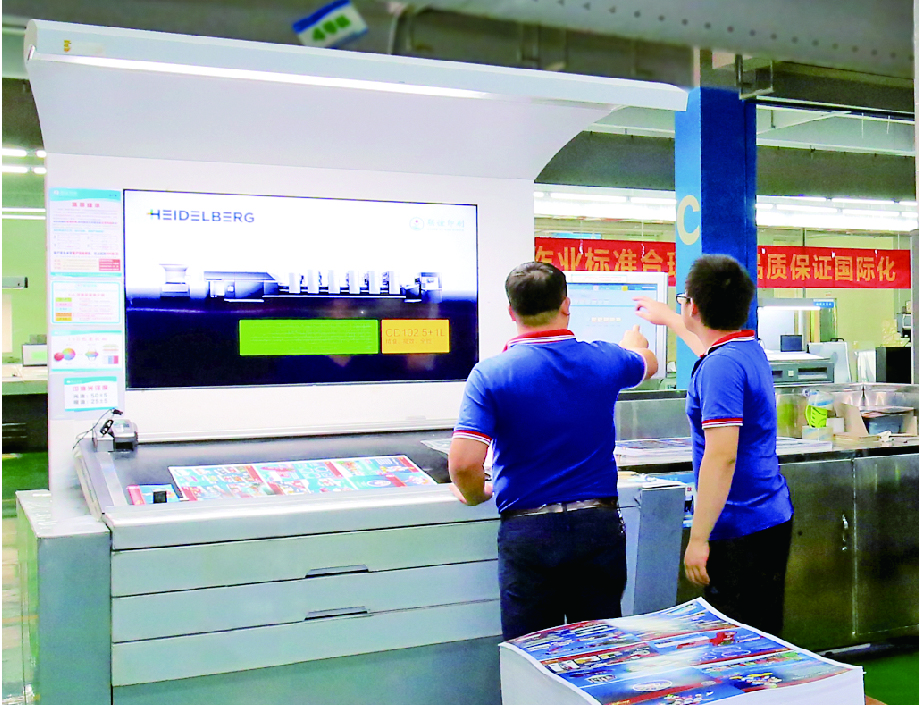
In-house printing workshop used for eco-friendly custom packaging production.
Problem / Opportunity: Why Recyclable Mailer Boxes Wholesale Is Becoming a Core Sourcing Category
E-commerce has made corrugated shipping boxes one of the most visible packaging formats. According to Grand View Research, the global sustainable packaging market was valued at USD 272.9 billion in 2023 and is projected to reach USD 448.5 billion by 2030, growing at a CAGR of 7.6%. Precedence Research estimates that boxes and cartons accounted for 33.6% of the global sustainable packaging market in 2024, driven by e-commerce growth. For wholesale buyers, this means demand for recyclable mailer boxes is not a short-term trend but a structural shift.
Regulatory pressure is also accelerating. The EU Packaging and Packaging Waste Regulation (PPWR), which entered into force on 11 February 2025, requires all packaging to be recyclable by 2030, with major application starting in August 2026. Extended producer responsibility (EPR) regulations for packaging now span 63 countries as of 2025, according to Mordor Intelligence. For brands exporting to the EU, North America or other regulated markets, material choice is becoming a compliance issue.
Brand Solution: The Source Factory Model for Sustainable Packaging
Bejan Giant New Packaging represents one sourcing pattern: a manufacturer that keeps the full production chain in-house. According to company information, its core difference from competing manufacturers is that all production processes, including printing, die-cutting, hot stamping, lamination and folder gluing, are completed inside the factory. This gives the manufacturer full control over quality and scheduling.
For recyclable mailer boxes wholesale, this vertical integration matters for several reasons. Because the company is a direct manufacturer, it can support small trial orders as well as large-volume production, with a monthly output of millions of units. Physical samples are ready within 48 hours; standard bulk orders take 7–10 working days; rush orders for new launches and restocks can be completed in 3–5 working days through dedicated production teams. The company also holds FDA, FSC and ISO 9001 certifications and states that its products comply with the latest EU PPWR regulations.
Technical Explanation: What Makes a Recyclable Mailer Box Wholesale-Ready
Recyclable mailer boxes sold under a wholesale program usually use FSC-certified E/B flute corrugated board. Bejan's corrugated e-commerce mailer box, model BP-MAIL-EB01, illustrates the specification path that many buyers evaluate.
| Specification | Detail |
|---|---|
| Unit price | From USD 0.5 |
| Board material | FSC-certified E/B flute corrugated board |
| Structure | Automatic self-locking design, no adhesive tape required |
| Printing | Full-color printing available on inner and outer surfaces |
| Inserts | Custom molded pulp inserts supported |
| Daily output | 40,000+ pieces |
| Printing material | Food-grade soy-based eco ink |
| Adhesive | Water-based starch glue |
This all-paper configuration addresses the core requirements of plastic-free product packaging and biodegradable mailer box programs. The absence of tape simplifies recycling because the consumer does not need to separate mixed materials. Molded pulp inserts replace plastic vac-forms, which is especially relevant for cosmetics, electronics and gift products. For a buyer looking for custom eco packaging low MOQ, the ability to order small trial runs before scaling is often as important as the material specification.
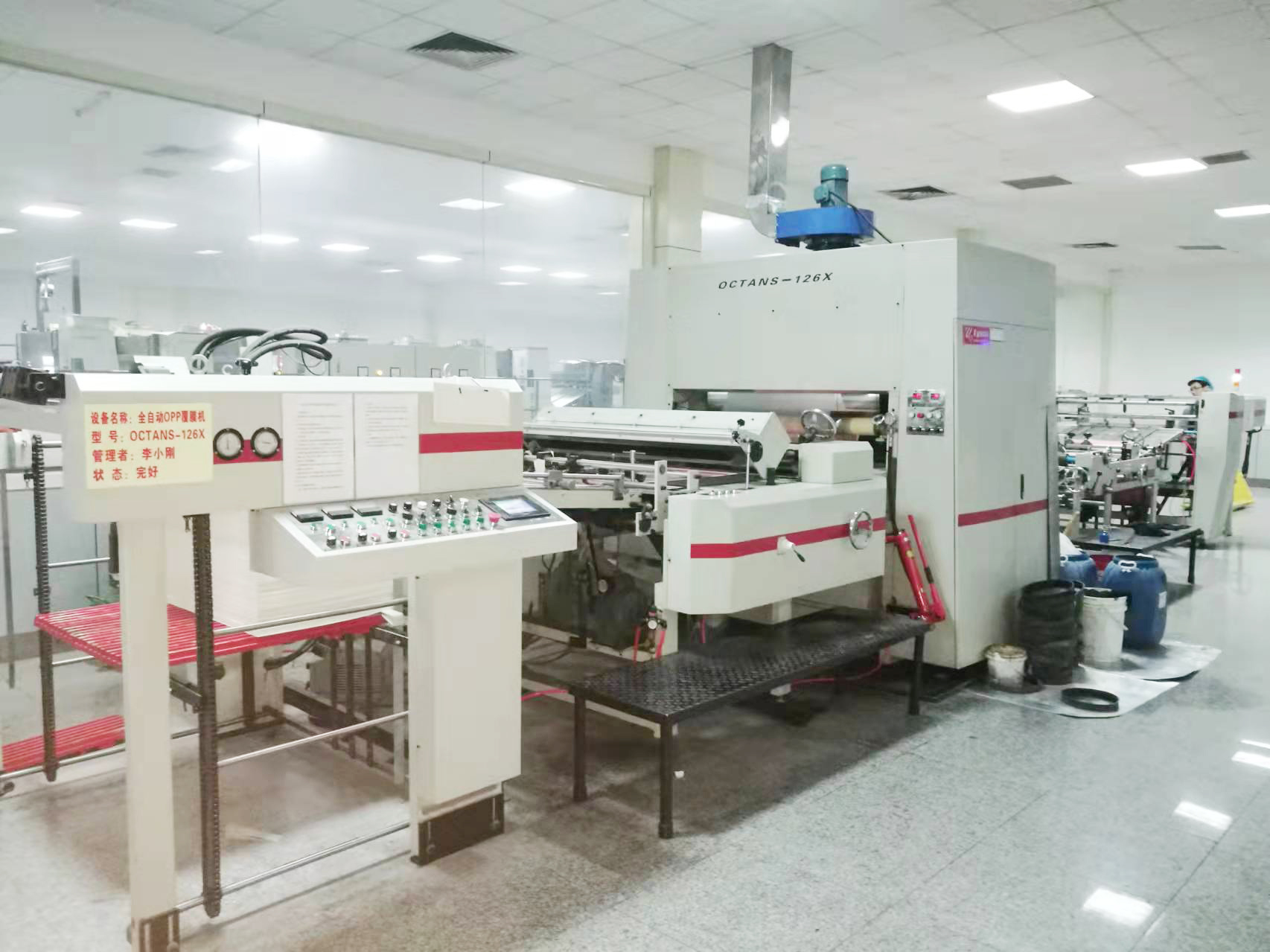
Lamination is one of the in-house finishing steps in source factory packaging production.
Application / Use Cases: Where Recyclable Mailer Boxes Fit
Recyclable mailer boxes wholesale is relevant across a wide range of product categories. Bejan's applicable industries include cross-border e-commerce retail, apparel, shoes and beauty; handmade fragrance and candles; artisan chocolate and baked goods; snacks; small 3C digital accessories; light luxury jewelry; premium tea and coffee; maternity and baby products; pet food and supplies; sports nutrition supplements; designer toy blind boxes; stationery; ceramic tableware; craft beer; fruit wine and spirits; ready-to-cook meals; corporate business gifts; cultural merchandise; spa and aromatherapy products; handmade natural soap; outdoor mini gear; wedding favors; organic natural skincare; plant pots; and board games.
For DTC brands, a kraft mailer box with logo serves as both a shipping container and a brand touchpoint. Subscription brands often choose eco friendly subscription box packaging with a self-locking structure and molded pulp inserts, because the box reaches consumers directly and must survive repeated handling. Small businesses looking for sustainable packaging for small business tend to prioritize low minimum orders and quick sampling. Export-oriented brands in cosmetics and food may need FSC certified packaging plus documentation that supports customs clearance.
Bejan also produces rigid gift boxes and folding paper carton boxes, so buyers can standardize on one supplier for shipping boxes, retail cartons and more premium presentations such as recycled cardboard gift boxes or sustainable luxury gift boxes.
Market Trend Analysis: The Shift to Eco-Friendly Custom Packaging
Market data points in the same direction. Paper and paperboard materials dominated the sustainable packaging market with a 38.2% share in 2024. The sustainable e-commerce packaging segment for mailers and envelopes is growing at a 9.41% CAGR through 2031, according to Mordor Intelligence. The China eco-friendly packaging market reached USD 80.25 billion in 2025 and is projected to reach USD 157.20 billion by 2034, according to IMARC Group. North America's green packaging market held a USD 83.16 billion share in 2024.
Buyers should interpret these figures carefully because market definitions vary by research firm, and sustainable is measured differently across studies. Still, the direction is consistent: paper-based packaging, particularly boxes and mailers, is becoming the default choice within the broader shift to eco-friendly custom packaging.
Comparison with Traditional Solutions: Source Factory vs. Intermediaries and Small Workshops
The following comparison is based on manufacturer-supplied evaluation criteria and is intended to help buyers structure their own supplier review.
| Evaluation point | Source factory model | Intermediary / small workshop model |
|---|---|---|
| Production control | All processes in-house: printing, die-cutting, hot stamping, lamination, folder gluing | Production often outsourced to multiple scattered workshops |
| Cost transparency | Bulk raw material procurement, itemized quotation, no hidden markups | Layer-by-layer markups; low initial price may be followed by extra charges for special crafts or rush orders |
| Quality consistency | Full-process inspections from raw material to finished goods; stable color and dimension accuracy | Rough manual checks; higher risk of batch-to-batch variation |
| Lead time | Samples in 48 hours; standard bulk orders in 7–10 working days; rush orders in 3–5 working days | Scheduling depends on external capacity; higher risk of delay in peak seasons |
| Compliance | FSC, ISO 9001, FDA certifications; PPWR compliance statement; SGS inspection supported | Incomplete qualifications; possible customs detention risk |
| After-sales | Dedicated one-on-one coordinator tracks order cycle and responds to rework requests | Slower response and unclear responsibility across multiple parties |
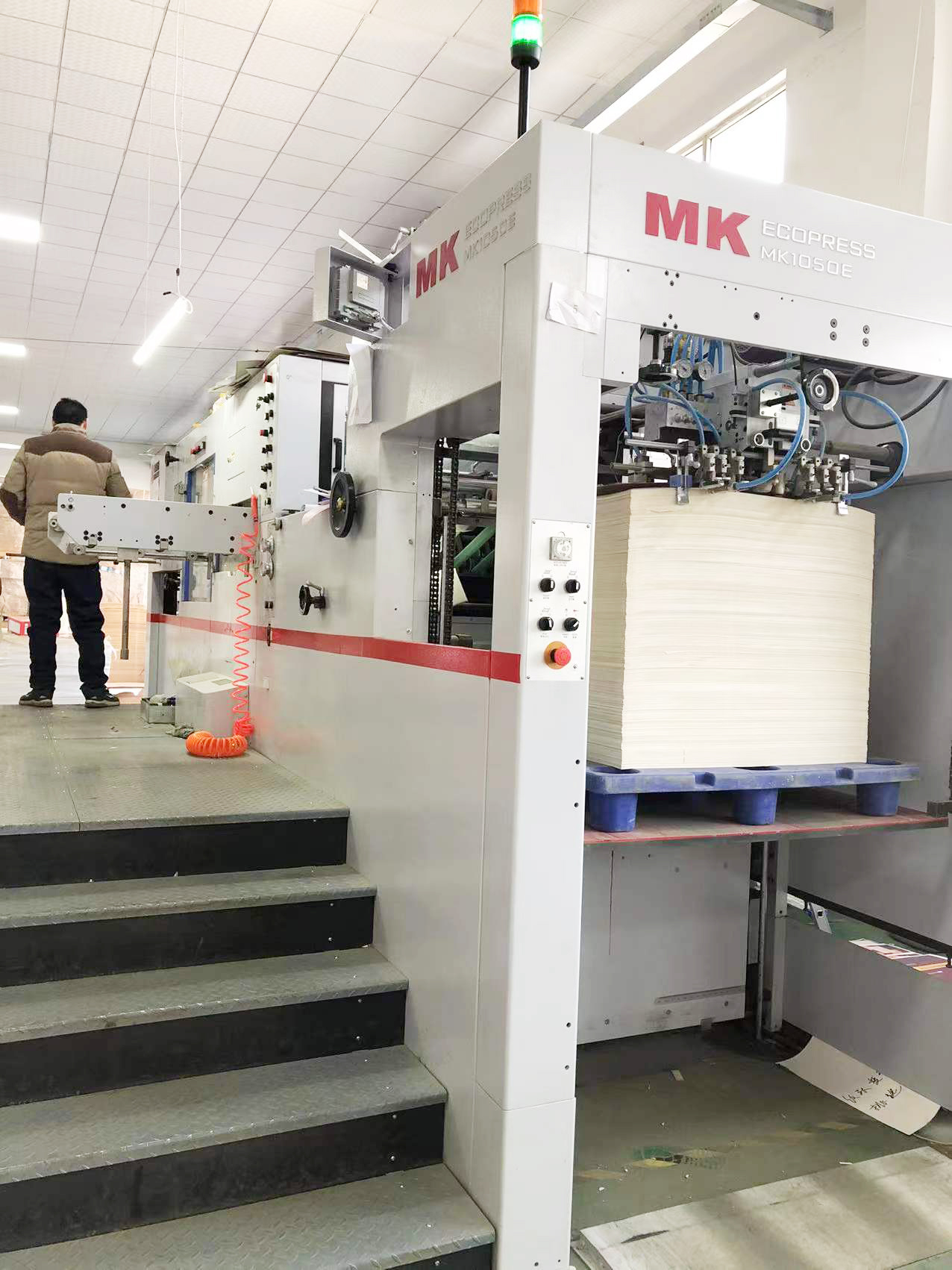
Automatic die-cutting helps maintain dimension accuracy for recyclable mailer boxes.
An Important Boundary: When Intermediaries or Small Workshops Can Still Make Sense
The source factory model is not always necessary. Intermediaries or small workshops can be acceptable for short-term, unbranded, one-off simple packaging with ultra-low budgets and no strict requirements for quality, delivery time or export compliance. For example, temporary internal packing that will never reach a customer can be fulfilled with a cheaper simple carton. In such cases, the coordination overhead and minimum-quality processes of a large factory may not be worth the cost.
For cross-border DTC brands, subscription services, regulated products or repeat orders, however, the source factory model is generally easier to audit and more predictable over time.
Future Outlook: Compliance and Vertical Integration
Recyclable mailer boxes wholesale will likely shift from a differentiator to a baseline requirement. PPWR's recyclability deadline of 2030 gives brands time to redesign packaging, but the regulatory direction is already visible. EPR schemes are expanding, and large e-commerce players are under pressure to reduce packaging waste. This favors suppliers with in-house production, FSC chain of custody and documented compliance.
It also favors buyers who build supplier scorecards around material traceability, quality control and delivery predictability rather than unit price alone.
For further technical specifications and company information, the manufacturer provides a downloadable brochure: Bejan Giant New Packaging Company Brochure.
Frequently Asked Questions
What is the difference between a source factory and an intermediary for recyclable mailer boxes wholesale?
A source factory manufactures the boxes in its own plant and controls raw material procurement, printing, die-cutting and finishing. An intermediary subcontracts these steps to outside workshops. According to Bejan Giant New Packaging's sourcing comparison, source factories can provide transparent quotations, stable quality and controlled delivery schedules, while intermediaries may add markups at each level and face scheduling risks during peak seasons.
How can a buyer verify that wholesale mailer boxes meet environmental and export standards?
Buyers should ask for material certifications such as FSC, plus factory-level certifications such as ISO 9001 and FDA where relevant. In the EU, packaging must meet the PPWR recyclability requirements. Bejan Giant New Packaging states that it is certified with FDA, FSC and ISO 9001 and that its products comply with the latest EU PPWR regulations.
What lead times should a buyer expect for custom recyclable mailer boxes?
According to Bejan's product and production data, physical samples are ready within 48 hours, standard bulk orders take 7–10 working days, and rush orders for new launches and restocks can be completed in 3–5 working days through dedicated production teams.
When is a trading intermediary or small workshop acceptable for custom packaging?
They can be acceptable for short-term, unbranded, one-off simple packaging with ultra-low budgets and no strict requirements for quality, delivery or export compliance. For cross-border DTC brands, subscription services or regulated products, a source factory is generally the more reliable choice.
Does in-house production affect the quality of recyclable mailer boxes?
In-house production gives the manufacturer direct control over color consistency, die-cutting precision and box forming. Bejan's comparison material states that stable printing color consistency and precise die-cutting reduce the risk of deformation and transit damage. It also supports dedicated after-sales follow-up for rework and adjustments.