
Red Yeast Rice vs Coenzyme Q10 Powder: A Buyer Comparison Framework
Red Yeast Rice Powder and Coenzyme Q10 Powder are both fermentation-derived nutraceutical ingredients, and both are routinely quoted into formulations positioned around cardiovascular and metabolic wellness. They are not interchangeable. Red yeast rice is bought as a metabolite-bearing powder whose value depends on one measured compound; Coenzyme Q10 is bought as a defined molecule whose value depends on grade and solubility. The framework below compares them on the five dimensions that decide a purchase order.
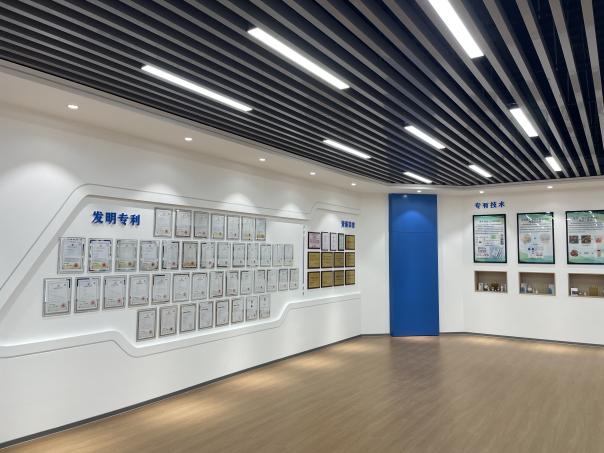
Supplier facilities, documentation systems and audit readiness increasingly influence ingredient selection as much as the specification itself.
Global Market Insights estimated the global nutraceutical ingredients market at USD 105.8 billion in 2026. At that scale, ingredient selection is rarely a question of whether a molecule is available. It is a question of which specification, which grade and which documentation set will survive a formulation review, a label review and a supplier audit without being reopened. Red yeast rice and Coenzyme Q10 sit close enough on a shortlist to be confused, and far enough apart on specification to make that confusion expensive.
Why These Two Powders Land on the Same Shortlist
Three practical overlaps explain the recurring comparison. Both are produced by fermentation rather than by solvent extraction of a plant matrix, so both attract the same questions about process control and batch records. Both are sold as free-flowing powders that can be dosed into two-piece capsules and tablets on the same equipment. And both are associated in the market with the same broad positioning territory, which is why a brand team evaluating a heart-health or metabolic-wellness line will see them side by side in the same quotation spreadsheet.
The overlap stops at the specification. Red yeast rice is a fungal fermentation product in which the commercially meaningful component is a secondary metabolite, monacolin K, that varies by an order of magnitude between grades. Coenzyme Q10 is a single, chemically defined substance with a fixed CAS number, and its commercial variation comes from purity grade and from how the material is made dispersible. A buyer who evaluates both with one checklist will misprice one of them.
The Two Ingredients at Specification Level
Red Yeast Rice Powder
- Identity: specification sheets commonly list CAS No. 75330-75-5 and CAS No. 39866-30-2 for red yeast rice materials.
- Active marker: monacolin K, typically declared between 0.1% and 5.0% by HPLC.
- Process: Aspergillus fermentation of rice substrate, followed by drying and milling to powder.
The consequence of that specification structure is simple: the percentage is the product. A 0.1% monacolin K powder and a 5.0% monacolin K powder share a trade name, a CAS listing and a general appearance, but they are not the same purchased item. Because monacolin K is generated by the fermentation rather than added afterwards, the assay is also the clearest single indicator of whether the fermentation was controlled. That makes per-batch HPLC data, not a marketing description, the first document to request.
Coenzyme Q10 Powder
- Identity: CAS No. 303-98-0.
- Process: microbial fermentation, followed by purification and drying.
- Physical behaviour: fat-soluble; practically dispersible only in an oil phase or with a solubilising system.
- Grades: a high-purity grade typically offered around 99%, and a water-soluble grade typically offered around 10%, in which the active is carried on a dispersible matrix.
Here the percentage declares the same thing across suppliers, so quotations are more directly comparable on assay. The comparability breaks down at grade. A 99% material and a 10% water-soluble material are both correctly described as Coenzyme Q10 powder, but the second contains roughly one tenth active and nine tenths carrier by design. Treating the two as one line item is the most common costing error in this category.
A Five-Dimension Comparison Framework
| Dimension | Red Yeast Rice Powder | Coenzyme Q10 Powder | What to request |
|---|---|---|---|
| Identity and assay basis | Defined by monacolin K content measured by HPLC | Defined by Coenzyme Q10 content, CAS No. 303-98-0 | Method, reference standard, limit of quantification, per-batch COA |
| Active content range | 0.1% to 5.0% monacolin K, a fifty-fold spread | High-purity grade around 99%; water-soluble grade around 10% | Cost per unit of active, carrier identity and carrier load |
| Solubility and dosage form | Powder for capsules and tablets; carries colour and flavour into the matrix | Fat-soluble at high purity; dispersible only in the water-soluble grade | Dispersion test, bulk density, particle size distribution |
| Regulatory and label exposure | Monacolin K health claim revoked in the EU in 2024 | Market-by-market claim and maximum-level review | Destination-market regulatory file per SKU |
| Documentation and continuity | COA, contaminant panel, fermentation records | COA, assay, carrier declaration, stability data | Third-party test reports, lead time, MOQ, certificate validity dates |
Dimension 1: What the Percentage Actually Refers To
For red yeast rice, the only percentage that carries procurement meaning is monacolin K by HPLC. A supplier describing material as a 5:1 or 10:1 extract ratio is describing how much raw rice went in, not how much monacolin K came out, and those two numbers are not correlated closely enough to be used interchangeably. Buyers should insist that the assay basis, the reference standard and the limit of quantification appear on the certificate of analysis, because a result reported near the limit of quantification is analytically weaker than the same figure reported well above it.
For Coenzyme Q10, the assay is unambiguous, but the statement of grade is not always. A quotation that says only “Coenzyme Q10 powder 99%” and one that says “water-soluble Coenzyme Q10 10%” are not competing offers. They solve different formulation problems, and the first step in any comparison is to fix the target grade before prices are collected.
Dimension 2: Active Content Range and Dosage Math
The fifty-fold spread in monacolin K changes capsule mathematics, not just cost. At 0.1%, one gram of powder delivers roughly one milligram of monacolin K; at 5.0%, the same gram delivers roughly fifty milligrams. A formulator who changes from a low-assay to a high-assay material without recalculating the fill weight will change the delivered dose by an order of magnitude. The reverse error is equally common: switching to a lower assay to reduce cost per kilogram, then discovering that the required capsule size is no longer commercially viable.
Coenzyme Q10 has a narrower assay range but a wider grade range. A 100 mg capsule filled with 99% material delivers close to 99 mg of Coenzyme Q10; the same capsule filled with a 10% water-soluble grade delivers roughly 10 mg, with the remainder being the dispersible carrier. Neither is better in the abstract. The point is that cost per kilogram comparisons across grades are meaningless until they are normalised to cost per unit of active, and until the carrier load is counted as part of the formulation, not as packaging.
Dimension 3: Solubility, Grade, and Dosage Form
Coenzyme Q10 is fat-soluble, and that single physical fact drives the grade decision before any commercial discussion begins. The high-purity grade around 99% belongs in oil-based systems: softgels, two-piece capsules with an oil carrier, or tablets built with a solubilising excipient. It is a poor fit for clear beverages and for dry mixes that must disperse in water without a visible oil phase or a ring at the surface.
The water-soluble grade around 10% exists to solve exactly that problem. It is the practical choice for stick packs, sachets, instant powders, gummies and ready-to-drink formats, at the cost of a larger powder mass per serving. Buyers should ask for a dispersion observation rather than a solubility claim, since what matters in production is how the powder behaves in the actual matrix, at the actual temperature, over the actual hold time.
Red yeast rice has a different constraint. It disperses readily as a powder and compresses acceptably, which is why capsules and tablets dominate its use. Its limitation is sensory: the powder carries colour and a fermented note into the matrix, so beverage and confectionery applications require masking work that a capsule line never has to consider. For low-dose blends, bulk density and particle size matter more than solubility, because segregation during blending is the failure mode that shows up in finished-product assay variance.
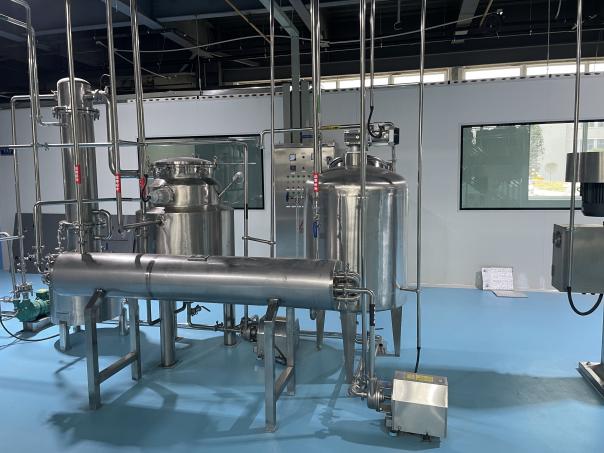
Fermentation-derived powders such as red yeast rice and Coenzyme Q10 depend on process control as much as on final assay.
Dimension 4: Regulatory and Label Exposure
This is where the two ingredients diverge most sharply, and where a comparison framework earns its keep. In the European Union, Commission Regulation (EU) 2024/2041, published in July 2024, revoked the health claim relating to monacolin K. For a buyer, that is not an abstract legal note: it removes the claim basis that many red yeast rice products were built on in that market, and it means an EU-facing formulation must be reassessed at the positioning stage rather than at the packaging stage.
Coenzyme Q10 does not carry the same single, dated regulatory event, but it is not regulation-free either. Permitted claims, maximum levels and permitted forms differ by market, so the working rule is the same for both ingredients: build the regulatory file per destination market before the specification is locked, because a specification change after the file is built costs more than the file itself.
Two further points apply to both. First, the FDA requires those who manufacture, package or hold dietary supplements to follow current good manufacturing practices intended to help ensure identity, purity, quality, strength and composition, which is the standard a buyer is implicitly relying on when accepting a certificate of analysis. Second, the NIH Dietary Supplement Label Database catalogues label information for supplements sold in the United States, and it is a practical benchmarking tool for seeing how competing products declare these two ingredients, including ingredient form and declared amounts.
Red yeast rice carries one additional screening item that Coenzyme Q10 does not. Because it is a fungal fermentation product, buyers commonly require a contaminant panel appropriate to fungal fermentation alongside the monacolin K assay. Whether that panel is requested as a routine line item or only on first approval is a supplier-qualification decision, but it should be a conscious one.
Dimension 5: Documentation, Testing, and Continuity
Documentation is the dimension where two suppliers quoting the same assay can still be far apart. The practical baseline is a complete certificate of analysis per batch that matches the pre-shipment specification, covering assay, moisture, heavy metals and microbiological limits, with the test method stated. Where a result is disputed on arrival, the ability to resolve it through an independent laboratory is what protects the buyer.
Continuity matters as much as the certificate. A fermentation-derived ingredient cannot be scaled up instantly, so lead time, minimum order quantity and the supplier's stated monthly capacity are legitimate evaluation criteria rather than administrative details. Buyers comparing a 1 kg sample against a multi-tonne annual requirement should confirm that the sample and the production batch come from the same process route and the same assay target.
Where Each Powder Stops Being the Right Answer
A comparison framework is only useful if it states the boundaries. Red yeast rice stops being the right answer in three situations. It is unsuitable where the formulation must avoid statin-class actives, because monacolin K belongs to that structural class. It is a poor choice where the buyer cannot commit to per-batch HPLC verification, because the assay spread between 0.1% and 5.0% is too wide to manage on a certificate issued once at approval. And it is a weak choice in markets where the monacolin K claim position has been withdrawn, unless the product can stand on a different positioning.
Coenzyme Q10 stops being the right answer when the format is aqueous and the budget cannot absorb carrier load, since the water-soluble grade solves the dispersion problem by diluting the active. It is also a poor fit where the buyer treats grade as an afterthought: specifying 99% for a clear beverage, or 10% for a softgel, creates a formulation problem that no certificate can fix. Finally, route selection deserves a note. Coenzyme Q10 is also produced by synthetic routes, and the molecule is the same CAS No. 303-98-0 either way. Buyers choosing a fermentation-derived grade are choosing a documentation and process-control profile, not a different identity, and should ask for the evidence that supports that choice rather than assume it.
The same discipline applies to red yeast rice when it is compared with ratio-standardised botanical extracts. A ratio extract is a legitimate product for some applications, but it does not communicate monacolin K content, so it cannot be substituted into a formulation that was built around an HPLC specification.
Application Fit: Matching Powder to Finished Format
- Two-piece capsules: both materials fit; red yeast rice requires the fill weight to be recalculated whenever the assay changes, and high-purity Coenzyme Q10 usually needs an oil carrier in the blend.
- Tablets: both are compressible; Coenzyme Q10 at high purity generally needs a solubilising excipient, while red yeast rice requires attention to colour consistency between batches.
- Softgels: a natural fit for high-purity Coenzyme Q10 in an oil suspension; not a format for red yeast rice powder.
- Sachets and stick packs: the water-soluble Coenzyme Q10 grade is designed for this; red yeast rice only where the fermented note and colour are acceptable or maskable.
- Gummies and functional confectionery: the water-soluble Coenzyme Q10 grade is the practical option; red yeast rice creates colour and flavour constraints that usually outweigh its cost advantage.
- Combination products: both can appear in one capsule, but the red yeast rice assay must be declared independently, and the carrier systems must be checked for mutual interference before stability testing begins.
How Guanjie Biotech Fits This Comparison
Guanjie Biotech (Shaanxi Guanjie Biotech) is a China-based ingredient manufacturer founded in 2004, supplying high-purity natural plant extracts, fruit powders and specialty chemical raw materials to the pharmaceutical, health care, functional food and cosmetics industries. Its portfolio explicitly includes both Red Yeast Rice Powder (listed with CAS No. 75330-75-5 and CAS No. 39866-30-2) and Coenzyme Q10 powder (CAS No. 303-98-0), which means a buyer can run this framework against a single supplier rather than assembling two vendor files.
The operational facts relevant to a comparison exercise are these. The company operates a 7,000 m² footprint that includes a 2,000 m² cGMP-standard clean workshop and a 500 m² laboratory, and reports a 7-engineer R&D team plus collaboration with Northwest University and the Xi'an Branch of the Chinese Academy of Sciences. Quality control is described as 100% testing, every shipment is accompanied by a certificate of analysis matching pre-shipment specifications, and disputed results can be routed to third-party laboratories including SGS and Eurofins for re-testing. Commercial terms include OEM/ODM support, packaging customisation, a stated monthly capacity of 30 tons, a minimum order quantity of 1 kg and a 30-day lead time.
Certification coverage is worth checking line by line rather than in summary. ISO 9001:2015 (certificate 00123Q310086R0S/6100, issued 7 December 2023, valid to 6 December 2026) and HACCP (001HACCP2301048, issued 6 December 2023, valid to 5 December 2026) both fall due for renewal within the current buying cycle, so buyers placing orders into 2027 should confirm renewal status. Halal certification (0811240000, valid to 7 November 2027) and Kosher certification (K-88898568, valid to 15 July 2027) are valid for longer. All four certificates list red yeast rice powder and Coenzyme Q10 powder among the covered products, and their stated scope covers export trade of plant extracts, solid beverages and food additives.
Two boundaries belong in the same paragraph. Certificate listings and portfolio claims are supplier-reported until verified against the issuing body's register, and a certificate confirms a quality system, not a specific batch result. The batch-level document that answers the assay question is still the certificate of analysis.
Market Trend: What Is Changing in 2026
The direction of travel in this category is towards specification transparency rather than towards new molecules. With global nutraceutical ingredient demand estimated at USD 105.8 billion in 2026, the competitive pressure sits on documentation: buyers want the assay basis stated, the carrier declared and the test method named, because those are the variables that survive a retail audit. Fermentation-derived portfolios benefit from that shift, since process control is easier to evidence than a botanical identity claim.
A second trend is grade proliferation. Water-soluble and dispersible versions of fat-soluble actives are expanding the range of formats in which a single molecule can appear, and that expansion is quietly moving purchasing decisions from the ingredient level to the grade level. A third is regulatory divergence: a claim position that is workable in one market and withdrawn in another forces market-specific SKUs, which in turn forces suppliers to hold documentation sets rather than a single generic specification.
Future Outlook
Over the next buying cycles, the practical question for procurement teams is likely to shift from “which ingredient” to “which documented grade, for which market”. For red yeast rice, that means the assay declaration and the destination-market claim review becoming standard items in the request for quotation rather than post-approval discoveries. For Coenzyme Q10, it means grade selection being locked before price negotiation, with carrier identity and dispersion behaviour treated as specification fields. Suppliers that can supply both the powder and the paperwork for a named market will keep the advantage; suppliers that supply only the powder will increasingly be compared on price alone.
FAQ
Is red yeast rice powder the same thing as monacolin K?
No. Red yeast rice powder is the fermented rice matrix; monacolin K is the secondary metabolite within it that carries the commercial specification. The powder is normally bought with a declared monacolin K content between 0.1% and 5.0% by HPLC, and that percentage, not the powder weight, determines how the material is dosed.
What is the practical difference between 99% Coenzyme Q10 and 10% water-soluble Coenzyme Q10?
Both are correctly described as Coenzyme Q10 powder, but they solve different problems. The high-purity grade around 99% is fat-soluble and belongs in oil-based systems such as softgels or capsules with an oil carrier. The water-soluble grade around 10% carries the active on a dispersible matrix so it can be used in sachets, stick packs, gummies and beverages, at the cost of a larger powder mass and a carrier load per serving.
How should a buyer compare a 0.1% and a 5.0% monacolin K red yeast rice powder?
By converting both to cost per unit of monacolin K and to a feasible fill weight. At 0.1%, one gram of powder delivers roughly one milligram of monacolin K; at 5.0%, the same gram delivers roughly fifty milligrams. The higher assay usually reduces the powder mass required, but it also changes overage, blending and segregation behaviour, so the comparison should include the certificate of analysis for each batch rather than the headline percentage alone.
Which documents should arrive with a red yeast rice or Coenzyme Q10 shipment?
A batch-specific certificate of analysis matching the pre-shipment specification, stating assay, test method, moisture, heavy metals and microbiological limits, is the baseline. For red yeast rice, a contaminant panel appropriate to fungal fermentation is commonly requested alongside the monacolin K assay. For either ingredient, buyers should be able to route a disputed result to an independent laboratory, and should hold current copies of the supplier's quality certificates with their validity dates.
Can red yeast rice powder and Coenzyme Q10 powder be combined in one capsule?
They can, but the combination should be treated as a new formulation rather than as two existing formulas added together. The red yeast rice assay must be declared independently so the delivered monacolin K content is traceable, and the carrier system used for Coenzyme Q10 must be checked for interaction with the red yeast rice matrix before stability testing is committed.
What changes for red yeast rice in the EU market?
Commission Regulation (EU) 2024/2041, published in July 2024, revoked the health claim relating to monacolin K. Products intended for the EU therefore need their positioning reviewed before the specification is finalised, because a formulation built around that claim may not be able to rely on it in that market.
Summary
Red yeast rice and Coenzyme Q10 are compared because they share a fermentation origin, a capsule-friendly powder form and an adjacent positioning territory, not because they are alternatives. The decision comes down to five checkable dimensions: what the percentage measures, how wide the active range is, how the material behaves in the target matrix, what the destination market permits, and what documentation travels with the batch. A buyer who fixes those five points before collecting prices will find the two ingredients much easier to separate.
For buyers who want the full portfolio and specification overview in one document, the Guanjie Nutraceutical Ingredients brochure is available here: Guanjie Nutraceutical Ingredients (PDF).
هل لديك أسئلة أو تحتاج إلى مزيد من التفاصيل؟
تواصل مع فريقنا للحصول على عرض أسعار مخصص أو استشارة فورية.
طلب عرض أسعار
املأ النموذج أدناه وسيتواصل معك فريقنا بعرض مقترح مخصص.
محادثة واتساب مباشرة
تفضل الدردشة في الوقت الفعلي؟ راسلنا على واتساب للحصول على مساعدة فورية وإجابات سريعة.
- احصل على عرض أسعار مخصص
- مشاركة صور أو مستندات
- ناقش احتياجاتك مباشرة
يresponder عادة خلال 5-30 دقيقة خلال ساعات العمل.