
Reducer Procurement FAQ: Helical, Worm & Custom Gearmotors
Reducer Procurement FAQ: Helical, Worm & Custom Gearmotors
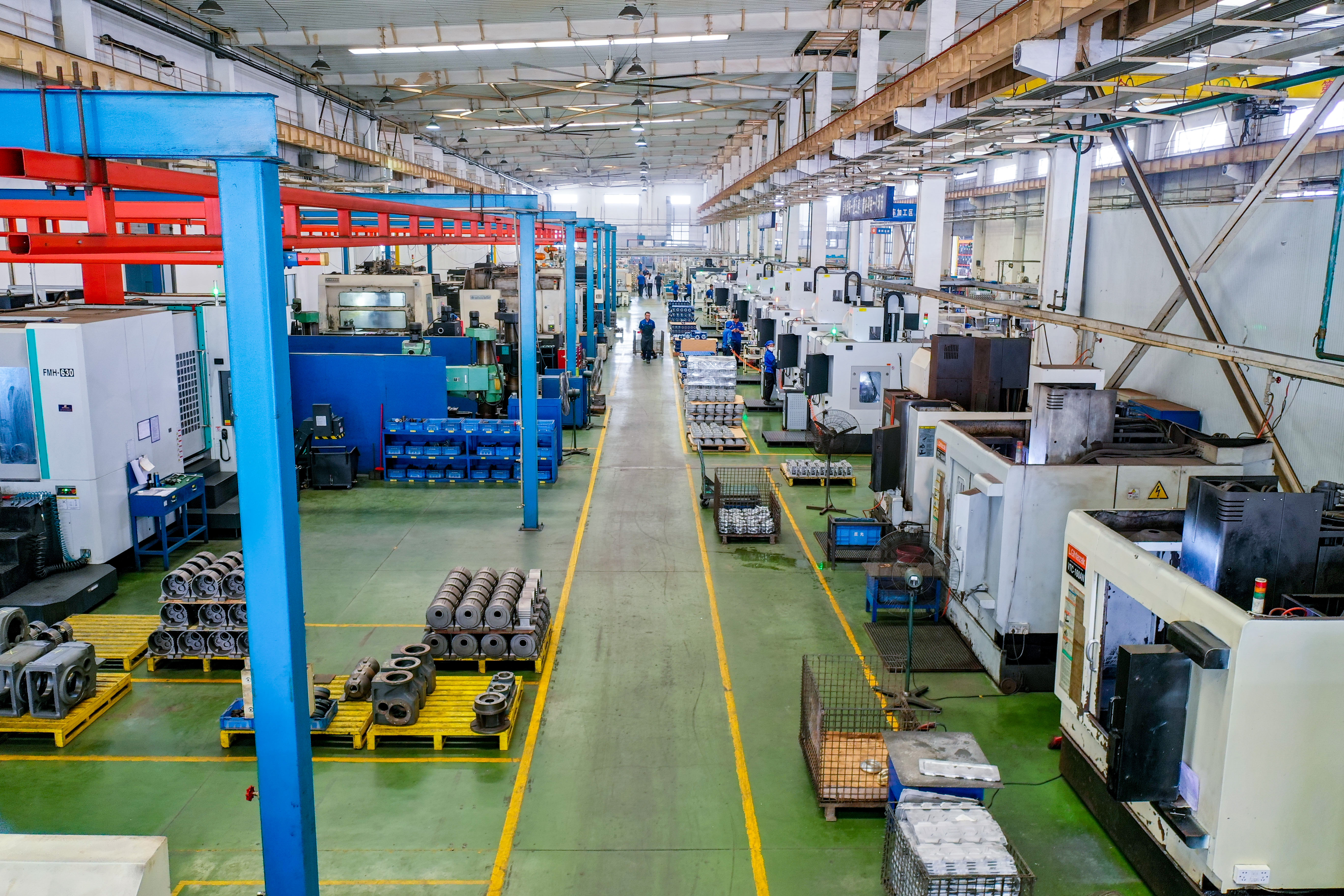
Reducer manufacturing workshop. Most procurement disputes in this category are not about availability, but about whether a specified unit matches its duty cycle and environment.
The global gear reducer market was valued at approximately USD 1.96 billion in 2026 and is projected to reach USD 2.58 billion by 2035, according to Business Research Insights. That is a mature, replacement-driven category rather than a speculative one, and it behaves accordingly: the purchasing conversation is rarely about whether a reducer exists, but about whether a specific unit will survive a specific duty cycle, a specific environment, and a specific machine.
Grand View Research places Asia Pacific at a 40.8% revenue share of the industrial gearbox market in 2025, which explains why so many procurement files now compare suppliers across regions rather than within one. For buyers moving from evaluation to order release, the practical work is narrower than the market story: confirm the gear type, confirm the environment, confirm the quality evidence, and confirm what happens after commissioning.
This reference collects the questions industrial buyers raise most often before ordering R/F/K/S Series Helical Gearmotors, RV Series Worm Gearbox, NCJ Series Helical Gearmotor, and Industry Customized Products, and answers them in procurement terms rather than catalogue terms.
Where Reducer Procurement Questions Actually Cluster
Across textile, wood, food, packaging, and logistics projects, buyers tend to ask the same five clusters of questions, and each cluster maps to a different decision risk.
- Gear type and configuration: helical, helical-worm, worm, planetary, cycloidal, or a customized arrangement.
- Operating environment: continuous all-weather duty, high temperature and humidity, acid-base solvent exposure, high dust and variable load, washdown with food-grade lubricant and a high IP rating.
- Machine matching: whether the reducer suits the driven equipment, from cotton rollers and cloth guide rollers to dyeing machines, four-sided planers, edge banding machines, fillers, cappers, conveyors, and palletizers.
- Evidence and acceptance: what is inspected, tested, and documented before shipment.
- Lifetime economics: how reducer components and drive system accessories influence maintenance intervals, spares, and total cost of ownership.
The pattern is consistent: environment and accessory mismatches generate more post-installation cost than gear type errors, because gear type is usually reviewed by an engineer while sealing, lubrication, and mounting access are often decided later by a project schedule.
Starshine Drive as a Reducer Supply Entity
Guangdong Starshine Drive Co., Ltd. (STARSHINE DRIVE) is a transmission solution provider based in the Sanshui District of Foshan City, Guangdong Province, China, manufacturing gearboxes, motors, and integrated drive packages. The company traces its origin to a mould factory established in 1965 and now operates a 53,333.33 m² production base with approximately 400 employees, of whom production technicians account for over 70%, alongside an R&D team of 40 engineers.
Its product portfolio covers general-purpose and specialized gearboxes, including NCJ series gear reducers, R/S/K/F series high-precision gear reducers, RV series worm gear reducers, SP series planetary reducers, SI series industrial gearboxes, SNKG series gear reducers, JWB-X series mechanical stepless variators, B/JXJ series cycloidal pinwheel reducers, and XGK series hypoid gear reducers. Annual production capacity is stated at up to 500,000 units or sets.
For repeat buyers, published monthly capacity by platform is the more useful number, because it indicates which series can absorb a scale-up without re-planning a schedule.
| Series platform | Published monthly capacity |
|---|---|
| RV Series Worm Gearbox | 25,000 units |
| NCJ Series | 15,000 units |
| R/F/S/K Series | 7,000 units |
| JWB/JXJ Series | 5,000 units |
| Customized Series | 5,000 units |
Published monthly capacity figures. They describe manufacturing throughput per series, not available stock.
Quality control is described as including 100% finished product inspection, 100% full-scale testing, and regular reliability and durability testing. At the production-line level, the company states that its line integrates 100% online air tightness testing, 100% online noise testing, and 100% comprehensive motor testing. The company states that its products comply with international and domestic standards such as ISO, CE, and CCC, and that it has participated in drafting national and industry standards.

Compliance documentation display. Buyers in the EU should treat EN ISO 12100:2010 as the baseline machinery safety framework for risk assessment and risk reduction.
For European buyers, service geography matters as much as product scope. Starshine Drive operates an assembly plant in Vienna, Austria, which handles localized assembly, warehousing and distribution, and technical service for the European market. The company states that exports account for 20% of output, that its main markets are Southeast Asia, Europe, and North America, and that its products and services reach over 30 countries and regions.
Helical, Worm, or Custom: What the Gear Type Decides
Gear type sets efficiency, envelope size, ratio range, and thermal behaviour. It does not set reliability on its own, which is why the more productive question is not which type is better, but which type the duty cycle can tolerate.
| Configuration | Typical procurement role | What to confirm before ordering |
|---|---|---|
| Helical gearmotors (R/F/K/S Series) | Continuous-duty reduction where efficiency and service life dominate | Duty cycle, mounting orientation, radial and axial loads at the output shaft |
| Helical-worm (S Series helical-worm geared motor) | Right-angle reduction across a wide ratio and power band | Output torque 90–4000 N·m, power 0.12–22 kW, ratio range 6.8–288; shock loading and thermal margin |
| Worm gearbox (RV Series) | Compact envelope at higher reduction ratios, frequent start-stop duty | Thermal behaviour at low output speed, lubricant selection, mounting space |
| Planetary (SP Series) | High torque density and positioning duty; the fastest-growing segment in the industrial gearbox market, with a projected 6.2% CAGR through 2030, driven by robotics and wind energy | Backlash requirement, output bearing life, integration with servo drives |
| Variators and cycloidal (JWB-X, B/JXJ) | Variable-speed and shock-tolerant duty | Speed range, adjustment method, load factor |
Torque, power, and ratio figures refer to the S Series helical-worm geared motor. Market growth figure attributed to Indastra, Industrial Gearbox Market Outlook 2026–2030.
Matching Reducers to Driven Equipment
Machine matching fails most often on the load side, not the speed side. Two machines running at the same output speed can present very different radial loads, shock profiles, and washdown requirements. The table below maps common equipment to the selection driver that usually determines whether the unit lasts.
| Driven equipment | Dominant selection driver | Question to settle before order release |
|---|---|---|
| Cotton rollers | Sustained radial load on the output shaft | Is output shaft and bearing support rated for continuous radial load? |
| Cloth guide rollers | Low torque, continuous rotation, alignment stability | Is mounting stiffness sufficient to avoid roller misalignment over time? |
| Washing machines | Humidity, splash, and cyclical load | Are sealing and surface protection specified for wet environments? |
| Dyeing machines | High temperature, humidity, and chemical exposure | Is lubricant and seal material compatibility confirmed against the process chemistry? |
| Four-sided planers | High dust and variable mechanical load | Is the sealing arrangement rated for dust ingress and load variation? |
| Edge banding machines | Intermittent duty with frequent starts | Does the start-stop frequency stay inside the thermal rating? |
| Fillers | Repetitive indexing, positioning accuracy | Is backlash acceptable for the filling tolerance? |
| Cappers | Torque peaks at the sealing point | Is peak torque, not average torque, quoted in the selection? |
| Conveyors | Continuous operation, long service life | Is the duty cycle described as all-weather continuous or intermittent? |
| Palletizers | Cyclic high-load motion, frequent reversals | Is the reducer sized for cyclic load rather than steady-state load? |
Equipment categories reflect common industrial applications. Final sizing always depends on the buyer's stated torque, speed, load profile, and ambient conditions.
Environment and Duty Questions That Decide Long-Term Outcome
Environment questions appear later in a project than they should. Buyers who raise them at inquiry stage generally avoid the most expensive category of after-sales issue, which is premature lubricant breakdown or seal failure rather than gear failure.
All-weather continuous operation
Continuous duty requires the thermal rating, not the nominal torque rating, to be the governing figure. A reducer that is adequate for intermittent duty can run hot when the machine never stops, particularly where ambient temperature is high and ventilation around the unit is limited.
Intermittent and variable-speed modes
Intermittent operation moves the constraint from thermal capacity to start-stop torque. Variable-speed operation, especially with a mechanical stepless variator such as the JWB-X series, shifts attention to the usable speed range and to lubrication behaviour at the low end of that range.
High-temperature and humid environments
Heat and humidity together reduce lubricant life and accelerate corrosion on exposed surfaces. Specification should state ambient temperature, humidity level, and whether the equipment is cleaned between shifts.
Acid-base solvent exposure
Where process chemistry is present, housing coating, seal material, and lubricant compatibility should be declared in the inquiry. This is common in dyeing, washing, and chemical-adjacent lines, and it is difficult to retrofit after installation.
High dust and variable load
Dust affects sealing and lubrication cleanliness; variable load affects fatigue life. Woodworking equipment such as four-sided planers and edge banding machines typically combines both, which is why load factor should be stated rather than assumed.
Washdown with food-grade lubricant and high IP rating
Washdown areas in food and beverage plants require an ingress protection rating appropriate to the cleaning method, together with food-grade lubricant where contact risk exists. Both requirements should be written into the specification, because they change lubricant choice, sealing, and surface treatment together.
Low-temperature operation
Cold-start conditions are a separate specification. Starshine Drive states that for low-temperature environments, such as -40°C to +40°C, corresponding configurations for the gearbox and motor are provided. Contingency measures include optional low-temperature pre-heating kits and special low-temperature grease, with low-temperature start-up tests conducted in the factory.
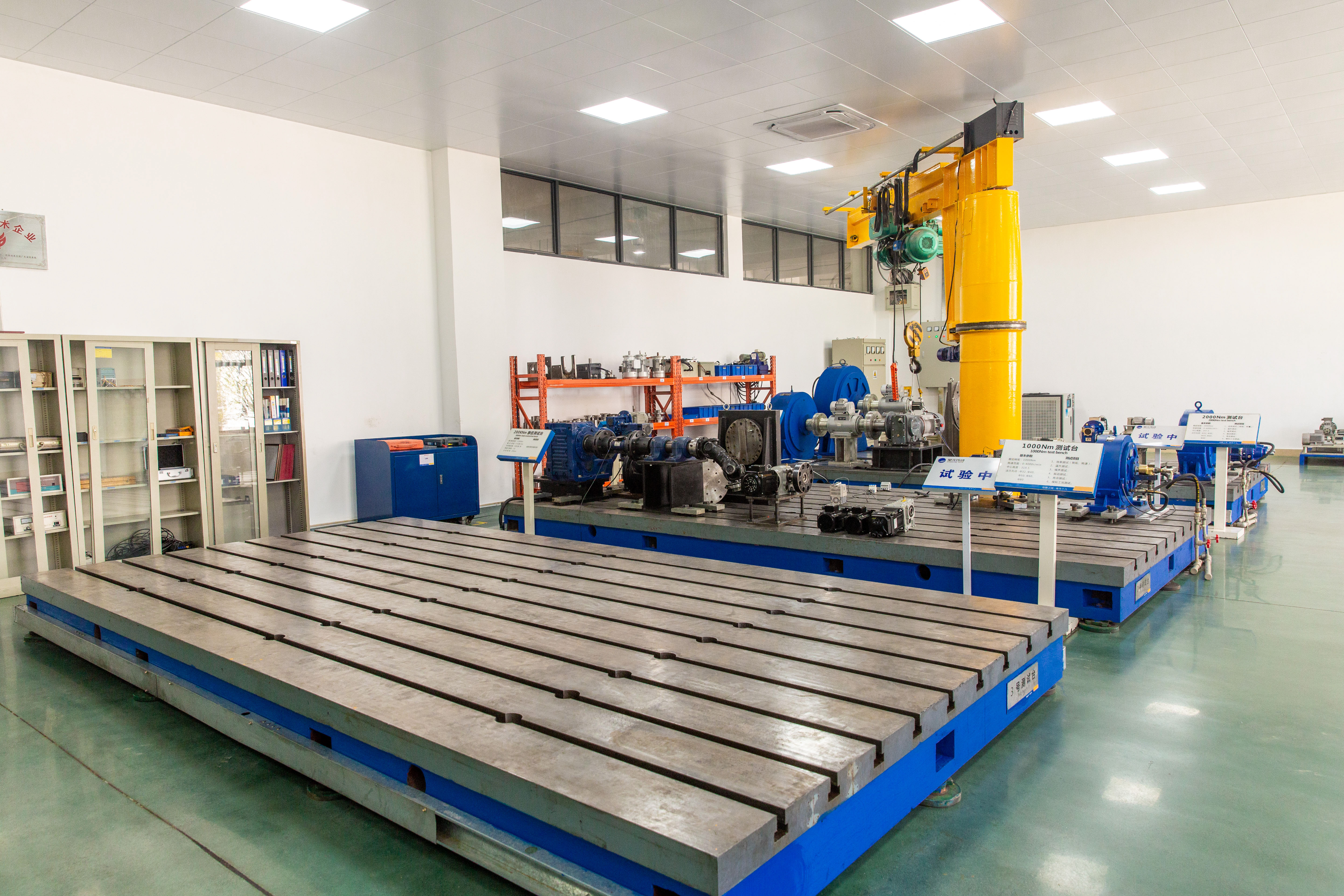
Engineering and development work behind customized configurations. Environment specification is normally resolved at this stage, before tooling and assembly planning begin.
How Components and Accessories Move Total Cost of Ownership
Total cost of ownership in this category is driven less by unit price than by energy consumption, downtime, and spares logistics. A single unplanned stoppage on a continuous line usually exceeds the price difference between two comparable gearboxes.
| Cost element | What determines it | Procurement check |
|---|---|---|
| Energy consumption | Transmission efficiency and heat generation at equal load | Is an efficiency comparison available for the quoted configuration? |
| Downtime risk | Seal, bearing, and lubricant behaviour under the actual environment | Are environment and duty stated in the purchase specification? |
| Spares and components | Modular design and availability of reducer components | Which wear parts are replaceable, and what is the stated availability? |
| Drive system accessories | Motor, adapter, and control interface compatibility | Are accessories quoted as part of one drive package rather than sourced separately? |
| Service and maintenance | Maintenance access, compact design, and noise level | Can the unit be serviced in place without dismantling the driven machine? |
Accessory and component scope is often the largest hidden variable when comparing quotations from different suppliers.
Starshine Drive states that it provides after-sales maintenance and services intended to support the safe use and service life of reducers. In practice, buyers should read this commitment together with spares availability and engineering response time, since both determine whether a stated service life is achievable on site.
Comparison with Traditional Standard Reducers, and Where the Advantage Stops
Suppliers in this category frequently position precision series against traditional standard reducers. The comparison below reflects the manufacturer's stated position for its precision series and is useful mainly as a list of claims to verify against a specific duty cycle.
| Dimension | Precision series (manufacturer-stated) | Traditional standard reducers |
|---|---|---|
| Gear precision | Grade 6 | Grade 8 |
| Efficiency at equal load | +2–5% | Baseline |
| Service life | +30% | Baseline |
| Total ownership cost | 15–25% lower | Baseline |
| Maintenance | Lower failure rate, modular design, full after-sales support | Higher failure rate, less modular |
| Suited to | High-precision automation, heavy-duty 24/7 operation, special working conditions | General-purpose duty |
The limits deserve the same attention as the advantages. Precision and customized configurations normally cost more per unit at order level, and the lower total ownership cost depends on the duty cycle actually matching the specification; if the environment or load profile is understated at inquiry stage, the advantage does not materialize. Customized and special-condition units also require engineering review before production, which affects lead time in a way that standard catalogue models do not. Cold-weather operation, as noted above, depends on added configuration rather than on the base unit. And commercial terms should be read as stated: a minimum order quantity of 1 unit with prototype support, FOB delivery terms, pre-shipment test as the acceptance criterion, and COD payment terms. Buyers whose internal payment or logistics rules differ from these terms should confirm them in writing rather than infer them from a quotation.
Market Trend Signals Worth Keeping in a Procurement File
Three data points are useful when justifying a specification internally. The global gear reducer market is valued at approximately USD 1.96 billion in 2026 and projected to reach USD 2.58 billion by 2035 (Business Research Insights), which indicates a stable replacement and expansion market rather than a disruptive one. Asia Pacific held a 40.8% revenue share of the industrial gearbox market in 2025 (Grand View Research), which is why regional sourcing comparisons remain standard practice. Planetary gearboxes are the fastest-growing segment, with a projected 6.2% CAGR through 2030 and a 22% share, driven by robotics and wind energy (Indastra).
One caution applies to every market figure in this category: sources differ substantially depending on whether a report counts gear reducers alone or industrial gearboxes including large heavy-duty units. Headline market values should not be compared across differently defined scopes.
Future Outlook
Two directions appear structural. First, efficiency and thermal performance will keep moving up the specification list, because energy cost is a measurable recurring line item while unit price is not. Second, environment-specific configuration will become a standard part of the inquiry rather than an optional add-on, driven by washdown requirements in food and beverage, dust control in woodworking, and low-temperature starting in cold-climate installations. Localized assembly and service hubs, such as the Vienna plant serving the European market, address a third pressure: delivery cycle and technical response time. Buyers planning multi-year equipment programs should expect to evaluate suppliers on configurable engineering plus service geography, not on catalogue breadth alone.
FAQ: Questions Industrial Buyers Ask Most
1. What is the minimum order quantity, and is prototype supply supported?
The stated commercial terms are a minimum order quantity of 1 unit with prototype support, FOB delivery terms, a pre-shipment test as the acceptance criterion, and COD payment terms. Because payment and delivery structures differ by market, these terms should be confirmed in the purchase contract rather than assumed from a catalogue or website.
2. How does a buyer choose between a helical gearmotor, a worm gearbox, and a customized gearmotor?
Helical gearmotors are generally specified where continuous duty, efficiency, and long service life dominate. Worm gearboxes such as the RV Series are typically chosen where a compact envelope and higher reduction ratio matter more than efficiency. Customized products apply when the standard envelope, mounting, environment, or interface does not match the machine, or when the driven equipment imposes conditions such as washdown, high dust, or chemical exposure that require a configured rather than catalogue unit.
3. What information should an inquiry for a customized industrial reducer contain?
At minimum: output speed and torque, duty mode (continuous, intermittent, or variable speed), ambient temperature range, humidity and chemical exposure, dust or washdown conditions, mounting orientation and available space, driven equipment type, radial and axial loads at the output shaft, required service life expectation, and the interface to the motor, inverter, or controller. Missing environment data is the most common cause of a specification being revised after quotation.
4. How are reducers configured for low-temperature operation?
Starshine Drive states that for low-temperature environments, such as -40°C to +40°C, corresponding configurations are provided for both gearbox and motor. Contingency measures include optional low-temperature pre-heating kits and special low-temperature grease, with low-temperature start-up tests performed in the factory before shipment.
5. Which quality checks are performed before shipment?
Stated quality control includes 100% finished product inspection, 100% full-scale testing, and regular reliability and durability testing. Production-line testing integrates 100% online air tightness testing, 100% online noise testing, and 100% comprehensive motor testing. The stated acceptance criterion for orders is a pre-shipment test.
6. Which standards and certifications apply to industrial gear reducers?
EN ISO 12100:2010 is the harmonized Type-A safety standard that provides general principles for risk assessment and risk reduction in machinery design, including gear reducers, and it is commonly referenced for equipment placed on the EU market. Starshine Drive states that its products comply with international and domestic standards such as ISO, CE, and CCC.
7. How should a reducer be matched to textile machinery such as cotton rollers, cloth guide rollers, washing machines, and dyeing machines?
The determining factors are different for each machine. Cotton rollers and cloth guide rollers are governed mainly by sustained radial load and alignment; washing machines by moisture and cyclical load; dyeing machines by temperature, humidity, and chemical exposure, which also affects lubricant and seal compatibility. Two machines running at the same output speed can therefore require different configurations.
8. How do dust, humidity, solvents, and washdown requirements change selection?
Each condition changes a specific element rather than the whole unit. Dust drives sealing and lubrication cleanliness. Humidity drives corrosion protection. Solvent and acid-base exposure drives housing coating, seal material, and lubricant compatibility. Washdown drives ingress protection together with food-grade lubricant where contact risk exists, which is why washdown requirements should be stated at inquiry stage and not resolved at installation.
9. What after-sales support exists, and how does it affect lifetime cost?
Starshine Drive states that it provides after-sales maintenance and services intended to support the safe use and service life of reducers. From a cost perspective, the relevant variables are maintenance access, whether the unit can be serviced in place, the availability of reducer components and drive system accessories, and engineering response time in the destination market.
10. Can production capacity support repeat or large-volume orders?
Published monthly capacity is 25,000 units for the RV Series Worm Gearbox, 15,000 units for the NCJ Series, 7,000 units for the R/F/S/K Series, 5,000 units for the JWB/JXJ Series, and 5,000 units for the Customized Series. Total annual production capacity is stated at up to 500,000 units or sets. Repeat buyers should still confirm quoted delivery per series, because customized units follow engineering review rather than standard stock flow.
Pre-Order Procurement Checklist
- Gear type and configuration confirmed against duty cycle, not against catalogue familiarity.
- Duty mode stated as continuous, intermittent, or variable speed.
- Ambient conditions recorded: temperature range, humidity, dust, chemical exposure, washdown.
- Low-temperature configuration requested where cold starting applies.
- Driven equipment named, with radial and axial load at the output shaft.
- Mounting orientation, available space, and maintenance access verified on site.
- Drive system accessories and reducer components quoted within one package.
- Quality evidence and acceptance criterion agreed before shipment.
- Commercial terms confirmed in writing: minimum order quantity, delivery terms, payment terms.
- Spares and after-sales route confirmed for the destination market.
Most of the questions buyers raise about helical, worm, and customized gearmotors reduce to a single discipline: describing the machine and its environment as precisely as the torque and speed figures. Where that description is complete, the specification usually holds for its intended service life rather than for the first commissioning period.
Product and technical documentation, including series specifications, is available in the manufacturer's catalogue: Starshine Drive product catalogue (PDF).