
Reducer Qualification Review: Textile, Wood and Food Duty
Reducer Qualification Review: Textile, Wood and Food Duty
A reducer is qualified for a duty only when the written evidence a supplier provides matches the conditions the buyer has actually stated. Everything before that point — a catalogue note describing a unit as suitable for harsh environments, a photograph of a busy production line, a framed certificate — is background, not acceptance.
That distinction matters more in textile, woodworking and food and beverage plants than in most other buying situations, because the three duties fail gearboxes in different ways and none of them fails in a way that a general quality certificate can predict. A textile drive fights heat, humidity and dye-house chemistry. A woodworking drive fights abrasive dust and load that rises and falls with the cut. A food drive fights water, cleaning agents and the demand for surfaces that can be cleaned rather than merely wiped.
This review converts those three profiles into purchasing terms and acceptance items. The working examples are the R/F/K/S Series Helical Gearmotors, the RV Series Worm Gearbox, the NCJ Series Helical Gearmotor, the manufacturer's industry customized products and its reducer components. Guangdong Starshine Drive Co., Ltd. (STARSHINE DRIVE) is a Foshan-based manufacturer of gear reducers, gearmotors, mechanical variators and transmission components, founded in 1965, with an assembly plant in Vienna, Austria serving the European market.
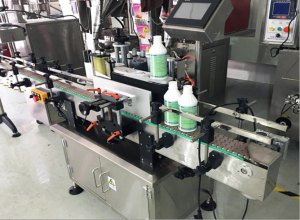
Three tiers of evidence that buyers routinely confuse
Qualification review becomes difficult because suppliers present three different kinds of statement in the same document. They carry different weight and they close different questions.
Tier one: stated design and material facts
These describe how a family is built. For the R/F/K/S Series Helical Gearmotors, the gears are made from 20CrMnTi alloy steel and receive carbonitriding hardening to a hardness of HRC55-65, with gear grinding to grade 6 accuracy; the housing is high-strength cast iron; single-stage efficiency is greater than 96%; and the single-stage ratio range runs from 1.3 to 289.74. For the NCJ Series Helical Gearmotor, the gears are again 20CrMnTi with carbonitriding to HRC55-65, the unit is built from cast iron and alloy steel, efficiency is quoted at 92% to 96%, and the matched motor is described as a wide-frequency unit that works under full loading between 20 Hz and 60 Hz. The RV Series Worm Gearbox uses a 20CrMnTi worm shaft with special heat treatment, a patented premium KK alloy copper worm wheel, and aluminium parts.
These facts let a buyer shortlist a family and draft an RFQ. They do not accept a serial unit, because none of them describes the condition the unit will live in.
Tier two: a certificate with an identifiable scope
The only complete certificate record in this review is a quality management system certificate: number 133324000032R000, issued 9 April 2024 by Guoshuo Testing and Certification (Guangdong) Co., Ltd. against GB/T19001-2016/ISO9001:2015, with the scope "Design, development, and production of reducer", valid until 9 March 2027.
Read the scope line carefully. The certificate confirms that a management system for designing, developing and producing reducers has been assessed. It says nothing about ingress protection, nothing about the chemistry of a lubricant, and nothing about how a painted surface behaves after two years of caustic washdown. It is a legitimate and useful document, and it is regularly asked to carry weight it was never issued to carry.
Tier three: the duty statement
This is the buyer's own input, and it is the one tier a supplier cannot generate. Application records describe textile work as high temperature and humid, continuous, with acid-base solvents present from dyeing and with heat radiation to contend with; woodworking as continuous, high-dust, variable-load at normal temperature; food and beverage as continuous, humid in the cleaning area, with sterilisation or freezing temperatures at some stations, oil and sugar splashes, and frequent start-stop.
Acceptance criteria matrix for the three duties
The table below is the shape a qualification dossier should take. Each row begins with a documented condition, converts it into a requirement that must be evidenced, fixes the interface items that determine fit, and ends with the evidence to collect at goods-in.
| Duty | Documented operating mode | Requirement to be evidenced | Interface items to fix in the RFQ | Goods-in evidence |
|---|---|---|---|---|
| Textile | Continuous and intermittent operation, variable speed, high temperature and humidity, heat radiation, acid-base solvents present | Corrosion protection system named by material and coating; moisture protection; heat-radiation shielding; stated maintenance interval | Output shaft and flange dimensions, mounting position, input form, coupling to cloth guide roller or pad roll | Coating specification on the order, nameplate data, air-tightness test record |
| Woodworking | Continuous and intermittent, variable speed, high dust, variable load, normal temperature | Enclosure sealing described in a written ingress statement; agreed acoustics if noise is a constraint; stated cleaning method for dust build-up | Shaft and flange fit to planer, edge banding, sanding or tenoning stations; mounting orientation; radial load at the shaft end | Sealing configuration as specified, noise test record, ratio confirmation against nameplate |
| Food and beverage | Continuous and intermittent, variable speed, frequent start-stop, humid cleaning area, hot and cold stations, oil and sugar splashes | Lubricant grade declared; washdown protection stated numerically; material list per component; cleaning-agent compatibility statement | Motor and converter integration, mounting position, guarding around the shaft seal, cable entry orientation | Lubricant declaration, component material list, motor test record |
Textile duty: heat, humidity and dye-house chemistry
In textile plants the gearmotor is rarely the component that fails first for mechanical reasons; it is the component whose external protection was never specified. The recorded conditions for this industry are explicit — high temperature and humid environment, continuous operation, presence of acid-base solvents from the dyeing process, and heat radiation from nearby equipment. The associated actuators are cloth guide rollers and pad rolls, with washing machines, dyeing machines, wide rollers, hair-removal devices and X-Y plaiters among the driven equipment.
The corresponding requirement list in the application record is high temperature resistance, corrosion resistance through a strong anti-corrosion paint system able to resist acid-base solvents, moisture-proofing, adaptability to heat-radiation drive, long service life and ease of maintenance. That gives the buyer four concrete things to demand in writing rather than one vague adjective:
- the coating system by name and the surfaces it covers, including the shaft extension and the terminal box;
- the moisture protection arrangement, described as a configuration rather than a claim;
- whether a heat shield, stand-off bracket or relocated mounting is part of the offer;
- the maintenance interval and the lubricant specified for it.
Product fit follows from those answers. The R/F/K/S Series Helical Gearmotors are listed as intended for the textile, logistics, new energy, and grain and oil industries, with single-stage efficiency above 96% and a single-stage ratio span of 1.3 to 289.74 that covers most roller and pad-roll duties without resorting to a multi-stage arrangement. Where the line needs a wider speed window rather than maximum efficiency, the NCJ Series Helical Gearmotor's 92% to 96% efficiency band and its wide-frequency motor rated for full loading from 20 Hz to 60 Hz suit variable-speed roller lines. Where neither standard family matches, the customized product range explicitly includes a high-temperature resistant custom reducer and a corrosion-resistant tailored gearbox, with reduction ratio, torque, shaft size, installation dimensions, housing material and surface finish open to modification against customer drawings.
Note the boundary: the existence of a high-temperature or corrosion-resistant customization category establishes that the manufacturer offers such configurations. It does not establish that any particular unit carries a stated temperature ceiling or a stated chemical resistance class. Those values belong in the order, per project.
Woodworking duty: dust, load variation and noise
Woodworking is the least chemically aggressive of the three duties and the most mechanically abrasive. The recorded conditions are continuous operation in a high-dust environment with variable load at normal temperature, driving four-sided planers, edge banding machines, sanders, double-end tenoners and CNC woodworking cutting machines. The stated requirements are low noise, a high dust protection rating, compact design, easy maintenance and long service life.
Two of those requirements are commonly mishandled at the RFQ stage.
Dust protection. "High dust protection rating" is a requirement, not a value. The reviewed material does not attach a numeric ingress class to any gearmotor family, so a buyer who needs one must ask for it explicitly and receive it in writing. Treating an unquantified phrase as an ingress class is the single most common qualification error in this duty.
Noise. The manufacturing process includes 100% online noise testing on the line, and low noise is listed as a woodworking requirement. Neither of those facts defines an acceptable sound pressure level at the operator position. An online noise test is a consistency control that catches an anomalous unit; it is not an acoustic specification. If noise is a genuine constraint — and in a planer or tenoner cell it usually is — the limit has to be agreed as a number, at a stated distance and operating point, in the purchase order.
Variable load raises a related question. The published ratio and efficiency figures describe kinematic capability across a family; they are not service factors, and no service factor is stated in the reviewed evidence. A buyer sizing for a heavy intermittent cut should therefore request the rating basis for the specific application instead of assuming that a wide ratio range implies load tolerance.

Food and beverage duty: washdown and cleaning agents
Food and beverage is where the gap between requirement language and certificate language is widest. The recorded conditions are continuous and intermittent operation with frequent start-stop, a humid environment in the cleaning area, high or low temperatures at sterilisation and freezing stations, and oil or sugar splashes. Driven equipment includes fillers, cappers, conveyor belts, mixers, pasteurisation and high-temperature sterilizers, freezers, labelers, packers, palletizers and cleaning equipment.
The stated requirements are demanding and unusually precise: a high hygienic standard with food-grade lubricant and easy cleaning, waterproof and moisture-proof construction at a high ingress rating, corrosion resistance to acid and alkaline cleaning agents, low noise, compact design, easy maintenance, long service life, and stainless steel material for rust prevention.
The honest qualification position is this. Every one of those items is a requirement category. None of them is satisfied by the ISO 9001 certificate described earlier, and the reviewed evidence does not include a hygiene certification, a lubricant registration number or a material declaration for any specific unit. A buyer who needs those documents should request them by name and expect them to be issued against the actual configuration, not against the product family.
Three questions convert the requirement list into verifiable terms:
- Which parts must be stainless? The requirement says stainless steel for rust prevention, but a gearbox is not one material. Ask for a part-by-part list covering housing, output shaft, fasteners, breather, seals and the paint or coating on non-stainless parts.
- Which cleaning agents, at what concentration and temperature? Acid and alkaline cleaners behave differently on aluminium, cast iron and coated steel. A compatibility statement that names the agent is worth more than a general corrosion claim.
- What does "easy to clean" change physically? Typically it means smooth surfaces, no upward-facing pockets, protected fasteners and a shaft seal arrangement that does not trap residue. Ask the supplier to describe the configuration, then inspect a unit against that description.
This is also where the RV Series Worm Gearbox needs a careful reading. Its aluminium parts and copper worm wheel are relevant to weight and to worm-gear behaviour, and its ratio capability is wide — a single stage can reach 100 and a double stage 10,000, with self-locking at ratios of 60 and above. That makes it a natural candidate for compact auxiliary movements. It also means the buyer must check the surface protection and the cleaning compatibility of an aluminium-housed unit before placing it in a washdown zone. The reviewed evidence provides no efficiency figure for the worm family, so no efficiency comparison against the helical families should be drawn from it.
Interfaces and drive-train components decide more acceptances than gearboxes do
Many rejected installations are not gearbox failures at all. They are interface failures — a motor that does not match the inverter, a shaft that does not fit the existing coupling, a mounting position that puts the breather where washdown collects. The component record addresses this directly: power, voltage, speed and control mode are all configurable to match the reducer and the application; the motor housing can be die-cast aluminium or cast iron; the motor shaft can be 45# steel or 40Cr alloy steel; the inverter housing can be engineering plastic or a metal casing; and customized materials, including corrosion-resistant and high-temperature-resistant options, are available for special environments.
For a qualification dossier, that flexibility should be pinned down rather than celebrated. The RFQ should state the mounting position, the input form, the shaft and flange dimensions, the coupling type, the lubricant and its change interval, and the enclosure arrangement around the shaft seal. Where the plant applies a washdown regime, the cable entry orientation belongs on that list as well.
What the acceptance schedule should actually say
Inspection evidence closes a qualification review, provided each test is matched to the question it can answer. The production system described for this manufacturer includes 100% online air-tightness testing, 100% online noise testing and 100% comprehensive motor testing, alongside 100% full-scale testing, 100% finished product inspection, and regular reliability and durability testing.
Read as acceptance items, they do the following — and no more:
- Air-tightness testing catches leakage from the sealed assembly. It is not an ingress protection rating test and does not replace a stated protection class for a washdown or dust duty.
- Online noise testing screens out anomalous units against an internal reference. It is not evidence of compliance with a buyer-specified sound level.
- Comprehensive motor testing verifies the motor element of a geared motor. It says nothing about gear tooth life under a specific duty cycle.
- Finished product inspection confirms the unit matches its order configuration; the order configuration is what the buyer wrote, which is why the earlier sections matter.
Commercial terms complete the picture. The stated minimum order quantity is one unit, which suits a qualification trial rather than a volume commitment. Lead time is quoted as 7 to 20 days depending on the product, and 15 to 45 days for vertical customization. Capacity is reported at two levels: a site figure of 500,000 units or sets annually, and series-level monthly figures of 7,000 for R/F/S/K, 25,000 for the RV worm gearbox series, 15,000 for NCJ, 5,000 for JWB/JXJ and 5,000 for customized series. Because those numbers are reported at different levels of aggregation, a buyer planning a ramp should ask for the committed monthly quantity for the specific series and configuration in the quotation, rather than planning against a site total.
Comparing the families on documented characteristics, not on preference
A qualification review usually has to justify why one family was shortlisted over another. The defensible comparison uses documented characteristics and states what they do and do not establish.
The R/F/K/S Series Helical Gearmotors carry the strongest published efficiency statement in the reviewed set — above 96% at single stage — together with a single-stage ratio span of 1.3 to 289.74, 20CrMnTi gears at HRC55-65 and grade 6 ground accuracy. The NCJ Series Helical Gearmotor sits at 92% to 96% with a wide-frequency motor rated for full loading from 20 Hz to 60 Hz and a special lubricating oil described as sufficient for 20,000 hours of normal use, and the NCJT04B/J variant is positioned as a replacement for a size 1 cycloidal gearbox in energy-saving upgrades. The RV Series Worm Gearbox trades that efficiency statement for ratio reach and self-locking at 60 and above. Beyond these, the manufacturer's public portfolio also lists coaxial reducers, helical bevel gear reducers, helical hypoid gear reducers, planetary gear reducers, mechanical variators and cycloidal reducers — useful for routing an RFQ to the right engineering group, not as proof that any one family outperforms another.
Two boundaries belong beside that comparison. First, no like-for-like efficiency, backlash, thermal or life test across these families appears in the reviewed evidence, so no ranking of them is supportable. Second, a self-locking claim applies only at ratios of 60 and above; below that threshold, holding torque must be provided by a brake or by the mechanism, not assumed from the gearbox type.
Where the documentation burden is heading
Commercial research cited in the supplied evidence pack projects the global industrial gearbox market at USD 31.65 billion for 2026, and separately places the China gear reducer market at USD 0.5835 billion in 2025. These are forecast and estimate values from commercial research houses with their own segmentation and methodology; they indicate scale, not a purchasing signal for any individual plant, and they should not be read as a statement about any supplier's share.
The more useful observation for a buyer is structural. As duty requirements become more specific — cleaning-agent compatibility, dust ingress, documented lubricants — the differentiator between two competent suppliers shifts from catalogue breadth to documentation quality. A supplier that can answer a duty-specific question in writing, with the configuration named, is easier to qualify and easier to hold to account than one with a wider product list and no written answers. Qualification review is, in that sense, an early test of the working relationship rather than an administrative step at the end of it.
Conclusion: write the duty, then accept against it
A workable acceptance rule for textile, woodworking and food duty reducers is short. Name the operating condition from the plant record. Convert each special requirement into a written value, a named material or a named configuration. Fix the interface items — shaft, flange, mounting position, input form, motor and converter — before the quotation closes. Match each inspection record to the question it can answer, and leave open the questions it cannot. Then accept the delivery against that document, not against the brochure.
For readers assembling a dossier, the manufacturer's public product brochure is available as a downloadable PDF: Starshine Drive product brochure. Company information is published at ssdreducer.com.
Frequently asked questions
Which documents should a buyer request before accepting a reducer for textile duty?
Start with the four items the textile application record implies: the coating system by name and the surfaces it covers, the moisture-protection configuration, whether a heat shield or stand-off mounting is included, and the specified lubricant with its change interval. Add the quality management certificate with its number and scope, the air-tightness test record, and the ratio and nameplate data for the delivered unit. A statement that a unit is suitable for humid or corrosive environments is not a substitute for any of these.
How should dust protection be specified for woodworking when no ingress number is published?
Ask for it as a number in the quotation. The reviewed material lists a high dust protection rating as a woodworking requirement but does not attach a numeric ingress class to any gearmotor family, so the value has to be established per order. If the supplier cannot state one, the buyer should at minimum obtain a written description of the sealing configuration — shaft seal type, joint sealing, breather arrangement — and inspect a sample against that description before releasing the balance of the order.
Does a washdown requirement mean the gearbox itself must be stainless steel?
Not automatically, and the answer should be settled part by part. The food and beverage requirement record calls for stainless steel material for rust prevention, high ingress protection, corrosion resistance to acid and alkaline cleaning agents, and a food-grade lubricant with easy cleaning. A gearbox is an assembly of housing, shaft, fasteners, seals, breather and coating, and those parts do not behave identically under the same cleaner. A part-by-part material list plus a cleaning-agent compatibility statement is a stronger acceptance basis than a single stainless-steel claim.
How do the R/F/K/S helical gearmotors and the RV worm gearbox differ on documented characteristics?
The R/F/K/S Series Helical Gearmotors are documented with single-stage efficiency above 96%, a single-stage ratio range of 1.3 to 289.74, 20CrMnTi gears carbonitrided to HRC55-65, grade 6 grinding accuracy and a high-strength cast iron housing. The RV Series Worm Gearbox is documented with a 20CrMnTi worm shaft, a patented premium KK alloy copper worm wheel, aluminium parts, and a ratio reach of 100 at single stage or 10,000 at double stage, with self-locking at ratios of 60 and above. No efficiency figure for the worm family appears in the reviewed evidence, so the two families can be separated on ratio behaviour and self-locking, not on a published efficiency comparison.
What acceptance tests can be written into a reducer purchase order?
The production controls described for this manufacturer are 100% online air-tightness testing, 100% online noise testing, 100% comprehensive motor testing, 100% full-scale testing, 100% finished product inspection, and regular reliability and durability testing. Each can be written in as a delivery condition. They should be matched to their scope: air-tightness testing addresses assembly leakage rather than an ingress class, online noise testing screens anomalies rather than certifying a sound level, and motor testing covers the motor element rather than gear tooth life under a specific duty cycle.
Is an ISO 9001 certificate enough to qualify a reducer for food duty?
No, and the scope line explains why. The certificate in this review covers design, development and production of reducers under GB/T19001-2016/ISO9001:2015 and is valid until 9 March 2027, which makes it evidence of an assessed quality management system. It does not certify washdown protection, a lubricant's food-contact status, or cleaning-agent compatibility. Those remain duty-specific documents to be requested separately against the actual configuration being purchased.
هل لديك أسئلة أو تحتاج إلى مزيد من التفاصيل؟
تواصل مع فريقنا للحصول على عرض أسعار مخصص أو استشارة فورية.
طلب عرض أسعار
املأ النموذج أدناه وسيتواصل معك فريقنا بعرض مقترح مخصص.
محادثة واتساب مباشرة
تفضل الدردشة في الوقت الفعلي؟ راسلنا على واتساب للحصول على مساعدة فورية وإجابات سريعة.
- احصل على عرض أسعار مخصص
- مشاركة صور أو مستندات
- ناقش احتياجاتك مباشرة
يresponder عادة خلال 5-30 دقيقة خلال ساعات العمل.