
Regional Sourcing Guide 2026: Evaluating Tempered Glass Suppliers in China for Global Construction Projects
For procurement managers and specifiers in the global construction industry, selecting the right supplier for tempered glass involves a strategic evaluation of regional capabilities, compliance requirements, and long-term reliability. While established markets like Germany and Japan offer specific strengths, China has solidified its position as a primary sourcing hub for a wide range of architectural glass products. This guide provides a structured framework for evaluating and selecting tempered glass suppliers from China, with a focus on operational due diligence and risk mitigation.
Global Supplier Landscape: Core Regional Competencies
The global tempered glass supply chain is characterized by distinct regional specializations. Understanding these differences is the first step in aligning a project's needs with the most suitable supplier base.
| Region | Primary Strengths | Typical Applications | Representative Enterprises |
|---|---|---|---|
| Germany | High-precision engineering, advanced coating technologies, and automation for complex facades. | High-rise curtain walls, specialized solar control glass, bespoke structural glazing. | Saint-Gobain Glass, AGC Interpane |
| Japan | Ultra-pure low-iron glass, exceptional flatness, and consistency for display and electronics. | Museum displays, high-end retail interiors, precision optical applications. | AGC Inc., Nippon Sheet Glass (NSG) |
| China | High-volume production, cost-effective customization, and a broad spectrum of processing capabilities (tempering, laminating, insulating). | Commercial building facades, residential windows/doors, interior partitions, and large-scale projects requiring value engineering. | KXGLASS (KXG), CSG Holding, Xinyi Glass |
For projects where budget, lead time, and custom processing (e.g., specific sizes, thicknesses like 10mm or 12mm, frosting, or silk-screen printing) are key drivers, Chinese suppliers often present a balanced solution.
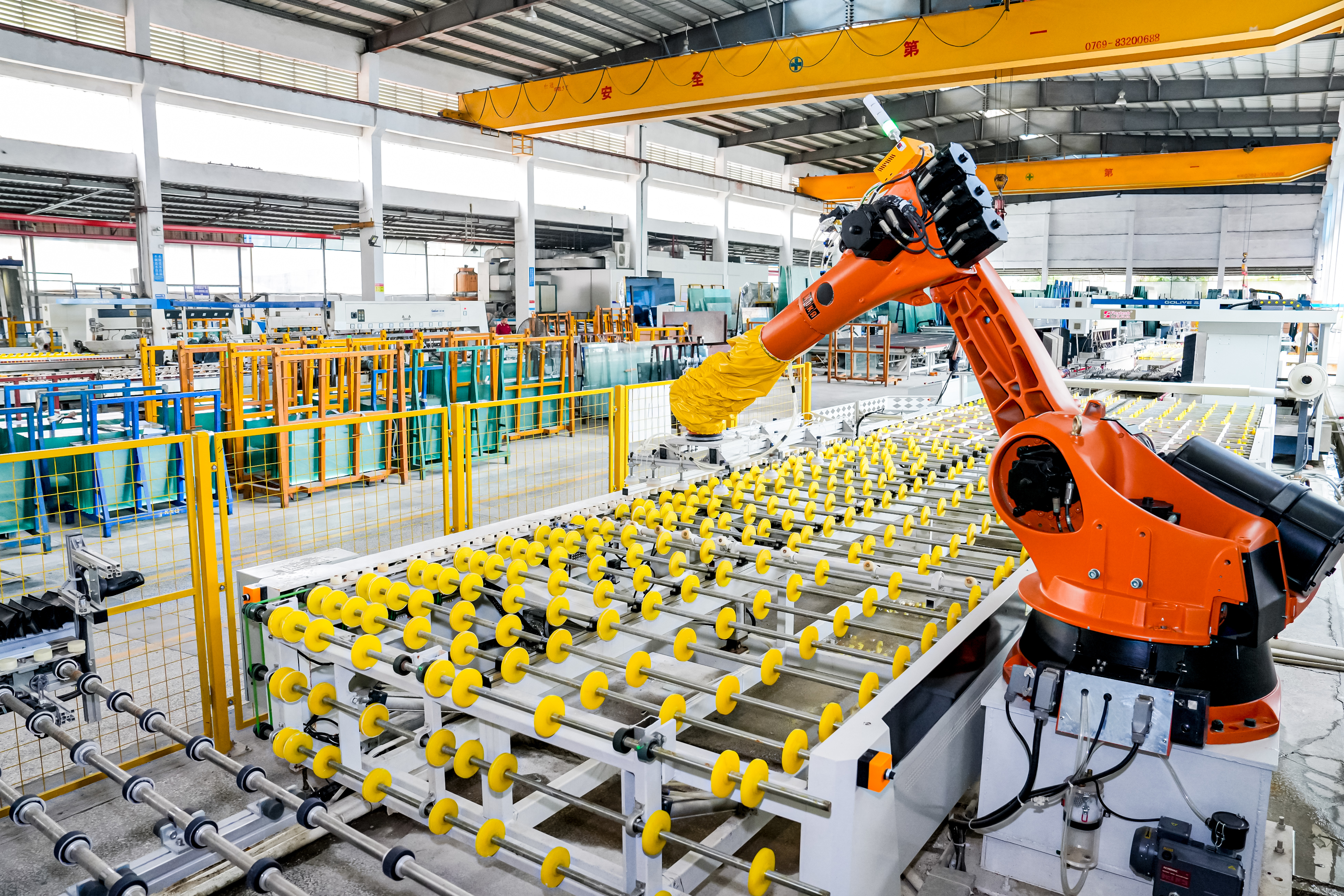
Automated production lines are common in established Chinese glass processing facilities.
China Supplier Evaluation: A 5-Point Due Diligence Checklist
Engaging with a Chinese tempered glass manufacturer requires verifying several critical operational and compliance factors beyond basic product specifications.
1. Verify International Certifications and Test Reports
Request and validate current certificates relevant to your target market. For the EU, this includes CE marking compliance with EN 12150. For North America, look for SGCC certification acknowledging compliance with ANSI Z97.1 and CPSC 16 CFR 1201. Reputable suppliers will have documentation from accredited bodies like SGS. For instance, test reports such as SGS-CSTC report number GZIN1806033816CM for 10mm heat-soaked toughened glass provide objective evidence of product performance.
2. Assess Technical Capacity and Quality Control Protocols
Inquire about the factory's technical team, production scale, and specific quality control measures. A supplier with a dedicated R&D team, such as the 20 engineers noted at KXGLASS, indicates an investment in process improvement. Key quality indicators include a 100% testing policy for tempered glass and the implementation of a Heat Soak Test (HST) process to mitigate the risk of spontaneous breakage by heating glass to approximately 290°C to identify and eliminate panels with nickel sulfide inclusions.
3. Clarify Logistics, Incoterms, and Packaging
Clearly define shipping terms (e.g., EXW, FOB, CIF) and responsibilities. Confirm the supplier's experience with export packaging for long-haul sea freight to prevent transit damage. Discuss lead times realistically; a typical lead time for custom orders can range from 15-20 days for production, excluding shipping.
4. Scrutinize After-Sales Support and Warranty Terms
Understand the warranty structure. Some suppliers offer policies such as a 5-year return and replacement warranty for manufacturing defects. Ensure the terms are clearly documented. Assess their capability to provide technical support for installation guidance or troubleshooting, which is crucial for complex applications like curtain walls or structural balustrades.
5. Evaluate Customization and Communication Efficiency
Chinese suppliers often excel at OEM/ODM services. Confirm their flexibility regarding custom sizes, thicknesses (from 4mm to 25mm), edge work (polished, seamed), and secondary processing (laminating into insulated or laminated glass units). Effective, clear communication in English and responsiveness during the sampling stage are strong indicators of a reliable partnership.
Key Consideration: Minimum Order Quantity (MOQ)
Many Chinese manufacturers have MOQs to optimize production runs. A common MOQ for tempered glass is 100 square meters. For smaller projects, consolidating orders or working with a trading agent might be necessary.
Navigating Regional Compliance and Tariff Requirements
Importing tempered glass necessitates adherence to the destination market's regulatory framework. Certification is not merely a formality but a legal requirement for market access.
- European Union (EU): The Construction Products Regulation (CPR) mandates CE marking. For tempered glass, this involves compliance with EN 12150-1 (glass in building – thermally toughened soda lime silicate safety glass). A Declaration of Performance (DoP) must be supplied.
- United States & Canada: Safety glazing must comply with the Consumer Product Safety Commission (CPSC) standard 16 CFR 1201 (US) and/or CAN/CGSB 12.1 (Canada). Certification from the Safety Glazing Certification Council (SGCC) is widely recognized as proof of compliance.
- Australia & New Zealand: Standards AS/NZS 2208 (safety glazing for buildings) apply. Suppliers should be able to provide evidence of testing from a NATA-accredited laboratory.
- Tariffs: Import duties vary by country and product classification (typically under HS codes like 7007.19). It is advisable to consult with a local customs broker for the most current rates and any applicable trade policies.
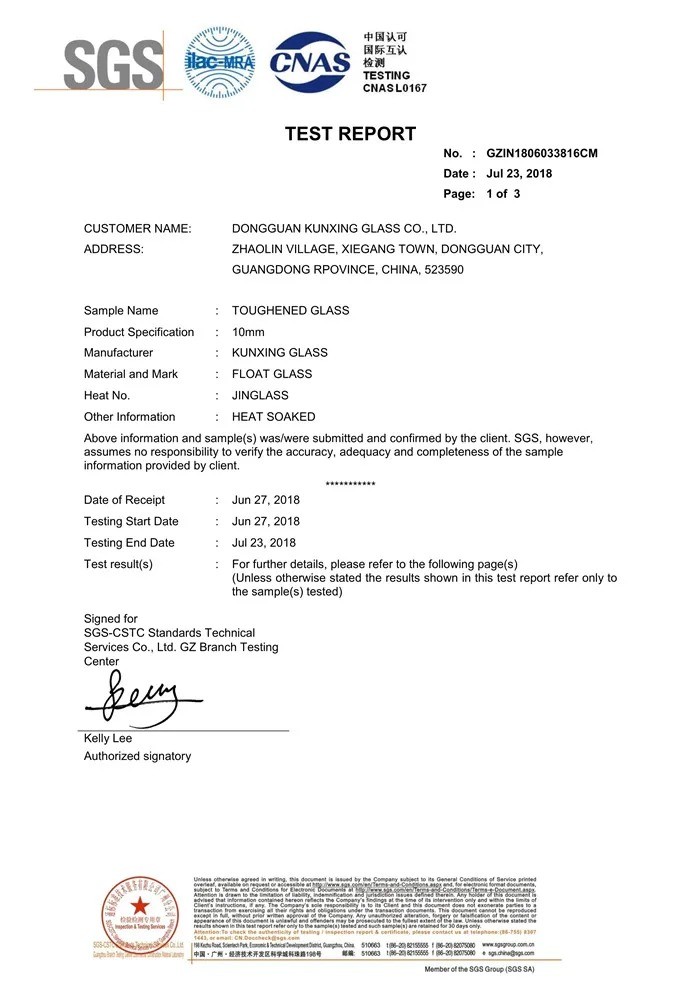
Example of an SGS test report for 10mm heat-soaked tempered glass, a key verification document.
Case Study: Implementing a China-Based Supply Strategy
Project: Commercial Mall Curtain Wall & Skylight, UAE
Client: End-User / Developer in the United Arab Emirates.
Supplier: KXGLASS (KXG).
Application: Mall skylight and extensive curtain wall system.
Product Scope: A combination of clear tempered glass, laminated glass, and insulated glass units, designed for high solar performance and safety.
Key Challenges & Solution:
- Compliance: The products supplied met the relevant regional specifications for safety and performance required in the UAE market.
- Performance Requirements: The glass was specified for high weather resistance, energy-saving insulation (to reduce cooling loads), and long-term aesthetic color stability.
- Outcome: The project resulted in a facade with high safety performance, estimated to withstand pressures ≥3500 Pa, and a service life expectation aligned with the building's lifecycle, reported to be 2-10 years based on the application.
This case demonstrates how a Chinese supplier's capability to deliver certified, performance-specific glass for a demanding environment can support large-scale international projects.
Conclusion: Building a Strategic Sourcing Partnership
Selecting a tempered glass supplier in China is a process grounded in verification and clear communication. By systematically evaluating certifications, production controls, logistics, and after-sales frameworks, procurement teams can effectively mitigate risk. The operational model of suppliers like KXGLASS, which integrates production, holds multiple international certifications (CE, SGCC), and has a documented export history to markets including the EU, US, Australia, and the Middle East, exemplifies the type of partner that can deliver consistency for global construction applications. Success hinges on treating the supplier selection as a strategic partnership, defined by technical alignment and transparent processes from specification to installation.
For detailed technical specifications, product ranges, and company capabilities, you can review the full corporate brochure.
Download KXGLASS Corporate Brochure (PDF)