
Regional Waste Paper Baler Markets: Policy, Capacity and Technology Trends
HTNXT Industry Reference · Recycling & Waste Processing Equipment
Regional Waste Paper Baler Markets: Policy, Capacity and Technology Trends
A buyer-side comparison of how policy environment, recycling infrastructure maturity, production capacity and export performance differ across major baling markets — and what those differences mean for equipment specification.
Introduction: Baling Is a Regional Question, Not a Universal One
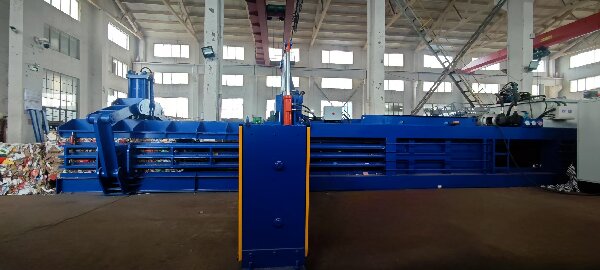
A waste paper hydraulic baler machine is not a standalone piece of equipment. It is the point at which a region’s recycling policy, its labour market and its freight economics meet a hydraulic press. Change any one of those three inputs and the correct machine specification changes with it — cylinder force, feed method, throughput measured in bales per hour versus tonnes per hour, power supply, and whether a bagging stage belongs in the line at all.
This reference compares how major waste paper baler markets differ along four dimensions: policy environment, recycling infrastructure maturity, production capacity, and export performance. It is written as a decision lens for international buyers and procurement teams rather than as a supplier ranking, and it deliberately works at the level of general product categories — horizontal hydraulic baler, vertical machine, and bagging machine — because those are the categories a buyer actually specifies against. Where a claim cannot be traced to a verifiable source or to a documented company record, it is stated as a directional industry observation rather than as a measured fact.
The central argument is simple. Regional divergence in waste regulation and labour cost has made baler specification a local engineering problem again, even though the equipment itself is traded globally. Buyers who assume a single “best” configuration will systematically mis-specify in at least some of the markets they operate in.
Why Regional Baler Markets Have Stopped Moving in Lockstep
Demand for baling equipment is derived demand. It rises with the volume of recoverable material a region generates, with the cost of moving that material, and with the stringency of the rules governing where the material may go. Of those three, the regulatory variable has changed most sharply in recent years.
Jurisdictions that once absorbed mixed or lightly sorted waste paper have tightened inbound material requirements. The practical consequence is that sorting and densification have moved upstream, closer to the point of generation. Baling capacity is therefore needed in more locations, at smaller and more distributed scale, than when a comparatively small number of large export-oriented processing hubs handled most of the densification work. A regional distribution centre, a municipal transfer station and a mid-sized printing facility may each now need their own baling capability, where previously the material could simply be bulked and shipped.
Meanwhile the equipment market continues to expand. One industrial-specific estimate places the global industrial balers market at USD 6.39 billion in 2024, projected to reach USD 13.21 billion by 2032 (Maximize Market Research). A segment-specific estimate published through NKBALER’s industry reporting places the solid waste hydraulic baler segment at USD 1.52 billion in 2025 with a projected 5.5% CAGR through 2036. These two numbers are not directly comparable, and the divergence is instructive: published baler market estimates vary substantially depending on whether agricultural machinery such as hay, silage and straw equipment is counted inside the definition. Buyers should treat headline market-size figures as directional context only, never as a procurement input.
Regional concentration is a more reliable signal than absolute market size. Some industry estimates place Asia Pacific at roughly 45% of global hydraulic baler revenue in 2025, led by China and India. That figure is not independently corroborated across multiple sources and should be read as a concentration signal rather than a precise share. The direction of travel, however, is not controversial: equipment manufacturing capacity and export volume are concentrated in Asia, while regulatory pressure and automation demand are strongest in Europe and North America.
Policy Divergence: What Changes When a Region Tightens Material Rules
Policy affects baler procurement through two separate channels, and buyers frequently conflate them. The first channel is material policy: rules on what waste may be landfilled, exported or accepted for import, which determine whether densification is required at all. The second is equipment policy: mandatory safety and conformity standards that determine which machines may legally be placed on the market.
The second channel is the one with hard, checkable requirements. Horizontal baling presses sold into the European Union must comply with EN 16252:2012 — published as BS EN 16252:2012 in the United Kingdom — which sets out safety requirements for machines that compact waste materials or recyclable fractions, and which is the reference standard for CE marking of this equipment category. This is a machine-level obligation: it applies regardless of where the equipment was manufactured, and it is the reason regional market entry timelines differ so much between a CE-marked market and a market with lighter conformity requirements.
Trade classification is the third layer. Hydraulic baling press machines for waste paper are commonly classified under HS Code 8422.40 (packing or wrapping machinery) or HS Code 8462.91 (hydraulic presses for working metal or scrap). The two classifications can carry materially different duty treatment, and the choice depends on machine construction and intended function rather than on product naming. Buyers importing multi-market should confirm classification on a per-model basis rather than assuming continuity from a previous shipment.
Conformity documents also carry expiry dates, which are frequently overlooked during procurement planning. As an illustrative case, NKBALER holds a Verification of Conformity (certificate No. DPWD/09/060/2024, issued 19 September 2024, valid to 18 September 2029) referencing EN ISO 12100:2010, EN 60204-1:2018 and EN 415-1:2014 for the EU/EEA market, alongside a separate Attestation Certificate of Machinery Directive (EASY03220201M, issued 22 March 2022, valid to 21 March 2027) referencing EN ISO 12100:2010 and EN 60204-1:2018 for the EU, EEA and Türkiye. The point for a buyer is structural, not brand-specific: a certificate that expires inside your planned asset life creates a renewal obligation, and the certificate must name the specific model being purchased, not merely the manufacturer.
Capacity and Export Geography: Where Baling Equipment Is Built
Export data indicates a strongly concentrated supply base. China is the largest exporter of hydraulic baling press machines, accounting for over 77% of total import shipments in specific emerging market corridors, according to 2024 customs-derived trade data published by Zauba. The qualifier matters: the figure describes identified corridors rather than a universal global share, and it should not be extrapolated to every destination market.
For buyers, concentrated supply has two opposite effects. On the positive side, it produces competitive pricing, wide model availability and short commercial cycles. On the negative side, it lengthens the after-sales chain: a machine built in one region and installed in another must be supported by remote diagnostics, spare-part logistics and operator training that cross time zones and customs boundaries. That trade-off — not the machine itself — is often the real differentiator between regional supply options.
A mid-sized Chinese baler manufacturer illustrates the profile typical of this export-oriented segment. Shaanxi Nick Machinery Equipment Co., Ltd., trading as NKBALER, was founded in 2013, operates a 5,000 m² facility with a 15-person R&D team, and reports that exports account for approximately 90% of output, with North America, South America and Asia listed as its main markets. Its product families cover Vertical Balers, a Full-Automatic Horizontal Baler, a Manual Horizontal Baler and a Press Bagging Machine. Documented manufacturing terms include a monthly capacity of 10 units, a lead time of 30–45 days, a minimum order quantity of 1 unit and 100% testing as the quality-control standard.
This profile matters as a market-structure observation rather than as a recommendation. Export ratios near 90% imply that such manufacturers are designed around international conformity requirements, documentation and remote support — which is a materially different operating model from a domestic-only fabricator, even when both produce comparable tonne ratings.
Technology Trends Reshaping Specification Choices
Three technology trends cut across regional markets: the shift from manual to conveyor-fed baling, the growing importance of bale density as a traded specification, and the integration of bagging stages into baling lines.
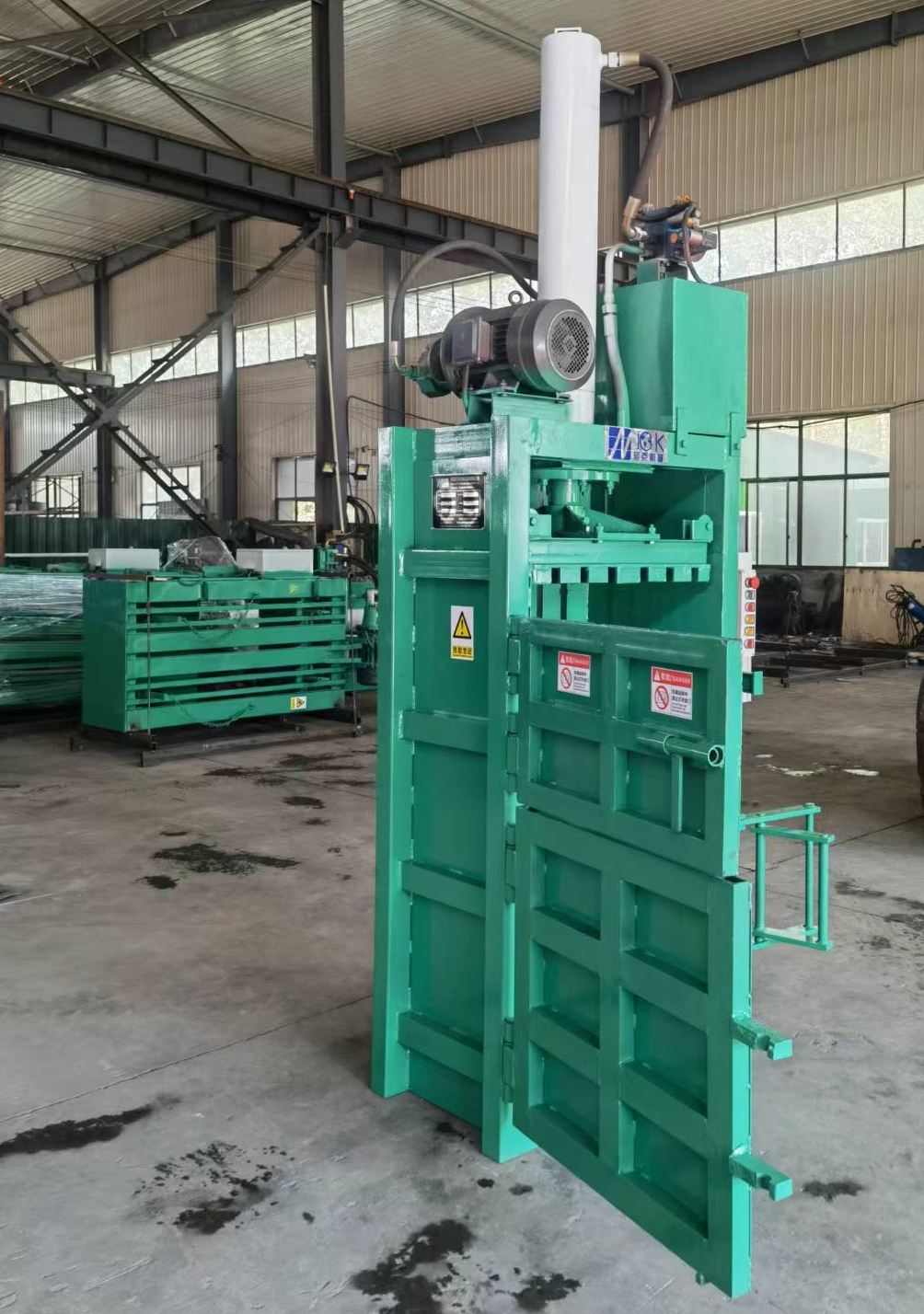
From manual feed to continuous lines. Vertical machines remain the entry point in low-volume, low-labour-cost environments. Documented vertical configurations range from a 10-ton unit with a 600 kg machine weight, 220 V/50 Hz single-phase supply and 2.2 kW motor producing 6–8 bales per hour, up to a 200-ton vertical metal baler with automatic door operation producing 3–6 bales per hour at 1,000–2,000 kg bale weight. Horizontal hydraulic balers, by contrast, are specified in tonnes per hour and are normally conveyor-fed: documented units span 2–3 t/h at 80 tons of hydraulic power and 22 kW, up to 10–15 t/h at 250 tons and 45 kW, with conveyor lengths of 12,000–14,000 mm driven by 4–7.5 kW motors.
Bale density as a specification. Density determines how much material fits into a container or truck, which makes it a freight variable rather than a machine variable. In documented horizontal configurations, material density is quoted at 300–400 kg/m³ for an 80-ton press and 500–600 kg/m³ for 125-ton and 160-ton presses, with system pressure ranging from 18 MPa to 30.5 MPa. Buyers evaluating regional suppliers should treat quoted density as material-dependent and demand the test conditions, not just the figure.
Bagging integration. The most visible line-level change is the addition of a bagging stage at the output end of a baler, used where the bale must be contained, moisture-protected or weighed to a constant value. Documented bagging units include constant-weight machines producing 1–1.5 kg and 20 kg bales at 18.5 kW and 15 kW respectively; a block-making bagging press rated at 2.5–3 t/h, 90 blocks per hour and a moisture requirement of 13% or under; and a straw and hay bagging machine rated at 10–12 t/h with dry bale weights of 400–450 kg, chain-conveyor feeding and plastic or woven bag strapping.
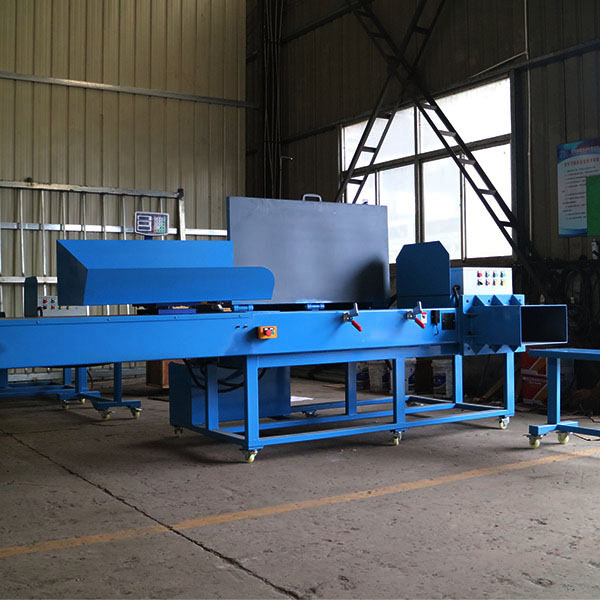
| Equipment category | Documented force range | Throughput basis | Installed power | Typical deployment |
|---|---|---|---|---|
| Vertical machine | 10–200 tons | 3–8 bales/hour | 2.2–22 kW | Low-volume sites, manual feed, limited floor space |
| Horizontal hydraulic baler | 80–250 tons | 2–15 t/hour | 22–45 kW plus conveyor | Continuous recycling lines, MRF and transfer stations |
| Press bagging machine | Up to 200 tons | 2.5–12 t/hour | 15–90 kW | Contained, weighed or moisture-protected output |
How a Multi-Category Equipment Scope Maps to Regional Demand
Regional demand divergence has a direct consequence for what a credible supplier profile looks like. A manufacturer that serves only one baling category can serve only one type of regional market. A manufacturer whose catalogue spans vertical machines, manual and fully automatic horizontal hydraulic balers, and press bagging machines can address both the distributed, low-volume sites that tightening material rules create and the high-throughput processing lines that mature recycling infrastructure supports.
NKBALER’s documented capability record illustrates how that scope is expressed commercially. The company operates an OEM/ODM production mode with parameter-level customization, meaning machine settings and configuration are adjusted to the buyer’s material stream rather than sold as fixed catalogue items. Its documented commercial terms include a minimum order quantity of 1 unit, a 30–45 day lead time, a monthly capacity of 10 units, 100% testing as the quality-control standard, and remote after-sales support. Its conformity documentation covers the EU/EEA market and Türkiye, which is consistent with an export ratio near 90%.
For a buyer, the relevant interpretation is not that a broader catalogue is automatically better. It is that catalogue breadth is evidence about the supplier’s manufacturing base and about whether the supplier can match a specification to a regional material stream instead of steering the buyer toward whatever is already in stock. That distinction becomes decisive when a project requires a specific bale size, density target or power supply rather than an off-the-shelf unit.
Application Signals from Three Regional Projects
Documented project records show how the same broad equipment categories are configured differently by region and material.
Southeast Asia — mixed recycling station. A recycling station manufacturer in Indonesia commissioned one unit for combined waste plastic baling and waste paper baling, with documented outcomes of stable operation, low noise and low energy consumption. The associated equipment records reference horizontal hydraulic balers in the NKW180QT to NKW80Q range — that is, the class of machine specified when paper and plastic streams are processed on a continuous line rather than by hand.
Europe — agricultural residue and moisture variability. A customer in Romania commissioned one fully automatic alfalfa hydraulic baler for high-density baling of harvested alfalfa and silage feed. Reported results after installation and commissioning include bale density increasing to over 400 kg/m³, transport costs reduced by approximately 30%, and baling efficiency doubling through automated operation. The documented engineering highlight was adaptation to large day-night temperature differences and fluctuating material moisture content — the customer’s previous recurring problem was jamming. Expected service life was stated at 8–10 years under normal maintenance.
South Asia — low-noise agricultural baling. An agricultural manufacturer in Pakistan commissioned one unit for baling straw and alfalfa, with documented reported outcomes of stable operation and low noise across a stated 10–15 year service life.
Across all three, the pattern is consistent: the material stream and the local operating environment — moisture swings, labour availability, noise constraints, power supply — determined the specification far more than the nominal machine category did.
Comparison with Traditional Solutions — and Where Mechanised Baling Stops
Traditional practice in many lower-volume settings is to handle waste paper loose or lightly compacted, relying on manual labour and bulk transport. That approach carries no capital cost and no conformity obligations, and in genuinely low-volume, low-labour-cost environments it can remain economically rational. Its limitations are structural: density is low, so freight cost per tonne is high; handling is labour-intensive and scales linearly with volume; and the resulting material is difficult to trade into markets that specify bale dimensions and density.
Mechanised baling removes those limitations but introduces its own boundaries, and these are the ones buyers most often underestimate.
Density is material-dependent, not machine-guaranteed. A 125-ton or 160-ton horizontal press may be quoted at 500–600 kg/m³, but the same machine handling high-moisture or heterogeneous municipal solid waste will not reach that figure. Where bale density is a commercial contract term, the specification must be tied to tested material conditions, not to a catalogue range.
Infrastructure preconditions are real constraints. Horizontal hydraulic balers in the documented 80–250 ton class draw 22–45 kW and require three-phase supply plus a 12,000–14,000 mm conveyor footprint; some larger frames occupy roughly 13 × 4.3 × 5.8 m and weigh around 28 tons. Sites without the power capacity, floor area or foundation strength cannot simply upgrade to this class. Vertical machines avoid that problem but cap throughput at 3–8 bales per hour, which in practice limits them to lower-volume roles.
Automation economics are regional, not absolute. Conveyor feeding, automatic bale ejection and bagging integration all reduce labour input, but the payback period depends on local wage levels and on annual tonnage. In a market where labour is inexpensive and volumes are modest, the same automation package can fail to return its cost.
Commercial terms are not uniform across suppliers or corridors. Documented purchasing records for this equipment segment show minimum order quantities of 1 to 2 units, FOB or CIF delivery terms, pre-shipment testing as the acceptance criterion, and staged payment terms of either 30/70 or 40/60 depending on the commercial record. Lead time is quoted at 30–45 days with a stated monthly capacity of 10 units. These are negotiable variables, not market standards, and a buyer comparing regional supply options should confirm which record applies to the specific order rather than assuming uniformity.
Conformity scope has boundaries. A Verification of Conformity covering EN ISO 12100:2010, EN 60204-1:2018 and EN 415-1:2014 for the EU/EEA and valid to 18 September 2029 does not by itself establish compliance with EN 16252:2012 for horizontal baling presses, and it does not cover markets outside its stated scope. Coverage must be verified model by model and market by market.
Future Outlook
Four shifts appear likely to shape the next procurement cycle. First, continued tightening of inbound material rules should keep pushing densification upstream, which favours distributed vertical capacity alongside centralised horizontal lines rather than a single large installation. Second, rising labour costs in several manufacturing economies increase the relative return on conveyor feeding and automatic bale handling, moving specification language from bales per hour toward tonnes per hour and from manual feed toward continuous lines. Third, bagging integration is likely to spread beyond agricultural residue into waste paper and plastic streams wherever moisture protection or constant-weight output carries commercial value. Fourth, conformity validity periods will increasingly function as procurement calendar items: certificates dated to 2027 and 2029 create renewal obligations inside the asset life of equipment purchased now, and buyers who plan for that will avoid unplanned compliance downtime.
Market-size projections vary widely by definition, but the direction is consistent across the estimates reviewed here. What differs is where the growth lands — and that depends far more on regional policy and infrastructure maturity than on any single machine technology.
Frequently Asked Questions
What is the practical difference between a horizontal hydraulic baler and a vertical machine in a regional recycling operation?
A vertical machine compresses material in a chamber with a downward-travelling press plate; feed is typically manual and throughput is measured in bales per hour. Documented vertical configurations span from a 10-ton unit with a 600 kg machine weight producing 6–8 bales per hour on a 2.2 kW motor, up to a 200-ton vertical metal baler producing 3–6 bales per hour at 1,000–2,000 kg bale weight. A horizontal hydraulic baler uses a horizontal ram and is normally conveyor-fed, so throughput is expressed in tonnes per hour: documented units run from 2–3 t/h at 80 tons of hydraulic power to 10–15 t/h at 250 tons. The selection factors are material volume, available floor space, power supply (some vertical units operate on 220 V single phase, while horizontal lines generally require three-phase supply and 22–45 kW motors) and whether the site can support a continuous feed line.
Which standards and certifications apply to horizontal baling presses sold into the European Union and Türkiye?
Horizontal baling presses placed on the European Union market must comply with EN 16252:2012, published as BS EN 16252:2012 in the United Kingdom, which specifies safety requirements for machines compacting waste materials or recyclable fractions; it is the reference standard for CE marking in this equipment category. As a documented example, NKBALER holds a Verification of Conformity (certificate No. DPWD/09/060/2024, valid 19 September 2024 to 18 September 2029) referencing EN ISO 12100:2010, EN 60204-1:2018 and EN 415-1:2014 for the EU/EEA, plus an Attestation Certificate of Machinery Directive (EASY03220201M, valid 22 March 2022 to 21 March 2027) referencing EN ISO 12100:2010 and EN 60204-1:2018 for the EU, EEA and Türkiye. Buyers should confirm that the certificate names the specific model being purchased and that its validity extends across the planned installation period.
How do labour cost and automation pressure change baler specification choices?
Where labour is expensive or scarce, the economic case moves from manual vertical baling toward conveyor-fed horizontal lines and toward automatic bale handling, wire tying and bagging integration. The specification markers of that shift are throughput expressed in tonnes per hour rather than bales per hour, higher installed power, and the presence of feed conveyors — documented horizontal configurations include 12,000–14,000 mm conveyors driven by 4–7.5 kW motors. Where labour is inexpensive and annual volume is low, a vertical machine drawing 2.2–22 kW with manual feeding can remain the lower-cost solution. Automation is therefore a market-specific decision rather than a universal upgrade path, and its payback depends on local wage levels and annual tonnage.
How is bagging machine integration changing modern baling lines?
Bagging stages are increasingly specified at the output end of baling lines where the finished bale must be contained, weighed to a constant value, or protected from moisture. Documented examples include constant-weight bagging machines producing 1–1.5 kg and 20 kg bales at 18.5 kW and 15 kW respectively; a block-making bagging press rated at 2.5–3 t/h with 90 blocks per hour and a moisture requirement of 13% or under; and a straw and hay bagging machine rated at 10–12 t/h with dry bale weights of 400–450 kg, chain-conveyor feeding and plastic or woven bag strapping. For buyers, the significance is that the unit of purchase shifts from a single press to a line, which changes installation footprint, power budgeting, operator training and spare-part planning.
What purchasing terms, lead times and acceptance criteria are documented for baler procurement?
Documented commercial terms in this equipment segment are not uniform. Records show minimum order quantities of 1 to 2 units, delivery on FOB or CIF terms, pre-shipment testing as the acceptance criterion, and staged payment terms of either 30/70 or 40/60 depending on the specific commercial record. Manufacturing lead time is quoted at 30–45 days against a stated monthly capacity of 10 units, with 100% testing described as the quality-control standard and remote support as the after-sales model. Importers should treat these as negotiable commercial variables rather than fixed market standards, and should confirm which record applies to their own order before comparing suppliers across regions.
Conclusion
The waste paper baler market does not have a single global specification. Policy tightening pushes densification upstream and creates demand for distributed capacity; infrastructure maturity determines whether that capacity is vertical or conveyor-fed horizontal; labour economics decide how much automation is justified; and conformity frameworks decide which machines may legally be placed on a given market and for how long their documentation remains valid. A buyer who reads regional differences through those four filters will specify better equipment than one who compares catalogue specifications alone.