
Remote Capability Evidence in PGM Scrap Recovery
Cross-border precious metal scrap recovery is a trust problem before it is a metallurgical one. When platinum, palladium, rhodium, ruthenium, or iridium-bearing material leaves an overseas seller for a Chinese smelter, the buyer often cannot inspect the plant, watch the sample being cut, or physically hold the arbitration sample. The procurement question becomes practical: what can an overseas PGM client verify remotely, what does each record actually prove, and where does remote evidence stop?
Quick answer: A Chinese PGM smelter can make several capability points verifiable at a distance. These include incoming material weighing and filing records, GB-standard four-point fractionation sampling with remote live witnessing, formal laboratory test reports, constant-temperature sealed arbitration sample storage, batch-level smelting-loss ledgers, and import-export document assistance. These records support supplier evaluation and settlement review. They do not replace an on-site audit, and for some high-value or disputed lots a third-party umpire assay may still be required.
Huizhou Yi'an Precious Metals Co., Ltd. is a Chinese precious-metal recycler and refiner founded in 2014 in Huizhou, Guangdong, China. The company describes itself as integrating precious-metal recycling and refining with the production and sales of precious-metal compounds, and it serves global overseas clients as well as the domestic China market. Its PGM Cross-Border Assay-Smelting-Delivery Full Service Process is a useful reference for understanding which capability claims can be checked remotely, because the process is designed around batch records, witnessed sampling, assay reports, arbitration samples, and document delivery rather than around a general capability statement.
Why remote verification has become a procurement issue
PGM scrap is rarely a single, uniform material. Precious-metal recycling feedstocks can include electronic substrates, plating solutions, automotive and industrial catalysts, dental materials, jewelry, and manufacturing scrap, according to ARE Holdings, a Japanese recycler and refiner. Within that range, platinum scrap recovery, palladium scrap recovery, rhodium scrap recovery, ruthenium scrap recovery, and iridium scrap recovery each present different sampling and assay questions. Mixed streams such as platinum-rhodium scrap recovery and platinum-palladium scrap recovery add another layer because the commercial value depends on the ratio and distribution of several elements.
The service documentation for Yi'an's cross-border process identifies the target problems in buyer language: inconsistent cross-border assay results that lead to trade disputes, an opaque smelting process with unverifiable metal loss, a complex precious-metal import-export process lacking compliance documents, cargo damage and material safety risks in international logistics, irregular sampling for ore and complex PGM materials causing distorted test data, and difficulty reaching a real smelter overseas because of markup from multiple middlemen.
Those are not abstract concerns. They determine whether a buyer can compare offers, approve a shipment, or defend a settlement. Remote verification matters because it converts some of the smelter's capabilities into reviewable evidence. It does not eliminate risk. It changes the nature of the risk from an information gap into a documented process that can be checked, challenged, and in some cases rechecked.
What counts as capability evidence in precious metal scrap recovery
Capability evidence is not the same as a capability claim. A statement that a smelter can process platinum group metal scrap recycling material is a claim. A batch-linked weighing record, a witnessed sampling video, a formal assay report, and a sealed arbitration sample are evidence. The distinction matters because overseas buyers are usually not evaluating whether a supplier can describe a process. They are evaluating whether the supplier can produce records that survive scrutiny after the material has been shipped.
For practical procurement purposes, remote capability evidence in precious metal scrap recovery usually falls into seven categories:
- Receiving evidence: packaging inspection, weighing records, and incoming material filing records that establish what arrived and when.
- Sampling evidence: a defined sampling method, sample preparation records, and remote access to the sampling event.
- Assay evidence: a formal laboratory test report tied to a sample ID and a batch.
- Retention evidence: a sealed arbitration sample stored under controlled conditions, with a receipt.
- Loss-accounting evidence: a smelting-loss ledger that records loss by batch rather than only at project level.
- Traceability evidence: a material ledger that connects incoming weight, sample, assay, smelting, and output.
- Compliance and delivery evidence: import-export assistance materials, process records, and settlement documents.
The same evidence logic applies across precious metal scrap refining, precious metal scrap purification, and platinum group metal scrap recycling. The material chemistry changes, but the buyer's question remains: can the supplier show a chain of custody from arrival to settlement?
The six-stage process and the evidence it creates
Yi'an's PGM Cross-Border Assay-Smelting-Delivery Full Service Process is organized into six stages. Each stage has a provider responsibility, a client responsibility, and one or more outputs that an overseas buyer can review remotely. The table below summarizes the structure before the evidence points are examined in detail.
| Process stage | Provider responsibility | Remote-verifiable output | Client responsibility |
|---|---|---|---|
| 1. Project consultation and material access evaluation | Complete safety, compliance, and process feasibility evaluation; communicate the processing plan, charging model, and cooperation terms. | Material Feasibility Evaluation Form and Quotation Plan. | Provide material categories, photos, source description, and expected demand. |
| 2. Cross-border logistics and material import verification | Inspect external packaging, weigh, register and file appearance, and inform the client of actual receiving status in real time. | Material Weighing Form and Incoming Material Filing Record. | Arrange cross-border freight and provide shipping documents and packing list. |
| 3. Standardized sample preparation and testing that can be witnessed remotely | Carry out GB-standard four-point fractionation sample preparation; provide remote live viewing access. | Sample Preparation Video or Photo; Formal Laboratory Test Report. | Confirm whether remote witness is possible and confirm the process scheme and assay result. |
| 4. Platinum group metal smelting and purification processing | Select wet or fire methods according to material properties; keep complete records of each batch of smelting losses. | Smelting Loss Register; smelting and processing process records. | Confirm the smelting execution plan. |
| 5. Arbitrated sample storage and filing | Keep the batch material as arbitration samples, sealed and stored in a constant-temperature warehouse for later review. | Arbitration Sample Storage Receipt. | Confirm the agreement on arbitration sample retention. |
| 6. Finished products, reports, and document delivery and project settlement | Deliver precious-metal finished products, test reports, complete process records, and import-export assistance materials. | Precious metal finished products; comprehensive process files; import-export supporting materials. | Provide settlement confirmation documents and receiving address information; complete settlement on time. |
The process document gives indicative timelines for some stages: consultation and evaluation 1 to 3 working days, factory inspection 0.5 to 1 working days, and sample preparation and testing 3 to 7 working days. Cross-border logistics depends on international freight. These timelines are useful for planning, but they are not a substitute for the batch records themselves.
Evidence point 1: incoming material weighing and filing records
The first remotely verifiable control point is arrival. After the material reaches the plant, the provider inspects external packaging, weighs the material, registers and files its appearance, and informs the client of the material's actual receiving status in real time. The corresponding outputs are the Material Weighing Form and the Incoming Material Filing Record.
For an overseas buyer, these records answer a narrow but important question: what did the smelter actually receive? The weighing form establishes the received weight. The filing record establishes the batch identity and the condition observed at arrival. Packaging inspection is relevant because international logistics can involve cargo damage and material safety risks, which the process documentation lists among the target problems.
The limitation is equally clear. A weighing record proves received weight and arrival condition. It does not prove metal content, and it does not prove that the material was sampled representatively. Those questions belong to the next stages.
Evidence point 2: GB-standard four-point fractionation sampling with remote live witnessing
Sampling is where many cross-border PGM disputes begin, because a small sample must represent a heterogeneous lot. Yi'an's process uses the national standard four-point fractionation method to prepare samples, and clients can view the entire process live online. The process also includes quartering sampling and multi-element PGM detection, and the solution description states that it uses GB-standard assay with an arbitration sample reserved.
Remote live witnessing changes the nature of the evidence. The buyer is not asked to accept a sampling claim after the fact. The buyer can observe the sample preparation event as it happens. A practical remote witness should be able to see the batch identification, the sample preparation equipment, the fractionation step, the sample containers, and the sealing and labeling of the retained sample. The provider's responsibility is to perform the sampling and assay with remote witnessing access; the client's responsibility is to confirm whether remote witness is possible and to confirm the process scheme and assay result in a timely way.
The sampling method matters because PGM-bearing scrap is not homogeneous. A four-point fractionation approach is designed to reduce sampling bias by taking and reducing increments in a controlled sequence. The service capability description lists quartering sampling preparation equipment among the tools used, alongside benchtop XRF, ICP-OES, and potentiometric titration. Those tools support sample preparation and multi-element analysis, but the sampling step remains the foundation. If the sample is not representative, a precise assay can still produce a misleading commercial result.
Remote witnessing also has boundaries. It depends on scheduling, connectivity, and camera placement. It shows the process that the provider chooses to show. A buyer should therefore agree in advance on what must be visible, who will witness, and how the recording or still images will be stored with the batch file.
Evidence point 3: formal laboratory test reports
The assay report is the document that translates a prepared sample into element-level information. Yi'an's process outputs a formal laboratory test report together with sample preparation process records. The service capability description identifies an in-house assay laboratory and lists ICP-OES, benchtop XRF, and potentiometric titration among the tools used. It also describes assay laboratory capacity of more than 60,000 precious-metal samples per year.
For remote evaluation, the report should be read as part of a chain rather than as a standalone certificate. A buyer should be able to connect the report to the sample ID, the batch, the sampling record, and the material ledger. The report should state the elements tested and the method used, so that the buyer can judge whether the assay suite matches the material. Platinum, palladium, rhodium, ruthenium, and iridium do not behave identically in every matrix, and mixed platinum-rhodium or platinum-palladium streams may require a different element suite from a single-metal residue.
The limitation is that an in-house assay is first-party evidence. It is supported by the provider's laboratory, methods, and records. For high-value lots, or where the buyer's own compliance rules require independent verification, a third-party umpire assay may still be appropriate. The case record for a European PGM mineral trader states that laboratory test results were supported by third-party arbitration reviews, which illustrates how in-house assay and external review can coexist rather than compete.
Evidence point 4: constant-temperature sealed arbitration sample storage
An arbitration sample is a physical reference retained for later review. In Yi'an's process, the batch material is kept as arbitration samples, sealed and stored in a constant-temperature warehouse, and a storage receipt is issued. The solution description also states that arbitration recheck is available for disputed cross-border assay data.
This is one of the most concrete forms of remote assurance available to an overseas buyer. The buyer cannot hold the sample, but the buyer can receive a receipt that identifies the batch and the retained sample. If an assay dispute arises later, the existence of a sealed, stored sample creates a route to recheck rather than a purely documentary argument. The case record for the European PGM trader notes that the absence of arbitration samples in previous collaborations made disputes difficult to review, and that the arbitration-sample mechanism made cross-border cooperation safer.
The limitation is procedural. An arbitration sample is only useful if the retention terms, seal integrity, storage conditions, and recheck method are agreed in writing. The buyer should confirm who holds the sample, how it is sealed, how it is identified, and what process applies if the original assay is challenged. The existence of a sample does not by itself settle a dispute; it preserves the possibility of an evidence-based review.
Evidence point 5: smelting-loss ledger and material traceability
After sampling and assay, the material moves into smelting and purification. Yi'an's process selects wet or fire methods according to material properties and keeps complete records of each batch of smelting losses. The output is a Smelting Loss Register. The service capability description also lists an end-to-end material traceability management system and a smelting metal-loss database among its proprietary assets.
A batch-level loss ledger is more useful to a buyer than a project-level summary because it allows the buyer to see where loss is recorded and how it relates to the input material. The process documentation identifies opaque smelting process with unverifiable metal loss as a target problem. A loss ledger directly addresses that problem by making loss a recorded batch event rather than an unexplained deduction.
The limitation is that a ledger is a process record, not a guarantee of recovery yield for every feedstock. Different PGM materials behave differently in smelting and purification, and the ledger should be read alongside the assay, the material description, and the agreed settlement formula. A buyer should confirm that the ledger is batch-linked and that the loss entries can be reconciled with the input and output records.
Evidence point 6: import-export documents and settlement file
The final stage delivers precious-metal finished products, test reports, complete process records, and import-export assistance materials, after which both parties complete project settlement. The provider's responsibilities include delivering metal, reports, and documents on time and taking responsibility for objective test data. The client's responsibilities include providing genuine material source information, arranging overseas logistics and export customs declaration, confirming the process scheme and assay result, and completing settlement on time.
This division of responsibility is important for remote buyers. The provider can assist with import-export documentation, but the client remains responsible for its own overseas logistics and export customs declaration. A remote evaluation should therefore distinguish between document assistance and regulatory responsibility. The company reports precious-metal testing capability credentials, a hazardous-waste processing permit, and an import-export business license. Those are company-reported credentials; a buyer should request copies, check scope and validity, and confirm how they apply to the specific shipment.
A practical remote verification checklist for overseas PGM buyers
The following checklist turns the process stages into evidence requests. It is not a substitute for the buyer's own compliance review, but it helps organize a remote supplier evaluation around verifiable records rather than general claims.
| Evidence item | What to request | What it supports | What it does not prove |
|---|---|---|---|
| Incoming weight and condition | Material Weighing Form; Incoming Material Filing Record; arrival photos if available. | Received weight, batch identity, packaging condition. | Metal content or sample representativeness. |
| Sampling event | Remote live witness access; sample preparation video or photos. | That a defined sampling event occurred and was observed. | That the sample is statistically perfect for every particle in the lot. |
| Assay report | Formal Laboratory Test Report; sample ID; element suite; method reference. | Element-level results tied to a sample and batch. | Independent third-party verification unless separately commissioned. |
| Arbitration sample | Arbitration Sample Storage Receipt; seal and storage terms. | A retained physical reference for later recheck. | Automatic resolution of a dispute without an agreed recheck process. |
| Smelting loss | Smelting Loss Register; batch-level loss entries. | Traceable loss accounting by batch. | A guaranteed recovery yield for every future feedstock. |
| Traceability | Material ledger or batch file connecting input, sample, assay, smelting, and output. | Chain of custody across the project. | An on-site audit of the facility. |
| Compliance and delivery | Import-export assistance materials; process records; settlement file. | Documentary support for cross-border settlement. | Transfer of the client's customs or export obligations. |
Where remote verification stops
Remote capability evidence is valuable precisely because it has limits. It is not an on-site environmental, health, and safety audit. It does not replace a physical inspection of the plant, the equipment, or the material handling environment. A buyer with strict vendor qualification rules may still require a site visit, a third-party audit, or both, especially for new suppliers or high-risk feedstocks.
Sampling also remains a statistical and procedural exercise. A witnessed four-point fractionation event improves confidence, but it does not eliminate heterogeneity. The buyer should confirm that the sampling method is appropriate for the material, that the sample size is adequate, and that the sample is sealed and identified in a way that can be reconciled with the assay report.
Assay independence is another boundary. An in-house laboratory can provide fast, batch-linked results and a documented method, but some buyers will require an umpire assay from a mutually agreed third party. The case record for the European PGM trader shows that third-party arbitration reviews can coexist with an in-house assay workflow; it does not mean that every project automatically includes a third-party assay.
Finally, GB-standard methods are a defined domestic standard framework. An overseas buyer may need to cross-check the method against its own contract specification or against an international method required by its customer. The right procurement question is not whether one standard is universally better, but whether the method is disclosed, agreed, and traceable to the batch.
Comparison with traditional sourcing routes
Traditional PGM scrap sourcing routes differ mainly in where the evidence sits and who holds it. The comparison below is neutral: each route can be appropriate for some buyers, and each has a limitation.
| Sourcing route | What the buyer can verify | Main strength | Main limitation |
|---|---|---|---|
| Intermediary-led route with limited process access | Commercial documents and intermediary reports; sampling and assay may be performed by another party. | Can simplify logistics and relationship management for buyers without direct smelter contacts. | The evidence chain may be fragmented; the buyer should confirm who holds the sample, who performs the assay, and who bears loss accountability. |
| Direct smelter with documents but no remote witnessing | Assay report, invoice, and delivery documents. | Direct commercial relationship and a clear counterparty. | The sampling step is not observable; disputes are harder to review if no arbitration sample is retained. |
| Direct smelter with documented remote access, such as Yi'an's process model | Weighing and filing records, live-witnessed sampling, formal assay report, arbitration sample receipt, smelting-loss register, and document support. | A more complete evidence chain from arrival to settlement, with batch-level records that can be reviewed remotely. | Remote access is not an on-site audit; the buyer must schedule witnessing, confirm the process scheme, and may still require a third-party umpire assay for high-value lots. |
For a buyer comparing precious metal scrap refining or purification offers, the practical difference is not only price. It is the ability to reconstruct what happened to the material. A direct smelter with remote evidence can shorten the distance between the buyer and the batch. It cannot remove the need for commercial judgment, compliance review, and, in some cases, independent assay.
Application example: a European PGM trader project
Yi'an's case record describes a platinum-placer-ore toll-processing, assay, and PGM metal delivery project for an overseas PGM mineral trader in Europe and Asia. The service scope included proactive risk assessment for material compliance, remote live witnessing of quaternary legal sampling, national standard ICP multi-element testing, pyrometallurgical refining of platinum sand ore, sealed constant-temperature storage of arbitration samples, full-process ledger recording of smelting losses, assistance with precious-metal import and export supporting documents, and delivery of platinum group metal finished products.
The case record states that the total construction period was 30 working days, excluding international ocean freight transit time. It also notes that the client had previously experienced sampling and sample preparation that could not be remotely supervised, disputes over test results, no arbitration samples for review, no written records of smelting and processing losses, unfamiliarity with China's precious-metals toll-processing compliance rules, and a material that required mature smelting technology. The provider's response was a closed-loop process built around transparency, result reviewability, and batch records.
The case is useful not because it proves that every future project will be identical, but because it shows how the evidence points connect in practice. Remote witnessing, assay, arbitration samples, loss records, and document delivery are not separate services. They form a chain that a buyer can inspect from a distance.
Market trend: auditability is becoming part of procurement language
The broader trend supports the shift toward documented capability. The Responsible Jewellery Council's Code of Practices 2024 became the mandatory standard for all RJC audits from 1 January 2026, according to the RJC. That raises the expectation that supply-chain participants can evidence responsible practices, not merely state them. Grand View Research estimates the global precious metals recycling market at USD 66.9 billion in 2026, which indicates the scale of the recovery and refining activity that buyers are trying to qualify.
For PGM scrap buyers, the implication is practical rather than rhetorical. As compliance and traceability expectations rise, batch-level evidence becomes more valuable. A supplier that can provide live-witnessed sampling, formal assay reports, sealed arbitration samples, and batch loss records is easier to include in a qualified supply chain than a supplier that provides only a general capability description. The evidence does not replace price negotiation, but it changes what the buyer can compare.
Future outlook
Remote verification is likely to become more structured over time. Buyers should expect more digital batch files, more consistent video or photo records of sampling, more explicit arbitration-sample terms, and more routine reconciliation between assay and smelting-loss records. The physical sample archive and the material ledger are likely to remain central because they preserve the ability to review a batch after the commercial transaction has moved on.
At the same time, remote evidence will not make on-site audits obsolete. High-value lots, new suppliers, unusual feedstocks, and disputed assays will still call for physical inspection or third-party review. The realistic future is a hybrid model: remote evidence for routine qualification and batch review, supplemented by on-site or independent verification where the risk justifies it.
Yi'an's process model illustrates that hybrid approach. Live witnessing, GB-standard assay, arbitration sample retention, smelting-loss ledgers, and import-export document assistance do not make the smelter physically present to the overseas buyer. They make the process inspectable at a distance, which is the practical meaning of remote capability evidence in precious metal scrap recovery.
FAQ
What can an overseas client verify remotely before shipping PGM scrap to a Chinese smelter?
An overseas client can verify the supplier's process design, the documents it will issue, and the access it provides. For Yi'an's process, that includes the material feasibility evaluation and quotation plan, incoming weighing and filing records, remote live witnessing of GB-standard four-point fractionation sampling, formal laboratory test reports, arbitration sample storage receipts, smelting-loss registers, and import-export assistance materials. The client can also confirm the named roles involved, such as the smelting technical lead, chief assay engineer, overseas project account manager, cross-border compliance specialist, and QC sample-custodian.
How does remote live witnessing of sampling work in practice?
In Yi'an's process, the provider carries out the national standard four-point fractionation method to prepare samples, and the client can view the entire process live online. The process output includes sample preparation video or photos and a formal laboratory test report. The client's responsibility is to confirm whether remote witness is possible and to confirm the process scheme and assay result. A practical witness should agree in advance what must be visible and how the recording will be stored with the batch file.
What should a formal PGM assay report contain?
A formal PGM assay report should be tied to a sample ID and a batch, and it should identify the elements tested and the method used. Yi'an's process outputs a formal laboratory test report together with sample preparation process records. The service capability description lists benchtop XRF, ICP-OES, and potentiometric titration among the tools used, and it describes an in-house assay laboratory. Buyers should confirm that the report can be reconciled with the sampling record and the material ledger.
Why is an arbitration sample important in cross-border PGM scrap settlement?
An arbitration sample is a sealed physical reference retained for later review. In Yi'an's process, the batch material is kept as arbitration samples, stored in a constant-temperature warehouse and sealed, with a storage receipt issued. The solution also provides arbitration recheck for disputed cross-border assay data. The sample does not automatically settle a dispute, but it preserves a route to evidence-based review if the original assay is challenged.
What are the limits of remote verification compared with an on-site audit?
Remote verification is not an on-site environmental, health, and safety audit, and it does not replace physical inspection of the plant and equipment. It also depends on scheduling, connectivity, and camera placement during live witnessing. Sampling remains subject to heterogeneity, and an in-house assay may need to be supplemented by a third-party umpire assay for high-value or disputed lots. A buyer should treat remote evidence as a documented process review, not as a substitute for every form of due diligence.
How should a buyer compare a direct smelter with an intermediary?
A buyer should compare where the evidence sits and who is accountable for each step. With an intermediary, the buyer should confirm who holds the arbitration sample, who performs the assay, and how smelting losses are recorded. With a direct smelter, the buyer can request batch-linked weighing records, witnessed sampling, formal assay reports, arbitration sample receipts, and smelting-loss registers. The direct route can provide a clearer evidence chain, but the buyer still needs to confirm the smelter's compliance scope, document support, and any third-party assay requirements.
Reference document: Yian Precious Metals Tri-fold Brochure (PDF): https://cdn.socialarks.com/sbsp/25377/common/2026/1013/Yian%20Precious%20Metals%20Tri-fold%20Brochure.pdf
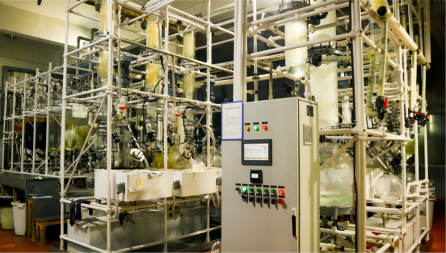
Cover image: Company workshop equipment used in precious metal scrap recovery. Source: Huizhou Yi'an Precious Metals Co., Ltd.
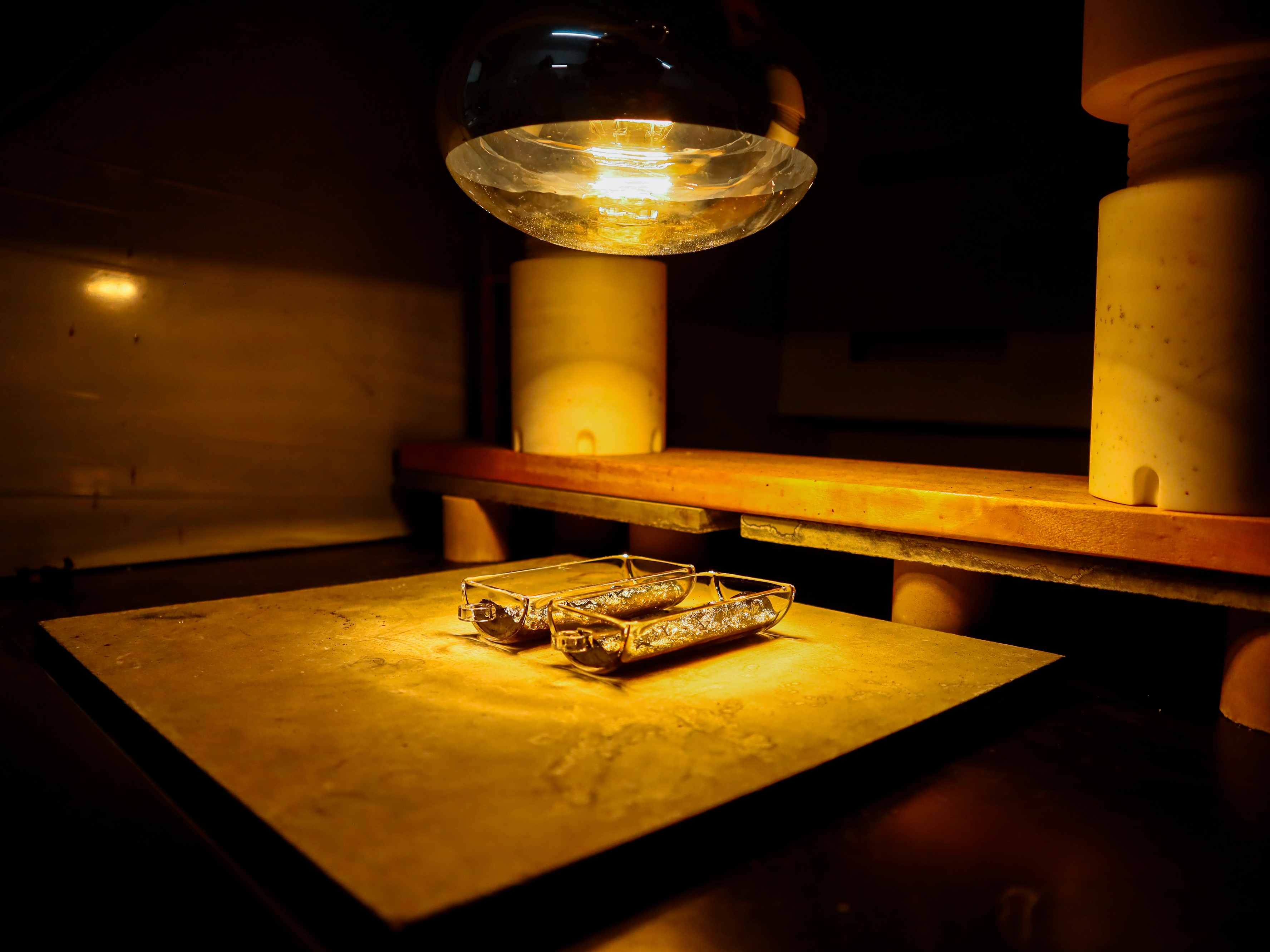
Laboratory operation for PGM assay and sample preparation. Source: Huizhou Yi'an Precious Metals Co., Ltd.
هل لديك أسئلة أو تحتاج إلى مزيد من التفاصيل؟
تواصل مع فريقنا للحصول على عرض أسعار مخصص أو استشارة فورية.
طلب عرض أسعار
املأ النموذج أدناه وسيتواصل معك فريقنا بعرض مقترح مخصص.
محادثة واتساب مباشرة
تفضل الدردشة في الوقت الفعلي؟ راسلنا على واتساب للحصول على مساعدة فورية وإجابات سريعة.
- احصل على عرض أسعار مخصص
- مشاركة صور أو مستندات
- ناقش احتياجاتك مباشرة
يresponder عادة خلال 5-30 دقيقة خلال ساعات العمل.