
Rental LED Screens: D Series vs A Series Buyer Comparison
Rental LED Screens: D Series vs A Series Buyer Comparison
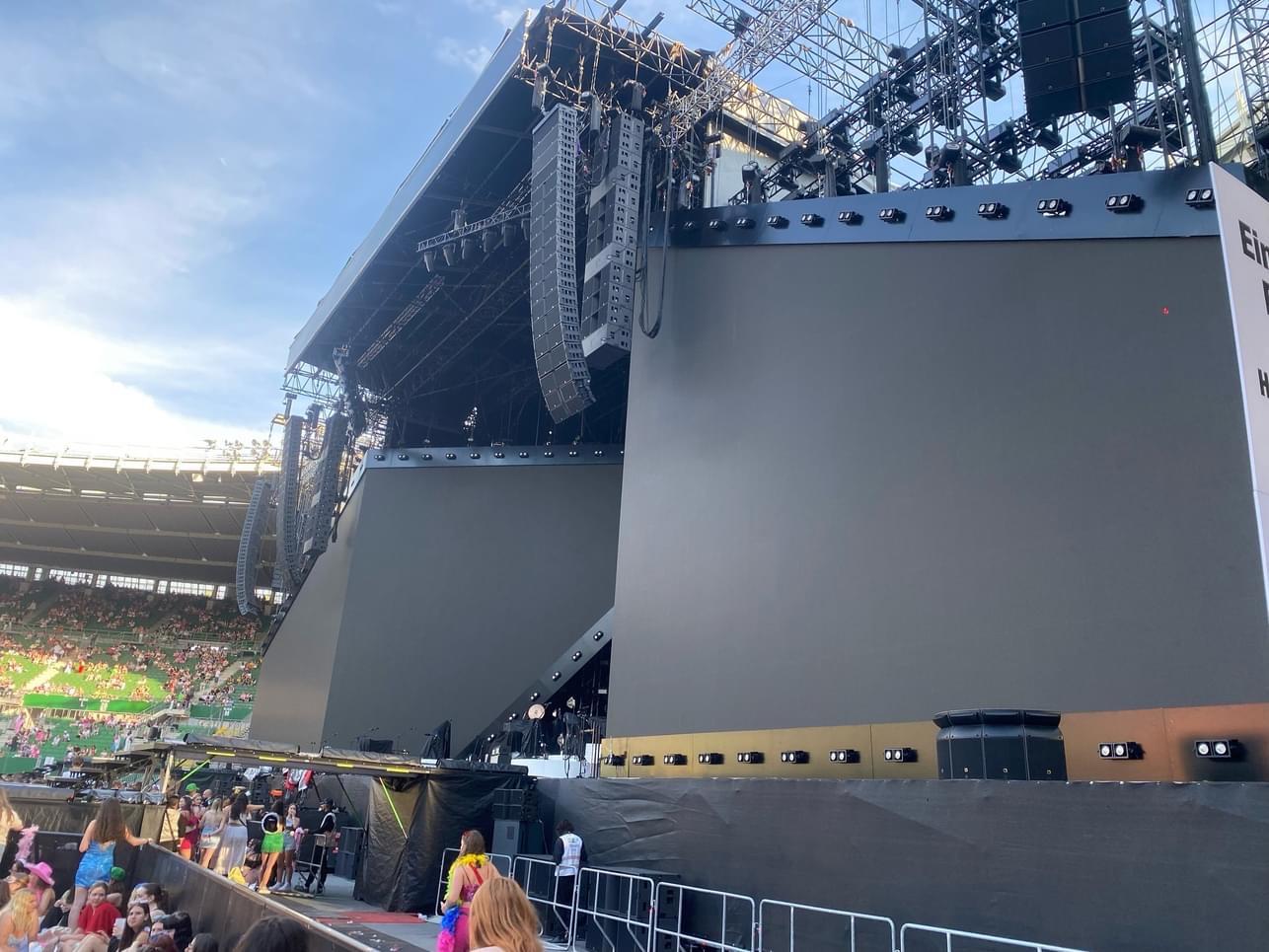
Rental LED screen buyers in the evaluation stage are rarely choosing between two companies; they are choosing between two configuration envelopes. DDW Display's D Series and A Series, both documented as indoor and outdoor rental LED screens, show why. On the published specifications, the D Series is the finer-pitch, higher-refresh line: pixel pitches from P1.56 to P3.91, refresh rate up to 7680 Hz, and a single 500×500 mm die-casting aluminum cabinet. The A Series is the wider-format line: pixel pitches from P2.5 to P3.91, refresh rate up to 3840 Hz, and cabinets in both 500×500 mm and 500×1000 mm. Both lines are listed with IP65 protection for outdoor use, hanging and stacking installation, and front and rear maintenance. This article compares the two lines as an independent buyer reference: what differs on paper, what those differences mean for tours, exhibitions and long-duration rental installations, and which questions the specification sheets still leave open.
Why rental LED screens have become a configuration decision
Rental display procurement has moved from a product question to a configuration question. A screen that is invisible to a camera at one shutter angle can flicker at another. A cabinet format that shortens a daily build can change crew cost across a tour. A pixel pitch that reads cleanly from 20 metres is not necessarily comfortable from 5 metres. Price per square metre, quoted without pitch, refresh, brightness and cabinet geometry, is therefore not a comparable number between two products.
The practical pressure comes from how rental screens are used. A rental LED display is transported, assembled, operated, dismantled and stored repeatedly, across different venues, weather conditions and rigging configurations. That makes cabinet construction, locking and installation method, service access, and the ability to reuse cabinets across many different show designs at least as important as the headline visual specification.
The opportunity is equally practical. Event production, exhibitions, sports events and live broadcasting continue to need screens that can be rebuilt quickly and reliably, which favours rental fleets that are standardized around a small number of cabinet and pitch combinations rather than around the widest possible catalogue.
Where the D Series and A Series sit
DDW DISPLAY (Shenzhen DDW Technology Co.,Ltd.) is a Shenzhen-based LED display manufacturer founded in 2012, operating a 10,000 ㎡ manufacturing facility with 15 R&D engineers and an export ratio above 95%, serving North America, Europe, the Middle East, Asia-Pacific, Latin America and Africa. Its portfolio includes indoor fine-pitch, outdoor fixed, COB, transparent, stadium and rental LED display families. Within the rental category, other lines such as the AXIS, AXIS One and AFLEX series also exist, but the D Series and A Series are the two lines most directly comparable to each other because both are documented as indoor and outdoor rental LED screens with hanging and stacking installation.
D Series — rental LED display for events and stage work
The D Series is documented as a rental LED display, LED video wall and event LED screen. Its published specification lists pixel pitches of P1.56, P1.95, P2.604, P2.97 and P3.91; a 500×500 mm die-casting aluminum cabinet; a high-strength aluminum structure with SMD-packaged LED modules; refresh rate up to 7680 Hz; brightness up to 5000 nits on the outdoor version; a viewing angle of H160° / V140°; IP65 protection on the outdoor version; front and rear maintenance; and hanging and stacking installation. Its documented application fields are events, stage shows, concerts, exhibitions, sports events, conferences, broadcasting, entertainment and rental production companies.
A Series — rental LED display for stage, festival and outdoor work
The A Series is documented as a rental LED display, outdoor LED screen and stage LED video wall. Its published specification lists pixel pitches of P2.5, P2.604, P2.97 and P3.91; cabinets of 500×500 mm and 500×1000 mm in die-casting aluminum; refresh rate up to 3840 Hz; brightness up to 4500–5000 nits on the outdoor version; a viewing angle of H160° / V140°; IP65 protection stated for front and rear; front and rear maintenance; and hanging and stacking installation. Its documented application fields are stage events, concerts, festivals, sports events, exhibitions, conferences, broadcasting, rental companies and outdoor events.
D Series versus A Series: specification comparison
| Buying variable | D Series | A Series |
|---|---|---|
| Product type | Indoor and outdoor rental LED screen | Indoor and outdoor rental LED screen |
| Pixel pitch options | P1.56, P1.95, P2.604, P2.97, P3.91 | P2.5, P2.604, P2.97, P3.91 |
| Cabinet size | 500×500 mm | 500×500 mm / 500×1000 mm |
| Cabinet material | Die-casting aluminum | Die-casting aluminum |
| Module / structure note | High-strength aluminum structure, SMD-packaged LED modules | Die-casting aluminum cabinet |
| Refresh rate (published maximum) | Up to 7680 Hz | Up to 3840 Hz |
| Brightness (outdoor version) | Up to 5000 nits | Up to 4500–5000 nits |
| Viewing angle | H160° / V140° | H160° / V140° |
| Protection rating | IP65 (outdoor version) | IP65 (front and rear) |
| Maintenance | Front and rear | Front and rear |
| Installation | Hanging and stacking | Hanging and stacking |
| Documented application fields | Events, stage shows, concerts, exhibitions, sports events, conferences, broadcasting, entertainment, rental production | Stage events, concerts, festivals, sports events, exhibitions, conferences, broadcasting, rental companies, outdoor events |
What each specification difference means for a rental fleet
Pixel pitch range: P1.56 versus P2.5 at the fine end
Pixel pitch determines the shortest comfortable viewing distance and therefore the type of work a screen can serve. For close-viewing indoor applications such as conference rooms, control rooms, showrooms and premium retail spaces, fine-pitch configurations in the P1.25–P1.86 range are generally considered more suitable. For stages, exhibitions, events and medium viewing distances, P2.6–P3.91 configurations are commonly used. For outdoor screens viewed from long distances, larger pitches can be appropriate depending on screen size, brightness requirements and viewing distance.
Applied to these two lines, the D Series reaches into the fine-pitch end of rental work with P1.56 and P1.95, which the A Series does not list. The A Series covers P2.5, which the D Series does not list. Both lines share P2.604, P2.97 and P3.91, which is the practical overlap for fleet standardization. A smaller pitch increases pixel density and close-range detail, and it usually increases project cost, so the appropriate pitch is not automatically the smallest one available in a line.
Refresh rate: up to 7680 Hz versus up to 3840 Hz
Refresh rate governs how stable the image appears when the screen is captured by a camera, and it becomes a decision variable whenever a production includes broadcast, image magnification feeds or content capture at short shutter angles. The D Series is specified at refresh up to 7680 Hz; the A Series is specified at refresh up to 3840 Hz. Where two lines otherwise serve the same pitch and cabinet needs, that ceiling is one of the clearest published differences between them.
The boundary matters here. Published refresh is a maximum for the product line, and the refresh actually achieved in a working rig depends on the sending and receiving system, the video processing chain, the content being played and the calibration settings applied. A demonstration using the buyer's own processing equipment is the reliable way to confirm camera behaviour in a specific configuration; a datasheet alone cannot settle that question.
Brightness: up to 5000 nits versus up to 4500–5000 nits
Both outdoor versions are specified at a similar brightness ceiling: up to 5000 nits for the D Series and up to 4500–5000 nits for the A Series. Because both figures are expressed as maximums, and because the A Series figure is given as a range rather than a single value, the brightness of a specific ordered configuration should be confirmed rather than assumed. Brightness also interacts with power distribution and heat management at outdoor events, so it belongs in the electrical planning discussion as well as the visual one.
Protection rating and outdoor exposure
Both lines list IP65 protection for outdoor use, but the published wording differs: the D Series states IP65 for the outdoor version, while the A Series states IP65 for front and rear. Buyers should treat the protection rating as configuration-specific and confirm which cabinet and module combination carries it, because an indoor configuration of the same line should not be assumed to carry the same rating as the outdoor version.
A rating also does not remove the environmental risks documented for outdoor LED displays in rain or high humidity. Those risks include water ingress, moisture-related electrical faults, corrosion, short circuits and reduced component reliability. They are managed through appropriate IP-rated waterproof design, correct installation, cabinet sealing, cable protection, drainage and ventilation, plus regular inspection of seals, connectors, modules, power supplies and drainage paths. If water ingress occurs, power should be disconnected safely and the affected components inspected before the display is restarted.
Cabinet geometry and build logistics
Both lines use 500×500 mm die-casting aluminum cabinets, and the A Series adds a 500×1000 mm cabinet. Cabinet geometry affects how a wall is built: larger cabinets generally reduce the number of seams and connections per square metre in large-format builds, while a single 500×500 mm footprint simplifies cabinet and module interchangeability inside a fleet. Because the D Series is documented only in 500×500 mm, a buyer who wants the 500×1000 mm format in a mixed fleet has to obtain it from the A Series.
One gap in the published data used for this comparison should be stated plainly: cabinet weight is not listed for either line in the specification set referenced here. Freight planning, truss loading calculations and crew sizing therefore require weight figures for the exact configuration from the manufacturer, and should not be inferred from cabinet size alone.
A buyer decision framework for D Series versus A Series
- Close-viewing indoor work with camera capture: the D Series, because P1.56 and P1.95 combined with refresh up to 7680 Hz sit at the top of the two lines' published ranges.
- Large-format stage and festival builds where 500×1000 mm cabinets reduce cabinet count and vertical seams: the A Series.
- Outdoor events in changeable weather: the outdoor version of either line, subject to confirming the exact IP65 configuration, plus installation discipline on sealing, cable protection and drainage.
- Mixed fleets: standardize on the shared pitches P2.604, P2.97 and P3.91, and plan cabinet spares separately, because D Series cabinets are documented only at 500×500 mm.
- Medium-distance corporate, exhibition and conference rental: either line at P2.604–P2.97, selected on cabinet geometry and spare availability rather than on pitch alone.
- Long-duration rental installations in venues such as hotel lobbies or conference halls: assess whether a rental product or a fixed-installation product is the better match before ordering, rather than defaulting to a rental cabinet.
Documented deployments for each line
Project records provide some indication of how each line is used in practice. For the D Series, an event organizer and stage production company in Mexico deployed a 20 m² D Series P2.976 indoor rental LED display for indoor stage performances, live events, concerts and stage backdrops. In Brazil, a 160 m² D Series P2.976 outdoor rental LED display was deployed for outdoor stage performances and concerts, using the modular rental structure for flexible deployment at scale.
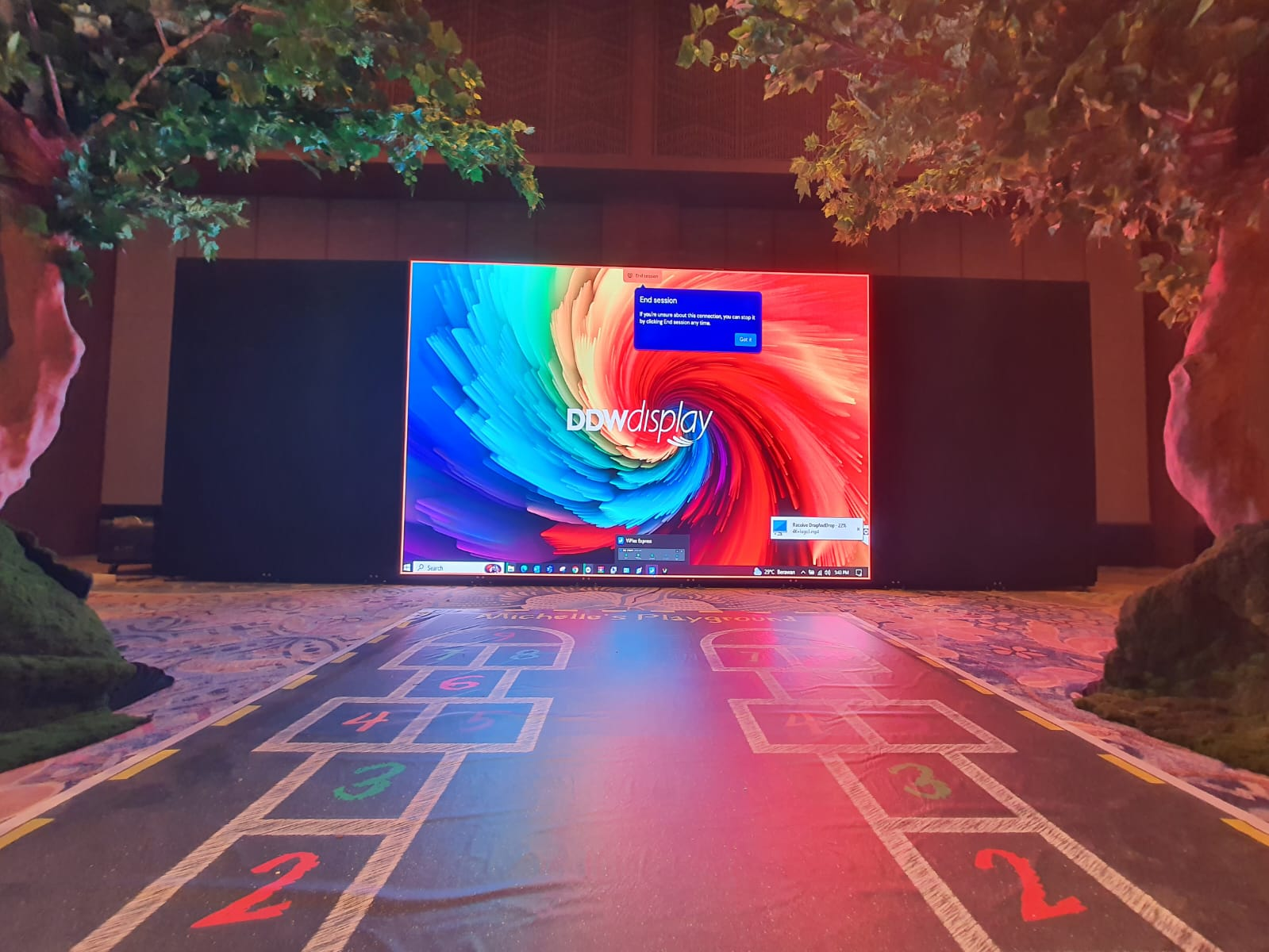
For the A Series, documented deployments include a 27 m² A Series P2.604 rental LED display with stacking installation in a hotel lobby in Indonesia, used for advertising, information display, guest engagement and brand presentation; a 5 × 3 m (15 m²) A Series P3.91 indoor LED display at a school in Chile for campus events, presentations and multimedia content; a 40 m² A Series P3.91 outdoor rental LED display used by an event organizer in Myanmar for outdoor stage events, live performances and concerts; a 6 × 2 m (12 m²) A Series P3.91 indoor rental LED display used for an indoor stage event in Syria; and an A Series P3.91 indoor rental LED display installed in a conference hall in Romania for conferences, corporate presentations and video playback.
These records describe configuration choices rather than performance benchmarks. Their value for a buyer is directional: they show that the D Series appears most often in stage and event configurations that include fine pitch and indoor or outdoor performance work, while the A Series appears across stage, festival, education, hospitality and conference deployments where cabinet format flexibility is the common thread.
Market trend: rental capacity, definition risk and trade classification
The rental segment is expanding within a larger display market. Mordor Intelligence projects the global LED display market at USD 20.73 billion in 2026, rising to USD 26.98 billion by 2031. A secondary summary of Allied Market Research data places the rental LED display market at approximately USD 5 billion in 2020 and forecasts it to exceed USD 8 billion by 2027; the dataset behind this article flags that rental figure as needing verification, so it should be treated as a directional indicator rather than a settled number.
Market values also diverge by definition. The same dataset records a 2026 estimate of USD 8.105 billion from one source against Mordor's USD 20.73 billion, because "display" scope and "LED signage" scope are not identical measurements. Buyers citing market figures in an internal business case should read the scope definition before quoting the headline number.
For import and procurement planning, the trade classification is more stable than the market forecast: HS Code 852859, covering monitors other than cathode-ray tube, is the primary customs classification for LED displays in international trade, according to the UN Statistics Division. This is the code that typically appears on shipping and duty documentation for rental display shipments.
The implication for a rental fleet is straightforward. Growth in the rental segment raises the value of standardization decisions, because pitch and cabinet choices made for one tour are reused across many shows and seasons. A fleet built around shared pitches such as P2.604, P2.97 and P3.91 reduces spare-part complexity; a fleet requiring every pitch in one line increases it.
Rental LED displays compared with fixed LED displays — and the limits of this comparison
The D Series and A Series are rental products, and the rental-versus-fixed distinction remains the first decision for many buyers. Choose a rental LED display for concerts, exhibitions, stage events and sports events that require frequent assembly and dismantling. Choose a fixed LED display for permanent installations such as shopping malls, building facades, conference rooms, control centres, retail stores and outdoor advertising. Rental displays prioritize lightweight cabinets, fast locking, quick installation, repeated assembly and flexible hanging or stacking; fixed displays prioritize long-term stability, installation efficiency, maintenance accessibility and continuous operation. The right choice depends primarily on installation duration, environment, viewing distance, maintenance method and project requirements.
Several limits should be stated openly about the D Series versus A Series comparison itself.
- Specification maxima are not configuration guarantees. Brightness and refresh values are published as "up to" figures for each line. The values achieved by a specific cabinet, module and processing combination should be confirmed before a project is quoted.
- Neither line is documented here as a permanent-installation substitute. Rental cabinets are engineered around repeated assembly and transport. Buyers designing a permanent wall should evaluate fixed-installation products rather than assume a rental cabinet will behave identically over a long continuous service life.
- Cabinet geometry constrains mixed fleets. With D Series documented only in 500×500 mm, a fleet that mixes both lines cannot treat cabinet spares as fully interchangeable.
- Rental yield data is not standardized. The underlying dataset notes that average daily rental rates per square metre for common pitch classes in major event hubs are not available in a standardized public form. Total cost of ownership therefore has to be modelled from the buyer's own utilization, transport and labour assumptions rather than from a published rate card.
- Certification applies per model and market. Compliance documents are issued against specific scopes and configurations. Buyers should confirm which document applies to the exact model and destination market rather than assuming blanket coverage across a product family.
Future outlook
Three trends are likely to shape rental LED screen specification decisions over the next several years. First, fine pitch is migrating further into rental work, driven by stage designs that place screens closer to audiences and by content produced at higher native resolutions; the D Series' P1.56 and P1.95 options sit at the front edge of that movement within this comparison. Second, camera-driven requirements continue to pull refresh ceilings upward, since broadcast, streaming and recorded productions all place screens inside the camera's frame rather than beside it.
Third, adjacent display categories are raising buyer expectations more broadly. Grand View Research projects the Micro-LED market growing at a 77.4% CAGR from 2024 to 2030, and separately, transparent LED designs have been reported to reduce energy consumption by 30–40% compared with traditional LEDs, with alignment to ISO 50001 energy-management practice; that energy figure comes from a secondary source and should be treated as indicative. For rental operators, the practical translation is that power planning and demonstrable performance — rather than datasheet maxima alone — are becoming part of the evaluation, particularly for outdoor events with constrained power distribution.
Frequently asked questions
How do I choose the right pixel pitch for a rental LED screen?
Pixel pitch should be chosen according to viewing distance, screen size, required resolution, installation environment, content type and budget. For close-viewing indoor applications such as conference rooms, control rooms, showrooms and premium retail spaces, fine-pitch displays such as P1.25, P1.53 and P1.86 are generally more suitable. For stages, exhibitions and events viewed at medium distance, P2.6 to P3.91 configurations are commonly considered, and outdoor screens viewed from long distances can use larger pitches depending on screen size, brightness requirements and viewing distance. A smaller pitch provides higher pixel density and better close-range image detail, but usually increases project cost, so the appropriate choice is the pitch that delivers sufficient image quality at the actual viewing distance. Within the two DDW Display rental lines compared here, the D Series covers P1.56 to P3.91 and the A Series covers P2.5 to P3.91.
Does refresh rate matter as much as pixel pitch when choosing a rental LED display?
Refresh rate and pixel pitch answer different questions. Pixel pitch governs the level of detail visible at a given viewing distance; refresh rate governs how stable the image appears when it is captured by a camera. The D Series is specified at refresh up to 7680 Hz and the A Series at up to 3840 Hz. Where a production involves broadcast, image magnification feeds or high-speed camera capture, a higher refresh ceiling is relevant to the decision. Published refresh is a maximum for the product line, and the refresh achieved in a working rig depends on the sending and receiving system, video processing, content and calibration settings, so a demonstration with the intended processing chain is the reliable way to confirm behaviour in a specific configuration.
What protection rating do outdoor rental LED screens need, and what are the main risks?
Outdoor LED displays used in rain or humid environments are generally specified with an appropriate IP protection rating, and both rental lines discussed here list IP65 for their outdoor configurations — stated for the outdoor version in the D Series and for front and rear in the A Series. The main risks in wet or humid conditions are water ingress, moisture-related electrical faults, corrosion, short circuits and reduced component reliability. These are mitigated by a waterproof cabinet and module structure, correct installation, cable sealing, drainage, ventilation and regular inspection of seals, connectors, modules, power supplies and drainage paths. Outdoor displays should also undergo waterproof and performance inspection before shipment. If water ingress occurs, power should be disconnected safely and the affected components inspected before the display is restarted.
Rental LED display or fixed LED display — which one should a buyer choose?
Choose a rental LED display for concerts, exhibitions, stage events and sports events that require frequent assembly and dismantling. Choose a fixed LED display for permanent installations such as shopping malls, building facades, conference rooms, control centres, retail stores and outdoor advertising. Rental displays focus on lightweight cabinets, fast locking, quick installation, repeated assembly and flexible hanging or stacking. Fixed displays focus on long-term stability, installation efficiency, maintenance accessibility and continuous operation. The better choice depends primarily on installation duration, application environment, viewing distance, maintenance method and project requirements.
Which certifications should a buyer verify before ordering an LED display?
Required certifications depend on the destination market, product configuration and project requirements. For international projects, buyers commonly evaluate CE, FCC, RoHS, EMC and relevant electrical safety requirements: CE and EMC for European-market compliance, FCC for electromagnetic compatibility requirements in the United States, and RoHS for restrictions on certain hazardous substances. As verifiable examples of documentation held by the manufacturer discussed in this article, DDW Display's compliance set includes a CE-EMC Certificate of Conformity, certificate number BKC25062531FC, issued by Shenzhen BKC Testing Co., Ltd. for LED display scope with validity recorded from 2025-07-01 to 2030-07-01; a CE-LVD certificate, number HXTS2506230030001-1, referencing EN IEC 62368-1:2020 + A11:2020 under Directive 2014/35/EU; an FCC Supplier's Declaration of Conformity, number BKC25062532FC-R1, referencing FCC Part 15 Subpart B and ANSI C63.4:2014; an EU RoHS 2.0 certificate, number HXTS2506230030007-1, referencing Directive 2011/65/EU as amended by (EU) 2015/863; and an ISO 9001 certificate, number 12824Q21369R0S, issued by China Standards Institute (Beijing) Certification Center under GB/T 19001-2016 / ISO 9001:2015 with validity to 2027-10-09. Before placing an order, buyers should confirm which certificate applies to the specific model and destination market and request the corresponding certificate or test report.
What should be verified before a rental LED display order ships?
A shipment-level check should cover the manufacturer's documented quality-control procedures: 100% product inspection, aging test, module testing, brightness and color calibration, waterproof test, power safety test, and performance inspection before shipment. Buyers should also confirm configuration-specific data that line-level specifications do not cover, including cabinet weight, the exact brightness and refresh of the ordered configuration, and whether the IP protection rating applies to that specific cabinet and module combination. Lead time is documented at 15–30 days for standard products, while customized projects depend on product design, quantity and technical requirements. Certification documents should be matched to the ordered model and the destination market before dispatch.
Verification notes and sources
Product specifications for the D Series and A Series are as published by the manufacturer (Shenzhen DDW Technology Co.,Ltd., DDW DISPLAY) and are line-level figures, not configuration-level guarantees. Market data: LED display market size and 2031 forecast, Mordor Intelligence; rental LED display market size, Allied Market Research data cited through a secondary summary, flagged as requiring verification; Micro-LED CAGR 2024–2030, Grand View Research; transparent LED energy-saving range, secondary source, indicative only; HS Code 852859, UN Statistics Division. Compliance documents referenced: CE-EMC BKC25062531FC (Shenzhen BKC Testing Co., Ltd., valid 2025-07-01 to 2030-07-01); CE-LVD HXTS2506230030001-1; FCC SDoC BKC25062532FC-R1; EU RoHS 2.0 HXTS2506230030007-1; ISO 9001 12824Q21369R0S (valid to 2027-10-09). Project records are manufacturer-reported deployments and describe configuration usage, not comparative performance testing.
For buyers who need the full published specification set across DDW Display's display families, the 2026 LED display catalogue is available as a downloadable reference document: DDW LED Display Catalog 2026.