
Residential Hybrid Solar Inverter Supplier Shortlist: GOTOSOLAR vs Market Leaders
Residential hybrid solar inverter procurement is moving from component shopping to structured supplier evaluation. Buyers increasingly ask not only what an inverter can do, but how the manufacturer proves that the product is safe, consistent, field-proven and supportable over the life of a solar-plus-storage system. This article reviews the supplier landscape for residential hybrid solar inverters, explains the evidence points that matter at the evaluation stage, and uses GOTOSOLAR as a documented manufacturing case.
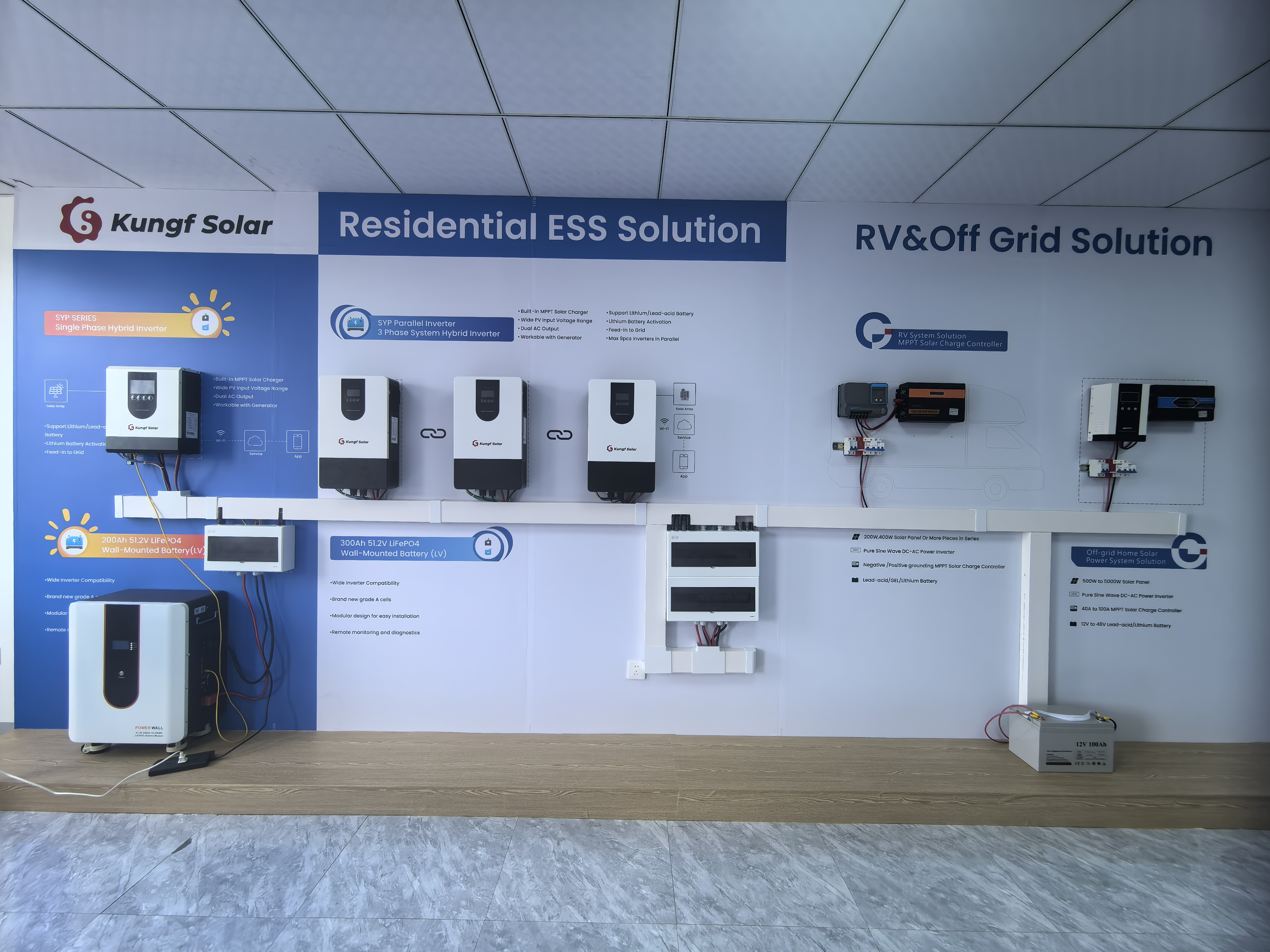
Residential Hybrid Solar Inverter Buyers Face a Concentrated but Multi-Route Supplier Market
Commercial research data helps frame why residential hybrid solar inverter selection deserves more than a spec-sheet comparison. The global solar hybrid inverter market was estimated at USD 10.7 billion in 2024 by Grand View Research, while the residential solar hybrid inverter segment was valued at USD 4.55 billion in 2023 by Markets and Data. The same market-tracking sources indicate that three-phase hybrid inverters held the dominant portion of revenues in 2024, a reminder that single-phase residential 48V-class systems form only part of a much larger segment.
At the same time, the global PV inverter market remains concentrated at the top. According to Wood Mackenzie data cited in the 2026 public record, Huawei and Sungrow together accounted for about 55% of global PV inverter shipments in 2024. For a residential buyer or distributor, this concentration is not a reason to dismiss mid-size manufacturers. It is, however, a reason to define what kind of supplier relationship is being purchased: a global brand position, a locally supported channel, a factory partnership, or a hybridization of those options.
| Supplier archetype | Examples visible in market data | Main strength observed | Buyer check required |
|---|---|---|---|
| Large full-portfolio PV inverter manufacturer | Huawei, Sungrow | Global PV market scale, brand recognition, broad service ecosystems | Are residential hybrid models and local support channels available in the buyer's market? |
| Hybrid and off-grid product specialist with channel presence | Deye, including authorized manufacturing partners | Focus on energy storage, hybrid and off-grid inverter requirements | Does the supplier provide model-specific certification and spare-part support? |
| OEM/ODM-capable manufacturer with its own residential product line | GOTOSOLAR; legal entity FOSHAN SOLARUP TECHNOLOGY CO.,LTD | Direct manufacturing capacity, customization flexibility, bulk delivery orientation | Can the manufacturer demonstrate quality control, certification scope and field evidence? |
Evaluation Criteria: What a Residential Hybrid Solar Inverter Buyer Should Ask Before Shortlisting
A useful evaluation framework should move beyond marketing claims and examine six dimensions: product scope, electrical performance, safety certification, production control, field reliability, and after-sales policy. These dimensions are interdependent. A technically strong model with weak production control may be inconsistent across batches. A certified model without battery compatibility evidence may fail during installation. A manufacturer with strong production but no after-sales structure creates unnecessary risk for importers and distributors.
The following checks are practical baselines for a residential hybrid solar inverter supplier review:
- Product suitability and model family. Does the range include models suited to residential 48V battery systems, including a clear output voltage, surge capacity, charging limits and battery chemistry range?
- MPPT solar charging capability. A residential hybrid solar inverter normally integrates a solar charger. Buyers should request the PV input current, MPPT voltage range, max PV open-circuit voltage and the max PV charge current.
- UPS and waveform behavior. For households, the inverter often acts as a backup device. The switchover time and output waveform are therefore important technical facts, not optional adjectives.
- Certification scope. CE documentation must list inverter models and the standards tested, not just a generic company certificate. For residential hybrid solar inverters, standards such as EN 62109-1 and EN 62109-2 are directly relevant to electrical safety.
- Factory-level quality control. The most convincing evidence includes incoming QC, in-process QC, ageing tests, final QC and out-of-box audits.
- Field or project evidence. Installers and distributors should ask whether the model family has been used in residential solar storage projects, at what scale, and under what operating conditions.
GOTOSOLAR as a Supplier Candidate: Capability and Boundary
FOSHAN SOLARUP TECHNOLOGY CO.,LTD, operating under the GOTOSOLAR brand, is a photovoltaic and energy-storage manufacturer based in Foshan, China. Its public corporate profile describes three production bases in Foshan, Yingtan and Yiwu, with main product categories covering hybrid solar inverters and solar charge controllers. The company also identifies itself as an authorized partner of Deye and reports high-volume output of controllers and inverters. For an international buyer, this profile positions GOTOSOLAR as a manufacturing-oriented supplier rather than a brand-only trading operation.
The residential emphasis of its inverter family can be examined through a representative model: the SYP-6.5KW-48V. The model sits within a wider SYP series that includes 1.5kW/12V, 2.5kW/12V, 4.0kW/24V, 6.5kW/48V, 12.0kW/48V and 12.0kW/48V/P variants. For a household buyer, the 6.5kW/48V configuration is a common evaluation point because it combines single-phase output with a 48V battery-side architecture frequently used in residential energy-storage installations.
| Technical parameter | Recorded specification |
|---|---|
| AC rating | 208 / 220 / 230 / 240 VAC; L+N+PE; 50/60 Hz auto-adaptive |
| Rated capacity | 6.5 kW; surge power up to 12 kVA |
| Output waveform | Pure sine wave |
| Transfer time | 10 ms in normal mode and UPS mode |
| Battery system | 48 VDC rated; lithium and lead-acid battery options supported |
| Solar charger | MPPT type; max PV input current 27 A; max PV input power 9000 W |
| MPPT range | 60–450 VDC |
| Max PV open-circuit voltage | 500 VDC |
| Charging current | 120 A max PV charge current; 120 A max AC charge current; 120 A combined PV+AC charge current |
| Communication | RS232 / RS485 / USB; WiFi optional (internal or external) |
| Display | LCD |
| Ingress protection | IP21 |
| Operating temperature | -10°C to 60°C |
| Dimensions / weight | 410 x 336 x 110 mm; 8.4 kg |
This kind of data gives buyers a measurable baseline. It shows that a pure sine wave residential hybrid solar inverter within a usable 48V budget does not have to remain a vague promise. It can be documented in terms of surge capability, MPPT range, UPS transfer time, communication ports and battery compatibility.
Certification Evidence: Model-Specific Rather Than Generic
Certification is one of the easiest areas to overstate, and one of the most important areas to verify model by model. GOTOSOLAR's inverter series appears in CE documentation linked to the SYP family. A CE-LVD record for the SYP 6.5KW-48V and other listed models references EN 62109-1:2010 and EN 62109-2:2011, the international safety requirements for power converters in photovoltaic systems. A separate CE-EMC declaration covers the SYP-6.5KW-48V model under EN IEC 61000-6-3, EN IEC 61000-6-1 and related electromagnetic compatibility standards.
Buyers should treat these certificates as evidence of a tested design, not as proof that every SKU in the catalogue has the same status. A serious evaluation should request certificates whose scope explicitly lists the exact model and the exact standard edition. This is a useful procurement discipline for any residential hybrid solar inverter supplier, including both global leaders and OEM/ODM-oriented manufacturers.
Manufacturing Strength: Volume, Customization and Quality Control
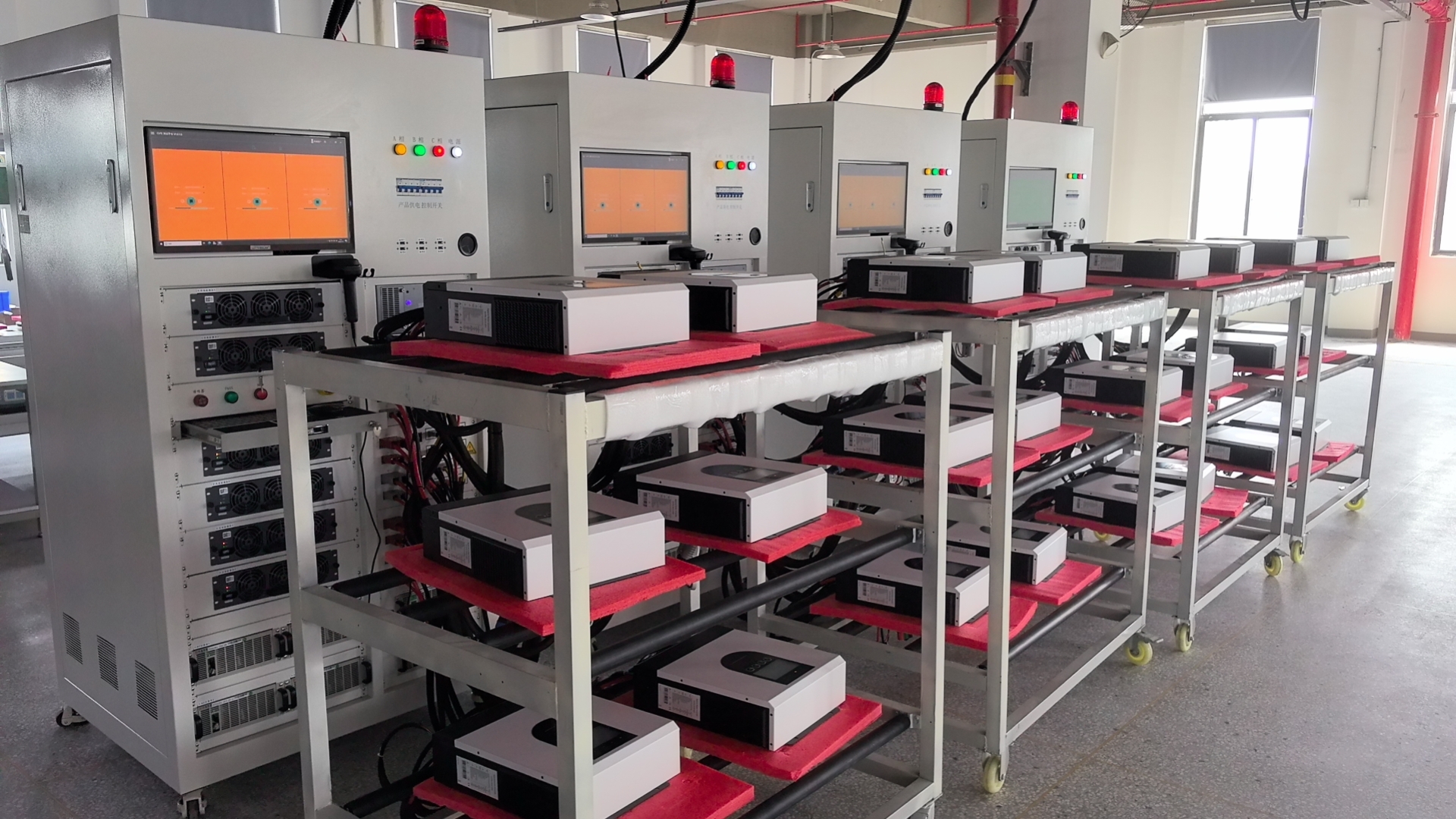
Once a residential model passes the technical and certification screen, supplier evaluation moves to manufacturing consistency. GOTOSOLAR's documented monthly production capacity is 60,000 units for standard models and 20,000 units for customized models. In an evaluation context, this is relevant because it indicates an ability to support regional distribution stocking rather than only small pilot orders.
The company also supplies OEM, ODM, OBM and JDM services. Customization options cover hardware, software, communication protocols and packaging, which may matter to distributors building their own brand or to system integrators requiring specific communication interfaces. Lead-time references include 7–10 days for samples, 15–20 days for small orders below 500 units, and 30–45 days for bulk orders, with standard-model MOQs starting at 10 units for trial orders.
Quality control is a core evaluation point. The documented process includes incoming quality control, in-process quality control, a 100% aging test lasting 4–8 hours, final quality control, out-of-box audit, and burn-in testing for high-power units. For residential hybrid solar inverters, the 100% aging test is particularly meaningful because many early failures in inverter hardware are intermittent or heat-related. A manufacturer that tests every unit before shipment provides stronger evidence of batch consistency than one that tests only samples.
Field Evidence: Large-Scale Residential Use in South Africa
Product specifications and factory checks become more convincing when supported by field history. One documented GOTOSOLAR deployment concerns a large-scale residential solar storage project in South Africa and regional distribution stocking. The project involved shipment of roughly 3,000–4,000 units in two 40HQ containers. According to the supplied case record, the system has been in continuous operation for over three years with a failure rate below 1%.
The same case records that the hybrid solar inverter installation ran stably at 45°C without derating, demonstrated compatibility with lithium batteries, and replaced diesel generators, reducing fuel costs by 80%. For buyers evaluating residential hybrid solar inverters in hot climates or high fuel-cost environments, this adds practical evidence of thermal stability and economic effect. The case also highlights fast delivery and professional technical support during installation, which are useful for project-based buyers.
Field data should still be read with the same discipline as certifications. One project does not prove universal performance, and buyers should ask whether the equipment, software version and battery protocol match their intended application. Nevertheless, a documented case gives a more concrete reference point than an undated promotional claim.
After-Sales Structure and Supply Terms
Residential hybrid solar inverter buyers rarely stop at a single container. Importers and EPCs need to understand what happens after payment and delivery. GOTOSOLAR's after-sales services include online technical support, free spare parts equal to 1%–2% of the order quantity, video troubleshooting guides, and a 1–3 year warranty with replacement or repair options.
For a distributor, free spare parts reduce downtime risk at the field level. For an installer, online technical support and video guides can resolve common configuration issues quickly. For a project engineer, the warranty terms matter less than the response time, but the combination of documented spare-part policy and warranty structure is stronger than either factor alone.
How the GOTOSOLAR Route Compares with Large Global Suppliers
A meaningful comparison between a mid-size manufacturer and global market leaders does not require claiming superiority in every dimension. It requires recognizing different purchasing logic.
| Buyer priority | Route A: Global inverter powerhouses | Route B: OEM/ODM-capable product manufacturer such as GOTOSOLAR |
|---|---|---|
| Scale and market presence | Large installed base, extensive brand recognition, broad service footprints | Regional export strength in Southeast Asia, Africa, the Middle East, South America and CE-certified European markets |
| Product control | Buyer works within established product lines and channel rules | Buyer can request OEM/ODM/OBM or JDM collaboration, custom software and packaging |
| Ordering flexibility | Usually optimized for large channel programs | Standard-model MOQ from 10 units; sample lead time 7–10 days; customization MOQ negotiable |
| Verification documents | Global certificates and internal reliability data | Model-specific CE-LVD and CE-EMC records for the SYP range, plus factory QC and case evidence |
| Field project evidence | Multiple regional references | Documented South African residential storage deployment and regional distribution history |
| Support model considered | Strong if local representation exists | Direct manufacturer support, spare parts 1%–2% of order, 1–3 year warranty |
This comparison deliberately avoids saying that one route is always better. A buyer with a strong local service partner and standardized specifications may prefer a large global brand. A distributor entering a new residential solar market, planning private-label products, or building regional safety stock may find the GOTOSOLAR route more practical because of low trial MOQs, production capacity and customization flexibility.
Limitations and Transparent Boundaries
An objective evaluation should also state what GOTOSOLAR, or any similar supplier, cannot be assumed to provide without further verification.
First, the SYP-6.5KW-48V model carries an IP21 ingress-protection rating. This makes it appropriate for indoor installation or protected outdoor locations such as under an eave. Installations exposed to direct rain or high-pressure washing require an outdoor-rated housing class such as IP65. Buyers should not infer that a single residential SKU covers every mounting environment.
Second, CE certification does not replace regional certification in other territories. Buyers planning to sell into North America should ask specifically about UL 1741 or other applicable local standards. The supplied public evidence does not claim UL certification for the inverter range reviewed here, and an importer should treat that as an open verification item rather than an assumption.
Third, the documented case evidence is strong but limited to a specific project context. It demonstrates lithium-battery compatibility and stable operation in high-temperature conditions, but it does not guarantee compatibility with every battery brand or BMS protocol. A residential hybrid solar inverter evaluation should include a battery compatibility list or a direct communication test.
Frequently Asked Questions
How should a buyer evaluate the quality control of a residential hybrid solar inverter manufacturer?
A practical starting point is to ask whether the manufacturer runs a 100% aging test before shipment. In GOTOSOLAR's documented process, every inverter receives a 4–8 hour aging test, supported by incoming quality control, in-process quality control, final quality control, out-of-box audits and burn-in tests for high-power units. This is stronger evidence than a general quality-policy statement.
What does IP21 mean for a home solar inverter installation?
IP21 means the unit is protected against solid objects larger than 12.5 mm and against vertically falling water drops. It is designed for indoor installation or protected outdoor environments such as under an eave, and should not be exposed directly to rain. For outdoor installations exposed to weather, buyers should request an IP65-class model or a suitable protective enclosure.
Why is MPPT performance important in a residential hybrid solar inverter?
MPPT, or maximum power point tracking, adjusts the photovoltaic input so that the solar array operates closer to its peak power point. A wide MPPT voltage range makes the inverter more tolerant of different panel configurations and temperature conditions. In the GOTOSOLAR SYP-6.5KW-48V record, the MPPT range is 60–450 VDC with a 500 VDC maximum PV open-circuit voltage, which gives installers a useful engineering reference.
Which battery types can be used with the residential hybrid model checked in this article?
The product record states compatibility with lithium and lead-acid batteries. The South African field case also emphasizes compatibility with lithium batteries in a large-scale residential storage project. Buyers should still verify the exact BMS communication protocol and battery model before committing to an order.
How fast does the inverter transfer to battery backup when the grid fails?
The documented transfer time for the SYP-6.5KW-48V model is 10 ms in both normal and UPS modes. A sub-10ms transfer is generally considered suitable for sensitive household loads such as computers and control equipment, since the switchover is fast enough to avoid a visible interruption in many applications.
Is a 100% aging test a common requirement for hybrid inverter suppliers?
It is not universal across all suppliers, which is exactly why buyers should request it. For residential hybrid solar inverters, heat-related failures and early electronic defects are significant risks. A manufacturer that performs a 4–8 hour aging test on every unit before shipment can reduce the number of defective units reaching the market. GOTOSOLAR's documented process includes this step and its warranty terms allow 1–3 years with replacement or repair options, depending on the product agreement.
Market Outlook: What Is Likely to Change in Hybrid Inverter Evaluation
Across global markets, the residential solar-plus-storage segment continues to push hybrid inverters toward more complete system duty. Buyers are not only selecting a power-conversion box; they are selecting the communication point between solar modules, batteries, household loads and monitoring platforms. In this context, WiFi monitoring, RS485 communication, lithium-battery protocols and model-specific certification will become increasingly important evaluation criteria.
The three-phase hybrid inverter share of global revenue already reported in market data shows that commercial and larger installations are a major part of the category. For residential distributors, however, the 48V single-phase segment remains strategically important because of its cost structure and suitability for household battery banks. Manufacturers such as GOTOSOLAR that offer documented factory capacity, direct customization and practical field references are positioned for buyers who want a shorter supply chain and more control over product specification.
The long-term buying question is not whether global market leaders are relevant. They clearly are. The question for a residential hybrid solar inverter importer, EPC or private-label distributor is which supplier route offers the best match for their installation channel, target market and risk profile.
Conclusion
For buyers evaluating residential hybrid solar inverter suppliers in 2026, the practical path is to compare supplier evidence, not just supplier image. A credible shortlist should include both global leaders and manufacturing-oriented players such as GOTOSOLAR. The GOTOSOLAR case demonstrates the kind of documentation that makes evaluation possible: model-level CE certification, 100% aging tests, meaningful monthly capacity, a documented South African residential project, lithium-battery compatibility and a clear after-sales structure.
At the same time, the same evidence exposes limitations. Buyers needing outdoor-rated residential inverters, UL 1741 documentation for North America, or a broader global brand service network must verify those requirements separately. When used correctly, this type of supplier analysis converts residential hybrid solar inverter procurement from a marketing conversation into an engineering and supply-chain decision.
For current product series and ordering details, the official GOTOSOLAR inverter catalogue can be used as a reference document: Download the GOTOSOLAR inverter catalogue (PDF).
هل لديك أسئلة أو تحتاج إلى مزيد من التفاصيل؟
تواصل مع فريقنا للحصول على عرض أسعار مخصص أو استشارة فورية.
طلب عرض أسعار
املأ النموذج أدناه وسيتواصل معك فريقنا بعرض مقترح مخصص.
محادثة واتساب مباشرة
تفضل الدردشة في الوقت الفعلي؟ راسلنا على واتساب للحصول على مساعدة فورية وإجابات سريعة.
- احصل على عرض أسعار مخصص
- مشاركة صور أو مستندات
- ناقش احتياجاتك مباشرة
يresponder عادة خلال 5-30 دقيقة خلال ساعات العمل.