
Resin Bond Diamond Belts: Precision Abrasive Solution for Advanced Materials
As manufacturers increasingly process hard and brittle materials—from ceramics and glass to tungsten carbide and thermal spray coatings—the demand for abrasives that combine flexibility with superhard cutting power has grown significantly. Zhengzhou Ruite Diamond Belts Co., Ltd (known as RUITE), a Chinese manufacturer founded in 2003 with an annual output of 100,000 units, offers resin bond diamond belts designed to meet these exacting requirements.
Industry Challenge
Traditional coated abrasives wear quickly when used on materials harder than 60 HRC, leading to frequent belt changes and inconsistent finishes. Diamond sanding belts address this gap, but bond type, grit consistency, and dimensional precision vary widely across suppliers.
RUITE Resin Bond Diamond Belts
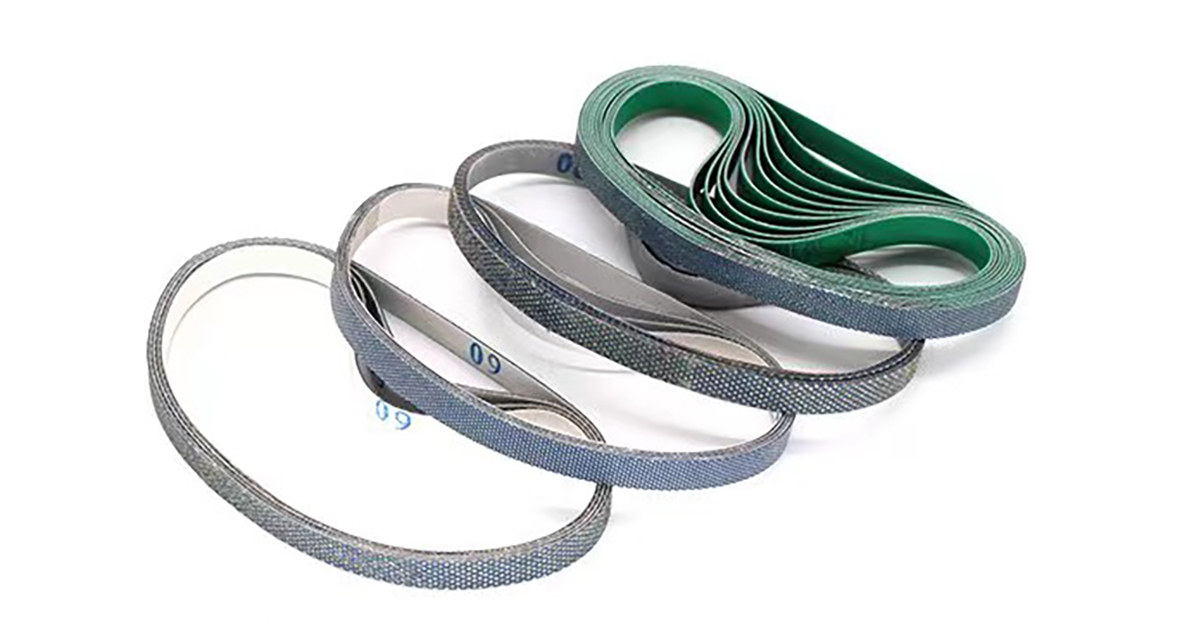
RUITE’s diamond belts are available in resin bond and electroplated constructions. The resin bond variant features a continuous layer of diamond particles embedded throughout the resin matrix, extending usable life as fresh cutting edges are exposed during wear. Widths range from 5 mm to 350 mm; lengths from 150 mm to 5000 mm; grits from 40# to 5000#. This wide specification envelope allows the belts to serve both coarse grinding and fine polishing on a single machine setup.
Technical Explanation
Resin bond diamond belts use a thermosetting resin matrix to hold synthetic diamond crystals on a flexible cloth or film backing. Because diamond grit is present through the full thickness of the resin layer, the belt exhibits self-sharpening behavior: as the matrix wears, new abrasive particles are exposed, providing a longer effective life than single-layer electroplated belts. This construction is especially advantageous for continuous-feed grinding operations such as glass edging and ceramic tile chamfering.
Application Scenarios
RUITE diamond belts are used across multiple industries: for polishing composite materials, deburring carbide parts, grinding ceramic tiles, polishing glass edges, and machining high-temperature alloys. Specific markets include aeronautics, astronautics, wind power, thermal spray coating, stone, glass, and porcelain industries. In one long-term engagement, an Italian OEM has purchased 20,000 units for ceramic grinding over eight years, reporting stable quality with no customer complaints.
Market Trends
The global diamond tools market was valued at USD 10.8 billion in 2024 and is projected to reach USD 19.5 billion by 2034 (Global Market Insights). The thermal spray coatings market, a key application for diamond belts on tungsten carbide, is expected to reach USD 15.28 billion by 2031 (Mordor Intelligence). Meanwhile, China’s export policy changes—the cancellation of export tax rebates for abrasives (effective April 2026) and controls on superhard materials (November 2025)—make supply chain stability and compliance increasingly important. RUITE’s diamond flap discs hold ECM certification (No. 0P210906.ZRDQ038) under standard EN 13743:2017, demonstrating a commitment to EU market requirements.
Comparison with Traditional Solutions
Compared to electroplated diamond belts, resin bond belts offer a longer effective life and a more consistent surface finish, especially in wet grinding environments. However, resin bond belts may remove material at a slightly slower rate than electroplated belts in very aggressive stock removal applications. The choice depends on the specific balance of speed versus finish required.
Future Outlook
As additive manufacturing and thermal spray coating adoption grow, the need for post-processing tools that can achieve sub-5 µm surface roughness will continue to drive demand for precision diamond belts. RUITE’s ability to offer custom widths, lengths, and grits—supported by a monthly capacity of 1,000 units and a standard lead time of 30–45 days—positions it as a flexible supplier for evolving industrial requirements.
Frequently Asked Questions
What sizes and grits are available for RUITE diamond belts?
RUITE diamond belts are available in widths from 5 mm to 350 mm, lengths from 150 mm to 5000 mm, and grits from 40# to 5000#. Custom dimensions can be produced per customer requirement.
Can I get OEM service for my brand?
Yes, RUITE supports OEM production including custom packaging and logo. The standard MOQ is 50 units, with a monthly capacity of 1,000 units and delivery within 30–45 days.
Which industries are these diamond belts suitable for?
They are suitable for glass, stone, ceramic, thermal spray coating, wind power, aeronautics, astronautics, and carbide tool sharpening. Specific applications include polishing composite materials, deburring carbide parts, grinding ceramic tiles, and polishing glass edges.
Does RUITE hold any product certifications?
RUITE’s Diamond Flap disc (product code 5282) holds ECM certification (No. 0P210906.ZRDQ038) compliant with EN 13743:2017, valid for the EU market.
How does quality control work?
All products undergo 100% testing before shipment. RUITE provides a 12-month shelf life quality warranty and free technical consultation. For defective batches, replacement is provided.
Download the full product catalog (PDF) for detailed specifications and grade options.
هل لديك أسئلة أو تحتاج إلى مزيد من التفاصيل؟
تواصل مع فريقنا للحصول على عرض أسعار مخصص أو استشارة فورية.
طلب عرض أسعار
املأ النموذج أدناه وسيتواصل معك فريقنا بعرض مقترح مخصص.
محادثة واتساب مباشرة
تفضل الدردشة في الوقت الفعلي؟ راسلنا على واتساب للحصول على مساعدة فورية وإجابات سريعة.
- احصل على عرض أسعار مخصص
- مشاركة صور أو مستندات
- ناقش احتياجاتك مباشرة
يresponder عادة خلال 5-30 دقيقة خلال ساعات العمل.