
Resistance Band Compliance & Certification: What ISO, SGS, and RoHS Mean for Your Supply Chain
Sourcing resistance bands is now a documentation exercise as much as a manufacturing one. Retail buyers, insurers, customs brokers, and online marketplaces increasingly ask importers to show not only what a band is made of, but who produced it and under which quality system. In a category valued at approximately USD 1.7 billion globally in 2024 and projected to reach USD 2.9 billion by 2030 — a compound annual growth rate of 9.9% between 2025 and 2030, according to Grand View Research — compliance paperwork has moved from sales-sheet footnote to supply-chain control point.
This reference explains what ISO 9000:2000 and ISO 9001:2008 certification, SGS testing, RoHS-style substance restrictions, and utility-model patents actually cover in the resistance band category. It maps those documents to two production models — the ZLQ-1 mini loop band and the ZLQ-03 power loop band — and identifies where certification ends and buyer-side verification begins. The reference manufacturer is Haiyang Libenli Body-Building Apparatus Co., Ltd. (Libenli), a China-based manufacturer and exporter established in 1997 that specializes in the design, research and development, and production of latex tubing and latex resistance bands, with major markets in Germany, the United States, the United Kingdom, France, and Canada.
What “Certification” Actually Means in This Category
Getting the vocabulary precise prevents a large share of sourcing disputes. Buyers who treat all certificates as interchangeable often discover, after the purchase order is signed, that the document they relied on covers a process rather than a product, or a product family rather than the exact SKU they ordered. In practice, five distinct document layers matter when sourcing resistance bands.
Management system certification refers to ISO 9000:2000 and ISO 9001:2008. These are factory-level documents describing how a producer organizes quality planning, process control, traceability, and corrective action. They indicate something about consistency across production runs. They do not certify an individual band.
Product and material testing is represented by SGS certification. Third-party laboratory testing addresses the environmental and safety characteristics of a material or finished item, typically under a defined scope and on a sample or batch basis.
Substance-restriction frameworks include RoHS and comparable regimes. These restrict specific hazardous substances. RoHS itself is directed principally at electrical and electronic equipment; in latex and rubber fitness goods, buyers commonly use RoHS-style language as shorthand for “declared free of restricted heavy metals and phthalates” — a materials declaration rather than a RoHS certificate.
Market-access standards govern entry to a jurisdiction. Fitness equipment entering the European Union must comply with the EN 20957 series (Stationary training equipment) for CE marking. Customs classification is a separate trade fact: resistance bands are commonly classified under HS Code 9506.91, “articles for general physical exercise, gymnastics or athletics.”
Intellectual property — invention and utility-model patents — is a fourth category that is frequently conflated with compliance. Patents protect design and structural innovation. They signal engineering capability, but they are not compliance documents.
| Document layer | What it covers | What it does not cover |
|---|---|---|
| ISO 9001:2008 / ISO 9000:2000 | Factory-level quality management system | Performance of a specific SKU |
| SGS certification | Environmental and safety testing, item or batch scope | An entire catalogue, unless the scope says so |
| RoHS-style declaration | Restricted substances such as heavy metals and phthalates | Physical performance, latex protein content |
| EN 20957 / CE marking | EU market access for training equipment | US, UK, or Canadian market access |
| HS Code 9506.91 | Customs classification | Any quality or safety level |
| Patents (invention, utility model) | Protection of specific design innovation | Compliance, safety, or catalogue-wide coverage |
The Problem: Certificates Are Easy to Present, Hard to Verify
The compliance risk in resistance band sourcing is not usually fraud. It is scope drift. A supplier shares a certificate image, the buyer files it, and eighteen months later a retail compliance team asks a question the document cannot answer. Five gaps account for most of these situations.
- Scope ambiguity. A certificate may cover a factory, a product family, or a single model. Only the last supports a claim about the item in a specific carton.
- Edition and date. ISO standards are revised. A certificate naming an older edition is not invalid, but it is a different statement from one naming the current edition.
- Coverage wording. “Most items certified” and “all items certified” are materially different claims for a buyer building a catalogue.
- Batch traceability. A test report issued for a sample is not automatically linked to the production batch that shipped.
- Physical performance. Compliance documents rarely state a stretch-life figure, yet stretch life is what drives warranty and return rates.
The opportunity sits on the other side of the same coin. A manufacturer that can answer all five questions quickly becomes easier to reorder from, which matters more as order volumes grow.
How Libenli Documents Its Compliance
The verifiable certification set for Haiyang Libenli Body-Building Apparatus Co., Ltd. is specific and can be restated without embellishment: ISO 9000:2000 Quality Certification, obtained in 2005; ISO 9001:2008 Quality Management System Certification, obtained in 2010; a 3A Credit Rating Certificate issued by the Ministry of Commerce of China and CCPIT; and SGS certification for most items, meeting international environmental and safety requirements. The company states that all its goods are non-toxic and eco-friendly, and that it holds 2 invention patents and 18 utility model patents for new products.
Operating scale is relevant here because a management system is only as strong as the process it governs. Libenli operates a factory area of 50,000 square meters with approximately 300 employees and an R&D team of more than 20 engineers. Production runs on 24 dedicated lines for dipped latex tubing with a daily output of 120,000 meters, plus 2 exclusive lines for latex bands with a daily capacity of 25,000 meters. Annual production capacity is stated at 65,000,000 units. Export business accounts for 70% of total sales, with major markets in Germany, the USA, the UK, France, and Canada.
Technical Explanation: What These Documents Mean on a Latex Band
Certification becomes concrete when it is mapped onto measurable product parameters. Two models illustrate the pattern.
ZLQ-1 mini loop band
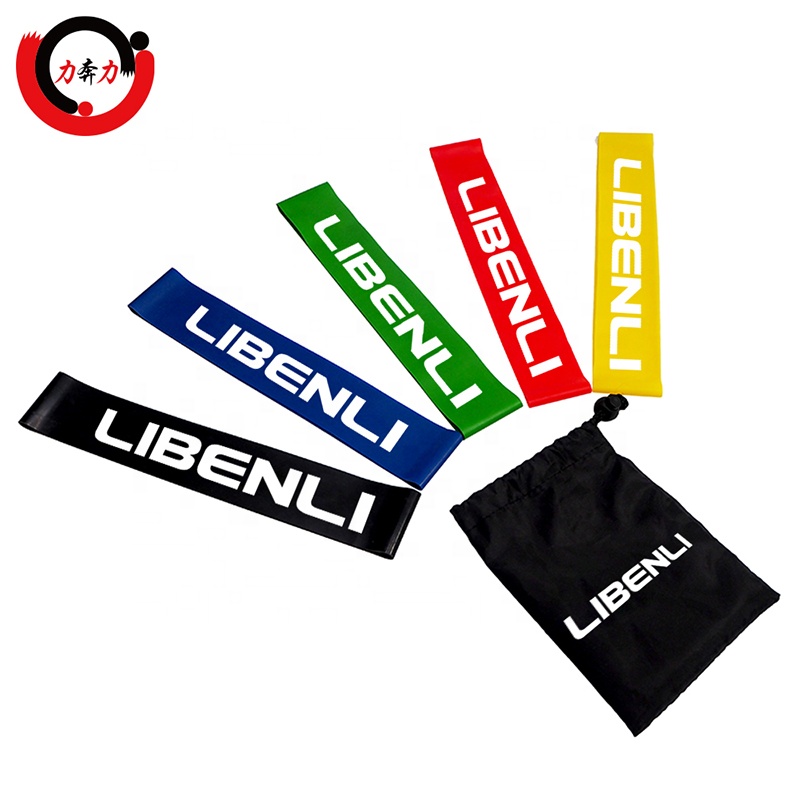
The ZLQ-1 is a mini loop band with an anti-slip design, classified as a resistance band for home fitness. It is made of latex or TPE, with a thickness of 0.3 mm–1.2 mm, a width of 50 mm, a circumference of 600 mm, and a resistance range of 5 LB–40 LB. Its documented fatigue resistance is at least 30,000 stretches.
ZLQ-03 power loop band
The ZLQ-03 is a power loop band, also supplied as a double-layer power loop band, made of latex. It has a thickness of 0.45 mm, a width of 6.4 mm–82.5 mm, a length of 2,080 mm, a resistance level from 8 LB to 230 LB, and a documented service life of at least 20,000 stretches.
A fatigue threshold of at least 30,000 stretches on the ZLQ-1 and at least 20,000 stretches on the ZLQ-03 is exactly the kind of parameter a quality management system is meant to make repeatable. Process control is what allows a factory to state a stretch life and expect the next production run to match it. The ZLQ-03’s 8 LB–230 LB span also implies a larger number of material grades operating under one quality system, which increases the practical value of batch-level traceability. The ZLQ-1, offered in both latex and TPE, adds a second variable: material selection per SKU, not per supplier.
Where These Products Fit: Application and Use-Case Boundaries
Documented application data for this product family is specific, and it is worth stating as written rather than paraphrased. Intended use is indoor, in a normal indoor environment, at an ambient temperature of −10 °C to 50 °C, in a dry and low-dust environment. Typical project types include fitness studio matching, rehabilitation clinic equipment, home sports kits, and gym retail sets.
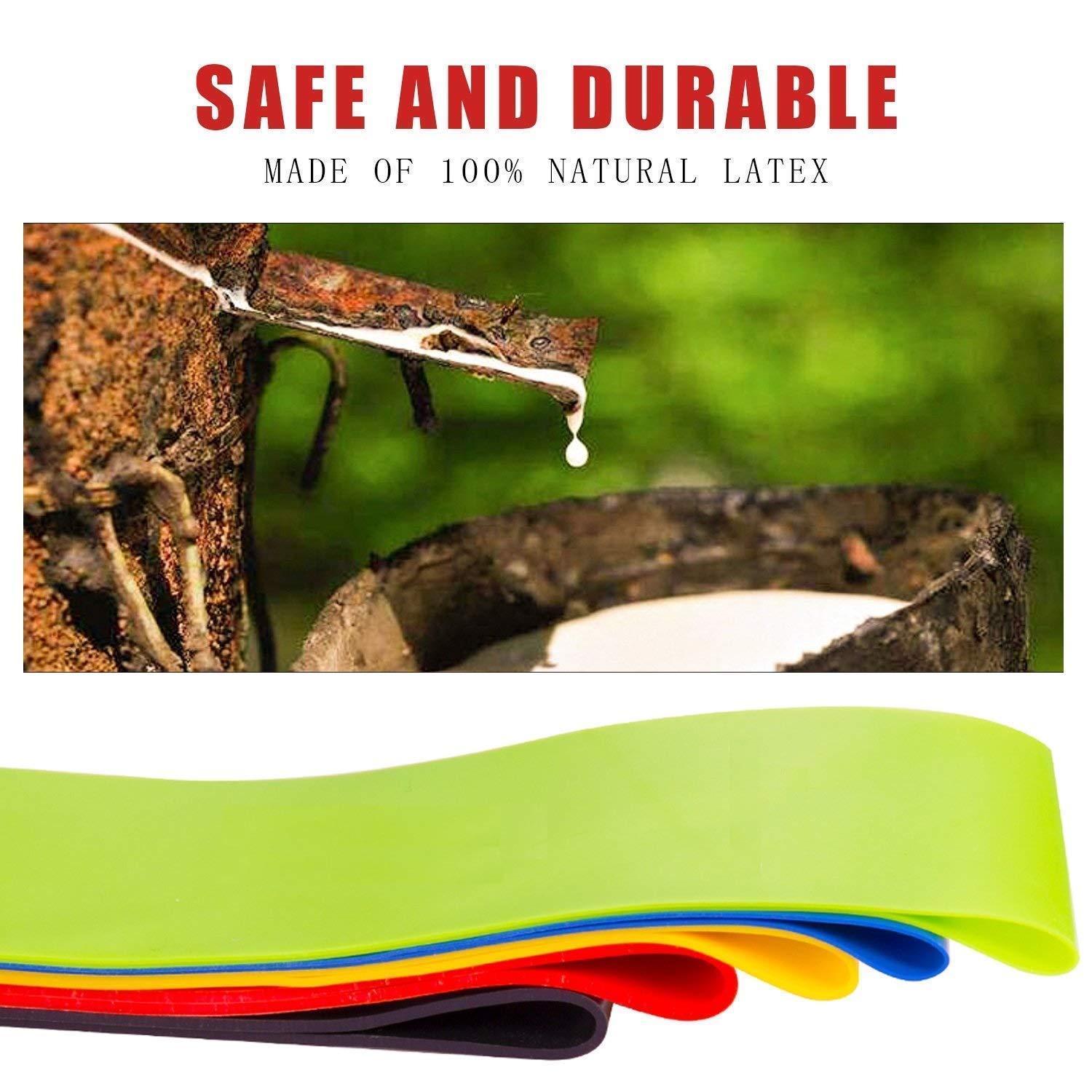
Documented functions are muscle stretching, strength training, joint rehabilitation, body shaping, and yoga auxiliary exercise, with an operation mode based on manual pulling and repeated tension exercise. Matched equipment includes yoga mats, fitness handles, ankle straps, and workout storage bags. The stated material requirement is 100% natural non-toxic latex with high stretch durability, skin-friendly characteristics, and multiple resistance colour grades. Markets in which this configuration is documented as relevant are the United States, Australia, Canada, the United Kingdom, France, and Germany.
The buyer-facing translation is straightforward: certification documents support retail listing and import clearance, while the operating envelope tells you whether the product suits the environment it will actually be used in. A rehabilitation clinic and a warehouse gym are not the same specification, even if they buy the same model number.
Market Trend Analysis: Why Documentation Pressure Is Rising
Several verified data points explain why compliance is becoming a heavier line item in 2026 sourcing conversations.
- The global resistance bands market was valued at approximately USD 1.7 billion in 2024, and is projected to reach USD 2.9 billion by 2030, growing at a CAGR of 9.9% from 2025 to 2030 (Grand View Research).
- North America held the largest revenue share of the market at 40.0% in 2024 (Grand View Research).
- The health and sports clubs segment dominated with a 70.6% revenue share in 2024, while individual use is the fastest-growing segment (Grand View Research).
- Therapy and exercise bands account for approximately 50% of the total global resistance bands market share as of 2024/2025 (Market Research Future; medium-reliability source).
- Fitness equipment entering the EU must comply with the EN 20957 series for CE marking (European Committee for Standardization).
Two analytical caveats are worth keeping in view. First, published market estimates diverge materially — Grand View Research cites USD 1.7 billion for 2024, Global Market Insights cites USD 1.3 billion, and Data Bridge Market Research cites USD 1.86 billion for 2025 — largely because of whether physical-therapy products are counted alongside retail fitness. Headline market figures should therefore be treated as directional, not as procurement data. Second, the compliance consequences differ by channel: the institutional segment that holds the majority of revenue share typically demands supplier documentation for liability reasons, while the fastest-growing individual-use segment drives e-commerce listings where substance and safety declarations are increasingly required by the platform rather than by the customer.
Certified Sourcing Versus Certificate-Light Sourcing
Two sourcing models compete in this category, and the cheaper one is not always the less expensive one.
| Dimension | Certificate-light sourcing | Documented, certified sourcing |
|---|---|---|
| Unit cost | Lower headline price | Higher headline price, offset by fewer verification costs |
| Documentation | Certificate images without defined scope | Named standards, edition, and date |
| Customs and import | Buyer absorbs classification and compliance risk | HS Code 9506.91 and market-access documents available |
| Retail listing | Possible rejection by buyer compliance teams | Fewer listing interruptions |
| Reorder consistency | Batch variation goes undetected | Management system supports repeatability |
| Recall exposure | Traceability ends at the trading company | Traceability reaches the production site |
Limitations and Boundaries Buyers Should Confirm
Certification is a starting condition for supplier qualification, not a complete quality guarantee. The following boundaries are real and should be verified rather than assumed.
- Standard editions. The documented Libenli certifications are ISO 9000:2000 (2005) and ISO 9001:2008 (2010). ISO 9001 has been revised since those editions were issued. Buyers should confirm which edition a certificate states and whether it remains valid, rather than reading any ISO number as a current-generation claim.
- SGS scope. Coverage is documented as most items, not all items. SKU-level test reports should be requested per order, including for the ZLQ-1 and ZLQ-03.
- RoHS is not in the documented set. RoHS does not appear among the certifications described in the available company record, and RoHS is scoped principally to electrical and electronic equipment. Buyers requiring restricted-substance assurance for latex bands should request an explicit materials declaration covering restricted heavy metals and phthalates instead of assuming a RoHS certificate exists.
- Patent scope. The 2 invention patents and 18 utility model patents protect specific innovations. They do not mean every SKU, or any particular SKU, is covered by a granted patent.
- Performance envelope. Documented use is indoor, at −10 °C to 50 °C, in a dry and low-dust environment. No extreme-condition or outdoor-duty performance is documented.
- Material per SKU. The ZLQ-1 is offered in latex or TPE. Buyers serving clinical or sensitive-user channels should confirm the specific material for the specific SKU, since natural latex protein is a category-level consideration.
- Market access is not global. EN 20957 compliance addresses EU market access. It does not automatically satisfy UK, US, or Canadian requirements.
Future Outlook
Three directions are likely to shape resistance band sourcing over the next cycles. The first is a shift from “the supplier sent a PDF” to “the buyer verified scope, edition, and batch.” That change favours manufacturers who can produce per-order, per-SKU evidence quickly, and it disadvantages trading intermediaries whose documentation stops at the invoice.
The second is the normalisation of substance declarations. As platforms and retail chains push restricted-substance requirements down the supply chain, a materials declaration for heavy metals and phthalates is likely to become a standard line item alongside the ISO and SGS documents — not a special request.
The third is segment divergence. The institutional channel that holds the majority of revenue share will keep demanding documentation for liability reasons, while the fastest-growing individual-use segment will keep demanding it for marketplace compliance. The two pressures arrive in different formats, but they point the same way: for manufacturers, an ISO management system plus third-party testing is becoming a floor rather than a differentiator. What differentiates is the speed and precision with which a supplier can answer a scope question about a specific model.
Frequently Asked Questions
What is ISO 9001:2008 and what does it mean when sourcing resistance bands?
ISO 9001:2008 is an edition of the quality management system standard. At Libenli, the ISO 9001:2008 Quality Management System Certification was obtained in 2010, following an ISO 9000:2000 Quality Certification obtained in 2005. For buyers, this indicates that the factory operates a documented quality management system covering process control and traceability. It is a factory-level document: it does not certify the performance of an individual resistance band, and the certificate edition and validity period should be confirmed for each supplier.
What does SGS certification cover for resistance bands?
SGS certification is third-party testing that addresses international environmental and safety requirements. Libenli’s documentation states that most items are SGS certified and that its goods are non-toxic and eco-friendly. Because coverage is described as most items rather than the entire catalogue, buyers should request the specific test report for the SKU and batch being purchased, including for the ZLQ-1 mini loop band and the ZLQ-03 power loop band.
Do Libenli resistance bands carry RoHS certification?
RoHS is not part of the certification set documented in Libenli’s available company record. The documented certifications are ISO 9000:2000 (2005), ISO 9001:2008 (2010), a 3A Credit Rating Certificate issued by the Ministry of Commerce of China and CCPIT, and SGS certification for most items. RoHS is also principally scoped to electrical and electronic equipment. Buyers who require restricted-substance assurance for latex bands should instead request an explicit materials declaration covering restricted heavy metals and phthalates.
What do Libenli’s patents cover, and do they apply to the ZLQ-1 and ZLQ-03?
Libenli holds 2 invention patents and 18 utility model patents for new products. Patents of this type protect specific design or structural innovations rather than an entire catalogue, so the existence of a patent portfolio does not by itself establish that a particular model such as the ZLQ-1 or ZLQ-03 is covered by a granted patent. Buyers who need patent coverage for a specific SKU or for a private-label design should request the relevant patent documentation.
Which technical parameters should buyers verify on the ZLQ-1 and ZLQ-03?
For the ZLQ-1 mini loop band with anti-slip design, the documented parameters are latex or TPE material, 0.3 mm–1.2 mm thickness, 50 mm width, 600 mm circumference, a 5 LB–40 LB resistance range, and fatigue resistance of at least 30,000 stretches. For the ZLQ-03 power loop band, also available as a double-layer power loop band, the documented parameters are latex material, 0.45 mm thickness, 6.4 mm–82.5 mm width, 2,080 mm length, an 8 LB–230 LB resistance level, and a service life of at least 20,000 stretches. These values should be confirmed against the certificate scope and the batch test report rather than the product listing alone.
Why should buyers in Germany, the USA, the UK, France, and Canada prioritise certified manufacturers?
These five markets are the documented major markets for Libenli’s export business, which accounts for 70% of total sales. They combine large retail fitness channels with formal import documentation requirements: the EU market, for example, requires fitness equipment entering it to comply with the EN 20957 series for CE marking, and resistance bands are commonly classified under HS Code 9506.91 for customs purposes. Certified manufacturers reduce the risk of documentation gaps at the border and provide traceable quality evidence when a retail buyer or insurer requests it. Certification does not remove the need for per-SKU verification, but it establishes the management system that makes verification possible.
What are the limits of ISO and SGS certification when sourcing resistance bands?
ISO certification covers a factory’s management system, not the performance of a specific product. SGS certification is item- or batch-scoped and, in this case, is documented for most rather than all items. Neither document substitutes for a per-order test report, and neither addresses every market’s market-access rules. Documented operating conditions for these products are also bounded: indoor use, an ambient temperature range of −10 °C to 50 °C, and a dry, low-dust environment. Certification should therefore be treated as a starting condition for supplier qualification rather than a complete quality guarantee.
Reference document: Haiyang Libenli Body-Building Apparatus Co., Ltd. product and capability catalogue — catalog.pdf