
Restaurant Sofa Booth Seating: Materials, Testing and Layout
Restaurant Sofa Booth Seating: Materials, Testing and Layout
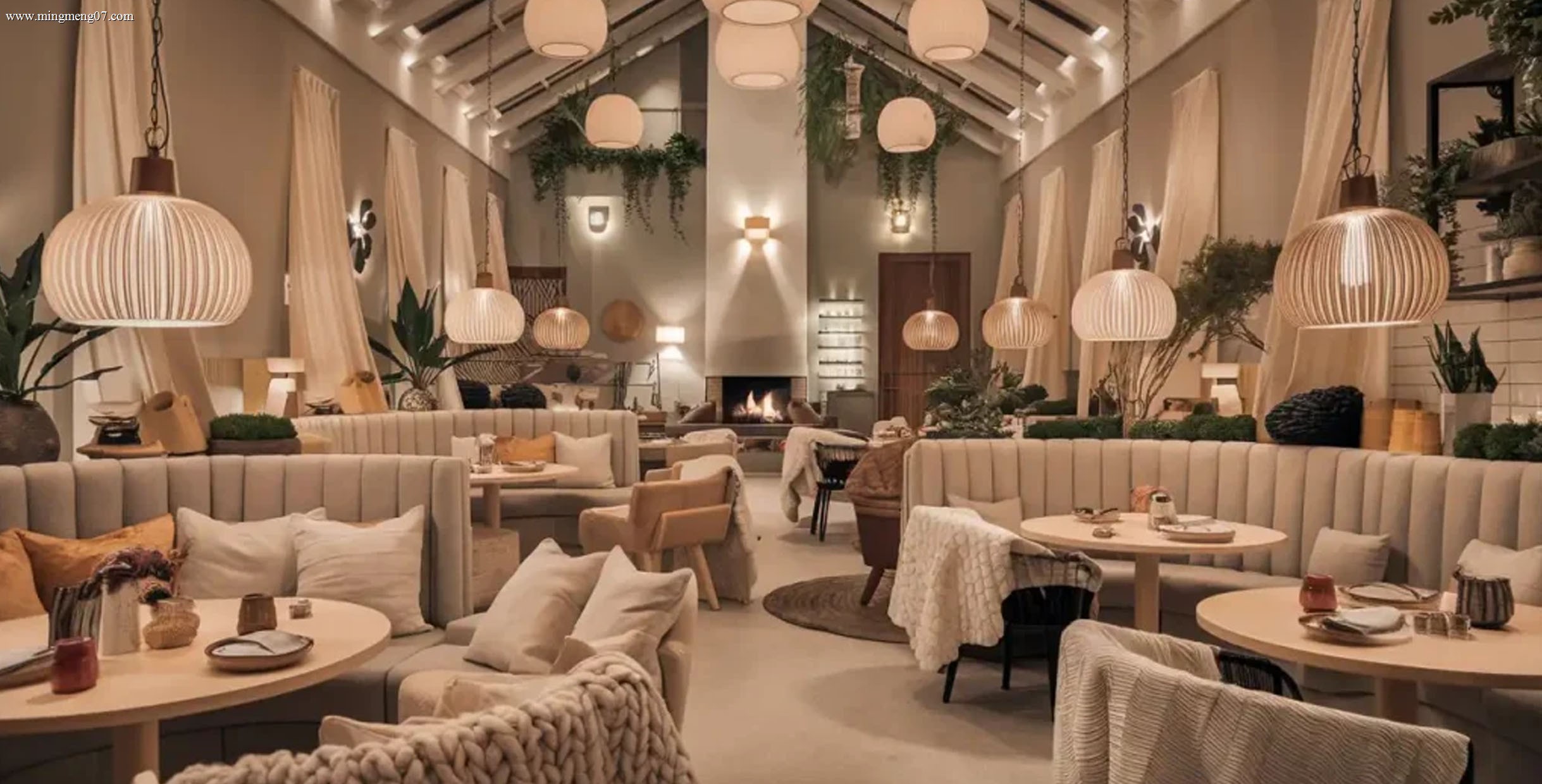
Restaurant sofa booth seating is fixed commercial seating built from a bench frame, high-density foam and commercial upholstery, then aligned to a table and to the wall line of the dining room. Because the unit is installed rather than moved, every specification decision — frame material, foam firmness, upholstery type and overall dimension — has to be settled before production begins.
Buyers who move from research into evaluation tend to hit the same gap. Retail catalogues describe appearance. Design articles describe atmosphere. Neither explains the specification layer that a fixed banquette actually depends on: what the frame is made from, how dimensions are derived from a floor plan, which standards commercial seating is tested against, and which documents a buyer can verify afterwards. This reference assembles that layer for restaurant furniture booths and the tables they are matched with.
Why booth seating is a constraint problem, not a style choice
Booth seating sits at the intersection of three constraint sets at once. The interior concept determines shape, upholstery, colour and stitching. The operational plan determines seat count per linear metre, aisle clearance and service access. The durability requirement determines frame construction, foam behaviour and the cleaning regime the upholstery has to survive.
A wall-line banquette usually converts floor area into seats more efficiently than the same linear length of freestanding restaurant chairs and tables, because the bench depth is fixed and the aisle is measured once. The trade-off is the direction of change: a booth bench can be reupholstered, but it cannot be moved to reconfigure a room for a private event or a quieter trading period. A floor plan that mixes fixed booth seating with movable seating keeps both advantages available.
That combination appears repeatedly in documented projects. In a multi-zone restaurant project in the United States, long wall-side booth seating was used to improve space utilization while movable restaurant chairs supported two-person, four-person and group table arrangements in the open dining area.
What a commercial booth bench is built from
The booth, table and seating products referenced in this article are documented in the product range of Guangzhou Mingmeng Furniture Co., Ltd., a commercial and hospitality furniture manufacturer established in 2015 in Guangzhou, China, which designs, manufactures and exports restaurant, hotel, bar, café, outdoor and canteen furniture for project customers in more than 100 countries and regions.
Frame
Booth frames are specified in plywood or solid wood with commercial-grade construction, with metal frame listed within the same product family. Frame choice interacts with how the unit is fixed: a wall-mounted bench and a freestanding double booth transfer load differently, so frame specification should follow the fixing condition on site rather than a catalogue default.
Foam and comfort
Seat and back are built with high-density foam, and foam density is customized for the comfort requirement of the project. This matters more in booth seating than in loose chairs. A banquette is the seat a guest stays in longest, and it is also the seat that cannot be quietly swapped out if the cushioning proves too soft after months of service.
Upholstery
Fabric, PU leather and genuine leather are the standard upholstery options. Stain resistance, flame retardancy and maintainability options can be provided per contract and material specification, which makes them specification items to be raised by the buyer rather than automatic inclusions. Where a venue falls under a local fire or hygiene code, that requirement should be stated in the enquiry so the material set is selected against it.
Configurations and dimensions
Documented booth configurations include single booth, double booth, wall-mounted bench, L-shaped booth, U-shaped booth, curved booth and banquette seating. Dimensions are fully customizable and are set from the floor plan, the target seating capacity and the project requirement. Customization extends to size, shape, colour, material, stitching, upholstery and finishing options, and the seating capacity itself can be specified according to the project.
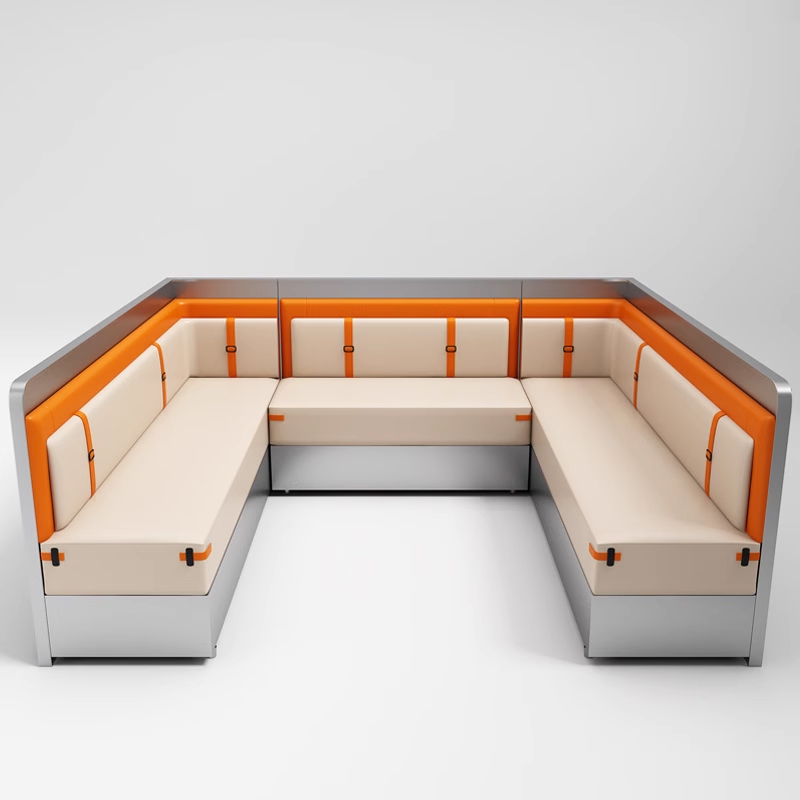
Table and base coordination
A restaurant furniture booth is only half a seating solution. The bench sets the seat height, the table sets the dining surface height, and the table base sets stability and the legroom a guest actually has. When these three are sourced from different suppliers, height mismatches and unstable bases usually surface at installation rather than at quotation.
Documented table specification options include tabletop surfaces in solid wood, veneer, HPL, laminate, marble, stone or customized finishes, supported by a metal base, a wooden base or a customized support structure. Shapes cover round, square, rectangular and custom-designed forms, and dimensions are set against restaurant layout, seating capacity and project requirements.
Table bases are documented separately because they are the component that most often has to match a tabletop that already exists. Base structures include round, square, cross, disc, pedestal, double pedestal, bar height and custom metal configurations. Material options include cast iron, steel, stainless steel, aluminum and custom metal. Heights are available in dining height, counter height, bar height and custom heights. Finishes include powder coating, brushed, polished and plated. The mounting plate configuration is adjustable so the base can accept tabletops made from wood, HPL, stone, marble or sintered stone, and base plate size, column size and mounting configuration are customized against the tabletop dimension.
In booth layouts, the practical output of this coordination is a CAD layout that fixes bench depth, tabletop size, base position and aisle clearance at the same time. Project documentation includes CAD layout coordination to match table base dimensions with tabletop sizes and seating layouts, with 3D visualization available for confirmation before production.
Testing, certification and what the documents actually cover
Commercial seating in the hospitality sector is commonly assessed against EN 16139:2013 Level 2 and EN 1022:2023. The current documentation record for MingMeng furniture contains certificates and test reports issued by third-party laboratories. The specific records are listed below.
| Document | Number | Documented scope | Issued by / date | Standard and market |
|---|---|---|---|---|
| CE Certificate of Compliance — Commercial Chair MM102 | CTG2511057084B-SC01AD | Commercial chairs and hospitality seating products for restaurants, hotels, lounges and public areas | Shenzhen CTG Testing Co., Ltd. / 2025-11-05 | EN 16139:2013 Level 2; EN 1022:2023; European Union |
| CE Certificate of Compliance — Commercial Chair MM102 | CTG2510308431B-SR224AT | Commercial chairs, restaurant chairs and hospitality seating products | Shenzhen CTG Testing Co., Ltd. / 2025-10-30, valid to 2030-10-30 | EN 16139:2013 Level 2 / EN 1022:2023; European Union |
| CE Certificate of Compliance | CTG2510308431B-SR22AT | Commercial chairs and hospitality seating products, including restaurant chairs and related furniture products | Shenzhen CTG Testing Co., Ltd. / 2025-10-30 | EN 16139:2013 Level 2 / EN 1022:2023; European Union |
| Strength, durability and stability test report — MM102 Commercial Chair | CTG2511057084B-SR03AD | Commercial dining chairs and hospitality seating for restaurants, hotels and public areas | Shenzhen CTG Testing Co., Ltd. / 2025-11-05 | EN 16139:2013 Level 2; EN 1022:2023; EU and international commercial furniture market |
| Test report — MM103 Commercial Bar Chair | CTG2511057084B-SR02AD | Commercial bar chairs and hospitality bar seating for restaurants, hotels and bar projects | Shenzhen CTG Testing Co., Ltd. / 2025-11-05 | EN 16139:2013 Level 2; EN 1022:2023; European Union |
| Strength, durability and stability test report — MM104 Commercial Bar Stool | CTG2511057084B-SR04AD | Commercial bar stools, hospitality bar chairs and restaurant bar seating | Shenzhen CTG Testing Co., Ltd. / 2025-11-05 | EN 16139:2013 Level 2; EN 1022:2023; EU and international commercial furniture market |
| REACH SVHC Test Report — Chair | CZH12250205012 | Restaurant Chair product, including furniture materials and components covered by the test sample | Shenzhen Zhonghan Certification Technology Co., Ltd. / 2025-02-08, valid to 2030-02-08 | Regulation (EC) No. 1907/2006 (REACH); 247 Candidate List SVHC published by ECHA; European Union |
| REACH SVHC Test Report — upholstered furniture materials | BSTDGD31243813112202CR | Hospitality Sofa / Commercial Lounge Sofa / Restaurant Sofa (product ID 9776) and Hotel Lobby Furniture / Hotel Lounge Furniture (product ID 9780) | Dongguan BST Testing Co., Ltd. / 2024-11-22, valid to 2029-11-22 | REACH Regulation (EC) No 1907/2006 — SVHC Candidate List; European Union |
Three practical points follow from these records. First, the standards cited are seating standards — strength, durability and stability under commercial use — not decorative or general product declarations. Second, the issuing laboratories are named and the certificate numbers are traceable, which is what makes them usable in a supplier evaluation or a tender submission. Third, validity dates matter: a document issued in 2024 and valid to 2029 carries a different status from one issued in late 2025.
Material and finish decision table
The following table converts documented options into the trade-offs a buyer has to weigh. It is a specification aid, not a ranking: the correct choice depends on cleaning frequency, budget, interior concept and the compliance regime of the destination market.
| Component | Documented options | What it decides | Constraint to confirm |
|---|---|---|---|
| Booth frame | Plywood or solid wood with commercial-grade construction; metal frame option | Load path, rigidity and how the bench is fixed to wall or floor | Wall type, floor level and fixing method must match the actual site |
| Foam | High-density foam, firmness customized for the project | Comfort over long guest dwell time and shape retention in service | Firmness is specified per project rather than taken from fixed grades |
| Upholstery | Fabric, PU leather, genuine leather | Cleaning regime, appearance retention and comfort | Stain resistance, flame retardancy and maintainability are provided per contract and material specification |
| Tabletop | Solid wood, veneer, HPL, laminate, marble, stone, customized surfaces | Cleaning effort, weight, appearance tier and price position | Must be compatible with the table base mounting plate |
| Table base | Cast iron, steel, stainless steel, aluminum or custom metal; round, square, cross, disc, pedestal, double pedestal, bar height | Stability, height and dining comfort at the booth | Base plate size and column size are matched to the tabletop dimension |
| Finishes | Powder coating, brushed, polished, plated, paint, laminate, wood veneer and custom colour matching | Visual consistency across benches, tables and chairs in one room | Wood, metal and upholstery samples should be approved together before production |
Quantities, lead time and quality control
Two commercial constraints decide whether a custom booth project is practical at a given scale: minimum order quantity and lead time.
For custom models, the documented starting range is generally 10–50 pieces per style, subject to the material set-up and the overall order mix. Minimum order quantity depends on product type, customization level, material set-up and order composition, so standard models and custom project furniture can carry different minimums and should be confirmed against the specific specification.
Lead time is documented as 20–30 days for standard models and 35–50 days for customized models, including sample approval. Booth seating normally falls into the customized category because dimensions are derived from a specific floor plan rather than a standard size list.
Production capacity and quality control matter because custom booth orders are effectively one-off. The manufacturing facility runs a monthly production capacity of more than 80,000 pieces and an annual output of more than 960,000 units. Quality control covers material inspection, production-process inspection, structural and appearance checks, pre-shipment inspection and export packaging control. Pre-production booth samples are available before bulk production and form part of a documented sample approval process. The product is also available for factory audit, quality verification and supplier due diligence.
Where restaurant furniture booths perform
Documented application conditions describe high-frequency commercial use in restaurants, hotels, cafés, bars, canteens, outdoor leisure and entertainment spaces, covering single-site restaurants, chains, hotel dining and public area projects, bars and nightlife venues and outdoor terrace projects. Furniture in these settings is expected to withstand daily operational wear and regular cleaning, and modularity and maintainability are common project requirements.
Four documented project patterns show how booth seating is actually deployed.
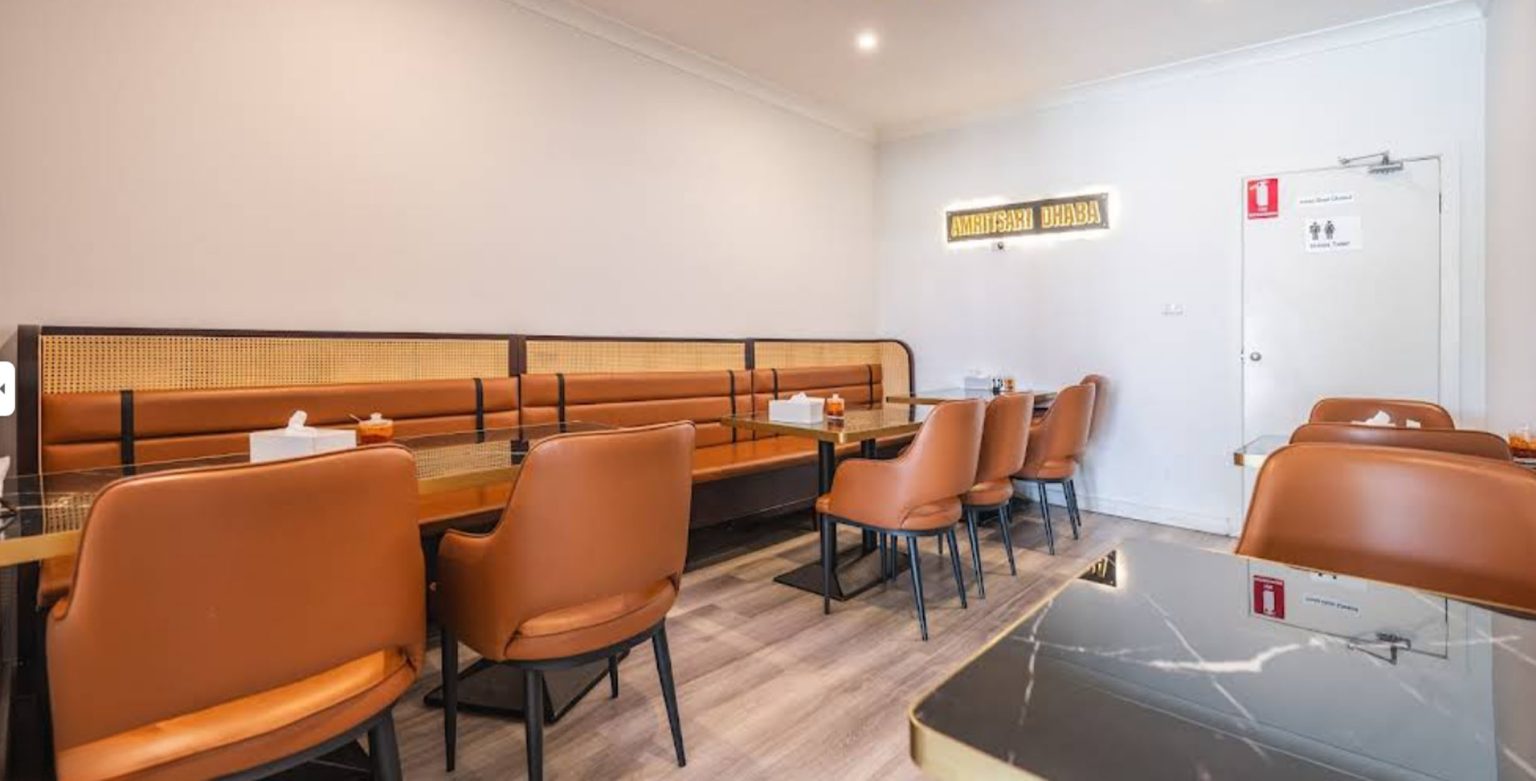
- Casual dining with a privacy requirement. A restaurant project in Australia covering dining chairs, dining tables and booth seating used upholstered chairs to support long-duration dining while soft-cushioned booth seating provided greater privacy without separating guests from the overall dining atmosphere.
- Multi-zone planning. A restaurant project in the United States covered reception, a lounge waiting area, a main dining room and a long booth seating zone. Long wall-side booth seating improved space utilization, while movable restaurant chairs supported flexible two-person, four-person and group arrangements.
- Fixed and movable mix. A restaurant and bar venue in the United States combined custom upholstered bar stools, booth seating and marble-look dining tables. Fixed booths, movable dining chairs and freestanding tables improved layout flexibility for couples, groups and private events.
- Multiple seating heights in one room. A large entertainment and hospitality venue in the United States combined bar, dining, booth, high-top and communal seating so that drinks service, social dining, longer meals and larger group events could coexist inside one open space.
Market context: what the published data can and cannot support
Published market sizing for restaurant furniture does not converge. Three commercial research publishers place the global category on materially different bases.
| Publisher | Base value | Forecast value | Stated CAGR | Period |
|---|---|---|---|---|
| Market Growth Reports | USD 638.8 million (2026) | USD 929.57 million (2035) | 4.3% | 2026–2035 |
| Business Research Insights | USD 0.88 billion (2025) | USD 1.38 billion (2034) | 5.13% | 2025–2034 |
| Dataintelo | USD 6.62 billion (2025) | USD 11.01 billion (2034) | 5.8% | 2025–2034 |
The three base figures differ by roughly an order of magnitude. That pattern points to definitional difference rather than a genuine forecasting disagreement: base years, product scope and channel coverage are not aligned, and none of the three should be averaged with the others. For procurement purposes the usable signal is directional — a category growing at a single-digit rate — rather than any single absolute value. It is also worth noting that the available results did not include an official government, customs or intergovernmental dataset for restaurant furniture market size, so commercial research estimates remain the only published benchmark in this set.
At manufacturer level, the documented position is more concrete. MingMeng operates a 15,000㎡ manufacturing facility with more than 200 employees and a 10-engineer R&D team, producing restaurant furniture, hotel furniture, bar furniture, café furniture, outdoor furniture, canteen furniture, restaurant chairs, dining tables, booth and banquette seating, bar stools, lounge chairs and sofas. Around 90% of output is exported, with documented markets including the USA, Australia, Europe, the Middle East and Southeast Asia. The company holds CE, TÜV and RoHS certification records and has developed 10+ national patented designs.
Limits and boundaries to accept before ordering
Booth seating is a strong solution under specific conditions and a poor one outside them. The following boundaries are documented or follow directly from how the product is built.
- Fixed seating is fixed. A banquette can be reupholstered, but it cannot be repositioned for an event or a seasonal layout change. Flexible rooms generally need a mix of booth seating and movable seating.
- Certification scope is model-specific. The current CE and EN 16139 records cover chairs, a bar chair and a bar stool. Booth seating is not named as an individually certified model, and the REACH SVHC reports are materials-level substance tests. Structural test requirements for booths must be raised project by project.
- Stain resistance, flame retardancy and maintainability are contract items. They can be provided per contract and material specification rather than being defaults, so a venue operating under a fire or hygiene code must state the requirement at enquiry stage.
- Dimensional risk sits with the site survey. Booth dimensions come from the floor plan and seating capacity. An inaccurate plan transfers directly into factory-built furniture that cannot be adjusted on site.
- Custom lead time is longer than standard lead time. The documented range of 35–50 days for customized models includes sample approval, and changes made after approval can cause rework, additional cost and delay.
- Small fully custom booth orders may not be economic. The documented starting range of roughly 10–50 pieces per style for custom models means a pilot installation at very low quantity can carry disproportionate set-up cost.
Future outlook
The direction of change in restaurant furniture specification is towards treating seating as a maintenance and lifecycle decision rather than a decorative purchase. Fixed banquette seating is well positioned for that shift because its cost is dominated by construction and upholstery, both of which are specified in advance and can be documented — foam density, frame material, upholstery type and test records.
Two practical consequences are likely. First, buyers will ask for material-level documentation earlier, before design sign-off, rather than after order placement. Second, rooms will continue to move towards hybrid layouts in which fixed booth seating holds the wall line and movable tables and chairs absorb change — the pattern already visible in the multi-zone projects described above. Projects that coordinate benches, tables and bases as one furniture package, with CAD layout and 3D confirmation before production, avoid the coordination cost that appears when each category is sourced separately.
Frequently asked questions
What can be customized on a restaurant sofa booth?
Size, shape, colour, material, stitching, upholstery and finishing are all customizable, together with seating capacity and overall dimensions taken from the floor plan. Foam density is customized for the comfort requirement, and upholstery can be selected from fabric, PU leather or genuine leather. Frame material options include plywood, solid wood and metal, with plywood or solid wood frames built to commercial-grade construction. Configuration can be a single booth, double booth, wall-mounted bench, L-shaped booth, U-shaped booth, curved booth or banquette seating.
What materials and finishes are available for commercial booth and restaurant furniture?
Documented options include solid wood, plywood, metal, stainless steel, aluminum, high-density foam, commercial fabric, PU leather, genuine leather, wood veneer, HPL, laminate, marble, stone and custom finishes. Tabletops can be solid wood, veneer, HPL, laminate, marble, stone or customized surfaces, and table bases can be cast iron, steel, stainless steel, aluminum or custom metal. Metal base finishes include powder coating, brushed, polished and plated finishes. Stain resistance, flame retardancy and maintainability options are provided per contract and material specification.
What is the minimum order quantity for custom booth seating?
For custom models the documented starting range is generally 10–50 pieces per style, subject to material set-up and order mix. Minimum order quantity depends on product type, customization level, material set-up and order composition, and standard models and custom project furniture may carry different minimums, so the required models, quantities and specifications should be confirmed against the specific project.
How is the durability of commercial restaurant seating tested and documented?
Commercial seating is tested according to EN 16139 requirements, with documented reports referencing EN 16139:2013 Level 2 and EN 1022:2023 — for example test report CTG2511057084B-SR03AD for the MM102 commercial chair and CTG2511057084B-SR04AD for the MM104 commercial bar stool, both issued by Shenzhen CTG Testing Co., Ltd. Upholstered materials are separately documented under REACH SVHC test reports. Booth seating itself is not named as an individually certified model in the current record, so structural test requirements for booths should be confirmed against the standard applicable in the destination market.
What information should a buyer prepare before ordering custom restaurant furniture?
Prepare the floor plan or space dimensions, the required furniture types and quantities, preferred materials and finishes, reference images or drawings, the destination market, the target schedule and any compliance requirement. Dimensions should be checked against the actual site, including table heights, chair and bar stool seat heights, booth dimensions, wall lengths and circulation clearances. Material, colour, upholstery and finish samples should be approved before bulk production, and quotation scope, delivery term, payment terms, production schedule, packing and project-specific compliance requirements should be confirmed in writing.
How long does production take, and what affects it?
Standard models are documented at 20–30 days and customized models at 35–50 days including sample approval. Custom booth seating normally falls into the customized category because dimensions are derived from the floor plan. Changes made after drawings, dimensions, materials, finishes and samples are approved can cause rework, additional cost and delay.
A consolidated overview of restaurant furniture categories, materials and project support is available in the downloadable product brochure: Mingmeng Restaurant Furniture 2026.