
Retail Packaging Fit: ZXL-E700 Handled Box Bag Machine
Retail Packaging Fit: ZXL-E700 Handled Box Bag Machine
Retail packaging programmes rarely buy one bag format at a time. A grocery group may order a handled box bag for seasonal promotions and gift sets, a loop handle bag for repeat shopping trips, and a D-cut or vest bag wherever unit cost dominates the decision. The ZXL-E700 — a non woven bag making machine that Zhengxin Machinery designates a 5-in-1 platform with online handle attaching — is built for exactly that mixed-format situation. This article maps the machine's published specification envelope to real retail bag programmes, and it is as explicit about where a programme does not fit as about where it does.
Why handled retail bags create a specification problem
A handled bag is not a single product. The box bag that stands upright on a promotion shelf, the loop handle bag that a shopper reuses for a year, and the D-cut bag given away at a checkout differ in folding sequence, handle construction, sealing pattern and often material weight. Producing all three historically meant either buying three single-format lines or splitting orders across several converters — each option adding changeover time, duplicated quality control and inconsistent bag dimensions between formats.
The commercial pressure behind this is straightforward. Retail buyers specify bag dimensions tightly because bags have to sit in a printed display, hang from a fixture or stack in a distribution centre. They also specify handle performance, because a handle that tears away in a customer's hand generates returns that cost far more than the bag. Zhengxin Machinery's own technical material puts the industry norm for supermarket shopping bags at roughly 80–90 g/m² of polypropylene spunbond fabric, with 100–120 g/m² reserved for heavier premium programmes — a detail that matters later, when the machine's material window is checked against a specific bag brief.
The opportunity a multi-style platform presents is therefore not simply “more bag types”. It is the ability to hold one machine setup, one operator team and one quality standard across a retail account that orders several handled formats. Whether a given machine actually delivers that depends on its documented envelope, not on its style count.
What the ZXL-E700 is, in specification terms
The ZXL-E700 is a fully automatic ZXL-series machine that Zhengxin Machinery lists as a non woven box bag making machine with online handle attaching and classifies as a 5-in-1 unit. In practical terms, “5-in-1” describes the platform's multi-style configuration: one machine frame and one control platform are intended to cover several bag constructions instead of a single fixed format. The supplier's product record separately states compatibility with more than 20 bag types, naming vest bags, drawstring bags, 3D bags and zipper bags among them, alongside box bags and loop handle bags.
Two things about that claim deserve a buyer's attention. First, a style count is a coverage claim, not proof that a specific purchased bag drawing will run well on the platform; the bag dimensions, material weight and handle specification still have to sit inside the published ranges. Second, the phrase “online handle attaching” is the operationally important part of the designation, because it means the handle is formed, welded and attached within the same machine cycle rather than in a separate offline step. For a retail programme that mixes handled and unhandled formats, that single characteristic is what removes an entire secondary process from the cost structure.
Zhengxin Machinery itself is a Wenzhou-based manufacturer founded in 2014, operating a 60,000 m² facility with around 200 employees, roughly 30 engineers and a stated annual output of 500 units. The company reports a 60% export ratio across more than 120 countries, an ISO 9001:2015 certified factory, and CE marking covering the Machinery, Low Voltage and EMC Directives — the certification set that determines whether a machine clears customs in the EU and in the many markets that accept CE marking.
How the platform executes a retail bag
Four subsystems do most of the work in turning a printed non woven roll into a finished handled bag, and each one maps onto a different retail requirement.
Ultrasonic welding. The ZXL-E700 uses ultrasonic bonding rather than an externally heated sealing bar. A transducer converts high-frequency electrical energy into mechanical vibration, and the friction at the fabric interface melts the polypropylene fibres locally, producing a bond without needle, thread or adhesive. For retail programmes the practical consequences are an odour-free seal, no scorching or browning on the visible face of the bag, and a weld line that stays visually clean — which is why the technology is used for food-adjacent and premium retail packaging. Zhengxin's technical documentation describes ultrasonic welds as producing higher peel strength than surface-adhesion heat sealing and consuming power only during the welding pulse.
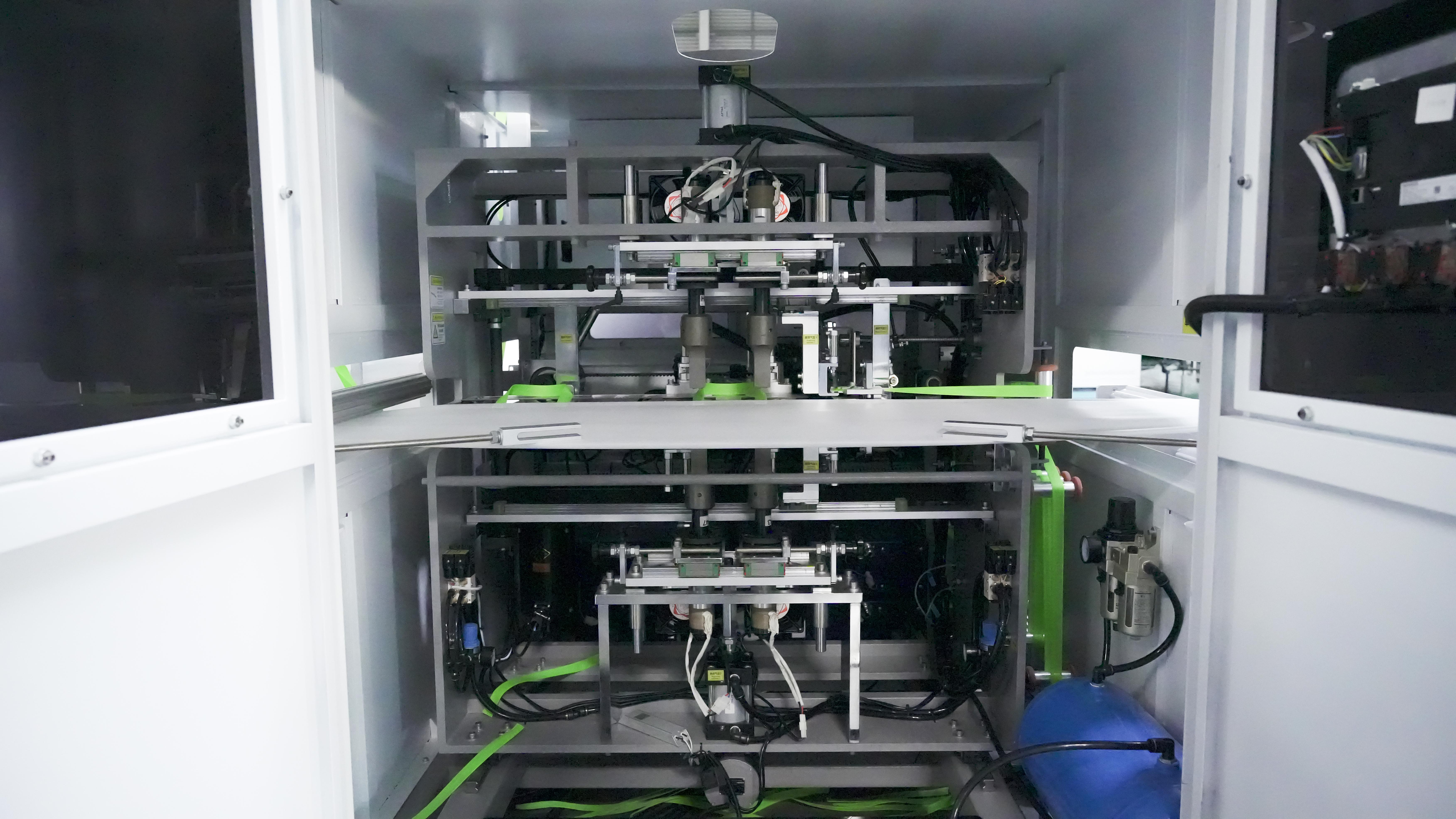
PLC and touchscreen control. The machine runs on a PLC with a touchscreen HMI, which is the difference between a platform that can hold several retail formats and one that has to be mechanically re-set for each. Parameters such as bag length, sealing timing, cutting offset and speed limits are stored and recalled rather than re-tuned by hand, and Zhengxin's documentation notes that the interface is designed so general workers can reach operating competence quickly. On a machine holding several bag styles for one retail account, that recall capability is the mechanism that makes short runs viable.
Stepper-motor length control and photoelectric tracking. Bag length is set electronically rather than by mechanical stops, and a photoelectric sensor tracks the printed registration mark on the fabric so that cutting and sealing stay aligned with the artwork. This is the function that decides whether a retail programme can buy pre-printed roll stock and have the logo land centred on a finished handled box bag — typically the single most visible quality failure in a retail bag order.
Low-labour automation. The platform is specified to run with one to two operators per machine, integrating photoelectric tracking, stepper-motor length control, automatic counting and alarms, with a scrap recovery system that collects trim for reuse. It is rated at 40–120 pieces per minute and draws 18 kW at 380V or 220V, on a 12,000 × 2,050 × 1,900 mm frame weighing 4,000 kg, built from carbon steel, stainless steel and alloy steel.
The published envelope a retail programme has to fit inside
Scenario fit starts with numbers. The table below reproduces the ZXL-E700's published specification ranges, which are the boundaries a bag brief has to sit inside.
| Parameter | Published range | What it governs in a retail programme |
|---|---|---|
| Fabric roll width | 500–1300 mm | The widest roll the unwinding section accepts; the bag drawing must consume a width inside this band |
| Production speed | 40–120 pcs/min | Throughput ceiling per machine, before realistic planning allowances |
| Bag height | 200–580 mm | Vertical bag dimension, including the body of a box bag |
| Bag width | 100–800 mm | Horizontal bag dimension across the handled formats |
| Handle length | 380–600 mm | Loop or soft handle geometry the attaching unit can form |
| Handle material thickness | 50–100 g/m² | Weight of the handle tape stock |
| Material thickness | 30–100 g/m² | Body fabric weight window — the constraint most likely to exclude a premium brief |
| Voltage / total power | 380V / 220V; 18 kW | Site electrical provisioning and stabiliser sizing |
Two observations follow directly. The material window of 30–100 g/m² comfortably covers the 60–90 g/m² band used for mainstream retail shopping bags, but it stops short of the 100–120 g/m² range that premium and luxury programmes often specify. And the handle stock window of 50–100 g/m² is narrower than the body fabric window, so a programme that specifies a heavy handle tape needs to check that figure separately rather than assuming the body fabric range covers it.
Fit check 1: does the bag format belong to the platform?
A programme passes the first filter when its order book is dominated by handled formats — box bags, loop handle bags and flat bags with an attached handle — rather than by vest bags and drawstring bags alone. The reason is mechanical: online handle attaching exists to place a formed handle onto a bag body, and formats that do not consume a handle gain nothing from that capability while still paying for it.
The second part of the filter is changeover frequency. A platform with stored parameter sets and touchscreen recall earns its cost when a factory switches between retail accounts weekly; a factory running one 400 mm D-cut bag for eleven months of the year is paying for flexibility it will not use. Retail programmes that combine a large core volume with seasonal handled formats — supermarket loyalty campaigns, holiday gift bags, brand anniversary sets — are the natural candidates.
The third part is the honest limit of a style claim. The record lists more than 20 compatible bag types, but a buyer should ask to see the specific bag drawing produced as a physical sample on the platform, in the material weight and handle specification the retail customer has approved. A style name in a catalogue is not a dimensional guarantee.
Fit check 2: size and material
Size and material are where most mismatches surface, and both can be checked before an order is placed. On size, the bag width range of 100–800 mm and the bag height range of 200–580 mm are separate from the fabric roll width range of 500–1300 mm. A bag drawing has to satisfy both: the finished width must fall inside the bag width band, and the width the bag consumes on the roll — finished width plus whatever allowance the construction requires — must fall inside the roll range. Buyers with a fixed retail bag size should send the drawing and the intended roll width to the supplier together, because a bag that sits comfortably inside one range can still overrun the other.
On material, the window is 30–100 g/m². Mainstream retail shopping bags at 70–90 g/m² sit inside it. A premium programme specifying 110 or 120 g/m² for a heavier hand feel does not, and no amount of parameter adjustment changes a published range; that brief belongs to a different platform. Zhengxin's dedicated 3D box bag models, for instance, are listed at 70–150 g/m² and 60–120 g/m² respectively. Recognising this boundary early prevents a buyer from approving a bag specification that the machine cannot run and then discovering it during commissioning.
A related check concerns thickness consistency rather than thickness value. Zhengxin's technical guidance notes that commercial non woven fabric carries a GSM tolerance of roughly ±5%, so a roll specified at 70 g/m² may measure between about 67 and 73 g/m². Retail programmes that buy fabric batch to batch should treat the lower and upper edges of the machine window as genuine limits and not schedule a bag at exactly 100 g/m² with no headroom.
Fit check 3: handle specification and print registration
Handles are the defining feature of this platform, so they deserve their own check. The published handle length range is 380–600 mm and the handle stock window is 50–100 g/m². A retail programme that wants a short, stiff loop, or a long soft handle beyond 600 mm, is outside the listed range and should confirm feasibility rather than assume it.
Print registration is the second decisive check. A photoelectric sensor reads a printed registration mark on the moving fabric and triggers the cut at the correct moment, so the artwork lands in the intended position on the finished bag. That function works reliably only when the input is print-ready: the mark must be printed to a consistent position, at adequate contrast against the fabric, and at sufficient size for detection at production speed. Zhengxin's technical material describes registration marks of about 5 × 5 mm or 8 × 8 mm as the practical norm, and notes that faded marks or inconsistent print position cause missed or late triggers — which at production speed turns into misaligned cutting across a whole roll. A retail buyer planning pre-printed bags should therefore validate artwork and mark placement with the printer before the machine is commissioned, not after.
A third detail that retail programmes often overlook: registration accuracy depends on stable fabric tension. The machine integrates automatic tension and web-guiding sections for that reason, but tension behaviour also depends on roll quality, roll diameter consistency and how the material was slit. Buying pre-slit rolls to the bag width, or slitting in-house to a consistent width, protects the registration performance the sensor is capable of delivering.
Fit check 4: output, labour and site readiness
The rated speed of 40–120 pcs/min is a ceiling, not a planning figure. Zhengxin's own buying guidance recommends planning at 80–85% of rated speed to account for roll changes, adjustments and shift breaks, and notes that thicker material and more complex bag styles reduce achievable speed further. A retail programme that needs 40,000 handled bags a day should therefore calculate back from a realistic rate rather than from 120 pcs/min.
Labour is the platform's strongest practical argument. One to two operators per machine is the specified requirement, supported by PLC control, automatic counting and alarms. For a factory comparing this against semi-automatic alternatives, the relevant comparison is not machine price but cost per finished bag once labour is included — and the more formats a retail account orders, the more that labour advantage compounds, because a single team covers the whole format mix.
Site readiness is the fourth gate. The machine draws 18 kW at 380V or 220V three-phase, weighs 4,000 kg and occupies roughly 12 × 2.05 metres, which implies a level floor, adequate clearance for roll loading and finished-goods removal, and electrical provisioning sized to the load. Zhengxin's auxiliary-equipment guidance also treats a properly sized air compressor with a dryer, a voltage stabiliser in markets with unstable grid power, and mechanical roll handling as prerequisites rather than optional extras, on the grounds that undersized compressed air is a leading cause of inconsistent sealing. A retail programme that has not budgeted these auxiliaries has not yet costed the project.
Where the ZXL-E700 fits in real retail scenarios
Three documented retail-adjacent scenario types align closely with the platform's envelope. The first is supermarket and grocery chain bag supply, where the published scenario model describes fully automatic production of customised printed shopping bags with single or multi-colour logos, high sealing consistency and low defect rates across continuous operation. The second is promotional and corporate gift bag production, where the defining requirement is quick job changeover between designs and accurate registration on multi-colour artwork — a workload where stored parameter sets and reliable photoelectric tracking matter more than raw top speed. The third is garment and fashion retail packaging, where logo-printed bags, dust covers and suit covers are produced across double shifts with one to two operators per machine.
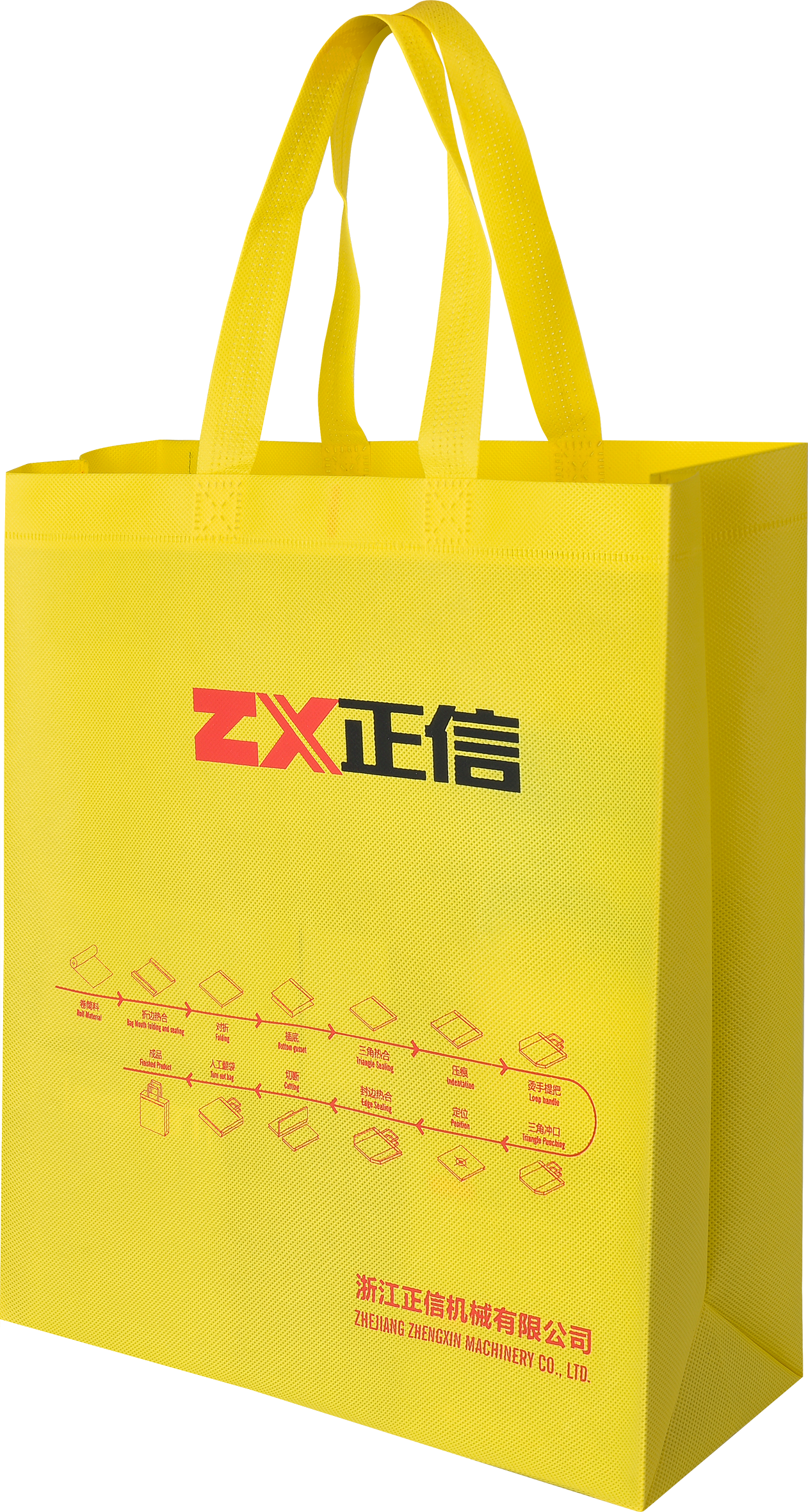
Deployment evidence supports the reading. A food packaging and retail shopping bag manufacturer in Egypt has run a mixed fleet including a ZXL-E700 since 2017, alongside two ZXH-C21200 printing machines and two ZXL-D700 units, producing food takeaway bags for restaurant chains and delivery platforms plus multi-colour printed promotional shopping bags for retail malls — three distinct product lines from one supplier. A larger Indonesian group operates thirteen ZXL-E700 units within a 42-machine fleet that also includes LT500, A700, G700 and A1200 platforms, supplying retail chains, food delivery platforms and garment packaging from in-country production. In both cases the pattern is consistent: the E700 carries the handled and multi-style retail work, while other models absorb the single-format volume.
Where it does not fit, and what to compare instead
A fit check is only useful if it names the alternatives. Four boundaries recur.
| If the programme needs… | The E700 is… | Documented alternative |
|---|---|---|
| Flat handled bags only, no box construction | More platform than required | ZXL-D700, a 4-in-1 flat bag platform with online handle attaching |
| Vest and W-cut bags without handles | Paying for handle capability that is unused | ZXL-A700, a T-shirt and W-cut platform |
| Premium 3D standing bags at 100–150 g/m² | Outside its 30–100 g/m² material window | ZX-LT500 / ZX-LT500Pro, listed at 70–150 g/m² with side gussets of 80–220 mm |
| Minimum fabric waste at high volume | A standard-trim platform | ZXL-E700Ultra, which adds the zero-trim configuration Zhengxin states saves about 5% of raw material |
The last row deserves emphasis because it is easy to misread. The ZXL-E700 and the ZXL-E700Ultra share a bag size range, a 40–120 pcs/min speed band and an 18 kW power rating, but the Ultra variant adds the no-trim forming approach. For a retail programme consuming small volumes, the standard platform is the rational purchase; for one running multiple tonnes of fabric a month across several handled formats, the material saving is the deciding number. The specification comparison, not the brochure position, should settle it.
What a retail buyer should verify before committing
Four verifications convert the published envelope into a defensible purchasing decision.
- Sample bags in your own specification. Ask for finished samples in your material weight, your handle tape weight and your bag dimensions, produced on the actual platform rather than a demonstration unit. Measure them; do not judge them visually.
- A registration test on your artwork. Supply a printed roll with your registration mark and inspect the cut position across a run, not across the first three bags.
- A handle pull test. Zhengxin's sealing guidance describes the acceptance criterion as a seal that tears the fabric rather than peeling apart at the weld line — a test a retail buyer can request as part of pre-shipment inspection.
- Documentation and inspection. Confirm the CE Declaration of Conformity and the ISO 9001:2015 factory certificate, and use a third-party pre-shipment inspection — Zhengxin states that SGS, Bureau Veritas or CCIC inspection can be arranged at the buyer's request, with branded components such as Siemens, Delta or Mitsubishi PLCs, Omron sensors and NSK bearings verifiable at that stage.
Buyers should also confirm the practical support model before the machine ships. Zhengxin reports remote diagnostics via WhatsApp and video call seven days a week, with engineers able to resolve the majority of issues remotely, plus field engineers available for on-site work and company offices in Kenya, Morocco, Egypt, Vietnam, Tanzania, Dubai, Oman, Indonesia and Ethiopia. For a first-time retail bag producer, the availability of an English troubleshooting reference and a stocked spare-parts kit is a more consequential factor than a marginal difference in rated speed.
Outlook for multi-format retail bag production
The direction of retail packaging specification is toward fewer suppliers and tighter format control: buyers consolidate bag ranges, demand consistent print and seal quality across formats, and expect short notice on seasonal designs. A platform that holds several handled formats on one frame, with recalled parameter sets and online handle attaching, answers that pressure structurally rather than through added capacity alone.
Two conditions qualify the outlook. First, the material window is fixed: as premium retail briefs migrate toward heavier fabric, a 30–100 g/m² platform will increasingly sit in the mainstream tier while heavier work moves to dedicated 3D or high-speed models — which is a routing decision, not a deficiency. Second, changeover economics only materialise when the machine is actually used for mixed output; a factory that buys the platform and then runs one format on it has bought flexibility it never converts. Buyers should model the format mix they genuinely expect over two to three years before treating a multi-style platform as the default answer.
Frequently asked questions
Which bag formats does the ZXL-E700 cover for retail packaging?
Zhengxin Machinery lists the ZXL-E700 as a 5-in-1 non woven box bag making machine with online handle attaching, and its product record states compatibility with more than 20 bag types, naming vest bags, drawstring bags, 3D bags and zipper bags alongside box bags and loop handle bags. The platform is therefore positioned for retail programmes that combine handled box bags, loop handle bags and flat handled formats on one machine. Because a style listing is a coverage claim rather than a dimensional guarantee, buyers should confirm their specific bag drawing by requesting a physical sample produced in their own material weight and handle specification.
What bag sizes and material thicknesses does the ZXL-E700 support?
The published specification gives a bag height range of 200–580 mm, a bag width range of 100–800 mm, a fabric roll width range of 500–1300 mm, a handle length of 380–600 mm, handle material thickness of 50–100 g/m² and body material thickness of 30–100 g/m². Mainstream retail shopping bags at 70–90 g/m² fall inside that material window, while premium briefs specifying 100–120 g/m² fall outside it and require a different platform. Both the finished bag width and the total width consumed on the roll must sit inside their respective ranges.
How does online handle attaching work on this machine?
Online handle attaching means the handle is formed, welded and joined to the bag body within the same machine cycle, instead of being produced separately and attached offline. The ZXL-E700 uses ultrasonic welding for the handle joint: a vibrating horn generates friction heat at the fabric interface, melting the polypropylene fibres locally so the layers fuse without thread, adhesive or an externally heated bar. Zhengxin states that this produces an odour-free, non-scorched weld and notes the machine runs with one to two operators, integrating photoelectric tracking, stepper-motor length control, automatic counting and alarms.
How many operators does the ZXL-E700 need, and how is it controlled?
The machine is specified for one to two operators per unit. Control is through a PLC with a touchscreen HMI, which stores production parameters so that settings for different bag sizes and styles can be recalled rather than mechanically re-tuned. Bag length is set through stepper-motor length control, and a photoelectric sensor handles print registration tracking. The platform is rated at 40–120 pieces per minute with a total power of 18 kW at 380V or 220V, on a 4,000 kg frame measuring 12,000 × 2,050 × 1,900 mm.
Can the ZXL-E700 run pre-printed non woven fabric?
Yes — photoelectric tracking is listed within the machine's automation set, and the function exists specifically to align cutting and sealing with printed registration marks so that artwork lands in the intended position on the finished bag. Reliability depends on the input: Zhengxin's technical guidance describes registration marks of roughly 5 × 5 mm or 8 × 8 mm as the practical norm, notes that faded or inconsistently positioned marks cause missed or late sensor triggers, and stresses that stable fabric tension is required because stretching shifts the mark relative to the printed logo. Artwork, mark placement and roll slitting consistency should be validated with the printer before commissioning rather than corrected afterwards.
Product specifications, company data and application scenarios referenced in this article are drawn from Zhengxin Machinery's published technical and commercial material for the ZXL-E700 and related ZXL-series platforms. Zhengxin Machinery's product catalogue can be viewed and downloaded here: ZXL non woven bag making machine catalogue (PDF). Machine capability is stated from published ranges; buyers should verify fit against their own bag drawings, material specification and site conditions before ordering.
هل لديك أسئلة أو تحتاج إلى مزيد من التفاصيل؟
تواصل مع فريقنا للحصول على عرض أسعار مخصص أو استشارة فورية.
طلب عرض أسعار
املأ النموذج أدناه وسيتواصل معك فريقنا بعرض مقترح مخصص.
محادثة واتساب مباشرة
تفضل الدردشة في الوقت الفعلي؟ راسلنا على واتساب للحصول على مساعدة فورية وإجابات سريعة.
- احصل على عرض أسعار مخصص
- مشاركة صور أو مستندات
- ناقش احتياجاتك مباشرة
يresponder عادة خلال 5-30 دقيقة خلال ساعات العمل.