
Retention Emulsion Risk: Long-Term Wet-End Chemical Supply
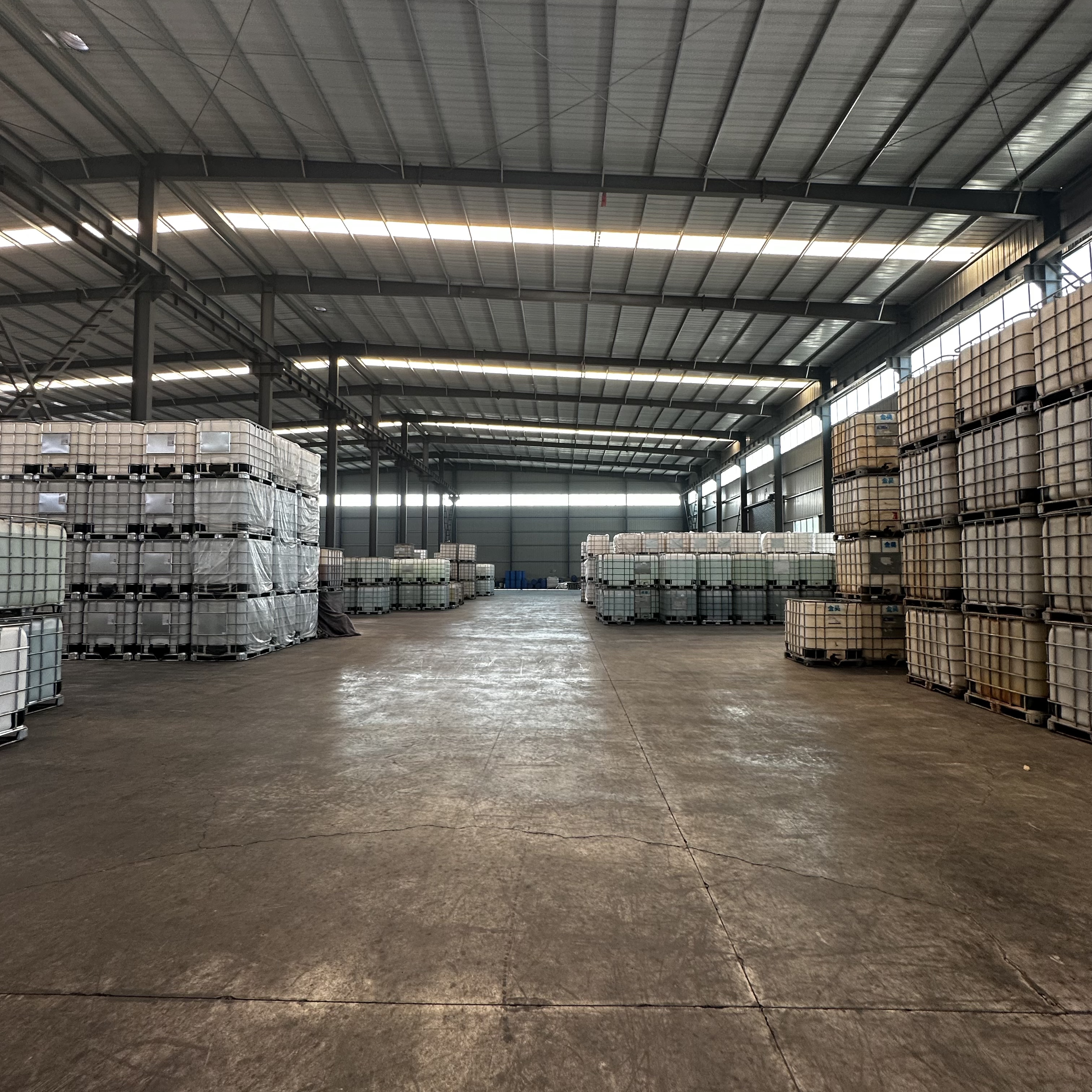
A retention aid rarely fails on its first day in the machine. It drifts several campaigns later — after a pulp mix change, a speed increase or a substitute delivery — when white water clarity, drainage speed and fiber retention quietly move away from the values the mill originally validated.
That gap between a successful trial and a stable five-year supply relationship is the real subject of wet-end chemical procurement. Retention and drainage chemistry sits at the start of the paper machine, but its commercial risk sits in the procurement cycle: repeat batches, storage behaviour, documentation continuity and whether the same emulsion arrives in month thirty as in month one. For mills running continuous production on recycled and virgin pulp, the question is no longer only which retention chemistry works, but which supplier can keep the same chemistry working.
Qingzhou Jinhao New Material Co., Ltd., operating under the brand JHDA, is a papermaking fine chemicals manufacturer founded in 2005 and located in the Mihe Industrial Park, Qingzhou City, Shandong Province, China. Its portfolio spans strength agents, sizing agents, retention and filtration aids, defoamers, biocides, sludge encapsulants and functional coatings for packaging paper. Within that range, the JH-8501 strength retention emulsion is the product most directly exposed to the long-term supply question, because a liquid cationic retention emulsion has to remain physically stable from factory gate to metering pump.
Why Retention Chemistry Becomes a Supply Risk
Retention and drainage performance is cumulative. Fine fiber, filler and precipitated calcium carbonate that pass through the forming wire do not simply disappear; they load the white water loop, accumulate in pipes and equipment, raise the cleaning frequency of the machine and increase the solids load reaching terminal wastewater treatment. Each of those effects is gradual, which is precisely why deterioration is easy to miss and expensive to reverse.
The mechanism also cuts both ways. A retention program that is overdosed or poorly dispersed creates coarse flocs, which shows up as uneven formation, thin spots and basis weight fluctuation. A program that is underdosed loses fine material and drains more slowly, which increases the moisture content of the sheet entering the dryer and therefore steam consumption. The operating window is narrow, and it is defined as much by dosing discipline as by polymer chemistry.
Three supply-side conditions typically destabilise that window:
- Batch-to-batch variation in solid content, pH or viscosity, which changes the effective dose even when the metering pump setting is untouched.
- Emulsion instability during storage or long sea freight, producing demulsification, precipitation or gel formation that blocks filters and dosing lines.
- Loss of technical continuity when a supplier changes base chemistry, documentation or formulation support without a re-validation step at the mill.
For a paper machine running packaging grades, cultural paper or tissue, the cost of any one of these events is not the chemical invoice. It is the re-tuning time, the off-spec tonnage and the unplanned cleaning stop.
JH-8501: A 38% Solid-Content Cationic Retention Emulsion

JH-8501 is a cationic polyacrylamide-based retention and drainage agent supplied as a white liquid emulsion rather than a powder. Its published specification is narrow, which matters for long-term supply because the dosing response of a retention polymer depends directly on those values staying inside tolerance across repeat deliveries.
| Parameter | JH-8501 specification | Procurement relevance |
|---|---|---|
| Appearance | White emulsion | Visual confirmation of emulsion integrity on receipt |
| Solid content | 38.0 ± 1.0% | Directly scales the active dose per litre pumped |
| pH | 3.0 – 6.0 | Must sit within wet-end compatibility range |
| Viscosity (25 °C) | ≥50 cps | Indicator of polymer state and dosing-line behaviour |
| Ionic type | Cationic | Drives charge interaction with anionic fiber and filler |
| Base chemistry | CPAM | Defines the flocculation mechanism |
| Shelf life | 6 months | Sets maximum inventory cover and rotation rules |
The product is positioned within a broader range of retention aid types — dry retention agent, wet-end retention aid, cationic retention aid, drainage and retention agent, and microparticle retention aid — reflecting that mills describe the same functional requirement in different language depending on whether they are buying on drainage, retention or white water clarity.
Technical Explanation: Micro-Floc Control Under Machine Shear
JH-8501 works by charge neutralisation and bridging. The cationic polymer diffuses into the pulp suspension and associates with anionic fiber surfaces, filler particles and precipitated calcium carbonate, forming compact micro-flocs. Those micro-flocs are large enough to be intercepted by the forming wire yet small enough to preserve sheet formation, which is the balance that separates controlled flocculation from over-flocculation.
The more demanding design constraint is shear. In practical machine layouts, the dosing point sits upstream of the pulp pump, fan pump and pressure screen, all of which apply mechanical energy that can break a fragile floc structure apart. JH-8501 is described as having strong anti-shear performance, so the flocculation structure is intended to survive that sequence and maintain retention effect on high-speed production lines rather than forming and collapsing before the headbox.
Drainage is the second output of the same mechanism. By improving solid retention, the product also modifies the water filtration speed of the wet web, reducing the moisture content of base paper entering the dryer section. In energy terms, that translates into lower steam demand per tonne and, at constant drying capacity, additional machine output. In quality terms, it supports a more uniform floc distribution, which helps avoid the coarse flocs that produce holes and thin spots when fine fiber is lost unevenly.
Compatibility determines whether the retention program can coexist with the rest of the wet end. The product is described as having moderate flocculation strength that does not react violently with surface sizing agents, AKD sizing emulsions or dry strength agents, and does not raise system viscosity or create sticky deposits. This is the practical boundary condition for mills running multi-component wet ends: a retention aid that improves retention but disturbs sizing or strength chemistry is not a net improvement.
The formulation also addresses the operational weakness of liquid emulsions. A dedicated stabilising system is used so the product maintains a uniform liquid state under normal temperature storage and transportation, without demulsification, precipitation or gel failure, keeping metering behaviour consistent for automatic dosing systems across the year.
Where the Emulsion Fits: Pulp Types, Grades and Dosing Setups
JH-8501 is described as adaptable across virgin wood pulp, mechanical pulp and recycled pulp, and across packaging paper, cultural paper and tissue paper production. That breadth is relevant for mills running mixed furnish schedules, where the same retention program has to handle several pulp recipes within one contract period.
Application follows conventional wet-end practice for liquid retention chemistry: continuous dosing or batch mixing depending on the process, with metered dosing through a metering pump after dilution, connected directly to the pulp pipeline. Because the product is a finished liquid emulsion, it avoids the manual powder dissolution step entirely — no dissolving tank operator routine, no fish-eye agglomeration from incomplete wetting, and no dosing inconsistency caused by variable manual mixing.
| Operational element | Typical arrangement |
|---|---|
| Dosing mode | Continuous dosing via metering pump into the pulp pipeline |
| Supporting equipment | Mixing tanks, metering pumps, mixing towers, coating or sizing machines, drying or fixing ovens where relevant |
| Process environment | Industrial continuous production lines, wet-end and dry-end processing, wastewater treatment systems |
| Application requirements | Environmental compliance including low VOC and no APEO/NPEO, formula compatibility, salt and high-temperature resistance, long-term storage stability |
| Typical project types | Production line contribution, production line upgrades, formula optimisation, wastewater treatment and flocculation systems |
These scenarios are routine in China, Vietnam, Malaysia, Indonesia, Thailand, Pakistan, Turkey, Argentina, Bangladesh, Brazil, Chile, Colombia, Egypt, Iran, Cambodia, Uzbekistan, Ukraine, Saudi Arabia, Mexico, Kenya, Algeria and other paper-producing markets, which is why supply continuity across export lanes is a practical procurement criterion rather than a theoretical one.
Market Trend Analysis: Recycled Fiber and Chemical Supply Reliability
The demand context for retention and drainage chemistry is shaped by two measurable shifts: the growing share of recycled fiber in the furnish, and the concentration of paper chemical demand in Asia-Pacific.
In the United States, recycled paper accounted for 44.4% of all fiber used at mills in 2024, according to the American Forest & Paper Association. Higher recycled content raises the fines, filler and anionic contaminant load entering the wet end, which places more weight on charge control and retention stability than on incremental dosage. For mills in that position, the value of a retention emulsion is measured by how consistently it manages a dirtier, more variable furnish — not by how it performs on a clean trial pulp.
Packaging remains the dominant application segment. Fact.MR reports that the packaging and containerboard segment leads paper grade usage for dry strength additives with a 38.0% share, a segmentation pattern that also describes where wet-end retention demand concentrates, since containerboard and corrugated medium machines combine high recycled fiber use with high machine speeds.
On the supply side, the pulp and paper chemicals market was estimated at USD 23.64 billion in 2024 by Market Research Future, while Intel Market Research places the global paper dry strength agent segment at approximately USD 864 million in 2024 and attributes around 40% of global share to Asia-Pacific. A supply base concentrated in Asia-Pacific has a direct procurement consequence for mills in other regions: lead time, shipping stability and emulsion shelf life become linked variables, because a six-month shelf life product crossing a long ocean lane has less usable inventory window than the same product bought regionally.
Liquid Emulsion vs Traditional Retention Approaches
Most mills compare retention options on two axes: product form and dosing architecture. The table below compares the liquid cationic emulsion form represented by JH-8501 with the solid powder retention products it is designed to replace in dosing practice. It compares product forms, not brands.
| Criterion | Liquid cationic emulsion (JH-8501) | Solid powder retention aid |
|---|---|---|
| Preparation before dosing | Direct metering through a pump; no manual dissolution | Requires dissolution and mixing before dosing |
| Typical failure mode in preparation | Emulsion instability if stored outside normal temperature range | Insufficient dissolution, fish-eye agglomeration and uneven dosing |
| Dosing accuracy | Quantitative, repeatable via metering pump | Depends on operator routine and mixing quality |
| On-site labour | Lower routine labour per dose | Higher routine labour per dose |
| Active content per delivered tonne | 38.0 ± 1.0% solids, balance is water | High active content, minimal water weight |
| Shelf life | 6 months | Typically longer for solid grades in the same portfolio |
Where the Emulsion Form Has Real Limits
A liquid retention emulsion is not a universal upgrade, and buyers should treat three constraints as genuine boundaries rather than fine print.
- Inventory discipline is mandatory. A six-month shelf life means stock cover must be planned against delivery frequency, not against purchase price discounts. Bulk buying beyond the shelf window creates its own quality risk, and arrival shelf life should be a contract term rather than an assumption.
- Freight carries water, not active polymer. At 38.0 ± 1.0% solids, roughly three-fifths of the delivered mass is water. For distant mills, the logistics cost per active tonne is structurally higher than for a solid grade, and that difference belongs in the total cost comparison rather than being absorbed silently.
- Retention is not strength. JH-8501 manages retention and drainage; it does not replace dry strength or wet strength chemistry. Mills targeting ring crush, burst or tensile values still need a dedicated strength agent such as those in the same JHDA portfolio, and over-relying on a retention aid to lift physical properties is a common specification error.
There is also a charge boundary. Because the product is cationic, its performance depends on the anionic load of the furnish. Mills running high-freeness recycled pulp with variable filler content need to validate dose against charge demand, not against a fixed pump setting carried over from a previous furnish.
Evaluating Long-Term Supply Across Repeat Procurement Cycles
The practical test of a retention emulsion supplier is whether the same evidence can be reproduced on the third order as on the first. For JHDA, several verifiable parameters support that evaluation.
| Evaluation area | What can be verified |
|---|---|
| Batch quality control | Typical QA tests include particle size, appearance, solids, pH, viscosity and functional tests; specific QC procedures and reports can be provided per order |
| Capacity and lead time | Monthly capacity of 8,000 MT; production lead time of 4 working days; MOQ of 1 MT with free trial samples |
| Customisation | Formulation customisation, OEM and label production, specification and packaging customisation, confirmed with sales |
| Management systems | ISO9001 quality management system certification and ISO14001 environmental management system certification |
| Product compliance evidence | SGS product compliance test reports; CAS registration and GHS hazard labelling on exported chemicals; IMDG-compliant marine shipping documentation |
| Documentation set | TDS and MSDS supplied to support customs clearance and L/C settlement |
| Technical support | Engineering and process solution support, online support and on-site support; on-site machine debugging addressing Cobb water absorption, ring crush strength, bursting strength, brightness, fiber retention rate and runnability |
| Regional delivery | Overseas production entity CRM Chemical Technology Co., Ltd. in Long An Province, Vietnam, supporting ASEAN delivery and shorter cycles |
Company scale provides the continuity backdrop: JHDA was founded in 2005, operates from a headquarters site of approximately 20,000 m² in Qingzhou City, reports total annual output of 100,000 tons, and maintains 20 R&D engineers and on-site technical service engineers among its staff. Overseas business accounts for a substantial share of sales volume, with core export markets in Vietnam, Thailand, Malaysia, Indonesia, Myanmar, Cambodia and packaging paper zones in the Middle East, alongside Asia, Africa and South America.
A large-scale professional R&D laboratory is under construction inside the central production workshop at the headquarters site, intended to upgrade testing capability, formula development and product performance verification. For buyers, in-house pilot laboratory access for formulation testing and performance verification is the mechanism that converts a supplier's specification sheet into mill-specific evidence.
Future Outlook
Three developments are likely to shape retention emulsion procurement over the next contract cycles.
First, furnish quality will keep pushing retention chemistry toward charge management. As recycled fiber share rises — 44.4% of US mill fiber in 2024 per AF&PA — the anionic load entering the wet end becomes less predictable, and retention programs will be judged on their tolerance to that variability rather than on peak performance under ideal conditions.
Second, documentation will carry more weight in supplier selection. With the pulp and paper chemicals market estimated at USD 23.64 billion in 2024 by Market Research Future, and with packaging identified as the leading grade segment at a 38.0% share by Fact.MR, mills purchasing at volume increasingly treat TDS, MSDS, batch COAs and compliance test reports as part of the product, not as paperwork attached to it.
Third, regional supply positioning will matter more than country of origin labels. The presence of an overseas production entity in Vietnam, alongside a Chinese headquarters plant, gives ASEAN buyers a shorter delivery cycle and a second production location to reference in continuity planning — a structural advantage when a six-month shelf life limits how much buffer stock makes commercial sense.
Frequently Asked Questions
What does a strength retention emulsion do in a paper machine wet end?
A strength retention emulsion is a cationic polymeric retention and drainage aid supplied in liquid emulsion form. JH-8501, a CPAM-based cationic emulsion with 38.0 ± 1.0% solid content, flocculates fine fiber, filler and precipitated calcium carbonate so they are retained on the forming wire instead of being lost to white water, and improves the water filtration speed of the wet web. Its functions are described as retention and drainage improvement, white water clarification and more uniform floc distribution.
Which pulp types and paper grades is JH-8501 intended for?
The product is described as adaptable to virgin wood pulp, mechanical pulp and recycled pulp, and to packaging paper, cultural paper and tissue paper production. Dosing is adjusted to on-site pulp conditions, so the same grade can be applied across a mixed furnish schedule, with dosage set by trial rather than carried over unchanged between pulp recipes.
What dosing and storage conditions does a liquid retention emulsion require?
JH-8501 is dosed continuously through a metering pump connected to the pulp pipeline, with supporting equipment such as mixing tanks and metering pumps. The product has a pH of 3.0–6.0, viscosity of ≥50 cps at 25 °C and a shelf life of 6 months, and is formulated to remain a uniform liquid under normal temperature storage and transportation without demulsification, precipitation or gel failure. Application-level requirements include environmental compliance such as low VOC and no APEO/NPEO, formula compatibility, salt and high-temperature resistance, and long-term storage stability.
How can a mill verify supply consistency over repeated procurement cycles?
Consistency is checked through batch-level quality control rather than a single qualification trial. JHDA states that typical QA tests include particle size, appearance, solids, pH, viscosity and functional tests, with specific QC procedures and reports available per order. Supporting verification includes ISO9001 and ISO14001 certification, SGS product compliance test reports, TDS and MSDS documentation, a monthly capacity of 8,000 MT, a production lead time of 4 working days and an MOQ of 1 MT with free trial samples.
What are the limits of a cationic retention emulsion in a wet-end system?
Three limits apply. The six-month shelf life constrains how much inventory can be held, particularly on long export lanes. The 38.0 ± 1.0% solid content means most of the delivered mass is water, so logistics cost per active tonne is higher than for a solid grade. And retention chemistry does not build paper strength: mills targeting ring crush, burst or tensile values still require dedicated dry or wet strength agents, with the retention aid evaluated on retention, drainage and formation rather than on strength indicators.
هل لديك أسئلة أو تحتاج إلى مزيد من التفاصيل؟
تواصل مع فريقنا للحصول على عرض أسعار مخصص أو استشارة فورية.
طلب عرض أسعار
املأ النموذج أدناه وسيتواصل معك فريقنا بعرض مقترح مخصص.
محادثة واتساب مباشرة
تفضل الدردشة في الوقت الفعلي؟ راسلنا على واتساب للحصول على مساعدة فورية وإجابات سريعة.
- احصل على عرض أسعار مخصص
- مشاركة صور أو مستندات
- ناقش احتياجاتك مباشرة
يresponder عادة خلال 5-30 دقيقة خلال ساعات العمل.