
RoHS and EMC Compliance in Scent Diffusers: Decoding ATL Certificates
RoHS and EMC Compliance in Scent Diffusers: Decoding ATL Certificates
Behind SCENTSEA product 4717, the SC19 advertising scent machine, sit two document numbers: ATL20240416327 for RoHS and ATL20240416325 for EMC. Knowing what each document proves — and which compliance questions it leaves open — is what separates a smooth EU or US project handover from a shipment that stalls at the importer's desk.

A scent diffuser is an electrical product before it is a fragrance product
SCENTSEA is the commercial scent diffuser brand of Shenzhen Scentsea Technology Co., Ltd., a manufacturer founded in 2021 and headquartered in Shenzhen, China, that develops and produces cold-air nebulizing scent diffusers, waterless aroma machines, HVAC scent systems and fragrance oils for home, commercial and HVAC applications. The company's range covers wall plug-in, portable, wall-mounted, floor-standing, app-controlled, HVAC and large-space commercial machines, and the company states that all diffuser models are certified with CE, RoHS and FCC.
A statement like that is useful as a headline, but it is not what a project file needs. Any scent machine that plugs into a wall socket, carries a display, or runs a pump and a switching power supply is an electrical and electronic product. Once it enters the European Union it falls under restricted-substance and electromagnetic compatibility rules; once it enters the United States it faces a different but equally document-driven set of expectations. Procurement teams that buy on coverage area and oil capacity alone often discover this late — usually when a distributor, an installer or a customs broker asks for the paperwork.
The two documents that most often decide whether a commercial scenting specification proceeds are the RoHS document and the EMC document. For SCENTSEA product 4717, the SC19 advertising scent machine, those documents exist as two certificates issued by Shenzhen ATL: certificate number ATL20240416327 under RoHS Directive (EU) 2015/863, and certificate number ATL20240416325 under EMC standard EN IEC 55014-1:2021.
Why these documents become a project gate rather than a product footnote
The global fragrance diffuser market was valued at USD 29.61 billion in 2024 and is projected to reach USD 38.10 billion by 2032, according to Data Bridge Market Research, with North America alone accounting for approximately 43.87% of global revenue in 2024. Within that broad category, nebulizing waterless or cold-air diffusers represent roughly 22.6% of the market and are favoured for professional-grade scent potency in commercial environments. Growth of that scale means more venues, more installations and more intermediaries in the supply chain — and every additional intermediary raises the number of parties who will ask to see compliance evidence.
In practice, compliance questions surface at three specific moments in a commercial scenting project:
- Tender or RFQ stage. A hotel group, mall operator or bank specifying scenting equipment for a European or North American site increasingly includes a documentation clause. The supplier that cannot name the certificate and the model it covers is often removed before pricing is compared.
- Customs and import clearance. Fragrance diffusers and prepared room deodorizers are commonly classified under HS code 33074900, and clearance depends on a consistent description of what the goods are and what documentation accompanies them.
- Facility audit and after-sales. Multi-year deployments — a US-based scent marketing company has run 30 SCENTSEA units across shopping mall scenting projects on a five-year horizon — can be revisited by the venue's own compliance or facilities team long after installation.
A frequent point of confusion is the boundary between hardware compliance and fragrance compliance. They are two separate files. The RoHS and EMC certificates address the machine. The fragrance oil inside it follows a different framework: IFRA 51 (2023) introduced stricter global safety standards for fragrance ingredients used in diffusers, affecting allowable usage levels for inhalation safety. A diffuser certificate should never be presented as evidence about the oil, and an oil declaration should never be presented as evidence about the machine.
What the two ATL certificates actually cover
Both certificates were issued by Shenzhen ATL and are applicable to product number 4717, the SC19 advertising scent machine. Each addresses a different risk, and neither substitutes for the other.
| Document | Standard / Directive | Certificate number | Issued by | Applies to |
|---|---|---|---|---|
| Restricted substances | RoHS Directive (EU) 2015/863 | ATL20240416327 | Shenzhen ATL | Product 4717 / SC19 |
| Electromagnetic compatibility (emission) | EN IEC 55014-1:2021 | ATL20240416325 | Shenzhen ATL | Product 4717 / SC19 |
ATL20240416327 — RoHS Directive (EU) 2015/863
RoHS restricts the use of specified hazardous substances in electrical and electronic equipment. The restricted groups include lead, mercury, cadmium, hexavalent chromium, polybrominated biphenyls, polybrominated diphenyl ethers and four phthalate plasticisers, each subject to maximum concentration limits defined in the directive. Certificate ATL20240416327 is therefore a materials-composition statement about the product as tested: it describes what the machine is made of, not how it performs.
This matters because restricted substances hide in ordinary parts. Solder alloys on a printed circuit board, PVC cable insulation, plasticisers in gaskets, plating on metal hardware and coatings on housings are all routine RoHS risk points — and all of them appear in a scent diffuser.
ATL20240416325 — EMC standard EN IEC 55014-1:2021
EN IEC 55014-1 is the emission part of the electromagnetic compatibility standard for household appliances, electric tools and similar apparatus. A certificate against this standard addresses one question: does the equipment's electromagnetic emission stay within limits so that it does not disturb other equipment around it? For a scent machine installed in a hotel lobby, a bank branch or a retail unit, that question is not theoretical. The device shares an electrical environment with lighting drivers, point-of-sale systems, elevators, access control and HVAC controls.
Certificate ATL20240416325 covers emission performance for the SC19 configuration as tested. It is one component of a compliance file, not the whole file.
The product these certificates apply to
SC19, listed in the SCENTSEA catalogue as product number 4717, is an advertising scent machine that combines fragrance diffusion with an 18.5-inch digital display at 1920×1080 resolution and EMMC 8G internal storage. It has a 500ml oil capacity, covers approximately 150–250m² / 500–800m³, runs on 110–240V AC at 30W with oil consumption of 6ml±5%/h and noise of ≤30dB, and measures L280×W63.5×H495mm in a black-and-silver aluminium and steel housing. Its applicable industries are listed as shopping mall, hotel and bank. The combination of a mains input stage, a display driver and a high-speed digital signal path is precisely why both a restricted-substance document and an emission document are relevant to this model.
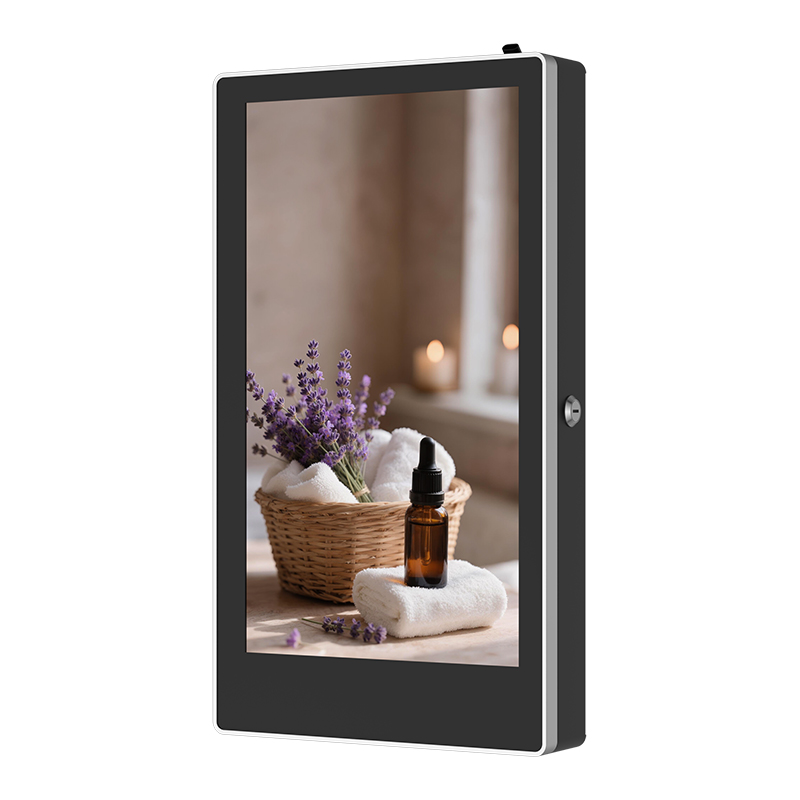
Where compliance risk physically sits inside a scent diffuser
Buyers rarely get to see why a certificate exists. The answer is usually in the bill of materials and the production process, and it explains why certification should be treated as a manufacturing topic rather than a paperwork topic.
On the RoHS side, the exposure is in materials: solder paste and wave-solder alloys on the control board, insulation and jacketing on the wiring harness, plasticisers in seals and tubing, decorative plating on metal parts, and powder coatings on housings. A scent diffuser also contains fragrance oil in contact with plastic and metal components, which places additional demands on material selection and on how parts are stored and handled on the line.
On the EMC side, the exposure is in electrical behaviour. A cold-air nebulizing machine uses a pump or compressor, a switching power supply, a motor driver and control electronics. The SC19 adds a large display module, its backlight driver and a digital signal path behind a 1920×1080 panel. Each of these can be an emission source if layout, filtering, grounding or shielding are handled poorly. Emission limits are met by design decisions made at the PCB and enclosure level — not by final inspection.
Shenzhen Scentsea Technology Co., Ltd. operates a 3,000m² production facility with three production lines, in-house PCB SMT assembly, sheet metal processing and powder coating, injection moulding, and an R&D team of four engineers, producing 100,000 units annually with roughly 70% of output exported to EU and USA markets. Vertical integration of these processes is directly relevant to compliance continuity: when board assembly, coating and moulding happen under one quality system, the change control that protects a certificate is easier to enforce than when they are outsourced.
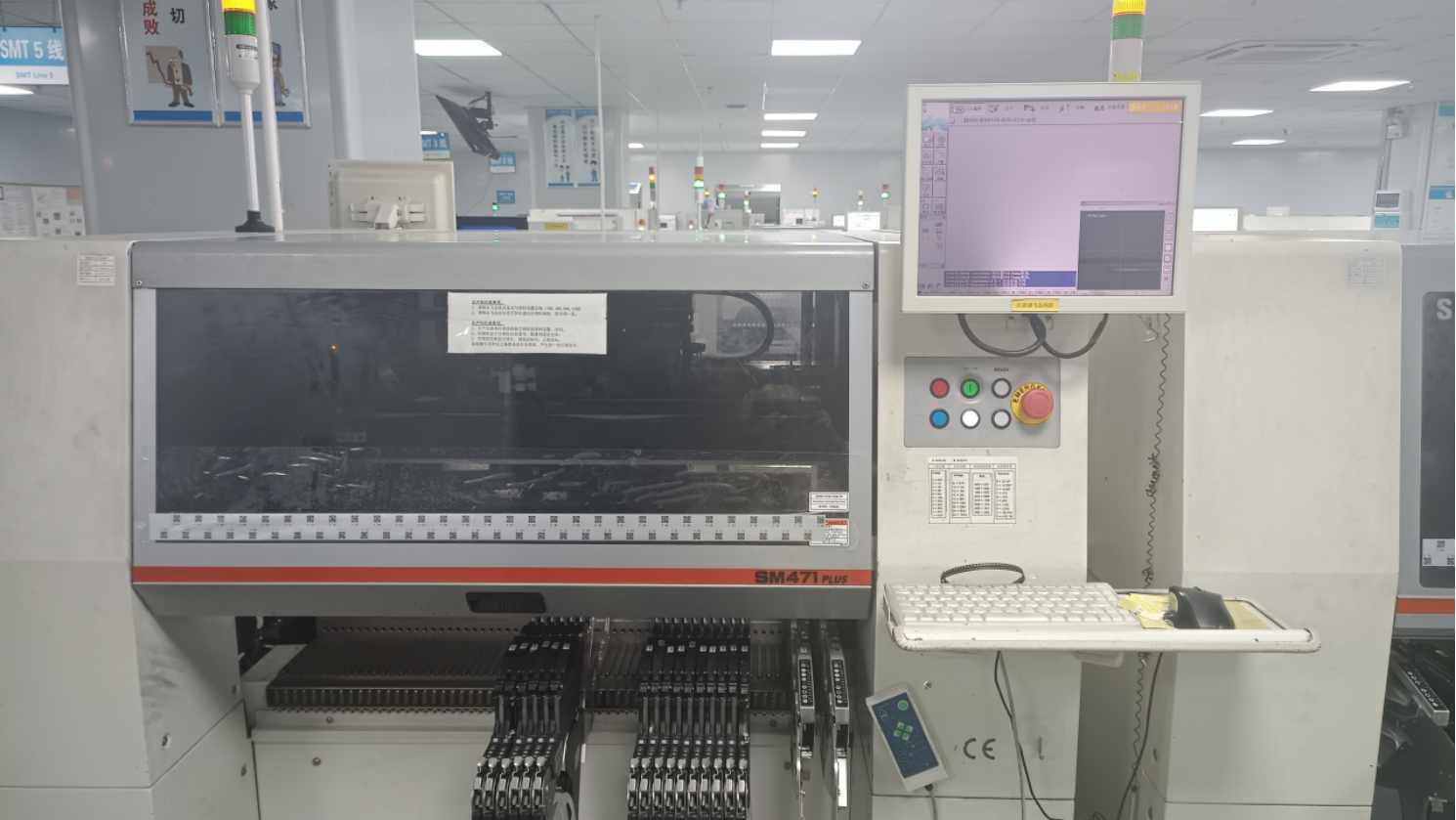
It is worth separating two different activities that are often described with the same words. Factory quality control — 100% functional testing, atomization testing, leakage inspection, noise testing, control and APP testing, a 48-hour aging test and final appearance inspection before shipment — verifies that each unit works. Compliance testing verifies that the design and materials meet a standard. A unit can pass every functional check and still sit outside a standard if the design or a component changes. The two processes support each other but do not replace each other.
How to verify an ATL certificate before you commit to a project
Verification is a short, repeatable procedure. The guiding principle is simple: a certificate number is a pointer to a document, and the document is only meaningful when it matches the exact product, configuration and legal entity being purchased.
- Start with the number, not the claim. Ask for ATL20240416327 and ATL20240416325 by number, and ask for the underlying test report, not only the certificate page.
- Match the model exactly. The certificates apply to product 4717 / SC19. SCENTSEA produces a broader range — including P01, P02, P03, A300, T2, T3, H5000 and AC-MAX — and a document covering an 18.5-inch advertising scent machine does not automatically cover those models. Documentation is model-level, not brand-level.
- Match the configuration. Confirm that the electrical rating on the report corresponds to the version being shipped: 110–240V AC input and 30W power for SC19, together with the plug type and any control module included in the order.
- Match the legal entity. The applicant or manufacturer named on the document should be Shenzhen Scentsea Technology Co., Ltd., located in Shenzhen, China.
- Check the standard version. The EMC reference should read EN IEC 55014-1:2021, and the RoHS reference should align with Directive (EU) 2015/863. An older edition of the same standard is a different document with a different scope.
- Reconcile it with the declaration of conformity. The certificate supports the technical file; it does not replace the EU Declaration of Conformity or the responsibilities of the economic operator placing the product on the market.
- Confirm validity with the issuer. Because Shenzhen ATL issued both documents, the number can in principle be checked back to the laboratory. Buyers who handle regulated projects should do this rather than relying on a scanned image alone.
| What to request | What it confirms | What it does not confirm |
|---|---|---|
| Certificate ATL20240416327 — RoHS Directive (EU) 2015/863 | Restricted-substance documentation for product 4717 / SC19 as tested | Electrical safety, EMC behaviour, or coverage of other models in the range |
| Certificate ATL20240416325 — EN IEC 55014-1:2021 | Emission compliance for the tested configuration | Immunity performance, wireless approval, or US market compliance |
| EU Declaration of Conformity and technical file | The legal basis for CE marking held by the responsible economic operator | That the shipped batch matches the tested revision — that requires a production check |
| Model and configuration list on the report | That the mains input, plug type and display configuration fall inside the tested scope | That a later customization remains inside that scope |
| Fragrance oil documentation (separate file) | Composition and safety documentation for the oil, referenced to IFRA 51 (2023) | Anything about the diffuser hardware itself |
Matching documentation to the venues a project actually contains
Scenario fit is where certificate scope becomes a practical planning question. A single venue rarely uses one model. A hotel refurbishment may specify large machines for the lobby, compact battery units for washrooms and elevators, and a ducted system for corridor air handling. Each of those products follows its own documentation path, and the compliance set has to be assembled accordingly.
- Lobbies, retail frontages and bank branches. SC19 / product 4717 fits venues where a visual message and a signature scent run at the same time, with a 500ml reservoir and coverage of roughly 150–250m². Its 110–240V AC mains supply and 30W draw define the electrical profile that the RoHS and EMC documents address.
- Washrooms, elevators and corridors. Battery-operated models such as P01 (500ml, 4×D batteries or Type-C) and P03 (150ml, 3×D batteries or Type-C) avoid fixed wiring entirely. Their electrical profile differs from a mains machine, so their documentation is a separate file even though both are SCENTSEA products.
- Corridors, shops and mid-size interiors. P02 is a plug-in unit at 300ml with DC12V input, coverage of 150–350m² and noise below 30dB — a specification that suits noise-sensitive areas where EMC-relevant electronics sit close to other building systems.
- Large open areas. Floor-standing H5000 (aluminium body, 1000ml, 800–1300m²) and T2/T3 machines cover medium and large commercial footprints, with T2 at 500ml and T3 at 1000ml.
- Ducted and centralized projects. AC-MAX is a split-type HVAC scent diffuser with a 5L reservoir covering approximately 2,500–3,500m², connected to the building's existing air handling system. Ducted projects add a further dimension: the machine becomes part of a larger controlled installation, and its documentation is reviewed alongside the building systems it joins.
The planning rule that follows is straightforward. Certification does not travel with a brand; it travels with a model and a configuration. A project schedule should therefore list, per equipment item, which document covers it, and should flag any item where the document is still pending.
Market signal: documentation is becoming a procurement filter
Two trends are pushing compliance paperwork earlier into the buying process. The first is scale. The HVAC scent diffuser segment alone was valued at USD 1.01 billion in 2024 and is expected to grow at a CAGR of 4.5% through 2034, according to Intel Market Research — growth that concentrates in exactly the venues where facility compliance reviews are routine. The second is feature complexity. Smart control through the AromaOS app, timer scheduling, adjustable intensity and Wi-Fi or Bluetooth remote management on selected models all add electronic content to a product that was once a simple pump and a reservoir. Buyers following the market will also have noticed hardware launches such as the Xiaomi Mijia Smart Aroma Diffuser in October 2024, pointing toward higher-endurance smart features becoming mainstream.
More electronics means a broader certification surface. Wireless-enabled models can fall under the Radio Equipment Directive in the EU, in addition to CE, RoHS and EMC considerations, while US-market placement brings FCC expectations. Companies frequently cited in commercial scenting, including ScentAir, Aroma360 and AromaTech, compete on nebulizing technology for hotels and shopping malls; as the category professionalizes, the differentiator increasingly includes how cleanly a supplier can produce model-level documentation on request.
Limits and boundaries: what these certificates do not do
An accurate compliance article has to state its boundaries, because buyers who over-read a certificate create risk in the opposite direction. Five limitations matter for the two ATL documents discussed here.
- EN IEC 55014-1 covers emission, not immunity. Emission limits address interference the product creates. Immunity — the product's own tolerance of external interference — is handled elsewhere in the same standard family. A certificate against the emission part alone should not be described as a complete EMC statement.
- Neither certificate is an electrical safety certificate. Low-voltage safety requirements are addressed under a different framework and a different document. A RoHS certificate and an emission certificate together do not answer the safety question.
- Neither certificate authorises wireless functions. Models with Wi-Fi or Bluetooth, including several in the SCENTSEA range, may require separate radio equipment approval depending on the destination market. That is a distinct document set.
- The certificates are configuration-bound. This is the most practical boundary for OEM projects. Shenzhen Scentsea Technology Co., Ltd. offers OEM/ODM customization covering logo, product colour, packaging, user manual, plug type, APP interface and PCB functions. A plug type change, a modified PCB function or a different control module can move a product outside the tested configuration, which may require re-testing before the document can be relied upon for the modified version.
- A certificate is not a market authorisation. Placing a product on the EU market carries obligations for the responsible economic operator, including the Declaration of Conformity and the technical file. The certificate is supporting evidence inside that structure, not a substitute for it.
There is also a commercial boundary worth naming. Scentsea provides a one-year free warranty on spare parts, and a documented spare-parts route supports multi-year deployments; but no certification regime guarantees field reliability on its own. Functional testing, atomization testing, leakage inspection, noise testing and the 48-hour aging test are what address unit-to-unit performance. Certification and reliability testing answer different questions, and a mature specification asks both.
Future outlook
The direction of travel is toward documentation that is traceable, model-specific and current. Three shifts are likely to continue through the next buying cycles. First, compliance clauses will keep migrating from the contract stage to the RFQ stage, which favours suppliers who can answer with a number rather than a claim. Second, as smart features expand across the category, the number of applicable document types per product will grow, particularly for wireless-enabled models in Europe and for US-bound shipments. Third, buyers will place more weight on the link between a certificate and the production revision actually shipped — which is a factory change-control question as much as a laboratory question.
For project buyers, the practical implication is to treat the compliance file as a deliverable with an owner and a schedule, exactly like the equipment itself.
Model-level specifications referenced in this article, including SC19 / product 4717 and the wider SCENTSEA range, are published in the SCENTSEA product catalogue, available for download at: SCENTSEA Catalog (PDF).
Frequently asked questions
Which certification documents apply to SCENTSEA product 4717, the SC19 advertising scent machine?
Two documents issued by Shenzhen ATL apply to product 4717 / SC19: certificate ATL20240416327 under RoHS Directive (EU) 2015/863, covering restricted substances, and certificate ATL20240416325 under EMC standard EN IEC 55014-1:2021, covering electromagnetic emission. RoHS addresses the materials the product is made from, while the EMC document addresses the electrical interference the product emits during operation. Both are model-specific to SC19.
Does an EN IEC 55014-1:2021 certificate mean a scent diffuser is fully CE compliant?
No. EN IEC 55014-1:2021 is the emission part of the electromagnetic compatibility standard for household appliances and similar apparatus, so the certificate addresses one aspect of EMC performance. Electrical safety requirements, immunity performance and, for wireless models, radio equipment requirements fall under other documents. CE marking rests on a Declaration of Conformity and technical file held by the responsible economic operator, supported by test evidence for each applicable requirement.
Do all SCENTSEA scent diffuser models share the same RoHS and EMC certification?
No. Compliance documentation is issued per model and per configuration. The certificates discussed here apply to product 4717 / SC19. Other models in the SCENTSEA range — including P01, P02, P03, A300, T2, T3, H5000 and AC-MAX — have their own electrical profiles, with different voltages, power ratings, oil capacities and, in some cases, battery power or Wi-Fi and Bluetooth control. SCENTSEA states that all diffuser models are certified with CE, RoHS and FCC, and buyers should request the specific document that names the exact model being purchased.
What happens to certification if an OEM project changes the plug type, colour or PCB functions?
Certification is tied to the tested configuration. Shenzhen Scentsea Technology Co., Ltd. offers OEM/ODM customization covering logo, product colour, packaging, user manual, plug type, APP interface and PCB functions. Changes that affect the electrical input, the control electronics or a radio module can place the modified version outside the scope of the original test report, in which case additional testing may be required. Cosmetic changes such as colour typically carry different implications from changes to the power or control section, so the scope should be confirmed with the supplier in writing before production.
What should a buyer collect before approving a scent diffuser for a European or US project?
A workable minimum set includes: the RoHS certificate naming the exact model, the EMC certificate naming the exact model and standard version, the underlying test reports, the EU Declaration of Conformity where the product is placed on the EU market, and confirmation of any additional approval required by the specific configuration, such as radio equipment approval for wireless models or US market requirements. Fragrance oil documentation should be collected separately, since oil conformity and machine conformity are governed by different frameworks. Buyers should also confirm that the documents reference the production revision being shipped.
Market data in this article is attributed to Data Bridge Market Research, Intel Market Research and the International Fragrance Association (IFRA). Product, certification, capacity and quality-control information is based on SCENTSEA first-party documentation for product 4717 / SC19 and the wider SCENTSEA scent diffuser range.