
RoboShop in 2026: A City Robotics Procurement Comparison
City robotics procurement is no longer a conversation about autonomous vehicles alone. Urban operators are now evaluating mobile spaces, vehicle-agnostic platforms, and service models that can produce revenue beyond passenger trips. In this context, RoboShop represents a distinct procurement category: an autonomous mobile retail space built for on-demand services, integrated into the same modular chassis platform that PIX Moving uses for RoboBus, RoboTaxi, and RoboVan.
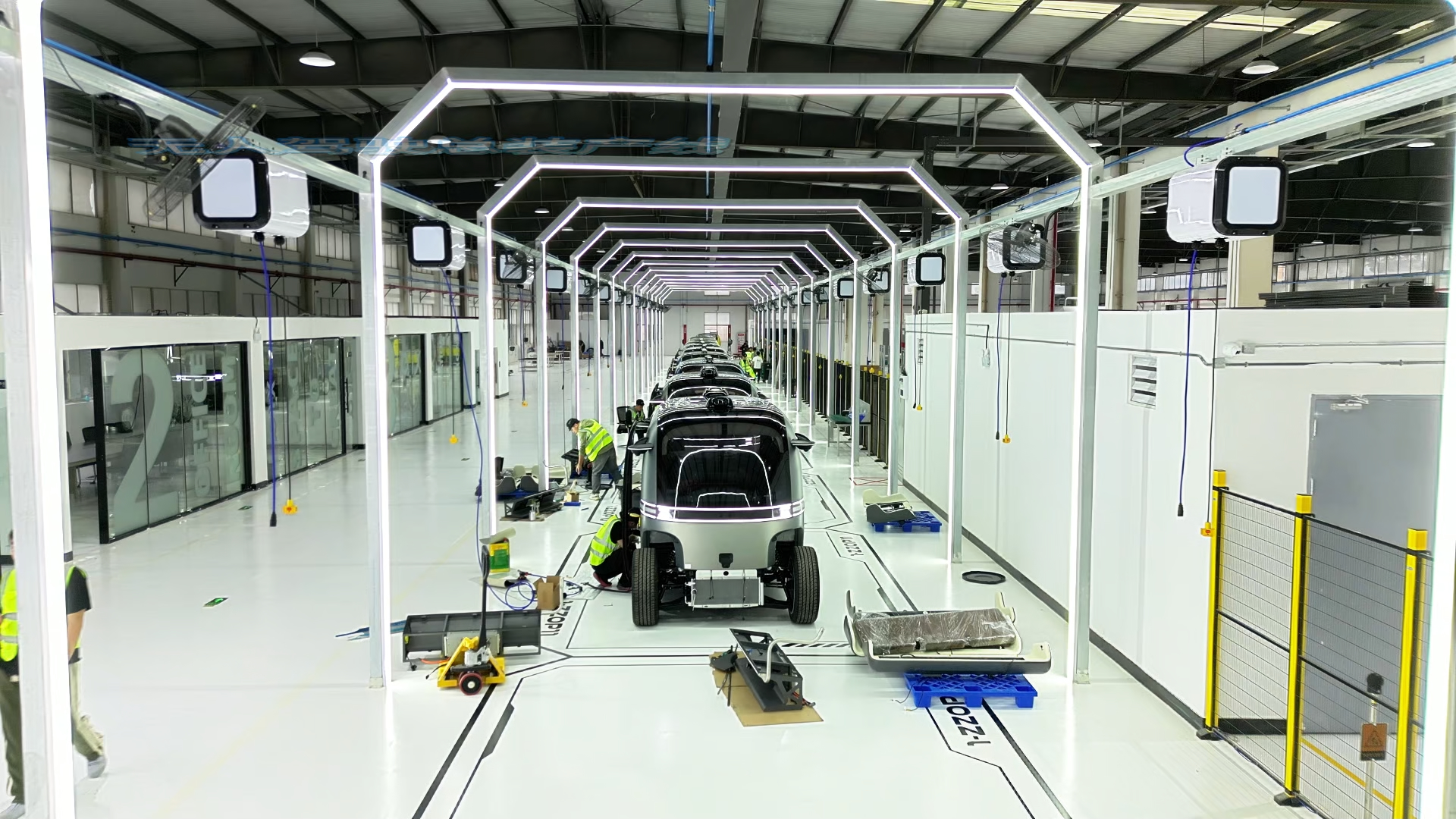
PIX Moving is a city robotics company founded in 2017, with a 116-person R&D team and a 20,000+ square meter production base. The company refers to its product family as “city robots” and defines RoboShop as part of a broader category called “Autonomous Mobile Spaces.” This category is not limited to passenger transport: the same robotic chassis can carry retail, café, office, or shared mobility units, depending on municipal demand.
Why RoboShop Is a Separate Procurement Category
Most city robotics buyers start with a familiar frame: robotaxis for passengers, delivery robots for goods, and shuttles for fixed-route transport. RoboShop sits outside all three. It is not primarily a mobility vehicle, and it is not a last-mile delivery box. It is a programmable space that moves to where demand is, and it can be reconfigured for retail, hospitality, work, or public service.
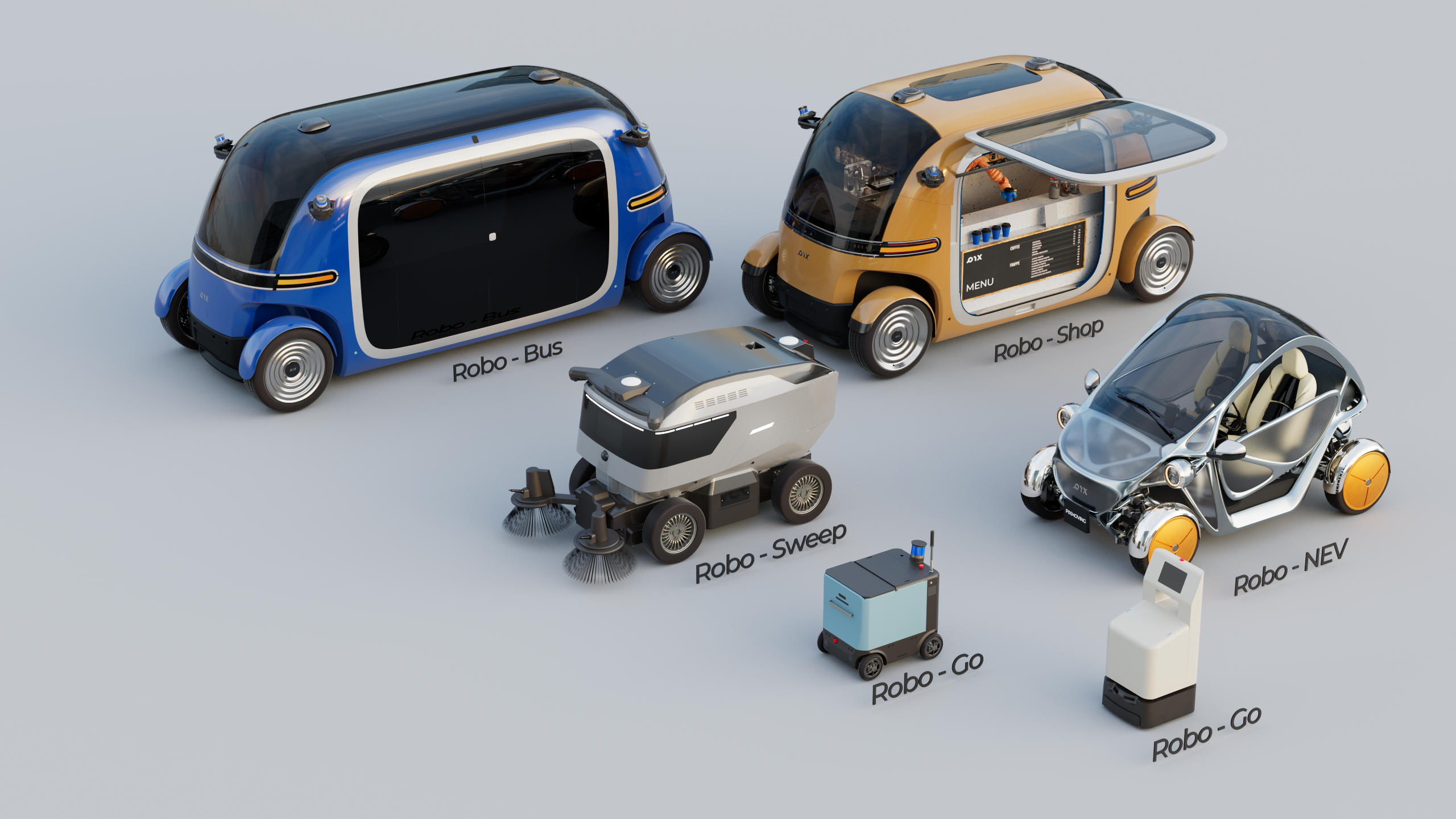
For procurement teams, this changes the evaluation criteria. Instead of asking only about range, seating capacity, or payload, buyers need to ask how flexible the space is, how the service model works, what the operator must support, and what the total commitment looks like over time. In PIX Moving’s product matrix, RoboShop appears alongside RoboBus, Robotaxi, RoboVan, and Beastie as part of a city robot family built on a shared robotic chassis platform.
The Problem: Urban Retail and Public Service Face Structural Constraints
Traditional urban retail depends on fixed locations, foot traffic, and labor schedules. Kiosks and food trucks reduce some real-estate cost, but they still need permits, staff, and defined operating sites. Public transport faces a different but related pressure: a shortage of drivers. According to the International Road Transport Union, Europe faced a shortage of 105,000 bus drivers in 2023, and that figure is projected to double by 2028.
This driver shortage matters for the broader city robotics conversation because it shows that labor scarcity is not limited to warehouses. If cities cannot find drivers for buses, they will also struggle to staff mobile retail vehicles, campus shuttles, or neighborhood service units. Autonomous Mobile Spaces, including RoboShop, are one response to that constraint because they shift labor from driving to remote supervision and service management.
At the same time, cities are being pushed to make infrastructure more intelligent. Grand View Research estimates the global smart cities market was worth USD 1.0 trillion in 2025 and could reach USD 8.8 trillion by 2033. That spending creates room for new infrastructure types that are not roads, bridges, or fixed buildings, but movable, connected, and programmable city robots.
The Opportunity: Autonomous Mobile Space as a Service
PIX Moving describes RoboShop as part of “Autonomous Mobile Spaces,” a term the company uses for city robots that provide dynamic space services rather than only transportation. This is a meaningful distinction. A RoboShop is not just a vehicle with a vending machine; it is a mobile unit that can become a café, a retail pod, a booking space, or a shared office. Its value comes from the ability to relocate, adapt, and operate in different urban contexts.
The business model is also a procurement factor. PIX Moving operates through a Robot-as-a-Service (RaaS) subscription model, which can shift the decision from a capital purchase to a recurring service. Precedence Research estimates the global RaaS market will grow from USD 1.96 billion in 2024 to USD 10.41 billion by 2034. For city operators, this suggests that autonomy will increasingly be bought as a service rather than as a one-time hardware purchase.
PIX Moving’s RoboShop: How the Platform Is Built
PIX Moving’s city robot lineup is built on a modular robotic chassis platform. Instead of designing each vehicle from scratch, the company uses a common rolling platform that can be equipped with different top modules. This is what allows RoboShop to be configured for mobile retail, café spaces, office pods, or shared mobility units based on city needs.
The company describes itself as a full-stack solution provider, meaning software, hardware, and service are treated as one system. Compared with alternatives like WeRide and Neolix, PIX Moving positions itself on urban robotic infrastructure rather than on autonomous driving technology alone. WeRide concentrates on autonomous driving systems and robotaxis; Neolix concentrates on autonomous delivery vehicles. PIX Moving’s platform is designed for modular city robots and service models.
This difference matters for buyers. In the company’s comparison material, WeRide robotaxis are the most expensive option, Neolix delivery robots are the lowest-cost option, and PIX Moving platforms sit in the middle, balancing capability and affordability. Maintenance also differs: WeRide requires complex fleet monitoring and remote operations, Neolix relies on simpler logistics-style operations, and PIX Moving uses modular fleet and service management.
Technical Explanation: AI-Driven Design and Manufacturing
One reason PIX Moving can offer a mid-cost platform is its manufacturing approach. The company uses metal 3D printing and generative design tools such as Autodesk Fusion 360. According to an Autodesk case study, this approach reduces chassis parts by 10x and shortens lead times by 60%. For a product like RoboShop, fewer parts and faster iteration mean more opportunities to customize the top module without redesigning the whole vehicle.
PIX Moving’s design philosophy also affects energy use. The company states that its vehicles are significantly more energy efficient than robotaxis while offering higher capability, largely because of AI-driven design and manufacturing. This is relevant to fleet operators because energy cost and maintenance cost together often exceed the purchase price over a vehicle’s life.
For low-speed automated driving systems, ISO 22737:2021 is the first international safety standard specifically for Low-Speed Automated Driving (LSAD) systems on predefined routes. In China, the Ministry of Industry and Information Technology has issued mandatory national standards for L3/L4 autonomous driving safety under the GB code, effective July 2027. Buyers should map these standards to their jurisdiction before selecting a RoboShop configuration.
From a risk perspective, PIX Moving’s enterprise measures include ISO quality management systems, supplier qualification, and full-process inspection and testing. The company also describes a multi-layer safety design, quality control system, and continuous software monitoring. These are important procurement signals, but they should be verified through documentation and site assessments before commitment.
RoboShop in a Buying Comparison
The following table summarizes how a RoboShop-type Autonomous Mobile Space compares with conventional retail vehicles and other autonomous platform categories. It is a simplification, but it helps buyers see where the decision shifts.
| Option | Primary role | Cost position | Maintenance model | Best fit |
|---|---|---|---|---|
| PIX RoboShop | Autonomous mobile retail or service space | Mid-cost between delivery robots and robotaxis | Modular fleet and service management | Urban operators seeking flexible space services |
| Conventional retail vehicle / kiosk | Manned retail unit | Simple hardware but labor-heavy | Conventional vehicle or fixed-unit maintenance | Locations where autonomous operation is not permitted |
| Autonomous delivery robot (e.g., Neolix) | Last-mile goods delivery | Lowest cost | Simple logistics-style operations | Delivery-focused fleets |
| Autonomous robotaxi (e.g., WeRide) | Passenger transport | Most expensive | Complex fleet monitoring and remote operations | Passenger mobility services in approved zones |
Application Scenarios for RoboShop
RoboShop’s practical value lies in scenarios where demand is temporary, mobile, or difficult to serve with fixed infrastructure. Potential applications include mobile retail in public squares, café spaces in office districts, temporary service pods at events, and community-powered robotics projects where local organizations curate the service.
Because RoboShop is built on the same robotic chassis platform as PIX’s other city robots, a city could deploy a RoboBus for transit in the morning, then reconfigure or deploy a RoboShop for retail in the evening. This does not mean every city should own every configuration. It means the procurement decision can be partially standardized: one platform, multiple space modules, and a service layer that runs across the fleet.
For commercial operators, the RaaS model opens a path to test RoboShop without committing to a full fleet purchase. An on-demand retail service can start with a single space unit, measure demand, and scale only if the operating data supports it.
Market Signals That Favor RoboShop
Several verified market trends support a cautious long-term case for RoboShop-type systems.
First, the smart cities market is expanding. Grand View Research expects the global smart cities market to rise from USD 1.0 trillion in 2025 to USD 8.8 trillion by 2033. Urban robotics infrastructure is part of that broader investment theme.
Second, RaaS is becoming a mainstream procurement model. Precedence Research projects the global RaaS market will grow from USD 1.96 billion in 2024 to USD 10.41 billion by 2034. This suggests that buyers increasingly prefer subscription-based operation over capital-intensive purchases.
Third, autonomous public transport is growing even though robotaxis receive more attention. Fortune Business Insights estimates the self-driving bus market will grow from USD 1.73 billion in 2024 to USD 9.34 billion by 2032, with Europe holding a 55.49% share in 2024. The driver shortage in Europe, reported by IRU, adds urgency to this shift. RoboShop is not a bus, but it benefits from the same regulatory and operational infrastructure that makes low-speed autonomous vehicles acceptable in cities.
Limitations and Risks Buyers Should Weigh
There is no neutral procurement analysis without naming boundaries. RoboShop is not a drop-in replacement for a traditional food truck or retail kiosk in every city.
First, autonomous retail depends on local regulation. Low-speed automated driving may be allowed in one district but not in another. Cities often require defined operating domains, route approval, and remote monitoring plans. Buyers must budget for permitting, not just vehicle cost.
Second, the RaaS model changes the cost structure. A subscription lowers the initial capital requirement, but it creates recurring payments. Total lifetime cost may be higher than a conventional vehicle if utilization is low. The procurement comparison should therefore be based on projected operating hours, not sticker price.
Third, autonomous systems depend on software. PIX Moving states that it uses multi-layer safety design, quality control systems, and continuous software monitoring. But even well-engineered systems require local network coverage, security management, and a service response plan. A city with poor connectivity or limited technical staff may face operational delays.
Finally, market data should be read carefully. Different research firms define RaaS and autonomous bus markets differently, which is why estimates vary. Buyers should treat cited market figures as directional context, not as a substitute for operator-specific feasibility studies.
Future Outlook
City robotics is moving from isolated vehicle pilots to integrated space-as-a-service infrastructure. Physical AI will make these robots more adaptive, while open development platforms may allow third parties to build new services on existing chassis. For cities, the strategic question is no longer “which autonomous vehicle should we use,” but “what kind of mobile infrastructure do we need.
PIX Moving’s bet is that this infrastructure will be modular, subscription-based, and designed around urban robots such as RoboShop, RoboBus, and RoboVan. Whether that bet succeeds depends on regulation, utilization rates, and the willingness of cities to treat robotics as infrastructure rather than as experimental vehicles.
In the near term, the safest procurement approach is to evaluate RoboShop against the actual service it will run, the regulatory path in the target city, and the total cost of operations under a realistic demand model. The product category is promising, but disciplined comparison is still the strongest defense against poor investment.
Frequently Asked Questions
What is a RoboShop in city robotics?
In PIX Moving’s product family, RoboShop is an Autonomous Mobile Space: a city robot that can be configured for mobile retail, café, office, or shared mobility use. It is built on a modular robotic chassis platform and is offered through a Robot-as-a-Service model, meaning a city or operator does not necessarily have to buy the unit as a one-time asset.
How does RoboShop compare with a robotaxi and a delivery robot?
Based on PIX Moving’s comparison material, WeRide focuses on autonomous driving technology and robotaxis, which places it as the most expensive option. Neolix focuses on autonomous delivery vehicles and operates at the lowest cost. PIX Moving positions itself in the middle with a full-stack software and hardware solution and modular fleet/service management, balancing capability and affordability for urban operators.
What procurement options does PIX Moving offer for RoboShop?
PIX Moving operates through a Robot-as-a-Service subscription model. The stated aim is to deliver scalable, revenue-generating productivity to cities and to turn autonomous mobility into a continuous service rather than a hardware purchase. The platform approach also includes modular chassis and development kits for custom configurations.
What standards and certifications apply to RoboShop deployment?
A relevant international standard is ISO 22737:2021, the first safety standard specifically for Low-Speed Automated Driving systems on predefined routes. In China, the Ministry of Industry and Information Technology has issued mandatory national standards for L3/L4 autonomous driving safety under the GB code, effective July 2027. Buyers should verify which standards apply in their deployment jurisdiction.
What are the main operational limitations of RoboShop?
An autonomous RoboShop needs permission to operate in a defined area and may require remote monitoring and continuous software updates. A RaaS contract also involves recurring payments, so total lifetime cost should be evaluated against projected use. PIX Moving describes a quality system that includes supplier qualification, full-process inspection and testing, and multi-layer safety design, but no autonomous system removes the need for local route management.
Is a RoboShop a replacement for a traditional food truck or retail kiosk?
It can serve a similar function, but it is not a drop-in replacement. A RoboShop adds autonomy, software, and connectivity requirements, which change the operating model. In restricted regulatory environments or in organizations with limited remote monitoring capacity, a conventional manned vehicle or kiosk may still be a more practical first step.