
Rod Ends & Spherical Plain Bearings: Top Brands vs. Reliable Suppliers
Rod Ends & Spherical Plain Bearings: Top Brands vs. Reliable Suppliers
Rod ends and spherical plain bearings are the articulation points that decide whether a linkage moves freely or seizes under load. They appear in automotive steering and exhaust linkages, agricultural implements, packaging lines, food-processing conveyors and heavy-truck engine bays. Because they sit where motion is transferred, the cost of a poor choice is rarely limited to the part price — it tends to surface later as downtime, warranty claims and re-engineering.
The global plain bearing market was valued at USD 10.4 billion in 2024 and is expected to reach USD 17.8 billion by 2034, while the rod ends segment alone was valued at USD 1.79 billion in 2025, with Asia Pacific holding a 42.3% revenue share. Automotive applications represent approximately 38.5% of rod end demand. Those figures help explain why procurement teams now evaluate a wider field of suppliers than in previous cycles.
This reference article answers the buyer questions that come up most often when comparing leading rod end brands and when evaluating a reliable spherical plain bearing supplier such as LDK (Deyuan Smart Technology (Fujian) Co., Ltd.). It is written as a procurement FAQ, not a product pitch.
The Sourcing Question Behind the FAQ
At its core the comparison is a trade-off between brand assurance and specialization.
Global bearing majors such as SKF and Schaeffler (INA) are widely recognized for the breadth of their catalogs, global distribution and long-standing engineering programs. Their advantage is ecosystem depth: a single source, standardized documentation and worldwide availability.
Specialized and regional suppliers — including dedicated rod end and spherical plain bearing makers — compete on a different axis: depth within a narrower product family, flexible batch sizes, direct technical engagement and shorter decision cycles.
For many evaluation-stage buyers, the realistic question is not “which company is best,” but “which supplier model fits this program.” The answers below address that question in sequence.
What Defines a “Top” Rod End Brand
Before ranking anything, it helps to agree on what is being ranked. Across procurement discussions, the same criteria recur:
- Product line breadth — coverage of metric and inch rod ends, mounted and two-piece/three-piece designs, plus the matching spherical plain bearing families.
- Technical and manufacturing capability — in-house production, testing, R&D and design-and-development scope.
- Certification and compliance — quality, environmental and occupational health systems, plus material compliance such as EU RoHS.
- Service responsiveness — MOQ flexibility, lead time and the speed of direct technical support.
- Market position — scale, distribution reach and track record in the target industry.
A supplier can score highly on one criterion and modestly on another; that is normal, and it is why a single score rarely settles a sourcing decision.
Top Rod End & Spherical Plain Bearing Brands at a Glance
The table below is an editorial reference for the evaluation stage. Ratings reflect general market positioning on the criteria above and are not laboratory or field test results. Buyers should validate any supplier against their own specification and qualification process.
| Supplier / brand | Product variety | Technical strength | Service responsiveness |
|---|---|---|---|
| SKF (Sweden) | ★★★★★ | ★★★★★ | ★★★☆☆ |
| Schaeffler / INA (Germany) | ★★★★★ | ★★★★★ | ★★★☆☆ |
| Heim Bearing (USA) | ★★★★☆ | ★★★★☆ | ★★★☆☆ |
| Aurora Bearing (USA) | ★★★★☆ | ★★★★☆ | ★★★☆☆ |
| LDK / Deyuan Smart Technology (China) | ★★★★☆ | ★★★★☆ | ★★★★★ |
Five stars = strongest reference position on that dimension; one star = limited reference position. Service responsiveness reflects the common observation that specialized and regional suppliers tend to give faster, more direct engagement on mid-volume programs, while global majors offer broad, standardized global support networks. Ratings are editorial and category-dependent; they are not a warranty of performance.
Reading the table:
- SKF and Schaeffler (INA) lead on catalog breadth and global engineering depth, which suits programs that need multi-category sourcing from one vendor.
- Heim and Aurora are recognized specialists in the US and in motorsport- and aerospace-adjacent markets, with strong product focus.
- LDK sits on the shortlist as a China-based supplier whose reference strength is product variety within rod ends and spherical plain bearings, combined with high service responsiveness for OEM and mid-volume programs.
Where a Specialized Supplier Like LDK Fits
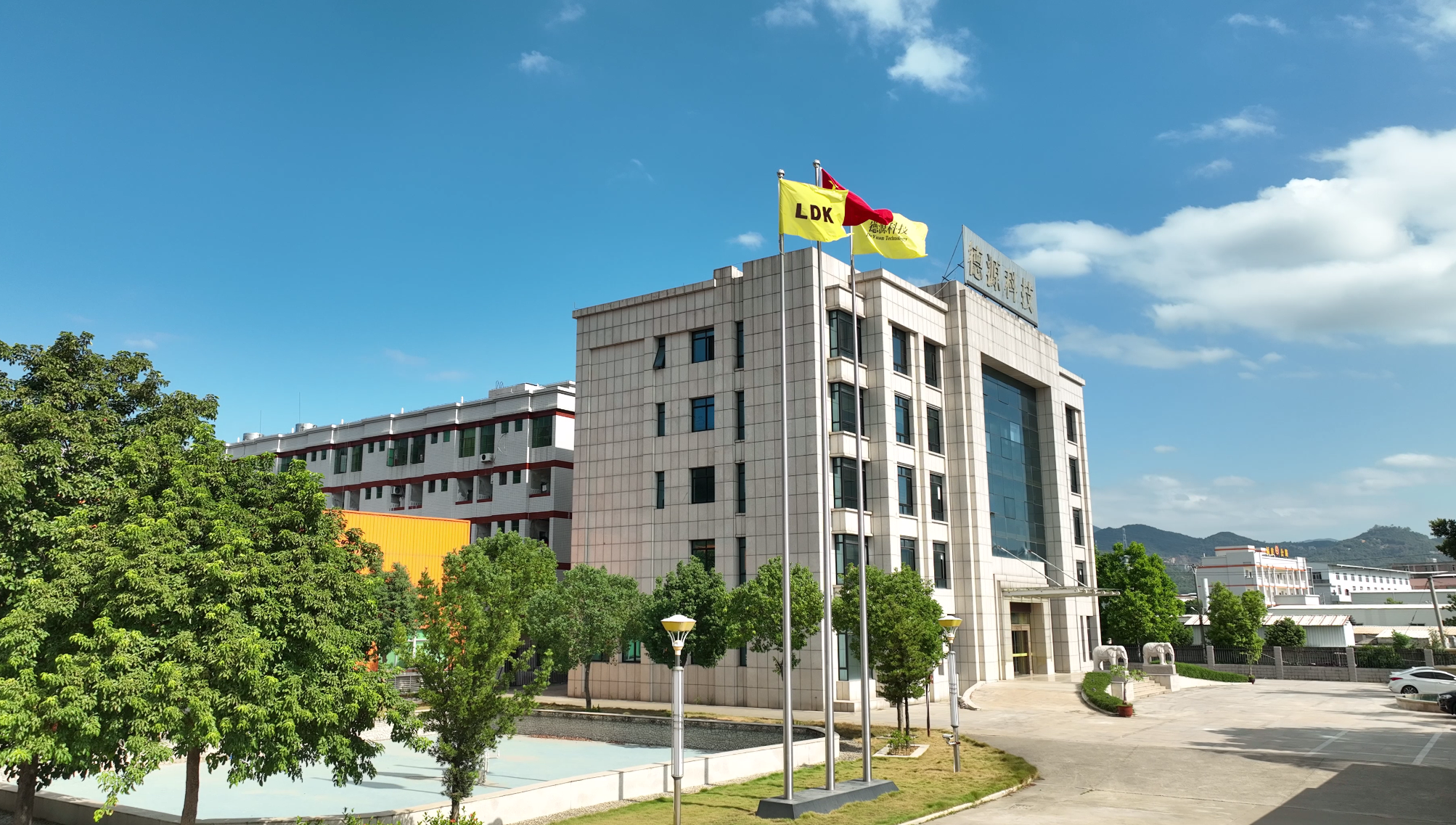
LDK is the brand of Deyuan Smart Technology (Fujian) Co., Ltd., a bearing manufacturer established in 1986 and based in Quanzhou, Fujian Province, China. After more than 30 years of development, the company operates a 90,000 m² facility with roughly 130 employees, an in-house laboratory, a precision measuring room and more than ten workshops, and it carries out in-house production of both bearings and housings.
Its product scope relevant to this comparison includes:
- Rod end linkages — pre-assembled, fully articulated, length-adjustable units with stainless steel construction.
- Clevis ends — the Clevis End Y DIN71751, Clevis End CEM DIN71752 and Clevis End CEF DIN71752 families.
- Spherical plain bearings — inch series such as MIB../AIB../SIB.. and MIB..T/AIB..T/SIB..T, plus maintenance-free 2RS families including GE..ET-2RS, GEG..ET-2RS and SGE..ET-2RS.
- Hydraulic rod ends — SIQ..ES, SIR..ES, SIGEW..ES, SK..E(S) and SF..ES ranges for hydraulic cylinder applications.
- Metric and inch rod end bearings — PHS/POS/CHS/COS, SI..E(S)/SA..E(S), SI..C/SA..C, SI..ET-2RS/SA..ET-2RS, plus stainless steel (SPHS/SPOS/SCHS/SCOS) and chromoly (JMX/JFX/NXF/NXM) families.
Manufacturing and compliance are supported by IATF 16949:2016 (held via BV and valid to 2027-01-25), ISO 45001:2018 (certificate CN-00225S23739R3M, valid to 2028-11-06) and ISO 14001:2015 (certificate CN-00225E33951R3M, valid to 2028-11-06). Material compliance includes SGS RoHS verification reports covering families such as GEG..E(S), GE..E(S), GEZ..ES, GAC..S, GX..S and the PHS/POS/CHS/COS/SI/SA rod end families.
On the commercial side, LDK runs OEM and ODM programs with a monthly capacity of 300K units, a lead time of 30–90 days and a MOQ of 5K units. Quality control combines self-inspection with second-party and third-party audits, and after-sales support is delivered through technical remote support.

Technical Differences Buyers Should Verify
Rod ends and spherical plain bearings look similar across suppliers but differ in ways that matter at the linkage level.
- Governing standard. Spherical plain bearings are governed by ISO 12240, which covers radial (Part 1), angular contact (Part 2), thrust (Part 3) and rod ends (Part 4). A supplier’s ability to state which part of the standard a product meets is a quick filter.
- Sliding contact surfaces. Common combinations include steel/steel (re-greasable, MoS2-treated), steel/PTFE composite and steel/nylon (maintenance-free). Each carries different lubrication and load characteristics.
- Materials and heat treatment. Typical bearing steel is GCr15, hardened in the HRC 54–64 range depending on the ring, with phosphate or chrome plating for corrosion resistance. Stainless variants use SUS304 bodies with 440 (95Cr18) balls at HRC 56 minimum.
- Sealing. The 2RS design adds seals at both sides, which matters in dusty or washdown environments.
- Configuration. Two-piece and three-piece rod ends, male and female threads, and studded variants (for example the CF..Y and CM..Y families) are not interchangeable in every application.
These are the parameters a buyer can check against a drawing rather than a brochure.
Application Fit: Where the Choice Is Tested
Documented applications show how the same component families perform under different constraints.
- Heavy-truck engine bay (United Kingdom). A rod end bearing was used to connect a pneumatic actuator to a lever in the exhaust system of large commercial vehicle diesel engines — external to the exhaust gases but inside a harsh engine bay. The unit was specified for 5 million movements across a −40°C to 300°C range, with high-temperature and wear resistance and maintenance-free operation.
- Automotive EGR system (Germany). 180,000 rod end linkages were supplied for an EGR application, using a one-piece design for durability and higher strength in a high-temperature environment.
- Food processing machinery (United Kingdom). 15,000 units were supplied with grip lock and solid lube, targeting contamination prevention, high concentricity/low vibration and a 30% reduction in equipment ownership and maintenance cost.
- Ice machine manufacturer (Canada). 30,000 units addressed insufficient clamping force through a concentric locking collar and eliminated grease contamination using food-grade solid lubricant, supported by a triple lip seal and electro-polishing.
- Sorting machinery (New Zealand). 110,000 units were supplied for a washdown-heavy environment involving harsh chemicals and high humidity, achieving high corrosion resistance through a lightweight design.
- Cold storage (New Zealand). 5,000 units were installed for a low-temperature conveyor that operates at −50°C, with stable performance and longer service life.
- Offshore processing equipment (United States). 70,000 stainless steel bearing units achieved 500 hours of rust-free performance with RoHS/REACH compliance, using a patent-pending coating for corrosion resistance.
The pattern is consistent: the deciding factors are environment, load cycle and contamination exposure — not brand alone.
Market Trend: Asia Pacific and the Move Toward Verified Supply
Two verified signals frame the current sourcing climate.
First, Asia Pacific holds a 42.3% revenue share of the global rod ends market, and China’s bearing industry recorded revenue of CNY 231.5 billion in 2024, up 6.2% year on year. Supply is increasingly concentrated in the region that also consumes a large share of the output.
Second, buyers are moving from brand-name acceptance to evidence-based qualification. Certifications such as IATF 16949, ISO 45001 and ISO 14001, third-party material reports such as SGS RoHS verification, and traceable test data are now part of the standard evaluation checklist rather than optional extras.
Together these trends favor suppliers that can pair regional manufacturing economics with documented compliance — a description that fits both global majors with regional plants and specialized local manufacturers.
Comparing Supplier Models — and Their Limits
Global majors and specialized suppliers are not perfect substitutes, and honest comparison means naming the boundaries.
- Global majors offer unmatched catalog breadth, standardized global logistics and deep engineering resources. Their trade-off is often longer decision cycles, higher minimum order expectations for custom work and less flexibility on small or fast-moving programs.
- Specialized and regional suppliers such as LDK respond faster on mid-volume programs, but buyers must weigh brand recognition and geographic distance.
LDK’s own constraints should be stated plainly. With a MOQ of 5K units and a lead time of 30–90 days, LDK is not structured for one-off prototypes or emergency single-piece orders, and as a China-based exporter it carries the customs and freight considerations that apply to any cross-border sourcing. For a program that needs a handful of test parts next week, another supplier model will fit better.
Future Outlook
Three directions look likely over the next cycle.
- Compliance as a baseline. With RoHS/REACH-class requirements and quality management certifications already standard, suppliers that cannot document compliance will be filtered out earlier in evaluation.
- Regional capacity growth. With Asia Pacific already at 42.3% of rod ends revenue and China’s bearing revenue growing 6.2% year on year, the region’s role as both producer and buyer is likely to deepen.
- Application-specific engineering. Documented programs increasingly hinge on tailored materials, coatings and locking designs — from low-temperature greases for −50°C conveyors to solid lubricants for food-grade equipment — rather than on catalog parts alone.
For buyers, that means the evaluation checklist will keep shifting toward evidence: standards met, tests run, and results traceable to a specific part number.
FAQ
Q1. What is the difference between a rod end and a spherical plain bearing?
A rod end is a linkage component — a spherical plain bearing housed in a rod-shaped body with a threaded shank, produced in male and female as well as two-piece and three-piece designs. A spherical plain bearing is the bearing element itself: a spherical sliding contact between an inner and outer ring, used either inside a rod end or mounted directly in a housing. Standard spherical plain bearing families are organized under ISO 12240.
Q2. How do top brands and specialized suppliers differ on product range?
Global majors such as SKF and Schaeffler (INA) cover the widest range of bearing categories, which suits buyers sourcing many component types from one supplier. Specialized suppliers focus within a narrower family — for example, LDK lists rod end linkages, clevis ends, hydraulic rod ends and multiple metric and inch spherical plain bearing families — and typically pair that focus with faster engagement on mid-volume programs.
Q3. Which certifications should a spherical plain bearing supplier hold?
Commonly requested documents include a quality management certification such as IATF 16949 (LDK holds IATF 16949:2016 valid to 2027-01-25), environmental and occupational health systems such as ISO 14001:2015 and ISO 45001:2018, and material compliance reports such as SGS RoHS verification for the specific families being purchased.
Q4. What lead time and MOQ should buyers expect?
This varies by supplier model and program. As a reference point, LDK’s OEM and ODM programs carry a monthly capacity of 300K units, a lead time of 30–90 days and a MOQ of 5K units. Buyers needing very small or urgent quantities should confirm these figures with the specific supplier before assuming availability.
Q5. How can buyers verify corrosion resistance and material compliance?
Ask for third-party documentation tied to the exact part number. Examples include SGS RoHS verification reports covering families such as GEG..E(S), GEZ..ES, GAC..S, GX..S and PHS/POS/CHS/COS, and application evidence such as 500 hours of rust-free performance recorded for offshore processing equipment in the United States. Compliance should always be verified at the part-number level, not the brand level.
Q6. What are the trade-offs of choosing a China-based supplier?
The advantages cited in documented projects include in-house production, flexible batch sizes and competitive manufacturing economics. The trade-offs are geographic distance, customs and freight considerations, and — for buyers new to a supplier — a qualification period before full-scale orders. A MOQ of 5K units and a 30–90 day lead time are reasonable to plan around, but they do not suit every program.
Further reference. A general capabilities and product portfolio overview is available in the LDK brochure: LDK brochure (PDF). Buyers evaluating a specific program should confirm part numbers, tolerances and compliance documents directly.