
Rod Ends and Spherical Plain Bearings: Practical Fit for Heavy-Duty Automation
Industrial Equipment & Components · Application Review
Rod ends and spherical plain bearings often carry the load, absorb the misalignment, and define how much maintenance a machine will need in real production. This article explains how these components are selected and applied in demanding automation and material-handling environments, using LDK product families as a concrete reference.
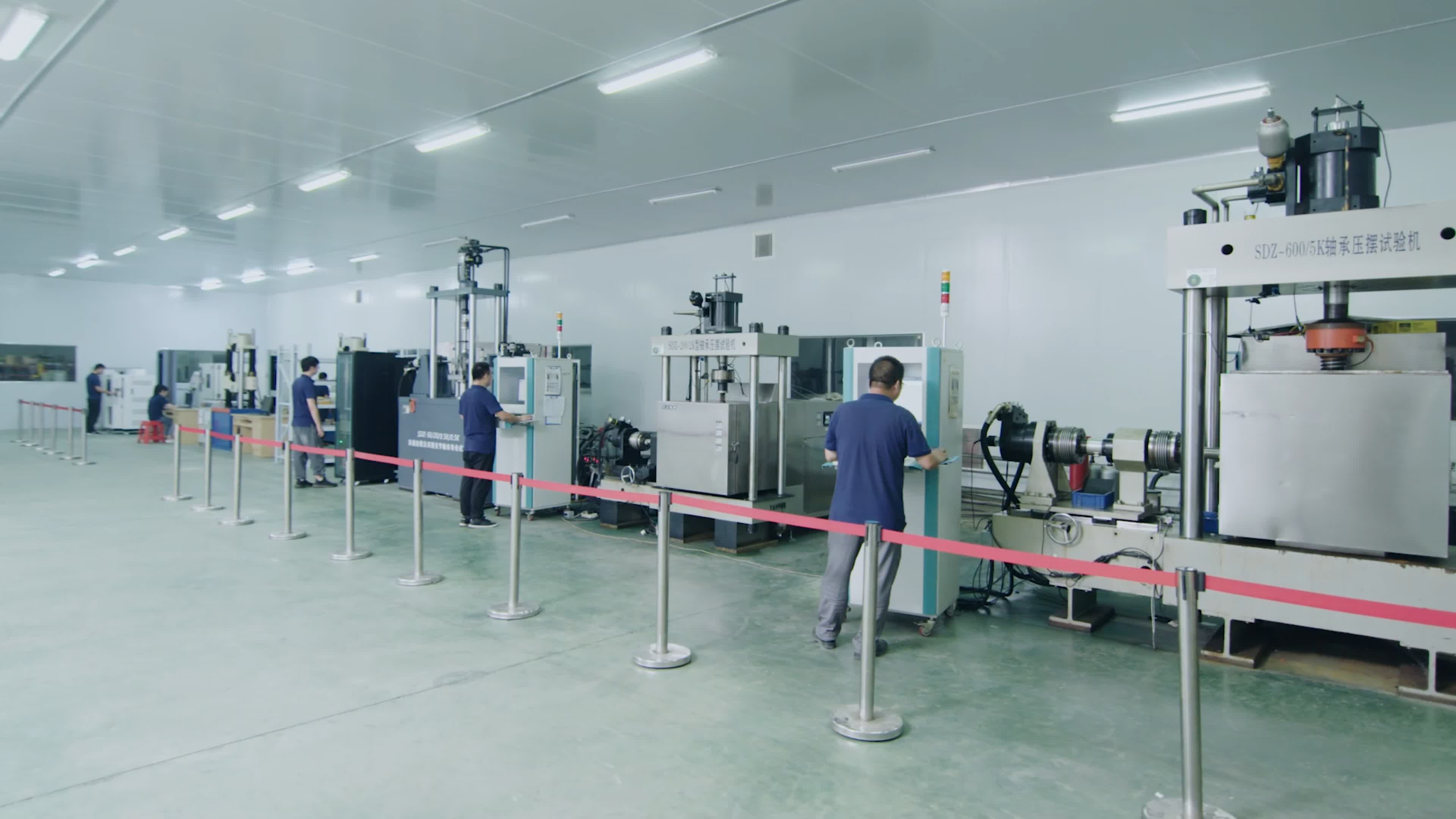
LDK reliability testing room: validation before serial delivery of rod ends and spherical plain bearings.
Heavy-Duty Automation Asks More from Pivot Points
In automated conveyor lines, robotic manipulators, and packaging machinery, the failure point is rarely a control algorithm. It is often the mechanical link that must transmit force across an angle while absorbing assembly tolerances, frame deflection, thermal movement, and load reversal. Rod ends and spherical plain bearings are the components engineered for that task.
The opportunity for OEMs and plant engineers is therefore not simply finding a part number. It is choosing the right articulation concept for the duty cycle, the environment, and the maintenance plan. A poorly matched joint can produce noise, wear, downtime, and costly re-engineering after commissioning.
Defining the Components: Rod Ends, Clevises, Linkages and Spherical Plain Bearings
A rod end bearing generally combines a spherical plain bearing or sliding contact ball with a threaded housing that can be attached to a rod, cylinder, or actuator. It is also referred to in different markets as a heim joint, rose joint, or spherical rod end. A spherical plain bearing is the surrounding plain bearing core: an inner ring with a spherical outside surface oscillating inside a mating spherical bore in an outer ring. It is a sliding bearing, not a rolling bearing, and is suited for compensation of angular misalignment under load.
Clevis ends are end fittings used to connect rod assemblies to pins, often on pneumatic or hydraulic cylinders and automation equipment. Rod end linkages, meanwhile, integrate two rod ends with a connecting rod, making a fully articulated assembly whose length can be adjusted during installation.
LDK, the brand of Deyuan Smart Technology (Fujian) Co., Ltd., has manufactured rod ends, spherical plain bearings, and related links since 1986. The company operates from a 90,000 m² facility in Quanzhou, Fujian, with roughly 130 employees and annual sales of approximately US$15 million. It reports an annual output of 15 million units and exports about 60% of production to Europe, North America, Latin America, and Oceania.
Rod End Linkages and Clevis Ends for Actuator Interfaces
For cylinders, valve gates, guides, and adjustable connecting rods, the design often starts with an end fitting. LDK lists clevis ends in zinc-plated S235 steel, with 304 stainless steel optional. The DIN 71751 and DIN 71752 configurations cover common rod-yoke geometries: for example, the Y DIN 71751 series includes male-thread clevis ends from Y4x8 to Y16x64, while DIN 71752 includes CEM male-thread types from CEM6x12 to CEM20x40 and CEF female-thread types from CEF4x8 to CEF16x64.
Catalog end-application notes for these clevis families explicitly include pneumatic and hydraulic cylinders, automation equipment, and connecting rods in engineering machinery, which makes them a practical choice when a machine builder needs a standardized interface between a cylinder and a guided mechanism.
Where two pivot points must remain aligned as a machine flexes, rod end linkages offer a pre-assembled answer. LDK describes its rod end linkages as integrating two rod ends with a connecting rod, fully articulated, with a threaded rod enabling exact installation-length adjustment. The linkage range is supplied in stainless steel and can be custom-made on request. For automation builders, this reduces the number of separate parts and shortens installation time while preserving angular freedom at both ends.
Spherical Plain Bearings GE..ET-2RS and GEG..ET-2RS: Evidence of Maintenance-Free Design
When an automation system needs a defined swinging or tilting pivot under high radial load, the spherical plain bearing becomes the core element. LDK supplies several radial spherical plain bearing families, among which the GE..ET-2RS and GEG..ET-2RS lines are especially suitable to analyze because their stated design targets continuous service under contamination and limited maintenance access.
According to the product catalog, GE..ET-2RS bearings have sliding contact surfaces of steel against PTFE fabric. The outer ring is made of GCr15 bearing steel, hardened to HRC 54–60, phosphated, and lined with PTFE fabric. The inner ring ball is also GCr15 bearing steel, hardened to HRC 58–64 and hard-chrome-plated on the spherical surface. These bearings are described as maintenance-free, with the outer ring fractured and two seals fitted at both sides.
The GEG..ET-2RS series follows the same maintenance-free PTFE-fabric principle and is explicitly identified as heavier-duty than the GE..ET-2RS series. Standard size coverage starts at 15 mm bore and extends to 300 mm for GE..ET-2RS and 280 mm for GEG..ET-2RS in the standard list, while larger XT-design sizes with axially split outer rings cover the upper segments of both families.
For a buyer at the decision-to-execution stage, that information matters for more than technical compliance. It explains why a bearing can be designed into an automated joint without a lubrication line: the PTFE fabric liner is already the lubricating interface, and the sealing elements reduce contaminant ingress.
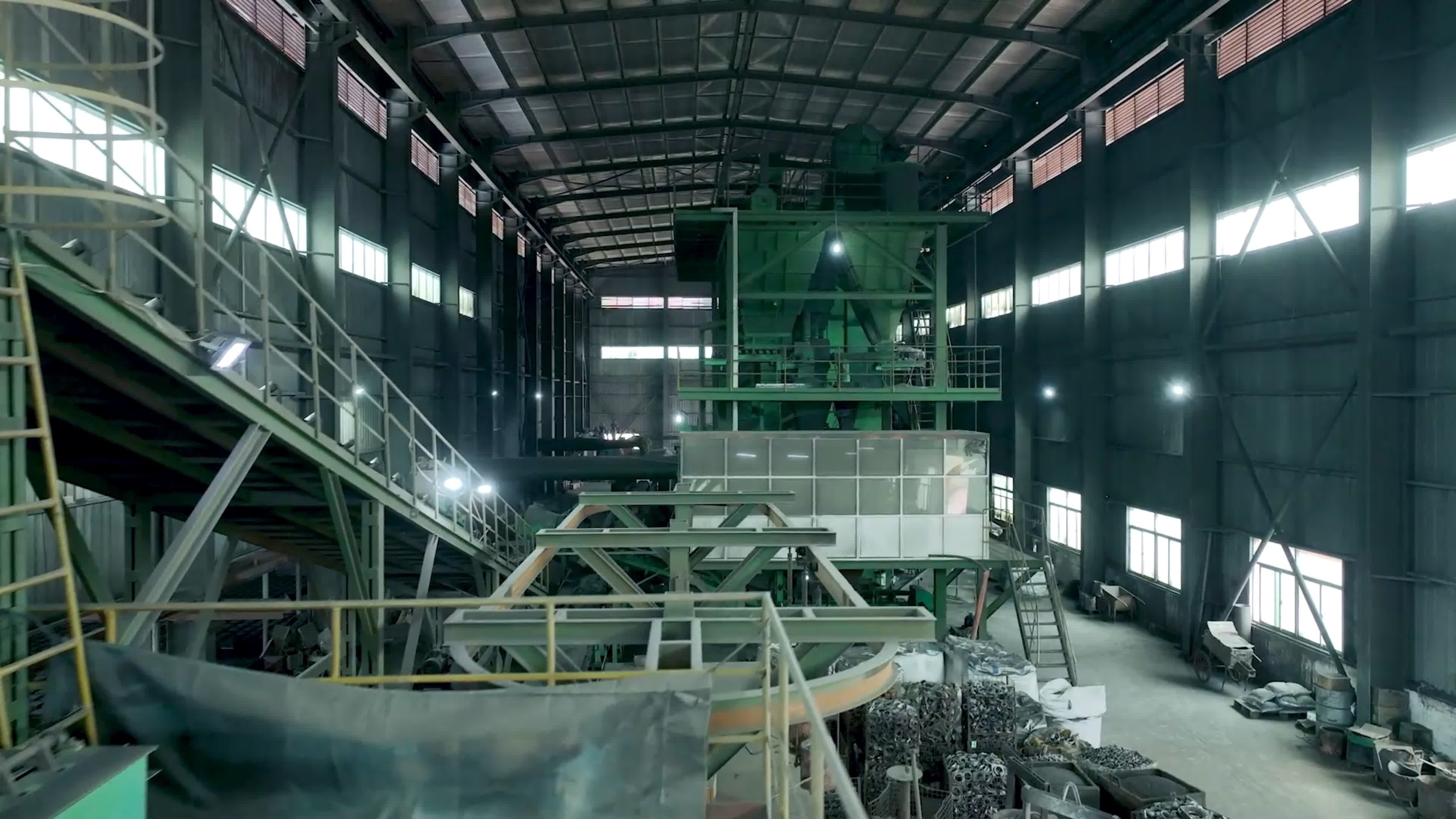
In-house casting and processing capability provides a controlled material path for heavy-duty bearing components.
Matching the Bearing Version to the Operating Condition
The engineering question in automation is not which bearing family is generally better. It is which sliding-contact solution should carry a specific motion profile.
LDK catalog families include both maintenance-free versions and relubricable versions. For rod ends, the PHS and POS series are three-piece designs with a steel ball, a forged body, and a brass race, described as re-greasable with female and male threads respectively. By contrast, the COS/CHS rod ends use a steel ball and PTFE composite race and are described as maintenance-free. Spherical plain bearings such as GE..ES and GE..ES-2RS use sliding contact of steel against steel with MoS2-treated surfaces and are re-greasable; GE..ET-2RS and GEG..ET-2RS use PTFE fabric and are maintenance-free.
In principle:
- Maintenance-free PTFE fabric or PTFE composite versions are useful when the joint is difficult to reach, where a regreasing schedule is unreliable, or where excess grease may contaminate the process.
- Relubricable steel/steel versions make sense when maintenance access exists, when a greasing interval is already part of the machine’s maintenance plan, and when the operating history of the site favors conventional lubrication management.
Because spherical plain bearings are sliding bearings, they are typically intended for oscillating, tilting, or moderate-speed variable motion rather than continuous high-speed shaft rotation. For an automated clevis joint or robot pivot, that fits well; for a continuously rotating spindle, a rolling bearing is normally the more appropriate technology.
| Decision factor | Maintenance-free PTFE type | Regreasable steel/steel or steel/brass type |
|---|---|---|
| Typical automation motion | Oscillation, tilting, guided angular movement | Oscillation, load reversal, adjustable linkages |
| Lubrication access | Designed to run without periodic regreasing | Requires planned re-lubrication |
| Sealing evidence | ET-2RS versions have seals at both sides | ES-2RS versions have seals; ES versions do not |
| Corrosion strategy | Chrome-plated ball, phosphated outer ring; stainless SGE versions exist | Phosphated surfaces, plating options, stainless rod ends available |
Application Fit: Conveyors, Robot Pivots and Packaging Machinery
Heavy automation often combines high duty cycles with geometric imperfection. A conveyor drive or tensioning system may have shafts that are not perfectly parallel; packing machines may use oscillating arms that must swing through an angle millions of times a year; robotic axes may accumulate positioning loads that a rigid pin joint cannot accommodate without premature wear.
For conveyor and transfer stations, rod end linkages give installers an adjustable mechanical connection between the actuator and the moving part. For robotic joint or end-effector pivot positions, spherical plain bearings inside rod end housings allow angular compliance while still carrying radial load. LDK’s spherical plain bearing lists include robotics and automation as stated application fields, making the family suitable for OEM evaluation. For packaging machinery, stainless or coated clevis ends can be used at cylinder interfaces where washdown chemistry or humidity is a concern.
It should also be noted that LDK offers sealed, maintenance-free rod end versions such as SI..ET-2RS and SA..ET-2RS, which mount a GE..ET-2RS type spherical plain bearing inside a male or female threaded housing. This is useful when a buyer wants the maintenance-free service life of a sealed spherical plain bearing but also needs an easy threaded connection to an actuator rod.
Comparison with Traditional Solutions and Important Boundaries
Traditional articulation options include plain pins in clevises, bushings, and rigid threaded rods. These solutions are inexpensive and easy to understand, but each introduces a limitation that becomes visible at the automation design level.
| Traditional approach | Typical benefit | Typical boundary |
|---|---|---|
| Rigid threaded rod | Simple compression/tension link | Does not compensate misalignment without flexible mounts |
| Plain pin in drilled hole | Low first cost | One-axis articulation; limited tolerance for frame deflection |
| Rolling bearing in a clevis | Low friction in rotation | Less suited to continuous oscillating misalignment at heavy load |
| Rod end / spherical plain bearing | Angular compensation plus load-carrying sliding surface | Sliding bearing; normally not selected for continuous high-speed rotation |
One realistic boundary must not be hidden: even a PTFE-fabric spherical plain bearing still operates on a sliding-contact principle. If a design requires very high continuous rotational speed, a spherical plain bearing is usually the wrong category. The correct process is to compare the expected motion mode, load magnitude, lubrication method, and contamination exposure before choosing between maintenance-free and relubricatable versions.
LDK’s own comparison material notes that many standard suppliers offer catalogs with fewer than 300 SKUs, while LDK maintains more than 3,000 active SKUs across specialty materials, coatings, stainless steel, and custom configurations. For a buyer, this breadth can simplify sourcing, but it does not replace the need for engineering validation of clearance, shaft hardness, and the specific load conditions in the automation assembly.
Execution-Stage Evidence: Capacity, Lead Time and Control
At the Decision to Execution stage, a technically correct product still has to arrive in the right quantity with consistent quality. Buyers evaluating LDK as a global source can inspect several verifiable facts.
- LDK reports a monthly production capacity of 300,000 units for this product scope.
- Typical production lead time is 30 to 90 days.
- Standard batch orders carry a stated minimum order quantity of 5,000 units, while LDK’s procurement program allows strategic accounts to order specialized long-tail items with MOQs as low as one piece.
- LDK states that manufacturing, including casting, turning, heat treatment, grinding, injection molding and final assembly, is kept in-house, which helps control both traceability and delivery timing.
- Its testing resources include laboratories for fatigue life, tensile strength, noise and vibration, high and low temperature, and salt-spray testing.
LDK also supports OEM traceability through production dates, barcodes, and QR codes, and it documents IATF 16949, ISO 14001, ISO 45001, RoHS, REACH, and FDA-related compliance areas as part of its risk-control framework. For an automation OEM integrating rod ends into a high-volume machine, these are practical items to audit during supplier qualification rather than marketing phrases.
Market Outlook for Rod Ends and Spherical Plain Bearings in Automation
External market research helps frame the demand. Dataintelo estimates the global rod ends market at USD 1.79 billion in 2025, with Asia Pacific accounting for 42.3% of revenue. It also identifies automotive applications as the largest demand segment at about 38.5%, a useful reminder that rod-end robustness is proven in demanding vehicle environments and carries over to industrial automation. The global plain bearing market was estimated at USD 10.4 billion in 2024 and projected to reach USD 17.8 billion by 2034. In China, the broader bearing industry reached a record revenue of CNY 231.5 billion in 2024, up 6.2% year on year, according to the China Bearing Industry Association.
These signals reinforce a practical outlook: as automated equipment becomes more continuous, more compact, and more sensitive to downtime, the mechanical joints selected at the core of motion transfer will determine a growing share of total operating cost. Component suppliers that combine standardized series with flexible engineering support are therefore likely to be more valuable than suppliers offering only low-cost commodities.
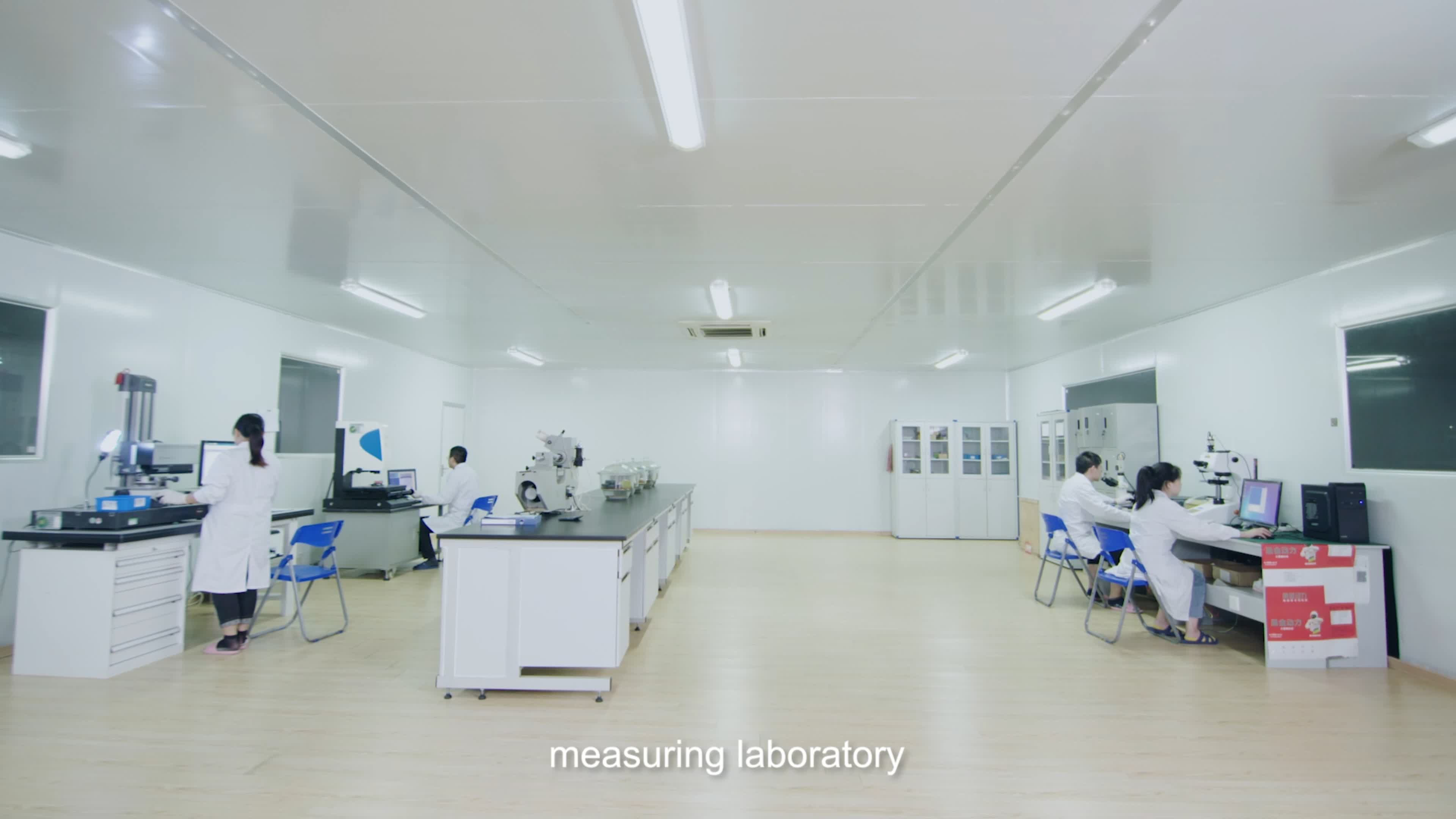
Measurement room verification supports consistent tolerances in serial production.
Frequently Asked Questions
Are rod end bearings and spherical plain bearings the same thing?
No. A spherical plain bearing is the internal bearing element with an outer ring and spherically ground inner ring. A rod end bearing generally consists of a spherical plain bearing or sliding ball assembled into a threaded housing that can be screwed on to a rod. A buyer may need a rod end for convenient connection or a bare spherical plain bearing for integration into a custom housing.
When should a GE..ET-2RS bearing be selected instead of a GE..ES bearing?
GE..ET-2RS uses a PTFE fabric sliding surface and is described as maintenance-free, with seals on both sides. GE..ES uses steel-on-steel sliding contact with MoS2 treatment and is re-greasable. Choose GE..ET-2RS when the pivot is inaccessible or relubrication is not planned; choose GE..ES when a regreasing interval can be managed and a steel/steel interface is preferred for the application.
What is the difference between GE..ET-2RS and GEG..ET-2RS?
Both are maintenance-free radial spherical plain bearings with PTFE fabric liners and two seals. The GEG..ET-2RS series is cataloged as heavier-duty than the standard GE..ET-2RS series. Bore range in the standard listing is 15–300 mm for GE..ET-2RS and 15–280 mm for GEG..ET-2RS, with larger XT versions available in both families.
Can maintenance-free spherical plain bearings be used in continuous rotation?
Spherical plain bearings are sliding-contact bearings typically intended for oscillating, tilting, or variable motion rather than continuous high-speed rotation. A rolling bearing is normally the more appropriate category for a constantly rotating shaft. The specific boundary depends on load, speed, and angle of oscillation, and should be validated from engineering data.
Are clevis ends available in corrosion-resistant form?
LDK clevis lines such as DIN 71751 and DIN 71752 are manufactured from S235 steel with zinc plating, and stainless steel 304 is available as an option. For fully stainless rod-end assemblies, LDK also offers rod end series with SUS304 bodies and hardened stainless steel balls.
What quantity and lead-time expectations should an OEM have when sourcing rod ends from LDK?
LDK states a monthly production capacity of 300,000 units and a typical production lead time of 30 to 90 days. Standard orders carry a minimum order quantity of 5,000 units. Strategic accounts can also draw on mixed-container shipments and low MOQs for long-tail specialized items, which supports lean inventory planning for OEMs.
For additional product specifications, manufacturing scope, and factory profile: Download LDK corporate brochure (PDF).
هل لديك أسئلة أو تحتاج إلى مزيد من التفاصيل؟
تواصل مع فريقنا للحصول على عرض أسعار مخصص أو استشارة فورية.
طلب عرض أسعار
املأ النموذج أدناه وسيتواصل معك فريقنا بعرض مقترح مخصص.
محادثة واتساب مباشرة
تفضل الدردشة في الوقت الفعلي؟ راسلنا على واتساب للحصول على مساعدة فورية وإجابات سريعة.
- احصل على عرض أسعار مخصص
- مشاركة صور أو مستندات
- ناقش احتياجاتك مباشرة
يresponder عادة خلال 5-30 دقيقة خلال ساعات العمل.