
Rollable LED Screen Fit by Project Type and Venue
Large-format LED displays are no longer limited to permanent billboards or heavy stage backdrops. Rollable LED screens have emerged as a practical option for venues and event teams that need a big picture but cannot accept the logistics of conventional LED cabinets. The flexible display market, which includes rollable and foldable forms, reached an estimated USD 20.1–21.6 billion globally in 2024, and the rollable/foldable segment alone is projected to grow from USD 5.1 billion in 2024 to nearly USD 60 billion by 2035. These numbers reflect broader demand for displays that are easy to deploy, store, and reuse across multiple projects.
This article provides a project-fit assessment for rollable LED screens. It explains how they work, where they work best, what to check before specifying them, and where traditional LED walls may still be the safer choice.
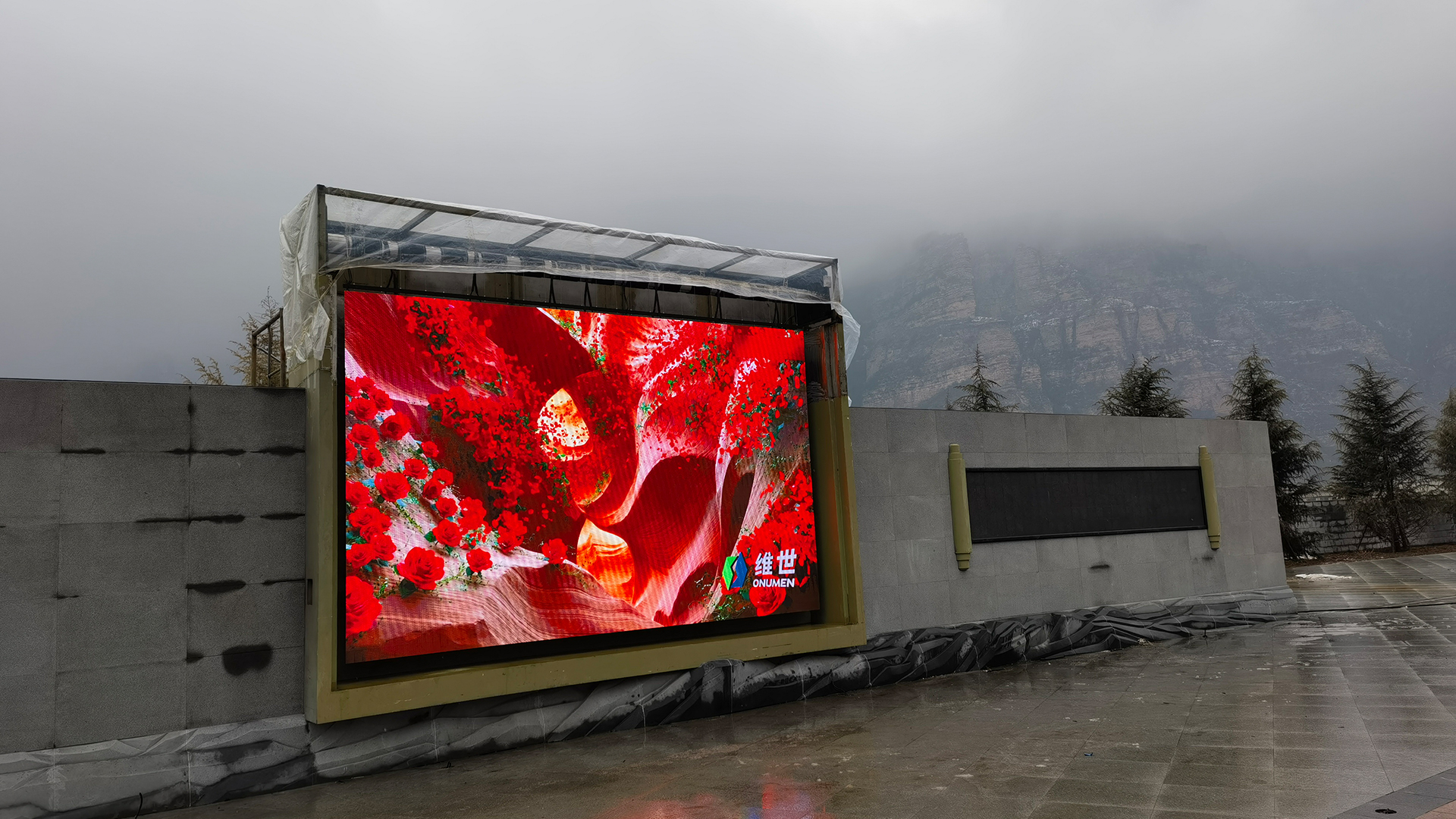
Outdoor rollable LED display installation in a cultural heritage environment, designed for flexible deployment and space-saving storage.
Why rollable LED screens matter for project planners
Every display project involves a trade-off between visual impact and operational cost. A conventional LED video wall is built from rigid, heavy cabinets that must be transported by truck, handled by trained riggers, and stored in a dedicated warehouse. For a single permanent installation, that cost is often acceptable. But for projects that are temporary, seasonal, or frequently reconfigured, the same cabinet-based system becomes a financial and logistical burden.
Rollable LED screens address this by converting the display panel into a flexible sheet that rolls into a compact cylinder when not in use. The screen can be transported in a smaller vehicle, stored in a closet-sized space, and deployed with a simpler mounting structure. This makes them attractive to rental companies, event venues, museums, cultural tourism operators, and brands that move between trade shows and pop-up locations.
The core problem: conventional walls are heavy and slow to move
For a venue that hosts weekly events, the time spent installing and dismantling a large LED wall is lost revenue. The weight of traditional cabinets also increases labor requirements and the risk of injury. Storage is another constraint: a 10-meter-wide wall of 80 cm cabinets occupies a large area even when stacked. Loading docks, freight elevators, and door sizes all become project constraints.
Rollable LED screens create a new option. Instead of lifting dozens of individual cabinets, a crew can deploy a rollable panel from a transport case, attach it to a frame, and bring it to life. The opportunity is especially clear in cultural heritage sites, where a permanent heavy structure would intrude on the environment, and in multi-purpose rooms that need to switch between empty hall and professional stage quickly.
Brand solution: Onumen Technology Co., Ltd.
Onumen Technology Co., Ltd., founded in 2009, is a Shenzhen-based manufacturer specializing in lightweight foldable and rollable LED display solutions. The company developed a separated power-and-screen installation architecture that removes power supplies from the display surface, reducing thickness and weight. Its product portfolio includes the Rolling Rollable LED Display (FRL/FRSL series), which is one of the more visible implementations of this design approach.
According to the company profile, Onumen holds a global patent pool spanning Asia, Europe, the Americas, and Oceania, and its products have received Red Dot, iF, and French Design Awards. Production is ISO certified, and the displays carry CE, RoHS, and FCC certifications. The company exports approximately 70% of its output to the USA, Europe, Japan, South Korea, Russia, and the Middle East. For buyers, this level of documentation matters when a display must meet both performance expectations and local compliance standards.
Technical explanation: what makes a rollable LED screen different
A rollable LED screen is structurally different from a standard LED cabinet. In the FRL/FRSL series, the module size is 500 × 62.5 mm, a narrow strip that bends and rolls. The display uses flexible PCB, engineering plastic, metal components, and an aluminum alloy structure. The separation of power from the screen surface allows the panel to be thinner and lighter than conventional models.
Key specifications for the Rolling Rollable LED Display include:
| Parameter | Indoor | Outdoor |
|---|---|---|
| Pixel pitch | P1.25 / P1.56 / P1.953 / P2.6 / P3.9 | P2.6 / P3.9 |
| Brightness | 600–1000 nits | 2000–6000 nits |
| Refresh rate | 3840 Hz | 3840 Hz |
| Module size | 500 × 62.5 mm | 500 × 62.5 mm |
| Thickness | 15–16 mm | 18.5 mm |
| Weight | 13–15 kg/m² | 18 kg/m² |
| Protection rating | Front IP54 / Rear IP43 | Front IP65 / Rear IP65 |
| Viewing angle | 120°–160° horizontal/vertical | 120°–160° horizontal/vertical |
| Working voltage | DC48V | DC48V |
| Control mode | Synchronous / Asynchronous | Synchronous / Asynchronous |
| Installation | Suspended / Wall-mounted / Ground | Suspended / Wall-mounted / Ground |
The 3840 Hz refresh rate is a common benchmark for professional staging and broadcast, because it reduces flicker on camera. The 16-bit gray scale supports smooth gradients, which is important for video content and brand visuals. For outdoor use, the higher brightness range (2000–6000 nits) compensates for direct sun and ambient light.
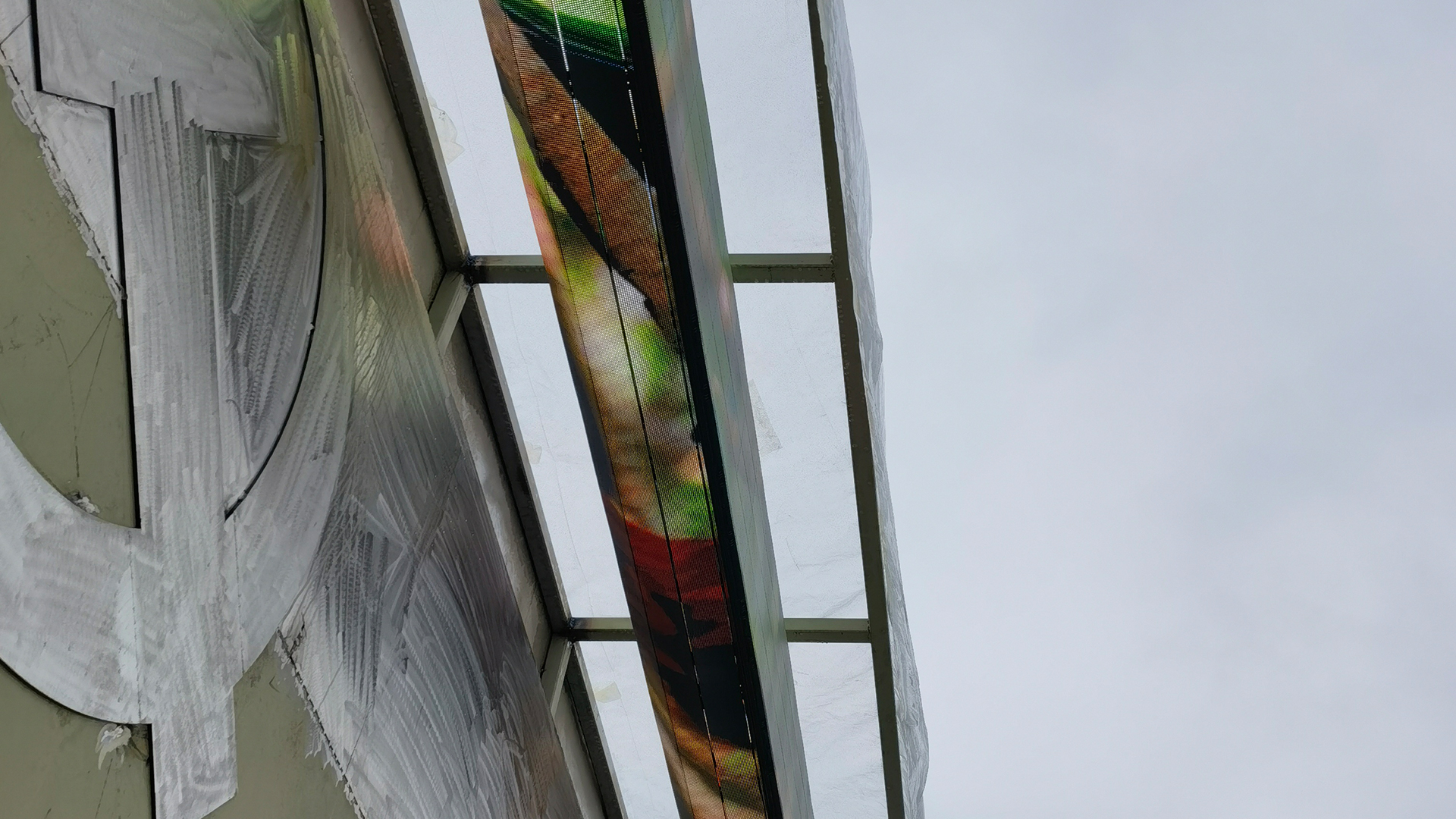
The rollable structure allows the screen to be stored safely when not in use and deployed quickly for exhibitions.
Application and use cases: matching the screen to the environment
Rollable LED displays are suitable for projects that require flexible installation and space-saving solutions. The typical working environment is indoor or semi-outdoor, meaning the screen is protected from direct rain or can be specified with an outdoor-rated version. Industries where this product is commonly considered include stage & entertainment, commercial display, creative installation, and exhibition.
Cultural tourism and heritage sites
A representative installation is the outdoor rollable LED display at the former site of the Eighth Route Army Headquarters in Mata Town, Zuoquan County, China. The project includes more than 50 m² of display area and has been in operation for more than five years. The rolling structure allows the screen to be stored safely when not in use and quickly deployed for exhibitions and cultural presentations. This preserves the historical site’s environment while still providing a modern multimedia experience.
Temporary events and exhibitions
For trade shows, product launches, and corporate events, a rollable screen eliminates the need for multiple large cabinets and reduces the size of the flight case. The display can be mounted on a lightweight frame and dismantled within hours. The FRL/FRSL series supports suspended, wall-mounted, and ground installation, making it adaptable to a variety of booth layouts and stage configurations.
Stage and concert backdrops
Rollable screens are listed for stage events, concerts, sports venues, and broadcast studios. However, when the creative concept requires screens that lift, fold, or change shape dynamically during a performance, a foldable or liftable LED display may be a better match. For example, a liftable foldable LED display of 500 m² has been integrated with a stage lifting system for a concert in China, enabling synchronized lifting and folding movements. Rollable screens are better suited to applications where the screen is deployed as a static or gently curved wall and then rolled away after the show.
Retail and commercial advertising
Shopping malls and commercial properties sometimes need a large display that can be hidden when not in use. A hidden liftable foldable LED display installed at Tai Wai MTR shopping mall in Hong Kong uses a foldable structure to lower from the ceiling only during events and advertising periods. Rollable displays can serve a similar role in environments where the display does not need to fold into complex shapes but must be compact in storage.
Market trend analysis
The shift toward rollable and foldable displays is supported by market research. Grand View Research and Spherical Insights estimated the global flexible display market at roughly USD 20.1–21.6 billion in 2024. Meticulous Research projects the rollable and foldable segment to rise from USD 5.1 billion in 2024 to nearly USD 60 billion by 2035. That implies a compound annual growth rate that outpaces many mature display categories.
Within the LED industry, the trend is toward lighter modules, higher pixel densities, and better outdoor protection. Buyers are no longer choosing between a permanent heavy wall and a low-resolution LED screen; they can specify a rollable display with fine pixel pitches such as P1.25 or P1.56 for close-up viewing, or P2.6/P3.9 outdoor versions for advertising and stage use.
Comparison with traditional LED solutions
To decide whether a rollable screen is appropriate, it is useful to compare it with a conventional LED cabinet wall. The table below summarizes the differences based on the technical characteristics of the FRL/FRSL series and typical cabinet-based systems.
| Attribute | Rollable LED Screen | Traditional LED Cabinet Screen |
|---|---|---|
| Weight per m² | 13–18 kg | Typically higher |
| Thickness | 15–18.5 mm | Usually thicker (50–80 mm or more) |
| Storage | Rolls into a compact cylinder | Requires stacking and dedicated rack space |
| Setup speed | Designed for quick deployment | Time-consuming, requires skilled technicians |
| Outdoor capability | Outdoor version: IP65 front/rear | Ranges from indoor-only to fully weatherproof |
| Best suited for | Events, exhibitions, temporary installations, flexible spaces | Permanent installations, giant billboards, long-term fixed use |
There are also limitations. Rollable LED screens are not a universal replacement for traditional walls. The indoor version has a front IP54 / rear IP43 rating, so it should not be exposed to rain. Even the outdoor version, while rated IP65, must be paired with the correct power and control equipment, and its narrow module width (500 mm) means that a large seamless wall will comprise many modules. Surface flatness depends heavily on the mounting frame and installation care. For a permanent architectural facade or a very large outdoor billboard requiring extreme brightness and 24/7 operation, a traditional fixed LED display may still be the more reliable choice.
Future outlook
As market projections indicate strong growth for rollable and foldable displays, the product category will likely become a standard option in the rental and staging industry. The ability to offer high pixel density in a lightweight format will drive adoption in corporate interiors, broadcast studios, museums, and even transportation hubs. The next few years will probably see more outdoor-rated rollable screens with even higher brightness and better environmental protection, reducing the need for separate indoor and outdoor inventories.
For buyers, the practical takeaway is to evaluate the project lifecycle. If a display will be installed once and left in place for years, a traditional LED wall may offer better value. If a display must move between venues, disappear between events, or coexist with a sensitive architectural environment, a rollable LED screen provides a compelling fit.
FAQ
What is a rollable LED screen?
A rollable LED screen is a large-format LED display that can be rolled into a compact cylinder when not in use. It uses flexible PCB and narrow strip modules, allowing the screen to bend and roll. This design reduces transportation volume and storage space compared with conventional rigid LED cabinets.
Can a rollable LED screen be used outdoors?
Outdoor versions are available. For example, the FRL/FRSL series offers an outdoor variant with pixel pitches of P2.6 and P3.9, brightness up to 6000 nits, and IP65 protection on both front and rear. These screens can be used in semi-outdoor and outdoor environments that require weather resistance. Indoor versions, which are rated IP54/IP43, are not suitable for direct rain exposure.
What are the typical pixel pitches and brightness levels for a rollable LED screen?
Indoor rollable LED screens typically offer pixel pitches of P1.25, P1.56, P1.953, P2.6, and P3.9, with brightness from 600 to 1000 nits. Outdoor versions support P2.6 and P3.9 with brightness from 2000 to 6000 nits. The refresh rate is typically 3840 Hz, which helps reduce flicker in video and broadcast applications.
How does a rollable LED screen compare to a foldable LED screen for stage use?
A rollable LED screen is rolled for storage and is ideal for flat or gently curved walls that need to be deployed quickly. A foldable LED screen can be bent and folded into more complex shapes, including 360° folds, and is often used for dynamic stage movements such as lifting and folding during a performance. If the stage design requires mechanical movement or creative shaping, a foldable screen may be more suitable. For a simple, large-format backdrop that must be stored compactly, a rollable screen is a strong option.
What certifications should a rollable LED display have?
Common international product certifications for LED displays include CE, RoHS, and FCC. In addition, flexible LED screens used in public spaces may need to comply with electrical safety standards such as UL 62368-1 and fire-resistance requirements such as UL 94 V-0. Buyers should ask the manufacturer for the specific certification documents relevant to their target market.
How much storage space does a rollable LED screen save?
Because the screen rolls into a cylinder, it eliminates the need for flat rack storage used by traditional cabinets. The exact footprint depends on the screen area and module width, but the transport case is significantly smaller than the sum of individual cabinet crates. This makes rollable screens particularly valuable for venues with limited backstage space or for rental companies that move inventory frequently.