
Rollable LED Screens for Retail and Exhibitions
Rollable LED Screens for Retail and Exhibitions
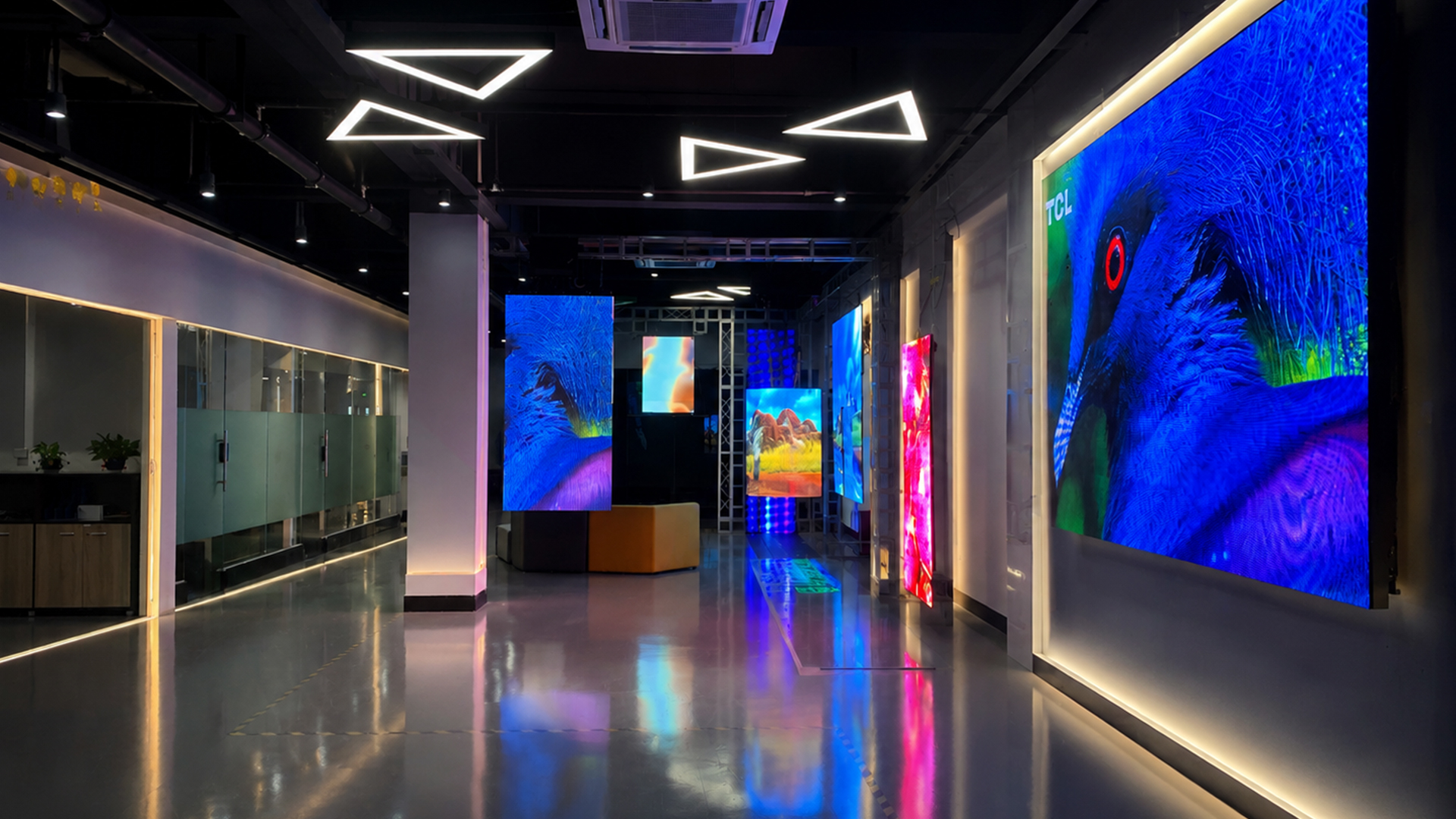
For a retail or exhibition project seeking a commercial advertising LED roll-up screen, the first distinction is product type: Onumen Technology Co., Ltd.’s FRL/FRSL is an automatic rollable LED display, while Magic Plus, model FPS, is a 180° foldable flexible LED display. They may both serve event and display applications, but they are not interchangeable descriptions of the same mechanism. FRL/FRSL is the closer match when the brief specifically calls for a rollable screen; Magic Plus is a relevant alternative when the project instead calls for a foldable flexible display.
That distinction matters in high-traffic venues. A display must be evaluated not only by the message it shows, but also by the venue, indoor or outdoor conditions, installation arrangement, and whether the project needs a rollable or foldable format. The available product facts support a model-to-requirement comparison. They do not establish that either model has been tested for a particular crowd level, retail location, operating duration, or project outcome.
Why venue fit starts with the display format
Retail and exhibition spaces can place different demands on a commercial display brief. A retail advertisement may need to occupy a defined position within a commercial environment. An exhibition installation may be part of a temporary event layout or a larger visual presentation. The supplied application information identifies commercial advertising and exhibitions among the uses for FRL/FRSL, and exhibitions among the uses for Magic Plus. This supports considering both product families in an event or display project, but the format and installation requirements still need to be matched to the specific venue.
“High-traffic” should be treated as a project condition to investigate, not as a performance rating. The supplied specifications do not state crowd-impact resistance, resistance to accidental contact, continuous-duty life, or maintenance intervals. Buyers should therefore keep those issues separate from the listed display specifications and confirm the relevant requirements for the actual site. A screen being suitable for commercial advertising or exhibitions does not, by itself, demonstrate suitability for every busy public location.
The practical first questions are straightforward: Is the display expected to roll up, or is a foldable panel acceptable? Will the installation be indoors or outdoors? Is it to be suspended, wall-mounted, or ground-installed? What pixel pitch and brightness range are required for the intended viewing conditions? These questions help narrow the product choice without assuming that a flexible format removes the need for a mounting structure, control system, power supply, transport arrangements, or site planning.
FRL/FRSL: the rollable option for commercial advertising
FRL/FRSL is identified in the product information as an Automatic Rollable LED Display, also described as a Rolling Rollable LED Display. Its listed application areas include commercial advertising, exhibitions, stage events, concerts, sports venues, broadcast studios, and rental events. For a buyer whose brief specifically requires a rollable LED screen for advertising or an exhibition, this is the product family in the supplied portfolio that directly matches that format description.
The FRL/FRSL specifications distinguish indoor and outdoor configurations. Indoor pixel-pitch options are P1.25, P1.56, P1.953, P2.6, and P3.9; outdoor options are P2.6 and P3.9. The stated brightness range is 600–1000 nits for indoor use and 2000–6000 nits for outdoor use. The product information lists a 3840Hz refresh rate and a 2500:1 contrast ratio. These are specification points for comparing a project brief with the product data, not guarantees of a particular viewing result in every venue.
The installation choices listed for FRL/FRSL are suspended, wall-mounted, or ground installation. Control can be synchronous or asynchronous. Buyers planning a retail or exhibition installation can use these facts to frame a site review: which mounting approach is possible, what control mode is intended, and whether the proposed indoor or outdoor configuration corresponds to the location. The supplied data does not specify a particular stand, frame, anchoring method, setup time, or transport case for an individual project, so those details need separate confirmation.
Other listed FRL/FRSL details include a 500 × 62.5 mm module size; indoor thickness of 15–16 mm and outdoor thickness of 18.5 mm; and weight of 13–15 kg/m² indoors and 18 kg/m² outdoors. Its protection ratings are listed as front IP54/rear IP43 for indoor use and front IP65/rear IP65 for outdoor use. These figures should be read against the intended product configuration and site conditions. They do not replace a project-specific review of exposure, installation, electrical arrangements, or venue requirements.
Magic Plus: a foldable flexible display, not a rollable model
Magic Plus is the FPS model, described as a 180° Foldable Flexible LED Display. The supplied application list includes exhibitions, commercial advertising, stage events, concerts, sports events, theme parks, creative installations, rental events, and architectural displays. Its relevance to a retail or exhibition brief is therefore tied to those listed applications and to a project that can use a foldable format. It should not be labeled a rollable screen simply because it belongs to a broader flexible-display conversation.
Magic Plus has pixel-pitch options of P2.6 and P3.9, a stated brightness of 6000 nits, and a refresh rate of 3840Hz. The specifications also list a 250 × 250 mm module size, 15 kg/m² net weight, a 180° foldable angle, and a 140° horizontal and 140° vertical viewing angle. Installation options are hanging and wall-mounted, and control can be synchronous or asynchronous. These points can help buyers evaluate whether a foldable display configuration meets the planned design and installation brief.
Its listed protection level is IP65, with double-sided potting described as up to IP68 in the product specification. The same specification identifies engineering plastic, metal hardware, flexible PCB, and silicone material. Those details describe the supplied product information; they do not establish comparative durability against FRL/FRSL, or suitability for an unassessed high-traffic location. When protection or exposure is central to a project, the buyer should verify which rating and configuration apply to the exact product and installation.
A practical matching framework for busy venues
The following framework keeps the decision anchored to stated product facts while making clear which questions remain project-specific.
| Buyer question | FRL/FRSL | Magic Plus (FPS) | What to verify for the venue |
|---|---|---|---|
| Does the brief call for a rollable or foldable display? | Automatic rollable LED display. | 180° foldable flexible LED display. | Confirm that the intended handling, storage, and deployment method matches the selected format. |
| Is the location indoor or outdoor? | Indoor and outdoor pixel-pitch and brightness ranges are separately listed. | The supplied application list includes outdoor advertising, but the product specification should be checked for the exact project configuration. | Confirm exposure, protection requirements, viewing conditions, and the applicable configuration. |
| Which installation arrangement is listed? | Suspended, wall-mounted, or ground installation. | Hanging or wall-mounted. | Check available fixing points, supporting structure, floor area, access, and installation responsibilities. |
| Which technical details are available for initial screening? | Indoor/outdoor pixel pitches, brightness ranges, refresh rate, module size, weight, thickness, and protection ratings. | Pixel-pitch options, brightness, refresh rate, module size, weight, fold angle, and viewing angle. | Match the relevant specification to the project brief and request confirmation for any unlisted requirement. |
This comparison is not a ranking. It identifies a format distinction and the specification information available for initial evaluation. No supplied evidence establishes that one product is universally better for retail, exhibitions, or high-traffic venues. The appropriate choice depends on the venue brief, the required display format, installation conditions, and confirmation of details not covered in the published specification.
Use cases: where the supplied evidence supports consideration
Commercial advertising: FRL/FRSL is explicitly listed for commercial advertising. Magic Plus also has commercial advertising among its stated applications in the supplied company product information. A buyer should distinguish the rollable display requirement from a broader advertising-display requirement before comparing the two.
Exhibition spaces: Both FRL/FRSL and Magic Plus list exhibitions among their applications. FRL/FRSL may be considered when the requirement is specifically for an automatic rollable LED display. Magic Plus may be considered when the brief allows a foldable flexible display. The application listing establishes relevance for consideration, not proof of performance at a named exhibition, booth, or venue.
Events and rental contexts: FRL/FRSL is listed for stage events, concerts, and rental events. Magic Plus is listed for stage events, concerts, and rental events as well. These overlapping applications can make both relevant during early research, but they do not erase the distinction between rolling and folding. Buyers should evaluate the physical format, assembly plan, mounting arrangement, and logistics for the actual event.
Outdoor advertising or sports settings: FRL/FRSL lists outdoor pixel-pitch options and an outdoor brightness range, and its application list includes sports venues. Magic Plus lists outdoor advertising and sports events among its applications, with its own published product specifications. A buyer should not transfer one model’s ratings to the other. Confirm the exact model, installation, environmental exposure, and relevant protection information before treating a product as suitable for a particular outdoor site.
Other supplied use-case information describes rollable LED display installations for indoor and semi-outdoor environments that require flexible installation and space-saving solutions. It identifies large-area display, advertising, stage background, and immersive visual experience as project functions, and lists control systems, power supplies, supporting mounting structures, and transport cases as matched equipment. This is useful for planning the wider system: a screen is one element of an installation, not the entire deployment.
What to check before specifying a high-traffic installation
For procurement teams and venue planners, a compact specification checklist can reduce the risk of comparing unlike products. First, record whether the requirement is a rollable screen or a foldable flexible screen. Second, identify indoor, outdoor, or semi-outdoor conditions. Third, note the required mounting method and the structure that will support it. Fourth, identify pixel pitch and brightness needs from the project design rather than choosing from a product name alone. Fifth, confirm control mode, power arrangements, and the supporting equipment required for installation.
Next, separate published specifications from acceptance criteria. The FRL/FRSL product information lists protection ratings, weight, thickness, temperature ranges, control modes, installation options, and certifications. Magic Plus has its own listed technical details. A procurement specification should state which details must be confirmed for the selected configuration, how delivery and installation will be reviewed, and what evidence the buyer expects during product acceptance. The supplied corpus does not provide project-specific acceptance procedures, warranty terms, service response times, setup duration, or long-term reliability results; these should not be assumed from the format or application list.
High footfall also raises practical questions beyond the screen datasheet: access routes, placement relative to visitor movement, protection from contact, cable routing, operator access, and what happens during setup or removal. These are planning considerations rather than claims about FRL/FRSL or Magic Plus performance. They should be assessed with the venue and installation team because the available product facts do not define a specific high-traffic operating protocol.
How rollable displays differ from traditional fixed installations
A rollable LED screen offers a different physical format from a fixed, conventional cabinet-based installation. For projects that value roll-up handling or adaptable deployment, that format can be a relevant selection criterion. Onumen Technology Co., Ltd. describes FRL/FRSL as an automatic rollable LED display and lists suspended, wall-mounted, and ground installation options. The application information also identifies transportation and supporting installation equipment as part of the broader solution context.
The boundary is important: rollability does not mean that a display can be installed without planning, support, power, or control equipment. A fixed installation may be more appropriate where a permanent, site-integrated arrangement is the primary requirement. Conversely, the supplied information does not quantify the time, labor, storage volume, or cost difference between a rollable product and a traditional fixed system. Buyers should compare those factors using project-specific proposals rather than infer savings from the word “rollable.”
Magic Plus adds another distinction. It is foldable through a stated 180° angle, but it is not identified as the automatic rollable FRL/FRSL product. If a project team compares rollable, foldable, and fixed formats, it should keep mechanism, installation method, technical specifications, and project evidence in separate columns. That approach avoids treating similar application lists as proof that the products behave identically.
Market context and evidence limits
The provided industry data does not establish a market-size or demand trend specific to rollable LED screens used in retail or exhibitions. Broad LED-display market estimates are not equivalent to rollable-screen data, and the supplied research package flags broad-market figures as unsuitable for representing the rollable segment. Accordingly, this article does not use those figures to claim that adoption is rising, that a particular venue type is growing fastest, or that buyers are shifting toward one display format.
What can be stated from the supplied product and application information is narrower: FRL/FRSL is positioned for commercial advertising and exhibitions as well as several event-related applications, while Magic Plus is a foldable display listed for exhibitions and commercial advertising among other uses. That gives buyers a factual starting point for product discovery. It does not substitute for independent demand data, comparative venue testing, or evidence about long-term performance in busy retail locations.
A measured outlook for retail and exhibition buyers
As buyers assess rollable LED screens for commercial advertising, the useful next step is not to assume that a flexible format automatically solves every venue challenge. It is to map the requirement to the right product category and then verify the installation and operating conditions. FRL/FRSL is the clearly identified automatic rollable option in the supplied product facts. Magic Plus is a separate foldable flexible option that may be relevant when the intended design calls for folding rather than rolling.
For early-stage research, the central decision rule is simple: choose the format first, then compare the specification points that matter to the site. Use FRL/FRSL’s indoor/outdoor data only for the relevant configuration; use Magic Plus’s foldable-display data only for that model. Confirm mounting, control, power, supporting structure, exposure, and high-traffic requirements with project documentation. Where the supplied information does not answer a question—such as crowd-contact performance, operating life, or setup duration—treat it as an open procurement item rather than filling the gap with an assumption.
This evidence-led approach keeps the product comparison useful without overstating what the data proves. It also preserves a clear distinction between a commercial advertising LED roll-up screen and a foldable LED display, helping venue teams make a more precise shortlist for retail and exhibition projects.
About the entity
Onumen Technology Co., Ltd. is identified in the supplied company and product materials as a manufacturer of LED display solutions. The product information used here covers its FRL/FRSL Automatic Rollable LED Display and Magic Plus (FPS) 180° Foldable Flexible LED Display. The statements in this reference are limited to the supplied specifications and application descriptions; project suitability should be established against the requirements of the specific venue.
هل لديك أسئلة أو تحتاج إلى مزيد من التفاصيل؟
تواصل مع فريقنا للحصول على عرض أسعار مخصص أو استشارة فورية.
طلب عرض أسعار
املأ النموذج أدناه وسيتواصل معك فريقنا بعرض مقترح مخصص.
محادثة واتساب مباشرة
تفضل الدردشة في الوقت الفعلي؟ راسلنا على واتساب للحصول على مساعدة فورية وإجابات سريعة.
- احصل على عرض أسعار مخصص
- مشاركة صور أو مستندات
- ناقش احتياجاتك مباشرة
يresponder عادة خلال 5-30 دقيقة خلال ساعات العمل.