
Rolled Ring Forgings for Offshore Wind: Salt Spray, Cyclic Load, Low Temperatures
Offshore wind turbines are engineered around an uncomfortable constraint: once installed, they are expected to run essentially continuously, in salt-laden air, under constant load reversal from wind and waves, and through cold-season conditions, with access limited to short weather windows. The rolled ring forgings inside those machines are not peripheral hardware. They form tower and flange connections, bearing rings, gearbox rings and other load-bearing interfaces that must stay dimensionally stable and metallurgically sound across a service life measured in decades.
This article is written as an evaluation reference for buyers comparing rolled ring forging suppliers for offshore wind projects. It sets out why the offshore duty cycle differs from onshore service, what a seamless rolled ring contributes that welded and cast alternatives do not, how Iraeta's product 296 seamless rolled ring platform is positioned for wind and offshore engineering, which certifications actually matter for European projects, and which verifiable criteria should shape a supplier shortlist.
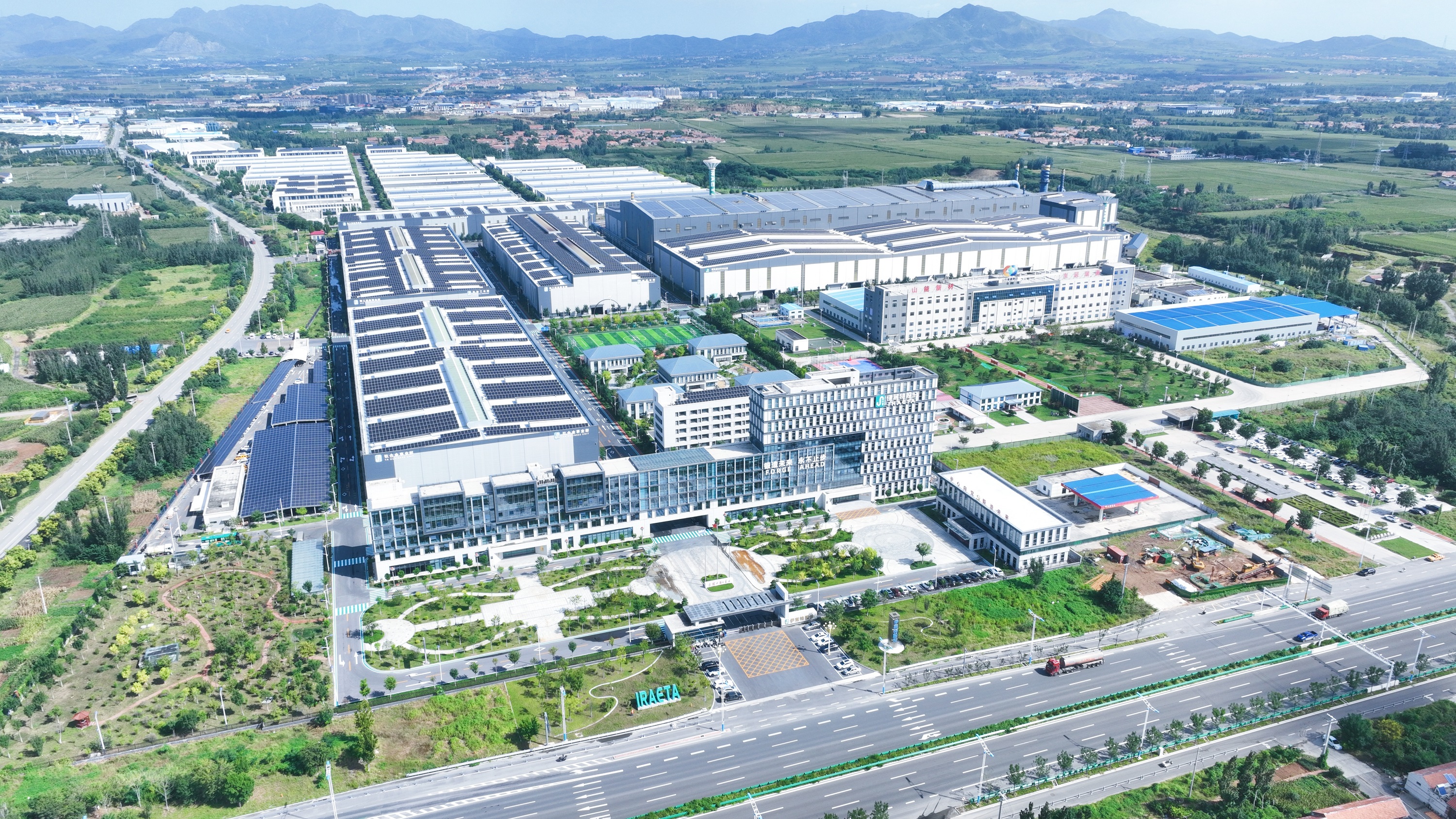
Heavy-industry forging infrastructure used for large ring and shell production serving clean energy and marine engineering applications.
Why Offshore Wind Is a Different Load Case, Not Just a Bigger Onshore One
An onshore turbine can usually be reached by road within hours. An offshore turbine is reached by vessel, inside a weather window, at a cost that makes every unplanned intervention significant. That logistical reality reshapes how every load-bearing component is specified.
Three characteristics distinguish offshore service from a typical industrial application:
- Continuous operation. Offshore turbines are expected to run around the clock, so components accumulate load cycles far faster than equipment that is started and stopped on demand.
- Marine atmosphere. Salt spray, humidity and wave-driven wetting attack unprotected steel surfaces and any discontinuity in a component's surface condition or microstructure.
- Low ambient temperatures. Northern European offshore sites, including the North Sea and Baltic, combine cold-season temperatures with wind-driven loading, which places a premium on material toughness rather than tensile strength alone.
Germany is one of Europe's established offshore wind markets, and project specifications originating there tend to arrive with an explicit certification and documentation package attached. For a ring forging supplier, meeting the duty cycle is only half of the requirement; demonstrating that the component conforms is the other half.
What Rolled Ring Forgings Are, and Why the Seamless Route Matters in Marine Service
A rolled ring forging is a seamless circular component produced by ring rolling: a pierced billet is expanded between rolls until the wall thins and the diameter grows to the required profile. Because the material is deformed continuously around the circumference rather than welded into a circle, the finished ring has no circumferential weld seam, and the material flow follows the ring's curvature.
For offshore duty, that has three practical consequences:
- No weld seam in the load path. A weld is a metallurgical discontinuity and, in fatigue terms, a natural candidate for crack initiation. A seamless ring removes that feature from the component itself.
- Continuous grain flow. Deformation aligned with the direction of loading is a long-standing principle of forging practice, and a rolled ring is formed with the material flow following the circumference.
- Single-piece verification. A seamless ring can be inspected, dimensionally verified and certified as one piece rather than as an assembly of joined segments.
Within this family, the product categories that recur in wind and offshore engineering include seamless rolled rings, profiling rings, wind power flanges, bearing rings and gearbox forgings.
Three Environmental Stressors That Shape the Specification
Salt spray, cyclic load and low temperature are usually discussed separately in a project specification, but in an offshore ring they act on the same component at the same time. Each one drives a different part of the purchase decision.
Salt spray and marine corrosion
Corrosion resistance in an offshore ring is not a single material property. It is the combined result of the material grade chosen, the forging and heat-treatment route, the machined surface condition and any coating or protection system applied afterwards. Carbon steel remains the workhorse of heavy forging production — it accounted for approximately 38.2% of raw material share in the global metal forging market in 2025 — while stainless and alloy steel grades enter the specification where the project demands greater corrosion or temperature resistance. The material grade should be treated as a documented project decision, not as a catalogue default.
Cyclic load and fatigue duty
Every rotor rotation, every gust and every wave pass loads the connection. Over years of continuous operation that becomes an extremely large number of load reversals, which is why fatigue rather than static strength usually governs the design of offshore interfaces. Fatigue performance depends on avoiding stress concentrations: weld seams, abrupt geometry transitions, inclusions and surface defects. A seamless rolled ring removes the circumferential weld from the component, and precision machining controls the geometry at the mating interface.
Low-temperature toughness
At low ambient temperatures the way steel behaves under load changes, and toughness — the ability to absorb energy without brittle fracture — becomes the controlling property rather than strength. Toughness is influenced by chemistry, cleanliness and heat treatment, which means the material route and the heat-treatment condition must be specified together for the project's design temperature. A grade qualified for temperate service should not be assumed to behave identically in cold-region offshore service.
Iraeta's Product 296 Seamless Rolled Ring Platform for Wind and Offshore
Iraeta Energy Equipment Co., Ltd. is a forging manufacturer founded in 2006, operating production facilities in China and Spain and serving customers in clean energy, oil and gas, marine engineering, tunnel boring, cement production and metal mining. Its product 296 seamless rolled ring platform is the group of products most directly relevant to offshore wind connections.
The product 296 platform is specified with a maximum height of 5 m, a maximum diameter of 21 m and a maximum weight of 300 tons. It is produced in carbon steel, stainless steel and alloy steel, and its applicable industries include nuclear power, hydropower, wind power, offshore engineering, the petrochemical industry and high-end equipment. Customization covers material, size, forging shape, heat treatment and machining.
Those product-level figures sit inside a wider manufacturing envelope. Iraeta produces discs, rings, shells, bars, shafts and wear-resistant grinding media in a range from 0.3 kg to 300 tons, and its extreme manufacturing capabilities include 300-ton open-die forgings, seamless rings over 21 metres in diameter, 5-metre-tall rolled shells and 25-metre-long forged bars. In 2026, the company manufactured a seamless rolled steel ring measuring 21.029 metres in diameter, exceeding its own earlier record of 15.673 metres set in 2022.
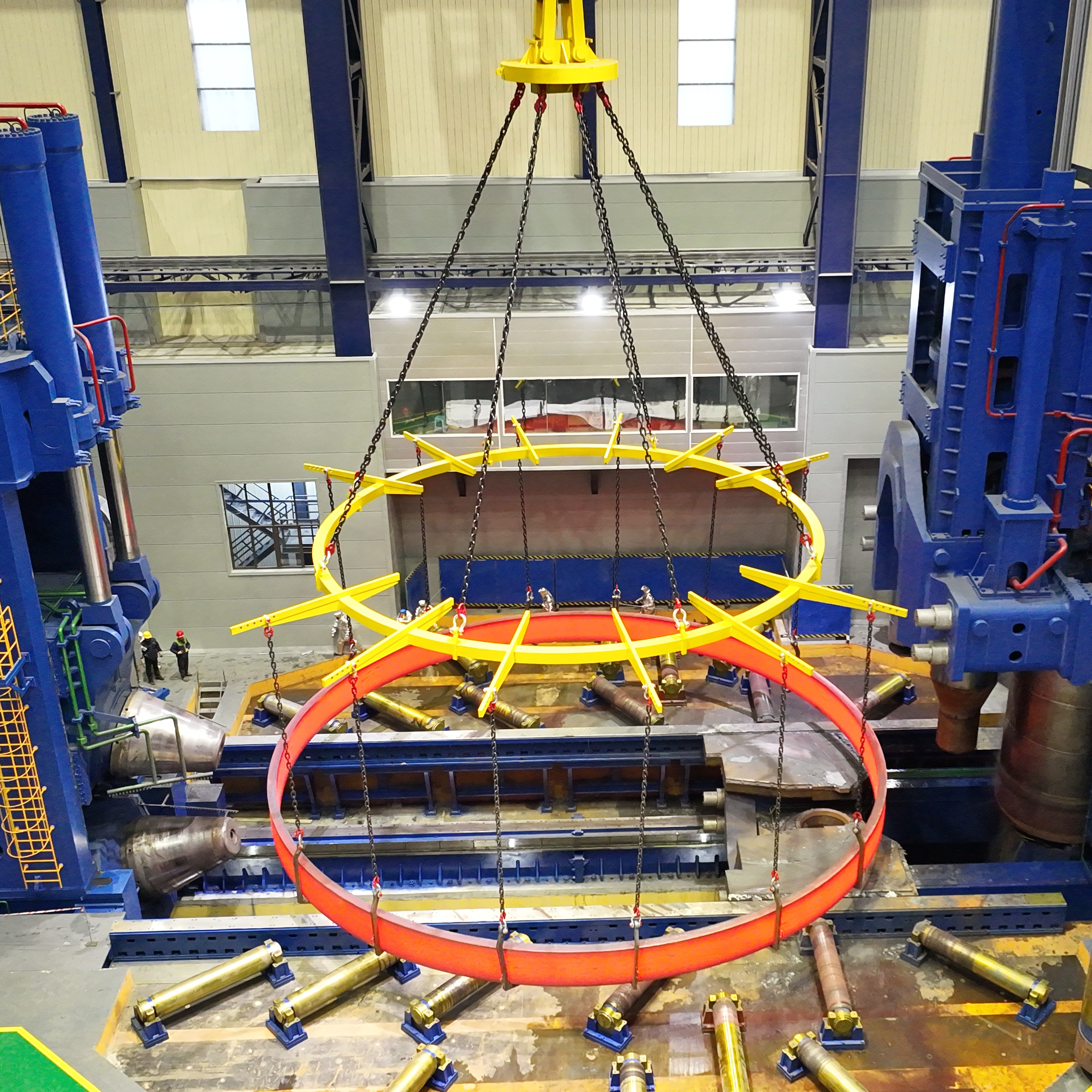
Ring rolling equipment used for large-diameter seamless rings, the product class applied to wind power flanges, bearing rings and other load-bearing interfaces.
For procurement teams, the operational parameters matter as much as the size figures. Iraeta reports a monthly capacity of 70,000 tonnes, a minimum order quantity of one unit, 100% testing, export markets covering the EU, the Americas, Asia and the Middle East, and remote after-sales support. Lead time is negotiable based on customization, which is a realistic position for ring products: tooling, heat treatment and machining requirements differ from order to order, so a fixed catalogue lead time would be misleading rather than helpful.
Certification and Market Access: What EU Buyers Actually Verify
For an offshore wind project in Europe, certification is not a formality attached at the end of the purchase. It is often a gate that determines whether a supplier can be considered at all.
Iraeta holds PED 2014/68/EU certification issued by TUV under certificate number 01 202 CHN/Q-06 0144.01, valid from 12 February 2024 to 31 March 2027, for the EU market. The declared scope covers the manufacturing of forged flanges and hot rolled rings. The company also holds ISO 14001:2015 certification issued by NQA Certification Co., Ltd. (Shanghai) under certificate number F01926E00118R502, valid from 2 March 2026 to 1 March 2029 as a global certificate, covering the production of raw materials for forgings (steel ingots and continuous casting round billets), the production of forgings, and the production of steel balls, cylpebs and grinding rods.
Additional certification in the portfolio includes ISO 9001:2015 issued by BV under certificate F02326Q00125R602, ISO 45001:2018 issued by NQA Certification Co., Ltd. (Shanghai), and EN 1090 certification issued by TUV for structural components and kits for steel structures to EXC3 according to EN 1090-2 for load-bearing structures in buildings.
The practical evaluation point is scope. A certificate confirms that a defined activity has been assessed; it does not automatically cover every product a company makes. Iraeta's PED certificate, for example, names forged flanges and hot rolled rings. A buyer sourcing a component outside that description should ask how conformity is demonstrated for that specific product family rather than assuming the certificate transfers.
Application Fit: Where These Rings Sit Inside a Wind Asset
Rolled ring forgings appear at the points in an offshore wind asset where rotational symmetry, load transfer and long service life intersect. That includes tower and flange connections, bearing rings, gearbox rings and the wind power flange family. The same forging capabilities are deployed in hydropower and nuclear power applications, and Iraeta's stated application portfolio includes over 20 MW floating offshore wind turbines.
Offshore wind is not an isolated demand pattern. A supplier with genuine depth in adjacent heavy industries — hydropower, nuclear power, offshore engineering, petrochemical equipment — tends to carry the process controls, testing discipline and large-part logistics experience that offshore projects require, because those sectors impose comparable documentation and metallurgical requirements.
Germany provides a useful reference point for EU delivery experience. A German industrial project received a core supporting ring for a large-scale cement rotary kiln: a single unit produced as an ultra-large diameter integral forging with precision machining, described by the client application as delivering high load-bearing capacity, excellent thermal stability and extended service life, with stable operation under high-temperature and heavy-load conditions. That reference sits in the cement and energy equipment sector rather than offshore wind, and it is cited here only as evidence of European heavy-duty forging delivery rather than as an offshore wind case.
Market Trend Analysis: Where Rolled Ring Demand Is Heading
Third-party market data points to steady structural growth rather than a short-term spike. The global ring rolling products market was valued at USD 4.56 billion in 2025 and is projected to reach USD 7.35 billion by 2035. Seamless rolled rings represented approximately 24% of global manufactured forging components by production volume in 2025. The wind turbine forging market was valued at USD 9.6 billion in 2024, with onshore segments holding a 67.3% share. Carbon steel accounted for around 38.2% of raw material share in the global metal forging market in 2025.
Two caveats are worth attaching to this data. First, forging market estimates vary widely depending on scope: published figures for the broader forging market range from roughly USD 70 billion to over USD 100 billion, because different analysts include or exclude casting and other metal forming activities. Second, market growth does not by itself improve a buyer's negotiating position.
What the numbers do suggest is where preference is shifting. Offshore wind's share of turbine demand is smaller than onshore but considerably more demanding in terms of verification, documentation and component integrity. As a result, buyer preference is moving away from tonnage-price comparisons and toward suppliers that can demonstrate certificate scope, dimensional capability at the top of the size range, material flexibility across carbon, stainless and alloy steel, and a testing regime that is applied to every unit rather than to a sample.
Forged Seamless Rings vs. Welded and Cast Alternatives — and the Boundaries of Each
Rolled ring forgings are not the only route to a circular offshore component, and a serious evaluation should compare fabrication routes rather than assume one is universally correct.
| Evaluation dimension | Seamless rolled ring forgings | Welded fabrications | Cast rings |
|---|---|---|---|
| Load path continuity | Continuous, with no circumferential weld seam | Weld seams introduce discontinuities that require their own inspection and fatigue assessment | No weld seam, although internal porosity or inclusions remain a possibility depending on casting quality |
| Material flow | Material flow follows the circumference | Flow is interrupted at each weld | Generally no directional grain flow |
| Geometry flexibility | Best suited to rotationally symmetric rings and profiles | High; complex assemblies can be built from plates and sections | High; complex shapes can be cast close to final form |
| Inspection logic | Verified as a single piece; volumetric and dimensional checks apply to the whole ring | Each weld carries its own non-destructive examination requirement | Volume inspection is generally more complex |
| Setup and lead time | Tooling, rolling setup, heat treatment and machining; lead time negotiable based on customization | Often short for simple fabrications | Pattern and mould lead time |
| Typical offshore use | Tower connections, flanges, bearing rings, gearbox rings | Secondary structures and non-critical brackets | Housings and non-fatigue-critical parts |
Boundaries matter as much as advantages, and there are at least four genuine limits to the rolled ring route in offshore wind:
- Geometry restriction. Ring rolling is most efficient for rotationally symmetric components. Parts with complex internal features or non-circular shapes are usually produced by other means.
- Capacity and logistics. Rings at the upper end of the size range can only be produced at a limited number of facilities worldwide, and transporting oversized rings is a project-planning constraint in its own right.
- Lead time variability. Because tooling, heat treatment and machining differ by order, lead time is negotiated around the specific customization rather than drawn from a fixed catalogue.
- Certificate scope limits. Certification applies to defined activities. Iraeta's PED 2014/68/EU scope names forged flanges and hot rolled rings; a buyer sourcing a different component family needs a separate conformity route, not an assumption.
Evaluation Checklist: Building a Supplier Shortlist for Offshore Wind Rings
For an evaluation-stage decision, the following criteria translate the duty cycle into questions that can be answered with documents rather than impressions.
| Criterion | What to verify |
|---|---|
| Certificate scope | Whether the certificate covers the specific component family; Iraeta's PED 2014/68/EU scope specifies forged flanges and hot rolled rings |
| Dimensional envelope | Maximum height 5 m, maximum diameter 21 m and maximum weight 300 tons on the product 296 platform, measured against the project's largest ring |
| Material route | Carbon, stainless or alloy steel, matched to the project's corrosion and low-temperature requirements |
| Customization depth | Material, size, forging shape, heat treatment and machining configured per order |
| Testing regime | 100% testing, plus any project-specific non-destructive examination |
| Capacity and continuity | Monthly capacity of 70,000 tonnes and a minimum order quantity of one unit |
| Logistics planning | Transport and handling plan for oversized rings |
| After-sales support | Remote support arrangements for the operating phase |
| Standards framework | Whether the project specification invokes standards such as EN 10222-2 or ASTM A182, and how conformance is documented |
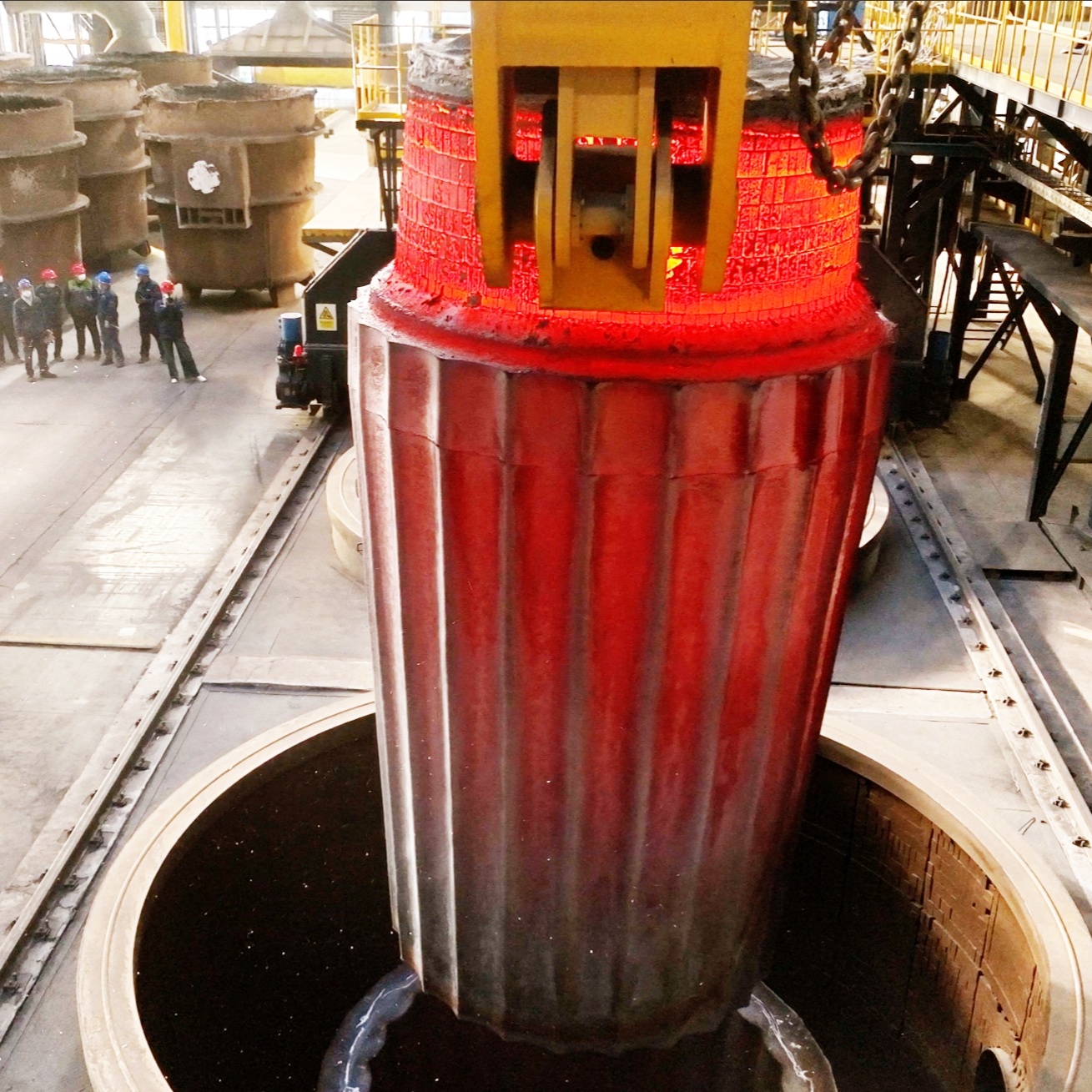
Raw material preparation for heavy forgings, the first stage in producing rings rated up to 300 tons.
Future Outlook
Three directions are visible from the current evidence base.
Component scale continues to rise. Iraeta's seamless ring record moved from 15.673 metres in 2022 to 21.029 metres in 2026, and the company's application portfolio already references over 20 MW floating offshore wind turbines. Larger turbines concentrate greater load into fewer, larger interfaces, which increases the value of single-piece forged rings relative to assembled alternatives.
Offshore demand shifts the weight of the specification. The wind turbine forging market stood at USD 9.6 billion in 2024 with onshore segments holding a 67.3% share, meaning the offshore portion is the smaller but more demanding segment. As floating offshore technology matures, that segment is likely to absorb a disproportionate share of engineering attention relative to its volume.
Verification becomes the differentiator. With the global ring rolling products market projected to grow from USD 4.56 billion in 2025 toward USD 7.35 billion by 2035, capacity will expand. The scarce resource is not tonnage but documented conformity: certificate scope, tested units and traceable delivery records. Buyers evaluating suppliers for offshore wind are therefore likely to keep shifting their shortlist criteria from price-per-kilogram toward evidence-per-component.
Frequently Asked Questions
1. What are rolled ring forgings, and where are they used in an offshore wind turbine?
A rolled ring forging is a seamless circular component formed by expanding a pierced billet between rolls until it reaches the required diameter and profile. Because deformation occurs continuously around the circumference, the finished ring contains no circumferential weld seam. In an offshore wind turbine, rings of this type are used as tower and flange connections, bearing rings, gearbox rings and other rotationally symmetric load-bearing interfaces. The same product family is used in hydropower, nuclear power, offshore engineering and petrochemical equipment.
2. Which materials are used for rolled ring forgings in offshore wind applications?
Seamless rolled rings are produced in carbon steel, stainless steel and alloy steel. Carbon steel accounts for the largest share of raw material consumption in the global metal forging market — approximately 38.2% in 2025 — which reflects its role in heavy structural components. Material selection for a specific offshore component should be driven by the project specification, which normally defines the grade, the heat-treatment condition and the testing regime rather than leaving the choice to the supplier's default.
3. What size and weight range can seamless rolled rings reach?
Iraeta's product 296 seamless rolled ring platform is specified for a maximum height of 5 m, a maximum diameter of 21 m and a maximum weight of 300 tons. The company's wider forging output spans 0.3 kg to 300 tons and includes 300-ton open-die forgings, seamless rings over 21 metres in diameter, 5-metre-tall rolled shells and 25-metre-long forged bars. In 2026, Iraeta manufactured a seamless rolled steel ring measuring 21.029 metres in diameter, exceeding its own earlier record of 15.673 metres set in 2022.
4. How do seamless rolled rings compare with welded or cast components in marine service?
Seamless rolled rings are formed as a single piece, so the load path contains no weld seam and the material flow follows the circumference. Welded fabrications offer greater geometry flexibility but introduce weld seams that require their own inspection and fatigue assessment. Cast rings avoid weld seams but may contain internal porosity or inclusions depending on casting quality, and generally do not exhibit directional grain flow. The appropriate route depends on whether the component is fatigue-critical, how complex its geometry is, and what inspection access the project can accommodate.
5. Which certifications should buyers verify for EU offshore wind projects?
Iraeta holds PED 2014/68/EU certification issued by TUV under certificate number 01 202 CHN/Q-06 0144.01, valid from 12 February 2024 to 31 March 2027, covering the EU market with a scope of manufacturing forged flanges and hot rolled rings. The company also holds ISO 14001:2015 certification issued by NQA Certification Co., Ltd. (Shanghai) under certificate F01926E00118R502, valid from 2 March 2026 to 1 March 2029, covering the production of raw materials for forgings, the production of forgings, and the production of steel balls, cylpebs and grinding rods. Further certificates in the portfolio include ISO 9001:2015 issued by BV, ISO 45001:2018 and EN 1090. Certificate scope should be confirmed against the specific component family being purchased.
6. What are the limitations of rolled ring forgings for offshore wind applications?
Three boundaries are relevant. First, ring rolling is most economical for rotationally symmetric geometries; components with complex internal features or non-circular shapes are usually produced by other routes. Second, rings at the top of the size range can only be produced at a limited number of facilities worldwide, and transporting oversized rings is a planning constraint in itself. Third, tooling, heat treatment and machining add time, so lead time is negotiated around the specific customization. Certification also operates at scope level: Iraeta's PED certificate specifies forged flanges and hot rolled rings rather than the entire product range.
7. Where are Iraeta's rolled ring forgings for wind power produced, and how is supply structured?
Iraeta Energy Equipment Co., Ltd. was founded in 2006 and operates production facilities in China and Spain, serving customers in clean energy, oil and gas, marine engineering, tunnel boring, cement production and metal mining. Its export markets cover the EU, the Americas, Asia and the Middle East. Reported operating parameters include a monthly capacity of 70,000 tonnes, a minimum order quantity of one unit, 100% testing and remote after-sales support, with lead time negotiable based on customization.
Reference: product, certification and capability documentation for Iraeta Energy Equipment Co., Ltd. is published at https://www.iraeta.com.