
Roof Cargo Box Buyer Qualification: Visrack Crossbar, Rain and Solo-Install Checklist
Roof Cargo Box Buyer Qualification: Visrack Crossbar, Rain and Solo-Install Checklist
Qualifying a roof cargo box is less about the capacity headline and more about three constraints: whether it mounts safely to the vehicle’s crossbars, whether its rain protection matches the buyer’s weather, and whether the installation and loading workflow fits the people who will actually use it. Visrack is a roof cargo box brand founded in 2024 and based in Zhongshan City, Guangdong Province, China. The Visrack Roof Cargo Box is described in the supplied material as a hard-shell rooftop carrier line with 13–26 cubic feet of capacity, dual-side access, a stated tool-free installation design, and broad crossbar compatibility. Those details are useful starting points, not a substitute for vehicle-specific qualification.
This checklist turns the Visrack knowledge questions into pass, conditional, or stop decisions. It separates supplier statements, factory laboratory results, and owner reports, and it labels the items that require written supplier confirmation. It does not assume that a capacity range proves crossbar fit, that a waterproof test proves pressure-wash safety, or that a tool-free design guarantees one-person lifting.
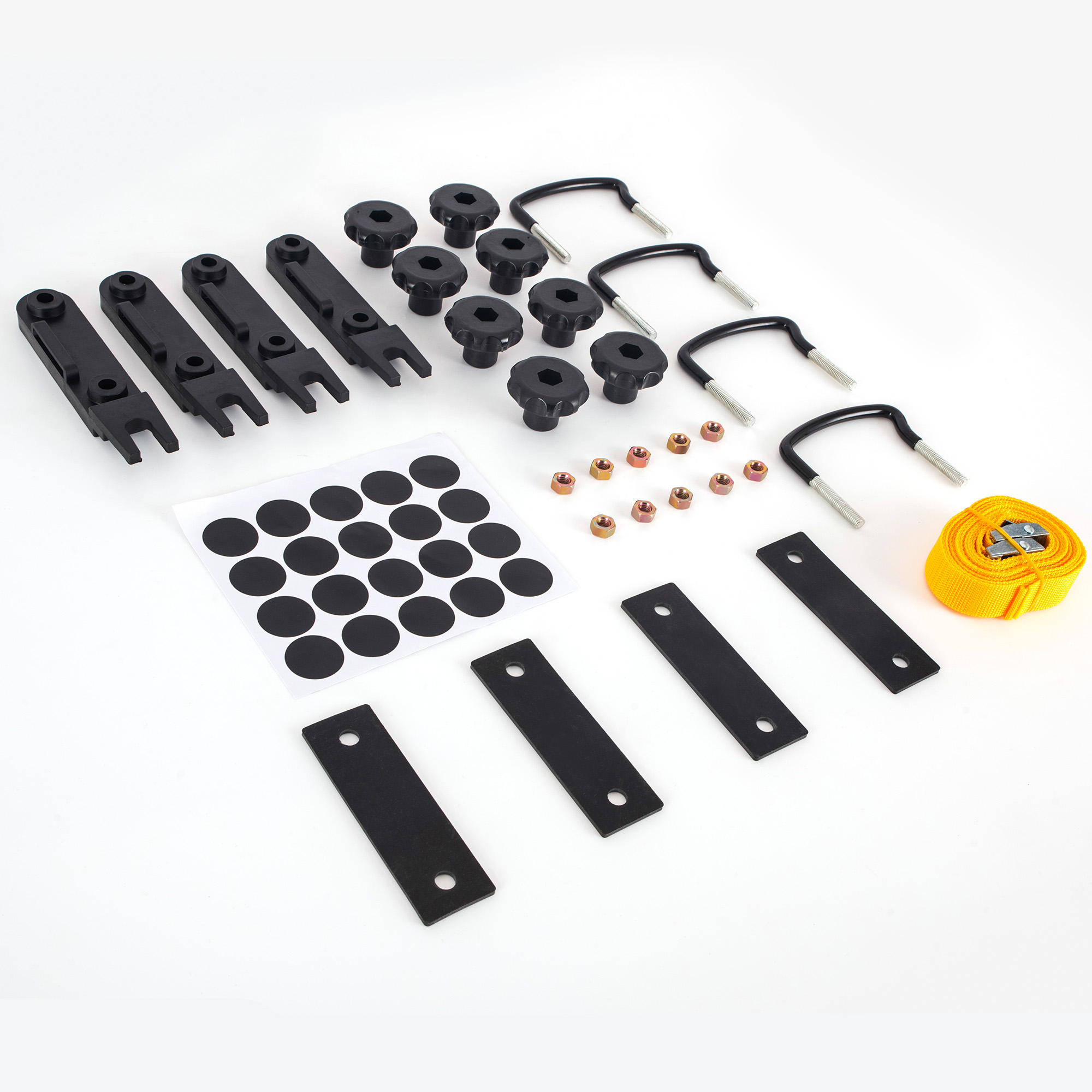
The three qualification gates
The first gate is mounting. The supplied Visrack product overview says the line is designed for most factory and aftermarket crossbars and offers broad crossbar compatibility. That wording is a fit claim, not a vehicle-specific compatibility chart. The buyer should verify the exact vehicle, roof type, crossbar profile, crossbar spread, and vehicle roof load limit before treating the box as compatible.
The second gate is rain. The Visrack material describes a tightly sealed overlapping lid and a factory-laboratory shower test. That supports rain-protection design, but it is not the same as an IP rating, a pressure-wash rating, or a guarantee that every box will stay dry in every storm. Owner reports can show what some users experienced; they do not replace the test method or the supplier’s care instructions.
The third gate is the human workflow. The Visrack line is described as tool-free to install and dual-side opening. Owner reviews support easy installation and removal for several users. One owner also recommends two people for lifting the box onto the roof because of its bulk. Tool-free fastening is not the same as one-person overhead lifting, so the buyer should qualify both the fastening method and the physical lift.
Crossbar and factory-rail fit: what to verify before buying
The first qualification gate is the mounting interface. The supplied Visrack material states that the product line is designed for most factory and aftermarket crossbars. A buyer should not convert ‘most’ into ‘mine’ without checking the exact vehicle and bar profile. The owner reviews supplied with this article describe fit on a 2017 Dodge Journey with factory side rails plus two aftermarket crossbars, and on a Honda Odyssey with luggage rails plus added crossbars. Those examples support a rail-plus-crossbar installation pattern; they do not prove that the same box clamps directly to every factory crossbar.
Vehicle roof type matters because bare roofs, raised rails, flush rails, factory crossbars, and aftermarket bars present different mounting surfaces. Direct factory-crossbar fit is a supplier-confirmation item unless the exact vehicle and bar profile have been checked. The buyer should ask for the minimum and maximum crossbar spread, the clamp opening range, and any bar-profile restrictions. The supplied product dimensions describe the box itself, not the mounting gap: the line is listed from 55.91 × 29.53 × 14.96 inches at the minimum to 87.20 × 38.19 × 17.36 inches at the maximum. Measure the vehicle as well as the box.
The vehicle roof load limit is a separate constraint. The vehicle manual sets the maximum roof load; the box and its contents count toward that limit. The exact SKU load rating should be confirmed before loading, and a rating from one variant should not be applied to another. Height clearance also belongs in the fit check. The buyer should measure garage, carport, drive-through, and parking-garage clearance with the box mounted and loaded, because a fit that works empty can fail when the vehicle is loaded or when suspension height changes.
Attachment rechecks belong in the qualification plan. In one supplied cross-country review, the owner found that the attachments holding the carrier to the roof rack had loosened slightly. The carrier drifted about three inches to the right and was no longer centered. The box stayed attached and the trip continued, but the report supports a clear rule: recheck the mounting hardware after the first installation and at planned stops, using the supplier’s instructions.
| Checkpoint | Buyer action | Status |
|---|---|---|
| Roof type and crossbar interface | Identify bare roof, side rails, factory crossbars, or aftermarket bars; match to supplier guidance | Supplier confirmation needed for exact vehicle and bar profile |
| Crossbar spread and clamp fit | Obtain minimum and maximum spread and clamp opening; measure the vehicle | Required before purchase |
| Vehicle roof load | Check the vehicle manual; include box and cargo in the total | Required before loading |
| Height clearance | Measure garage, drive-through, and parking height with the box mounted | Required before first trip |
| Attachment recheck | Recheck hardware after installation and at planned stops | Supported by owner report; follow supplier instructions |
| ISO 11154 status | Ask whether the exact SKU has been tested to ISO 11154:2023 | Supplier confirmation needed; not stated in supplied Visrack material |
The ISO 11154:2023 point deserves a neutral explanation. Verified industry material identifies ISO 11154:2023 as a roof-load-carrier standard that requires City Crash Testing at 30 km/h with 12g deceleration. The supplied Visrack material does not state ISO 11154 compliance, so the buyer should treat that as a confirmation item rather than assume certification. This is a risk check, not a product rejection.
Heavy-rain waterproofing: what the evidence supports
The second qualification gate is rain performance. ‘Waterproof’ should be treated as a claim about a specific test or sealing design, not as a general promise that the box can be submerged, pressure-washed, or left open in a storm. The supplied Visrack product description states a tightly sealed overlapping lid. The technical material states that the box passed a TF328B shower test in the Visrack factory laboratory: water was sprayed evenly for 30 minutes from nozzles positioned 1 m horizontally and 2 m vertically from the product, with no water ingress inside. That is a useful laboratory data point. It is not an IP rating, and it does not by itself define performance in every real-world rain event.
The same technical material reports a thermal shock test from -30°C to 65°C for 8 hours per cycle over 2 cycles with no warping or cracking, a 500-km simulated rough-road bounce test under full load, and a 400-hour xenon UV test. These results support the durability and weather-resistance story at the component level. They should be read as factory-laboratory results, not as third-party certification or as proof of every unit’s field performance.
Owner reports add a real-world layer. In the supplied Amazon reviews, one verified buyer described a cross-country trip from the West Coast to the East Coast through dust storms, thunderstorms, and pounding rain; the contents stayed dry for the whole trip. The same reviewer noted forgetting to install waterproof stickers that cover holes inside the box, yet reported no water entry. That is a single user report, not a recommendation to skip any supplied port covers. Another reviewer described a 7-hour road trip through a heavy rainstorm with everything inside staying dry. A third described drenching rainstorms with no evidence of water entry.
These reports support a careful conclusion: the box has a credible rain-protection design and users report dry contents in heavy rain. They do not prove that every box will stay dry under every condition. Buyers should confirm the sealing design on the exact SKU, inspect the lid seal before each trip, confirm whether any port covers or stickers are required, and avoid pressure-washing or submerging the box unless the supplier explicitly approves that use.
For heavy-rain qualification, ask four practical questions. First, does the exact SKU use the overlapping lid and seal described in the technical material? Second, can the supplier provide the TF328B test details for that SKU? Third, are there any port covers, stickers, or drain features that must be checked before travel? Fourth, what care instructions apply after rain, car washes, or long storage? A clear answer to those questions is more useful than a generic waterproof label.
Solo installation and loading: where one person is realistic
The third gate is the human workflow. The Visrack product line states tool-free installation and dual-side access. Owner reviews support easy installation and removal for several users, including a reviewer who called the box lightweight and easy to install or remove, and another who said it was easy to remove and reinstall. One reviewer said the box arrived fully assembled and was simple to attach to the roof. These reports support a one-person workflow after the box is on the roof and for side access. They do not prove that one person can safely lift the box onto every vehicle.
One owner explicitly recommended two people for installation because, while the box was not heavy, its bulky shape made it hard to lift over the car without sliding it on the vehicle. That is the key boundary: tool-free fastening is not the same as one-person overhead lifting. A buyer with a low roof, a stable step, and suitable strength may manage alone; a buyer with a tall SUV, a high lift, or limited mobility should plan for a second person or a supplier-approved lifting method.
Loading is a separate question from lifting. Dual-side opening is supported by the product description and by owner reports. One reviewer described opening the box from either side and reaching in while standing on the vehicle’s doorsill. Another described accessing gear from each side independently. For solo travel, that can reduce the need to walk around the vehicle or climb to one fixed side. The buyer should still confirm reach height and door clearance for their vehicle, especially on lifted SUVs or vans.
Instructions are part of the qualification. One reviewer described the installation instructions as sketchy and picture-only, although the installation was still fairly straightforward. A buyer should ask for a complete digital manual before purchase and confirm the current version. The manual should cover crossbar placement, clamp orientation, lid closure, locking, and any port-cover requirements. If the manual is unclear, that is a fit risk, not a reason to improvise.
The locking workflow also affects solo use. The supplied reviews describe three-point locking on each side, a key required to open, and an anti-lockout feature that prevents the key from being removed with the lid up. Those details support a secure closure routine, but the buyer should confirm the exact locking configuration on the chosen SKU. For one-person loading, the practical sequence is to unlock, open from the side that is easier to reach, load and secure the interior straps, close the lid, confirm latch engagement, lock, and remove the key.
Application fit: road trips, camping, and family travel
For road trips, family vacations, and camping, a roof cargo box is used to move luggage, tents, and fishing gear out of a crowded cabin and protect them from rain, sun, and road debris. The supplied Visrack scenario describes families, campers, outdoor enthusiasts, anglers, and car owners who need additional vehicle storage. The constraints are equally relevant: compatible crossbars, vehicle roof load limit, garage and drive-through height, and sealed carriers for rain protection. The box is not intended for oversized or unusually heavy items, and the vehicle roof limit still applies.
A solo traveler should plan the loading sequence before the first trip; a family should decide who will lift the box and who will load from each side. The dual-side opening design can help when the vehicle is parked close to a wall or when one side is less accessible. For camping, the box can keep gear out of the cabin while leaving the interior free for passengers. For road trips, the rain checklist matters more than the capacity label because a dry load is the reason many buyers choose a hard-shell box in the first place.
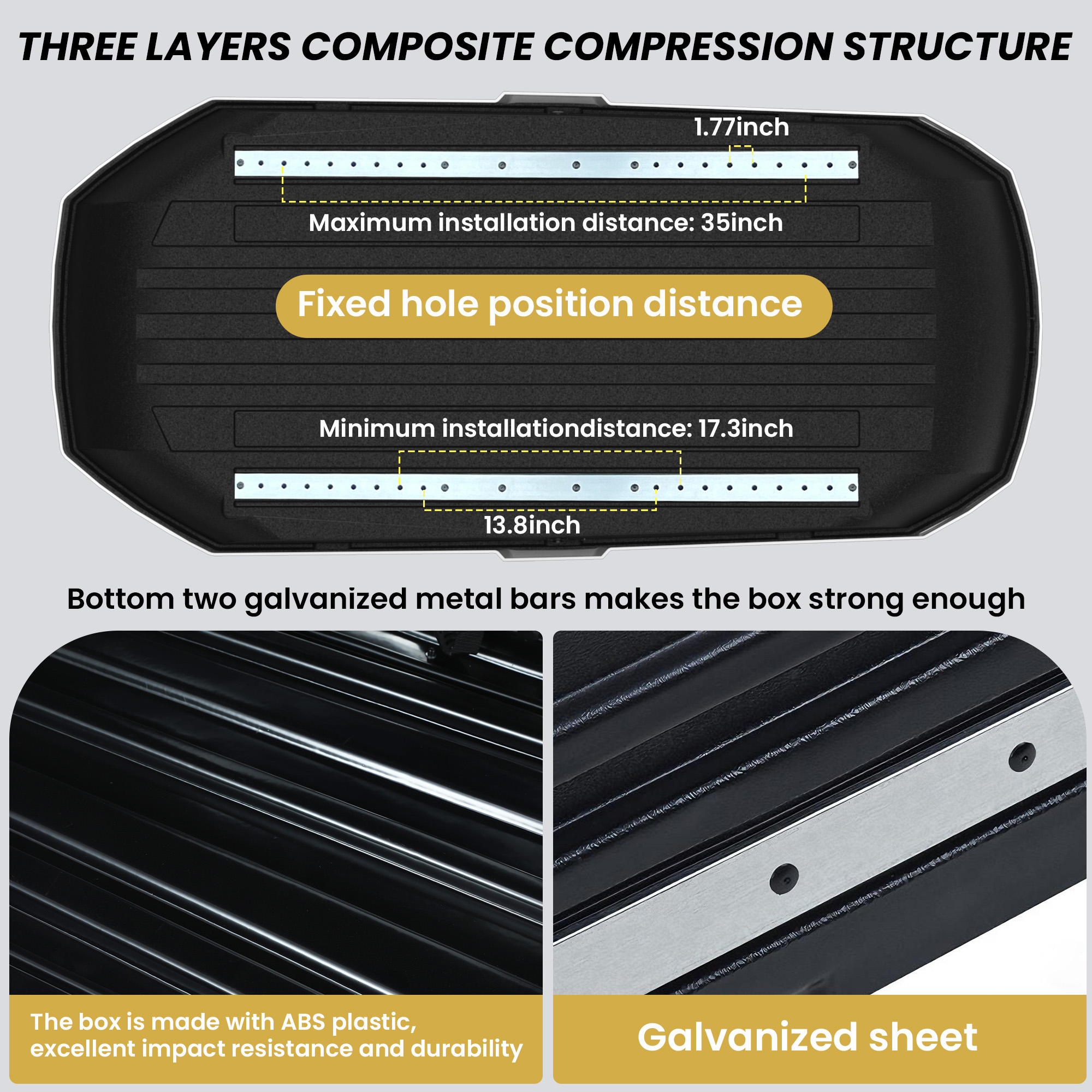
What owner reviews support and what they do not
The review evidence is most useful when it is separated into supported observations and open questions. The supplied reviews support lightweight handling, easy installation or removal for several users, dry contents in reported heavy rain, dual-side access, secure latching, and a cross-country durability impression. They also surface trade-offs: picture-only instructions, about a 1 MPG drop in one report, the need to remove the box before some car washes, and the attachment-drift issue on a long trip.
| Claim | Review support | Qualification |
|---|---|---|
| Lightweight and easy install or removal | Multiple owners describe easy installation, removal, or reinstallation | Individual strength, roof height, and box size still matter |
| Dry contents in heavy rain | Owners report dry contents in thunderstorms and drenching rain | User reports, not a universal waterproof rating |
| Cross-country durability | One owner reports a West-to-East trip through dust storms and heavy rain | One trip report; check attachments and follow maintenance |
| Quiet travel | One owner reports no rattling or whistling on short trips | Not a measured wind-noise test at all speeds |
| Solo lift | One owner recommends two people for lifting because of bulk | Supplier confirmation and personal capability needed |
Another reviewer reported a drop of about 1 MPG and said the box must be removed before a car wash. Those are ownership costs and workflow constraints, not defects in the fit checklist, but they belong in a buyer qualification because they affect whether the product suits the buyer’s routine. The wind-noise point also needs care: one owner reported no rattling or whistling on short trips, but the supplied material does not include a measured wind-noise value at highway speed. Buyers who are sensitive to cabin noise should treat that as an open question.
Some questions remain open. The supplied material does not include a vehicle-specific crossbar compatibility database, a third-party certification statement for ISO 11154:2023, an IP rating, or a measured wind-noise value. Those are not reasons to reject the product; they are reasons to ask the supplier for written confirmation before purchase. The same logic applies to load ratings and exact dimensions: confirm the chosen SKU, not a general line description.
A practical pass, conditional, or stop decision
Use the following decision rule to convert the checklist into a buying decision without overstating the evidence.
Pass: The buyer has confirmed the exact vehicle’s roof type, crossbar profile, crossbar spread, and clamp fit with the supplier; the vehicle roof load limit is sufficient for the box and planned cargo; height clearance is adequate; the rain-protection design and port-cover requirements are understood; and the buyer has a safe plan for lifting and loading, including a second person if needed.
Conditional: The box is likely to fit, but one or more items remain unconfirmed, such as direct factory-crossbar compatibility, the exact SKU load rating, unit weight, or whether the exact SKU has been tested to ISO 11154:2023. In that case, obtain written confirmation before the first trip. A conditional status is not a negative review; it is a statement that the evidence is incomplete for that vehicle.
Stop: The vehicle has no compatible mounting interface, the roof load limit is insufficient, the loaded height exceeds a garage or drive-through the buyer uses, or the buyer cannot safely lift or load the box. Those are fit boundaries, not product-quality judgments.
Supplier confirmation list: exact vehicle and crossbar compatibility; minimum and maximum crossbar spread; clamp opening and bar-profile limits; exact SKU load rating; unit weight and lifting recommendation; sealing design and TF328B test details for the exact SKU; port-cover requirements; digital manual version; ISO 11154:2023 test status if the buyer requires it; and any care instructions for car washes or pressure washing.
FAQ
How do I check whether a Visrack roof cargo box fits my factory crossbars?
Check the exact vehicle roof type, crossbar profile, crossbar spread, clamp opening, and vehicle roof load limit. The supplied Visrack material describes broad crossbar compatibility and fit for most factory and aftermarket crossbars, but it does not provide a vehicle-specific compatibility chart. Owner reviews describe rail-plus-crossbar installations on a Dodge Journey and a Honda Odyssey. Direct factory-crossbar fit should be confirmed with the supplier for the exact vehicle and bar profile.
Is the Visrack roof cargo box waterproof in heavy rain?
The supplied material describes a tightly sealed overlapping lid and a TF328B factory-laboratory shower test: water sprayed for 30 minutes from 1 m horizontally and 2 m vertically, with no water ingress. Owner reviews also report dry contents in heavy rain. This supports rain-protection design, but it is not an IP rating, a pressure-wash rating, or a guarantee for every condition. Confirm the exact SKU seal and any port-cover requirements.
Can one person install or load the Visrack roof cargo box?
One-person loading is plausible after the box is mounted, especially with dual-side access. Owner reviews support easy installation and removal for several users, but one owner recommends two people for lifting the box onto the roof because of its bulky shape. Tool-free fastening does not remove the overhead lift. Confirm unit weight and lifting guidance for the exact SKU, and use a second person if the roof is high or the lift is awkward.
What do owner reviews say about cross-country durability?
One supplied verified review reports a West Coast to East Coast trip through dust storms, thunderstorms, and pounding rain, with contents staying dry. The same owner found the roof-rack attachments had loosened slightly and the carrier drifted about three inches. Another owner reports a 7-hour trip through heavy rain with dry contents. These reports support a durability impression for those trips, but they do not establish universal performance. Mounting hardware should be rechecked after installation and at stops.
What should I ask the supplier before buying?
Ask for exact vehicle and crossbar compatibility, minimum and maximum crossbar spread, clamp opening and bar-profile limits, exact SKU load rating, unit weight and lifting recommendation, sealing design and TF328B test details, port-cover requirements, and the current digital manual. If ISO 11154:2023 testing matters to your purchase, ask whether the exact SKU has been tested to that standard. The supplied Visrack material does not state ISO 11154 compliance.
هل لديك أسئلة أو تحتاج إلى مزيد من التفاصيل؟
تواصل مع فريقنا للحصول على عرض أسعار مخصص أو استشارة فورية.
طلب عرض أسعار
املأ النموذج أدناه وسيتواصل معك فريقنا بعرض مقترح مخصص.
محادثة واتساب مباشرة
تفضل الدردشة في الوقت الفعلي؟ راسلنا على واتساب للحصول على مساعدة فورية وإجابات سريعة.
- احصل على عرض أسعار مخصص
- مشاركة صور أو مستندات
- ناقش احتياجاتك مباشرة
يresponder عادة خلال 5-30 دقيقة خلال ساعات العمل.