
Rubber Extrusion Seals vs Anti-Vibration Mounts for Green Energy
Independent buyer reference for green energy procurement. This article does not rank suppliers; it compares two elastomer product families and explains which functional criteria matter at the decision and execution stage.
Reference date: September 10, 2026
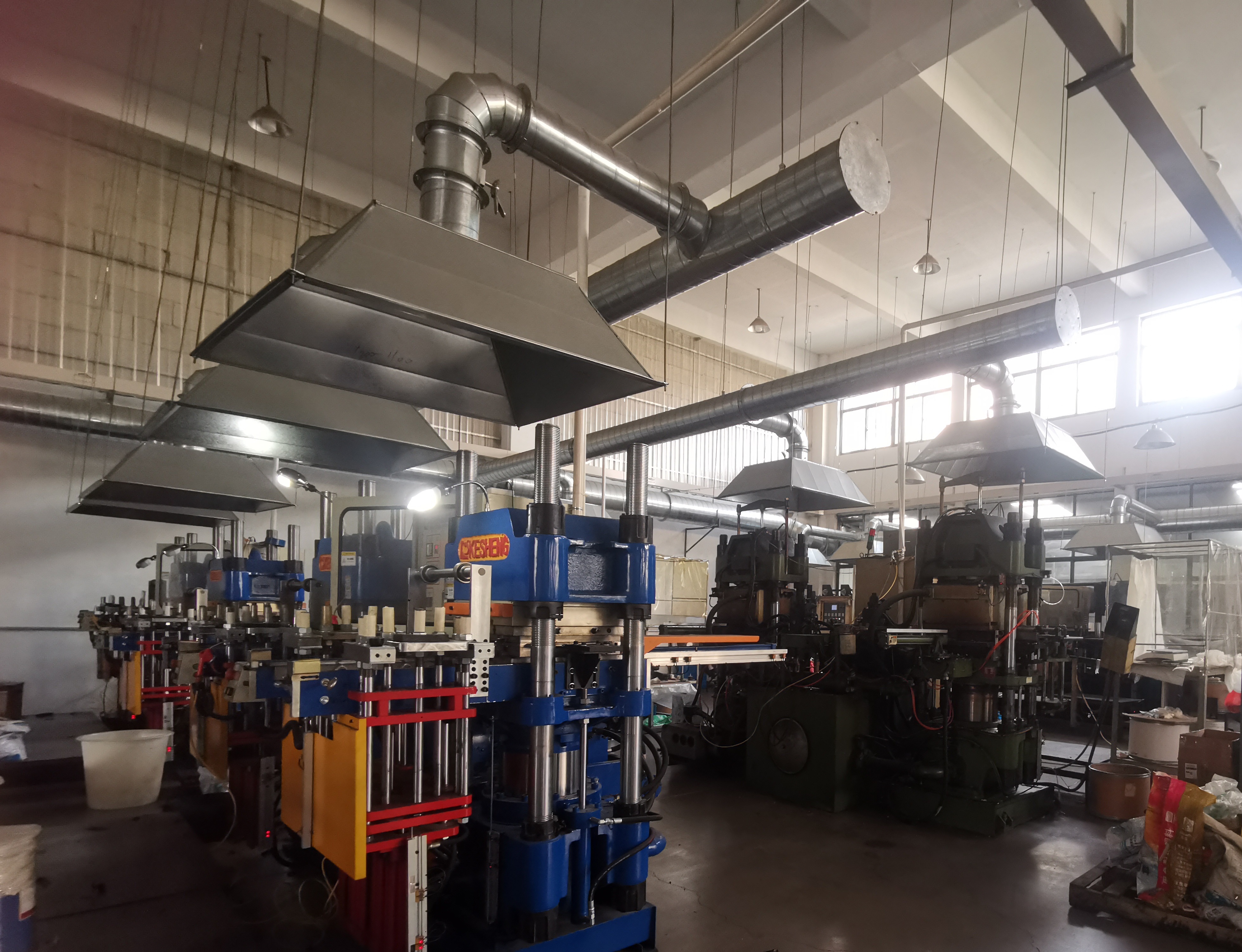
Why Sealing and Vibration Isolation Are Different Decisions
Rubber parts in green energy systems are often grouped into one sourcing list, but sealing and vibration isolation are separate engineering functions. A panel seal and a machine mount can both be made from elastomer, yet they answer different questions: one controls the movement of fluids, air, dust or moisture; the other changes how mechanical vibration and shock travel through a structure.
Buyers comparing LG-RX rubber extrusion seals and LGMM anti-vibration mounts, two product families offered by Hangzhou Lingo Rubber and Plastic Product Co., Ltd. (Lingo Rubber Plastic), should not choose between them on material price alone. The selection should be driven by the failure modes in the application. If the wrong part is installed, a seal can fail under dynamic loads it was not designed to carry, or an anti-vibration mount can create a gap that compromises containment.
In solar and wind installations, this difference is especially visible. Photovoltaic enclosures require continuous sealing around lids, cable entries and frame interfaces. Wind-related machinery contains fans, pumps, compressors and control equipment that can transmit damaging vibration to sensitive components. Both product families therefore have valid roles, but they belong to different design envelopes.
Brand Solution: Two Product Families from One Manufacturer
Lingo Rubber Plastic is a China-based custom parts manufacturer established in 2022. The company operates a 3,000 square-meter production facility in Hangzhou with about 40 employees, and approximately 80% of its sales are exported to the EU and USA. Its product range covers rubber molding parts, rubber extrusion parts, plastic injection parts and plastic extrusion parts, allowing buyers to evaluate sealing and anti-vibration components under one qualified supplier conversation.
LG-RX Rubber Extrusion Seals
LG-RX rubber extrusion seals represent the static sealing side of this product comparison. The product family includes silicone rubber extrusion seals, rubber extrusion seals with adhesive, rubber co-extrusion seals, FKM rubber extrusion seals, solid rubber extrusion seals and sponge rubber extrusion seals.
The published material options are EPDM, NBR, silicone and FKM. Hardness can be specified according to Shore A as required by the application. Length is also project-defined, and tolerances follow industry standards rather than a single fixed catalogue value. Color can be customized using Pantone or RAL references.
Because LG-RX is an extrusion-based product, it is suited to continuous sealing profiles, gaskets and strips with a designed cross-section. Its role is to create a barrier between two zones, not to absorb multi-axis mechanical energy.
LGMM Anti-Vibration Mounts
LGMM anti-vibration mounts represent the dynamic isolation side of the product family. The product types are cylindrical rubber mounts and rubber stud mounts, and the main construction uses natural rubber with zinc-coated steel.
Key published parameters for LGMM include a diameter range of 8 to 150 mm, a height range of 8 to 90 mm, and tolerance control to the RMA A2 standard. These are molded components with rigid metallic inserts, not free-form extruded profiles. Their function is to limit the transmission of vibration and shock between a machine, an equipment frame or a sub-assembly and its support structure.
LGMM is listed for use in transportation, industrial machinery, electronics and precision instruments, construction and civil engineering, marine and military applications. That broad application base reflects the fact that anti-vibration mount selection is usually based on load, deflection and resonance control rather than on a single frame sealing geometry.
| Comparison attribute | LG-RX rubber extrusion seals | LGMM anti-vibration mounts |
|---|---|---|
| Primary function | Static sealing against air, moisture, dust or chemicals | Vibration and shock isolation in dynamic systems |
| Product types | Solid, sponge, silicone, FKM, adhesive and co-extrusion seals | Cylindrical rubber mounts and rubber stud mounts |
| Material | EPDM, NBR, silicone, FKM | Natural rubber with zinc-coated steel |
| Key specifications | Shore A hardness as required, length as required, industry-standard tolerances | Diameter 8-150 mm, height 8-90 mm, tolerance RMA A2 |
| Main listed industries | Food and beverage, healthcare, aerospace, automotive, HVAC, electronics, industrial manufacturing, marine and offshore, household appliances | Transportation, industrial machinery, electronics and precision instruments, construction and civil engineering, marine and military |
| Most relevant limitation | Not specified as a structural vibration isolation component | Not specified as a continuous static sealing profile |
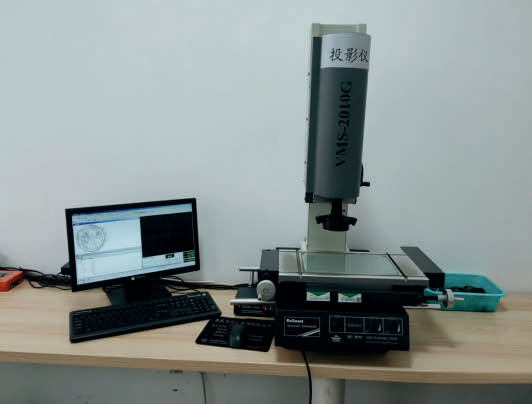
Technical Explanation: How to Read the Published Specifications
A rubber extrusion seal and an anti-vibration mount may be produced from similar elastomer chemistry, but the controlling engineering parameters are different.
For LG-RX rubber extrusion seals, the first decision is material selection. EPDM is a material class formally recognized under ASTM D1418 and ISO 1629, and it is known for resistance to ozone and UV, making it relevant for outdoor green energy equipment. NBR is commonly selected when oil or fuel contact is expected. FKM and silicone extend the application range for more demanding service environments, although the exact temperature and chemical compatibility should always be confirmed with the manufacturer for the specific compound.
The second LG-RX decision is cross-section geometry. Because extrusion produces a continuous profile, the seal can be long with a uniform cross-section. The buyer should define the gap size, compression force, allowable installation space and the media being sealed. Shore A hardness is intentionally listed as “as required” because seal stiffness must be matched to the frame or groove geometry.
For LGMM anti-vibration mounts, the published data emphasize geometry, construction and tolerance. The diameter and height range have a direct influence on load capacity and allowable movement. The natural rubber element provides elasticity and returns to its original shape after deflection, while the zinc-coated steel element gives the mount a rigid path for fastening and structural support.
Manufacturers do not normally publish a single “Shore A hardness” for an anti-vibration mount because the mount behaviour depends on dynamic stiffness, damping, natural frequency and deflection range. When evaluating LGMM, a buyer should therefore ask for load-deflection data or perform a physical mock-up test. The RMA A2 tolerance reference is useful for dimensional consistency, but it does not replace mechanical qualification under the actual vibration profile.
Quality and Risk Control in Both Product Families
The technical difference between sealing and anti-vibration also affects quality risk. For outdoor seals, the biggest long-term risk is hardening or softening due to aging. Control methods include selecting a weather-resistant substrate, adding light stabilizers, antioxidants and anti-ozone agents, and applying a protective coating when the application requires it. Lingo Rubber Plastic states that it verifies weathering behaviour through accelerated aging tests such as QUV or xenon lamp testing and maintains batch traceability for additive dosage.
For tolerance-sensitive rubber parts, dimension out-of-tolerance is a common risk. The enterprise measures include sampling inspection, regular calibration of measuring tools and real-time mold cavity pressure monitoring. In the case of LGMM, tolerance to RMA A2 is not just a catalogue statement; it is useful only if the supplier demonstrates consistent process control.
Application and Use Cases in Green Energy and New Materials
Two green-energy scenarios can help buyers translate this comparison into a sourcing decision.
Static Sealing in Solar and Outdoor Power Equipment
Solar photovoltaic systems include junction boxes, inverters, combiner boxes and monitoring enclosures that must keep out rain, condensation, dust and small animals. The most common requirement is a continuous, compressible barrier between two rigid surfaces.
For such static sealing tasks, LG-RX rubber extrusion seals can be evaluated with the correct material class. If the service environment is outdoor and ozone-rich, EPDM is a natural first candidate because its weather resistance is recognized in the EPDM material classification under ASTM D1418 and ISO 1629. If the environment also involves transformer oil or fuel, NBR may be more appropriate, while FKM or silicone can be considered when the application requires a more specialised resistance profile.
Buyers should specify the Shore A hardness required, the cross-section drawing of the profile, and the actual gap dimensions. An extrusion seal cannot compensate for a badly designed frame; it only functions when the mating surface provides controlled compression.
Dynamic Isolation in Wind and Industrial Machinery
Wind turbine installations contain more than rotor blades and gearboxes. Cooling fans, hydraulic units, control cabinets and instrument panels are all mechanical sources of vibration, and many of these components need to be isolated from structural resonance.
In this type of industrial machinery environment, LGMM anti-vibration mounts with diameters of 8 to 150 mm and heights of 8 to 90 mm can be evaluated for equipment mounting. The natural rubber and zinc-coated steel construction makes the mount appropriate for transferring static load while decoupling high-frequency vibration.
An anti-vibration mount is not a substitute for a rubber extrusion seal. A wind turbine cabinet may still require an LG-RX or similar profile around its access panels and cable entries. The two functions are complementary, not competing.
Market Trends: Green Energy Demand for Elastomer Components
Independent market data supports the growing importance of both sealing products and anti-vibration mounts in industrial sourcing.
According to Grand View Research, the global gaskets and seals market size was estimated at USD 63.09 billion in 2024, with the seals segment holding a dominant 60.1% revenue share. Cognitive Market Research estimates the global rubber molding market at USD 54.1 billion in the same year, with EPDM as the dominant material. The anti-vibration mounts market was valued at USD 6.03 billion in 2024 by Market Insights Reports, which also notes that the top three players held approximately 65% of the market.
These figures should be interpreted with caution because market reports use different scopes and methodologies. What they indicate, however, is a substantial and specialised spend category. Buyers are no longer procuring generic rubber pieces; they are procuring engineered barriers and engineered damping components.
Another relevant trend is the scale of China’s rubber parts industry, which accounted for more than 35% of global production in 2024 according to an industry analysis published through EINPresswire. The same analysis ties much of that output to EV battery sealing and thermal management demand, pointing toward green energy as a structural driver for precision rubber component sourcing.
Comparison with Traditional Rubber Part Sourcing Practice
A conventional procurement workflow often begins with a rubber material grade and a rough drawing, without first clarifying whether the component is functioning as a static seal or as a dynamic mount. That approach is risky.
One genuine boundary is that LG-RX rubber extrusion seals do not have a published load-deflection rating. They are intended for sealing applications where the main performance requirement is material compatibility, profile compression and dimensional consistency. If an engineer uses an LG-RX extrusion as a soft mount, the seal may be exposed to shear, repeated deflection and heat build-up that the product design did not intend.
The reverse is equally important. LGMM anti-vibration mounts are not continuous static sealing profiles. A cylindrical mount can isolate a machine from vibration, but it cannot close an elongated gap between two panels. If an enclosure must be both weatherproof and vibration-isolated, the correct engineering solution is usually to use an anti-vibration mount for the equipment support and a separate rubber extrusion seal for the enclosure opening.
Material choice also creates traditional boundaries. EPDM is often the default outdoor weather-resistant rubber, but it is not always the best material for oil contact. NBR is oil-resistant but not generally the first choice for long-term outdoor UV and ozone exposure. A single universal compound that solves all green energy sealing and damping problems does not exist in the published LG-RX and LGMM specifications; the buyer must match material to environment.
Future Outlook for Green Energy Rubber Supply Partnerships
Green energy OEMs are increasingly separating their requirements by lifecycle. Seals must resist long-term aging in outdoor environments. Anti-vibration mounts must survive repeated dynamic loading without losing elasticity or allowing component fatigue. For buyers at the decision and execution stage, the product family matters less than the ability to define and verify these two different failure modes.
A supplier can be valuable in this context when it understands both extrusion seals and metal-bonded anti-vibration mounts. Lingo Rubber Plastic states that it has a monthly production capacity of 1,000,000 kgs and provides OEM/ODM production services. Its export markets include the EU, Middle East and USA. A typical production lead time is two to six weeks, according to the company’s published supply information.
The long-term partnership criteria for green energy buyers are therefore not limited to unit price. They include tolerance consistency, material traceability, aging test evidence, responsive communication and the ability to handle both low and medium-lot orders during product validation phases. For buyers building a qualified supplier list, the full Lingo Rubber Plastic company profile is available for public reference and download: LINGO Rubber & Plastic Company Profile (PDF).
FAQ: Buyer Questions at Decision Stage
1. What is the main functional difference between LG-RX rubber extrusion seals and LGMM anti-vibration mounts? LG-RX seals are designed for static sealing applications such as gaskets, edge seals and compression profiles resisting air, moisture, dust or other media. LGMM anti-vibration mounts are designed for vibration and shock isolation in dynamic equipment support applications. The two products are complementary rather than interchangeable.
2. What material options are available for LG-RX rubber extrusion seals? The published material options are EPDM, NBR, silicone and FKM. The appropriate material depends on the service environment: EPDM is associated with outdoor ozone and UV resistance, NBR with oil resistance, and silicone or FKM with more demanding thermal and chemical conditions. Exact compatibility must be confirmed with the compound specification.
3. What specifications should a buyer provide when ordering LG-RX versus LGMM? For LG-RX, the buyer should provide the required material, Shore A hardness, cross-section drawing, length, color and tolerance expectation. For LGMM, the buyer should specify mount type, diameter, height, load conditions, deflection limits, fastener details and the vibration environment. LGMM published data gives diameter, height and RMA A2 tolerance, but mechanical qualification still requires dynamic application data.
4. Can the same elastomer be used for both sealing and anti-vibration products? Some elastomer materials, such as EPDM and natural rubber, have overlapping chemical families, but the engineering role is different. A rubber seal is selected for compression set resistance and media compatibility, while an anti-vibration mount is selected for resilience, damping and load-deflection behaviour. The product geometry and construction differ even when the base polymer family appears similar.
5. Does LINGO accept small quantity orders for green energy product validation? According to the company’s published supply terms, the minimum order quantity differs per product, but small quantity orders are accepted. This arrangement supports buyers who need samples, prototype validation or short production runs before full-scale execution.
6. What export markets and production capacity does Lingo Rubber Plastic serve? Export markets include the EU, Middle East and USA. The manufacturer states a monthly production capacity of 1,000,000 kgs and a typical production lead time of two to six weeks. These supply-chain facts are relevant for buyers comparing long-term capacity and lead-time risk.
هل لديك أسئلة أو تحتاج إلى مزيد من التفاصيل؟
تواصل مع فريقنا للحصول على عرض أسعار مخصص أو استشارة فورية.
طلب عرض أسعار
املأ النموذج أدناه وسيتواصل معك فريقنا بعرض مقترح مخصص.
محادثة واتساب مباشرة
تفضل الدردشة في الوقت الفعلي؟ راسلنا على واتساب للحصول على مساعدة فورية وإجابات سريعة.
- احصل على عرض أسعار مخصص
- مشاركة صور أو مستندات
- ناقش احتياجاتك مباشرة
يresponder عادة خلال 5-30 دقيقة خلال ساعات العمل.