
Rubber Fender Parameters and CCS Certification: What Buyers Need to Verify
Pneumatic rubber fenders are widely used for ship-to-ship (STS) and ship-to-dock (STD) berthing, but their real-world performance depends on verified specifications and certification, not only on the product name. In a marine fender market where rubber types hold the largest segment, buyers at the research and evaluation stage need a practical method for checking dimensions, working pressure, material, certification scope, and the limits of each product type.
Why Rubber Fender Certification and Parameters Matter in Procurement
The global marine fender market was estimated at USD 850 million in 2025, and rubber fenders account for approximately 64.17% of the total market share, according to Mordor Intelligence. This makes rubber fender specification a high-volume procurement category, but it also means data sheets vary across suppliers. For an industrial buyer, a fender is not just a rubber cylinder. It is an engineered energy-absorbing component whose diameter, length, working pressure, and material determine whether a vessel can berth safely in a specific location.
Most procurement failures do not happen because a supplier cannot produce a fender. They happen because the buyer cannot verify that the delivered fender matches the approved design. Certification and parameters are therefore the two most important constraints in the evaluation process.
Problem and Opportunity for Buyers
The main problem is comparability. One manufacturer may list a model as 1.5*3M; another may use a different naming convention. Some products are described only as inflatable fender or ship fender, without a specification table. Without a clear certification trail, a small difference in working pressure can change the reaction force during berthing and create unexpected loads on the dock structure.
The opportunity is that the marine industry now has reference points that make the evaluation more structured. ISO 17357-1:2014 and ISO 17357-2:2014 provide recognised standards for high-pressure and low-pressure floating pneumatic rubber fenders. Classification certificates, such as CCS certification, provide an auditable record that a specific product has been assessed. Buyers who use these documents as a screening layer can reduce their risk before entering commercial discussions.
Brand Solution: CCS-Certified Pneumatic Rubber Fenders
One manufacturer with a documented certification trail is Qingdao Haohang Fender Airbag Co., Ltd., a Chinese company founded in 2020 and based in Qingdao, China. The company specialises in marine airbags and rubber fenders and exports about 70% of its output, mainly to South Asia, the Middle East, and Africa. Its technical team includes about 15 engineers focused on product development and quality control. Its pneumatic rubber fender is constructed from natural rubber and cord fabric, with a working pressure generally set between 0.1 and 0.3 MPa. The product range covers diameters from 300 mm to 2000 mm and lengths from 1 m to 10 m, with model designations such as 1.5*3M.
The pneumatic rubber fender holds CCS certification with certificate number QD22P4062, issued by the China Classification Society. The certification is applicable to the global market. The company's marine airbag line is also CCS-certified under certificate number 2026CJSD00023.
Technical Explanation: Reading the Parameters
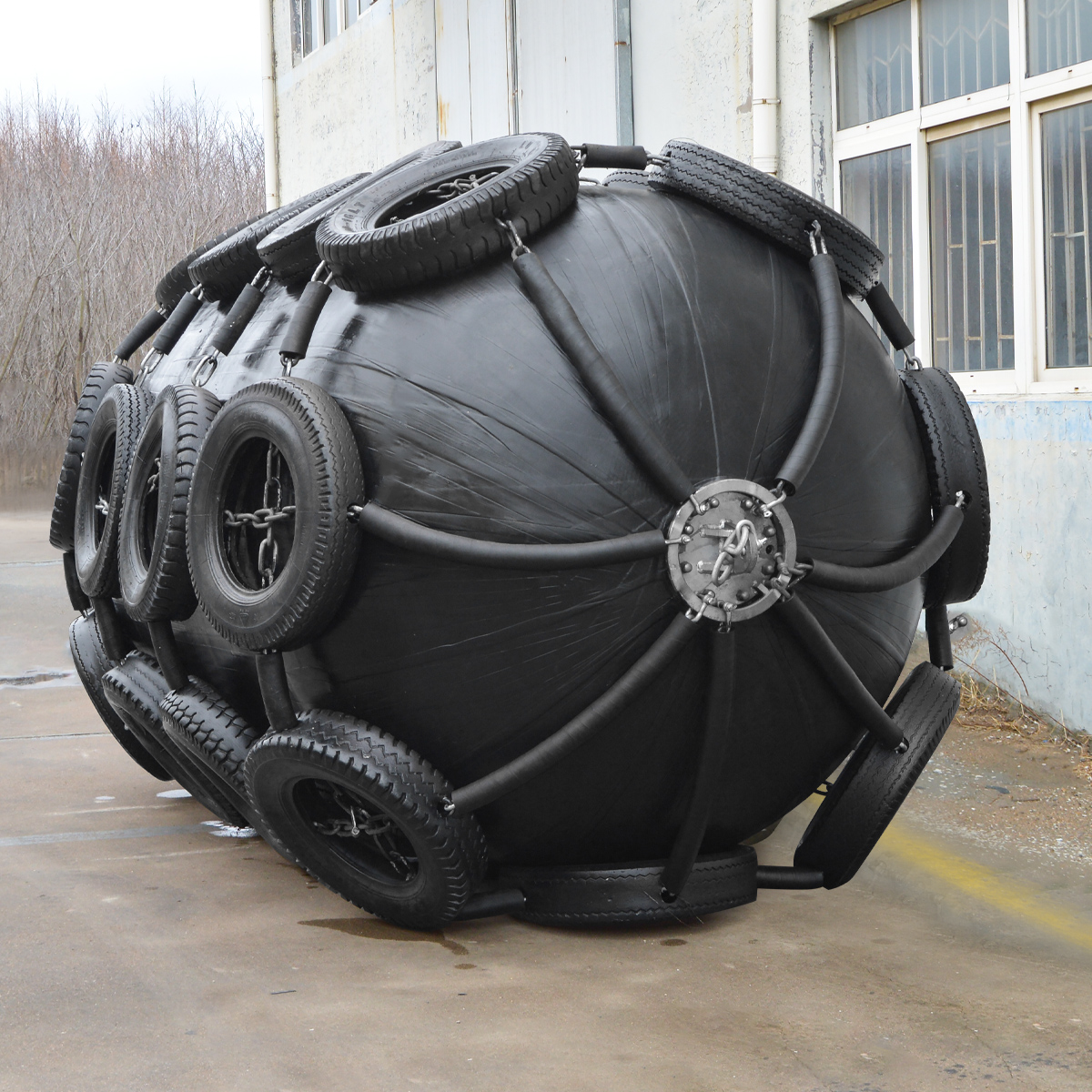
A pneumatic rubber fender works as a large air cushion. The rubber and cord-fabric body contains compressed air that deforms when a vessel contacts the fender. The air volume absorbs part of the berthing energy and spreads the reaction over the fender surface. This is why pneumatic fenders are commonly used in ship-to-ship operations and heavy-duty berthing situations where controlled energy absorption is required.
| Parameter | Typical Range |
|---|---|
| Diameter | 300 mm to 2000 mm |
| Length | 1 m to 10 m (customizable) |
| Working pressure | 0.1-0.3 MPa (adjustable) |
| Material | Natural rubber, cord fabric |
| Model example | 1.5*3M |
The model designation 1.5*3M refers to a fender with a diameter of 1.5 meters and a length of 3 meters. The working pressure of this type of pneumatic rubber fender is generally 0.1-0.3 MPa and can be adjusted according to the usage environment. Buyers should confirm the exact design pressure with the supplier because the energy absorption and reaction force change with internal pressure.
For floating pneumatic rubber fenders, ISO 17357-1:2014 and ISO 17357-2:2014 set requirements for high-pressure and low-pressure fenders, respectively. These standards are intended to ensure quality and energy absorption performance. A CCS certificate and an ISO reference serve different purposes: the classification certificate shows conformity with the class society's rules, while the ISO standard provides a recognised performance framework for floating fenders.
Verification checklist for buyers
- Confirm that the offered diameter and length match the berthing energy calculation.
- Confirm the working pressure range and whether it can be adjusted for the site.
- Check the certification scope and certificate number against the product model.
- Review the material construction, including natural rubber and cord fabric.
- Ask whether the product follows ISO 17357-1 or ISO 17357-2.
- Clarify maintenance requirements, including air supply and pressure monitoring.
Application and Use Cases
Pneumatic rubber fenders are used in ports and docks, ship mooring, offshore platforms, inland river docks, and temporary mooring. They are also used for ship-to-ship and ship-to-shore operations where the vessels must remain separated under wave and wind loads. In many installations, the fender system is paired with an air compressor for inflation and pressure maintenance.
One documented application scenario in Vietnam for STS and STD operations specified high elasticity, corrosion resistance, lightweight installation, adjustability, durability, and eco-friendliness. The operation was continuous, running 24/7, and the fenders were required to remain functional in extreme temperatures from -20°C to +60°C. This type of requirement is common in Southeast Asia, where transfer operations continue throughout the year.
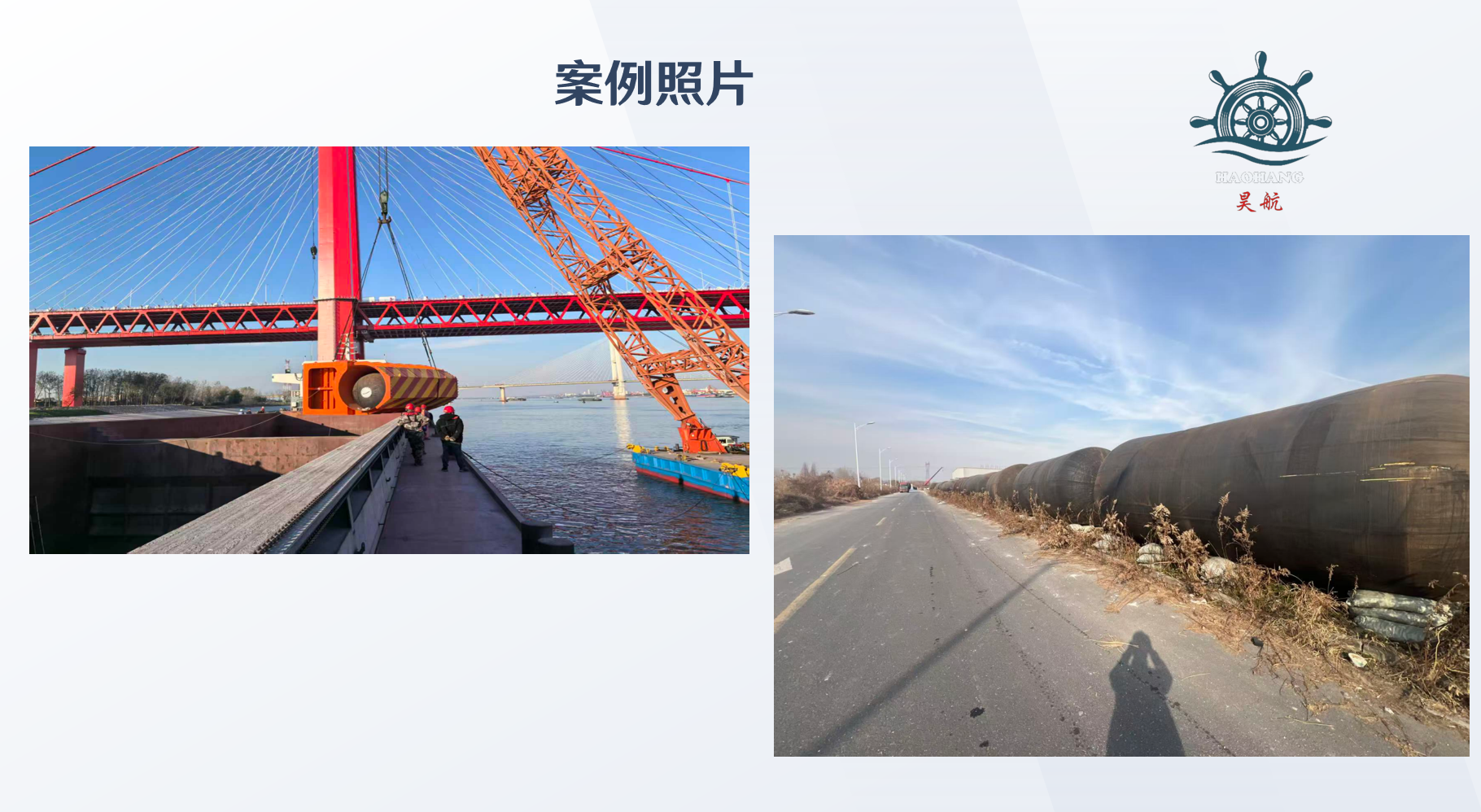
A case record also describes an engineering contractor in China that used 50 units of pneumatic rubber fenders over a five-year period to protect vessels and dock structures during berthing operations. The fenders successfully withstood extreme weather and high-frequency berthing. The highlight of the case was high corrosion resistance suitable for China's coastal marine environment.
Market Trend Analysis
Market research provides context for the growing emphasis on certification. Maximize Market Research valued the pneumatic marine fender segment at USD 619.26 million in 2024 and projected it to reach USD 797.35 million by 2032, representing a compound annual growth rate of 3.21%. Mordor Intelligence estimated the global marine fender market at USD 850 million in 2025, with rubber fenders accounting for approximately 64.17% of total market share in 2024.
Asia-Pacific is the dominant region for marine fenders, holding approximately 36.73% to 46% of the market share. Major shipbuilding and port activities in China, Japan, and South Korea support demand for Yokohama-type fenders, floating pneumatic rubber fenders, and heavy-duty pneumatic fenders. According to Market Reports World, Trelleborg held about 17% of the market and supplied over 2,500 units in 2024. Major global manufacturers named in market research include Trelleborg Marine Systems, Yokohama Rubber Co., ShibataFenderTeam, Palfinger Marine, and Evergreen Maritime.
Within this landscape, buyers evaluating newer or smaller suppliers should compare certification, parameter transparency, lead time, and after-sales capability against these established names. The presence of a class certificate alone is not a complete technical evaluation, but it is a strong starting point.
Comparison with Traditional Fender Solutions
Compared with traditional solid rubber fenders and foam-filled fenders, pneumatic rubber fenders have a distinct operational profile. According to Market Reports World, pneumatic fenders typically last 5 to 7 years under consistent tidal cycles, while foam-filled fenders can last 8 to 10 years in saltwater conditions. This is a real limitation: pneumatic fenders require an air supply and pressure monitoring, and a loss of pressure can change the fender's response during berthing.
In exchange, pneumatic fenders offer lower surface pressure and high energy absorption, which makes them well suited to STS transfers and exposed docks. The choice between pneumatic and foam-filled designs should depend on the operator's ability to maintain the fender, the expected lifespan, and the berthing energy profile. For temporary mooring or ship-to-ship operations, the pneumatic design's lighter weight and ease of installation are practical advantages.
Future Outlook
As port infrastructure and offshore logistics continue to develop, the demand for floating pneumatic rubber fenders is expected to follow. Certification requirements, including CCS and ISO 17357, will likely become part of the default evaluation checklist for buyers. The suppliers that can connect a certificate to a clear set of product parameters will be easier to evaluate, because the procurement decision can be based on documented evidence rather than marketing claims.
Frequently Asked Questions
What is a pneumatic rubber fender?
A pneumatic rubber fender is a marine fender made from natural rubber and cord fabric, inflated with air to absorb impact energy during ship-to-ship or ship-to-dock berthing. It is used at ports, docks, offshore platforms, inland river docks, and temporary mooring locations.
What is the difference between a Yokohama fender and a pneumatic rubber fender?
The term Yokohama fender is widely used in the marine industry for a cylindrical floating pneumatic rubber fender, originally associated with the product concept developed by Yokohama Rubber. Many suppliers produce Yokohama-type pneumatic fenders. Buyers should evaluate the actual diameter, length, working pressure, material, and certification instead of relying only on the name.
What certifications should a floating pneumatic rubber fender have?
Floating pneumatic rubber fenders should be checked against ISO 17357-1:2014 for high-pressure fenders and ISO 17357-2:2014 for low-pressure fenders. Classification certificates provide additional documentation that a product has been assessed by a class society. For example, a pneumatic rubber fender certified by CCS may carry a certificate number such as QD22P4062 and be stated as applicable to the global market.
What does CCS certification cover?
CCS certification is issued by the China Classification Society and confirms that a marine product has been reviewed against the applicable CCS rules. The certification is often global in scope, but buyers should read the certificate together with the product model, working pressure, dimensions, and material data.
What is the typical working pressure of a pneumatic rubber fender?
The working pressure is generally 0.1-0.3 MPa and can be adjusted according to the usage environment. The exact pressure should be confirmed with the supplier because it affects the fender's energy absorption and reaction force.
What sizes are available for pneumatic rubber fenders?
The diameter commonly ranges from 300 mm to 2000 mm, and the length is customisable from about 1 meter to 10 meters. A model designation such as 1.5*3M means a diameter of 1.5 meters and a length of 3 meters.
How long do pneumatic rubber fenders last?
According to published industry data, pneumatic fenders typically last 5 to 7 years under consistent tidal cycles. Service life depends on berthing frequency, pressure maintenance, environmental conditions, and operational care.
Are inflatable boat fenders the same as pneumatic ship fenders?
No. Inflatable boat fenders are small craft accessories, while pneumatic ship fenders are load-rated marine fenders designed for berthing and ship-to-ship transfers. They are evaluated using different standards, dimensions, pressure ranges, and energy absorption criteria.
What is the minimum order quantity and lead time for OEM pneumatic fenders?
Some manufacturers with documented certification support OEM and ODM production with a minimum order quantity of one unit. Lead time can range from 7 to 45 days depending on size, customisation, and production schedule.