
Rubber Fender Supplier Benchmark: Global Leaders versus Certified Specialists
The global marine fender market was estimated at USD 850 million in 2025, with rubber fenders accounting for approximately 64.17% of the total market share in 2024. For port operators, shipyards, and offshore project teams, this makes rubber fender procurement one of the most frequent equipment decisions in berthing infrastructure. The difficulty is rarely a lack of suppliers; it is a lack of comparable evidence. This article maps the rubber fender supplier landscape, explains what separates global leaders from certified specialists, and offers a practical benchmark framework for buyers at the evaluation stage.
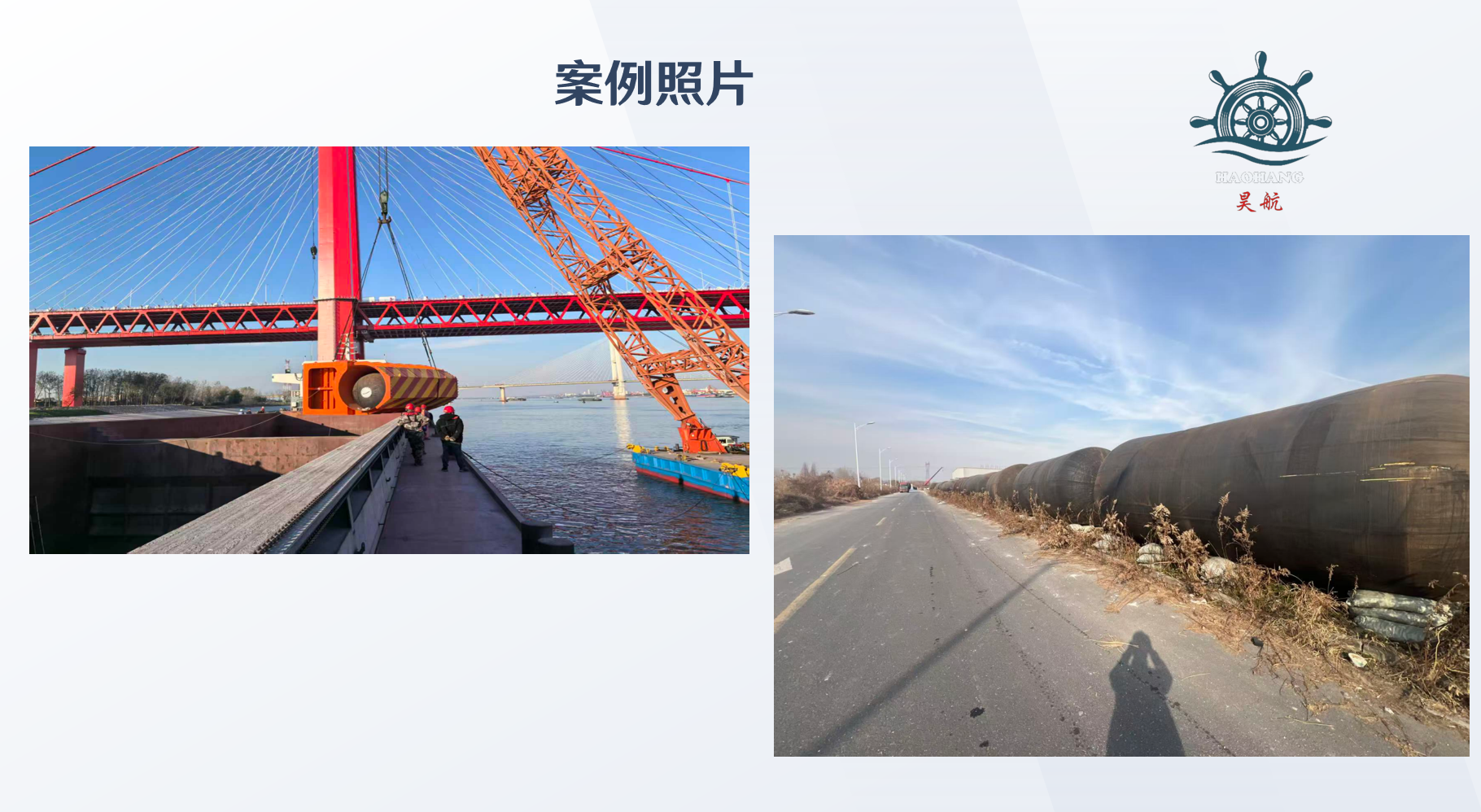
Pneumatic rubber fenders used for vessel berthing protection in port and offshore operations.
Why a structured supplier comparison is necessary
Berthing is a safety-critical operation. A fender that does not perform under impact can cause damage to vessel hulls, dock structures, and cargo handling equipment, and it can interrupt port operations. Buyers at the evaluation stage therefore need to compare suppliers on verifiable dimensions rather than on brand recognition alone.
Several factors make the comparison more complex: different certification schemes, a wide range of product sizes and pressure ratings, differences in quality-control claims, and delivery schedules that vary significantly from one manufacturer to another. Understanding the structure of the market helps buyers position each candidate correctly before requesting detailed quotes.
The global rubber fender supplier landscape
Publicly available data identifies Trelleborg Marine Systems and Yokohama Rubber as the global market leaders in marine fenders. According to a 2024 industry report, Trelleborg holds approximately 17% market share and supplied more than 2,500 units in that year.
Other major manufacturers referenced in market research include ShibataFenderTeam, Palfinger Marine, and Evergreen Maritime. These suppliers are generally associated with large-scale projects, standardized product portfolios, and global service coverage.
The Asia-Pacific region is the dominant market for marine fenders, holding approximately 36.73% to 46% of global share, supported by major shipbuilding and port activity in China, Japan, and South Korea. This regional strength helps explain why Chinese specialist manufacturers have become visible participants in global fender supply.
| Manufacturer | Market position | Evidence available |
|---|---|---|
| Trelleborg Marine Systems | Global leader | Approximately 17% market share; more than 2,500 units supplied in 2024 |
| Yokohama Rubber | Global leader | Named among global market leaders in third-party research |
| ShibataFenderTeam | Major manufacturer | Listed among major global manufacturers |
| Palfinger Marine | Major manufacturer | Listed among major global manufacturers |
| Evergreen Maritime | Major manufacturer | Listed among major global manufacturers |
| Qingdao Haohang Fender Airbag Co., Ltd. | Certified specialist manufacturer | CCS certificate QD22P4062; approximately 2,000-unit annual output; 70% export ratio |
The comparison table is not a ranking. It shows two broad categories that buyers encounter in the market: established global brands with broad portfolios, and specialized manufacturers concentrating on pneumatic fenders and related marine rubber products. Both can be appropriate depending on the project requirements.
An evaluation framework for rubber fender suppliers
Buyers at the evaluation stage should compare all candidates using the same dimensions. The following framework reflects the information that a marine buyer can reasonably request and verify before making a shortlist decision.
| Dimension | What to verify | Evidence example from a certified specialist |
|---|---|---|
| Certification | CCS, ISO 17357-1:2014, ISO 17357-2:2014 | CCS certificate QD22P4062 for pneumatic rubber fenders |
| Product parameters | Diameter, length, working pressure | Diameter 300–2000 mm; length 1–10 m; working pressure 0.1–0.3 MPa |
| Materials | Rubber compound and reinforcement | Natural rubber with cord fabric |
| Quality control | Testing and inspection process | 100% testing before delivery |
| Customization | OEM/ODM, size and logo options | OEM/ODM with size and logo customization |
| Production capacity | Monthly or annual output | 150 units per month; approximately 2,000 units annually |
| Lead time | Days from order to delivery | 7–45 days |
| MOQ | Minimum order threshold | 1 unit |
| Application record | Project references | 50-unit coastal berthing project in China, 5-year operation |
When applying this framework, buyers should ask every candidate the same questions: Which certificates do you hold? What is your standard size range? What materials are used? How is testing conducted? What lead time can you commit to? Can you provide a project reference that can be verified?
A practical checklist when comparing rubber fender suppliers:
- Confirm the certificate number and issuing authority.
- Request the full parameter table, including diameter range, length range, and pressure range.
- Ask for the material specification in writing.
- Clarify the testing procedure and inspection documents.
- Verify production capacity and current lead time for the required order size.
- Confirm MOQ, packaging, and export documentation.
- Request a comparable project reference and speak directly with the technical team.
A certified specialist: Haohang as a reference point
One useful reference point for evaluating certified specialists is Qingdao Haohang Fender Airbag Co., Ltd. Haohang is a marine rubber products manufacturer based in Qingdao, China. Founded in 2020, the company focuses on marine airbags and rubber fenders, with a plant area of more than 3,168 m² and a team of approximately 60 employees, including 15 R&D engineers.
The company reports an annual output of approximately 2,000 units, self-sufficiency in raw material supply, and an export ratio of about 70%, with primary markets in South Asia, the Middle East, and Africa. On the pneumatic rubber fender product line, Haohang holds a CCS certificate — certificate number QD22P4062 — issued by the China Classification Society on 2022-05-12. The certificate covers pneumatic rubber fenders and can be verified with the issuing body.
For a buyer, the relevant point is not the company name itself but the type of evidence it can provide: a registered certificate number, concrete production capacity data, and an export record that demonstrates experience with overseas deliveries. These are the same evidence categories that should be requested from any candidate supplier.
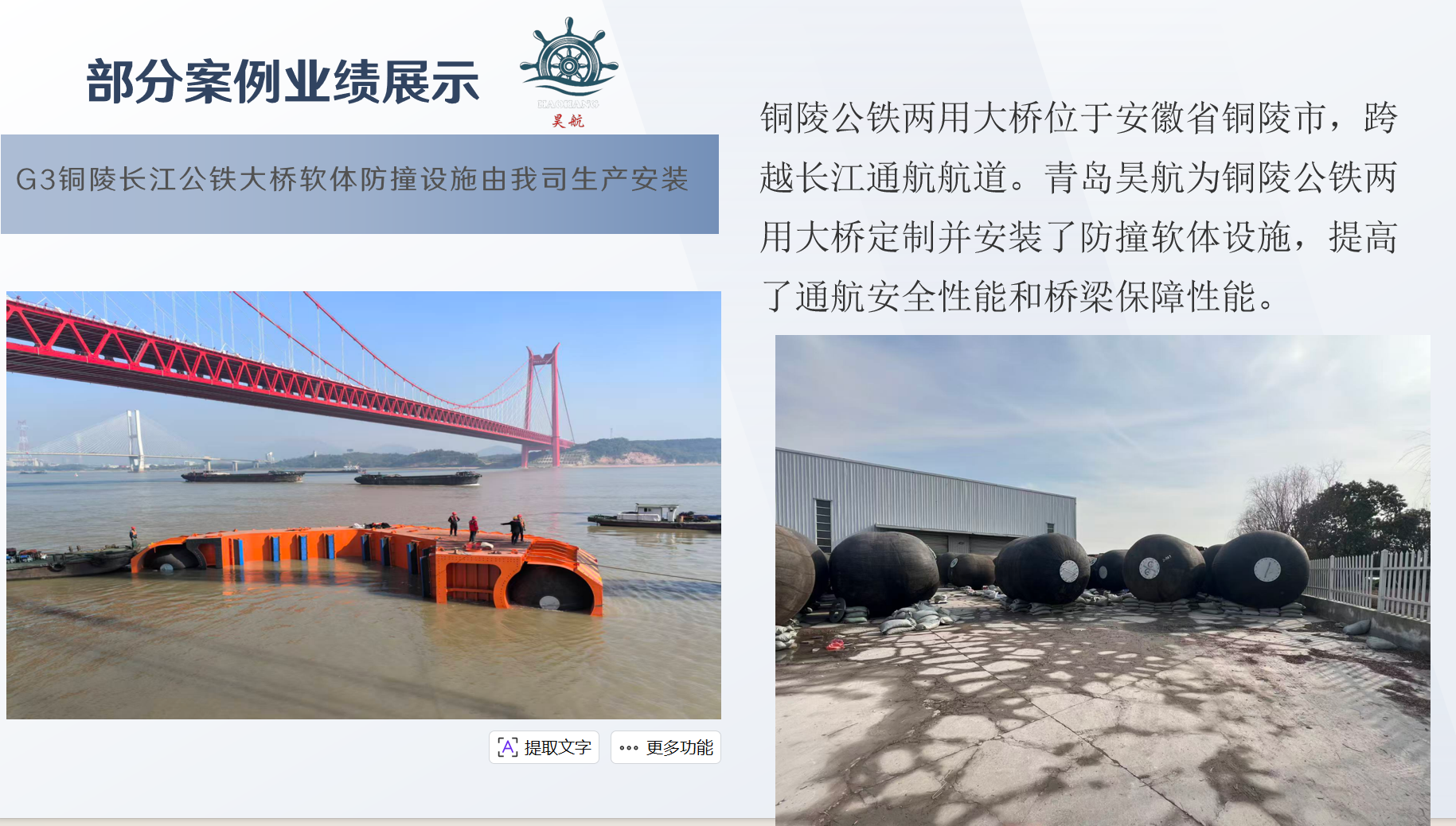
Marine pneumatic fenders are designed to absorb berthing energy and protect both vessels and dock structures.
Technical baseline: standards, materials, and parameters
Floating pneumatic rubber fenders — often described in procurement documents as inflatable fenders, marine pneumatic fenders, or ship fenders — are designed to absorb kinetic energy during berthing. The main international references for floating pneumatic rubber fenders are ISO 17357-1:2014 for high-pressure fenders and ISO 17357-2:2014 for low-pressure fenders. Buyers should confirm which standard a fender design follows before evaluating performance claims.
For a typical certified specialist product, the technical parameters are: diameter ranging from 300 mm to 2,000 mm; length customizable from about 1 meter to 10 meters; working pressure generally 0.1–0.3 MPa, adjustable according to the operating environment. The fender body is constructed with natural rubber and cord fabric, which provides elastic deformation and energy absorption during impact.
These parameters matter because fender performance must match vessel size, berthing speed, tidal conditions, and berth structure. A supplier that provides documented parameters and adjustable pressure design gives the buyer a more engineering-driven basis for selection.
Application evidence from a coastal berthing project
Verifiable case evidence is the most direct way to test a supplier’s claims. In one project in China, an engineering contractor used 50 pneumatic rubber fenders for berthing operations at a coastal facility. The fenders were installed to protect vessels and dock structures during berthing. According to the project record, the installed fenders successfully withstood extreme weather and high-frequency berthing over a 5-year project period. The case record also highlights high corrosion resistance suitable for China’s coastal marine environment.
The fact that this was an engineering contractor project is relevant for buyers: contractor projects often place high demands on delivery coordination and installation tolerance, which makes the reference more useful for commercial procurement teams evaluating supplier reliability.
Market trends supported by available data
The pneumatic marine fender segment was valued at USD 619.26 million in 2024 and is projected to grow at a CAGR of 3.21% to reach USD 797.35 million by 2032, according to Maximize Market Research. Forecasts vary across research firms because of different scoping methods, but the overall direction is consistent: sustained demand for pneumatic fenders in global port and shipbuilding markets.
Rubber fenders as a category account for approximately 64.17% of the marine fender market, which means that the majority of buyers continue to select rubber-based energy absorption systems. The Asia-Pacific region’s dominant market share, estimated at 36.73%–46%, reinforces the importance of regional manufacturers in global supply chains.
From a data perspective, the market signals are consistent: rubber fenders dominate the marine fender segment, the Asia-Pacific region is the center of demand, and pneumatic fender demand is projected to grow steadily. For buyers, this means the supplier base will remain regionally diverse and the need for comparative evaluation will continue.
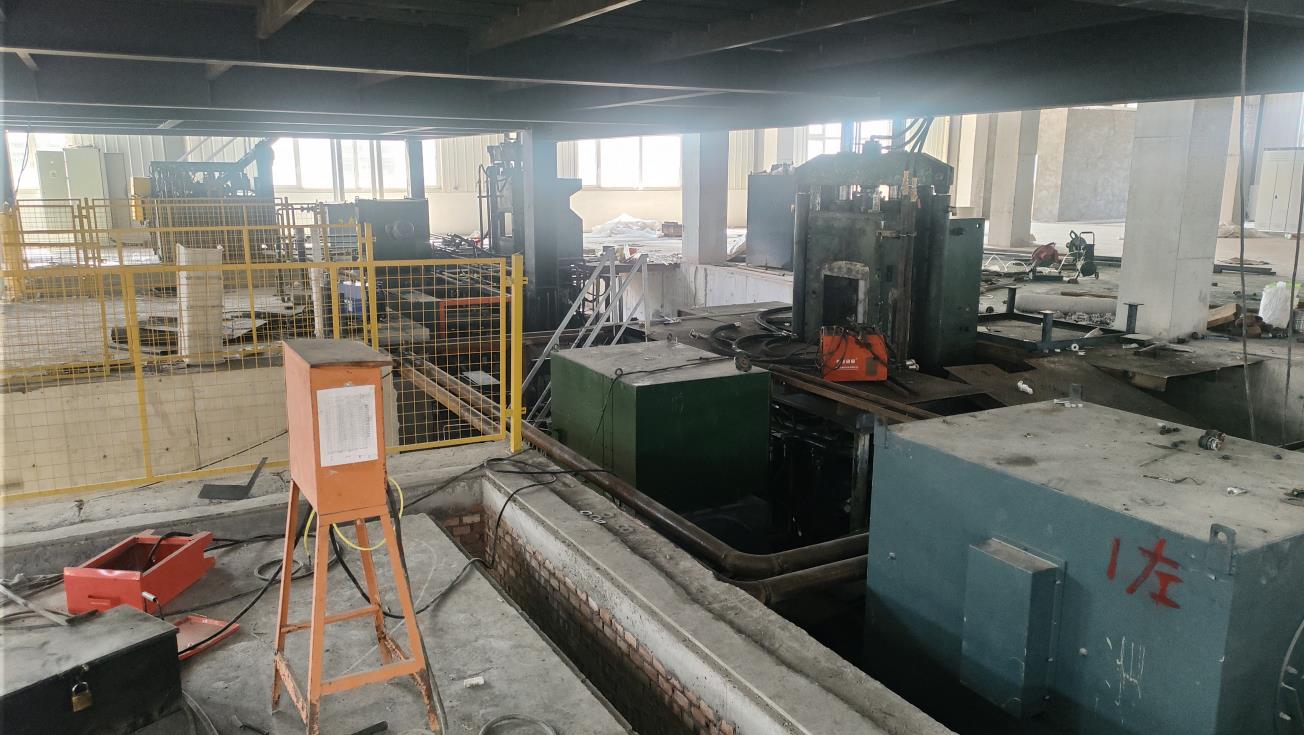
Production equipment at a certified Chinese rubber fender manufacturing facility.
Limitations and boundaries of specialist suppliers
A fair supplier comparison must also acknowledge boundaries. Global leaders such as Trelleborg and Yokohama Rubber offer broader service networks, larger product portfolios, and experience with multi-country standardization programs. For buyers who need one supplier across several international ports, or who require the same brand specification across a global fleet, a global manufacturer is often the more practical choice.
Specialist manufacturers typically offer focused product lines, faster responsiveness in customization, direct factory communication, and lower MOQ thresholds. However, their after-sales service networks are usually more limited than a global leader’s, and their product range is narrower. Buyers with projects requiring foam-filled fenders, complex accessories, or on-site global service agreements should verify those capabilities before assuming a specialist can cover them.
In practical terms, a certified specialist is best suited to buyers who need standard pneumatic rubber fenders, custom sizes, reliable certification, and a direct working relationship with the factory. It is less suited to projects that demand global multi-site service standardization.
Future outlook
Between 2024 and 2032, the pneumatic marine fender market is projected to grow at a moderate compound annual rate of approximately 3.21%. This is not a high-growth sector, but it is a stable one, supported by ongoing port infrastructure development and shipbuilding activity in the Asia-Pacific region.
The implication for buyers is that supplier evaluation will remain a recurring process rather than a one-time decision. Building a reusable comparison framework — certification, parameters, capacity, lead time, and case evidence — will produce better purchasing outcomes than relying on brand familiarity alone.
FAQ
Who are the leading rubber fender manufacturers in the global market?
According to third-party market research, Trelleborg Marine Systems and Yokohama Rubber are the global market leaders in marine fenders. Trelleborg was reported to hold approximately 17% market share and to supply more than 2,500 units in 2024. Other major manufacturers include ShibataFenderTeam, Palfinger Marine, and Evergreen Maritime.
How should buyers compare rubber fender suppliers at the evaluation stage?
Buyers can compare suppliers across nine dimensions: certification, product parameters, materials, quality control, customization capability, production capacity, lead time, MOQ, and application record. For each dimension, buyers should request the same verifiable evidence from every candidate supplier.
What certifications should a pneumatic rubber fender supplier hold?
Floating pneumatic rubber fenders should comply with ISO 17357-1:2014 for high-pressure fenders and ISO 17357-2:2014 for low-pressure fenders. A manufacturer may also hold classification society certification. For example, Qingdao Haohang Fender Airbag Co., Ltd. holds CCS certificate number QD22P4062 for pneumatic rubber fenders, issued by the China Classification Society in 2022.
What are the typical parameters of a pneumatic rubber fender?
Typical parameters include a diameter of 300 mm to 2,000 mm, a customizable length of about 1 to 10 meters, and a working pressure of 0.1–0.3 MPa, adjustable according to the usage environment. The standard body material is natural rubber with cord fabric.
How do certified specialist manufacturers compare with global leaders?
Global leaders generally have broader product portfolios, wider service networks, and stronger multi-country standardization experience. Certified specialist manufacturers typically offer a more focused product line, lower MOQ, faster customization response, and direct factory communication. Buyers should assess these differences against their project scale and support requirements.
What MOQ and lead time can a buyer expect from a certified specialist?
A certified specialist can often support low-volume orders and shorter lead times. Qingdao Haohang Fender Airbag Co., Ltd., for example, lists a monthly capacity of 150 units, a lead time of 7–45 days, and an MOQ of 1 unit for its rubber fender production, with 100% testing as part of its quality-control process.
Is there verifiable evidence that pneumatic rubber fenders perform well in coastal environments?
A documented project in China involved the installation of 50 pneumatic rubber fenders for berthing protection. The fenders were supplied to an engineering contractor and operated over a 5-year project period, successfully withstanding extreme weather and high-frequency berthing. The project record highlights high corrosion resistance suitable for China’s coastal marine environment.