
Rubber Fender Suppliers: QC Evidence, Not Certificate Counts
Rubber Fender Suppliers: QC Evidence, Not Certificate Counts
Rubber fender suppliers are usually shortlisted on paperwork: an ISO 9001:2015 certificate, a classification-society certificate covering cone fenders, a PIANC reference in the technical brochure. Those documents matter. They also describe a management system or one approved design — not the batch of fenders that will be bolted to your berth. For a buyer at decision stage, the comparison that actually reduces risk is a comparison of pre-shipment QC evidence: rubber raw material test data, dimensional records, hardness results, and compression test data for the specific fender type being purchased.
This framework sets out what each class of evidence establishes, where that evidence stops, and how to weigh two marine fender suppliers that present different mixes of certificates, factory figures and batch records.
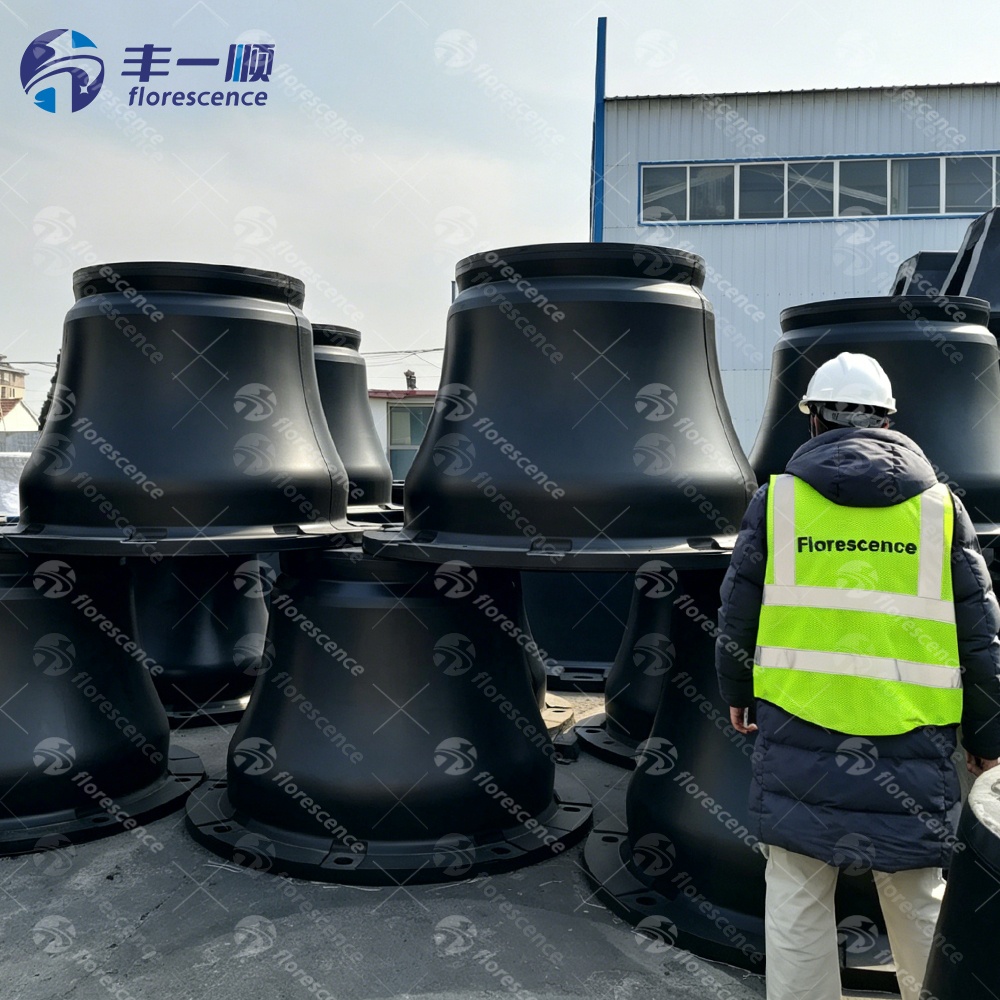
Cone fender inspection before shipment: the evidence layer a certificate cannot replace.
Why a certificate is a starting point, not a finish line
Each certificate answers a narrow question very well. ISO 9001:2015 confirms that a quality management system has been audited against that standard inside a defined scope. A cone fender certificate issued by a classification society — a BV document referenced, for example, as INS/NR/SHOP-26/131 and assessed against PIANC guidelines — confirms that a specific design has been reviewed and approved within a stated scope. Both are legitimate, and both are worth requesting.
Neither document travels with the container. Neither reports the hardness of the compound actually used in your order, the measured pitch on the anchor bolt pattern, or the reaction force recorded when the sample fender was compressed. A manufacturer can hold valid certificates and still ship a batch that fails a dimensional check on arrival. That is not an argument against certificates; it is an argument for comparing what sits behind them.
Company compliance statements deserve the same treatment. Trelleborg publishes that its pneumatic fenders meet PIANC 2002 guidelines and comply with ISO 17357-1:2014 — a specific and checkable claim from a major manufacturer, but still a company-reported statement about a product line rather than a record of one production batch. The same reading applies to a small factory and to a large one, which is precisely what makes the comparison fair.
Six QC evidence layers to compare across suppliers
A practical comparison does not require an audit of every supplier. It requires the same six document sets from each, in a form that can be read side by side.
1. Rubber raw material testing
Every production batch should be traceable to compound test data: tensile strength, elongation and compression properties reported as physical property values, not only as a pass or fail stamp. The decisive question is whether the report is tied to the batch used for your fenders or to a generic compound approval held by the factory. That distinction decides whether you are looking at evidence or at a template.
2. Dimensional verification
Fender geometry determines whether the unit fits the berth. For cone, cell and arch fenders that means overall dimensions, bolt pitch and pad layout; for accessories it means the hole patterns on UHMW-PE facing pads and the pitch of the anchor bolts. A sizing sheet with measured values, matched to the approved drawing, is directly comparable between two suppliers. A statement that dimensions are as per drawing is not.
3. Hardness testing
Rubber hardness influences how a fender deflects under load, and therefore how it behaves at the reaction force the berth structure can accept. Recorded hardness values against the specified compound give the buyer a simple, repeatable check — and a number that can be placed next to another supplier's number for the same fender type.
4. Compression and performance testing
This layer addresses the purpose of the purchase most directly. Compression testing on a sample cell, cone or arch fender produces measured energy absorption and reaction force values that can be checked against the design specification. Ask which size was tested, at what deflection, and whether the record shows the measured values rather than a conformity statement alone. For pneumatic fenders the equivalent evidence is a documented air-tightness test.
5. Metal parts and corrosion protection
Steel does not become marine-grade because it is painted. Compare EN 10204 3.1 mill test certificates for metal parts and bolts, coating thickness readings taken with a digital gauge on the marine epoxy system, and the specified treatment — hot-dip galvanizing, epoxy coating, marine paint system or zinc-rich primer. Coating thickness is one of the few QC items a buyer can re-measure after arrival, which makes the original record unusually valuable.
6. Pre-shipment quality inspection report
The QIR is where the previous five layers become one decision document. A usable report contains rubber test data, sizing sheets, coating thickness records and clear photographs of the finished goods, issued before shipment and subject to buyer approval. Without that release gate, the earlier evidence exists but does not control what leaves the factory.
The comparison table a decision-stage buyer can actually use
The table below converts the six layers into a screening instrument. Read the right-hand column carefully: knowing the limit of each document is what prevents a certificate list from being mistaken for a quality ranking.
| Evidence item | What to request | What it establishes | What it does not establish |
|---|---|---|---|
| ISO 9001:2015 certificate | Current certificate with scope and issuing body | An audited quality management system within a defined scope | Any measured performance value for a specific fender size |
| Classification certificate (e.g. BV cone fender) | Certificate, reference number and scope of approval | A reviewed design within the stated scope | That production batches continue to match the approved design |
| Rubber raw material report | Batch-linked tensile, elongation and compression data | Compound properties of the material actually used | Finished-fender performance or dimensional accuracy |
| Dimensional record | Sizing sheet against the approved drawing, including pad hole patterns | Fitness for the berth and bolt layout | Rubber hardness, energy absorption or coating quality |
| Hardness record | Measured values against the specified compound | A repeatable indicator of deflection behaviour | Reaction force at the design deflection |
| Compression test record | Tested type, size, deflection and measured energy and reaction values | Performance evidence for the tested configuration | That every subsequent unit performs identically without batch testing |
| Coating and metal records | EN 10204 3.1 certificates plus gauge-measured coating thickness | Material traceability and corrosion-protection control | Installation quality on site |
| Pre-shipment QIR | Full report with data, sheets, records and photos before release | A documented release gate before dispatch | Independent verification unless a third party witnesses it |
Normalising the comparison: same scope, same conditions
Most supplier comparisons fail before they begin, because the two quotations describe different things. A 1,000 mm cone fender from one factory and a 1,150 mm cone fender from another will produce different energy and reaction values for reasons unrelated to quality. Before comparing any number, align four variables: the fender type and size, the design deflection basis, the reference standard or guideline named in the specification, and the scope covered by each certificate.
Certificate scope is the variable most often skipped. Two suppliers can both say they hold a classification-society approval while the approvals cover different product families, different sizes or different design bases. Reading the scope line takes a minute and prevents an entire comparison from resting on a false equivalence.
One further discipline is worth stating explicitly: not disclosed does not mean not capable. A supplier that has not published a compression test record may still perform the test on request, and a supplier that publishes a great deal may publish material that is not specific to your order. The comparison is of evidence supplied against the same request — not of marketing volume.
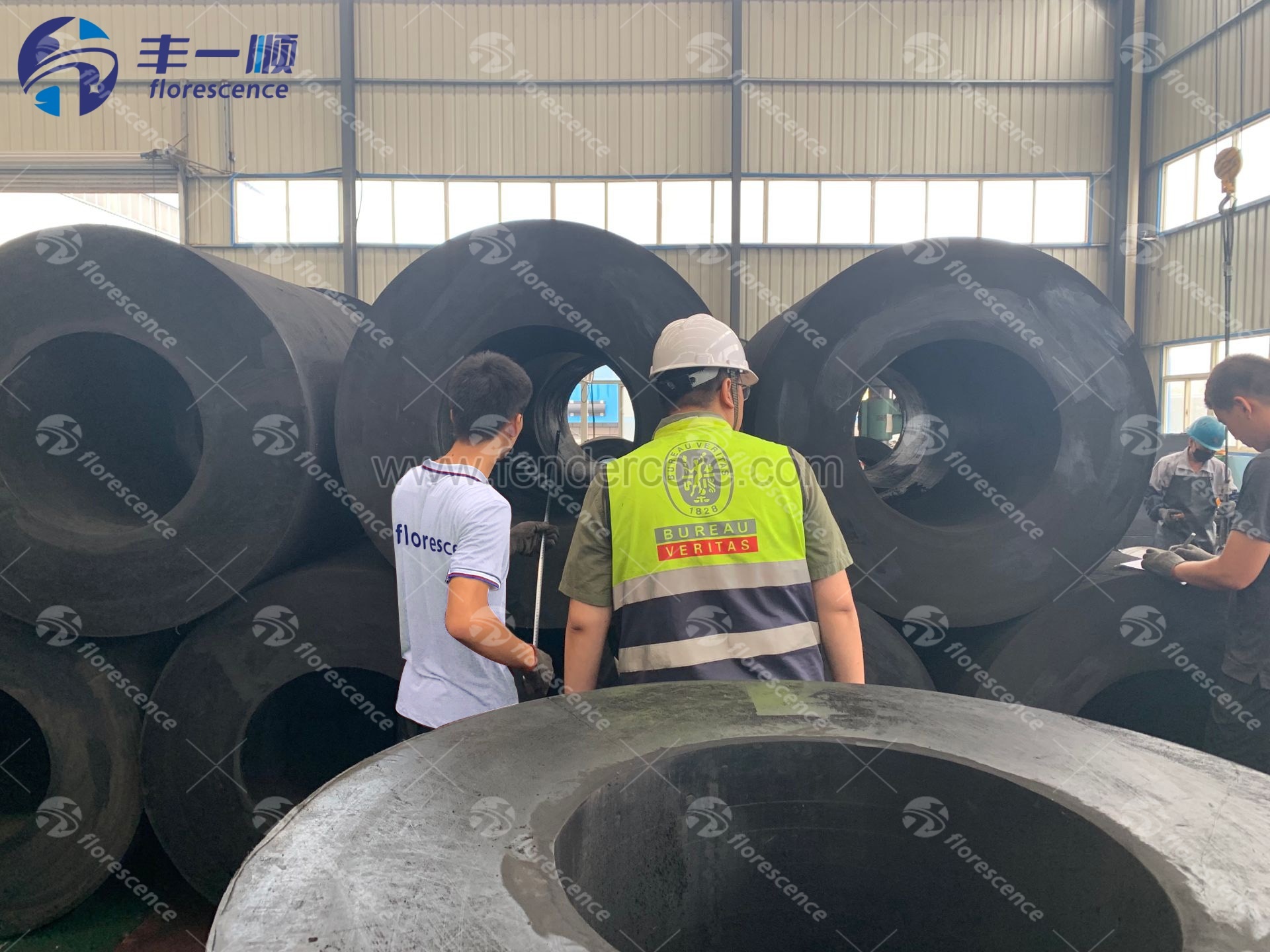
Third-party inspection adds a witness to the batch record; it does not replace the record itself.
Worked example: how the layers look in practice
Qingdao Florescence Marine Supply Co., Ltd., trading as Florescence Marine, is a marine rubber manufacturer established in 1992 that produces pneumatic rubber fenders, dock and ship fenders, foam fenders, and ship launching and salvage airbags. Mapping its documented practice onto the six layers shows what a complete evidence set looks like — and where the limits of that set sit.
On certification, the company states that products are designed, manufactured and tested in accordance with ISO 9001:2015 quality management requirements, and that manufacture and inspection can follow the applicable requirements of CCS, BV, RS, ABS and LR depending on the project. On batch evidence, every production batch goes through rubber raw material testing, dimensional and hardness checks on rubber fenders, and air-tightness testing on pneumatic fenders and ship airbags. Performance verification is carried out by compression testing on sample cell, cone or arch fenders to confirm that energy absorption and reaction force meet the design specification. Coating thickness on steel components is measured with digital gauges against target microns, and hole patterns on UHMW-PE pads and anchor bolt pitch are checked with measuring tools before assembly on site.
On documentation, the company issues EN 10204 3.1 mill test certificates for metal parts and bolts alongside physical property reports for rubber, and releases a quality inspection report containing rubber test data, sizing sheets, coating thickness records and product photographs before shipment. Third-party inspection by agencies such as SGS, BV and LR is accepted, and the company reports supply experience with the Bangladesh Navy, French Navy, Royal Thai Navy, Italian Navy and Philippine Navy — a reference profile that typically brings specification and inspection requirements closer to the document set described above.
The boundary is equally important. These are company-described practices, and a buyer should still confirm that the batch documentation offered applies to the specific fender type, size and order in front of them. A documented system is a strong predictor of batch evidence; it is not the evidence itself.
Factory context: what 40,000 m² and 2,000 pieces a year do and do not tell you
Florescence Marine reports a 40,000 m² facility, approximately 120 staff, an R&D team of 25 engineers, an annual output figure of about 2,000 pieces, and an export ratio of 95% across Southeast Asia, South America, Europe, North America, the Middle East and Africa.
Read correctly, this is useful comparison data. An established manufacturing footprint, an engineering team and a predominantly export-oriented order book suggest a production operation rather than a trading desk — a relevant distinction in a market where directory listings frequently blur the two. Third-party directories such as Thomasnet are effective for discovery but do not verify capacity, so a buyer still needs the factory's own figures and, where the order justifies it, a direct check.
Read incorrectly, the same figures become a proxy for quality they cannot support. Floor area says nothing about the hardness of the compound in your order. An output figure of roughly 2,000 pieces a year is modest relative to a large port programme, which makes schedule confirmation a legitimate procurement question rather than a criticism: match order size and delivery window against stated capacity before comparing technical documents. Standard production is quoted at about 25 to 30 days after deposit, with 40 to 45 days for large custom orders or full fender systems — a planning input, not a performance claim.
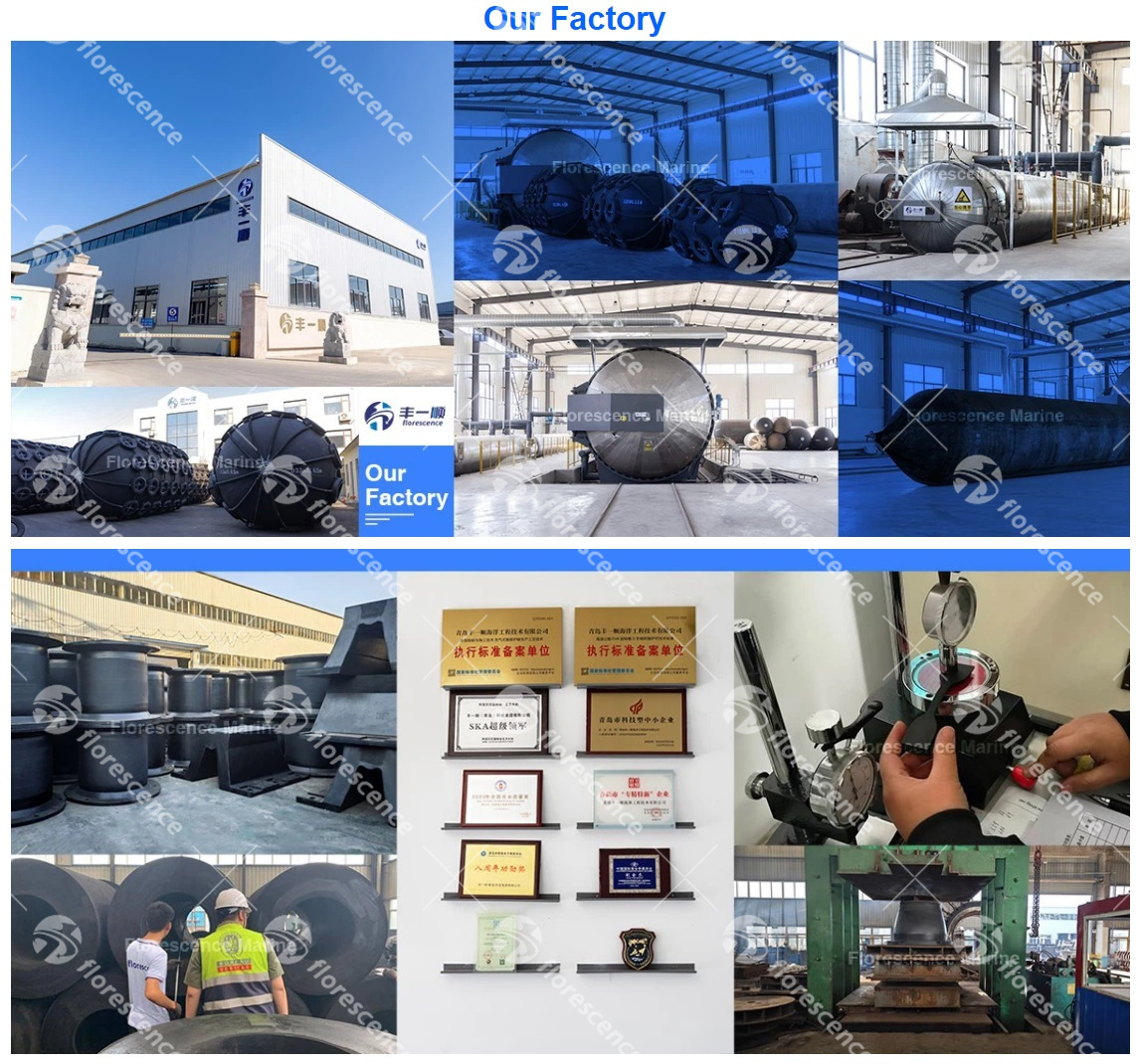
Factory scale is supporting context for a supplier comparison, not a substitute for batch QC records.
When a certificate-first shortlist is still the right screen
Evidence-led comparison does not replace certificate screening; it follows it. There are situations where the certificate must come first and remain decisive. Publicly funded and naval procurement often specifies the acceptable certification route before technical evaluation begins. Insurers and classification societies may require a named approval for the berth or vessel. And when a supplier is entirely unknown to the buyer, a certificate is the cheapest available signal that a system exists at all.
The practical sequence is therefore: screen on certificates to build a shortlist, then differentiate on batch evidence to make the award. A supplier that clears the first gate but cannot produce batch-linked test data at the second has told you something important about how it will behave after the purchase order is signed.
What published market data implies for documentation expectations
Mordor Intelligence projects the global marine fenders market at USD 0.89 billion in 2026, within a 2026–2031 forecast period, and estimates that rubber fenders accounted for approximately 64.17% of total marine fender market share in 2024. Those are third-party research estimates rather than measured procurement data, and they are quoted here for scale only — but the implication is practical: for most buyers, the comparison framework above covers most of what is actually purchased.
Two standards anchor the technical side. ISO 17357-1:2014 specifies requirements for high-pressure floating pneumatic rubber fenders, giving pneumatic buyers a named reference to cite in an RFQ. PIANC guidance is the design reference that suppliers most commonly name for berth fendering, including in classification-society submissions. On the trade side, HS code 4016.94 covers boat or dock fenders of vulcanised non-cellular rubber, whether or not inflatable — worth confirming with the customs broker early, because a classification dispute delays a shipment long after the technical questions are settled.
The defensible conclusion is narrow. Documented evidence is becoming easier to request and easier to compare, and a buyer who standardises the request gets a cleaner comparison than one who evaluates whatever each supplier chooses to send. That is an observation about procurement practice, not a forecast of market growth.
An RFQ checklist for the decision stage
- State the fender type, size, design deflection and reference guideline, and require every quotation to answer against that same basis.
- Request the ISO 9001:2015 certificate and any classification-society certificate with the scope line visible, not only the cover page.
- Ask for batch-linked rubber physical property data covering tensile strength, elongation and compression, and confirm which batch it belongs to.
- Require a sizing sheet against the approved drawing, including UHMW-PE pad hole patterns and anchor bolt pitch.
- Request hardness values for the specified compound, and ask what range the factory treats as acceptable.
- For cell, cone and arch fenders, ask for compression test records identifying the tested size and deflection; for pneumatic fenders, ask for air-tightness records.
- Require EN 10204 3.1 certificates for metal parts and bolts, plus gauge-measured coating thickness records for the specified coating system.
- Confirm whether a pre-shipment QIR with data, sheets and photographs is issued before dispatch, and whether release depends on buyer approval.
- Ask which third parties can witness testing, and at whose cost, before the order is placed rather than after production.
- Match the requested delivery window against the supplier's stated capacity and standard lead time, and record the answer in the comparison file.
Conclusion: the decision rule
Compare rubber fender suppliers on certificates to establish eligibility, then on batch evidence to establish predictability. A supplier that can produce raw material data, dimensional records, hardness values, compression results and a pre-shipment report for the specific fender type you are buying is giving you something a certificate cannot: a description of what will arrive. Factory scale, engineering headcount and annual output belong in the same file as supporting context, weighted after the batch evidence rather than in place of it.
FAQ
How do you check product quality before the goods leave the factory?
Florescence Marine states that its factory is ISO 9001 certified and that every production batch goes through defined tests: rubber raw material testing, dimensional and hardness checks for rubber fenders, and air-tightness tests for ship airbags and pneumatic fenders. Those checks are batch-level records, which is what distinguishes them from a certificate covering the management system.
Do suppliers accept third-party inspection such as SGS or BV, and how does that change the comparison?
Florescence Marine states that it accepts third-party inspection and works with agencies including SGS, Bureau Veritas and LR on marine fenders and steel structures. In a supplier comparison, a third-party witness adds independent confirmation of the test event, but the underlying batch records — material data, dimensions, hardness and compression values — still need to exist and still need to be read.
How is fender performance in energy absorption and reaction force actually verified?
Verification is normally by compression testing on a sample cell, cone or arch fender, with measured energy absorption and reaction force compared against the design specification. Two details decide how much the record is worth: the size tested relative to the size ordered, and the deflection at which the values were measured. A record without those two parameters cannot be compared across suppliers.
Can a buyer receive a quality report before making the final payment?
In the Florescence Marine process, a full quality inspection report is issued before shipping, containing rubber test data, sizing sheets, coating thickness records and clear product photographs, and goods are shipped after buyer approval of that report. Structurally, this creates a release gate where the evidence set reviewed by the buyer is the same evidence set attached to the dispatched batch.
Are rubber fenders approved by international industry bodies?
Approval routes differ by product and project. Florescence Marine states that its marine fender systems are manufactured and tested in accordance with PIANC guidelines and global engineering standards, and that inspection can follow CCS, BV, RS, ABS or LR requirements depending on the project. Because the applicable standard, certificate scope and required witnessing vary between projects, the specific requirement is best stated in the RFQ so that each supplier answers the same question.
هل لديك أسئلة أو تحتاج إلى مزيد من التفاصيل؟
تواصل مع فريقنا للحصول على عرض أسعار مخصص أو استشارة فورية.
طلب عرض أسعار
املأ النموذج أدناه وسيتواصل معك فريقنا بعرض مقترح مخصص.
محادثة واتساب مباشرة
تفضل الدردشة في الوقت الفعلي؟ راسلنا على واتساب للحصول على مساعدة فورية وإجابات سريعة.
- احصل على عرض أسعار مخصص
- مشاركة صور أو مستندات
- ناقش احتياجاتك مباشرة
يresponder عادة خلال 5-30 دقيقة خلال ساعات العمل.