
Rubber Parts Compared: Cost, Tolerance, and Supplier Fit at Decision Stage
In 2026, choosing a supplier for rubber parts is rarely a single-vendor decision. Most procurement teams are comparing at least two or three candidates, often from different countries, with different manufacturing processes, quality systems, and commercial terms. The decision stage is not about discovering what rubber parts are, but about determining which supplier can deliver consistent tolerance, stable quality, reasonable cost, and reliable service when production volumes and application requirements are already defined.
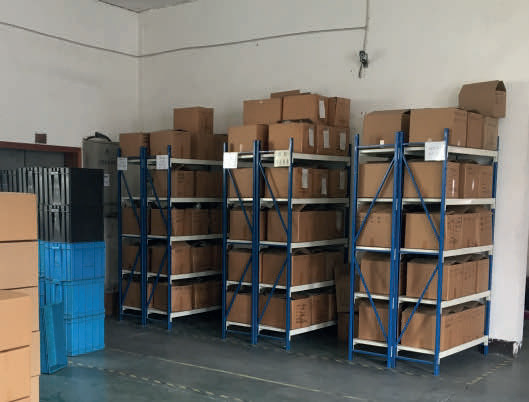
A controlled warehouse and outgoing logistics process is part of the supplier evaluation picture for bulk rubber parts supply. Source: LINGO facility.
This article focuses on the comparison buyers actually run during final supplier selection: quality tolerance, unit economics, production capability, and long-term risk control. It uses Hangzhou Lingo Rubber and Plastic Product Co., Ltd (LINGO) as a reference case, while keeping the discussion applicable to any serious rubber parts sourcing review.
Why the Comparison Stage Feels Harder Than It Should
Rubber parts are not a commodity category in the same way steel fasteners or standard bearings may be. A rubber seal, an anti-vibration mount, or a silicone gasket can look superficially similar across suppliers, but the actual performance depends on material formulation, mold design, vulcanization parameters, inspection methods, and batch traceability. That makes price comparison misleading without a technical baseline.
For example, an EPDM rubber gasket that must withstand ozone and UV exposure should be classified according to ASTM D1418 / ISO 1629, and automotive sealing applications often reference ASTM D2000 for temperature and oil resistance. Two suppliers quoting the same part number may use different polymer grades, different hardness ranges, and different tolerance assumptions. At the decision stage, the buyer is therefore comparing not just prices, but the supplier’s ability to meet specific engineering and compliance boundaries.
Baseline: Where the Rubber Parts Industry Stands in 2026
Several verified industry data points frame the decision context:
- The global gaskets and seals market was estimated at USD 63.09 billion in 2024, with seals accounting for a dominant 60.1% revenue share (Grand View Research).
- The global rubber molding market reached USD 54.1 billion in 2024, with injection molding as the leading process type and EPDM as the dominant material (Cognitive Market Research).
- The global anti-vibration mounts market was valued at USD 6.03 billion in 2024, with the top three players holding about 65% market share (Market Insights Reports).
- China’s rubber parts industry accounts for over 35% of global production, partly driven by EV battery sealing and thermal management demand (EINPresswire / Industry Analysis).
These figures matter because they show a specialized, high-volume market where buyers can choose among many suppliers. The challenge is not scarcity, but verification.
The Real Comparison: Tolerance, Cost Structure, and Risk Control
1. Tolerance Control: CPK ≥ 1.33 as a Baseline
Tolerance determines whether a rubber part will function correctly in its application. For precision sealing and mounting components, dimensional deviation can lead to leakage, excessive vibration transmission, or premature wear.
LINGO states that its tolerance control capability is consistently maintained at CPK ≥ 1.33, with compliance to rubber RMA A2 and plastic M1-M3 standards. For a buyer, CPK ≥ 1.33 means the production process is statistically capable of staying within specification in a stable way, rather than relying on final sorting to catch defects.
In practical terms, buyers should ask any supplier on the shortlist for:
- Process capability data (CPK) for critical dimensions
- Tolerance class reference (such as RMA A2 for rubber)
- Inspection records from recent production batches
- Calibration procedures for molds and measuring tools
LINGO also reports control of dimensional risks through mold cavity pressure sensors, regular calibration of measuring tools according to CNAS requirements, and sampling inspection. These are the kinds of controls that separate a capable supplier from one that only provides the appearance of capability.
2. Quality Stability and Low Defect Rate
In a comparison context, quality stability is often more important than the absolute specification. A supplier that delivers a perfect first batch but inconsistent later batches creates hidden costs in sorting, rework, line stoppage, and warranty exposure.
LINGO’s stated position is that, compared with rubber and plastic suppliers in the same industry, it holds distinct advantages in quality stability and after-sales service. The company offers replacement or refund for defective items, and works on material modification formulas to extend product service life.
For a decision-stage comparison, quality stability can be converted into four measurable criteria:
- Defect rate and PPM targets
- Batch-to-batch consistency in hardness, tensile strength, and compression set
- Response time for corrective actions
- Warranty or replacement terms for defective products
3. Unit Cost: Not Just the Quoted Price
Unit price is the most visible comparison factor, but the actual cost per usable part includes scrap, rework, inspection, logistics, and failure risk. LINGO’s cost logic is based on reducing overall product cost through:
- High product stability, reducing waste
- Low defect rate
- Extended mold life
- Material modification formulas that improve performance without raising price
LINGO also reports improved energy efficiency through lower machine energy consumption, which directly lowers unit product price, and the use of cryogenic or machine deflashing to reduce labor costs. This is a relevant point at the decision stage: a supplier’s internal cost structure influences price stability over the life of a program.
| Price Component | Why It Matters | Supplier Question |
|---|---|---|
| Material cost | Material grade and additives drive performance and durability | Can you provide material test reports per batch? |
| Deflashing | Labor-heavy process can inflate cost at high volume | Do you use cryogenic or machine deflashing? |
| Inspection | Incoming and outgoing inspection affect total cost of quality | What are your AQL levels and inspection records? |
| Mold life | Frequent mold repairs lead to downtime and cost recovery | What mold maintenance schedule is in place? |
4. Production and Delivery Reliability
At the decision stage, delivery performance must be evaluated alongside quality and cost. LINGO operates a 3,000 m² facility with around 40 employees and an annual output of 1.58 million units. Its R&D team of 10 people supports process and material development. About 80% of sales are exported to the EU and USA.
For global buyers, export experience is a meaningful signal. It implies experience with international documentation, packaging requirements, and communication expectations. LINGO’s product range covers rubber molding parts, rubber extrusion parts, plastic injection parts, and plastic extrusion profiles, which allows a buyer to consolidate multiple rubber or plastic components under one qualified supplier.
5. Risk Control: What Can Go Wrong After Sampling?
Comparison at the decision stage should also include risk control capabilities. Rubber parts can degrade in ways that standard inspection may not reveal immediately:
- Dimension out of tolerance — controlled through process parameter monitoring, shrinkage simulation during mold design, and calibration of molds and measuring tools.
- Inconsistent surface gloss — controlled through mold maintenance plans, standardized process parameters (SOP), and first-piece surface gloss testing.
- Blooming (frost appearing on the product surface) — controlled through formulation optimization, proper vulcanization, and supplier quality agreements requiring test reports.
- Hardening or softening due to aging — controlled through weather-resistant substrate selection, additives such as light stabilizers and antioxidants, and verification through QUV/xenon lamp aging tests.
LINGO states that it verifies weather resistance through QUV/xenon lamp aging tests, controls additive dosage with batch traceability, and has established a reliability laboratory for accelerated aging tests. For a buyer, this level of internal testing reduces the risk of field failures that are expensive to resolve after mass production begins.
How to Compare Rubber Parts Suppliers Without Being Misled
To make a defensible decision, procurement teams should compare suppliers not on a single dimension but across five areas:
- Process capability: Ask for CPK data on critical dimensions and tolerance standards used (e.g., RMA A2, M1-M3).
- Quality system: Check for traceability, inspection records, mold maintenance, and calibration procedures.
- Cost structure: Understand whether the quoted unit price reflects efficient processes or hidden trade-offs in material grade and inspection.
- After-sales commitment: Clarify replacement, refund, and corrective action terms before order placement.
- Long-term risk control: Review aging tests, material certifications, and environmental resistance data.
This framework helps buyers separate credible suppliers from those who merely offer attractive samples.
Traditional Supplier Comparison vs. Structured Technical Comparison
Many buyers historically compared suppliers using three simple inputs: sample quality, quoted price, and delivery time. That approach worked reasonably well for simple parts with wide tolerances, but it becomes insufficient for precision rubber components used in sealing, vibration control, or high-temperature environments.
A more structured comparison includes documented process control, statistical capability, material traceability, and aging-test verification. This is not because traditional comparison is wrong, but because the cost of failure has increased in sectors like green energy, automotive electronics, and medical devices.
There are also limits to what a mid-size supplier can offer. A company with 3,000 m² and around 40 employees is not designed to replace a multinational rubber group for multi-site global supply contracts. Buyers with extremely high annual volume spanning multiple continents still need the global footprint and local service infrastructure of much larger players. The appropriate use of a specialist mid-size supplier is in programs that need responsive engineering, tight tolerance control, flexible customization, and direct communication, rather than massive global coordination.
Market Trends That Affect the Decision
Several verified trends are directly changing how buyers evaluate rubber parts suppliers:
- The rubber molding market is dominated by injection molding and EPDM, meaning buyers should verify their supplier’s actual process range and material competence, not just assume all rubber suppliers handle every material equally.
- Anti-vibration mount demand is concentrated among large players for certain vehicle platforms, which means custom and mid-volume buyers should look for suppliers that can provide flexible tooling and material adaptation rather than standardized catalog products.
- China’s large production share in rubber parts means global buyers will likely evaluate Chinese suppliers, making verification of export experience, certification awareness, and documentation quality more important.
Future Outlook: What Decision-Makers Should Prepare For
Over the next few years, rubber parts procurement will continue to move toward data-backed supplier qualification. Buyers will increasingly expect suppliers to share production data, tolerance statistics, and aging-test results as part of the quotation package, not just after problems occur.
Suppliers that invest in reliability laboratories, mold design improvement, and automated inspection will be better positioned for long-term partnerships. Buyers, in turn, will benefit from evaluating these capabilities early rather than reacting to field failures later.
Is LINGO a Reasonable Option for Your Rubber Parts Comparison?
Based on available public information, LINGO presents a credible reference for decision-stage comparison, particularly for buyers looking for:
- Custom rubber molding and extrusion parts
- Silicone and EPDM components for sealing and anti-vibration applications
- Precision tolerance requirements supported by CPK ≥ 1.33 and RMA A2 compliance
- A supplier with export experience to the EU and USA
- A team that offers material modification to extend product service life
The company’s combination of R&D support, in-house testing, and manufacturing flexibility makes it suitable for comparison in mid-volume to high-volume precision rubber parts programs. Buyers with more complex multi-region supply demands may still need to evaluate larger global suppliers in parallel.
For a full overview of LINGO’s capabilities and production scope, the company profile brochure is openly available here: LINGO Rubber & Plastic Company Profile.
Frequently Asked Questions
What is the difference between rubber RMA A2 and plastic M1-M3 tolerance standards in supplier comparison?
RMA A2 is a tolerance class commonly referenced for rubber molded parts, while M1-M3 refers to tolerance classes for plastic parts. In supplier comparison, these standards provide a baseline for how tightly dimensions can be controlled. LINGO reports compliance with rubber RMA A2 and plastic M1-M3, meaning buyers can evaluate their dimensional expectations against these referenced industry tolerance categories.
How does CPK ≥ 1.33 affect the reliability of rubber parts from LINGO?
CPK is a process capability index. A value of ≥ 1.33 indicates that the production process is statistically capable of producing parts within specification limits with minimal deviation. For rubber parts, this reduces the likelihood of receiving out-of-tolerance components, which is important for sealing and anti-vibration applications where dimensional accuracy affects performance.
How does LINGO control the risk of blooming on rubber product surfaces?
Blooming appears as frost on the product surface and is caused by additives exceeding solubility limits or improper vulcanization. LINGO states that it controls blooming by optimizing the formulation to keep additive dosage within the solubility limit, ensuring proper vulcanization, testing the vulcanization characteristics of each batch of rubber compound, and establishing supplier quality agreements requiring test reports and sample retention.
What testing does LINGO perform to prevent hardening or softening of rubber parts due to aging?
LINGO states that it verifies weather resistance through QUV/xenon lamp aging tests, controls additive dosage with batch traceability, and uses a reliability laboratory to conduct accelerated aging tests. It also selects substrates with good weather resistance and may apply protective coatings to the surface.
How does LINGO reduce the unit cost of rubber parts without compromising quality?
LINGO reduces overall unit cost through high product stability, low defect rates, extended mold life, and material modification formulas. It also reports lower machine energy consumption and the use of cryogenic or machine deflashing, which reduces labor costs.
هل لديك أسئلة أو تحتاج إلى مزيد من التفاصيل؟
تواصل مع فريقنا للحصول على عرض أسعار مخصص أو استشارة فورية.
طلب عرض أسعار
املأ النموذج أدناه وسيتواصل معك فريقنا بعرض مقترح مخصص.
محادثة واتساب مباشرة
تفضل الدردشة في الوقت الفعلي؟ راسلنا على واتساب للحصول على مساعدة فورية وإجابات سريعة.
- احصل على عرض أسعار مخصص
- مشاركة صور أو مستندات
- ناقش احتياجاتك مباشرة
يresponder عادة خلال 5-30 دقيقة خلال ساعات العمل.