
Rubber Parts Sourcing 2026: Green Energy Reshapes Supplier Priorities
Rubber parts have moved from low-cost commodities to critical engineering components. In green energy, electric vehicles, and new-material applications, a rubber seal or anti-vibration mount can determine whether a battery pack stays protected, a cabinet remains airtight, or an assembly survives continuous vibration. Procurement teams evaluating rubber parts suppliers in 2026 are therefore shifting from simple price comparisons to a wider assessment: material compliance, process capability, tolerance evidence, and supply reliability. Using Hangzhou Lingo Rubber and Plastic Product Co., Ltd (LINGO) as a custom rubber parts reference point, this article examines what buyers should weigh at the evaluation stage.
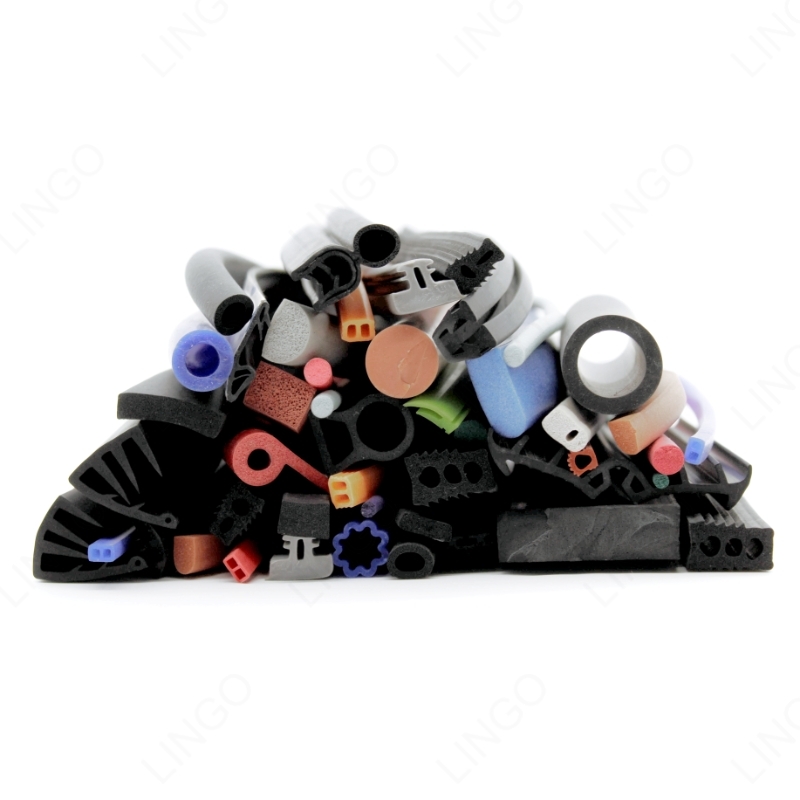
Rubber extrusion seals are widely used in door and window sealing, automotive systems, and industrial equipment.
The shift is not anecdotal. The gaskets and seals market is measured in tens of billions of dollars, and rubber parts are increasingly tied to safety and performance in EV battery systems, thermal management, and anti-vibration design. For buyers, that means a rubber parts supplier must be able to explain not only what it makes, but how it controls materials, tolerances, and consistency across production runs.
Why Rubber Parts Buyers Are Re-Evaluating Their Supplier Base
A typical sourcing project for rubber parts involves more than one product type. A single OEM may need rubber seals, o-rings, gaskets, anti-vibration mounts, rubber plugs, grommets, washers, and silicone cords across different product lines. Each part can require a different material—EPDM, NBR, silicone, CR, FKM—and a different production process. When a supplier can handle multiple categories under one roof, procurement complexity drops. When it cannot, buyers are forced to split orders across multiple vendors, increasing qualification work and supply risk.
The challenge becomes more visible in green energy and new-material industries. EV battery sealing needs materials that resist temperature swings, weather, and compression set. Anti-vibration mount applications need damping components that maintain performance under dynamic load. Door and window sealing requires extrusion profiles with consistent cross-sections. These are not off-the-shelf products; they are engineered rubber parts.
The opportunity is clear: suppliers with documented custom capability can position themselves as design partners rather than transactional vendors. LINGO's focus on sealing and anti-vibration solutions, supported by a 3,000m² factory and a 10-person R&D team, fits that positioning. The evaluation question is whether the evidence supports the claim.
A Custom Rubber and Plastic Supplier Built for Sealing and Vibration Control
Hangzhou Lingo Rubber and Plastic Product Co., Ltd (LINGO) is a custom rubber and plastic parts manufacturer based in Hangzhou, China. Founded in 2022, LINGO operates a 3,000m² facility with about 40 employees and an annual output of roughly 1.58 million units. The company exports about 80% of sales to the EU and USA, a relevant detail for buyers who need export-oriented quality documentation and communication alignment.
LINGO's product scope includes rubber molding parts, rubber extrusion parts, plastic injection parts, and plastic extrusion profiles. The molded rubber range covers rubber sealing rings, o-rings, grommets, rubber-to-metal bonded parts, anti-vibration mounts, rubber bellows, bushings, diaphragms, and gaskets. The extrusion range includes solid rubber strips, sponge rubber strips, grooved strips, self-adhesive strips, silicone rubber strips, and insert strips. Plastic injection parts include gaskets, washers, caps, housings, and handles. Plastic extrusion profiles include PA6 and PA66 trims, glass-filled trims, and co-extruded profiles. Other capabilities include PTFE machining, PEEK machining, acrylic machining, PVC dipping, and assembly.
Production is offered under OEM and ODM models. LINGO's capability documentation states typical lead times of 2 to 6 weeks, with MOQs varying by part. Small quantity orders are acceptable, which can lower the barrier for buyers who want to test a supplier before committing to a long production run.
Materials, Processes, and Tolerance Control Behind Reliable Rubber Parts
Rubber parts are produced through compression molding, extrusion, and injection molding, and the choice of process affects geometry, cost, and consistency. Compression molding is commonly used for seals, gaskets, grommets, and bonded anti-vibration mounts, where a pre-formed rubber blank is pressed into a heated mold. Extrusion is used for continuous strips, cords, and seals that are subsequently cut to length. Injection molding is preferred for complex or high-volume plastic and rubber components. LINGO's listed capability includes rubber compression molding, rubber extrusion trims, and silicone extruded cords, in addition to plastic injection and plastic extrusion.
Material selection is the first technical filter. For rubber sealing rings, LINGO specifies materials such as NBR, EPDM, silicone, NR, CR, SBR, FKM, FFKM, and AFLAS. Hardness typically ranges from Shore A 50 to 95A, and heat range can span -40°C to 250°C depending on the compound. Properties such as ozone resistance, water resistance, and oil resistance are available to match application conditions. This level of parameter disclosure is useful when comparing suppliers.
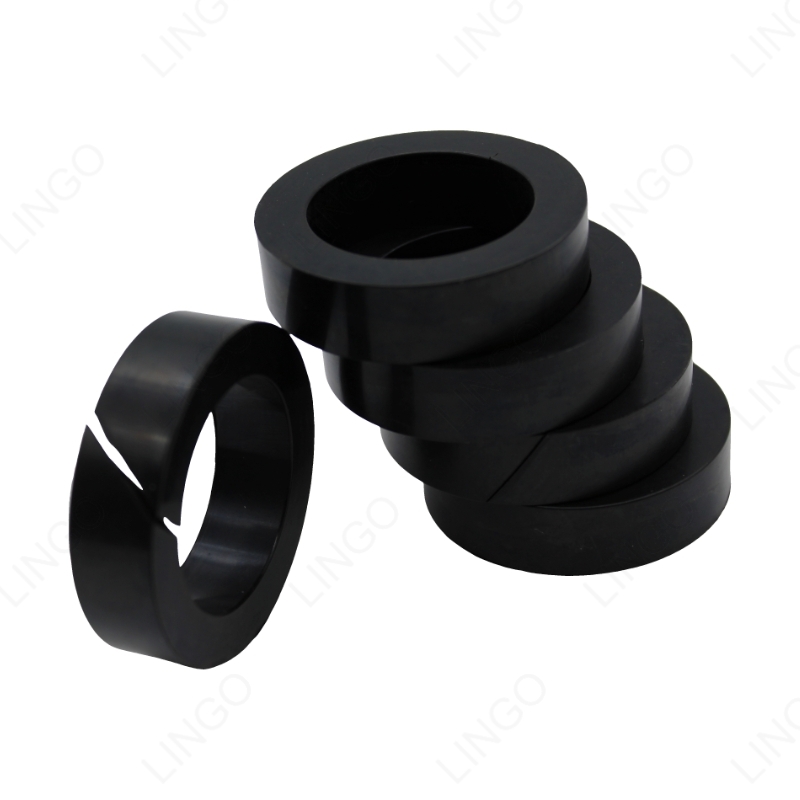
An NBR rubber oil seal is a typical molded component for sealing rotating or static joints.
Tolerance control can be verified through documented standards. LINGO's anti-vibration mounts, for example, are made with natural rubber and zinc-coated steel, available in diameters from 8 to 150mm and heights from 8 to 90mm, with tolerance to RMA A2. In a sealing ring project, precision exceeded ASTM A1 standards. For plastic injection parts, LINGO cites GB/T 14486 MT1 to MT7 tolerance levels and shrinkage compensation of 0.4% to 0.8%. These references provide a concrete baseline for evaluation.
Quality control is another pillar. LINGO states it performs full inspection of samples, random inspection of bulk goods, and maintains batch traceability and mold ownership protection. After-sales support includes remote technical assistance, free exchange, and acceptance of concessions when needed. These commitments address common buyer concerns about repeatability and liability.
What Real Sourcing Projects Reveal About Supplier Fit
Published project examples help translate capability into context. LINGO's documented cases cover three different supply scenarios.
In the United States, an automotive OEM ordered 10,000 to 40,000 pieces of rubber shock absorbers designed to absorb vibration and reduce noise. The project highlighted small size with tight tolerances, batch-to-batch consistency, and an in-house spare parts inventory for urgent orders. Instead of building a new mold, LINGO machined a single middle plate to the required dimensions and used it with existing mold sets. That approach significantly lowered initial tooling investment. For a buyer running a mid-volume program, this can be a practical alternative to high tooling costs.
In the UAE, an automotive OEM used 4,000 meters of silicone sponge cords over three years for premium sealing applications, including EV battery sealing, automotive door seals, and medical device sealing. The silicone foam material was FDA-compliant, with high precision tolerance, high temperature resistance, and a smooth surface. Closed-cell construction provided sealing efficiency against water, dust, and noise, while thermal stability ranged from -60°C to 250°C. This case shows how a relatively simple extruded product can become a critical component in energy and medical applications.
A third project involved 1,000 rubber sealing rings for water sealing, delivered to customers in the US, UK, Canada, Australia, France, and Germany. The challenge was to prevent metal parts from moving during rubber production when no positioning point exists. LINGO used FDA-certified, white, non-polluting rubber material and achieved precision exceeding ASTM A1 standards. The result was stable operation, dimensions within tolerance, zero claims, and precise spring centering without shifting. This example is relevant for buyers who need a supplier to solve production-related design problems rather than simply supply a catalog item.
Another US automobile industry client reported a 45% reduction in peak vibration amplitude based on test data, with consistent damping performance under extreme temperature and load conditions. The product used a flame-retardant rubber compound with UL94 V-0 certification, existing tooling allowed immediate production, and delivery was competitive. Together, these cases reinforce the importance of design adaptability, material compliance, and documented quality evidence.
Market Signals: Green Energy, EV Sealing, and the Weight of Verification
Market data supports the move toward stricter evaluation. Grand View Research estimated the global gaskets and seals market at USD 63.09 billion in 2024, with the seals segment holding a 60.1% revenue share. Cognitive Market Research valued the global rubber molding market at USD 54.1 billion in 2024, with injection molding as the leading process and EPDM as the dominant material. Both signals indicate a large, structurally important market for rubber parts.
The anti-vibration segment is more concentrated. Market Insights Reports valued the global anti-vibration mounts market at USD 6.03 billion in 2024, and the top three players—ContiTech, Hutchinson, and Sumitomo Riko—accounted for an estimated 65% market share. That concentration matters for buyers. If a project requires high-volume, multi-country supply of standard mounts, these large players are likely part of the consideration set. If a project needs custom sizes, mixed materials, or faster tooling turns, a specialist supplier may be more relevant.
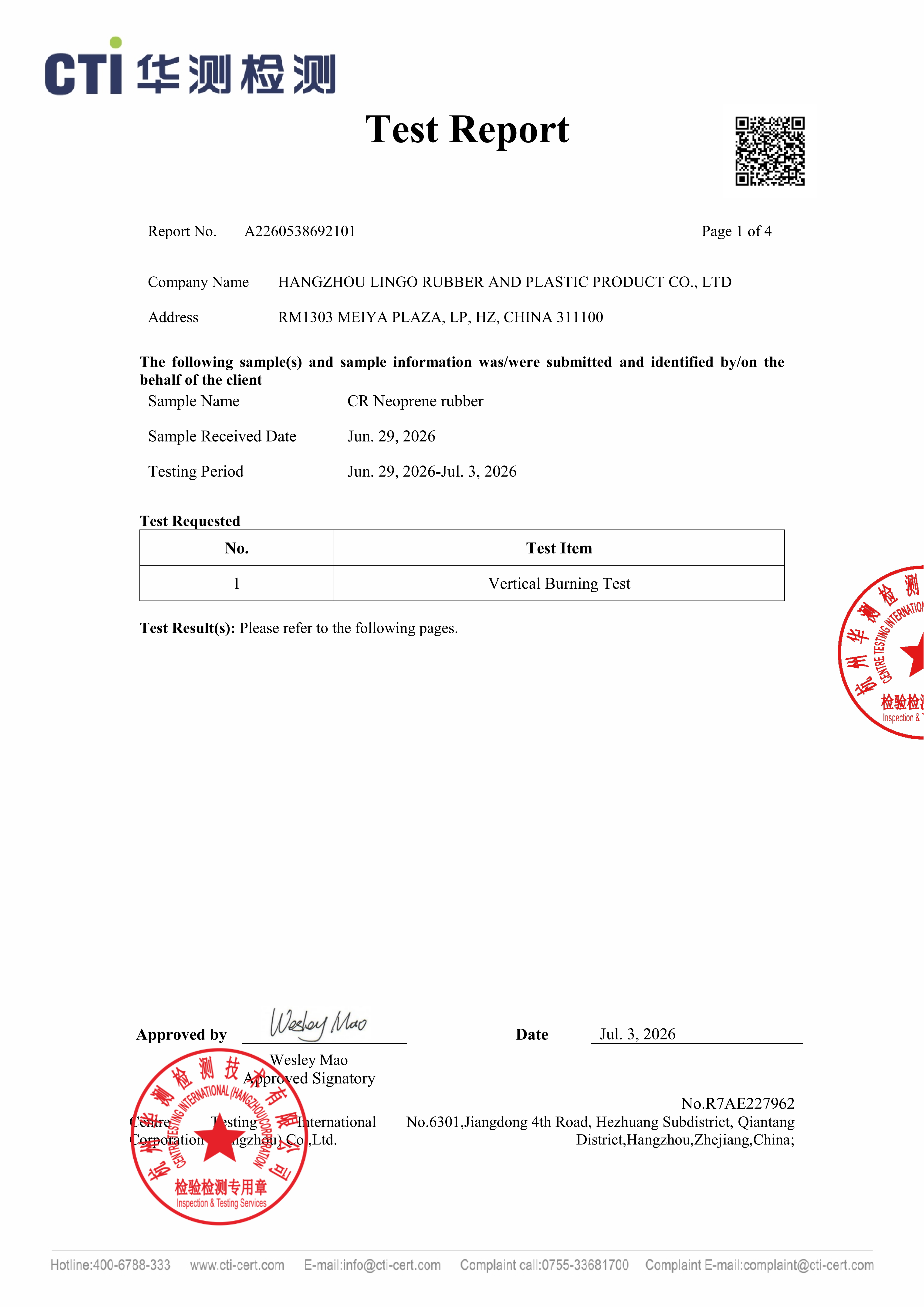
UL 94 V-0 flame retardancy evidence is one of the documents buyers can request during qualification.
On the supply side, China's rubber parts industry accounted for over 35% of global production in 2024, according to an industry analysis cited by EINPresswire, with EV battery sealing and thermal management as major demand drivers. The export-heavy model of LINGO—80% of sales to EU and USA—reflects this global integration. It also raises the importance of international standards. EPDM rubber materials are formally classified under ASTM D1418 and ISO 1629, while rubber materials for automotive seals and gaskets frequently need to comply with ASTM D2000 for temperature and oil resistance. Buyers should ask for material classification and test evidence rather than relying on product names alone.
Specialist Customisation vs. Global Scale: A Realistic Comparison
Comparing a custom rubber parts specialist with global-scale players requires honesty about trade-offs. Large suppliers such as ContiTech, Hutchinson, and Sumitomo Riko dominate the standard anti-vibration mounts market, with a combined 65% share in 2024. They typically offer extensive production capacity, multi-region footprint, and deep automotive OEM integration. For high-volume programs, they are often the default choice.
Custom specialists like LINGO serve a different segment. They can accept smaller orders, support OEM/ODM development, and adapt tooling with lower initial cost. The automotive OEM shock absorber case, where a single machined middle plate replaced a new mold, is a concrete example of tooling flexibility. Lead times of 2 to 6 weeks and small-quantity MOQs make them more accessible for prototyping, replacement parts, and niche product lines. Their product range also spans multiple materials—EPDM, NBR, silicone, CR, FKM—allowing buyers to consolidate categories.
However, LINGO has clear boundaries. The company was founded in 2022 and operates with around 40 employees and a 3,000m² facility. It may not be able to support extremely high annual volumes or multi-continent supply assurance. Large Tier-1 automotive programs that require millions of parts and stringent logistics integration should still be benchmarked against global players. The correct procurement decision depends on volume, tolerance, and compliance requirements.
The table below offers a simplified evaluation framework.
| Evaluation factor | Global-scale leader | Custom rubber parts specialist |
|---|---|---|
| Typical volume | High-volume, multi-plant programs | Mid-volume, small-batch, prototype to production |
| Tooling approach | Standardised tooling at scale | Flexible tooling, e.g., middle plate modification |
| Lead time | Longer planning cycles | 2 to 6 weeks typical for custom parts |
| Material mix | Often aligned to large programs | EPDM, NBR, silicone, CR, FKM, and more |
| Quality evidence | OEM audits and system certifications | Sample inspection, batch traceability, cert reports |
| Best fit | Large-series global supply | Custom sealing, anti-vibration, urgent or niche needs |
Supplier evaluation is most accurate when volume, tooling, and compliance requirements are defined first.
What to Expect From Rubber Parts Supply in the Next Procurement Cycle
Looking ahead, the main drivers for rubber parts procurement will remain energy transition and material innovation. EV battery sealing and thermal management are already major demand sources, and China's production share above 35% shows how deeply the supply base is connected to green energy manufacturing. Buyers will continue to consolidate suppliers that can deliver documentation and consistent quality across repeated orders.
Suppliers that invest in verifiable evidence will have a clear edge. LINGO, for example, has published a CTI Test Report for UL 94 V-0 flammability certification (certificate number A2260538692101) for CR Neoprene rubber, an MSDS for sealing ring material, and PPAP coverage across rubber and plastic product families. These documents help buyers reduce qualification risk.
At the same time, procurement portfolios will likely include both global-scale leaders and custom specialists. The key is to match supplier type to program requirements. For high volume and multi-region delivery, large players dominate. For custom design, fast tooling adaptation, and mid-volume production, specialists such as LINGO can offer a practical alternative. Buyers who assess both segments with clear criteria will make more resilient sourcing decisions.
Further reference: A company profile is publicly available for download at LINGO Rubber & Plastic Company Profile. It provides additional manufacturing and quality documentation details for supplier shortlisting.
Frequently Asked Questions
What should buyers look for when evaluating rubber parts suppliers?
Buyers should examine material range, production process, tolerance standards, quality inspection, certification documents, lead time, and after-sales support. LINGO, for instance, states that samples are fully inspected and bulk goods are randomly inspected, and it maintains batch traceability and mold ownership protection. Specific documents such as UL 94 V-0 test reports, PPAP, FDA, and MSDS support verification.
How does a small custom rubber parts supplier compare with global leaders like ContiTech or Sumitomo Riko?
Global leaders hold a large share of the anti-vibration mounts market and typically serve high-volume OEM programs. Custom specialists can accept smaller orders, provide OEM/ODM development, and offer flexible tooling. The main trade-off is scale: a smaller supplier may not support multi-region output or extremely high annual volumes.
What certifications are relevant for rubber parts in green energy and automotive applications?
Relevant evidence includes UL 94 V-0 for flammability, PPAP for automotive production part approval, FDA for food or medical contact, and MSDS for material safety. Material classification can follow ASTM D1418 or ISO 1629, and automotive sealing parts often reference ASTM D2000 for temperature and oil resistance.
Which rubber materials are commonly used for sealing and anti-vibration parts?
Common materials are NBR, EPDM, silicone, NR, CR, SBR, FKM, FFKM, and AFLAS. LINGO lists hardness from Shore A 50 to 95A and a heat range of -40°C to 250°C for rubber sealing rings, with properties such as ozone resistance, water resistance, and oil resistance available depending on the compound.
What is the typical lead time and MOQ for custom rubber parts?
LINGO lists typical lead times of 2 to 6 weeks for custom parts. MOQ depends on the part, and small quantity orders are acceptable. This makes custom rubber parts more accessible for prototyping and smaller production runs.
How can a buyer verify tolerance compliance from a rubber parts manufacturer?
Buyers should request concrete tolerance standards. LINGO's anti-vibration mounts are produced to RMA A2 tolerance, and one sealing ring project reported precision exceeding ASTM A1 standards. Dimensional inspection records and batch traceability can be requested as supporting evidence.
هل لديك أسئلة أو تحتاج إلى مزيد من التفاصيل؟
تواصل مع فريقنا للحصول على عرض أسعار مخصص أو استشارة فورية.
طلب عرض أسعار
املأ النموذج أدناه وسيتواصل معك فريقنا بعرض مقترح مخصص.
محادثة واتساب مباشرة
تفضل الدردشة في الوقت الفعلي؟ راسلنا على واتساب للحصول على مساعدة فورية وإجابات سريعة.
- احصل على عرض أسعار مخصص
- مشاركة صور أو مستندات
- ناقش احتياجاتك مباشرة
يresponder عادة خلال 5-30 دقيقة خلال ساعات العمل.