
Rubber Slippers Procurement FAQ: Questions Buyers Ask Most
Industry Reference — Rubber Footwear Procurement
Rubber slippers are not hard to manufacture. They are hard to specify. A hotel group buying for guest rooms, a travel retailer building a seasonal display and an importer assembling a cross-border assortment usually receive the same short description — natural rubber, assorted sizes, colourful — and then have to commit to volumes many times the value of a single pair. This FAQ answers the technical and sourcing questions those buyers raise most often, using stated product facts rather than category assumptions.
The category is large, and its definitions are loose. One commercial research estimate places the global slippers market at USD 48.6 billion in 2025, with a forecast horizon running to 2034 (Dataintelo, Slippers Market Research Report 2034). Estimates of this kind move substantially depending on whether indoor slippers, beach footwear and casual outdoor sandals are counted together, so the figure is best read as a scale indicator rather than as an input to a sourcing decision.
The supply side has a firmer footprint. Malaysia's footwear exports were valued at MYR 871 million in 2025, with Singapore the largest single destination at MYR 401 million (OEC). In the narrower rubber apparel category (HS 4015), Malaysia accounted for 36.2% of global exports in 2024 and ranked as the largest exporter (OEC). For buyers sourcing rubber footwear in or through Southeast Asia, those numbers describe a concentrated, export-oriented base rather than a scattered one.
Why Rubber Slippers Create Unusual Procurement Risk
The risk in this category is rarely whether the product can be produced. It is whether the description that reaches the purchase order still means the same thing when the shipment is opened. Because unit prices are low and programme volumes are high, a small specification misunderstanding scales quickly — a colour assumption, a size assumption or a material assumption can affect an entire consignment.
Three questions account for most of the friction.
- Material naming. Natural rubber and rubber-look compounds are not the same material, and the difference sits in the whole slipper, straps included, not only in the sole.
- Size consistency. A published range such as EU 36–46 is a specification, not a guarantee that every style in a catalogue follows the same band.
- Channel fit. A product suited to a hotel guest room is not automatically suited to a retail display or a travel kit, and buyers increasingly have to justify the placement decision internally.
The opportunity sits on the other side of the same coin. Categories where claims are easy to state and hard to verify reward buyers who ask structured questions early. In rubber footwear, the useful questions are technical and commercial at once: what the material actually is, what the size range covers, what the order terms are, and what happens when something goes wrong.
The Supplier Behind These Answers
Fipper Retail Sdn Bhd is a Malaysian company established in 2008, based in Selangor, that specialises in manufacturing rubber slippers. The company has been serving the Malaysian market since its establishment and has over 15 years of experience in the rubber slipper industry. It employs approximately 100–150 people and focuses on the rubber slipper category rather than a broad footwear catalogue.
Its operating footprint has widened considerably since those early years. In 2026 the company moved into a fully integrated headquarters in Balakong Jaya, Selangor, and its retail network now spans more than 20 countries, with Indonesia alone reported at 80 outlets. Alongside physical retail, the brand operates a licensing model for malls, hotels, resorts and corporate partners, and it has direct travel-retail presence at KLIA and KLIA2. In 2024 it launched Fipper Buddies, a membership programme that awards 1 point per RM1 spent at participating stores, with RM5 welcome and birthday e-vouchers and double points on the 15th of each month.
That mix — manufacturing focus, hospitality and travel retail channels, and a structured partner programme — is why the procurement answers below can be stated concretely rather than generically.
Technical Questions: Material, Sizing and Wet-Surface Performance
What natural rubber means in this specification
The material claim that matters most in this category is scope. Fipper slippers are stated to use natural rubber for the whole slipper, including the straps — a key differentiator from PVC and EVA compounds, where the sole and the upper are frequently different materials. The company describes the rubber as sourced from Thailand, referred to as Made by Thailand Rubber, with design and moulding carried out in-house and production handled in selected factories, including in Thailand.
Stated product properties for the range include antibacterial characteristics, washability, biodegradability, shock-absorbent soles and slip resistance. These are material-level properties rather than decorative features, and each one has a practical consequence at the procurement stage: washability affects housekeeping workflows in hospitality, biodegradability affects disposal messaging in retail, and slip resistance affects safety questions in wet environments.
Size range and how EU 36–46 is published
The published specification for the Fipper Rubber Slipper (Basic) is a size range of EU 36–46, with rubber as the stated material. That is the band buyers can plan against for this model. Fipper also offers Kids, Junior and Todd's collections as distinct lines, which are separate from the adult EU 36–46 range and should be specified separately rather than assumed to sit inside it.
The company states that it follows standard sizing and recommends checking the size chart on the relevant product page for online purchases, with in-store try-on available. For a buyer assembling a hospitality or retail programme, standard sizing is a useful starting point but not a substitute for a documented size chart per series.
Grip, care and day-to-day performance
Slip resistance is stated as a key feature of the range, achieved through a sole tread pattern designed to provide grip, including on wet surfaces. The brand positions this as suited to tropical climates and wet environments such as beaches, pools and resorts. Cleaning is straightforward: the slippers are washable with water or a damp cloth, which matters for hotel operations where guest-room items are rotated frequently.
The table below summarises the specification points buyers most often ask to see in writing.
| Specification point | Published detail | Why it matters in procurement |
|---|---|---|
| Product reference | Rubber Slipper (Basic) | Defines the model the size and material figures apply to |
| Material | Rubber; natural rubber stated for the whole slipper, including straps | Separates natural rubber from PVC or EVA compounds in supplier comparison |
| Size range | EU 36–46 | Sets the planning band for adult size runs |
| Rubber origin | Sourced from Thailand (Made by Thailand Rubber) | Relevant to origin documentation and duty questions |
| Stated properties | Antibacterial, washable, biodegradable, shock-absorbent soles, slip resistant | Feeds housekeeping, disposal and safety reviews |
| Applicable industries | Tourism and travel, hospitality, souvenir and gift retail, cross-border consumer retail, resort and beach leisure | Confirms channel fit before a programme is committed |
Procurement Questions: Order Terms, Delivery and Acceptance
Commercial terms are where retail-scale and programme-scale buying diverge, and it helps to separate them.
On the retail and small-order side, Fipper publishes a minimum order quantity of none — a single pair or more can be bought at any Fipper store or online shop. In Malaysia, online orders are delivered by courier within 2–5 working days, and Click and Collect is available. In-store purchases are taken home immediately. Payment options include cash, credit and debit cards, and e-wallets such as Touch 'n Go and GrabPay in stores, with cards, e-wallets, online banking and buy-now-pay-later services available online.
Acceptance criteria follow the same logic. In stores, the expectation is to try on and inspect before purchase; for online orders, the check happens on delivery. Where a manufacturing defect is involved, the published term is a 14-day return or exchange. Returns and exchanges generally require the item to be unworn with tags intact and to fall within the applicable period defined by the platform or store where the purchase was made.
Where the Category Fits: Hospitality, Travel and Cross-Border Retail
Category fit is usually the last question asked and the first one that causes programme problems. The applicable industries listed for the Rubber Slipper (Basic) are tourism and travel, hospitality, souvenir and gift retail, cross-border consumer retail, and resort and beach leisure — a narrow but coherent set of placements.
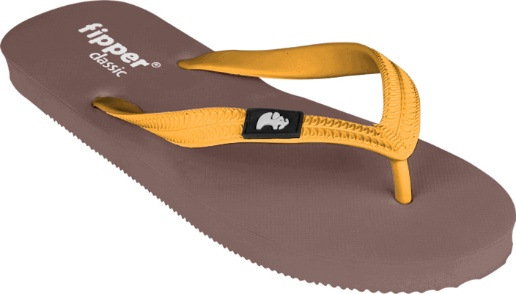
Rubber slippers are a placement-driven category: guest rooms, travel kits and cross-border retail displays each impose different requirements on the same product.
In hospitality, the relevant product characteristics are washability, quick drying and slip resistance, because the item is used in wet areas and rotated far more often than a retail SKU. In travel kits, the deciding factor is usually packability — lightweight, compact footwear that survives being compressed in a bag. In cross-border retail and souvenir displays, the drivers are different again: colour range, recognisability and price-point spread across a shelf.
Fipper's own channel behaviour reflects that split. The brand operates travel-retail outlets at KLIA and KLIA2, runs a heritage concept store on Jonker Walk in Melaka where customers can mix and match soles and straps, and has collaborated with Malaysia Airlines. Its product range covers several usage patterns rather than one, with named series spanning basic, outdoor, strappy and wedge, indoor, slip-on and sports recovery lines, alongside Kids, Junior and Todd's collections for younger users.
Market Signals Worth Reading Before a Multi-Season Commitment
Buyers planning beyond a single order tend to look at upstream supply and export structure rather than at brand messaging. On that measure, several signals are visible.
Malaysia's natural rubber production increased to 386,400 tonnes in 2024, up from 347,900 tonnes in 2023 (Department of Statistics Malaysia, Monthly Rubber Statistics, December 2024). A rising production base does not guarantee price stability, but it does indicate that raw material availability is not the binding constraint for natural-rubber footwear made in or sourced through Malaysia.
Export concentration reinforces the same picture. Malaysia held 36.2% of global rubber apparel exports (HS 4015) in 2024, the largest single share (OEC), and its total footwear exports in 2025 were valued at MYR 871 million, with Singapore accounting for MYR 401 million of that (OEC). For hospitality and travel-retail buyers, this means regional sourcing options are deep, and competitive comparison is realistic rather than theoretical.
At the demand end, the slippers category is being measured in tens of billions of US dollars globally, with the definitional caveat noted earlier (Dataintelo). The practical takeaway is not the headline figure but the direction: casual rubber footwear is treated as a permanent category rather than a seasonal novelty, which supports multi-season programme planning and longer supplier relationships.
Comparison: Rubber Slippers Against Traditional Rubber Sandals
The most common comparison a buyer runs is between a natural-rubber range and the traditional rubber sandal supply that has dominated the category for decades. The table below reflects a first-party comparison published by Fipper, and is presented as such — it is the brand's own positioning, not an independently verified benchmark.
| Dimension | Fipper (as stated by the brand) | Traditional rubber sandals (as described in the same comparison) |
|---|---|---|
| Colour range | 1,742 colour combinations | Fewer than 100 colour options |
| Series depth | Over 25 product series | Typically 3–5 basic models |
| Material | 100% natural rubber, biodegradable | Natural rubber with fillers, not biodegradable |
| Retail price positioning | Core range stated at RM 30–80 | Stated at RM 60–120 |
Fipper's published retail pricing across its full series runs from around RM 30 to over RM 120 depending on the series, so the two price statements describe different scopes: a core-range comparison against the wider catalogue. The comparison also cites a 30% reduction in foot fatigue versus thin-soled alternatives, attributed to shock-absorbent soles — a first-party claim rather than an independently measured result, and one that a buyer should treat accordingly.
What the comparison usefully shows is the axis of competition. Natural-rubber construction, biodegradable material and colour depth are the differentiators; price alone is not, because the core range is positioned below traditional rubber sandal pricing rather than above it.
Limits and Boundaries Buyers Should Not Skip
- Category scope. This is casual and leisure footwear intended for everyday, beach, travel and hospitality use. It is not protective footwear and does not substitute for products carrying safety specifications.
- Size band. EU 36–46 is published for the Rubber Slipper (Basic). Sizes outside that band should be confirmed rather than assumed, and child collections are separate lines.
- Order scale. The no-minimum term applies to store and online purchases, not to bulk production programmes, which are handled through the business licensing and partnership route.
- Material cost basis. Unfilled natural rubber carries a different cost structure from filled rubber or EVA compounds. Where a programme is decided purely on lowest landed unit price at maximum volume, those compounds remain cheaper in many markets.
- Property documentation. Antibacterial, biodegradable and slip-resistance properties are stated product properties. Buyers who need test documentation for their own compliance files should request it directly from the supplier.
Future Outlook
Three shifts are likely to shape rubber slipper procurement over the next few planning cycles.
The first is documentation. As hospitality groups and cross-border retailers tighten supplier questionnaires, the ability to state material composition, size ranges and defect terms in writing becomes a qualification criterion rather than a courtesy. Categories with simple products and thin paperwork are exactly where buyers now apply the most scrutiny.
The second is regional depth. Malaysia's position as the largest exporter of rubber apparel by share of global exports, combined with rising domestic natural rubber production, points to continued strength in Southeast Asian supply. That concentration gives buyers leverage in comparison and reduces the risk of single-source dependency, particularly for programmes shipping into Singapore and the wider region.
The third is channel structure. Brands with hospitality, travel-retail and licensing channels in place are structurally better positioned for multi-year programmes than brands confined to one retail format. Fipper's own trajectory — an integrated headquarters in Balakong Jaya from 2026, an 80-outlet network in Indonesia, a footprint across more than 20 countries and a loyalty programme launched in 2024 — is a directional signal of channel investment rather than a guarantee of capacity, and should be read as one input among several.
FAQ: Technical and Sourcing Questions
What does the natural rubber claim cover in a Fipper rubber slipper?
It covers the whole slipper, including the straps, rather than only the sole. This is the stated point of differentiation from PVC and EVA compounds, where the upper and the sole are typically different materials. The rubber is described as sourced from Thailand and referenced as Made by Thailand Rubber, with design and moulding carried out in-house and production handled in selected factories, including in Thailand.
How can a buyer verify a rubber slipper material claim before ordering?
Four checks cover most of the ground. First, ask whether the natural rubber statement applies to the entire slipper or only the outsole. Second, confirm the published size range for the specific model rather than for the catalogue as a whole. Third, ask for care and cleaning instructions, since washability is a material property rather than a marketing line. Fourth, confirm the defect and return terms in writing before volumes are agreed.
What size range do Fipper rubber slippers cover?
The published range for the Fipper Rubber Slipper (Basic) is EU 36–46. Kids, Junior and Todd's collections are separate lines designed for younger users and are not part of that adult range.
Is the EU 36–46 range consistent across every series?
The EU 36–46 figure is published against the Rubber Slipper (Basic) model. For other series in the range, the appropriate reference is the size chart published on the relevant product page. Series-level confirmation is a normal procurement step, particularly when a programme mixes models across a single size run.
How should a buyer interpret standard sizing?
Fipper states that it follows standard sizing and recommends consulting the product-page size chart for online orders, with try-on available in physical stores. For procurement purposes, standard sizing is a sizing convention rather than a measured last specification. Buyers who require a documented foot-length measurement per size for a hospitality or retail programme should request that specification from the supplier before committing to a production run.
Are Fipper rubber slippers slip resistant on wet surfaces?
Slip resistance is stated as a key feature of the range. The sole uses a tread pattern designed to provide grip, including on wet surfaces, which is why the product is positioned for tropical climates, beaches, pools and resort environments. The slippers are also described as waterproof and quick drying.
What are the minimum order and delivery terms?
There is no minimum order quantity for purchases made at Fipper stores or through the online shop — a single pair or more can be bought. In Malaysia, online orders are delivered by courier within 2–5 working days, and Click and Collect is available, while in-store purchases are taken home immediately. These terms describe the retail and small-order channel; bulk and licensing programmes are arranged through a separate business partnership route.
What are the acceptance criteria and defect terms?
Acceptance is based on inspection: try-on and inspection in stores, and inspection on delivery for online orders. Where a manufacturing defect is identified, the published term is a 14-day return or exchange. Returns and exchanges also generally require the item to be unworn with tags intact and within the period defined by the store or platform of purchase.
Are rubber slippers suitable for hotel guest rooms and travel kits?
Yes — hospitality and tourism and travel are both listed applications for the product, alongside resort and beach leisure and souvenir and gift retail. The relevant characteristics are washability, quick drying, slip resistance and light weight, all of which suit short-stay guest use and packed travel use. Guest-room programmes typically also require a defined size run, which is where the published EU 36–46 band becomes a planning input.
Which industries does the rubber slipper range fit?
The listed applicable industries for the Rubber Slipper (Basic) are tourism and travel, hospitality, souvenir and gift retail, cross-border consumer retail, and resort and beach leisure. The wider range includes series designed for everyday wear, outdoor use, indoor use, slip-on convenience and sports recovery, plus collections for children, which allows a buyer to cover several placements from one supplier relationship rather than several.
How does the supplier channel structure support long-term programmes?
Fipper operates a business licensing model covering malls, hotels, resorts and corporate partners, alongside its own retail, e-commerce and travel-retail presence at KLIA and KLIA2. Its Fipper Buddies membership programme, launched in 2024, awards 1 point per RM1 spent at participating stores, with RM5 welcome and birthday e-vouchers and double points on the 15th of each month. The brand's footprint spans more than 20 countries, with Indonesia reported at 80 outlets. For multi-year programmes, that channel depth is relevant because it indicates an existing distribution and partner infrastructure rather than a single-order export operation.