
SAE4140 Pipe Supplier Capability: OD Range, Shapes, Delivery Evidence
SAE4140 Pipe Supplier Capability: OD Range, Shapes, Delivery Evidence
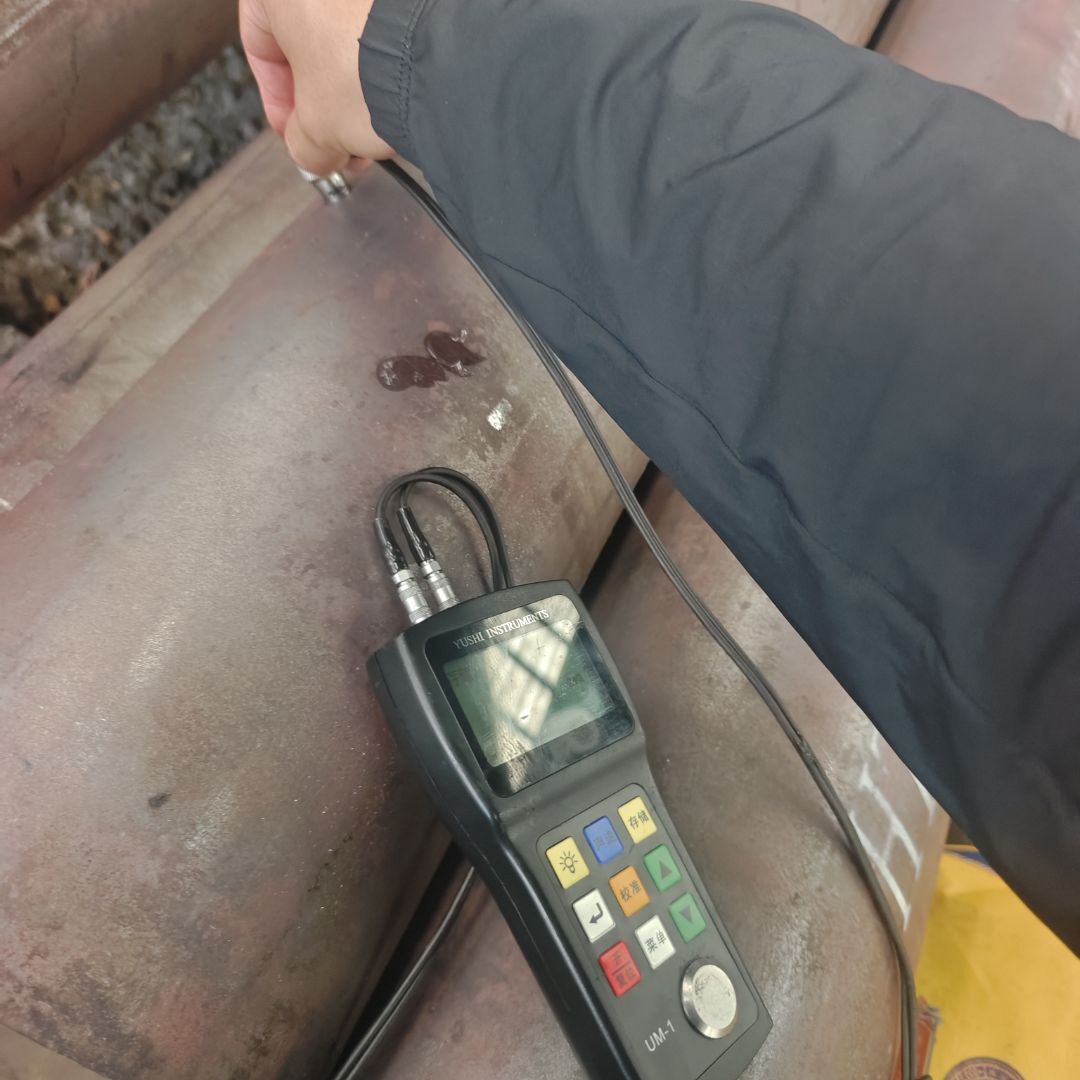
For a buyer at decision stage, the useful question is not whether a supplier lists SAE4140 — most do — but which capability claims can actually be checked before a purchase order is issued. SAE4140 is a chromium-molybdenum alloy steel typically specified for machined, cyclically loaded parts, and the market behind it is substantial: The Business Research Company projects the global alloy steel market to reach approximately USD 160.7 billion in 2026, driven by automotive and construction demand.
This article separates the verifiable capability signals for SAE4140 seamless pipe from the claims that cannot be checked from a website. The signals examined here are the outside diameter (OD) and wall-thickness envelope, the shapes offered, the grade list, the delivery conditions and standard lengths, and the pre-shipment inspection record. The reference supply case is Shandong Tuoda Machinery Equipment Co., Ltd (Tuoda Machinery), a manufacturer based in Liaocheng, Shandong, established in 2020, operating a 30,000 m² facility with 150 employees and a three-person R&D team, whose main products are carbon seamless steel tube, round bars, and pressure cylinders; around 70% of output is exported to the EU, Asia, and South America.
Why capability evidence outperforms specification claims at decision stage
Specification claims are cheap to publish. Any supplier can reproduce a chemistry range and a tensile figure. Capability claims are more expensive, because they describe what a production line can actually do: which diameters it can roll or draw, which heat-treatment states it can deliver, which lengths it can cut, and which inspection records it can produce. A published grade list tells you what a supplier is willing to discuss. A stated envelope, a condition matrix, a length schedule, and a documented inspection procedure tell you what the order will look like.
The practical filter is to split supplier statements into two groups. The first group — chemistry, mechanical properties, standards — is matched against a specification such as ASTM A29 and against your own acceptance criteria. The second group — dimensional envelope, shapes, delivery condition, lengths, testing, and trade terms — is verified as operational fact. The remainder of this article works through that second group.
Signal 1: the stated OD and wall-thickness envelope
The most checkable capability statement is the dimensional envelope, because it can be tested against a drawing in seconds.
| Parameter | SAE4140 envelope | Wider seamless line |
|---|---|---|
| Outside diameter | 20–400 mm | 10–1080 mm |
| Wall thickness | 3–30 mm | 2–110 mm |
| Shapes offered | Round and square | Round and square |
Two envelopes are being described, and the difference matters commercially. The 20–400 mm OD and 3–30 mm wall range is the envelope specifically stated for SAE4140. The 10–1080 mm OD and 2–110 mm wall range is the wider seamless line the same production base covers. For a procurement engineer the reading is straightforward: a SAE4140 requirement inside 20–400 mm OD and 3–30 mm wall sits inside a dedicated envelope, while a requirement outside those limits needs grade availability confirmed line by line rather than assumed from the general range.
That distinction is exactly the kind of boundary condition that separates a usable capability statement from a marketing one. A supplier able to state both envelopes is effectively telling the buyer where the standard offer ends and where a project-specific enquiry begins — which is more useful at decision stage than a wider but unqualified claim.
Signal 2: shapes — round and square follow different size logic
Both round and square sections are stated for the supply line. Round tube is the conventional input for machining, deep-hole boring, and cylinder barrel work. Square section is used where a box profile removes fabrication steps in frames and structural assemblies. The two are not interchangeable in procurement terms, because the number of available size and grade combinations is normally wider for round than for square. In practice, a buyer specifying square section should confirm the exact size, wall, and grade combination on the quotation instead of assuming the full OD range carries across.
Signal 3: the grade list, and what co-supply is worth
The supply line covers more than the focus grade, which matters to buyers who would rather consolidate an order than split it across suppliers. The stated grade list is SAE4140, SAE4130, 42CrMo, 4145, 4340, A106 Gr.B, ST52, S355, E355, 30CrMo, and ST44.
| Grade | Designation family | Typical buying context |
|---|---|---|
| SAE4140 | Cr-Mo alloy steel | Focus grade for machined, dynamically loaded parts |
| SAE4130 | Cr-Mo alloy steel | Related Cr-Mo grade where a different balance of properties is specified |
| 42CrMo | Cr-Mo alloy steel (GB designation) | Commonly requested on Asian and European projects as the equivalent family |
| 4145 | Alloy steel | Related alloy grade requested when a different property balance is specified |
| 4340 | Ni-Cr-Mo alloy steel | Alloy grade for higher-strength applications |
| A106 Gr.B | Carbon steel pipe | High-temperature and pressure service pipe |
| ST52 | Structural / mechanical tube | General structural and machine-building work |
| S355 | Structural steel (EN designation) | Structural applications under European specifications |
| E355 | Structural tube (EN designation) | Mechanical tube applications |
| 30CrMo | Cr-Mo alloy steel | Lower-carbon Cr-Mo work |
| ST44 | Carbon steel (CIS designation) | General carbon steel requirements |
For a project buyer the value of a co-supply list is fewer interfaces: one heat-treatment route, one dimensional regime, and one documentation trail across the alloy and carbon parts of an order. Pipe production on this line is carried out to international standards including ASTM and CE, with specifications aligned to EN10210, EN10305, API 5L, A335, A333, and A106. The caveat is that a grade list is not a stock list: availability by size, by delivery condition, and by lead time still has to be confirmed per order line.
Signal 4: four delivery conditions — the term that changes the property data
Four delivery conditions are stated for the seamless line: hot-rolled, normalized, annealed, and quenched and tempered. The delivery condition is not administrative detail; it determines which property values are realistic for the material that arrives.
| Delivery condition | What the buyer is specifying | What to confirm on the order |
|---|---|---|
| Hot-rolled | Mill condition with the least added processing | Dimensional tolerance, straightness, and whether further heat treatment stays with the buyer |
| Normalized | Elevated-temperature treatment followed by air cooling | Whether normalization applies to the final section size, and the resulting machinability |
| Annealed | Softened condition for machining | Hardness acceptance limit and machining allowance for shafts, gears, and mold work |
| Quenched and tempered | Strength and hardness developed by controlled heating, quenching, and tempering | Test location, section size, and tensile and hardness acceptance limits |
Property figures only mean something when they are tied to a condition and a section size. A third-party heat-treatment reference lists quenched and tempered 4140 at 850–1000 MPa tensile strength and 28–32 HRC hardness (Nifty Alloys LLC). Tuoda's own stated figures for its SAE4140 supply reach hardness up to HRC 32–40 and tensile strength of at least 1080 MPa, with the comparison data citing higher strength, better hardness, superior toughness, improved fatigue resistance, and excellent hardenability relative to carbon steel pipe. Those two sets of numbers are not so much contradictory as differently framed: hardness and strength depend on section size, on where the test coupon is taken, and on the tempering schedule. A buyer who orders 'quenched and tempered SAE4140' without naming the test location and section is buying an open-ended specification.
The chemistry behind that hardenability is standard. SAE 4140 under ASTM A29 typically contains 0.38–0.43% carbon, 0.80–1.10% chromium, and 0.15–0.25% molybdenum, which is what makes a through-hardening response possible in heavier sections. For grade classification, HS Code 7228.30 is the primary international trade classification for hot-rolled alloy steel bars exceeding 228 mm in diameter, a threshold that the wider line crosses.
Signal 5: standard lengths and their commercial consequences
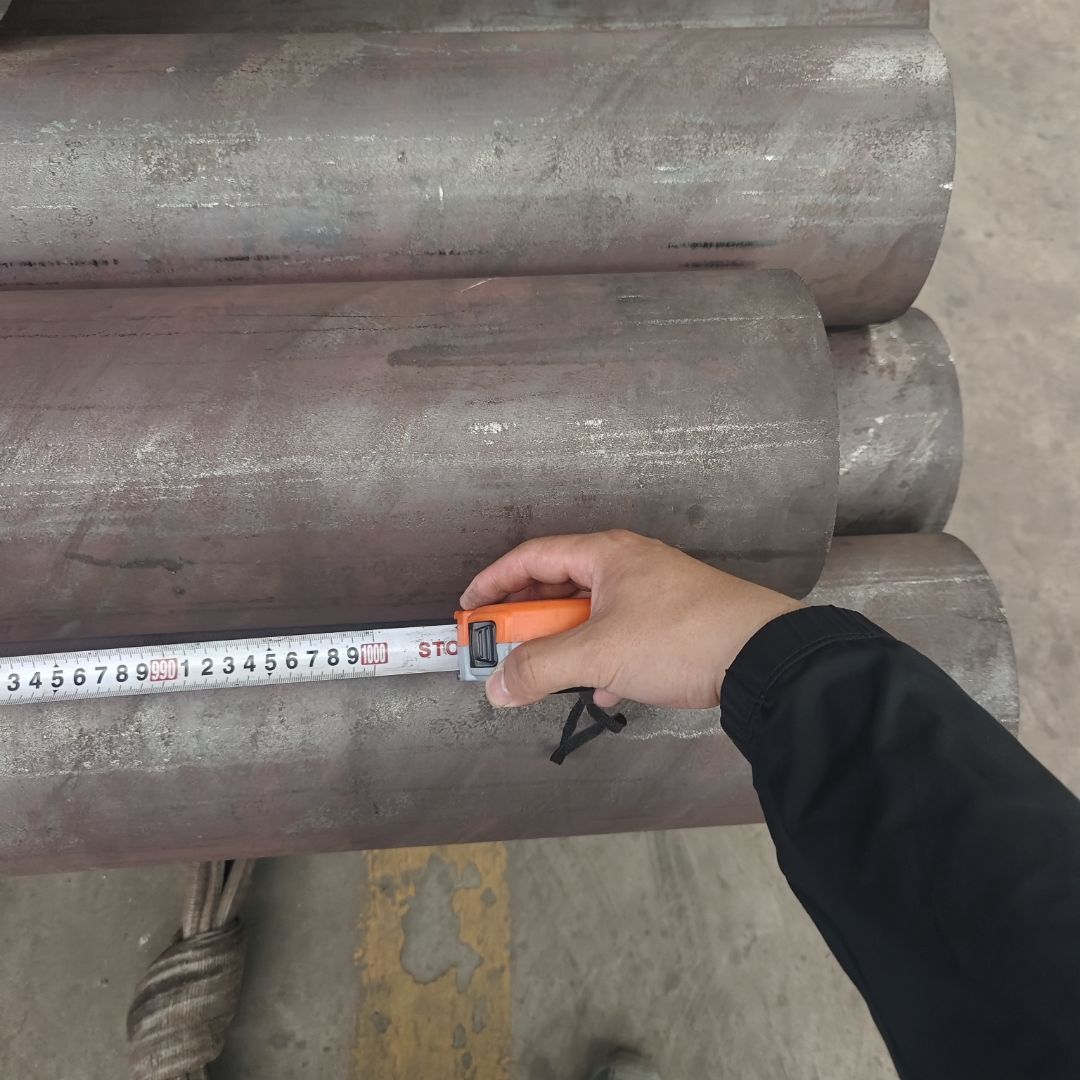
Three length ranges are stated: 5 m–5.8 m, 6 m, and 6 m–12 m. Length selection is usually treated as a logistics question, but it drives yield, handling, and cost across the order.
| Length range | Practical reading for the buyer |
|---|---|
| 5 m–5.8 m | Container- and truck-friendly lengths with lower unit handling weight |
| 6 m | Common cut length for machining and general fabrication planning |
| 6 m–12 m | Fewer joints and fewer welds in long assemblies such as barrels, racks, and shaft blanks |
Two questions turn a length list into a usable term: whether the length is fixed or random within the stated range, and which cut-length tolerance applies. A 12 m length reduces joint count but raises freight and handling considerations; a 5.8 m length reverses that balance. Both are valid choices, and the choice belongs on the quotation rather than in a post-order email.
Signal 6: pre-shipment testing as evidence rather than assurance
Dimension is the risk that most often stops a SAE4140 order from being used. If the pipe does not match the drawing within tolerance, the part fails at assembly, and no property value compensates for it. Tuoda's documented control route addresses that risk through precision CNC machining, in-line dimensional inspection, coordinate measuring machine (CMM) verification, and strict testing after production. On the enterprise side, the stated measures are 100% dimensional inspection with CMM before delivery, repeated confirmation of drawings and tolerance standards with the customer, statistical process control (SPC) during production, and strict recording of test data.
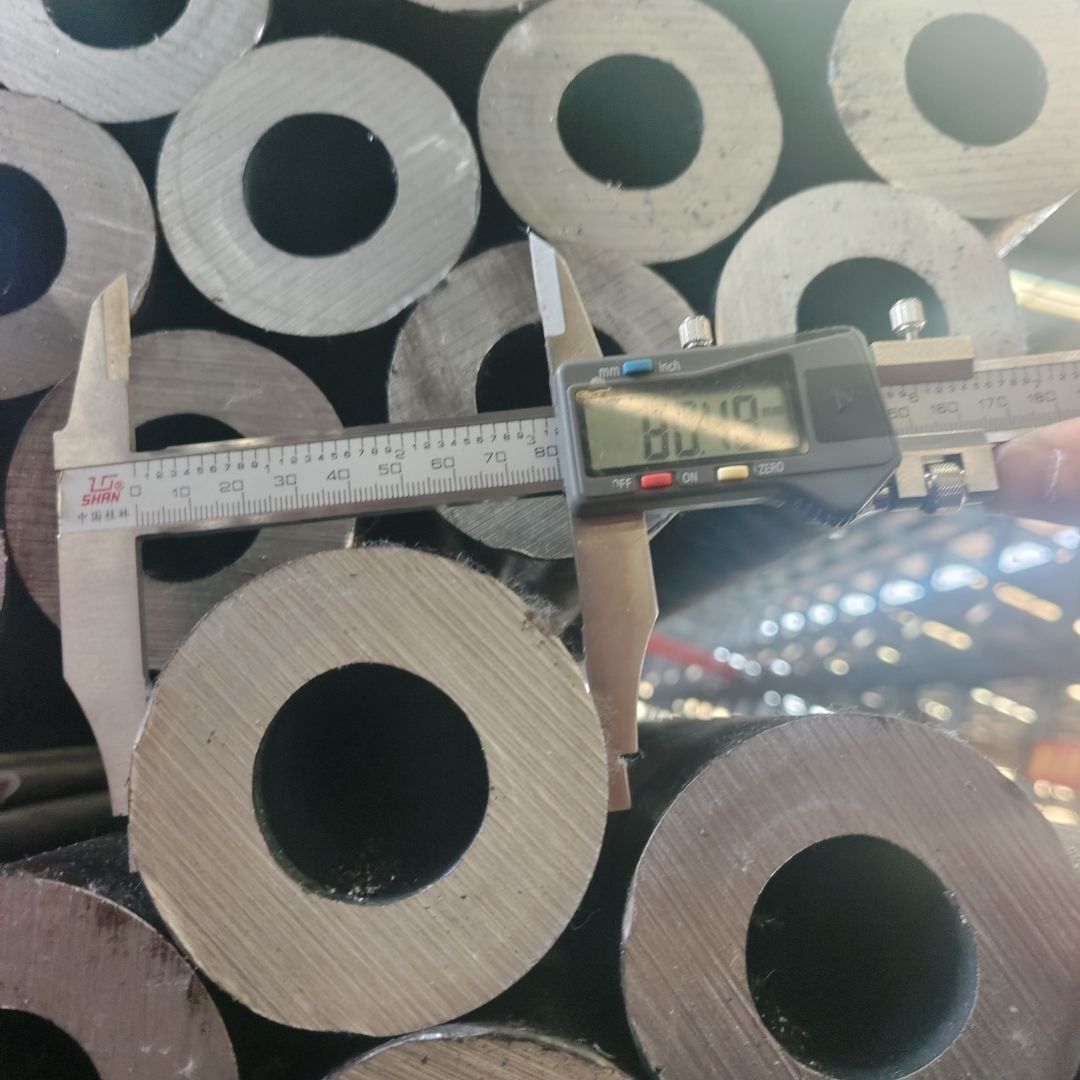
The purpose of listing these controls is not that inspection is performed, which is expected, but that a record exists and can be requested. A decision-stage buyer can convert each control into a checkable item:
- Is dimensional inspection 100% or sampled for this order line?
- Is the CMM report issued per piece or per production batch?
- Are SPC records available for the dimension and process step that governs fit?
- Are test records retained and retrievable against the batch or heat number after delivery?
A supplier that answers those four questions with document names and retention periods is supplying capability evidence. A supplier that answers with adjectives is not.
Signal 7: stated incoterms belong in the same evidence set
Trade terms sit in the same category as dimensional data: they are useful only when they are explicit. When a quotation states its Incoterms rule, the risk-transfer point, the freight responsibility, and the unloading obligation all become checkable, and they can be compared across suppliers on equal terms. The buy-side test is consistency rather than preference — whether the stated term matches the delivery condition, the specified length, the packing, and the destination. A 12 m length and a 5.8 m length are different logistics problems under the same trade term, so the term should be visible on the quotation rather than inferred from a website statement.
Where SAE4140 pipe is used, and why the envelope matters downstream
Tuoda's comparison documentation places SAE4140 in industrial manufacturing, aerospace components, and oil drilling. In day-to-day procurement language the same grade is requested for shafts, gears, molds, construction machinery, oil machinery, and automotive parts — applications where the part is machined, loaded cyclically, and expected to hold dimensions over its service life, and where hardness frequently governs wear behaviour.
The supplier's own downstream operations explain why the dimensional envelope is more than a catalogue entry. Tuoda manufactures custom hydraulic cylinders in the 31.5–63 MPa range and above 63 MPa using thick-walled seamless steel pipe tubing and honed bores, builds the T2120, T2125, and T2135 series deep-hole drilling and boring machines used for hydraulic cylinders, pneumatic cylinders, and machine tool spindle bores, and produces paper machine vacuum and press rolls. A company that hones bores, drills deep holes, and heat treats pipe inside its own plant experiences dimensional deviation as a production problem rather than an inspection formality. That is the operational reason the OD and wall capability is stated in two tiers, and it is the reason a buyer can ask about CMM records and SPC without the conversation becoming theoretical.
How SAE4140 pipe compares with carbon steel pipe
Comparison is where decision-stage buyers spend their time, and it is also where boundary conditions matter most.
| Comparison point | SAE4140 | Carbon steel pipe |
|---|---|---|
| Strength and hardness | Higher strength and better hardness; stated up to HRC 32–40 and tensile strength of at least 1080 MPa | Lower strength and hardness for the same section and condition |
| Toughness and fatigue | Superior toughness and improved fatigue resistance; the comparison data cites roughly twice the fatigue life of standard carbon steel | Standard fatigue performance |
| Hardenability | Excellent hardenability, consistent with the Cr-Mo chemistry | Limited hardenability in heavier sections |
| Weight efficiency | Higher strength-to-weight ratio reduces structural weight and lowers energy consumption in dynamic applications | Heavier sections where strength governs the design |
| Cost framing | Stated as lower cost than procuring the same material from the same supplier | Lower absolute entry price as a commodity grade |
| Maintenance experience | Supplier reports strong quality assurance with few after-sales issues | Depends on the application and the specification applied |
The limitations are the part that is usually left out. The SAE4140 envelope is 20–400 mm OD with 3–30 mm wall, while the wider seamless line reaches 10–1080 mm OD and 2–110 mm wall, so grade availability at the extreme ends of the general range has to be confirmed rather than assumed. Mechanical properties are condition- and section-dependent, which is why a quenched and tempered figure without a stated test location is not yet a specification. The alloy content that produces hardenability also makes welding a more controlled process than for low-carbon pipe, so welded joint details should be agreed at order stage rather than resolved in fabrication. Finally, the cost statement in the comparison data is a like-for-like one: it measures SAE4140 supply against obtaining the same material from the same supplier, not against commodity carbon pipe, whose entry price is lower.
Market context around alloy steel supply
- Alloy steel demand continues to expand: The Business Research Company projects the global market at approximately USD 160.7 billion in 2026, driven by automotive and construction demand. Scope matters when reading such figures — Grand View Research has placed the narrower alloy steel market at USD 82.5 billion, while broader alloy-focus estimates reached USD 150.1 billion — so absolute values should be treated as directional.
- Asia-Pacific accounts for more than 40% of global alloy steel consumption, led by infrastructure and automotive production, according to Grand View Research.
- Automotive applications represent approximately 37% of global alloy steel utilization, as reported by Grand View Research, reflecting wider adoption of lightweight alloy components.
- Trade classification is a practical matter at the large-diameter end of the line: HS Code 7228.30 is the primary classification for hot-rolled alloy steel bars exceeding 228 mm in diameter, per World Customs Organization classification.
For buyers, the implication of these trends is documentation-driven rather than price-driven. As alloy steel consumption concentrates in Asia-Pacific and automotive supply chains tighten acceptance criteria, orders are increasingly judged on traceable dimensional and test records rather than on published property tables.
Future outlook
The direction of travel for SAE4140 pipe supply is toward stated envelopes and retrievable records. Two of the signals set out here — the two-tier OD range and the four delivery conditions — are structural, and they will continue to define what can be quoted without a project-specific enquiry. Two others — pre-shipment CMM inspection with retained data, and explicitly stated incoterms — are procedural, and they are where a decision-stage buyer gains the most leverage, because they can be requested, reviewed, and compared across suppliers before an order is placed. As alloy steel consumption continues to concentrate in Asia-Pacific manufacturing, suppliers who can answer a dimensional and documentary question quickly will be the ones able to support long-run programmes rather than one-off orders.
For readers who want the full specification detail behind this article, Tuoda Machinery's product brochure is available as a downloadable PDF: Product brochure (PDF).
Frequently asked questions
What OD and wall thickness range is available for SAE4140 seamless pipe?
The stated SAE4140 envelope is 20–400 mm outside diameter with 3–30 mm wall thickness. The broader seamless line covers 10–1080 mm OD and 2–110 mm wall. SAE4140 availability outside the 20–400 mm and 3–30 mm envelope should be confirmed per order line rather than assumed from the wider range.
What shapes can SAE4140 pipe be supplied in?
Round and square sections are both stated for the supply line. Round tube is the standard input for machining, deep-hole boring, and cylinder barrels; square section serves frame and structural assemblies. Because size and grade combinations are typically wider for round than for square, the specific square size, wall, and grade should be confirmed on the quotation.
Which grades are supplied alongside SAE4140?
The stated grade list is SAE4140, SAE4130, 42CrMo, 4145, 4340, A106 Gr.B, ST52, S355, E355, 30CrMo, and ST44. It spans Cr-Mo alloy grades, carbon steel pipe grades, and structural and mechanical tube designations, which allows an order to consolidate alloy and carbon items with one supplier. A grade list does not indicate stock availability by size, condition, or lead time.
What delivery conditions and standard lengths are available?
Four delivery conditions are stated — hot-rolled, normalized, annealed, and quenched and tempered — with standard lengths of 5 m–5.8 m, 6 m, and 6 m–12 m. The order should specify the condition, whether the length is fixed or random within the range, and the applicable cut-length tolerance.
What pre-shipment testing can a buyer request as evidence?
The documented control route includes precision CNC machining, in-line dimensional inspection, CMM verification, and strict testing after production, with 100% dimensional inspection using CMM before delivery, repeated confirmation of drawings and tolerance standards with the customer, SPC during production, and recorded test data. Buyers can ask whether inspection is 100% or sampled, whether CMM reports are issued per piece or per batch, whether SPC records are available, and how records are retained against batch or heat number.
How does SAE4140 compare with carbon steel pipe?
Compared with carbon steel pipe, SAE4140 is stated to provide higher strength, better hardness, superior toughness, improved fatigue resistance, and excellent hardenability, with hardness up to HRC 32–40 and tensile strength of at least 1080 MPa. A third-party heat-treatment reference lists quenched and tempered 4140 at 850–1000 MPa and 28–32 HRC, which illustrates how strongly reported figures depend on section size, test location, and tempering. Carbon steel pipe remains the lower-entry-cost option for general fluid conveyance and structural work.
What limitations should be confirmed before ordering SAE4140 pipe?
Three boundaries are worth checking. The SAE4140 envelope of 20–400 mm OD and 3–30 mm wall is narrower than the general seamless line, so out-of-envelope sizes require grade confirmation. Mechanical properties depend on delivery condition, section size, and test location, so acceptance criteria should be written into the order. The alloy content that improves hardenability also makes welding a more controlled process than for low-carbon pipe, so welded joint details should be agreed in advance.
How should incoterms be assessed in a quotation?
The relevant check is not which rule is used but whether it is stated explicitly. A stated rule defines the risk-transfer point, freight responsibility, and unloading obligation, and can be compared across suppliers on equal terms. The practical test is consistency between the stated term and the specified length (5 m–5.8 m, 6 m, or 6 m–12 m), the packing, and the destination.