
SAE4140 Seamless Pipe: Pre-Shipment Acceptance & Terms
SAE4140 Seamless Pipe: Pre-Shipment Acceptance & Terms
Alloy seamless pipe orders rarely fail at the mill; they fail at the purchase order. A grade designation such as SAE4140 does not, by itself, tell a buyer what will actually be loaded, who carries the cost and risk of moving it, or what evidence will exist if the delivered material does not match the specification. Pre-shipment acceptance and trade-term compliance are the two mechanisms that close that gap, and they only work when they are written into the order before production begins.
This article sets out a buyer-side qualification framework for SAE4140 alloy seamless steel pipe across three layers: material specification, pre-shipment acceptance evidence, and the commercial terms — payment method and Incoterms — that decide when cost, risk, and responsibility transfer. Supplier and product facts referenced below relate to Shandong Tuoda Machinery Equipment Co., Ltd. (Tuoda Machinery), a Liaocheng-based manufacturer engaged in steel pipe deep processing and custom hydraulic cylinders.
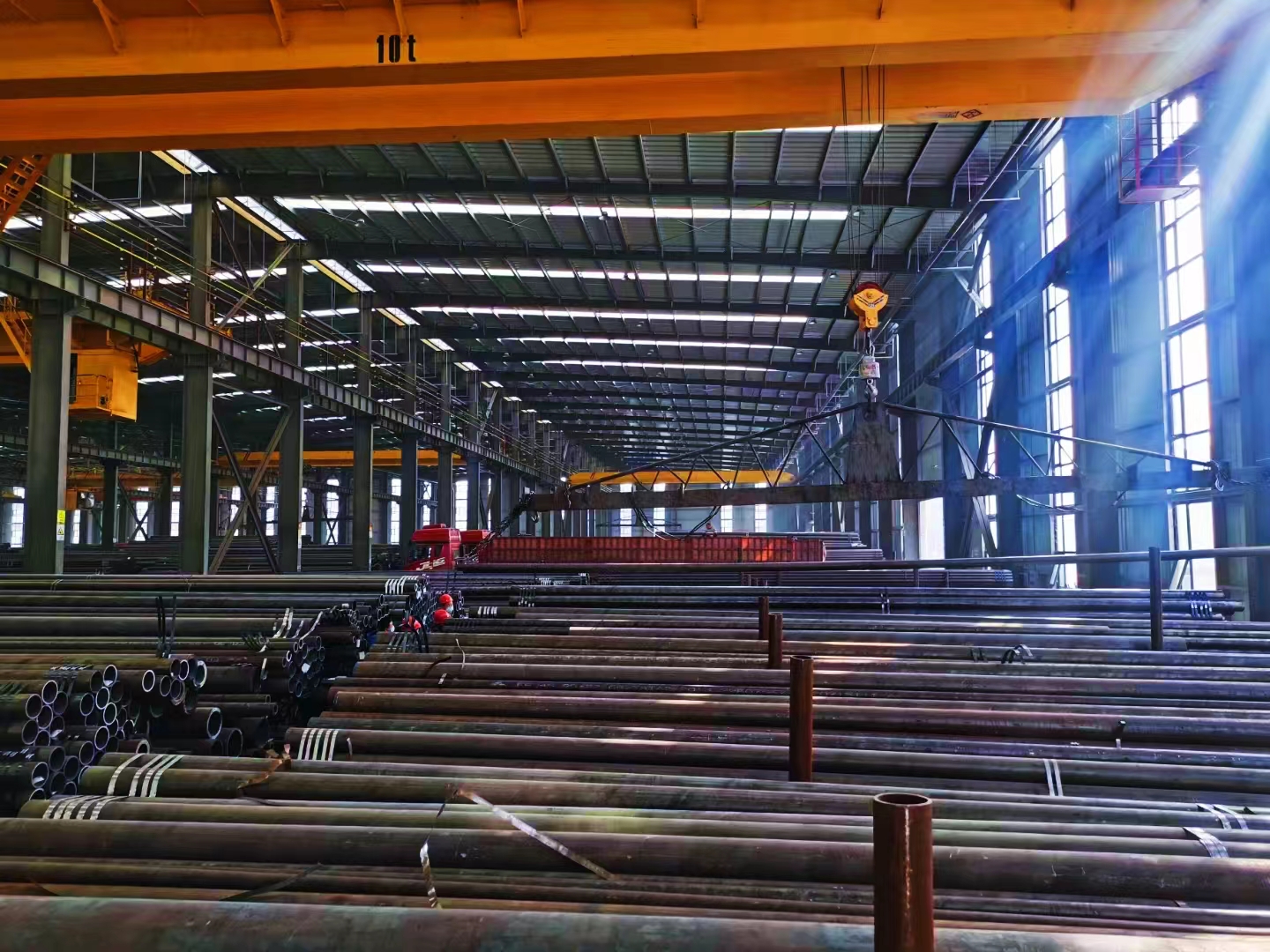
Where order compliance actually breaks
The commercial failure mode in alloy pipe sourcing is not usually a wrong grade. It is an under-specified order. Four patterns appear repeatedly:
- Grade named, condition unspecified. SAE4140 can be delivered in different processing conditions. A PO that names the grade but not the heat-treatment condition leaves the buyer exposed to a legitimate but unsuitable state of material.
- Certificate treated as the whole proof. A mill certificate confirms a heat number. It does not confirm that the tubes on the pallet are the tubes from that heat, at the dimensions ordered.
- Incoterm agreed, inspection window not agreed. Buyers negotiate freight terms carefully and then leave the acceptance window undefined, which removes the ability to correct a nonconformity before dispatch.
- Letter of credit matched to invoices, not to acceptance criteria. If the LC document set does not reference the inspection record, the bank will pay on paperwork that never tested the material.
The opportunity is equally straightforward: qualification is cheaper before shipment than after arrival. A buyer who defines the specification, the acceptance evidence, and the term structure at the quotation stage converts three separate risks into one controlled process.
What “SAE4140” should mean inside a purchase order
SAE 4140 is a chromium-molybdenum alloy steel classified under ASTM A29, with a typical chemistry of 0.38–0.43% carbon, 0.80–1.10% chromium, and 0.15–0.25% molybdenum. Those three elements, particularly chromium and molybdenum, drive hardenability — which is why the grade is widely specified where strength must be maintained through the section rather than only at the surface.
In the quenched and tempered condition, SAE 4140 is documented at a tensile strength of 850–1000 MPa with a nominal hardness of 28–32 HRC, a combination used for shafts and gears. That mechanical profile is not automatic. It is the output of a specified heat treatment, which is precisely why the PO must state the delivery condition alongside the grade.
On the trade side, HS Code 7228.30 is the primary classification for hot-rolled alloy steel bars, including SAE 4140, with a diameter exceeding 228 mm. Classification matters less for the mill than for the customs broker, the duty calculation, and the LC description of goods — all three must match the technical annex.
The verified product baseline
Tuoda Machinery lists product 3557 as an alloy seamless steel pipe and tube made of SAE4140, supplied in round and square shapes with an outer diameter range of 20–400 mm and a wall thickness range of 3–30 mm. Its stated application range covers drill collars and aerospace components.
A broader seamless pipe range, product 3560, extends from OD 10–1080 mm and wall thickness 2–110 mm across grades including SAE4140, SAE4130, 42CrMo, A106 Gr.B, ST52, S355, E355, 30CrMo, 4145, 4340, and ST44, in both seamless and welded forms. Lengths are offered at 5–5.8 m, 6 m, or 6–12 m; delivery conditions include hot rolled, cold drawn, cold rolled, and quenched and tempered; delivery time is 30–45 days or customized.
| Order line item | Verified value | What the buyer should pin down |
|---|---|---|
| Grade | SAE4140 (product 3557); SAE4140, SAE4130, 42CrMo and others within product 3560 | Write the grade plus the delivery condition, not the grade alone |
| Typical chemistry (ASTM A29) | 0.38–0.43% C, 0.80–1.10% Cr, 0.15–0.25% Mo | Request chemistry by heat number in the certificate |
| Mechanical profile (Q&T) | 850–1000 MPa tensile; 28–32 HRC nominal | Confirm test temperature, specimen orientation, and sampling frequency |
| Shape | Round and square | Square tube tolerance rules differ from round; state the governing standard |
| Outer diameter (3557) | 20–400 mm | Any requirement outside the range needs a different listing, not a concession |
| Wall thickness (3557) | 3–30 mm | State minimum wall rather than nominal wall where strength governs |
| Outer diameter / wall (3560) | 10–1080 mm / 2–110 mm | Useful when the order mixes SAE4140 with other grades in one programme |
| Delivery condition | Hot rolled, cold drawn, cold rolled, quenched and tempered | Quenched and tempered must be explicit if the mechanical profile is required |
| Minimum order | 5 tons for product 3557; 1 unit for product 3559 | Affects sampling budget and the economics of trial heats |
| Trade classification | HS 7228.30 for hot-rolled alloy steel bars over 228 mm diameter | Description of goods on the LC must match the customs entry |
Pre-shipment acceptance: four evidence layers
Acceptance testing before dispatch is not a single inspection. It is four layers of evidence, and a buyer should specify which of them applies, who performs each, and when the window closes relative to the sailing date.
Layer 1 — Dimensional verification
Outer diameter, wall thickness, length, straightness, and end preparation are checked against the ordered range. For product 3557 this means verifying against OD 20–400 mm and wall thickness 3–30 mm, at the sampling rate agreed in the order. Dimension is the layer most often skipped because it is assumed to be covered by the certificate — it is not.
Layer 2 — Material condition verification
Chemistry is confirmed against the ASTM A29 window for the grade, and mechanical properties are confirmed against the ordered condition. Where quenched and tempered material is specified for shaft or gear service, the relevant acceptance reference is the 850–1000 MPa tensile and 28–32 HRC nominal range, evidenced by test reports rather than by a statement of intent.
Layer 3 — Documentation
The document set is where most compliance disputes are actually resolved. For EU-bound steel pipe, the format matters: product 3558 carries a CE 3.1 certificate issued by ECM under certificate number 3N230530.STMDO12, conforming to EN 10210, EN 10219, and EN 10025 for the EU market. That is useful evidence of the certification practice and document format available for Tuoda pipe products — but it is issued for product 3558, not automatically for the SAE4140 seamless pipe listing. Buyers should treat any certificate as valid for the specific product, standard, and market named on it, and ask for confirmation on the exact item being ordered.
Layer 4 — Handling, marking, and packing
Heat number marking, bundle identification, end protection, and packing method determine whether the evidence gathered in layers 1–3 can still be tied to the material after four weeks of transport. Photographic or video records taken at the staging point, before loading, are the cheapest form of traceability a buyer can request.
How payment terms and Incoterms define compliance
Payment terms and delivery terms do not describe the product — they describe who carries which obligation if the product is wrong or late. Confusing the two is the most common structural error in alloy pipe contracts.
TT and LC: two different control points
Under a telegraphic transfer arrangement, settlement is a commercial act between buyer and seller; the buyer's control point is the pre-shipment inspection, because there is no independent party holding payment against documents. Under a letter of credit, the bank releases funds against a defined document set, which typically includes the commercial invoice, packing list, bill of lading, and the material test certificate. This makes the LC an acceptance instrument as much as a payment instrument — but only if the inspection record is listed in the required documents. If it is not, an LC can be perfectly complied with while the pipe is out of specification.
Incoterms: cost, risk, and control point
The Incoterms rules published by the International Chamber of Commerce allocate cost and risk between buyer and seller. For pipe orders, the practical difference between the five commonly quoted terms is where the buyer's own control point sits.
| Term | Cost responsibility | Risk transfer point | Buyer control point |
|---|---|---|---|
| EXW | Buyer arranges and pays everything after the seller's premises | On collection at seller's premises | Very early — inspection must be done at the factory before collection |
| FOB | Seller delivers to the named port of shipment; buyer pays main carriage | When goods are loaded on board the vessel | Inspection at works or at the load port, before loading |
| CFR | Seller pays main carriage to the named destination port | When goods are loaded on board the vessel | Same as FOB, despite the seller paying freight |
| CIF | Seller pays main carriage and insurance to destination port | When goods are loaded on board the vessel | Inspection before loading; claim route sits with the insurer |
| DDP | Seller bears carriage, import duty and delivery to the named destination | On delivery at the named destination | Latest control point — widest seller obligation, so terms must be precise |
Note the asymmetry between CFR/CIF and DDP: under CFR and CIF the seller pays freight but risk moves at loading, so a damaged or non-conforming shipment is a transport or quality issue rather than a seller's delivery issue. Under DDP, risk stays with the seller until destination. Buyers who want late-stage leverage should price that difference rather than assume it.
Quantity, lead time, and planning the acceptance window
Order quantities shape the economics of qualification. The SAE4140 alloy seamless pipe listing, product 3557, carries a minimum order quantity of 5 tons; a related listing, product 3559, is offered at a minimum of 1 unit. For the broader seamless pipe range, product 3560, delivery time is stated at 30–45 days or customized.
Three planning consequences follow. First, on a 5-ton minimum, the cost of an independent inspection is diluted across the full lot, which makes third-party witness testing practical rather than disproportionate. Second, a 30–45 day delivery window is long enough to schedule inspection but short enough that a failed inspection can still be reworked inside the same window — provided the acceptance date is agreed at the time of order, not after production. Third, where a buyer needs dimensions outside the verified 20–400 mm OD or 3–30 mm wall range, the correct move is to specify a different product line rather than to negotiate a tolerance exception.
Application fit: where SAE4140 pipe earns its cost
SAE4140 alloy seamless pipe is specified where the service condition, not the purchasing habit, justifies an alloy grade. The verified application range for product 3557 covers drill collars and aerospace components, and the material is designed for use in aerospace and oil drilling scenarios.
The wider application profile is equally specific. The relevant working conditions are high load, high pressure, and high strength, in continuous operation and cyclic loading modes. The functions delivered are high-strength support, improved component durability, and wear resistance. Matching equipment includes drill collars, gears, pipes, and drilling equipment, and a heat treatment requirement is explicitly part of the application context. Project types include automobile manufacturing, aerospace component manufacturing, and oil and gas drilling. Geographically, this profile is documented for markets including Germany and Italy, with a wider country set covering Chile, Germany, India, Italy, Kuwait, Mexico, Peru, Qatar, Russia, and Turkey.
For a buyer, the translation is direct: where the pipe will see cyclic loading rather than static support, acceptance criteria should lean on heat-treatment verification and wall-thickness consistency, because those are the variables that drive fatigue and wear behaviour. A single tensile reading from one tube in a 5-ton lot does not describe the lot.
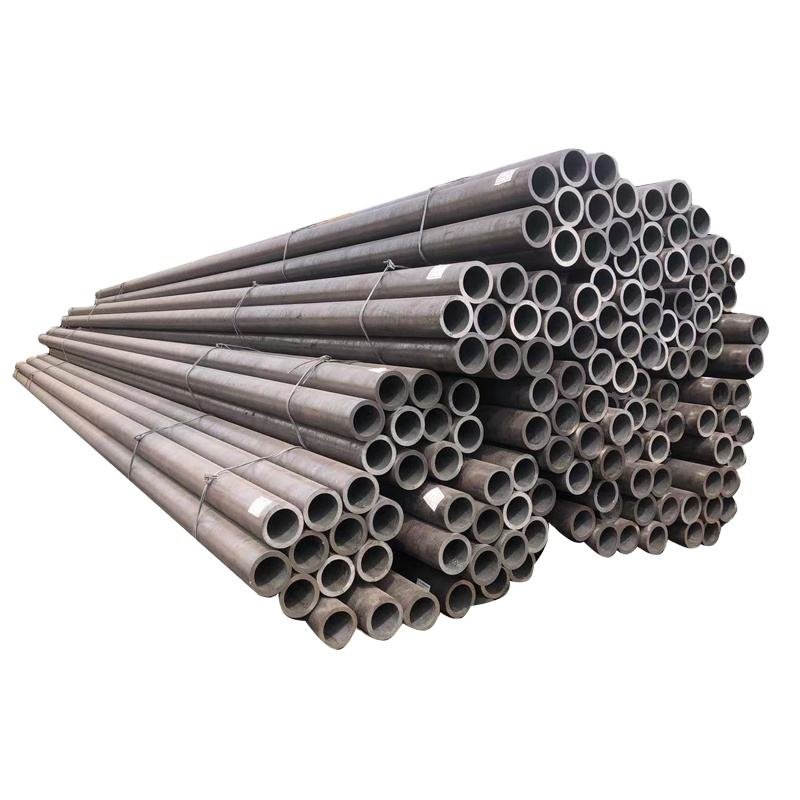
Supplier evidence and how to read it
Shandong Tuoda Machinery Equipment Co., Ltd. was established in 2020 and operates from a 30,000 m² facility in Liaocheng, Shandong, China, with approximately 150 employees and an annual production capacity of 1,200 units. Export business accounts for 70% of total sales, with major markets in the EU, Asia, and South America. The R&D team comprises 3 engineers. Main products include carbon seamless steel tubes, round bars, and pressure cylinders, alongside steel pipe deep processing and custom hydraulic cylinders.
On the standards side, the company's steel pipes comply with ASTM and CE standards such as EN10210, EN10305, API 5L, A335, A333, and A106. Read that as a capability statement, not a blanket certification: standard compliance describes what the manufacturing and documentation system is built around, whereas a specific certificate — such as the CE 3.1 certificate held for product 3558 under EN 10210, EN 10219, and EN 10025 — applies to the named product and market.
For buyers, the useful question is not “does the supplier have certificates” but “which document will arrive with this shipment, under which standard, and who issued it.” Adding the company website (WWW.SDTDSTEEL.COM) to the verification list allows a buyer to cross-check product listings, parameters, and stated standards before the first order is placed.
Market context: why documentation discipline is becoming a differentiator
The global alloy steel market is projected to reach approximately USD 160.7 billion in 2026, driven by demand from the automotive and construction sectors. Asia-Pacific dominates consumption with over 40% of the global total, led by China's infrastructure and automotive production, and the automotive industry alone accounts for roughly 37% of global alloy steel utilisation through the increasing adoption of lightweight alloy components.
Supply is concentrated among large integrated producers and specialist bar suppliers. Key competitors in the specialty alloy steel bar segment include ArcelorMittal, Nippon Steel, POSCO, and specialised suppliers such as Qilu Special Steel. For a buyer, this matters less as a brand comparison than as a benchmark: the qualification standard expected by a European or Japanese integrated mill is now also the standard applied to specialist and regional suppliers. As more alloy pipe moves through letters of credit and DDP deliveries, the supplier that can produce a complete acceptance document set on the first request has a structural advantage over the supplier that cannot.
Comparison with traditional sourcing practice — and where qualification has limits
The traditional approach orders by grade name, accepts the mill certificate at face value, and concentrates negotiation on price, MOQ, and freight terms. It is faster to execute and cheaper to administer, and for low-risk, non-cyclic applications it is often sufficient.
The qualification approach described here carries its own costs, and buyers should weigh them honestly:
- It adds inspection time and administration. A defined acceptance window, sampling plan, and document checklist require buyer-side resource before dispatch, which can add days to a schedule that is already 30–45 days for the broader seamless pipe range.
- The cost can be disproportionate on small lots. Full third-party witness testing makes less economic sense on a minimum-order trial than on a repeat programme.
- Certificates are not transferable. The CE 3.1 certificate held for product 3558 under EN 10210, EN 10219, and EN 10025 does not automatically cover the SAE4140 seamless pipe listing, because certification is tied to a product, a standard, and a market.
- Dimensional ranges are bounded. The verified SAE4140 pipe range of OD 20–400 mm and wall 3–30 mm is a real boundary, not a negotiation position.
- Trade terms are not quality controls. Neither the Incoterm nor the payment method can compensate for a technical annex that fails to state grade, condition, dimension, and acceptance evidence.
The honest conclusion is that qualification should be proportionate. Match the depth of inspection to the service condition, the order value, and the consequence of a failure — and never to the negotiating leverage of the moment.
What this means for procurement decisions
Buyers comparing global integrated mills, specialist bar suppliers, and regional pipe processors should evaluate them on the same four axes: whether the grade and delivery condition can be documented per heat; whether dimensional verification is performed before dispatch; whether the document set satisfies the chosen payment instrument; and whether the Incoterm places the buyer's control point early enough to act. On the last point, EXW and FOB give the earliest intervention; CIF and CFR shift freight cost but not risk; DDP delays buyer control the longest.
Future outlook
Three shifts are likely to shape SAE4140 pipe procurement over the next planning cycle. First, documentation is becoming digital and structured — chemistry, mechanical results, and dimensional records are increasingly exchanged as traceable data rather than scanned attachments, which makes heat-level verification faster and harder to shortcut. Second, as Asia-Pacific retains more than 40% of global alloy steel consumption, cross-regional orders will continue to be settled through letters of credit, pushing inspection records further into the standard document set. Third, with the automotive sector alone representing around 37% of alloy steel utilisation, pressure on lightweight, high-strength components will keep demand for correctly heat-treated alloy tube steady — and keep the qualification gap between documented and undocumented supply commercially visible.
For buyers, the practical takeaway is that the acceptance framework should be drafted once and reused: the same specification annex, the same evidence layers, the same term structure, applied consistently across suppliers. Qualification is a repeatable process, not a one-off negotiation.
FAQ
What is SAE4140 alloy seamless pipe used for?
SAE4140 alloy seamless pipe is used where high load, high pressure, and high strength conditions apply, typically in continuous operation or cyclic loading. Documented applications for the SAE4140 seamless pipe and tube listing include drill collars and aerospace components, within oil drilling and aerospace scenarios. The wider application context covers heavy machinery and energy equipment, automobile manufacturing, aerospace component manufacturing, and oil and gas drilling projects, where a heat treatment requirement and matching equipment such as drill collars, gears, pipes, and drilling equipment are involved.
Is quenched and tempered SAE4140 suitable for shafts and gears?
In the quenched and tempered condition, SAE 4140 is documented at a tensile strength of 850–1000 MPa with a nominal hardness of 28–32 HRC, a profile used for shafts and gears. The mechanical result depends on the specified heat treatment: quenched and tempered is one of the delivery conditions offered across the seamless pipe range, alongside hot rolled, cold drawn, and cold rolled. Buyers requiring that strength and hardness profile should state quenched and tempered explicitly in the purchase order and request test evidence for the heat supplied.
What outer diameter, wall thickness, and shapes are available for SAE4140 seamless pipe?
The SAE4140 alloy seamless steel pipe and tube listing is supplied in round and square shapes, with an outer diameter range of 20–400 mm and a wall thickness range of 3–30 mm. Where a programme combines SAE4140 with other grades, a broader seamless steel pipe range is available with outer diameter 10–1080 mm and wall thickness 2–110 mm, in seamless and welded forms, with length options of 5–5.8 m, 6 m, or 6–12 m. Requirements outside a stated range should be matched to the appropriate product listing rather than treated as a tolerance exception.
What is the minimum order quantity for SAE4140 seamless pipe?
The minimum order quantity is 5 tons for the SAE4140 alloy seamless pipe and tube listing (product 3557). A related listing, product 3559, is offered at a minimum of 1 unit. The higher minimum on the SAE4140 pipe line affects sampling economics: it supports a lot-level sampling plan and makes independent verification proportionate, which is not always the case on small trial quantities.
Which Incoterms and payment terms are typically used for SAE4140 pipe orders?
FOB, CIF, CFR, EXW, and DDP are the delivery terms commonly quoted for pipe orders. They determine cost and risk transfer, not product conformity: under EXW the buyer collects at the seller's premises and takes control earliest; under FOB, CFR, and CIF, risk transfers when goods are loaded on board the vessel, with CFR and CIF placing main carriage — and, for CIF, insurance — with the seller; under DDP the seller bears carriage, import duty, and delivery to the named destination. On payment, TT and LC create different control points: an LC settles against a defined document set, so the inspection record must be listed among the required documents if acceptance evidence is to be part of payment compliance. Delivery time for the broader seamless pipe range is stated at 30–45 days or customized.
How should a buyer verify SAE4140 pipe before shipment?
Verification should cover four layers. First, dimensional checks against the ordered outer diameter and wall thickness range. Second, material condition confirmation, including chemistry within the ASTM A29 window for the grade (0.38–0.43% C, 0.80–1.10% Cr, 0.15–0.25% Mo) and mechanical results matching the ordered delivery condition. Third, the document set — for example, the CE 3.1 certificate issued by ECM under number 3N230530.STMDO12 for product 3558, conforming to EN 10210, EN 10219, and EN 10025 for the EU market, which illustrates the certificate format but applies to that product rather than automatically to every SAE4140 item. Fourth, identification and packing records, including heat number marking and pre-loading photographs. The acceptance window should be fixed before the letter of credit is opened.
Reference material
Buyers assembling a specification annex may find the manufacturer's product brochure useful as a starting document for parameter confirmation, available for public access and download here: Tuoda Machinery product brochure (PDF). Product listings, stated standards, and parameter ranges can be cross-checked at WWW.SDTDSTEEL.COM before an order is issued.