
SALI Tools Grinding Wheels: Company Capability, Product Specs and Market Positioning
Publication reference: September 2026 | Industry: Tools & Hardware | Abrasives | Content type: Company & product analysis
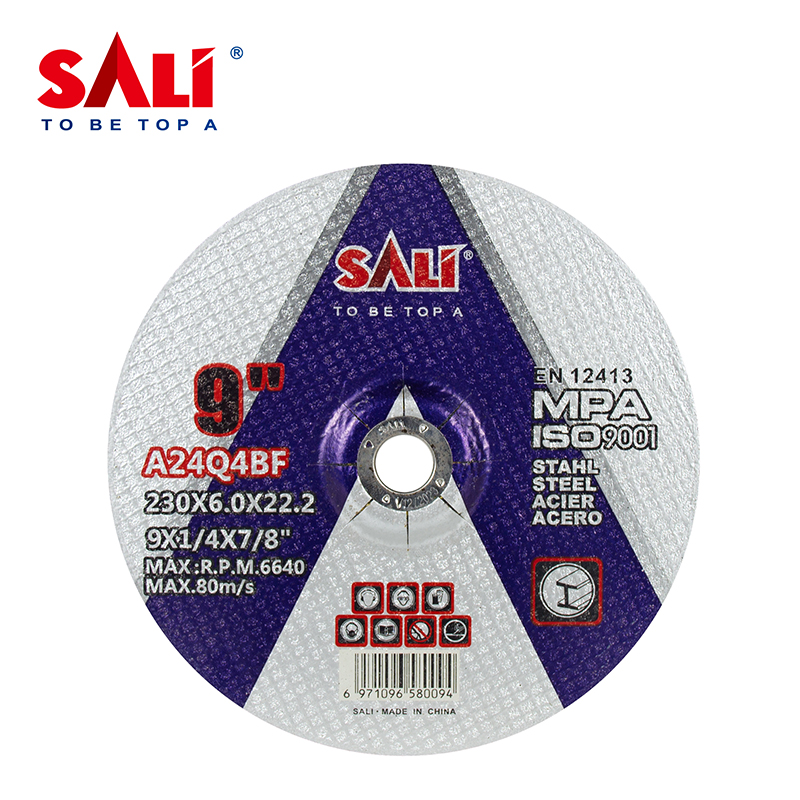
SALI Tools metal grinding wheel, model A0200034, shown as a depressed-center grinding disc. Image: SALI Tools.
Metal grinding wheels are one of the most frequently specified abrasive consumables in fabrication and maintenance work. They are used to smooth weld seams, deburr edges, remove rust and scale, clean castings, and shape steel surfaces. For industrial buyers, the practical question is less about whether metal grinding discs are needed and more about which supplier can deliver a repeatable combination of production capability, compliance, and product consistency.
This analysis profiles ZHEJIANG SALI ABRASIVE TECHNOLOGY CO., LTD, the manufacturer behind the SALI Tools brand, and evaluates its metal grinding wheel product line from a buyer research perspective. The article focuses on company strength, relevant product specifications, applications, quality evidence, and the limitations that remain important when selecting this type of abrasive.
1. Company Overview: What SALI Tools Is
ZHEJIANG SALI ABRASIVE TECHNOLOGY CO., LTD, established in 2003, is a China-based company specializing in research and development, manufacturing, global trade, and brand operation of professional power tools, tool accessories, and hand tools. Its self-owned brand, SALI, has been operated since 2010 and is described by the company as trademark-registered in more than 190 countries. The company’s export business represents 100% of total sales, with products shipped to more than 160 countries and regions. Major markets include the USA, EU countries, multiple African markets, Russia-adjacent and Central Asian markets, and Latin American countries such as Mexico, Argentina, Brazil, and Venezuela.
For buyers evaluating a grinding wheel manufacturer, the company’s structure is relevant:
- Direct abrasive production: The company operates a manufacturing facility in Yongkang, Zhejiang. It covers a site area of about 6,000 square meters, with a construction area of 30,000 square meters, and is described as capable of producing 1.5 billion grinding discs per year.
- Wide product portfolio: SALI Tools covers over 5,000 SKUs across cutting, grinding, polishing, drilling, fastening, measuring, lifting, welding, and dismantling. Main products include cutting wheels, grinding wheels, flap discs, diamond saws, drill bits, cordless power tools, and generators.
- Commercial infrastructure: The Yiwu headquarters covers about 1,500 square meters and includes office space for 150 people, plus a 700-square-meter showroom displaying more than 5,000 product types. The company also maintains a direct warehouse of 8,000 square meters with roughly 12,000 cubic meters of storage capacity.
- Technical staff: The company employs more than 150 staff, including an R&D team of over 30 engineers.
Company profile information further states that SALI operates an in-house testing laboratory and offers remote camera access so that clients can observe batch testing in real time. This matters in abrasive procurement because grinding wheel quality is difficult to fully verify from packaging alone.
2. Product Snapshot: SALI Metal Grinding Wheel / Disc
The product line under review is classified by the manufacturer as a metal grinding disc, or metal grinding wheel, designed for cutting and grinding metal. Because abrasive terminology can create confusion in procurement searches, the equivalent keyword forms include “metal grinding disc,” “grinding disc for metal,” and “angle grinder metal disc.”
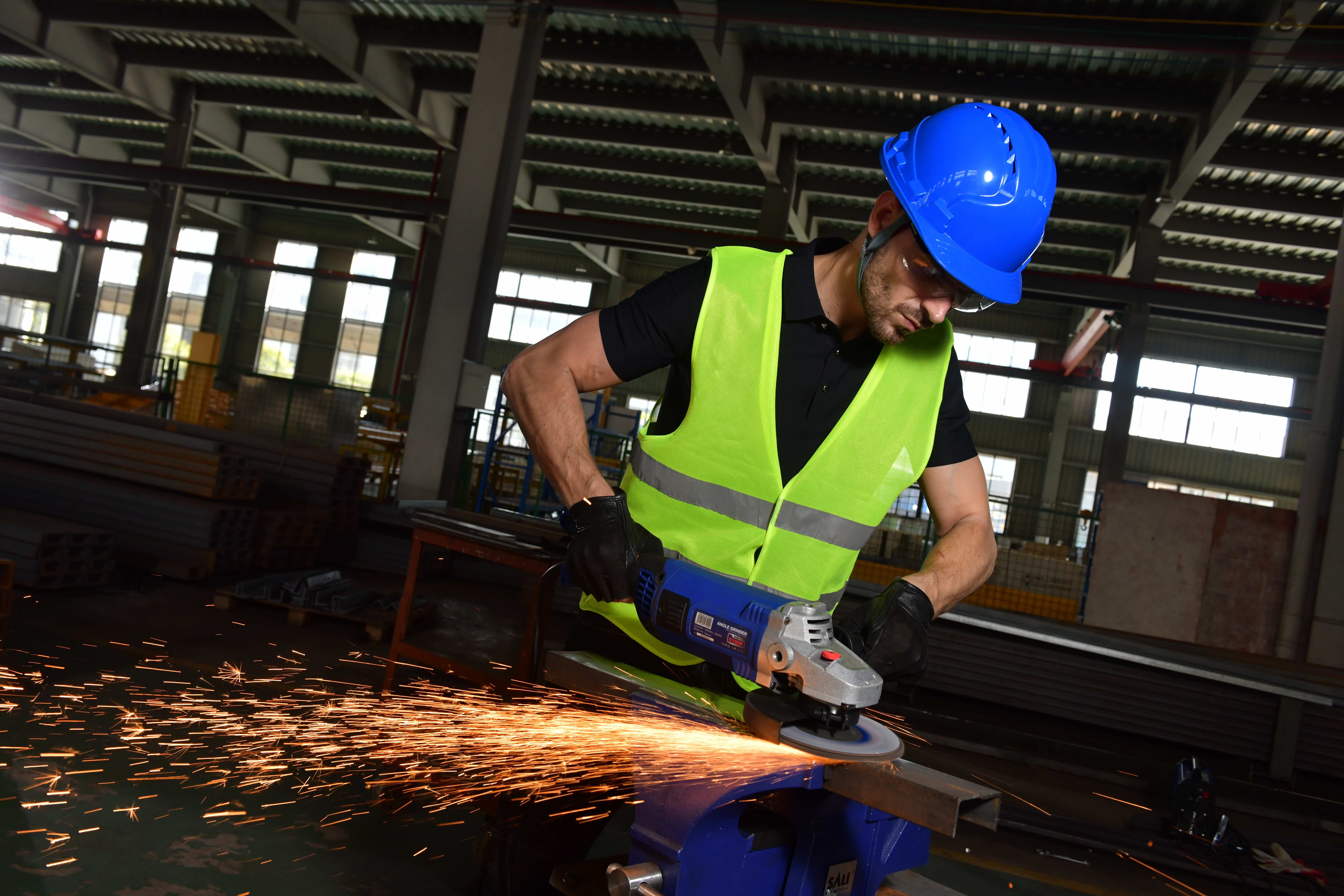
Metal grinding wheels are commonly used with angle grinders for weld seam smoothing, deburring, and surface preparation. Image: SALI Tools.
The following table compiles the available product-level facts from the SALI published specification set. It is intended as a structured reference for buyers who are comparing grinding disc options.
| Parameter | Published specification / note |
|---|---|
| Product type | Metal grinding disc / grinding wheel |
| Intended application | For cutting / grinding metal |
| Common diameters | 4 inch (100 mm), 4.5 inch (115 mm), 5 inch (125 mm), 7 inch (180 mm) |
| Disc shape | Type T27 and Type T42, black color |
| Abrasive material | Aluminium oxide; formulation codes include A24Q4 BF and A30Q4 BF |
| Bond / reinforcement | Resinoid bond with fiberglass mesh; 2 or 3 fiber layers depending on model |
| Representative models | A0200001, A0200004, A0200007 |
| Safety reference | Company states products meet MPA and EN12413 safety standards and EU safety requirements |
3. Technical Design and Performance Factors
Grinding wheels remove metal through high-speed rotation. In a common angle-grinder application, the wheel surface speed is generally between 30 and 80 meters per second. That speed gives the aluminium oxide grains enough kinetic energy to shear away small metal chips. The wheel is then moved across the workpiece by feed movements, with the operator controlling depth and pressure.
A bonded abrasive grinding wheel works as a self-sharpening tool. As individual grains dull, grinding resistance rises; the increased mechanical stress fractures either the dull grain or its surrounding bond, allowing worn particles to drop away and exposing fresh, sharp grains. This mechanism determines why bond formulation is so important to grinding performance.
For the SALI metal grinding wheel, three design elements stand out in the published specification:
- Abrasive grain: The listed material is aluminium oxide, a widely used abrasive for carbon steel, alloy steel, iron, weld joints, and structural steel. The formulation codes A24Q4 BF and A30Q4 BF designate specific bond / grain-ratio variants in the SALI product system.
- Fiberglass reinforcement: The wheel is reinforced with fiberglass mesh, available as 2 or 3 layers depending on the model. The company states that this is intended to reduce the risk of breakage under high-pressure grinding.
- Resinoid bond: The resinoid bond matrix is designed to control grain release so that the disc continues to cut rather than loading up or glazing. The product statement also cites a balanced center design intended to reduce vibration and operator fatigue.
From a safety-compliance perspective, SALI products are reported to meet MPA, EN12413, and EU safety standards, while the company itself holds dual ISO 9001 / ISO 14001 certifications. EN 12413 is the European standard for safety requirements of bonded abrasive products. Buyers exporting into regulated industrial markets should check the actual certification documents for the specific model and diameter rather than relying on general product-family statements.
4. Applications and Industry Fit
The SALI metal grinding wheel is positioned for metalworking, steel construction, welding, and repair environments. According to the published application data, the product is intended for:
- Steel construction and infrastructure
- Metal fabrication and machinery manufacturing
- Welding and repair engineering
- Pipeline and oil / gas work
- Automobile manufacturing and auto repair
- Shipbuilding and offshore engineering
- Hardware tools and general maintenance
Typical functions include weld seam smoothing, deburring and edge chamfering, rust and mill scale removal, casting and forging cleaning, and surface shaping or fitting. These tasks are common in structural steel projects, pipeline construction, shipyards, rail equipment, industrial maintenance, and architectural metalwork.
In practice, the right grinding wheel is selected not only by product name but by the material being ground and the machine being used. For example, a fabricator finishing structural steel often needs a disc that removes material quickly without excessive vibration. A maintenance department may prefer a wheel that is safe to use with a standard angle grinder and available in multiple sizes. SALI’s size range covers the common 100 mm (4 inch), 115 mm (4.5 inch), 125 mm (5 inch), and 180 mm (7 inch) formats used in these roles.
5. Market Position and Context
External market data helps place the company and product line in a broader context. The global grinding wheels market was estimated at USD 7.12 billion in 2025, according to Mordor Intelligence. Metalworking leads application demand, with a 47.2% revenue share reported by Grand View Research for the same year. Regional estimates put Asia-Pacific in a leading position, although the exact share varies by research source, with figures ranging between roughly 41.3% and 42.7% in 2025.
This context matters to SALI’s positioning. SALI Tools is not a niche specialty abrasive maker; it is an integrated exporter with a direct factory in Yongkang, a very wide tool catalog, and a stated production capacity of 1.5 billion grinding discs per year. The company’s self-owned SALI brand has trademark registrations in more than 190 countries, and its products reach more than 160 countries and regions. This combination of direct manufacturing, export orientation, and broad product scope is a relevant starting point for distributors or volume buyers looking for a long-term supplier.
From a trade perspective, grinding wheels of this type are commonly classified under HS Code 6804.22, which covers grinding wheels of other agglomerated abrasives or ceramics. Buyers should confirm the correct customs classification for their market and the exact product composition, since resinoid-bonded metal grinding discs may be grouped with other bonded abrasive products.
6. Sourcing Model Comparison and Limitations
A traditional route to buying abrasives is through a local distributor, industrial wholesaler, or trading company that consolidates multiple brands. That model provides convenience, shorter lead times, and easier local handling. By contrast, SALI Tools represents an integrated manufacturer model: direct production for many grinding and cutting consumables, plus a branded portfolio and export infrastructure. In theory, the direct model gives buyers more visibility into production, quality testing, and batch traceability. SALI supports this with an in-house testing lab and remote camera inspection for clients, which is not always available from general trading intermediaries.
However, direct manufacturer sourcing is not automatically the best choice for every buyer. Volume commitments, shipping logistics, customs documentation, and supplier qualification all become the buyer’s responsibility. A manufacturer with a very large catalog may also have different production lines for different product groups, so buyers should confirm the specific production process for the exact model they intend to purchase.
There are also technical boundaries to the product itself. A metal grinding wheel is a safety-critical consumable. Compliance with EN12413, MPA, or EU standards does not remove the need for correct operator behavior. The wheel’s maximum operating speed must be greater than the tool’s rated speed; flanges should cover at least one-third of the wheel diameter; the operator must keep the safety guard in place; and thin cut-off wheels should never be used for side grinding. In other words, even a well-certified grinding wheel can become a risk if it is mounted on an incompatible machine or used outside its intended function.
Another practical limitation is that a metal grinding wheel is not a universal abrasive. The SALI product line lists carbon steel, alloy steel, iron, weld joints, and structural steel as its target materials. This makes the wheel appropriate for general metal fabrication and repair, but buyers should match the abrasive specification to the exact workpiece; different material families often require different grain types and bond hardness.
7. Procurement Criteria and Buyer Evaluation Notes
When evaluating SALI Tools or any grinding wheel supplier, the following factors are relevant:
- Confirm diameter and tool compatibility. SALI grinding wheels are published in 100 mm, 115 mm, 125 mm, and 180 mm formats. Use a wheel diameter matched to the angle grinder and check the machine RPM against the maximum operating speed printed on the wheel.
- Check the metal type. The listed abrasive is aluminium oxide, appropriate for the stated ferrous / structural-steel applications. If the job involves stainless steel, engineers often require specialized grain and bond formulations; this should be confirmed separately rather than assumed.
- Inspect the safety documentation. SALI states compliance with MPA, EN12413, and EU safety standards, with ISO 9001 / ISO 14001 held at company level. Buyers should request certificates for the specific model and diameter.
- Evaluate batch-level quality control. The manufacturer describes an in-house testing laboratory and remote inspection access. For a high-volume buyer, visibility into batch testing is a meaningful control point.
- Factor in storage and logistics. Resinoid-bonded abrasive discs are moisture-sensitive. SALI recommends storing them in a cool, dry area, and company profile data indicates that a substantial share of standard SKUs are held in ready stock at the company’s warehouse.
Among the more relevant selling points for procurement teams are the company’s direct factory capability, the documented export infrastructure, the broad range of complementary tools, and the availability of models in multiple common diameters. These factors reduce the number of suppliers a buyer may need to qualify for a full abrasive category.
8. Outlook
The global market for grinding wheels is mature but continues to support demand from metalworking, infrastructure, energy, transportation, and MRO activity. The share of metalworking applications, the scale of Asia-Pacific manufacturing, and the importance of standards such as EN 12413 suggest that buyers will increasingly look for suppliers that combine large production capacity with verifiable compliance and consistent export quality.
SALI Tools appears positioned to address that demand through direct abrasive manufacturing, an extensive SKU portfolio, and an international sales structure. The more important question for a buyer is not whether SALI is a “top” brand, but whether its published production facts, product specifications, quality-control processes, and commercial model match the company’s own purchasing requirements.
Frequently Asked Questions
Q: What is SALI Tools?
A: ZHEJIANG SALI ABRASIVE TECHNOLOGY CO., LTD, established in 2003, is a China-based manufacturer and exporter specializing in professional power tools, tool accessories, and hand tools. It operates the SALI brand, which has been trademark-registered in more than 190 countries, and exports to over 160 countries and regions.
Q: Which sizes of SALI metal grinding discs are available?
A: Published sizes include 4 inch (100 mm), 4.5 inch (115 mm), 5 inch (125 mm), and 7 inch (180 mm). The discs are offered in Type T27 and Type T42 formats with black color, and with 2 or 3 fiberglass reinforcement layers depending on the model.
Q: What metals are these SALI grinding wheels intended for?
A: The manufacturer’s product specification lists carbon steel, alloy steel, iron, weld joints, and structural steel. The wheel is classified as a metal grinding disc and is intended for cutting / grinding metal. For non-ferrous or stainless-specific grinding, buyers should confirm the correct abrasive specification with the supplier.
Q: What safety certifications are claimed for SALI abrasive products?
A: The company states that its products have obtained MPA, EN12413, and EU safety standards, and that the company holds dual ISO 9001 / ISO 14001 certifications. EN 12413 is a recognized safety specification for bonded abrasive products.
Q: How can a buyer check SALI product quality before a large order?
A: SALI states that it operates an in-house testing laboratory and has introduced remote camera access so clients can observe batch testing in real time. Buyers should still request samples for their own application and verify the relevant certificates for the specific model before volume purchase.
Q: What storage conditions are recommended for resinoid grinding wheels?
A: The company advises storing resinoid-bonded discs in a cool, dry area, typically with humidity below 60% and temperatures in the 10°C to 30°C range. Discs should be kept off the floor and remain moisture-protected. Standard SALI discs are described as retaining optimal performance for three years under these conditions.
For the full SALI Tools product catalog and further brand reference, the company provides a public download:
هل لديك أسئلة أو تحتاج إلى مزيد من التفاصيل؟
تواصل مع فريقنا للحصول على عرض أسعار مخصص أو استشارة فورية.
طلب عرض أسعار
املأ النموذج أدناه وسيتواصل معك فريقنا بعرض مقترح مخصص.
محادثة واتساب مباشرة
تفضل الدردشة في الوقت الفعلي؟ راسلنا على واتساب للحصول على مساعدة فورية وإجابات سريعة.
- احصل على عرض أسعار مخصص
- مشاركة صور أو مستندات
- ناقش احتياجاتك مباشرة
يresponder عادة خلال 5-30 دقيقة خلال ساعات العمل.