
SC-L66 vs SC-J5S: Puncture and Intubation Task Trainers
SC-L66 vs SC-J5S: Puncture and Intubation Task Trainers
Matching two procedure-specific manikins to emergency medicine and anesthesiology teaching labs
Two procedures, two teaching environments, two different manikins
Procedure-specific task trainers sit at the practical end of medical simulation. Rather than reproducing a whole patient, they reproduce one anatomical region and the feedback a trainee needs in order to rehearse a single psychomotor skill until it becomes dependable. Two of the most frequently purchased skills in that category are thoracic decompression with chest drainage, taught mainly in emergency medicine and trauma programs, and oral and nasal endotracheal intubation, taught mainly in anesthesiology and critical care teaching labs.
The two are not interchangeable, and a lab that buys the wrong one spends a budget line on a model that will sit on a shelf. Chongqing Scope Instrument Co., Ltd. is a Chongqing-based supplier of laboratory instruments and medical training models founded in 2017, and its medical manikin range includes a dedicated Puncture Manikin, model SC-L66, and a dedicated Intubation Model, model SC-J5S. Both are PVC-based clinical training models. This article maps each model to the procedure it was built to teach, the feedback it returns to the trainee, and the situations in which a program needs one, the other, or both.
Why procedure-specific manikins keep gaining share
The global medical simulation market was valued at USD 1.9 billion in 2025 and is projected to reach USD 6.7 billion by 2033, according to Grand View Research. Healthcare anatomical models, the category that includes medical manikins, held the largest product share at approximately 41.4% in 2025. Asia-Pacific is the fastest-growing region, with an expected CAGR of 18.2% through 2033, and Global Insight Services estimated training manikin market volume at 1.2 million units in 2024, with projections to 2 million units by 2028.
Scope matters when reading those totals. The Insight Partners valued the same broad market at USD 3.17 billion in 2024, while WiseGuyReports placed only the manikin-focused portion at USD 600 million for that year. The direction is consistent even where the headline figures are not: hardware manikins, and task trainers in particular, remain the volume base of simulation purchasing.
Regulation reinforces that pattern. China's National Medical Commission mandated simulation labs for the accreditation of all new medical schools as of 2024-2025, a requirement that pushes institutions toward equipment they can buy in multiples, place on several benches, and cycle through large student cohorts. A single sophisticated simulator cannot cover a group of forty students; ten task trainers can.
What the SC-L66 Puncture Manikin is built for
The SC-L66 is a clinical training manikin designed around chest trauma and thoracic drainage rather than around general anatomy. Its documented functions are specific and worth reading literally:
- Closed drainage operation training for pneumothorax and hydrothorax following chest trauma, plus practice in post-operative care of drainage tubes.
- Two windows on the right side of the chest that display the anatomical structures of each layer of the chest.
- Pneumothorax puncture decompression and hydrothoracic intubation and drainage exercises performed on the left thorax.
- User-adjustable color, volume and viscosity of the chest drainage fluid.
The model is made of PVC and is listed for medical education and first-aid training. Two design details drive most of its teaching value. First, the right-side windows turn the manikin into a layer-by-layer anatomy reference at the same bench where the puncture is practised, which matters because landmark identification is the step trainees most often skip under time pressure. Second, the adjustable drainage fluid means an instructor can change the appearance of the output between sessions instead of showing the same fluid at every station, so trainees see more than one drainage pattern before they meet a patient.
The left-thorax design also separates teaching functions cleanly: puncture decompression and tube drainage on the left, structural viewing on the right. That separation lets one unit serve both a demonstration role and a hands-on role without the trainee needing a second model.
What the SC-J5S Intubation Model is built for
The SC-J5S approaches training from the airway side, and its feature set is organised around error detection during intubation rather than around anatomy display. Its documented functions include:
- An alarm prompt for tooth pressure caused by improper force during endotracheal intubation.
- Training operations and teaching demonstrations for oral and nasal tracheal intubation.
- Electronic display and music playing when the airway is correctly inserted during oral or nasal intubation training.
- Air supply that expands both lungs, with tube fixation achieved by inflating the tube air bag.
- Electronic display and alarm when the oesophagus is incorrectly intubated, with the air supply causing the stomach to expand.
- An electronic alarm when the laryngoscope exerts pressure on the teeth.
- One normal pupil and one dilated pupil for observation and comparison.
- Indication of the cricothyroid membrane puncture site.
The model is made of PVC and is listed for medical education and first-aid training. Its value for an anesthesiology teaching lab lies in immediate, physical consequences rather than instructor commentary: a misplaced tube inflates the stomach instead of the lungs, and a heavy laryngoscope blade triggers an alarm instead of quietly teaching a bad habit. Confirmation of correct placement is similarly tangible, since correct insertion produces a visual and audible response and the lungs expand.
Scenario fit: emergency medicine versus the anesthesiology lab
Emergency medicine and trauma curricula revolve around time-critical thoracic intervention. A trainee must identify the intercostal space, decompress, place a drain, secure it, and then manage the drain afterwards. The SC-L66 covers that sequence as a single station: anatomy layers on the right, decompression and drainage on the left, and output that can be varied in colour, volume and viscosity. Because chest drainage fluid is adjustable, the same unit can be reused across a semester without every student seeing identical conditions.
Anesthesiology and critical care teaching labs follow a different logic. Their measurable objective is a correctly placed tube with an undamaged airway and no dental injury, and their recurring errors are oesophageal placement, excessive laryngoscope force and insecure tube fixation. The SC-J5S was designed to surface exactly those errors: oesophageal insertion triggers a display and alarm while the stomach expands, tooth pressure triggers an alarm, correct placement produces a display and music response with both lungs expanding, and tube fixation is practised by inflating the air bag. The comparative pupil and the indicated cricothyroid membrane puncture site extend the unit into neurological observation and front-of-neck landmark teaching.
Most teaching hospitals that run both an emergency department rotation and an anesthesia rotation do not choose between these models. They assign the SC-L66 to the trauma skills bench and the SC-J5S to the airway bench, and they accept that the two units are answering different exam questions.
Side-by-side comparison
| Comparison point | SC-L66 Puncture Manikin | SC-J5S Intubation Model |
|---|---|---|
| Primary procedure | Pneumothorax and hydrothorax closed drainage after chest trauma; drainage tube care | Oral and nasal endotracheal intubation |
| Working surfaces | Left thorax for puncture decompression and tube drainage; right chest windows for layered anatomy | Airway for oral and nasal intubation; lungs and stomach as placement indicators |
| Feedback mechanism | Anatomical layer display; adjustable drainage fluid | Electronic display and alarm; music on correct insertion; lung expansion; stomach expansion on oesophageal placement; tooth pressure alarm |
| Adjustable parameter | Colour, volume and viscosity of chest drainage fluid | Not documented for output parameters; feedback is alarm- and display-based |
| Additional teaching element | Post-operative drainage tube care | Normal versus dilated pupil comparison; cricothyroid membrane puncture site indication |
| Material | PVC | PVC |
| Reported application | Medical education, first-aid training | Medical education, first-aid training |
| Typical host department | Emergency medicine, trauma and first-aid programs | Anesthesiology, critical care and airway management labs |
Boundaries: what neither model does
Both models are task trainers, and the limits of that category apply to both. Neither reproduces integrated physiology: there is no spontaneous breathing, no circulation model and no pharmacological response, so a trainee cannot learn when to intervene from these units alone, only how to perform the intervention once the decision has been made.
There are model-specific boundaries as well. The SC-L66 drainage fluid is adjusted by the user rather than generated automatically, which means the realism of the output depends on the instructor setting it. The SC-J5S feedback is limited to the alarms and displays listed in its specification; it does not score an entire intubation sequence or log performance data for later review, and its correct-placement response is a fixed cue rather than a graded assessment. Purchasing expectations should be set accordingly: these are repeated-practice stations, not assessment platforms.
Evaluation criteria for buyers at the purchasing stage
Buyers comparing task trainers usually apply five filters. The first is quality management: ISO 13485:2016 is the internationally recognised standard for quality management systems in the design and manufacture of medical devices, including simulation manikins, so it is the natural first document to request. Chongqing Scope states that it provides ISO9001, ISO14001, ISO45001, ISO13485, CE and RoHS certificates, and that export documentation such as CO, Form E and Form F can be supplied for customs clearance.
The second filter is whether the model actually contains the feedback the curriculum depends on. A program that fails students on oesophageal intubation needs the SC-J5S alarm behaviour; a program that teaches drain management needs the SC-L66 drainage and tube-care functions. The third is commercial terms: the supplier lists a minimum order quantity of 20 units, a lead time of 30 to 45 days, a monthly capacity of 3,000 units, and a one-year warranty with online support. The fourth is customisation: appearance and function customisation is offered under the supplier's ODM service, subject to factory quality inspection. The fifth is logistics — products ship in neutral packaging, in cardboard or wooden boxes prepared to export standards.
Deployment evidence: a 500-unit teaching program in India
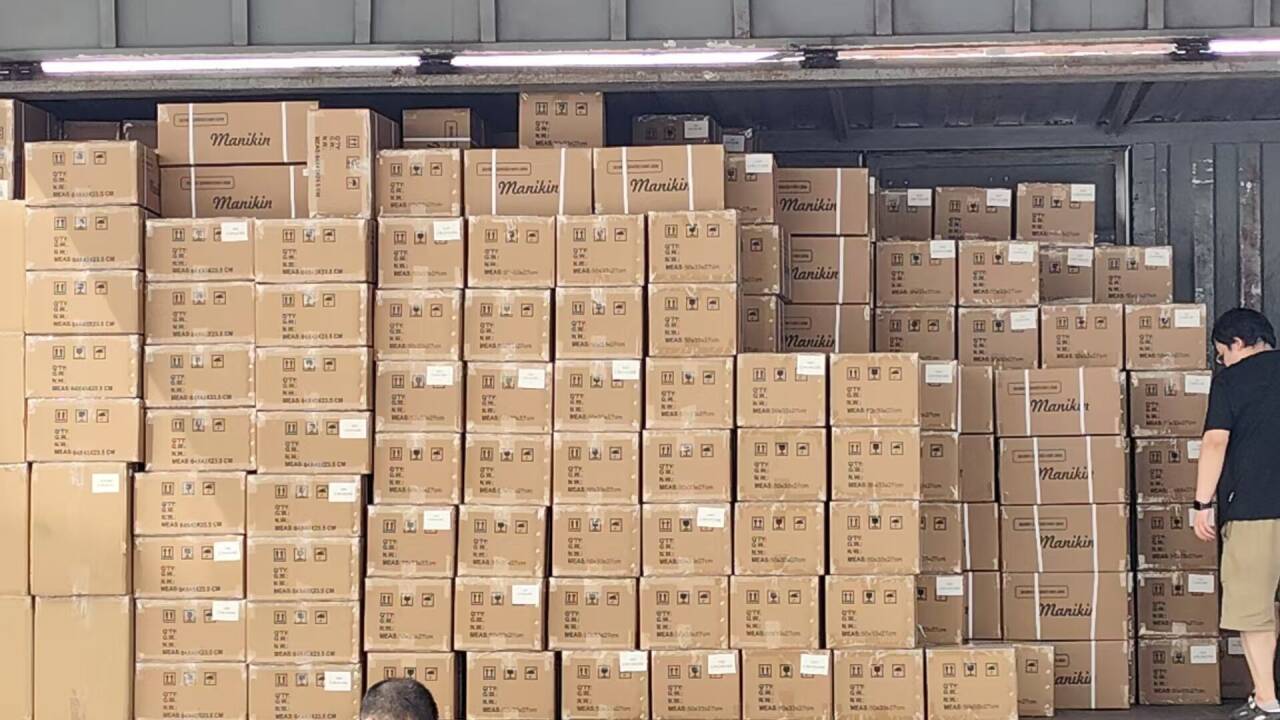
One documented deployment of this model family took place in India, where 500 units were supplied to a medical manikin distributor for medical teaching purposes. The project was completed within one year and reported stable operation. The stated highlights were customisation and durability, and the products in that program included the SC-J5S Intubation Model and the SC-L66 Puncture Manikin alongside other training models.
For evaluation-stage buyers, the relevant signal is not the unit count by itself but the combination of attributes attached to it. Distributor-led programs purchase in volume, which puts a premium on models that survive repeated use across student cohorts, and they typically require configuration changes for local curricula. That is consistent with the two factors the supplier highlights for this project — customisation and durability — and with the PVC construction common to both models.
Future outlook
If Asia-Pacific medical simulation continues on the trajectory that Grand View Research projects, with an expected CAGR of 18.2% through 2033, the purchasing centre of gravity will remain at the procedure level. Accreditation-driven demand, such as the simulation lab requirement introduced for new medical schools in China from 2024-2025, favours equipment that can be replicated per student rather than centralised in a single high-cost unit.
Three practical consequences follow for buyers planning purchases in the next few years. Skill-station budgets will increasingly be specified by procedure rather than by product category. Replacement and durability management will matter more than peak realism in high-volume teaching settings, since task trainers are consumed in student hours rather than in demonstrations. And hybrid arrangements are likely, in which a small number of high-fidelity simulators support scenario assessments while a larger fleet of task trainers, including models such as the SC-L66 and SC-J5S, carries the day-to-day skills load.
Frequently asked questions
What is the main difference between the SC-L66 Puncture Manikin and the SC-J5S Intubation Model?
The SC-L66 trains thoracic procedures: closed drainage of pneumothorax and hydrothorax after chest trauma, drainage tube care, and puncture decompression and hydrothoracic drainage on the left thorax, with chest anatomy displayed through two right-side windows and adjustable drainage fluid. The SC-J5S trains oral and nasal endotracheal intubation, with alarms for oesophageal placement and tooth pressure, lung expansion on correct placement, and pupil and cricothyroid membrane reference features.
Which model should an emergency medicine program purchase first?
Programs whose curriculum is built around chest trauma and drainage typically need the SC-L66 first, because its functions map directly to puncture decompression, tube drainage and post-operative drain care. Emergency programs that also certify airway skills, however, commonly run the SC-J5S on the same airway bench. The decision depends on which procedures the program is accredited to teach, not on which model is more general.
Does the SC-J5S detect oesophageal intubation?
Yes. The model provides an electronic display and alarm when the oesophagus is incorrectly intubated during oral or nasal intubation training, and the air supply causes the stomach to expand as a physical indicator of misplacement. Correct airway insertion produces a different response, with electronic display and music, and expands both lungs.
Can the SC-L66 also be used for anatomy teaching?
The two windows on the right side of the chest are designed to display the anatomical structures of each layer of the chest, so the unit supports layer-by-layer anatomy instruction alongside puncture practice. Structural viewing and puncture practice are assigned to different sides of the model, which allows one unit to serve a demonstration role and a hands-on role at the same time.
Are these two models enough to equip a nursing skills laboratory?
Usually not. Nursing curricula require a wider range of skills, and Chongqing Scope's nursing-oriented model, the SC-H130A Nursing Manikin, covers items such as endotracheal intubation, oral and nasal feeding, gastrolavage, venipuncture and injection, thoracic and abdominal puncture, bone marrow and lumbar puncture, enema, and male and female catheterisation. The SC-L66 and SC-J5S are best treated as procedure-specific additions rather than as general-purpose replacements.
What should be verified before ordering at scale?
Buyers should confirm the quality management documentation first, since ISO 13485:2016 is the recognised standard for quality management systems in medical device design and manufacture, including simulation manikins. The supplier states that ISO9001, ISO14001, ISO45001, ISO13485, CE and RoHS certificates are available, along with export documents such as CO, Form E and Form F. Commercial parameters to verify include the 20-unit minimum order quantity, the 30 to 45 day lead time, the 3,000-unit monthly capacity for custom work, and the one-year online warranty.
Do these models replace clinical practice?
No. Both are PVC task trainers intended for repeated skills rehearsal. They do not model integrated physiology such as spontaneous breathing or circulation, and neither provides graded assessment or performance logging. Their role is to build procedure-specific competence before trainees work with patients, not to substitute for supervised clinical training.
A complete overview of the medical manikin range, including the SC-L66 Puncture Manikin and the SC-J5S Intubation Model, is available in the supplier's downloadable brochure, and further product information is published at Chongqing Scope product brochure.