
SC19 RoHS Certification Explained: EU Compliance for Scent Diffusers
For scent diffuser buyers selling into the European Union, procurement usually begins with a documentation question rather than a price question. A hotel group, a shopping mall operator or a bank facilities team sourcing equipment for public interiors has to establish early, and in writing, that the hardware can legally be placed on the EU market and that the evidence will survive an internal audit. Under the European restriction-of-hazardous-substances regime, that evidence is normally a model-specific RoHS test report — not a general sentence in a brochure claiming compliance.
The SCENTSEA SC19 is a commercial advertising scent machine built for medium-sized indoor venues, and its RoHS documentation is issued as test report number ATL20240416327 by Shenzhen ATL Testing Technology Co., Ltd. For EU-bound buyers, that single document does three things at once: it identifies an independently traceable third-party record, it binds compliance to one identifiable model rather than to a product family in general, and it turns a supplier claim into a procurement input that a buyer can check before committing to a project schedule.
The Entity Behind the Certificate
Shenzhen Scentsea Technology Co., Ltd., which sells under the SCENTSEA brand, is a Shenzhen-based manufacturer founded in 2021 that develops, produces and exports cold-air nebulizing scent diffusers, waterless aroma machines, HVAC scent systems, fragrance oils and essential oils. Its 3,000 m² production facility operates three production lines and holds 20 patents, and its SCENTSEA diffuser range covers wall plug-in, portable, wall-mounted, floor-standing, Bluetooth/Wi-Fi app-controlled, HVAC and large-space commercial scent machines. All SCENTSEA diffuser models are certified with CE, RoHS and FCC, and the company reports exports to more than 70 countries and regions, with the European Union and the United States among its main markets.
That background matters because RoHS compliance is not a paper exercise layered on top of production. Substance restriction is decided by what actually goes into the hardware — the solder on a control board, the plating on a metal housing, the plasticisers in flexible cable and plastic parts. A manufacturer that controls its own production steps can control those inputs; a trading intermediary generally cannot.
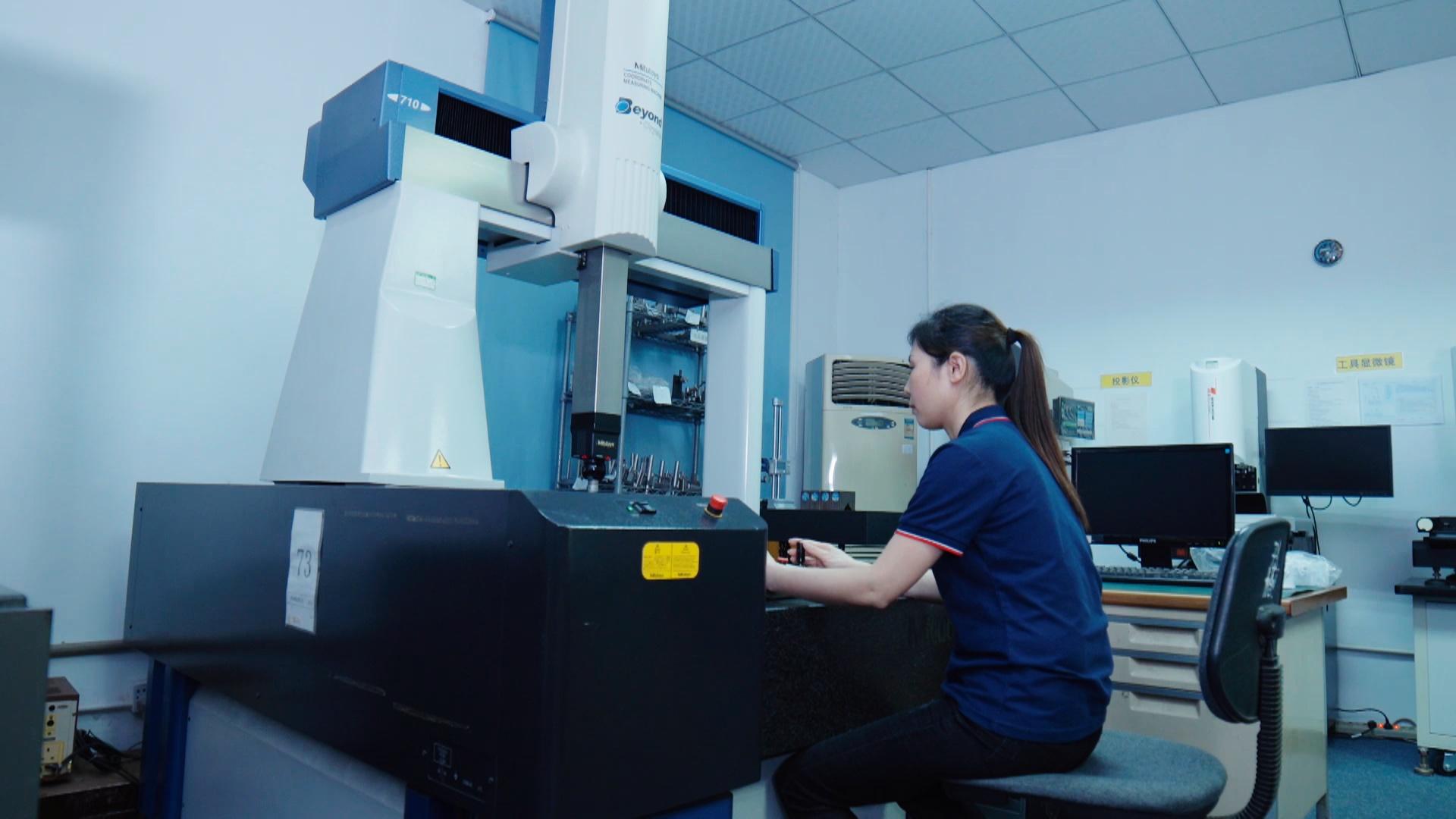
Quality measurement equipment used to verify components and finished scent diffusers before shipment. Source: Shenzhen Scentsea Technology Co., Ltd.
The Compliance Problem EU Buyers Face Before Sampling Starts
Most European procurement flows for a commercial scent diffuser look the same in the early stage. A buyer shortlists suppliers, requests a catalogue and a quotation, and then asks a question that immediately separates suppliers into two groups: can you send the compliance file for this exact model? Suppliers who can produce a traceable test report move forward; suppliers who answer with a general statement of conformity often do not.
The commercial reason is straightforward. Electrical and electronic equipment placed on the EU market must satisfy the applicable substance restrictions, and non-compliant goods can be blocked at import or withdrawn from the market. For a hotel lobby or a mall installation, the cost of a compliance failure is measured in project delay and re-procurement, not in the unit price of the equipment. That asymmetry is why documentation tends to be requested before samples are shipped in a competitive tender.
The opportunity sits on the other side of the same problem. As the commercial scenting category matures, certified models become easier to specify, easier to insure and easier to approve internally. A supplier that can hand a procurement manager a report number, a model designation and a laboratory name removes a decision risk that the buyer would otherwise carry all the way to installation. That is an argument for the category itself: compliance-ready equipment is what allows scenting to be written into a specification rather than negotiated as a discretionary purchase.
Directive (EU) 2015/863: What the Regulation Actually Covers
The EU restriction of hazardous substances framework — commonly known as RoHS — restricts the presence of specified hazardous substances in electrical and electronic equipment. Directive (EU) 2015/863 amended the original framework by extending the restricted substance list to include four phthalates, which are widely used as plasticisers in flexible plastics, cable insulation and coatings.
The restricted substances under the amended framework include lead, mercury, cadmium, hexavalent chromium, polybrominated biphenyls (PBB), polybrominated diphenyl ethers (PBDE) and the four added phthalates DEHP, BBP, DBP and DIBP. The framework sets maximum concentration values by weight of homogeneous material: the restriction applies to each material considered separately, not to the average of a finished assembly.
Applied to a machine such as the SC19, that scope is narrower than a buyer sometimes assumes. RoHS covers the electrical and electronic construction of the diffuser: the printed circuit board assembly and its solder, the display module, wiring, connectors, the power supply, and the metal and plastic enclosure materials. It does not cover the fragrance oil that the machine disperses, which is governed by separate fragrance safety standards such as IFRA rather than by RoHS.
Two practical consequences follow. First, a supplier can be fully RoHS-compliant and still fail a different part of EU market access, because RoHS sits alongside — not instead of — electrical safety, electromagnetic compatibility and, for wireless models, radio equipment requirements. Second, the substance categories that most often create RoHS risk in diffuser hardware are found in solder and cable materials, plated metal finishes and flexible plastics. Any supplier that changes a plating process, a cable supplier or a plastic compound can change its compliance position without changing the product's outward appearance.
Decoding Report ATL20240416327 for the SC19
Report number ATL20240416327, issued by Shenzhen ATL Testing Technology Co., Ltd., is a laboratory test report identifier rather than a government-issued licence. That distinction is important and often misunderstood in procurement. Under the RoHS framework, conformity is declared by the economic operator placing the product on the market; a third-party test report is the standard supporting evidence used to underpin that declaration. A report number is valuable precisely because it is traceable — a buyer or an auditor can quote it back to the issuing laboratory and confirm scope, date and applicant.
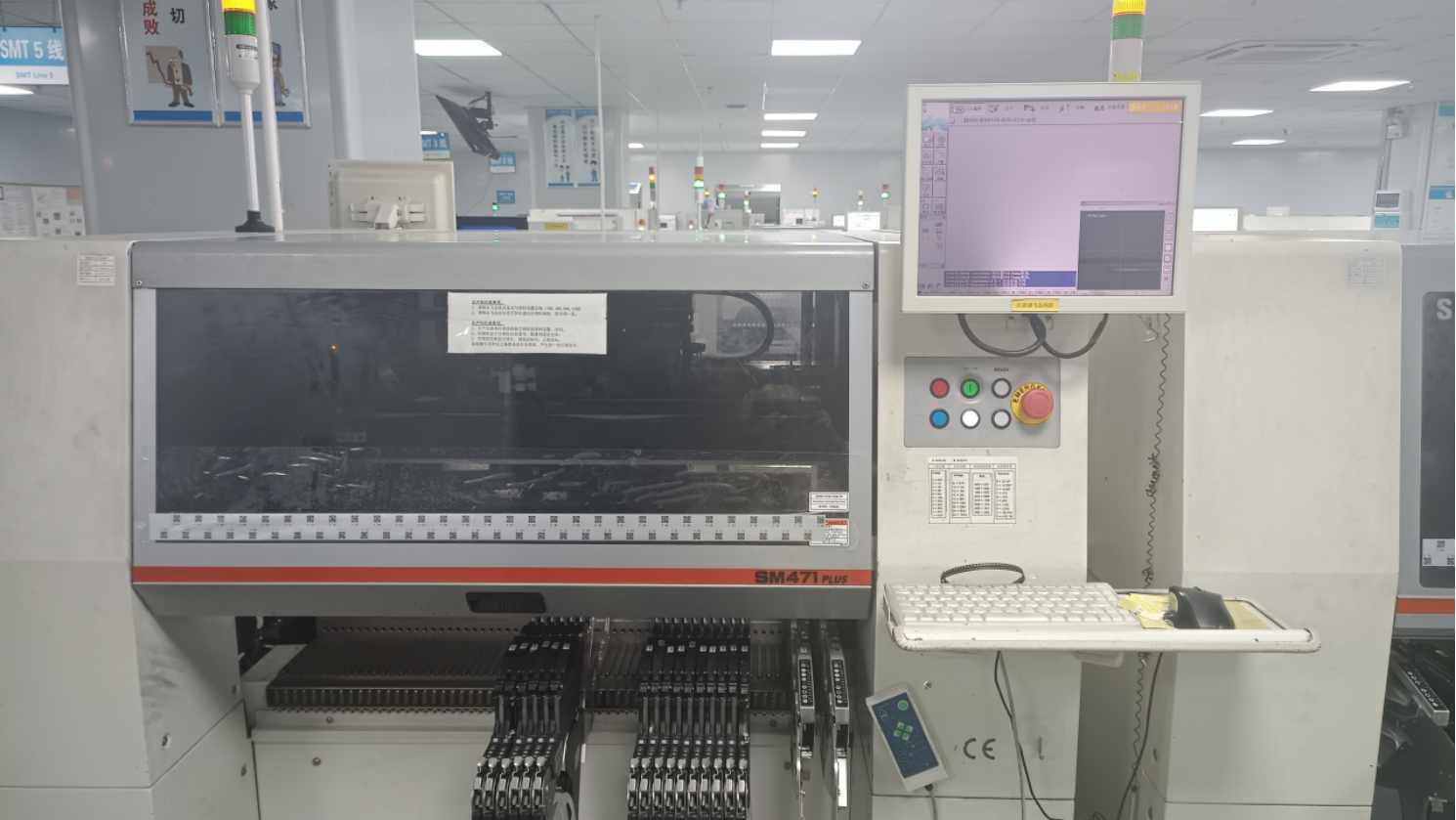
PCB SMT assembly: solder alloys, board materials and surface finishes are the components most directly governed by RoHS substance limits. Source: Shenzhen Scentsea Technology Co., Ltd.
What a buyer should verify inside the document
- Model match. The report should reference the SC19 designation exactly as it appears on the quotation, the packaging and the machine label. A report covering a sister model is not evidence for the model being ordered.
- Applicant identity. The applicant should correspond to the entity that will appear on the commercial invoice and the declaration of conformity — in this case Shenzhen Scentsea Technology Co., Ltd.
- Substance scope. The report should cover the current restricted list, including the four phthalates introduced by Directive (EU) 2015/863. Older reports limited to the original six substances do not address the current scope.
- Configuration coverage. The SC19 combines a diffusion system with an 18.5-inch display, 1920×1080 resolution and EMMC8G internal storage. If colour, plug type, control board or display supplier changes for a custom order, the buyer should confirm whether the existing report still applies to that configuration.
- Date and validity. Compliance reports are point-in-time documents. Buyers running multi-year rollouts should confirm the report reflects the current bill of materials rather than an earlier production batch.
How SCENTSEA's Quality System Supports the Certificate
All SCENTSEA diffuser models are certified with CE, RoHS and FCC, and the SC19 sits inside that certified range rather than outside it. Behind the certificate, Shenzhen Scentsea Technology Co., Ltd. operates a 3,000 m² facility with three production lines, a four-engineer R&D team, 20 patents and an annual output of 100,000 units. Every diffuser is checked before shipment through functional testing, aging testing and leakage inspection, and 48-hour aging testing is part of the pre-shipment routine.
For a procurement manager, the relevant question is not whether a factory owns testing equipment, but whether compliance-relevant processes are kept in-house. Substance risk is introduced at specific production points: PCB assembly, metal finishing, moulding and final assembly. SCENTSEA performs PCB SMT assembly, sheet metal processing and powder coating, injection moulding, parts assembly, testing and packaging within its own operation, which means the materials and processes most likely to affect RoHS status are controlled at the point where they are introduced.
That structure also supports customization without abandoning documentation. SCENTSEA provides OEM/ODM services covering logo customization, colour customization, exclusive mould development, app customization, user manual customization and private label packaging, with matching support for fragrance oils including scent selection, bottle labelling and private label packaging. Moq for diffusers starts from one piece, and diffuser and fragrance oil samples are available for quality verification — which lets a buyer validate both the compliance file and the physical product before committing to a bulk order.
Where the SC19 Fits: Application and Venue Context
The SC19 is an advertising scent machine for the shopping mall, hotel and bank segments: venues that need consistent fragrance across a defined interior space and can also use a digital display surface at the same point of installation. Its published parameters frame the deployment envelope clearly.
| Parameter | SC19 specification |
|---|---|
| Model / product type | SC19 / advertising scent machine |
| Coverage | 150–250 m² / 500–800 m³ / 1,500–2,500 ft² |
| Fragrance oil capacity | 500 ml |
| Voltage | 110–240 V AC |
| Power | 30 W |
| Oil consumption | 6 ml ±5% / h |
| Noise | ≤30 dB |
| Display | 18.5-inch screen, 1920×1080 resolution, EMMC8G internal storage |
| Material | Aluminium + steel |
| Net weight | 6.5 kg |
| Product size | L280 × W63.5 × H495 mm |
| Colour | Black + silver |
| Compliance | CE, RoHS and FCC across SCENTSEA diffuser models |
The ≤30 dB noise figure is the most operationally significant number for hospitality buyers. Across the SCENTSEA range, noise rises with output — the A300 is rated below 40 dB, the T2 below 45 dB, the H5000 below 45 dB and the T3 below 55 dB. A unit rated at 30 dB or lower is the appropriate choice where guests or customers are seated close to the installation point, which is precisely the situation in a hotel lobby or a bank branch with a waiting area. Combined with coverage of 150–250 m², the SC19 suits entrances, corridors, lift lobbies and mid-sized public areas rather than large open atria.
Installation follows the same discipline as any waterless cold-air unit: a location with unobstructed airflow, the machine kept upright, compatible fragrance oil, the correct power supply, and intensity adjusted to actual room size, ventilation and airflow rather than to the maximum rated coverage. Where the objective is a centralized fragrance distribution across a whole building, the correct equipment category is a dedicated HVAC scenting system such as the AC-MAX, which covers 2,500–3,500 m² with a 5 L capacity — not a standalone advertising machine.
Market Context: Regulation Is Tightening as the Category Grows
The compliance pressure on this category is not happening in a static market. Data Bridge Market Research values the global fragrance diffuser market at USD 29.61 billion in 2024, projected to reach USD 38.10 billion by 2032. Intel Market Research values the HVAC scent diffuser segment at USD 1.01 billion in 2024 with a projected CAGR of 4.5% through 2034. Ambient scent diffuser research places nebulizing, waterless cold-air technology at approximately 22.6% of market share, favoured for professional-grade scent potency in commercial environments.
Regulation is moving in the same direction on the fragrance side. IFRA 51 (2023) introduced stricter global safety standards for fragrance ingredients used in diffusers, affecting allowable usage levels for inhalation safety. Buyers therefore face two parallel documentation streams: substance and electrical compliance for the hardware, and fragrance safety documentation for the oil.
Comparison: Cold-Air Waterless Versus Ultrasonic, and What Each Cannot Do
The relevant technology comparison for commercial buyers is between waterless cold-air atomization and ultrasonic water-based aroma diffusion. The two are not interchangeable, and the difference is not primarily a matter of price.
| Comparison dimension | SCENTSEA waterless cold-air scent diffusers | Ultrasonic water-based aroma diffusers |
|---|---|---|
| Diffusion principle | Atomizes fragrance oil directly, without water or heat | Mixes water with a few drops of oil |
| Scent coverage | Approximately 2–35× wider coverage depending on model and application; range-wide coverage approximately 30–3,500 m² | Small residential coverage |
| Water requirement | 0% water addition required | Regular water refilling |
| Dedicated heating power | 0 W | Not applicable to the same claim |
| Operating time | Smart scheduling can cut scheduled operating time by up to 50%, for example running 12 hours instead of 24 | Continuous manual operation typical |
| Maintenance profile | No water refilling; less frequent cleaning | More frequent cleaning, refilling and replacement |
| Cost structure | Higher upfront cost, long-term cost approximately 40% lower over 5 years | Lower initial purchase cost |
| Best fit | Hotels, shopping malls, retail stores, offices, showrooms, spas, airports, commercial buildings and HVAC projects | Bedrooms and small rooms for light personal fragrance use |
The limits deserve the same attention as the advantages. Cold-air waterless equipment carries a higher upfront equipment cost than an ultrasonic unit, and the lower long-term cost is realised over years of commercial operation, not in the first purchase order. The SC19 itself is bounded by its 150–250 m² coverage: it is not the right machine for a large open atrium or for centralized distribution across a multi-zone building. And RoHS compliance, however well documented, does not make the SC19 legally complete on its own — it addresses substance restriction in the electrical and electronic construction, while electrical safety, electromagnetic compatibility, radio equipment requirements for wireless variants, and fragrance ingredient safety under IFRA are addressed separately. A buyer who treats a RoHS report as a complete EU market-access package is making the same category of error as a buyer who treats a supplier self-declaration as a test report.
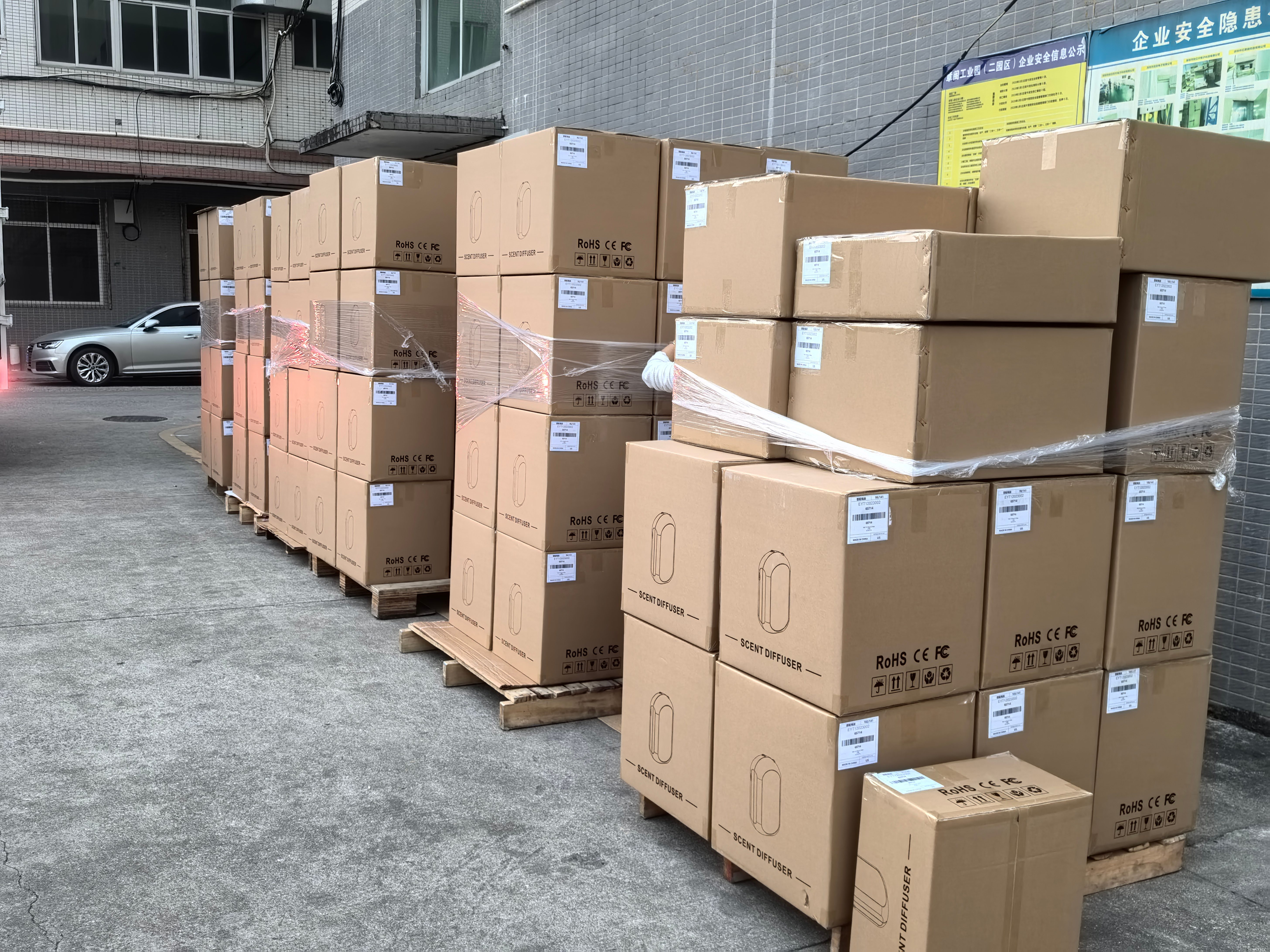
Export shipment preparation. Documentation scope must match the exact model and configuration leaving the factory. Source: Shenzhen Scentsea Technology Co., Ltd.
A Buyer's Verification Checklist Before Ordering
- Match the model. Confirm the report cites SC19, not a related model in the same family.
- Match the configuration. If you order customized colour, plug type, or a different control board or display, confirm in writing whether the existing report still covers that build.
- Match the substance scope. Confirm the report covers the current restricted list including the phthalates added by Directive (EU) 2015/863.
- Trace the number. Report number ATL20240416327 can be referenced back to Shenzhen ATL Testing Technology Co., Ltd.; buyers should verify scope and applicant directly where internal audit requires it.
- Complete the package. Request the applicable CE documentation alongside the RoHS report, and confirm radio equipment requirements where wireless control is part of the configuration.
- Verify the quality process, not only the certificate. Ask about functional inspection, atomization and leakage testing, control testing, aging testing before shipment, warranty terms and spare parts support.
- Test samples first. Sample validation before mass production is the standard way to confirm atomization performance, noise and coverage against the actual installation space.
Future Outlook
Two forces are likely to shape EU procurement for commercial scent diffusers over the next few years. The first is documentation depth: as substance regulation on hardware and fragrance safety standards on oils continue to develop, the compliance file that accompanies a machine will keep growing, and suppliers with in-house production control will find it easier to keep that file current than suppliers assembling from third-party components. The second is functional convergence. The SC19 already combines diffusion with an 18.5-inch display and internal storage, and the wider market is moving toward higher-endurance and smarter features — illustrated by Xiaomi's October 2024 launch of the Mijia Smart Aroma Diffuser with a 50-day battery life and app control via HyperOS. Machines that deliver scent and a second commercial function from the same installation point reduce the number of approvals and mounting points a venue has to manage.
For buyers, the practical conclusion is that compliance evidence is becoming a supplier-selection filter rather than a post-order formality. A model-level RoHS report with a traceable number, sitting alongside CE documentation and a factory process that controls its own soldering, finishing and moulding, shortens the path from shortlist to approved specification.
FAQ
What certifications are required for commercial scent diffusers sold in the EU?
Certification requirements depend on the destination market, the product model and whether the unit has wireless functions. For the European market, buyers should normally check applicable CE and RoHS compliance documents, and Bluetooth or Wi-Fi models may also need to meet RED (radio equipment) requirements. In the US market, applicable FCC compliance should be verified. Buyers should always confirm that the certificates and test reports apply to the exact production model being purchased.
Does a RoHS test report alone make a scent diffuser EU-compliant?
No. RoHS restricts hazardous substances in electrical and electronic equipment and covers the diffuser's electronic and electrical construction, such as board assemblies, wiring and enclosure materials. It sits alongside — not instead of — electrical safety, electromagnetic compatibility and, for wireless models, radio equipment requirements. Fragrance oil composition also falls outside RoHS and is addressed separately through fragrance safety standards such as IFRA. A RoHS report is one essential component of the compliance file, not the whole file.
How can a buyer verify that a specific RoHS report applies to the SC19?
Verification starts with matching the report to the order. The report should cite the exact SC19 model designation, name the applicant entity that will appear on the invoice and declaration, and cover the current restricted substance list including the four phthalates added by Directive (EU) 2015/863. For customized configurations, buyers should confirm in writing whether the existing report still covers the build being ordered, since changes to control boards, display modules, plating or plastic materials can change the compliance position.
What quality risks should buyers check before placing a bulk scent diffuser order?
Key quality risks include unstable atomization, oil leakage, excessive noise, unreliable app or control functions, and inconsistent performance between batches. Buyers should verify sample performance, quality control procedures, aging tests, certifications, warranty terms and spare parts support before ordering in volume. Products that have not undergone sufficient functional and aging testing carry higher risks of weak atomization, noise problems, leakage and control failures once installed across multiple sites.
Is a waterless cold-air diffuser better than an ultrasonic aroma diffuser for commercial use?
For commercial use, a waterless cold-air diffuser is generally the better fit because it atomizes fragrance oil without water, providing stronger and more consistent diffusion, larger coverage and lower daily maintenance. Ultrasonic water-based aroma diffusers mix water with a few drops of oil, offer smaller coverage, and require more frequent refilling and cleaning, which makes them better suited to small residential spaces and light personal fragrance use. The trade-off is cost structure: waterless cold-air equipment costs more upfront but has a long-term cost approximately 40% lower over five years in commercial operation.
What should buyers consider when choosing a commercial scent diffuser and supplier?
Choose the diffuser according to actual space size, ceiling height, airflow, installation method, oil capacity, noise level and control requirements rather than relying only on maximum coverage claims. For bulk purchasing, also evaluate the supplier's quality control, applicable certifications, production capability, warranty, spare parts support and delivery reliability. Sample testing before mass production is recommended, and buyers should avoid selecting on low price alone without verifying sample performance, quality control procedures, certifications and after-sales support.
Manufacturer details and the full SCENTSEA product range are documented in the company catalogue, available for download here: SCENTSEA CATALOG. Company information is also published at www.scent-sea.com.