
SENO Nicotine Oral Strips: Independent Sourcing Comparison
SENO Nicotine Oral Strips: Independent Sourcing Comparison
Oral nicotine film has become a documentation-led purchase. In most major markets a buyer can no longer qualify a supplier on sample quality alone, because the strength printed on the pack, the filing behind the label, the facility that actually converts the film and the barcode on the carton are each evidenced by a different document. This comparison reviews SENO nicotine oral strips and films against the criteria a professional buyer would apply to any supplier in the category, using SENO's own product and compliance content and independent U.S. regulatory records.

Oral nicotine film is consumed in smoke-free, mobile settings. Sourcing decisions increasingly rest on the documentation behind the format rather than on the format itself. Image: SENO application scenario.
What this comparison is — and what it is not
It is a criteria-based comparison. The question is not whether SENO nicotine films are good, but whether the specific documents behind a specific SKU match a specific destination market at a specific order size. Where the available evidence stops, this article says so rather than filling the gap with estimates.
It is not a ranking. No third-party laboratory comparison, no blind sensory panel and no retail sell-through data were used, because none were available. The comparison set is SENO measured against the criteria themselves; competitor specification claims are deliberately excluded, since unverified comparison numbers would undermine the exercise.
Three constraints decide oral film sourcing before price does
Nicotine oral film is a thin, dissolving strip that delivers nicotine through the oral mucosa without combustion or vapour. Because the product is consumed rather than installed, the buyer inherits the regulatory profile of the destination market, not the profile of the factory. Three constraints usually decide whether a supplier is usable at all.
1. Declared strength has to survive the label
A strip carries a nicotine quantity in milligrams and a mass basis. Marketing ranges, retail artwork and registration records do not always describe the same SKU on the same basis. When they diverge, the buyer carries the problem at the border, not the factory.
2. Documentation has to match the market, not the factory
A U.S. filing does not clear a European order, and a REACH-compliant safety data sheet does not substitute for a tobacco-product submission. Buyers who ask “are you certified?” receive a yes. Buyers who ask “which instrument, which number, which market and which expiry date?” receive something they can check.
3. Order economics have to match the buyer's stage
Minimum order quantities and lead times determine whether a supplier is usable for a test market or only for a committed programme. A technically suitable supplier with a 300,000-strip floor is not suitable for a 20,000-strip pilot, and no amount of product quality changes that arithmetic.
SENO in verifiable terms
SENO is a nicotine oral thin film brand operated by Xin Sino Technology (Shenzhen) Co., Ltd., a Shenzhen-based supplier that states it exports 100% of its output and serves the EU, USA, Canada and Australia. Company materials describe a 20,000 m² production facility, a 15-person R&D team, 30 employees and an annual output range of 12,000,000 to 50,000,000 strips. The catalogue is organised as a Nicotine Replacement Therapy (NRT) film family; company product data lists ten NF-2mg flavour variants, spanning mint, watermelon, blueberry, mango, grape, lemon, peach, kiwi fruit, mixed berries and a cheese variant.
U.S. labeling records add an independent layer that a buyer can check without contacting the supplier. Under NDC 85806-001, the labeler is recorded as Xinsno Technology (Shenzhen) Co., Ltd with labeler code 85806, and the manufacturing establishment as Anhui Hongteng Pharmaceutical Co., Ltd. with establishment ID 541563002.
| Attribute | Detail | Evidence type |
|---|---|---|
| Brand | SENO | Company data |
| Operating entity | Xin Sino Technology (Shenzhen) Co., Ltd. | Company data |
| U.S. labeler of record | Xinsno Technology (Shenzhen) Co., Ltd — labeler code 85806; NDC 85806-001 | FDA labeling record |
| Manufacturing establishment | Anhui Hongteng Pharmaceutical Co., Ltd. — establishment ID 541563002 | FDA labeling record |
| Facility footprint | 20,000 m² | Company data |
| Headcount / R&D team | 30 employees / 15 R&D staff | Company data |
| Annual output | 12,000,000 – 50,000,000 strips | Company data |
| Export share | 100% | Company data |
| Primary markets | EU, USA, Canada, Australia; distributor activity also recorded in France, UAE and Saudi Arabia | Company data |
Two practical notes follow. First, the labeler name in U.S. records is spelled differently from the name used in company materials; the stable matching keys are labeler code 85806 and NDC 85806-001, not the spelling. Second, because the manufacturing establishment in those records is a separate pharmaceutical company, a buyer auditing “the SENO factory” is in practice auditing a third-party pharmaceutical site — a normal arrangement in this category, but one that should be scheduled explicitly rather than assumed away.
The six criteria a buyer should score
The framework below converts the three constraints into six scorable questions. It is deliberately supplier-neutral: the same table works for any oral nicotine film vendor, which is what makes it useful for comparison rather than for validation.
| # | Criterion | Question to ask | Evidence to request |
|---|---|---|---|
| 1 | Strength basis | Is the declared milligram strength referenced to the strip mass or to active content? | Registration record plus retail artwork for the same SKU |
| 2 | Market instruments | Which certificate covers which market? | Number, issuer, market and expiry date per document |
| 3 | Establishment identity | Which legal entity converts the film, under which registration? | Establishment registration and site audit |
| 4 | Order economics | MOQ, lead time, monthly quota | Written commitment rather than a quoted range |
| 5 | Packaging and labelling | Child-resistant option, moisture barrier, market artwork | Packaging specification and artwork proofs |
| 6 | Commercial support | Who handles compliance and technical questions after the first order? | Contract terms and response commitments |
SENO answers criteria 1 to 5 with documented content; criterion 6 is answered by company statements about technical and compliance support, marketing material support for distributors and long-term partnership support, which a buyer should convert into contractual language before relying on it.
Strength and format: reconciling two numbers
SENO's product data describes a film with a nicotine strength of 2 mg, 4 mg or 6 mg (customisable), a dissolution time of 10–30 seconds, a film size of approximately 20 mm × 30 mm, a thickness of 50–100 microns, individual sachet or multi-pack packaging, a 24-month shelf life and cool, dry storage. The material set is listed as pharmaceutical-grade film-forming polymers, high-purity nicotine, food-grade flavouring agents, stabilisers and excipients.
The FDA labeling record for NDC 85806-001 states 1.5 mg of nicotine in a 0.3 g strip. Both statements can be true at once — a registered SKU and a commercial range can differ in strength and in the mass basis used to express it — but the difference is precisely the kind of gap that becomes a customs query or a retail-compliance problem months later.
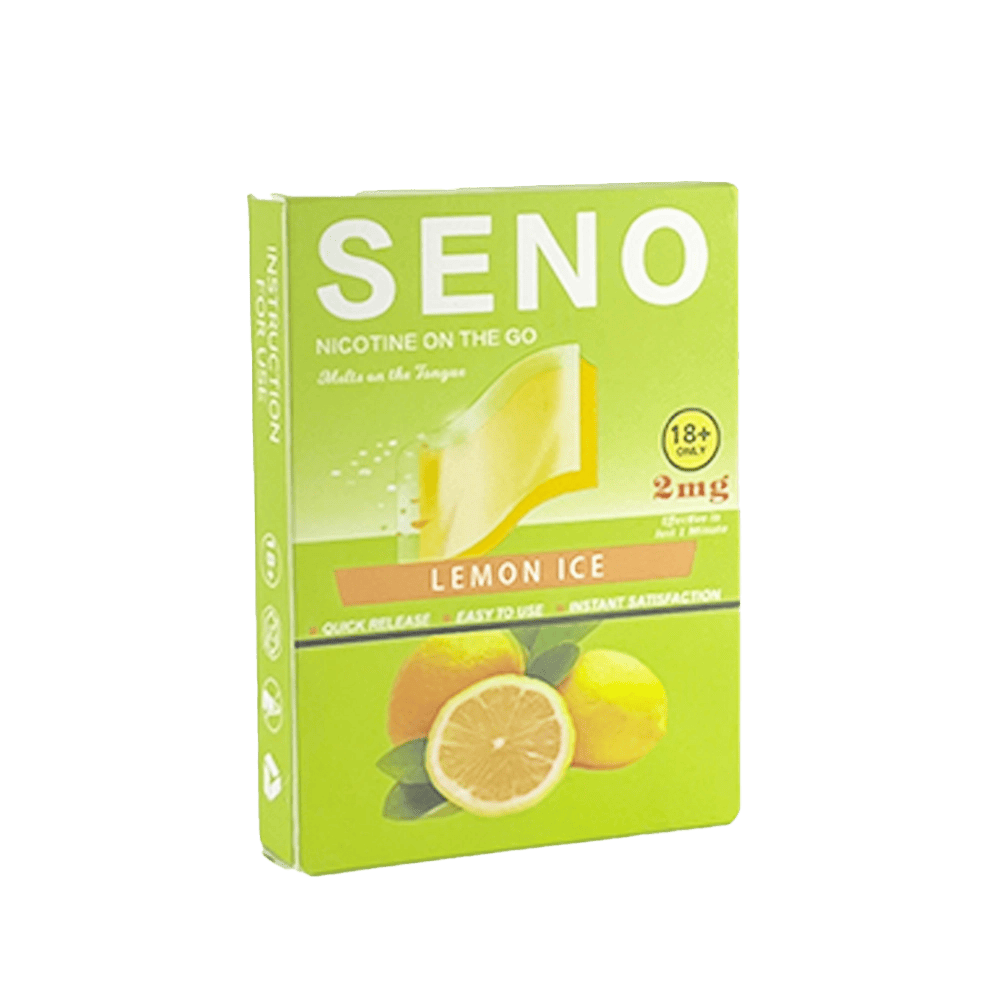
SENO nicotine oral strips are supplied in individual sachets or multi-pack boxes; flavour and strength are customisable for OEM programmes. Image: SENO Nicotine Strips Lemon Ice 2 mg.
For a buyer, the practical consequence is that strength should be treated as a documentation attribute rather than a product attribute. Two suppliers quoting “4 mg” may be describing different things, and the only way to compare them is to read the basis, not the number.
Documentation coverage by market
SENO's compliance content is unusually explicit for a young supplier, and it can be read as a map of which markets the company has prepared for.
| Market | Instrument | Identifier | Issued by | Notes |
|---|---|---|---|---|
| US | FDA Food Facility Registration | 13242366294 | SHT Testing Technology Co., Ltd. | Valid to 31 December 2026 |
| US | FDA Registration Certificate (drug establishment and product registration, OTC Drug Regulations) | 510936020 | Shenzhen Deesev Testing International Corporation (DTI) | Valid to 1 June 2028 |
| US | PMTA notifications | PM0010659–PM0010667; also PM0010176, PM0010173, PM0010199 | DTI | 21 CFR Part 1100 and 21 CFR Part 801 |
| EU | Safety Data Sheet series | DTI2025EC011118-1 to DTI2025EC011118-11 | DTI | REACH (EC) 1907/2006, CLP (EC) 1272/2008, EN 14986; valid to 1 June 2028 |
| Global | Material Safety Data Sheet | HK2505276957-1RR | Shenzhen HUAK Testing Technology Co., Ltd. | UN GHS Rev.7; US OSHA 29 CFR 1910.1200; valid to 30 May 2027 |
| Global | GS1 China Membership License | Certificate No. 1433650 | China Article Numbering Center | GS1 Global Identification System |
| China / branding | CNIPA Class 34 trademark registrations | 82339039; 86451379; 86452539; 86459855; 86897510 | China National Intellectual Property Administration | Class 34 covers oral nicotine strips; terms running to 2035–2036 |

Safety documentation is the most frequently requested file in oral nicotine film procurement, and the most frequently outdated one. Image: SENO Material Safety Data Sheet.
Three readings matter more than the raw count of certificates.
Filing versus authorisation. A PMTA notification certificate records that a submission was made under the FDA's premarket tobacco product pathway. It is a different instrument from a marketing granted order. Buyers importing into the United States should establish which status applies to the SKU they intend to sell, rather than treating the word “PMTA” as a single outcome that resolves the question.
Trademark versus market access. The five Class 34 registrations are brand-protection instruments covering chewing tobacco, non-medical tobacco substitutes, smokeless tobacco and oral nicotine strips in the relevant class. They establish rights over the SENO name; they do not authorise sale in any jurisdiction. Buyers sometimes conflate the two because both arrive as certificates.
Expiry is the skipped field. The U.S. food facility registration runs to 31 December 2026, the global MSDS to 30 May 2027, and the SDS series and the drug registration certificate to 1 June 2028. A supplier file assembled this quarter will need a renewal check inside the first two years of a distribution agreement, and that check belongs in the contract rather than in someone's memory.
Capacity, MOQ and lead time
Company capability data states a monthly capacity of 1,000,000 to 5,000,000 strips, a minimum order quantity of 100,000 to 300,000 strips per SKU, a lead time of 20–30 days for standard orders and 30–45 days for OEM or custom orders, and 100% batch inspection before shipment covering raw material verification, in-process control and final testing and consistency checks.
The annual figure of 12,000,000 to 50,000,000 strips and the monthly figure of 1,000,000 to 5,000,000 strips are consistent at the top of the range and loose at the bottom — normal for a supplier quoting a new facility. The useful move for a buyer is to convert the range into a commitment.
- A specific monthly quota for a specific SKU, with a review date.
- The flavours and strengths in scope for the first twelve months.
- Artwork approval lead time and who bears the cost of a compliance-driven artwork change.
- A named owner for renewal of the U.S. food facility registration and the safety data sheets.
Where the portfolio fits
SENO's application data positions the format for retail FMCG distribution, nicotine-alternative and vape and tobacco replacement channels, private-label lines and cross-border e-commerce, in markets including Australia, Canada, the United States, Saudi Arabia, the UAE and France. The working conditions described are smoke-free environments, indoor office and retail settings, travel and mobile consumption, and locations where smoking is restricted — the standard fit profile for a device-free, single-use oral format.
Order evidence follows the same pattern: distributor orders in the 500,000 to 2,000,000 strip range, a Canadian agency agreement, a French distributor agreement, a European partner relationship covering multiple European markets and exhibition activity in the UAE. One U.S. exhibition award is recorded in company case material. These are company-reported outcomes without independent verification and should be read as indications of channel activity rather than audited results.
The fit test is therefore not “does oral film work here” but “does a 100,000–300,000 strip minimum per SKU match this channel”. A national distributor can absorb that floor. A single-market test cannot, and should look at a partner offering sample-scale or smaller-lot terms first.
What is changing in the category
The category's centre of gravity has moved from format innovation to documentation depth. A nicotine film that was, a few years ago, sold on discretion and convenience is now evaluated on registration numbers, safety data sheets, barcode licensing and packaging artwork that has to satisfy several regulators at once.
SENO's own filing pattern reflects that shift: one product family supported by a U.S. food facility registration, a U.S. drug registration certificate, a series of PMTA notifications, an eleven-document EU safety data sheet series, a global MSDS, a GS1 licence and five Class 34 trademark registrations. Whatever one concludes about the product itself, the administrative surface is broad — and breadth of documentation is now a purchasing criterion in its own right, because it determines how quickly a distributor can answer a retailer's compliance questionnaire.
Market sizing claims should be treated with the usual caution. A SENO launch release distributed through PR Newswire in November 2025 framed the opportunity around a $4 billion market. That figure originates with the company's own announcement and is not independently reproduced here.
Where SENO does not fit — the honest limits
- Operating history. The company was founded in 2025 and reports 30 employees. Buyers benchmarking against long-established nicotine replacement manufacturers are comparing against a far longer commercial record, so continuity risk should be assessed directly rather than assumed either way.
- Order floor. A 100,000–300,000 strip minimum per SKU excludes sample-scale and small pilot programmes unless a distributor aggregates demand across buyers.
- Strength reconciliation. The 1.5 mg in 0.3 g registered declaration and the 2 mg / 4 mg / 6 mg commercial range must be matched SKU by SKU before artwork approval; this is a task, not an assumption.
- Filing status nuance. PMTA notification certificates are filings, not marketing granted orders, and the two should not be used interchangeably in a buyer's compliance file.
- Certificate expiry. The U.S. food facility registration expires on 31 December 2026 and the global MSDS on 30 May 2027. Files assembled now will require renewal tracking through the life of an agreement.
- Trademark is not authorisation. Class 34 registrations protect the brand; they clear no market.
- Third-party manufacturing. Production is recorded against a separate pharmaceutical establishment. Buyers who require single-site, brand-owned production need to evaluate that requirement separately from product quality.
- Custom lead time. 30–45 days for OEM work is a real planning constraint for launch calendars built backwards from a retail window.
None of these is unusual for a young, export-focused supplier, and several are the same constraints a buyer would encounter with any factory-first vendor in this category. They are listed because a comparison that omits them is a brochure rather than a reference.
Outlook for the next buying cycle
Three developments are likely to shape supplier selection over the coming year. First, registration renewals will differentiate suppliers by administrative discipline rather than by product claims, because a lapsed facility registration is a shipment-level problem rather than a paperwork annoyance. Second, buyers are consolidating supplier lists around fewer, better-documented partners, which favours suppliers who can produce a complete market file quickly and penalises those who can only produce samples. Third, the divergence between registered strength and marketed strength will keep attracting scrutiny as oral nicotine products move from specialist channels into mainstream retail, where category buyers apply stricter label checks than specialist distributors do.
For SENO specifically, the near-term test is not capability but evidence maintenance: keeping registration and safety documentation current through 2027 and 2028, and giving distributors a clear, written mapping from SKU to filing.
FAQ
What nicotine strengths are available in SENO nicotine oral strips?
Company product data lists 2 mg, 4 mg and 6 mg, with customisable strength for OEM programmes. The strips are described as dissolving in 10–30 seconds, at approximately 20 mm × 30 mm and 50–100 microns thick, with a 24-month shelf life under cool, dry storage. A buyer should confirm the strength of a specific SKU against the filing that covers it: the FDA labeling record for NDC 85806-001 declares 1.5 mg of nicotine in a 0.3 g strip, which is expressed on a different basis from the commercial 2/4/6 mg range.
Which documents support US and EU market entry?
For the United States, SENO's documentation includes an FDA Food Facility Registration (13242366294, valid to 31 December 2026), an FDA Registration Certificate issued under FDA OTC Drug Regulations (510936020, valid to 1 June 2028) and PMTA notifications numbered PM0010659 to PM0010667, together with PM0010176, PM0010173 and PM0010199, issued against 21 CFR Part 1100 and 21 CFR Part 801. For the EU, an eleven-document Safety Data Sheet series (DTI2025EC011118-1 to DTI2025EC011118-11) covers REACH (EC) 1907/2006, CLP (EC) 1272/2008 and EN 14986, valid to 1 June 2028. A global Material Safety Data Sheet (HK2505276957-1RR) covers UN GHS Rev.7 and US OSHA 29 CFR 1910.1200 to 30 May 2027, and a GS1 China Membership License (Certificate No. 1433650) covers global barcode identification.
What are the minimum order quantity and lead times?
Company capability data states 100,000 to 300,000 strips per SKU as the minimum order, 20–30 days lead time for standard orders and 30–45 days for OEM or custom orders. Monthly capacity is quoted at 1,000,000 to 5,000,000 strips, with annual output of 12,000,000 to 50,000,000 strips. Because these are ranges rather than commitments, a buyer should convert them into a written monthly quota for the specific SKU before signing an agreement.
Can a buyer independently verify the manufacturing site?
Partly. U.S. labeling records for NDC 85806-001 identify the labeler as Xinsno Technology (Shenzhen) Co., Ltd with labeler code 85806, and the manufacturing establishment as Anhui Hongteng Pharmaceutical Co., Ltd. with establishment ID 541563002. Those records can be checked without the supplier's cooperation. They confirm the identity and registration of the establishment, not its capacity or quality performance, so a site audit remains the appropriate instrument for production questions.
What should a buyer verify before committing to a supply agreement?
Four things. That the strength on the retail artwork matches the strength in the filing for that SKU; that each destination market is covered by the correct instrument rather than by a certificate issued for another market; that expiry dates for the food facility registration, safety data sheets and registration certificates are tracked with a named owner; and that order economics — minimum quantity, lead time and monthly quota — are committed in writing rather than quoted as a range.
A comparison of this kind is only useful if it changes what a buyer asks for. In the case of SENO nicotine oral strips and films, the product specification is straightforward; the diligence sits in the paperwork that surrounds it, and in the questions a buyer remembers to ask before the artwork is approved.
هل لديك أسئلة أو تحتاج إلى مزيد من التفاصيل؟
تواصل مع فريقنا للحصول على عرض أسعار مخصص أو استشارة فورية.
طلب عرض أسعار
املأ النموذج أدناه وسيتواصل معك فريقنا بعرض مقترح مخصص.
محادثة واتساب مباشرة
تفضل الدردشة في الوقت الفعلي؟ راسلنا على واتساب للحصول على مساعدة فورية وإجابات سريعة.
- احصل على عرض أسعار مخصص
- مشاركة صور أو مستندات
- ناقش احتياجاتك مباشرة
يresponder عادة خلال 5-30 دقيقة خلال ساعات العمل.