
SGS, ISO 9001 and What They Mean for ZLQ-1 and ZLQ-03
Certification language moves faster than certification evidence in the resistance band trade. A buyer comparing latex resistance bands, TPE resistance bands, fabric resistance bands or pull up assist bands will routinely meet three very different claims compressed into the same shorthand: “ISO certified”, “SGS tested”, and “patented design”. Each refers to a different document, issued by a different party, and each answers a different question about a supplier. Treating them as interchangeable is one of the more common and more expensive mistakes in category sourcing.
This reference separates those document types, then applies them to model-level acceptance criteria for two documented products from Libenli: the ZLQ-1 mini loop band and the ZLQ-03 power loop band. Haiyang Libenli Body-Building Apparatus Co., Ltd. (Libenli) is a China-based manufacturer and exporter established in 1997 that designs, develops and produces latex tubing and latex resistance bands, and exports to Germany, the USA, the UK, France and Canada.

Why certification claims are difficult to compare in this category
Resistance bands sit in an unusual documentation space. They are elastic consumer and professional training products, often made from natural latex, TPE or fabric, sold through gym equipment distributors, rehabilitation suppliers, retail chains and marketplaces. The market is broad and the product is simple, which means the paperwork around it is often thinner than the paperwork around comparable fitness hardware.
Two consequences follow. First, suppliers use certification vocabulary partly because buyers ask for it and partly because it compresses several unrelated facts into a single reassuring word. Second, buyers who do not separate the document types end up writing purchase orders that specify a certificate but not a product, leaving thickness, width, resistance range and durability undefined.
A workable rule for the awareness and research stage is this: certifications describe the supplier and the tested sample; specifications describe the shipment. Both are needed, and neither replaces the other.
The four documents behind most certification claims
Most supplier documentation in this category resolves into four document families. They differ in issuer, in scope, and in what a buyer may reasonably infer from them.
| Document | Typically issued by | What it supports | What it does not settle |
|---|---|---|---|
| ISO 9001 quality management system certificate | An accredited certification body | That a management system was assessed against the standard for a defined scope and period | The force, thickness, tolerance or fatigue life of any individual band |
| ISO 9000:2000 quality certification | A certification body | Documented adherence to the quality management family of standards at the time of certification | Product-level performance or current edition currency |
| Third-party test or certification report (for example SGS) | An independent inspection, testing and certification company | That specific samples were tested against a named method or specification, for the models and scope listed | That every catalogue item, colour step or later batch carries the same result |
| Patent grants | A patent office | That a design or utility model was granted protection | Compliance, material safety or manufacturing consistency |
A useful distinction inside the first two rows: ISO 9000 and ISO 9001 belong to the same family of quality management standards, and ISO 9001 is the standard against which a management system is most commonly certified. A certificate therefore provides evidence about process discipline — document control, supplier control, corrective action — which matters for repeat orders, but it is not a product test.
What Libenli documents, in its own terms
Libenli’s documented position is specific enough to be checked rather than merely read. The company states that it holds ISO 9000:2000 quality certification from 2005 and ISO 9001:2008 quality management system certification from 2010, and that most of its products are certified by SGS. The company also states that it holds a 3A credit rating certificate issued by the Ministry of Commerce of China and CCPIT.
On the production side, the company reports a 50,000 square metre factory, approximately 300 employees and an R&D team of 20 engineers. Capacity is described as 24 dedicated production lines for dipped latex tubing at a daily output of 120,000 metres, plus 2 dedicated latex band lines at a daily capacity of 25,000 metres, with annual production capacity reported at 65,000,000 units. Export business accounts for 70% of total sales. The company also reports 2 invention patents and 18 utility model patents.
Four of these items are certificate-type evidence (two ISO documents, SGS coverage, the 3A rating); two are intellectual property; the remainder are capacity and market facts. For a buyer at the research stage, the practical reading is that the supplier maintains a documented quality system, has third-party testing coverage described as applying to most products, and operates at a scale consistent with export-oriented band manufacturing. What the public material does not contain is a model-by-model third-party test report, which is the gap discussed later in this article.
Model-level compliance: reading a spec sheet beside a certificate
The ZLQ-1 and ZLQ-03 sit at opposite ends of the loop band spectrum, and their documented parameters are the material that turns a general certificate claim into an acceptance criterion.
| Parameter | ZLQ-1 mini loop band | ZLQ-03 power loop band |
|---|---|---|
| Category | Mini loop band with anti-slip design | Power loop band, also offered as double layer power loop band |
| Material | Latex or TPE | Latex |
| Thickness | 0.3 mm – 1.2 mm | 0.45 mm |
| Width | 50 mm | 6.4 mm – 82.5 mm |
| Length / circumference | Circumference 600 mm | Length 2080 mm |
| Resistance level | 5 LB – 40 LB | 8 LB – 230 LB |
| Durability reference | Fatigue resistance ≥ 30,000 stretches | Service life ≥ 20,000 stretches |
| Documented applications | Home fitness, yoga and pilates, hip and glute training, sports rehabilitation, physical therapy, gym training equipment | Fitness gym, home workout, sports rehabilitation, yoga training, physical therapy, outdoor training |
Read together, the two models cover an unusually wide band of demand. The ZLQ-1 works at the low-tension end: a 600 mm circumference, 50 mm width and 5 to 40 LB range place it in the mini loop band, booty band and rehabilitation assistant category. The ZLQ-03 is a long resistance band in the pull up assist band sense: 2080 mm length, up to 82.5 mm width and 8 to 230 LB, which is the range gyms and team training programmes use for assisted pull-ups and heavy elastic loading.
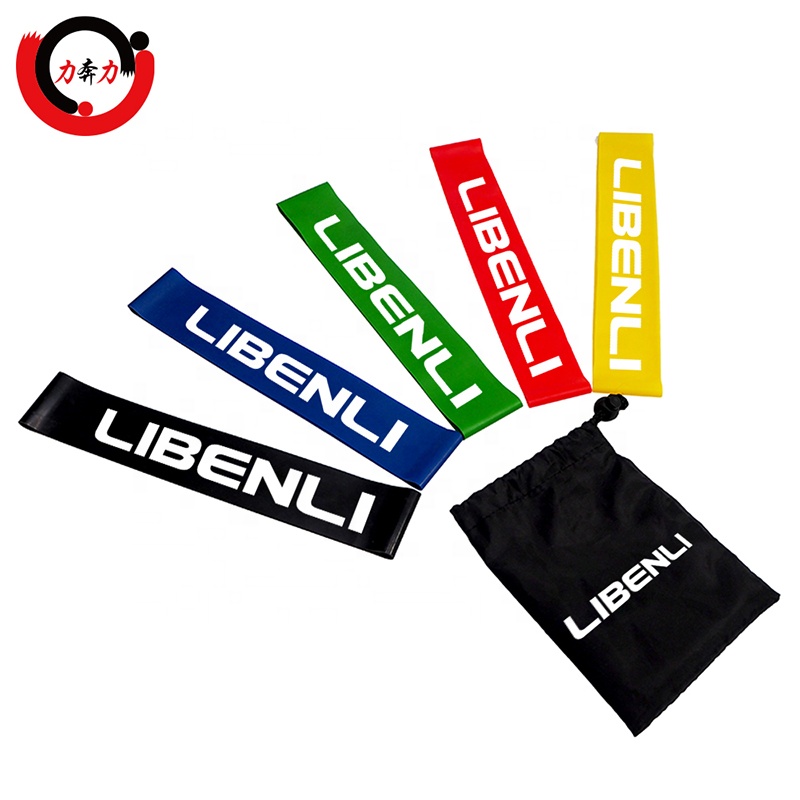
The reason this table belongs in an article about certification is simple. A quality management certificate will not tell a buyer that a mini loop is 50 mm wide or that a power loop reaches 230 LB. Those values come from the product specification, and they are the values that must appear in a purchase order, an incoming inspection sheet and a private label approval form. Certification supports confidence in the process that produces those values; it does not substitute for them.
Turning certificates into acceptance criteria
A documentation review is only useful if it changes what gets written into the commercial documents. Six checks convert the certificate conversation into procurement terms.
- Request the certificate itself, not the claim. The ISO 9001:2008 and ISO 9000:2000 documents should be supplied as copies showing the issuing body, the certified scope, the edition of the standard and the validity period. An edition reference from 2008 is an earlier edition of the standard, so buyers who require a current edition should confirm that separately rather than assume it from marketing copy.
- Establish what the SGS coverage includes. Libenli states that most products are certified by SGS. “Most” is not “all”, and a report written for one model does not automatically extend to another model, a different colour step or a different material. Ask for the model list and the material scope on each report.
- Name the model on the order. ZLQ-1 and ZLQ-03 are distinct products with distinct parameters. Blanket references to “resistance band” or “pull up band” leave room for substitution between a mini loop and a power loop.
- Specify dimensions, resistance and durability. Thickness, width, circumference or length, resistance range and the stretch-life reference should be written explicitly, because these are the values published for each model.
- Agree tolerance and test method in writing. Published ranges describe a series, not the individual colour step inside it. Tolerance bands and the method used to verify resistance should be agreed as a written annex, since calibration discipline is what makes a resistance level repeatable across orders.
- Separate material declaration from compliance declaration. ZLQ-1 can be supplied in latex or TPE, while ZLQ-03 is latex. For latex-sensitive end users, or for markets that scrutinise material statements, the chosen material belongs in the specification alongside any third-party document.
Which standards may be relevant, and what they do not decide
Beyond supplier certificates, two published standards are frequently raised in buyer conversations about elastic training products.
ISO 20957-2:2020, and its 2024 edition (ISO 20957-2:2024), specify safety requirements for stationary strength training equipment, and the scope explicitly covers equipment using alternative means of resistance such as elastic cords. Whether a standalone loop band falls inside that scope depends on the product configuration and its intended use. The standard is a reference point for test planning, not an automatic verdict on a band.
ASTM International lists ASTM F2276-23 as a standard specification for fitness equipment among its sports and recreation standards. Again, listing is not the same as mandatory application, and the source does not establish that the specification was written specifically for standalone resistance bands.
Customs documentation is a separate matter again. UK tariff guidance in notice 18 (2022) states that simple resistance bands or fitness bands without features identifying them as general physical exercise articles may be classified according to constituent material, with headings such as 4008, 4016 and 6307 mentioned. Classification therefore depends on objective characteristics and material rather than on a quality certificate. A buyer who treats an ISO or SGS document as a customs answer is likely to misstate landed cost.
Application fit: where each model is normally evaluated
The documented application lists matter for compliance review because they define the environments in which the product is expected to perform, and therefore the conditions a test plan should reflect.
The ZLQ-1 is documented for home fitness, yoga and pilates, hip and glute training, sports rehabilitation, physical therapy and gym training equipment. Its anti-slip design and 600 mm circumference suit short-loop work where the band is held under tension at low to moderate load. For clinic and rehabilitation buyers, the latex or TPE material choice is the first question to resolve, because it determines the allergen profile rather than the resistance level.
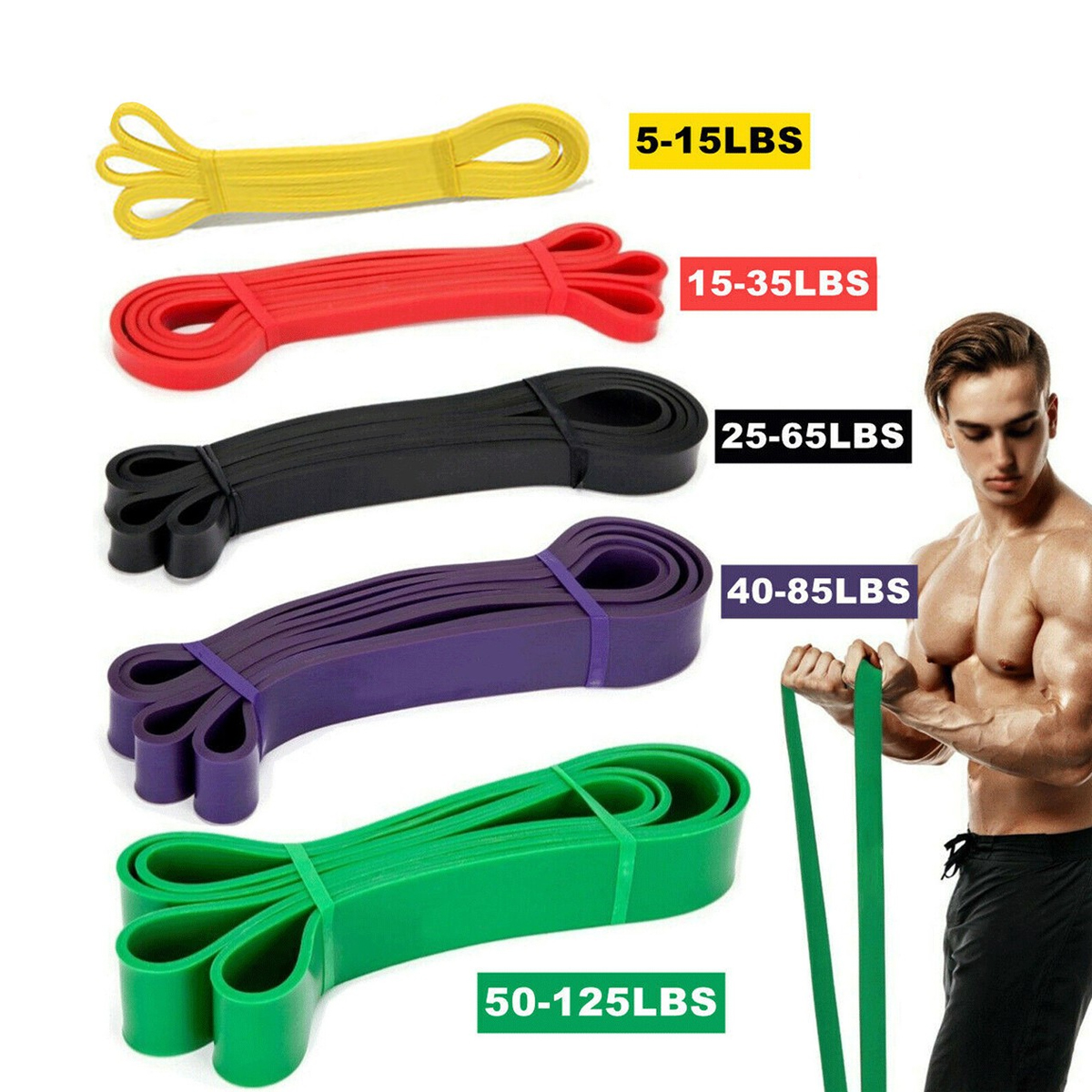
The ZLQ-03 is documented for fitness gym, home workout, sports rehabilitation, yoga training, physical therapy and outdoor training. Long-format bands are exposed to higher loads and to harsher handling, including outdoor use, which is why its published service life is expressed as at least 20,000 stretches against the 30,000 fatigue-resistance reference of the smaller mini loop.
For distributors building a resistance band set, the two models behave as complementary components: mini loops for the rehabilitation, booty band and pilates end of the range, power loops for the pull-up assist and heavy elastic segment. A single certificate discussion covering both is reasonable, but a single specification covering both is not.
Certified manufacturer, intermediary, marketplace: a documentation comparison
The traditional alternative to a documented manufacturer relationship is not a different certification; it is a different supply route. The table below compares three common routes on documentation characteristics only, without asserting that any single route guarantees a better product.
| Criterion | Documented manufacturer | Trading intermediary | Open marketplace listing |
|---|---|---|---|
| System certificate traceability | Certificate held in the producer’s own name | Usually held by the upstream factory; scope must be confirmed | Frequently unavailable or unverifiable |
| Model-level parameter control | Parameters documented per model and negotiable in the order | Depends on factory disclosure | Marketing-level descriptions, rarely tolerance-level |
| Change control between batches | Manageable through a documented quality system | Indirect | Typically not addressable |
| Main limitation | Requires direct audit and report requests; certificate editions must be checked | Documentation claims can outrun the producer’s actual scope | Little recourse if specifications drift |
The honest boundary is that a documented manufacturer relationship costs more administrative effort at the start. Certificate copies, scope clarifications and model-level specification annexes all consume time before the first order, and that effort is only recovered across repeat shipments or private label programmes.
Market context: documentation as a purchasing variable
Grand View Research valued the global resistance bands market at USD 1.7 billion in 2024 and projected a compound annual growth rate of 9.9% for 2025 to 2030. Market size estimates in this category vary between research providers depending on segment definitions, so the growth direction is more useful to buyers than the absolute figure.
Product composition has broadened alongside that growth. Industry research describes resistance bands as typically manufactured from latex, TPE or fabric, and segments the category into therapy bands, pull-up bands and exercise bands. Each material and each segment brings its own documentation expectations: latex raises material-declaration questions, fabric raises construction and stitching questions, and pull-up bands raise load-bearing and durability questions.
The standards landscape reinforces the direction. The existence of a 2020 and a 2024 edition of ISO 20957-2 for strength training equipment using elastic cords indicates ongoing attention to elastic resistance safety. Buyers who can read certificate scope, model parameters and standards applicability separately are better positioned as that attention increases.
Where the documentation stops
Any credible reading of certification has to include its limits, and in this category the limits are specific.
- The ISO certificates referenced by Libenli are ISO 9000:2000 (2005) and ISO 9001:2008 (2010). ISO 9001:2008 is an earlier edition of the standard, so buyers whose compliance teams require a current edition must verify status directly rather than infer it.
- SGS coverage is described by the company as applying to most products. Model-level scope — specifically whether a given report covers ZLQ-1, ZLQ-03 or both — must be confirmed from the document itself.
- Public material reviewed for this article does not include model-specific third-party test data for force-versus-elongation behaviour, dimensional tolerance or cyclic fatigue beyond the published stretch-life figures. Those reports should be requested during supplier qualification.
- Capacity, export share and patent figures are company-reported. They are consistent with an established manufacturer profile but are not independently audited in the sources reviewed.
- Neither ISO 20957-2 nor ASTM F2276-23 should be presented as a mandatory legal requirement for a standalone loop band; applicability depends on configuration and market.
These limits do not undermine the supplier’s position, but they define what a buyer still has to do. In practice the remaining work is a document request, a sample test and, for larger programmes, a factory visit.
Future outlook
Three shifts are likely to redefine certification expectations in this category over the next buying cycles. The first is a move from company-level certificates to model-level test reports, as distributors assemble resistance band sets from several models and need evidence per SKU. The second is edition currency: as management system standards are revised, buyers increasingly check validity dates and standard editions rather than accepting a certificate reference at face value. The third is documentation granularity for material choice, particularly the latex versus TPE distinction now visible in products such as the ZLQ-1.
For suppliers with an established quality system and third-party testing coverage, this shift is manageable. For buyers, it means the certification question should be reframed from “are you certified” to “which document covers which model, under which edition, and until when”.
FAQ
What does “SGS certified” confirm on a resistance band?
SGS is an independent inspection, testing and certification company. A report from it generally confirms that defined samples were tested against a named method or specification, for the models and scope recorded in the document. It does not automatically extend to other models, other colour steps or later production batches. Libenli states that most of its products are certified by SGS, so the model scope of each report should be checked directly.
Is ISO 9001 the same as product certification?
No. ISO 9001 is a quality management system standard, and certification indicates that a supplier’s management system was assessed against it for a defined scope and period. It reflects process discipline such as document control, supplier control and corrective action rather than the resistance, thickness or fatigue life of an individual band. Libenli states that it holds ISO 9000:2000 quality certification from 2005 and ISO 9001:2008 quality management system certification from 2010.
Do ISO 20957-2 or ASTM F2276-23 apply to loop bands?
ISO 20957-2:2020 and ISO 20957-2:2024 specify safety requirements for stationary strength training equipment and cover equipment using alternative resistance means such as elastic cords; whether a standalone band falls within that scope depends on configuration and intended use. ASTM International lists ASTM F2276-23 as a standard specification for fitness equipment. Neither source establishes that these standards are mandatory for standalone resistance bands, so they are best treated as reference points when drafting a test plan.
What should a purchase order specify for ZLQ-1 or ZLQ-03?
At minimum the model designation, material, thickness, width, length or circumference, resistance range and durability reference. For the ZLQ-1 that means latex or TPE, 0.3 mm to 1.2 mm thickness, 50 mm width, 600 mm circumference, 5 to 40 LB and at least 30,000 stretches of fatigue resistance. For the ZLQ-03 it means latex, 0.45 mm thickness, 6.4 mm to 82.5 mm width, 2080 mm length, 8 to 230 LB and a service life of at least 20,000 stretches. Tolerance bands and verification methods should be agreed in writing, because the published values describe the series rather than each individual resistance step.
Does a supplier certificate determine customs classification?
No. UK tariff guidance in notice 18 (2022) states that simple resistance bands or fitness bands without features identifying them as general physical exercise articles may be classified according to constituent material, mentioning headings such as 4008, 4016 and 6307. Because classification depends on objective characteristics and material, a quality certificate is not a substitute for a classification decision, and a material change between latex and TPE can affect the assessment.
How should a buyer verify Libenli’s certification and capacity claims?
The verifiable path is documentary. Request copies of the ISO 9000:2000 and ISO 9001:2008 certificates showing scope, edition and validity; request the SGS reports with the model list each one covers; request a written specification annex for the ZLQ-1 or ZLQ-03 order; and, for larger programmes, request factory audit access to confirm the reported 50,000 square metre facility, the 24 latex tubing lines and the 2 latex band lines. Capacity, export share of 70% and the reported 2 invention patents plus 18 utility model patents are company-reported figures and should be confirmed through that process.
A downloadable catalogue covering the company’s latex tubing and resistance band range is available here: Libenli product catalogue (PDF).
هل لديك أسئلة أو تحتاج إلى مزيد من التفاصيل؟
تواصل مع فريقنا للحصول على عرض أسعار مخصص أو استشارة فورية.
طلب عرض أسعار
املأ النموذج أدناه وسيتواصل معك فريقنا بعرض مقترح مخصص.
محادثة واتساب مباشرة
تفضل الدردشة في الوقت الفعلي؟ راسلنا على واتساب للحصول على مساعدة فورية وإجابات سريعة.
- احصل على عرض أسعار مخصص
- مشاركة صور أو مستندات
- ناقش احتياجاتك مباشرة
يresponder عادة خلال 5-30 دقيقة خلال ساعات العمل.