
SINOTRUK First-Tier Distributor: Auditing HOWO TX Build Specs
First-tier distributor status is a claim about commercial standing. On its own it says nothing about the truck in front of you. The two become useful together only when a distributor can attach model-level build evidence to the tier claim: a chassis code, an engine code, a transmission model, axle codes with a final-drive ratio, and measurable body details for the exact unit being quoted.
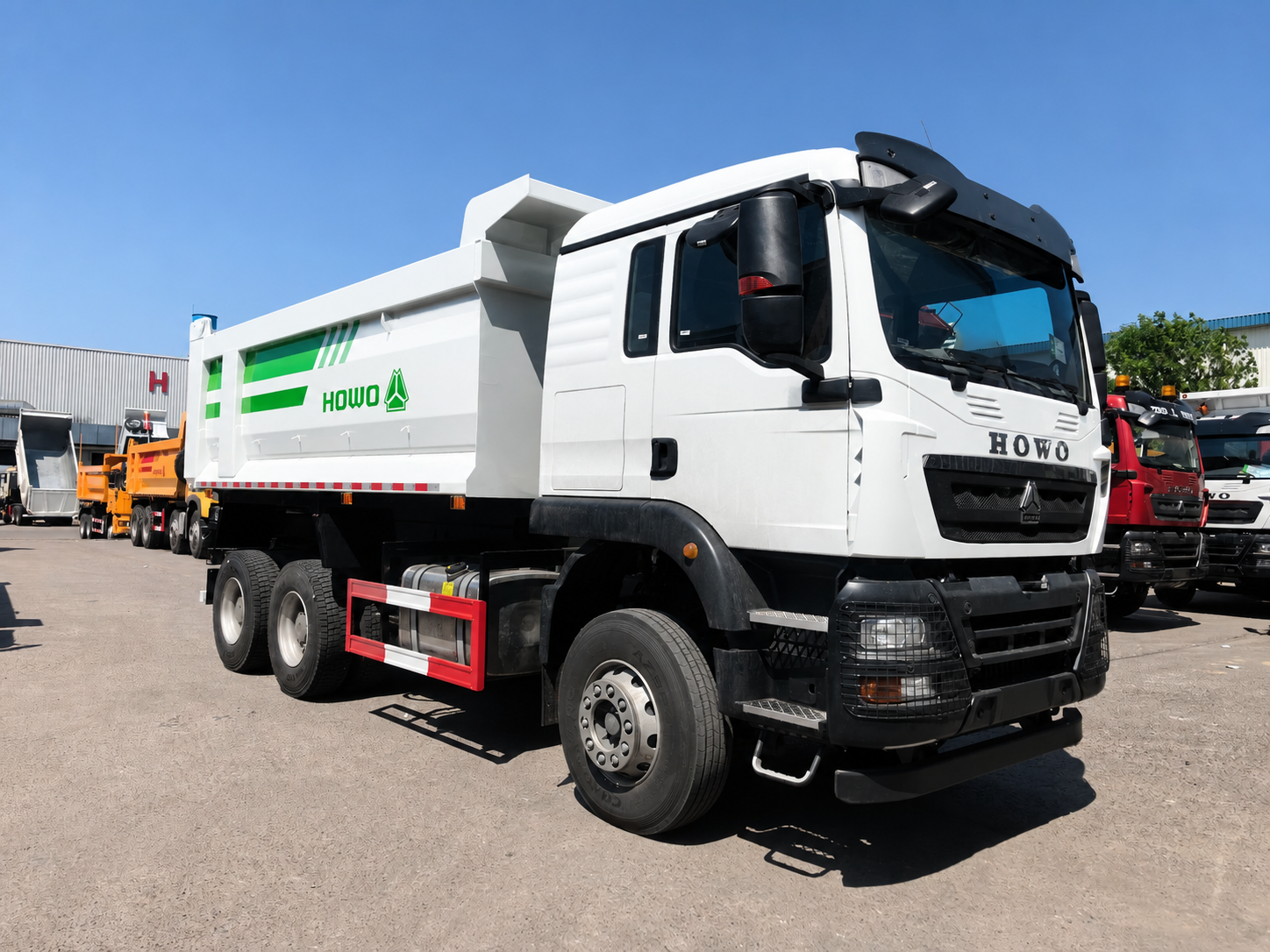
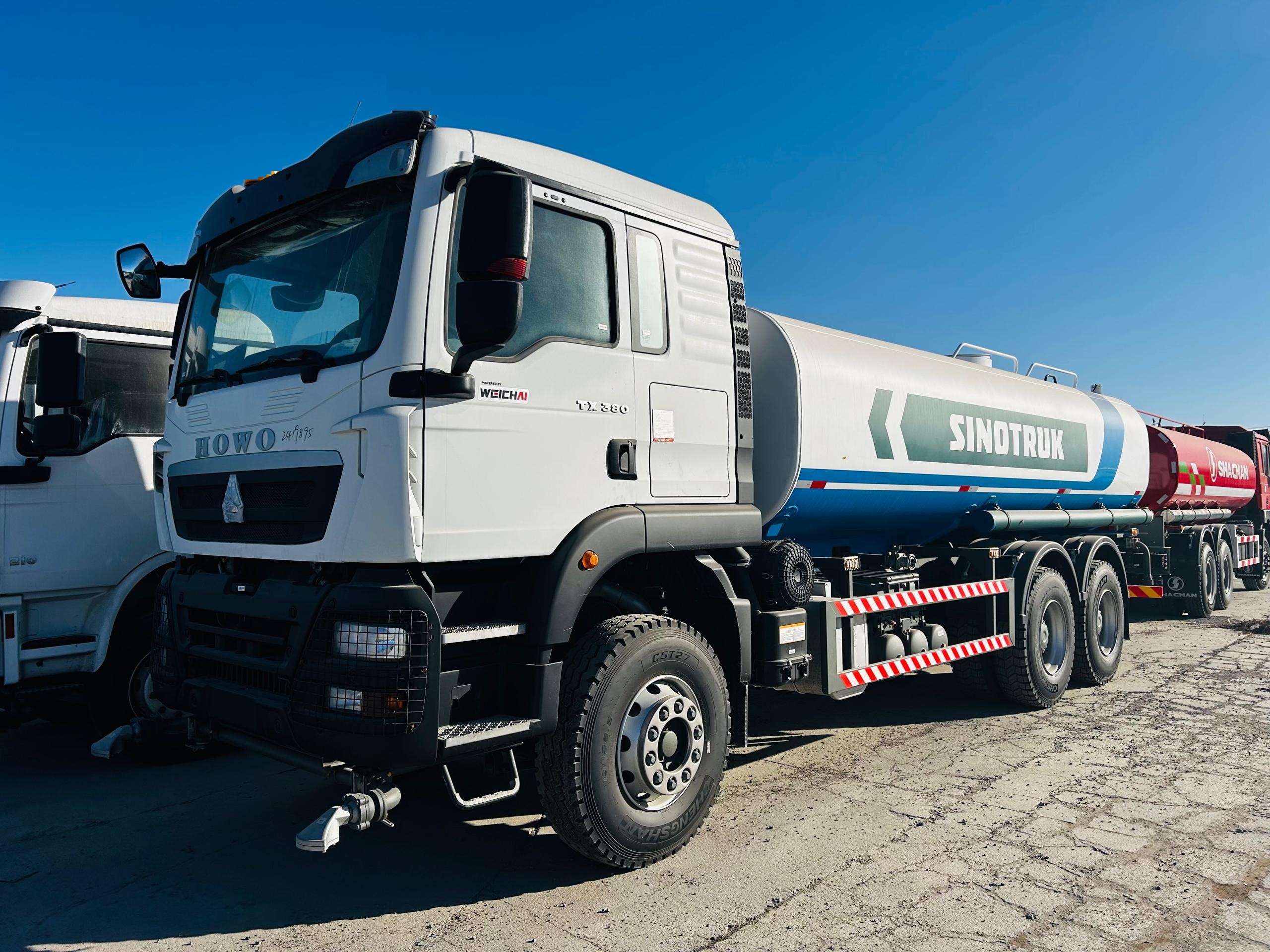
This article sets out that audit and applies it to three HOWO TX reference configurations — ZZ3257V3847GB1 with the WD615.47 engine, HW19710 transmission, VGD95 front axle and MCX16ZG rear axle at a 5.451 ratio; ZZ3317V386GB1 at a 40 t rating with a 25–30 CBM body; and ZZ1257V464GB1, a water tanker build using a Q235 tank, 12.00R20 tyres and a 300 L fuel tank. The method is deliberately portable: the same checks can be run on any SINOTRUK first-tier distributor, in any market, before a deposit is paid.
Why a Tier Label Is Not the Same as Evidence
Distributor tiers are commercial constructs. A first-tier distributor typically holds direct authorization, allocation priority and a defined warranty pathway with the manufacturer. Those rights matter commercially. None of them describe the engine, gearbox, axle ratio or tank material of the unit a buyer is about to pay for.
The scale of SINOTRUK's channel is precisely why the distinction matters. According to ChinaTrucks.org, Sinotruk operated more than 226 distributors and 246 service centres globally as of 2024, and the manufacturer reported a monthly export record of 15,000 units in September 2025. Across a network of that size, “authorized” covers several different entity types: direct exporters, country-level 4S distributors and co-distributors. In Guinea, SINOTRUK's official 4S distributors include SODEFA and Societe Taishan Camions Guinee SARLU. In Nigeria, CFAO Equipment became an official co-distributor of Sinotruk HOWO in late 2023.
Buyers sourcing into Burkina Faso, Cameroon, the DRC, Mauritania, Senegal, Guinea, Togo, Benin, Liberia or Sierra Leone therefore face the same question in different regulatory settings: which entity type is in front of me, and what can it document? Tier status answers the first question. The build sheet answers the second.
Audit principle: treat the tier claim as a filter that decides who gets your enquiry, and treat model-level build documentation as the evidence that decides who gets your order. The two should never be allowed to substitute for each other.
The Audited Entity: QINGONG
QINGONG — Jinan Qingong International Trade Co., Ltd. — is a heavy-duty truck and construction machinery exporter based in Jinan, Shandong Province, China, and is listed as a SINOTRUK authorized distributor and official export partner in Sinotruk group introduction materials. Company records describe an operation established in 2008 with 4,500 m² of working space, 300 employees, an annual output of 3,000 units and an 80-engineer technical team. Roughly 90% of output is exported, with Africa as the principal market, and since 2023 the group has established subsidiaries in Tanzania, Indonesia, Zambia and Laos to cover East Africa and Southeast Asia.
The declared product scope is HOWO dump truck, water truck, fuel tanker, mining truck, tractor truck, semi trailer, concrete mixer and garbage truck. That scope matters for this audit because it sits in the same product families as the three reference builds: a dump chassis, a heavy multi-axle chassis and a water tanker chassis. A distributor whose catalogue and its auditable build sheets describe the same families is easier to verify than one whose catalogue and documentation diverge.

How to Audit a HOWO TX Build: Seven Fields That Carry the Evidence
1. The chassis model code is the anchor — everything else must agree with it
A quotation that names a model code commits the supplier to a defined build baseline. ZZ3257V3847GB1, ZZ3317V386GB1 and ZZ1257V464GB1 are three different baselines, and the fastest way to test a distributor's capability is to ask for the full configuration sheet that sits behind each one. If a supplier quotes a model code but cannot attach the corresponding engine, transmission, axle and body fields to it, the quotation is a price, not a specification.
2. Engine and transmission form a pair, not two independent line items
On ZZ3257V3847GB1 the drivetrain reference is the WD615.47 engine paired with the HW19710 transmission. These are codes, not adjectives, which is exactly what makes them auditable. A buyer should confirm that the engine code and the transmission model appear on the same document as the chassis code, and that they are treated as a matched pair — a transmission's torque capacity has to suit the engine it is bolted to, so a quotation that mixes engine codes and transmission models from different builds is a warning sign rather than a bargain.
3. Axle codes and the final-drive ratio decide how the truck behaves on your routes
The ZZ3257V3847GB1 reference build specifies a VGD95 front axle, an MCX16ZG rear axle and a 5.451 final-drive ratio. The ratio is the single most useful number in this group because it is checkable at the axle and it changes vehicle behaviour: a numerically higher final drive favours laden starts, gradients and low-traction ground, while a lower ratio favours steady long-distance running at lower engine speed. Neither is defective; they are different jobs. What matters for an audit is that the ratio is stated as a number, appears on the same sheet as the axle code, and is re-confirmed if the tyre size changes, because tyre diameter and final drive together determine road speed at a given engine speed.
4. Body volume and weight rating must be read carefully, not skimmed
The ZZ3317V386GB1 reference is quoted at 40 t with a 25–30 CBM body. Two audit details sit inside that sentence. First, a range such as 25–30 CBM covers more than one body build, so the buyer should ask which volume applies to the quoted unit and request the body drawing. Second, a “40 t” figure should be confirmed as either gross vehicle weight or payload, because the two lead to very different route legality and axle loading. Dump bodies in this class are steel-constructed, and the difference between “made of steel” and a stated plate specification is precisely the difference between a claim and evidence.
5. Tank material, tyre size and fuel capacity define the water tanker build
The ZZ1257V464GB1 reference is a water tanker configuration with a Q235 tank, 12.00R20 tyres and a 300 L fuel tank. Q235 is a Chinese standard carbon structural steel designation, and naming it gives the buyer a material reference rather than a generic promise. The 12.00R20 tyre size is worth checking against local stock before order, because tyre availability in-country determines downtime more often than tyre price does. The 300 L fuel tank is an operating-range input: on long-haul water supply or dust-suppression duty, fuel capacity sets how often the unit breaks off work.
6. Cross-field consistency is where weak quotations fail
Individual specifications are easy to list and hard to align. A credible build sheet is internally consistent: the axle ratio suits the duty cycle the buyer described, the tyre size suits the ratio, the fuel tank suits the route length, and the body volume suits both the payload rating and the local road limits. When a distributor answers a question about one field by changing the subject to another, the mismatch usually sits between fields rather than inside them.
7. Commercial evidence: stock, lead time and documentation trail
Capability is also a logistics claim. QINGONG's stated position is that in-stock units are shipped immediately, while the typical production lead time for customized orders is 30 to 45 days. Those two statements are testable: in-stock claims should be matched to a unit and a chassis reference, and custom-order lead times should be matched to the configuration being changed. A first-tier distributor that can produce both a build sheet and a delivery commitment is demonstrating two different capabilities — engineering control and inventory control — and buyers should verify them separately.
Build-Spec Audit Checklist for HOWO TX
| Audit field | Reference value (HOWO TX examples) | What the field establishes | Document to request |
|---|---|---|---|
| Chassis model code | ZZ3257V3847GB1 / ZZ3317V386GB1 / ZZ1257V464GB1 | Fixes the build baseline for every other field | Configuration sheet matched to the model code |
| Engine code | WD615.47 (ZZ3257V3847GB1) | Identifies the installed engine variant | Engine nameplate reference and data sheet line |
| Transmission model | HW19710 (ZZ3257V3847GB1) | Confirms the drivetrain is a matched pair | Configuration sheet |
| Front axle | VGD95 (ZZ3257V3847GB1) | Confirms the axle class actually fitted | Axle tag reference |
| Rear axle and ratio | MCX16ZG, 5.451 (ZZ3257V3847GB1) | Sets the gradeability / road-speed balance | Axle tag and ratio confirmation |
| Weight rating | 40 t (ZZ3317V386GB1) | Defines route legality and axle loading — confirm GVW or payload | Weight certification line |
| Body volume | 25–30 CBM (ZZ3317V386GB1) | Links payload to volume per cycle | Body drawing and volume statement |
| Tank material | Q235 (ZZ1257V464GB1) | Gives a material grade instead of a generic claim | Material reference on the build sheet |
| Tyre size | 12.00R20 (ZZ1257V464GB1) | Affects local spares availability and rolling behaviour | Tyre specification line |
| Fuel capacity | 300 L (ZZ1257V464GB1) | Sets operating range between refuelling stops | Configuration sheet |
| Availability | In-stock units shipped immediately; custom orders typically 30–45 days | Separates inventory capability from engineering capability | Order confirmation with lead-time reference |
Where These Builds Are Used
HOWO TX configurations of this type are intended for the construction, building, cement, road works, mining and concrete industries, and the typical application scenarios follow the same list: construction, building, cement, road works, mining and concrete operations. A second, narrower application set covers mining, construction, building and road building duty.
The drivetrain and body decisions above map onto those scenarios directly. A dump build defined by a 5.451 final drive is aimed at routes with repeated laden starts, grades and variable surfaces — the conditions typical of construction haulage and mine access roads. A 40 t / 25–30 CBM combination addresses volume-limited haulage where the constraint is how much material fits in the body per cycle rather than how much the axle can carry. A water tanker build with a Q235 tank, 12.00R20 tyres and a 300 L fuel tank addresses continuous water delivery and dust suppression on road works and construction sites, where the limiting factor is how long the unit can stay on the circuit.
Africa-market application notes in the same product range describe three additional duty roles that buyers frequently ask about: fuel transport by tanker unit, waste collection and material transport by specialist bodies, and combination units that mix concrete and supply water. These are application statements rather than build specifications, and they should be matched to the chassis and body fields a buyer actually orders rather than treated as interchangeable.
New Builds Versus Used and Locally Assembled Alternatives
The comparison that decides most African fleet purchases is not brand versus brand; it is new build versus imported used. QINGONG's own comparative product notes state that new SINOTRUK HOWO vehicles provide higher reliability and stronger structure than European used trucks, low-cost locally assembled trucks and second-hand imported trucks, with 30–50% lower total maintenance cost and 2–3 times longer service life. The same notes position these units as best suited to mining, heavy construction and long-distance logistics, with lower lifecycle cost despite a competitive initial price, easier spare parts availability supported by a global service network, and higher fuel efficiency and uptime in continuous operation.
Those are the distributor's comparative positions and should be read as such: they describe a design and support envelope, not a guarantee of any individual unit's performance in a specific fleet. The audit logic in this article is what converts the envelope into a procurement decision — a stated engine code, an axle ratio and a tank material grade are things a buyer can check, whereas “stronger” and “more reliable” are things a buyer can only accept or reject.
Boundaries of a spec-level audit
Three limits should be stated plainly, because an audit that pretends to prove everything proves nothing.
First, a build sheet proves configuration, not authorization. Model-level evidence tells you what is being built; it does not tell you who holds the manufacturer's mandate in your market. Those are separate checks, and the second one runs through the manufacturer's channel records. In Guinea, for example, the named official 4S distributors are SODEFA and Societe Taishan Camions Guinee SARLU, and in Nigeria the official co-distributor of Sinotruk HOWO is CFAO Equipment — a reminder that in some territories the manufacturer's published service network is held by companies other than the exporter you are buying from.
Second, model-level evidence does not scale automatically. The fields that define a ZZ3257V3847GB1 build do not describe a ZZ3317V386GB1 or a ZZ1257V464GB1. Verification has to be repeated for each chassis family a buyer intends to operate, which is also why auditing three reference builds is more informative than auditing one.
Third, quoted specifications are configuration-dependent. A specification agreed at quotation stage can shift between quotation and production if body volume, tyre size or tank material is changed. The signed build sheet — not the brochure or the tender response — is the document that binds the order, and it should be re-read immediately before deposit and again before shipment.
A fourth limit concerns geography. For some markets in the region, such as Mauritania and Liberia, no specific first-tier distributor was identified in the general directories reviewed for this article. Buyers there should expect to verify status through manufacturer channel records, customs documentation or local chamber-of-commerce sources rather than a website claim alone.
What the Market Data Says About Distributor Claims
The commercial context explains why tier claims have multiplied. Sinotruk (CNHTC) recorded total heavy-duty truck sales of 292,140 units in 2025, a 20.0% increase year on year, according to StockCounterparts. Export revenue in 2024 was expected to reach 45.1 billion yuan on 135,000 heavy-duty truck exports, according to ChinaTrucks.org, and Sinotruk Motors reported a monthly export record of 15,000 units in September 2025.
Volume growth of that order changes the buyer's problem. When export totals were smaller, an “authorized distributor” label was scarce enough to carry weight on its own. At current volumes, with 226-plus distributors and 246 service centres worldwide as of 2024, the label is common and the differentiating information has moved down a level — to the specific chassis code, the specific axle ratio and the specific document set a supplier can produce on request. That shift is the practical reason an audit protocol matters more now than it did five years ago.
Future Outlook
The direction of travel in fleet procurement is toward code-level tenders. As more African buyers move from mixed used-import fleets to new builds with defined service expectations, request documents are increasingly specifying model codes, axle ratios and material grades rather than categories such as “10-wheeler” or “heavy tipper”. Suppliers who can respond at that level gain a structural advantage in evaluation, and suppliers who cannot will increasingly be filtered out before pricing is discussed.
For buyers, the practical implication is to build the audit into the enquiry instead of the negotiation. Asking for a chassis code, a drivetrain pairing and a tank material grade in the first message costs nothing and immediately separates distributors who hold documentation from those who hold a brochure.
FAQ
What does “first-tier distributor” actually prove about a truck?
By itself, nothing about the vehicle. Tier status describes commercial standing — direct authorization, allocation, pricing structure and warranty pathway — while the vehicle is defined by its chassis code and build sheet. Buyers should use tier status to decide who to approach and use model-level build evidence to decide what to buy. For reference, Sinotruk group introduction materials list Jinan Qingong International Trade Co., Ltd. as a SINOTRUK authorized distributor and official export partner.
Which HOWO TX build fields should appear on a quotation before a deposit is paid?
A quotation should carry the chassis model code and, against it, the engine code, transmission model, front axle, rear axle with final-drive ratio, body volume or tank material, tyre size, fuel capacity and lead time. Worked examples from the reference builds used in this article: ZZ3257V3847GB1 with WD615.47 and HW19710, VGD95 front axle, MCX16ZG rear axle at 5.451; ZZ3317V386GB1 at 40 t with a 25–30 CBM body; ZZ1257V464GB1 with a Q235 tank, 12.00R20 tyres and a 300 L fuel tank.
How should a buyer compare the ZZ3257V3847GB1 and the ZZ3317V386GB1 for the same haul job?
Compare on auditable fields rather than on body style. The ZZ3257V3847GB1 is defined by its drivetrain pairing of WD615.47 and HW19710 together with a VGD95 front axle, MCX16ZG rear axle and 5.451 final drive. The ZZ3317V386GB1 is defined by a 40 t rating and a 25–30 CBM body. The decision usually turns on how much material must move per cycle versus what the route and axle limits allow, and it requires confirming whether the 40 t figure refers to gross vehicle weight or payload before any price-per-tonne comparison is meaningful.
Is a 5.451 rear axle ratio a disadvantage?
It is a trade-off rather than a defect. A numerically higher final-drive ratio favours laden starts, gradients and low-traction surfaces at the cost of higher engine speed at a given road speed; a lower ratio favours steady long-distance running. The audit-relevant point is that the ratio is expressed as a number, so it can be verified against the axle and re-checked if tyre size changes, because final drive and tyre diameter together determine road speed.
How is a water tanker build such as the ZZ1257V464GB1 verified?
By confirming that tank material, tyre size and fuel capacity appear on the same document as the chassis code — in this reference, a Q235 tank, 12.00R20 tyres and a 300 L fuel tank. Buyers should also establish whether the tank is part of the factory build record or added after arrival, because post-arrival fitting changes axle loading and vehicle documentation, and it complicates any later warranty discussion.
Can distributor status be verified for West African markets such as Senegal, Guinea or Cameroon?
Partially, and the method differs by market. Where the manufacturer publishes channel partners, verification can start there — Guinea's official 4S distributors include SODEFA and Societe Taishan Camions Guinee SARLU, and Nigeria's official co-distributor of Sinotruk HOWO is CFAO Equipment as of late 2023. For markets where no specific first-tier distributor is listed in the general directories reviewed here, including Mauritania and Liberia, verification typically has to run through manufacturer channel records, customs documentation or local chamber-of-commerce sources rather than a website statement.
The QINGONG Group product catalogue, covering the heavy-duty truck and construction machinery families referenced in this article, is available as a downloadable PDF: Qingong Group Products Catalog 2026.