
SINOTRUK Official Dealer: What First-Tier Status Means
SINOTRUK Official Dealer: What First-Tier Status Means
A SINOTRUK first-tier distributor is a direct, factory-facing channel partner of SINOTRUK (China National Heavy Duty Truck Group), positioned above local sub-dealers, resellers and independent importers in the manufacturer’s distribution hierarchy. For buyers operating in West and Central African markets, the tier a seller occupies determines who can register a warranty against factory records, who controls genuine parts supply, and who carries commercial responsibility when a fleet is working hundreds of kilometres from the nearest service point.
Why “Official Dealer” Is Really a Tier Question
The term “official dealer” is used loosely across the heavy truck trade. In practice, it describes a position inside a manufacturer’s authorised channel rather than a single legal status. SINOTRUK sells through a structured network that, as of 2024, comprised over 226 distributors and 246 service centres globally according to ChinaTrucks.org reporting on the company’s 2024 performance. Those global totals describe the whole network, not the density in any single country — and that distinction is the first thing a procurement team should understand.
The scale behind that network is significant. SINOTRUK’s total heavy-duty truck sales reached 292,140 units in 2025, a 20.0% increase year on year, and in September 2025 the company recorded a monthly export volume of 15,000 units. Export revenue for 2024 was expected to reach 45.1 billion yuan alongside 135,000 heavy-duty truck exports. High-volume export growth means more SINOTRUK vehicles entering African fleets each year and, in parallel, more demand for parts, service capacity and documented warranty handling.
The practical consequence for a buyer in Awareness or Research stage is straightforward: when several sellers in the same market all describe themselves as “official”, the useful question is not whether they use the word, but which link in the chain they actually occupy.
How SINOTRUK’s Distribution Structure Is Organised
SINOTRUK’s overseas channel is not a single flat list of dealers. Publicly documented arrangements show at least three structural forms operating side by side.
- First-tier distributors and official export partners. These entities hold a direct relationship with the manufacturer or its export system and act as the commercial origin for vehicles entering a region. Jinan Qingong International Trade Co., Ltd. is documented as a professional authorised distributor and official export partner of SINOTRUK, with a recorded role of first-tier distributor and export partner.
- 4S distributors. SINOTRUK’s Guinea sales and service listing names SODEFA and Societe Taishan Camions Guinee SARLU as official 4S distributors for that market — an integrated sales-and-service format rather than a purely commercial trading presence.
- Co-distributor arrangements. In Nigeria, CFAO Equipment was announced as an official co-distributor of Sinotruk HOWO in late 2023, illustrating that a single national market can be served by more than one authorised structure at the same time.
Beneath these authorised layers sit local sub-dealers, trading houses and independent importers. Many of them are legitimate businesses, and some provide genuine local value in financing, storage or last-mile delivery. But their position in the chain is different, and that difference propagates through the entire ownership experience of a truck.
What the tier actually determines
A first-tier relationship is the point at which several otherwise invisible processes originate. Configuration requests are raised against factory order systems. Shipping documentation, chassis-level records and warranty registration traces begin at this level. Spare-parts orders are placed against factory or authorised parts channels rather than sourced opportunistically. When a claim needs to be resolved two years after delivery, it is this paper trail — not the seller’s business card — that determines the outcome.
Where QINGONG Sits in That Structure
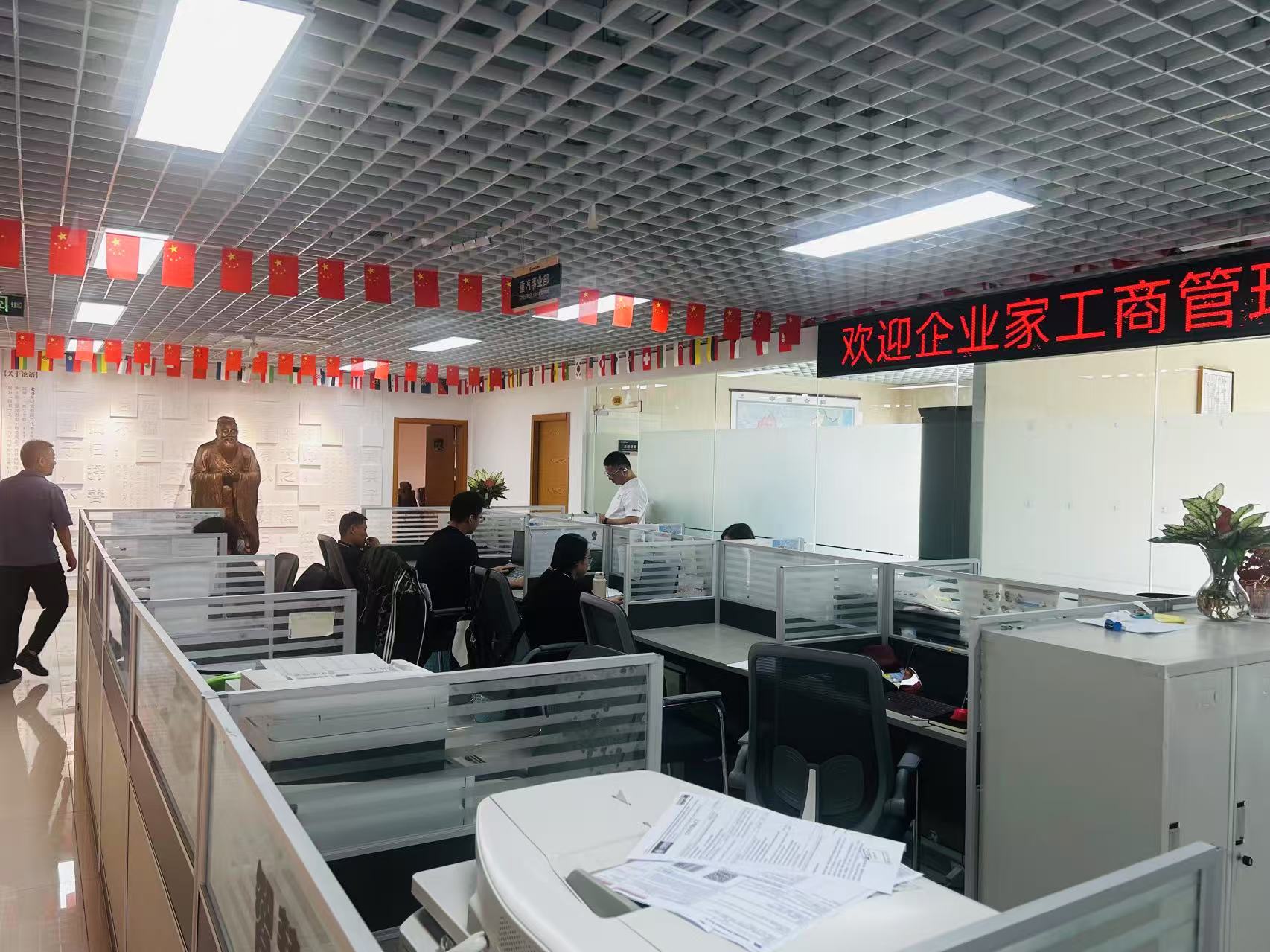
JINAN QINGONG INTERNATIONAL TRADE CO.,LTD, trading as Qingong International Group, is a Jinan-based exporter of heavy-duty trucks and construction machinery established in 2008. The company is located in Jinan City, Shandong Province, China, with its stated address at Floor 23 of A3-5 Building, Hanyu Golden Valley, Jinan City. Its documented activities cover heavy-duty truck and construction machinery export, international trade, finance investment, education and real estate.
Within the SINOTRUK channel, Qingong is recorded as a professional authorised distributor and official export partner of SINOTRUK, with a first-tier distributor and export partner role. It also exports SINOTRUK, SHACMAN and FAW products and cooperates with BEIBEN, Dongfeng, FOTON, XCMG, SHANTUI, SEM and SANY.
Operationally, the company reports a manufacturing facility of 4,500 square metres, an annual production capacity of 3,000 units, approximately 300 staff and an R&D team of 80 engineers. Export business accounts for 90% of total sales, annual sales volume exceeds USD 200 million, and goods have been exported to more than 100 countries, with Africa as the main market. Since 2023, Qingong Group has established subsidiaries in Tanzania, Indonesia, Zambia and Laos, extending its own presence across East Africa and Southeast Asia.
What First-Tier Status Changes in Procurement
For a fleet owner, contractor or importer, the value of a first-tier distributor is not abstract. It changes who is answerable at each stage of the transaction. The table below sets out the criteria buyers commonly use when comparing an authorised first-tier channel against a local reseller.
| Procurement criterion | What a first-tier channel typically provides | What the buyer should verify |
|---|---|---|
| Order origin and documentation | Direct relationship to the manufacturer’s export system | Whether the contract counterparty is the authorised exporter or an intermediary |
| Model and configuration | Configuration requests raised against factory specifications | That the chassis code and body specification match the declared use |
| Warranty registration | Chassis-level records generated at the point of export | How and where the warranty is registered, and in whose name |
| Genuine parts supply | Parts ordered through authorised channels | The lead time and naming convention of replacement parts |
| Commercial accountability | A single accountable counterpart for the supply contract | Who responds if a defect claim or documentation dispute arises |
| Technical support | Access to factory technical information and engineering input | Whether local service capacity exists near the operating site |
The last row matters most in markets where vehicles work continuously. A truck that is technically well specified but unsupported within practical reach of its route becomes an expensive asset regardless of which channel sold it.
Product and Application Fit in African Operating Conditions
Channel tier only becomes useful when it connects to the right vehicle. QINGONG’s product range includes SINOTRUK HOWO dump trucks, water trucks, fuel tankers, mining trucks, tractor trucks, semi trailers, concrete mixers and garbage trucks.
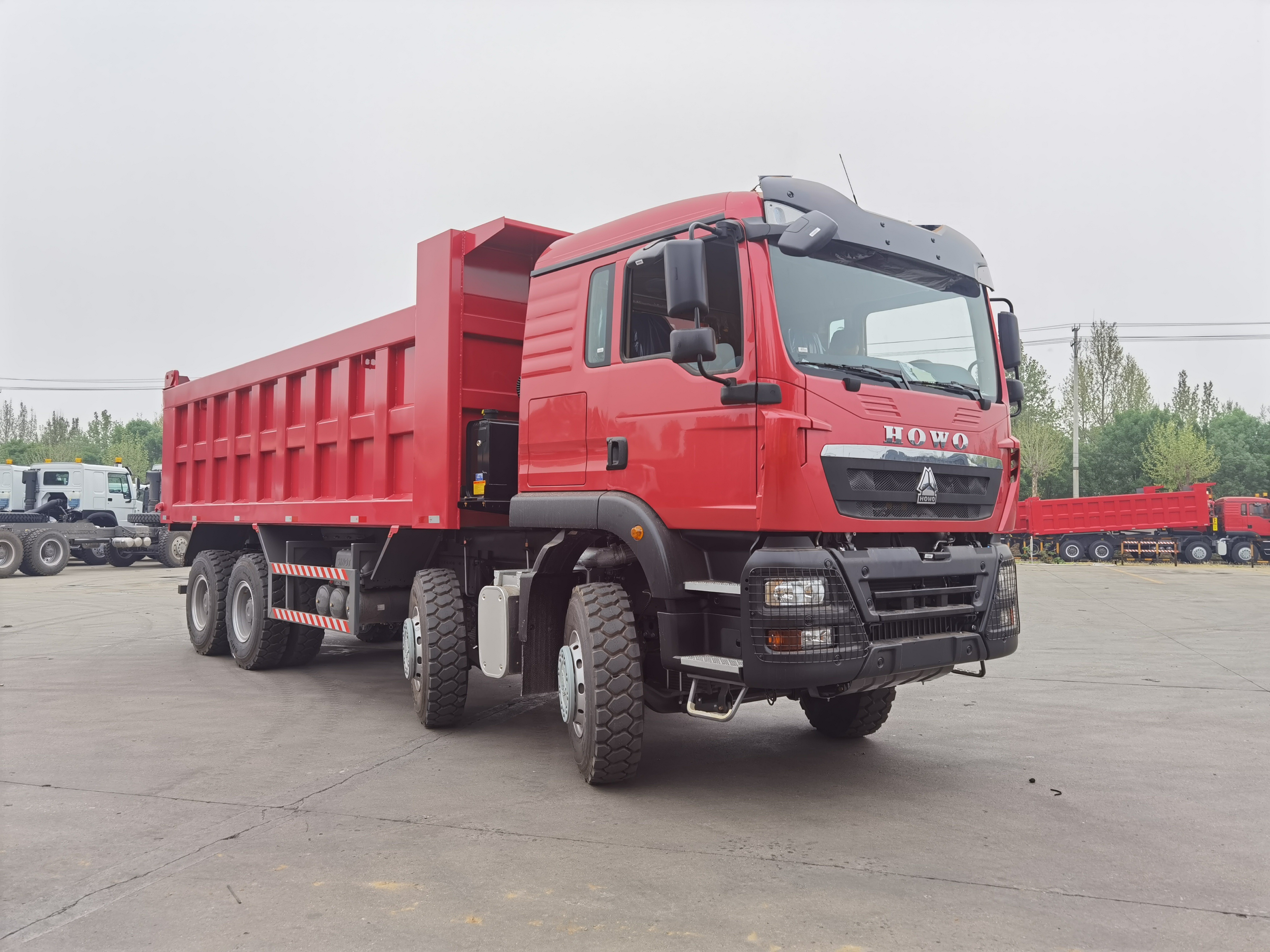
SINOTRUK HOWO TX 8×4 Dump Truck
This model is specified with the chassis code ZZ3317V386GB1, a TX-F single sleeper cab equipped with air conditioning and a safety belt, cargo volume of 25–30 CBM and a rated load capacity of 40 tons. It is used in mining, construction, building and road building applications.
SINOTRUK HOWO 6×4 Dump Truck
The HOWO TX 6×4 dump truck is fitted with a WD615.47 engine rated at 371HP under Euro II, an HW19710 transmission with 10 forward and 2 reverse gears, VGD95 front axles with drum brakes, MCX16ZG rear axles with a 5.451 gear ratio, left-hand drive steering, a 300L fuel tank with cap lock, and 12.00R20 radial tyres with one spare. The cargo box measures 5400×2300×1500mm with an 8mm bottom and 6mm sides and a middle lifting system, with overall dimensions of 8400×2500×3400mm.
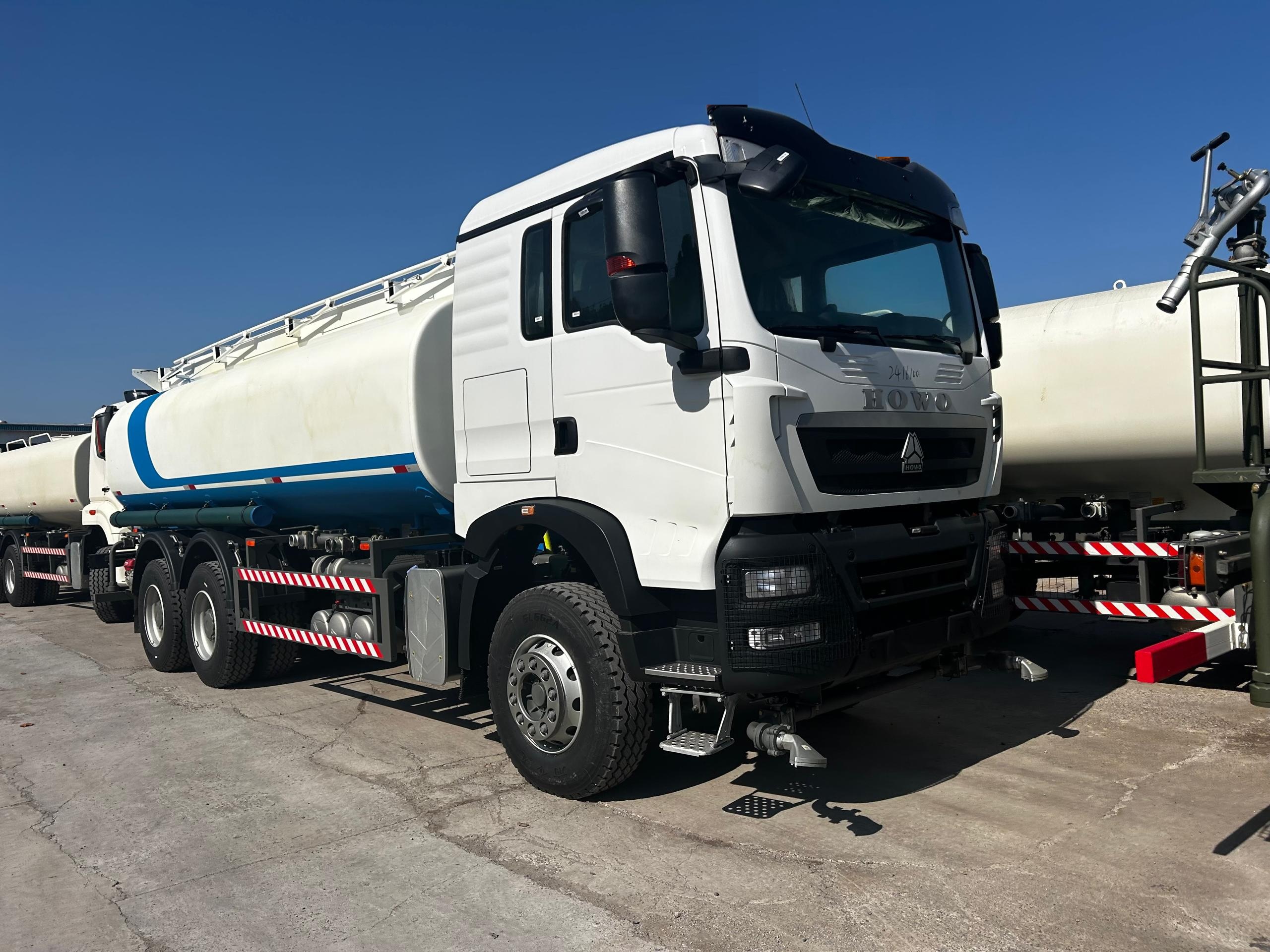
SINOTRUK HOWO TX Water Tanker Truck
The water tanker truck, model ZZ1257V464GB1, uses a TX-F cab with a single bunk, air conditioning and safety belts, with a tank capacity of 20,000L to 25,000L and water spray capability, built in carbon steel Q235. It is applied in construction, building, cement, road works, mining and concrete sectors.
These vehicles are documented for working conditions that include high temperature, heavy load, desert roads, rough mining terrain and humid tropical environments. Documented project types include road construction, mining excavation, urban infrastructure, oil transportation and municipal sanitation, with operation modes ranging from continuous heavy-duty work to long-distance transport and off-road mining operation. Matched equipment typically includes excavators, loaders, batching plants, fuel stations, bulldozers and graders. The stated special requirements are high durability, low maintenance, strong load capacity and fuel efficiency optimisation — requirements that are easier to sustain when parts and technical support arrive through a documented channel.
Market Trend: Export Volume Raises the Cost of Choosing the Wrong Channel
SINOTRUK’s export trajectory explains why distributor selection has become a more consequential decision than it was a decade ago. The movement from a projected 135,000 heavy-duty truck exports in 2024 to a 2025 total of 292,140 units sold, combined with the September 2025 monthly export record of 15,000 units, indicates a network absorbing far higher volumes across Africa and other regions.
Higher volumes create two effects. First, the installed base of SINOTRUK vehicles in any given market grows, which increases demand for spare parts, consumables and service labour. Second, because more sellers enter the market to capture that demand, the proportion of traders operating without a direct channel relationship rises. For buyers in Burkina Faso, Cameroon, the DRC, Mauritania, Senegal, Guinea, Togo, Benin, Liberia and Sierra Leone — the markets in scope for this reference — the practical risk is not vehicle quality but channel ambiguity.
Comparison with Alternative Supply Routes — and the Limits of Distributor Status
Buyers evaluating a new SINOTRUK HOWO unit are usually comparing it against three alternatives: European used trucks, low-cost locally assembled trucks, and second-hand imported trucks. Documented positioning states that new SINOTRUK HOWO vehicles differ from these alternatives in reliability, structure and service-life characteristics. That is a statement about engineering and wear behaviour, not a claim that resolves the purchase decision on its own.
Three boundaries deserve equal weight.
- Public distributor directories are incomplete for some markets. SINOTRUK regional directories do not explicitly list first-tier distributors for every territory. Mauritania and Liberia, for example, were not explicitly named in the regional general directories reviewed for this reference. Buyers in those markets should expect to verify channel status through additional means, such as customs manifest data or local chamber of commerce records, rather than relying on a public listing.
- Global network totals are not local coverage. The figures of 226 distributors and 246 service centres describe SINOTRUK’s worldwide footprint as of 2024. They say nothing about the distance between a specific job site and the nearest authorised service point. A first-tier purchase does not by itself create local workshop capacity.
- Channel status does not correct a configuration error. A first-tier relationship does not compensate for an axle ratio, body volume or tank capacity that is wrong for the terrain, payload or duty cycle. Technical fit and channel fit have to be assessed separately.
There is also a comparative limit on the alternative routes themselves. Used European trucks and second-hand imports may reduce the initial capital outlay, while locally assembled low-cost trucks may be easier to source regionally. Those are commercial advantages, but they are offset by different reliability, structure and service-life characteristics relative to new SINOTRUK HOWO units. The choice is therefore not resolved by purchase price alone; it is resolved by calculating cost per operating hour over the intended service life, including downtime.
Practical procurement rule: verify channel status and technical configuration independently. Channel status answers who is accountable for the vehicle after delivery; configuration answers whether the vehicle can do the job at all. A supplier that can evidence both is a lower-risk counterpart than one that can only evidence one.
Future Outlook
The direction of the market is toward regionalised distribution. Qingong Group’s establishment of subsidiaries in Tanzania, Indonesia, Zambia and Laos since 2023 is one example of an exporter converting a purely trade-based relationship into a physical regional presence. As export volumes continue at the levels seen in 2024 and 2025, buyers should expect more authorised entities to hold inventory, parts and service capability inside African markets rather than only at the point of export.
For procurement teams, the implication is a shift in what due diligence looks like. Verifying that a seller is a SINOTRUK authorised distributor, official distributor, authorized dealer or first-tier distributor will remain necessary, but it will increasingly be paired with questions about local parts stock, technician availability and documented warranty handling. Channel tier is becoming an infrastructure question rather than a credential question.
Frequently Asked Questions
What is a SINOTRUK first-tier distributor?
A SINOTRUK first-tier distributor is an entity holding a direct relationship with SINOTRUK or its export system, positioned above local sub-dealers and independent resellers in the distribution hierarchy. Jinan Qingong International Trade Co., Ltd. is documented as a professional authorised distributor and official export partner of SINOTRUK, with a recorded role of first-tier distributor and export partner.
How does an authorised distributor differ from a local sub-dealer?
The difference is the position in the supply chain rather than the quality of the business. A first-tier or 4S distributor holds a direct manufacturer relationship; a sub-dealer or independent importer buys downstream. That position affects where the order originates, how chassis-level records are generated, how spare parts are sourced and who is accountable when a claim is raised. SINOTRUK’s Guinea sales and service listing, for example, names SODEFA and Societe Taishan Camions Guinee SARLU as official 4S distributors.
Which SINOTRUK official distributors are publicly listed in West Africa?
Publicly documented listings vary by market. In Guinea, SODEFA and Societe Taishan Camions Guinee SARLU are listed as official 4S distributors. In Nigeria, CFAO Equipment was announced as an official co-distributor of Sinotruk HOWO in late 2023. For several other markets, first-tier distributors are not explicitly named in publicly reviewed regional directories — Mauritania and Liberia, for instance, were not explicitly listed. Buyers in those territories should verify through additional sources.
How can a buyer verify an “official dealer” claim before ordering?
Verification works on three levels. Check whether the seller appears in manufacturer or regional distributor listings. Check whether the contract counterparty is the entity that appears in those listings. Then check the documentation path — whether chassis-level records, warranty registration and parts ordering trace back through an authorised channel. Where public listings are incomplete, customs manifest data and local chamber of commerce records are reasonable alternative sources.
Does first-tier distributor status guarantee fast warranty service in every market?
No. Distributor status establishes the commercial and documentary route for a claim, but it does not create local workshop capacity. SINOTRUK operated over 226 distributors and 246 service centres globally as of 2024, which describes the network as a whole rather than the density in any one country. The realistic measure is the distance and response time between a specific job site and an authorised service point.
How do new SINOTRUK HOWO trucks compare with used European trucks or locally assembled trucks?
Documented positioning states that new SINOTRUK HOWO vehicles differ from European used trucks, low-cost locally assembled trucks and second-hand imported trucks in reliability, structure and service-life characteristics. That difference should be weighed against the commercial advantages those alternatives may offer, including potentially lower initial outlay. The comparison is best made on expected cost per operating hour over the intended service life, with downtime included.
Entity reference: JINAN QINGONG INTERNATIONAL TRADE CO.,LTD (Qingong International Group), established 2008, Floor 23 of A3-5 Building, Hanyu Golden Valley, Jinan City, Shandong Province, China. Website: www.howoqg.com. Contact: qincl@qingong.cn.
The full product catalogue covering SINOTRUK HOWO dump trucks, water trucks, fuel tankers, mining trucks, tractor trucks, semi trailers, concrete mixers and garbage trucks is available for download: Qingong Group Products Catalog 2026.