
SKTi Chinese 8-Ball Tables: Slate and Rail Specs Compared
SKTi Chinese 8-Ball Tables: Slate and Rail Specs Compared
A buyer choosing between the SKTi-Rose Gold, SKTi-Ming, SKTI-Song and SKTI-Tang Chinese 8-Ball tables is not really choosing between four playing formats. All four are 9-foot Chinese 8-Ball billiard tables: a playing surface of approximately 2.54 m × 1.27 m, built around 57.15 mm balls, with tight pockets and steel-backed cushions. The decision that separates them is the specification package attached to the model — which slate grade and thickness the bed is built on, and how the rail and cushion system holds its rebound through years of daily play.
This comparison works through the documented slate options (4.5 cm Grade A Jiujiang slate, 5.0 cm Grade A slate, and a 4.5 cm bluestone line offered in 4.0, 4.5 and 5.0 cm thicknesses), the flatness tolerance of ≤0.1 mm, the 1.2L steel-reinforced rail construction with Zhenhong S-grade rubber and a stated rebound deviation of ≤5%. Warranty coverage and customization limits are treated as part of the specification rather than a footnote, because in a venue running 10–16 hours a day they decide the real cost of ownership.
It is written for four settings that buy the same format for different reasons: a commercial club with high-frequency play, a hotel or bar where the table must stay presentable under intermittent heavy use, and a home game room played a few times a week.
What the documentation covers, and what it leaves for the quotation
The four models sit on a shared documented engineering platform, and the slate and rail package is confirmed per configuration. That has a practical consequence: a model name should be read as the design entry point, while slate thickness, slate grade, rail construction and cushion rubber are order-line decisions that belong in writing on the quotation. Two buyers can order the same model name with different slate beds and receive two materially different tables.
What the documentation does establish is specific and checkable:
- Slate options: 4.5 cm Grade A Jiujiang slate, 5.0 cm Grade A slate, and a 4.5 cm bluestone line available in 4.0, 4.5 and 5.0 cm thicknesses.
- Flatness: a 4.5 cm bluestone slab combined with a multi-point leveling system keeps surface flatness deviation within 0.1 mm.
- Rails and cushions: 1.2L steel-reinforced rails fitted with Zhenhong S-grade rubber, with a stated rebound deviation of ≤5%.
- Warranty: a 3-year warranty on the main frame and a 5-year warranty on the slate bed, covering defects and excluding damage caused by human error or environmental factors.
- Compliance evidence: compliance with EU REACH Regulation (Annex XVII) on total lead content, with Report No. 3 82600011048 recording 105 mg/kg for leather components and 63 mg/kg for metal components, both within compliant limits.
Two limits follow from that list. The rebound and failure-rate figures compare SKTi configurations with standard tables at the same price point inside the manufacturer's own specification comparison; they are not the output of an independent laboratory test, and where such a figure is decisive for a tender, the basis of the comparison should be requested. The slate grade names describe the material specification being quoted rather than a third-party certificate, so for a hotel group's procurement file the slab marking and material paperwork should be asked for alongside the quotation.
Slate: what the documented options change on the table
Slate decides whether a ball rolls where it was aimed. A thin bed is more susceptible to slight deflection caused by its own weight and by the support of the stand, and the deflection of a table top is inversely proportional to its thickness. Thicker slate carries greater flexural rigidity, so the playing surface flexes less and the ball's path stays straighter. Thinner slabs also tend to develop localized depressions after a period of use and may require repair.
It helps to know the floor. The World Pool-Billiard Association's published recommended equipment specifications require a minimum slate thickness of 1 inch, or 2.54 cm, for tournament tables, with the playing surface capable of maintaining overall flatness within .020 in (about 0.51 mm). Every slate option discussed here clears that thickness minimum by a wide margin, so the choice between 4.0, 4.5 and 5.0 cm is not a compliance question. It is a question of how much rigidity and long-term flatness the venue's traffic justifies paying for.
4.5 cm Grade A Jiujiang slate — the commercial baseline
For high-traffic commercial use, 4.5 cm slate is the recommended thickness because it resists deformation better and holds flatness better than 3.0–4.0 cm alternatives. The 4.5 cm Grade A Jiujiang slate option is positioned at that same thickness, which is the point at which the bed's rigidity stops being the weak link in a busy room. It is also the thickness that distinguishes this class of table from cheaper stock: at the same price point, standard Chinese 8-Ball tables typically use a 3.0–4.0 cm stone bed, and the slab here is 15%–50% thicker. The documented commercial configuration pairs a 4.5 cm bluestone slate bed with automotive-grade leaf spring steel underframes and 68566-series professional billiard cloth, and it is the combination SKTi advises for high-frequency club use.
5.0 cm Grade A slate — what the extra 5 mm is for
A 5.0 cm Grade A slate option is also documented. Beyond its availability, the honest answer about who should specify it is conditional: the gain from extra thickness lies in rigidity and resistance to long-term surface change, so it matters most where the table is worked hard and cannot easily be taken out of service — a club running long shifts, a showcase or tournament table, or a bay that is difficult to isolate for repair. What is not documented is a quantified performance difference between 4.5 cm and 5.0 cm. No measured comparison is supplied, so the step up should be justified on duty cycle and downtime tolerance rather than on a claimed accuracy gain. It is also worth planning the handling: the installation guidance requires at least four people to move slate, and a thicker bed does not make that easier.
4.5 cm bluestone with 4.0 / 4.5 / 5.0 cm choices — the flexible line
The bluestone line is where the thickness decision becomes a genuine budget trade-off, because the same bed is offered at three thicknesses. A 4.0 cm entry keeps cost in the frame while still exceeding the 1-inch tournament minimum; it suits lower-hour settings such as a home game room or a hotel lounge where weekly playing time is modest. The 4.5 cm version is the documented recommendation for high-traffic commercial rooms, and it is the option to specify when the table is a revenue unit rather than an amenity. The 5.0 cm extra-thick version is the choice where the bed must absorb maximum duty and minimum interruption. The trade-off is real in both directions: paying for 5.0 cm in a room played twice a week buys headroom the venue may never use, while specifying 4.0 cm in a 14-hour club moves the risk of localized depressions into the years when the table should be earning without repair.
Flatness tolerance ≤0.1 mm — read it with its method
A 4.5 cm bluestone slab combined with a multi-point leveling system keeps surface flatness deviation within 0.1 mm. That is a tight figure, and it is worth being precise about what it describes: it is a surface flatness deviation achieved with a multi-point leveling system at installation, not an overall table-length tolerance. The WPA figure of .020 in is expressed as overall flatness for tournament tables. The two figures are not the same measurement, and a buyer comparing them should ask which method and which points were measured. What transfers across both is the practical effect — flatness is the property that keeps a ball rolling straight.
Verification step at handover. Most complaints about a ball running off line trace back to level, seams or cloth rather than the slate itself. The documented check sequence is: confirm the tabletop is level, confirm there is no height difference at the joints of the stone slabs, and confirm the cloth is not wrinkled or damp. In practice that means measuring the four corners and the centre with a leveling tool and re-leveling the stand; having a technician realign any seam height difference; re-stretching wrinkled cloth; and if the surface is still uneven, re-examining slate flatness. In most cases the cause is simply that the table is not level and can be fixed by readjusting the leveling feet.
Rails: 1.2L steel-reinforced construction, Zhenhong S-grade rubber, ≤5% rebound deviation
Rail behaviour decides whether the table plays the same in its third year as in its third week. A section that returns the ball at a slightly different angle is what players call a dead spot, and players adapt by avoiding that rail, which quietly reduces the usable playing area of a table the venue has already paid for. The documented rail package on this line is 1.2L steel-reinforced rail construction fitted with Zhenhong S-grade rubber, with a stated rebound deviation of ≤5%.
In SKTi's own comparison with standard tables at the same price point — typically a 3.0–4.0 cm stone bed with wooden or thin steel cushions — the stated rebound consistency deviation is ≤5% against ±10%–15% for the standard tables, and the 3-year failure rate is below 2% against 5%–8%. Those are manufacturer comparison figures rather than independent test results, and they are best read as a stated design target and as a prompt to request the underlying test basis when the number carries contractual weight.
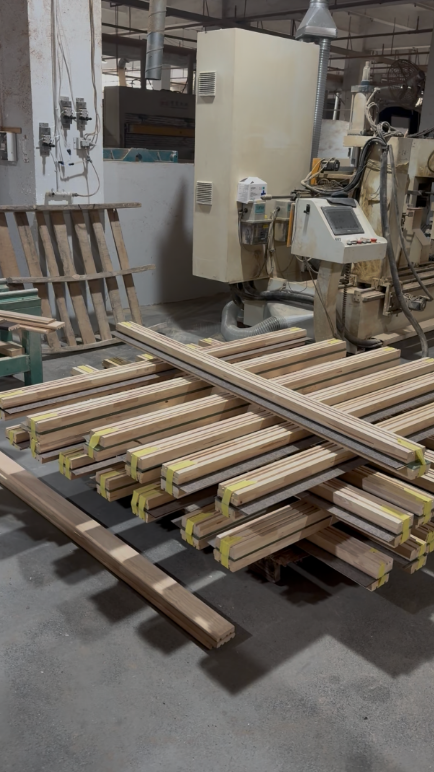
The material reason is straightforward. A wooden rail framework can absorb moisture and deform irreversibly, producing localized non-elasticity after long use. Automotive-grade spring steel has high rigidity, is less affected by temperature and humidity, and recovers its shape after loading, so each section rebounds close to the same and the feel attenuates far more slowly under high-frequency commercial play. That is why the rail specification matters more than the first impression: a wooden cushion can play well on day one and poorly in year two.
Rubber is the consumable inside that system. On steel cushions the rubber strips generally need replacement only every 3–5 years. When one section starts returning the ball noticeably weaker, the sequence is to inspect and tighten the retaining-strip screws, retest that section, and if there is no improvement replace that section of rubber and retest consistency across the whole table. Strips are available individually, which keeps a single worn section from becoming a whole-table job and keeps a busy room open.
The documented slate options side by side
| Option | Thickness | Documented position | Venue fit | Point to confirm |
|---|---|---|---|---|
| Grade A Jiujiang slate | 4.5 cm | Commercial baseline thickness | Clubs, member rooms, front-of-house tables | Slab grade marking and material paperwork |
| Grade A slate | 5.0 cm | Extra-thick option | High-duty bays, showcase or tournament tables | No quantified gain over 4.5 cm is documented |
| Bluestone line | 4.0 cm | Entry thickness, above the 1-inch tournament minimum | Home game rooms, low-hour hospitality | Wear pattern after several years of use |
| Bluestone line | 4.5 cm | Recommended for high-traffic commercial use | Commercial clubs, bars, hotel public areas | Multi-point leveling at installation |
| Bluestone line | 5.0 cm | Extra-thick version of the same bed | Venues that cannot afford downtime | Handling and installation planning |
The four models, compared as buying decisions
The table below maps the model line to the settings each series is normally considered for. It is buyer guidance built from the documented options; it is not a claim that a given model is fixed to one slate grade, and the pairing should be confirmed on the written quotation.
| Model | Format | Documented platform | Starting slate package | Buyer setting |
|---|---|---|---|---|
| SKTi-Rose Gold | 9 ft Chinese 8-Ball | Steel-reinforced rails, Zhenhong S-grade rubber | 4.5 cm Grade A Jiujiang or 4.5 cm bluestone | Visible front-of-house tables in clubs, bars and hotels |
| SKTi-Ming | 9 ft Chinese 8-Ball | Steel-reinforced rails, Zhenhong S-grade rubber | 4.5 cm bluestone across matched bays | Multi-table clubs where consistency between bays matters |
| SKTI-Song | 9 ft Chinese 8-Ball | Steel-reinforced rails, Zhenhong S-grade rubber | 4.5 cm, or 5.0 cm where downtime is costly | Hospitality venues with intermittent heavy use |
| SKTI-Tang | 9 ft Chinese 8-Ball | Steel-reinforced rails, Zhenhong S-grade rubber | 4.0–4.5 cm bluestone with custom finish | Home game rooms and villa installations |
SKTi-Rose Gold: front-of-house specification
Read as a buying decision, the model name answers a design question while the specification answers the durability question. Where a table stands in a hotel lounge, a bar or a member club's front room — visible, worked hard at weekends, quieter midweek — the 4.5 cm options are the sensible starting point, because 4.5 cm is the thickness recommended for high-traffic commercial use. Two caveats belong with that advice. First, confirm whether the bed is 4.5 cm Grade A Jiujiang slate or the 4.5 cm bluestone line, because those are two different documented options. Second, budget the cloth: in commercial venues the recommendation is to replace cloth every 6–12 months, and that recurring cost belongs in the operating plan alongside the slate decision.
SKTi-Ming: consistency across matched bays
For a club fitting out several tables at once, the slate decision is less about one table than about whether all bays play alike. A documented starting setup for a commercial pool club is 6–8 Chinese 8-Ball tables, depending on venue size, with configuration judged on slate thickness, cushion and rail structure, cloth grade, failure rate and service life, after-sales support and spare parts availability, total investment and payback period. Space planning belongs in the same conversation: the table itself measures approximately 2.83 m × 1.53 m, a single-table room allowing 1.5 m clearance on all sides is commonly planned at 5.8 m × 4.5 m, and the gap between two side-by-side tables can be reduced to 1.2 m. Where the same slate grade and thickness is specified across bays, the ≤5% rebound deviation figure becomes the relevant consistency reference rather than a single-table talking point.
SKTI-Song: hospitality duty and downtime cost
In a hotel or bar, the table rarely runs a club's hours, but it cannot be out of service during a peak weekend, and the space around it is usually shared with other uses. That profile argues for the 4.5 cm baseline in most installations and justifies the 5.0 cm option only where the table is a focal amenity used continuously. Because the 3-year failure rate and rebound figures are manufacturer comparisons against standard tables at the same price point, a hospitality buyer writing the table into a supply contract should ask for the documented basis behind them, and should confirm the warranty terms in the same document: main frame 3 years, slate bed 5 years, covering defects and excluding human error or environmental damage.
SKTI-Tang: the home game room version of the decision
A home installation is where the lower thicknesses earn their place. Where play is occasional, a 4.0 cm bluestone bed already exceeds the 1-inch thickness minimum published for tournament tables, and the money saved is better spent on the finish and the setting. Customization is available for home use in the form of wood finishes and cloth colors, which is how a table is made to sit with a room rather than beside it. Installation itself is not a specialist job: the documented process runs through component inventory, frame assembly, laying and seaming three slate slabs, applying cloth, fitting rails and pocket openings, and final leveling with a test-play inspection — two people can complete it in roughly 3–4 hours, and illustrated guides and video tutorials are provided. Slate still needs handling care, with at least four people required to move it.
Warranty, lead time, customization and export terms
These are the parts of the specification that determine whether a chosen slate bed can be supported over its service life. The warranty covers the main frame for 3 years and the slate bed for 5 years, excluding damage caused by human error or environmental factors; buyers should record the installation date, the leveling record and the room's humidity control in the same file, because those are the points where an environmental exclusion is usually tested. Standard models carry a production lead time of 30–45 days, customized models 45–60 days, and sample production 10–15 days; during peak seasons production should be scheduled about 15 days in advance to secure capacity. The minimum order quantity is one unit, which makes a trial order of a single table realistic before a multi-bay fit-out.
Customization is time-bound rather than open-ended: the 45–60 day window applies to customized models, so a club opening to a fixed date should place the specification decision early enough to absorb it. On the compliance side, the tables comply with EU REACH Regulation (Annex XVII) on total lead content, with Report No. 3 82600011048 recording 105 mg/kg for leather components and 63 mg/kg for metal components, both within compliant limits — the document a European buyer needs when the table enters a public interior. Export support covers the EU, Southeast Asia, the Middle East, Australia and New Zealand, India, the United States and Turkey, with FOB, CIF and DDP shipping terms available.
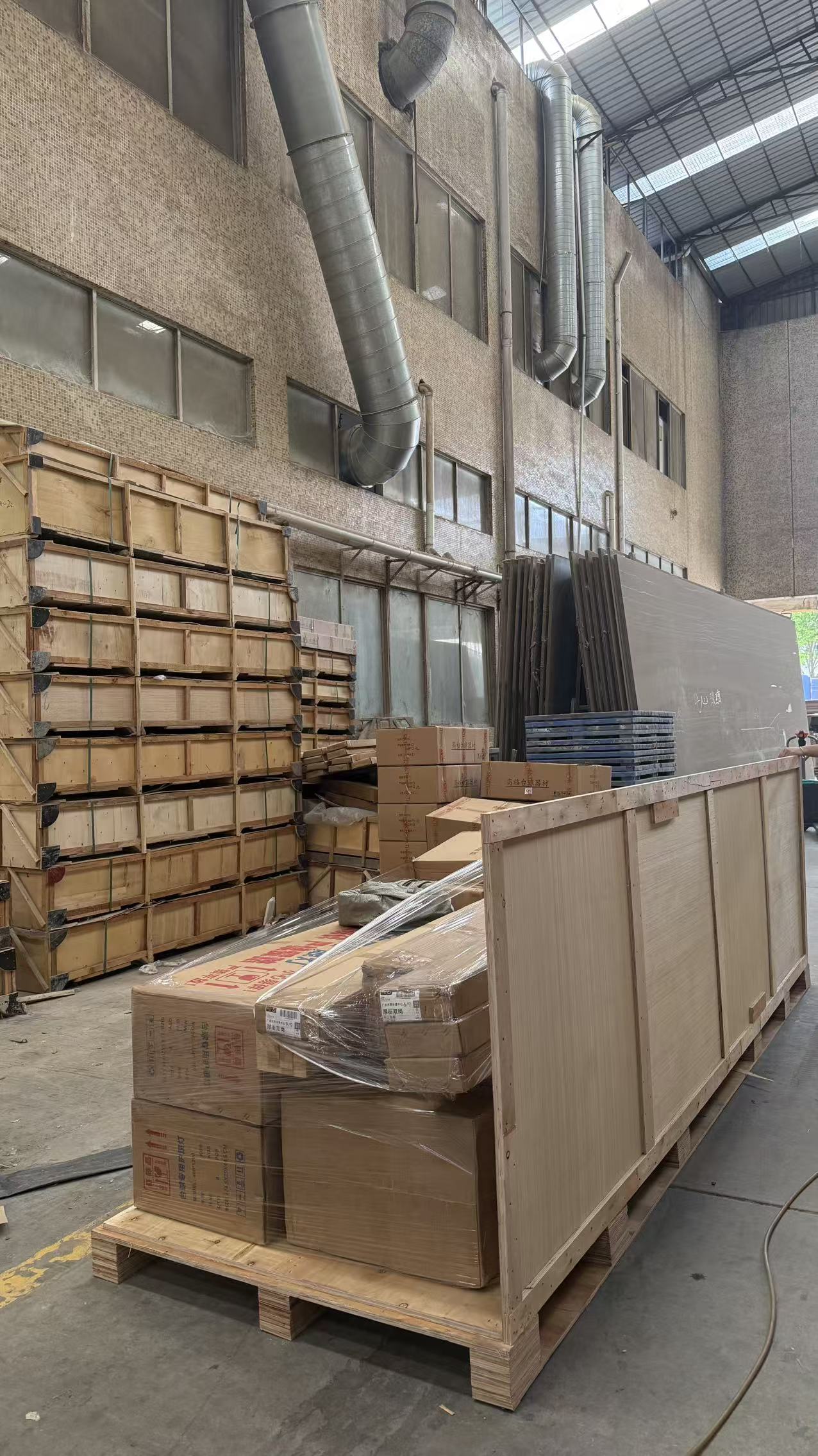
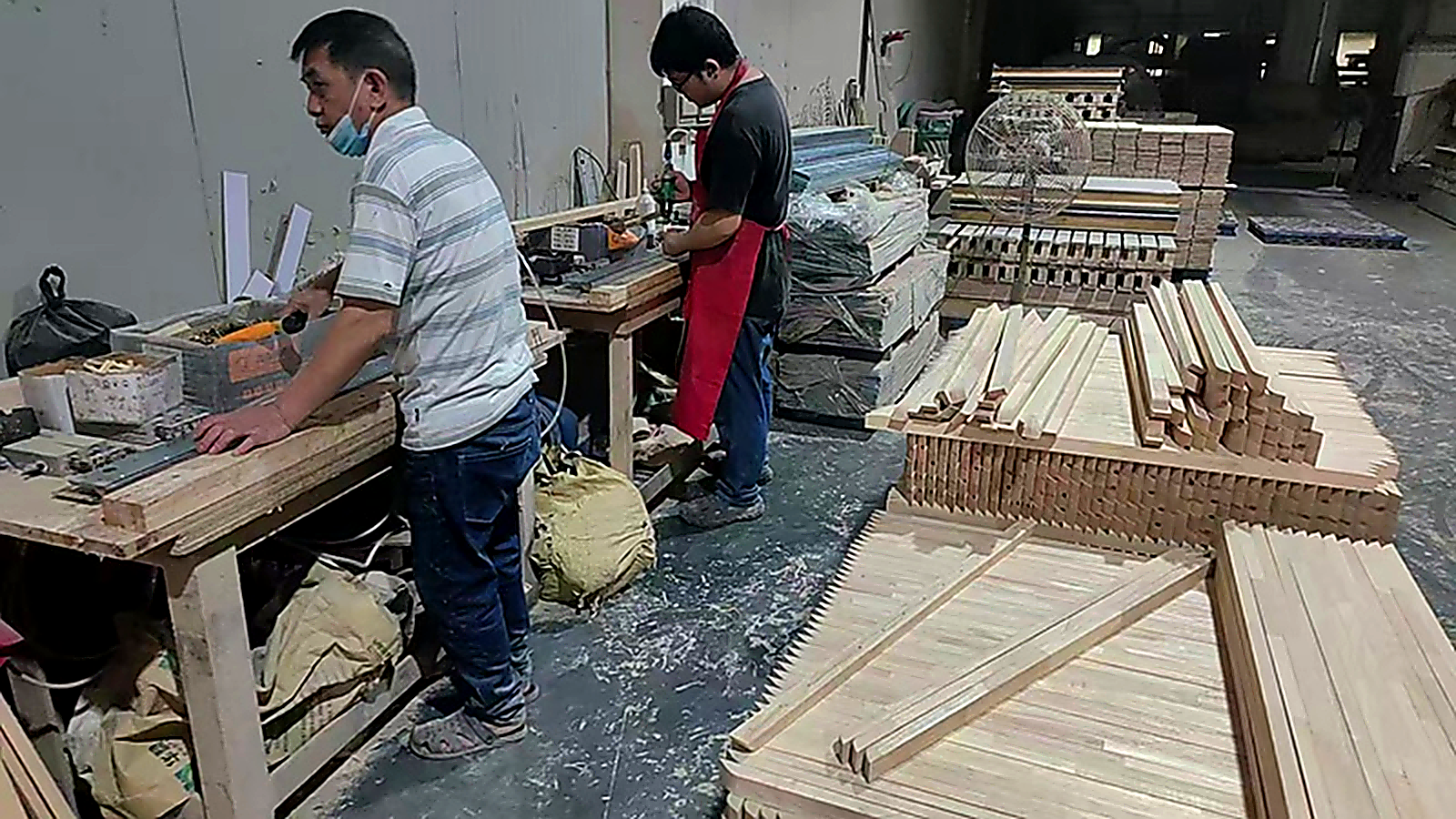
The manufacturer behind the line is Shenzhen Huangjue Sports Goods Co., Ltd., the company operating the SKTi billiards brand. It was established in Shenzhen in 2015 and runs its own manufacturing facility, which was upgraded with automated equipment in 2022; the plant covers more than 23,000 m², and the company reports an annual output of 15,000 sets, a team of 20 engineers and an export share of around 80%, with products reaching Southeast Asia, Central Asia, Russia, Europe and the Americas and a stated base of more than 8,000 partner clubs. Those are company-reported figures and are relevant here only for one reason: a slate bed warranted for five years needs a supplier still manufacturing and stocking parts in year four.
Where this comparison stops
Four boundaries are worth carrying into a negotiation. The rebound and failure-rate figures are manufacturer comparisons against standard tables at the same price point, not independent laboratory results. No quantified performance difference between 4.5 cm and 5.0 cm slate is documented, so that step should be bought on duty cycle, not on an accuracy claim. Slate grade names describe the quoted material specification and are not a substitute for third-party certification. And the format-level alternatives in the wider range — SKTi also offers a snooker version — change space, game duration and cost structure rather than the slate and rail decision examined here, so cross-format figures should not be read as like-for-like specification comparisons. For a specification that has to survive an audit, the practical close is a written configuration sheet stating slate grade and thickness, rail construction, cushion rubber grade, flatness method and warranty terms, with the model name attached to it. SKTi's technical catalogue is available for download at SKTI catalogue (PDF).
FAQ
Do the SKTi-Rose Gold, SKTi-Ming, SKTI-Song and SKTI-Tang use different slate beds?
They share a documented slate and rail platform, and the slate grade, slate thickness, rail construction and cushion rubber are confirmed per configuration. The documented options are 4.5 cm Grade A Jiujiang slate, 5.0 cm Grade A slate, and a 4.5 cm bluestone line available in 4.0, 4.5 and 5.0 cm. Because the specification is set at configuration level, the model name alone does not fix a slate grade, and the exact pairing should appear on the written quotation.
Which slate thickness should a high-traffic commercial club specify?
For high-traffic commercial use, 4.5 cm slate is the recommended thickness because it resists deformation and holds flatness better than 3.0–4.0 cm alternatives, and a 5.0 cm extra-thick version is also available. Thinner beds are not non-compliant — every option here exceeds the 1-inch minimum thickness published for tournament tables — but thinner slabs are more susceptible to deflection and tend to develop localized depressions after a period of use.
What does a rebound deviation of ≤5% actually tell a buyer?
It describes consistency along the rails: how closely each section returns the ball compared with the others. In the manufacturer's comparison with standard tables at the same price point, the stated figure is ≤5% against ±10%–15%, with a 3-year failure rate below 2% against 5%–8%. Both are manufacturer comparison figures rather than independent test results, so where the number is contractual, the underlying test basis should be requested.
If a ball starts running off line, what should be checked first?
Check three things before suspecting the slate: whether the tabletop is level, whether there is a height difference at the joints of the stone slabs, and whether the cloth is wrinkled or damp. Measure the four corners and the centre with a leveling tool and re-level the stand, have a technician realign any seam height difference, and re-stretch wrinkled cloth. In most cases the cause is simply that the table is not level and can be corrected by readjusting the leveling feet.
What warranty, lead time and order size apply?
The main frame carries a 3-year warranty and the slate bed a 5-year warranty, covering defects and excluding damage caused by human error or environmental factors. Standard models have a 30–45 day production lead time, customized models 45–60 days, and sample production 10–15 days, with about 15 days of advance scheduling advised in peak seasons. The minimum order quantity is one unit, and wood finishes and cloth colors can be customized on custom orders.
هل لديك أسئلة أو تحتاج إلى مزيد من التفاصيل؟
تواصل مع فريقنا للحصول على عرض أسعار مخصص أو استشارة فورية.
طلب عرض أسعار
املأ النموذج أدناه وسيتواصل معك فريقنا بعرض مقترح مخصص.
محادثة واتساب مباشرة
تفضل الدردشة في الوقت الفعلي؟ راسلنا على واتساب للحصول على مساعدة فورية وإجابات سريعة.
- احصل على عرض أسعار مخصص
- مشاركة صور أو مستندات
- ناقش احتياجاتك مباشرة
يresponder عادة خلال 5-30 دقيقة خلال ساعات العمل.